







The Most Profitable Arcade Games: How Much Money Can Your Business Actually Earn?
Social Media:
- Introduction
- Are arcade businesses still profitable today?
- What are the most profitable arcade games of all time?
- How much money does an arcade machine generate per month?
- What types of arcade games have the highest return on investment?
- How much does it cost to start an arcade business?
- Why are redemption games more profitable than video games?
- How do modern arcades maximize their profit margins?
- What is the average yearly income of an arcade owner?
- Conclusion
- Call to Action
Introduction
Have you ever walked into a room illuminated by neon lights and filled with the symphony of electronic chimes? The arcade industry, once thought to be a relic of the 1980s, has undergone a massive transformation. Today's amusement landscape is a highly sophisticated, data-driven sector that blends nostalgic entertainment with cutting-edge technology.
As entrepreneurs look for lucrative opportunities in the experiential economy, the question of profitability in the gaming sector is more relevant than ever. Investors want to know what machines drive the highest engagement and how the underlying business models have evolved to survive in an era of home consoles.
In this comprehensive guide, we will break down the exact economics of the modern amusement industry. From the historical giants of the golden age to today's high-tech family entertainment centers, we will explore the costs, profit margins, and strategies that dictate how much money this business can actually earn.
Are arcade businesses still profitable today?
Yes, arcade businesses remain highly profitable when executed with a modern approach. The days of dark, quarter-devouring rooms have largely transitioned into bright, multifaceted Family Entertainment Centers (FECs). This shift has allowed operators to diversify their income streams and attract a much wider demographic, moving away from relying solely on coin-drop revenue.
The financial data strongly supports this industry resurgence. The global arcade gaming market is experiencing steady growth and is projected to reach approximately $16.9 billion by 2034, demonstrating the industry's continued financial viability Market.us. This growth is largely driven by consumers seeking out-of-home experiential entertainment that they cannot simply replicate on their smartphones or home consoles.
Profitability today relies heavily on the arcade revenue model, which combines engaging gameplay with high-margin secondary offerings. Establishments that incorporate premium food, craft beverages, and merchandise see a compounding positive effect on their bottom line. By keeping guests in the building longer, the average spend per head increases significantly.
Furthermore, the target audience has expanded dramatically. While children and teenagers remain a core demographic, the rapid rise of "barcades" caters specifically to adults with disposable income. Corporate events, team-building exercises, and nostalgic millennials have proven to be exceptionally lucrative and reliable markets for modern operators.
What are the most profitable arcade games of all time?
When discussing the most profitable arcade games historically, the golden age of the 1980s holds records that are difficult to surpass in terms of pure unit sales and raw coin-drop revenue. These iconic titles defined an era of pop culture and laid the permanent groundwork for the modern amusement and video game industry.
Pac-Man is widely recognized as the highest-grossing arcade game of all time, generating an astounding $3.5 billion in revenue by 1990 Celebrity Net Worth. Adjusted for inflation, this figure soars over $12 billion, a testament to the game's universal appeal, recognizable mascot, and perfectly balanced difficulty curve that kept players continuously inserting quarters.
Other legendary earners include Space Invaders, which famously caused a brief coin shortage in Japan upon its release, and Street Fighter II, which revitalized the global arcade scene in the 1990s by introducing competitive multiplayer mechanics. These games achieved massive profitability through a sheer volume of plays across hundreds of thousands of distributed cabinets worldwide.
In the contemporary landscape, however, the definition of a "profitable game" has completely shifted. Rather than relying on single blockbuster video titles, today's highest earners are often redemption arcade games and physical merchandisers. Games like oversized claw machines or elaborate coin pushers consistently top the weekly earnings charts in modern FECs due to their highly addictive, prize-driven nature.
How much money does an arcade machine generate per month?
The monthly revenue of a single arcade machine can vary drastically based on its specific type, optimal placement within a venue, and the overall foot traffic of the location. There is no one-size-fits-all number, but aggregate industry averages provide a clear picture of expected baseline earnings for business planning.
On average, a well-placed, popular machine in a busy location can generate between $200 and $500 per week. This translates to a gross monthly revenue of roughly $800 to $2,000 per unit. High-end deluxe simulators or brand-new highly licensed games can occasionally exceed these numbers during their initial "honeymoon" phase right after installation.
However, to accurately calculate the true amusement machine ROI, operators must account for variable costs. For redemption games, the cost of tickets and physical prizes (Cost of Goods Sold) typically consumes 20% to 30% of the gross revenue. Additionally, electricity, routine preventative maintenance, and inevitable part replacements will slightly reduce the net monthly profit of the unit.
The physical location of the machine within the floor plan also dictates its earnings. A machine placed prominently near the entrance or close to the redemption prize counter will historically perform much better than one hidden in a back corner. Savvy operators constantly monitor their game data, rotating machines to optimize their monthly yield per square foot of real estate.
What types of arcade games have the highest return on investment?
Understanding which machines offer the best return on investment is a crucial coin-op business strategy. Generally, arcade games fall into three highly profitable categories:
- Merchandisers: Claw machines, key-master games, and direct prize dispensers.
- Redemption Games: Ticket-based skill and chance games like skee-ball or giant spinning wheels.
- Video Games: Standard cabinets, racing simulators, fighters, and premium VR experiences.
Merchandisers frequently boast the absolute highest ROI. Because the operator mathematically controls the payout rate (within legal limits) and the wholesale cost of the plush or electronic prizes is typically very low, the profit margins are exceptional. A well-stocked claw machine with visually appealing toys can completely pay for its initial purchase price in a matter of a few months.
Ticket redemption games follow very closely behind in profitability. Games that require an engaging mix of skill and luck encourage rapid, repeated play from guests. The psychological drive to win enough tickets for a specific high-tier prize ensures that players willingly spend significantly more money than the actual retail value of the items they eventually claim.
Conversely, standard video games often have a lower direct ROI, but they serve a vital operational purpose. While a classic fighting game might take longer to pay off, it attracts a different, dedicated demographic of gamers and adds essential variety to the venue. High-end Virtual Reality (VR) setups represent a modern exception, allowing operators to charge premium prices per play to accelerate their capital return.
How much does it cost to start an arcade business?
Entering the amusement sector requires a substantial and carefully planned initial capital investment. The exact budget depends entirely on the chosen business model, ranging from a small local retro game room to a massive, multi-attraction family entertainment center spanning tens of thousands of square feet.
The initial cost to start an arcade business generally ranges between $50,000 and $250,000, depending heavily on the location, scale, and types of machines purchased Game Room Shop. Those aiming for a large-scale FEC complete with bowling alleys, laser tag arenas, and hundreds of redemption games can easily see startup costs exceeding $1 million to $3 million.
Equipment acquisition logically forms the bulk of this startup expense. New, top-tier arcade cabinets and elaborate simulators can cost anywhere from $5,000 to well over $15,000 each. To mitigate these steep upfront costs, many new owners strategically opt to lease equipment, buy refurbished machines, or enter into revenue-sharing agreements with established route operators.
Beyond the games themselves, prospective owners must diligently budget for heavy facility costs. This includes expensive commercial lease deposits, extensive electrical build-outs to handle the massive power load, thematic interior decoration, and the implementation of a modern Point of Sale (POS) infrastructure. Initial marketing blitzes and local licensing fees also require dedicated funding before the doors even open.
Why are redemption games more profitable than video games?
The stark financial superiority of redemption games over traditional video games boils down to fundamental human psychology. Redemption games operate efficiently on the proven principle of variable reward, releasing physical or digital tickets that trigger an immediate dopamine response and a sense of accomplishment in the player.
Unlike standard video games, where the only ultimate reward is a digital high score or slightly extended playtime, redemption games offer a tangible perceived value. Players, especially young children, become deeply fixated on earning enough tickets for a specific toy or gadget sitting prominently at the prize counter. This goal-oriented gameplay frequently leads to players spending $20 to "win" a prize that only cost the arcade $3 wholesale.
Furthermore, the physical skill ceiling on redemption games is intentionally kept low. Anyone can drop a coin down a pegboard, toss a ball, or spin a giant colorful wheel. This extreme accessibility means that a much wider demographic—from toddlers to grandparents—can comfortably participate and succeed, vastly increasing the total volume of plays per hour.
Finally, the physical turnaround time per game is significantly shorter. A standard round of a racing simulator might occupy a single player for three to five minutes for a single paid credit. In contrast, a player can swipe their card and complete a round of a quick-drop ticket game in under ten seconds, exponentially maximizing the machine's hourly earning potential.
How do modern arcades maximize their profit margins?
To ensure long-term family entertainment center profitability, modern arcades have adopted highly sophisticated operational strategies that go far beyond simply plugging in machines. The most significant industry-wide shift has been the rapid adoption of cashless card systems using RFID and NFC technology.
By forcing guests to convert their cash into digital "credits" or "tokens," arcades effectively abstract the true cost of play. A player is psychologically much more likely to swipe a plastic card for "12 credits" than to physically insert $3 in quarters. These digital systems also allow operators to effortlessly implement dynamic pricing, slightly increasing the cost of popular games during peak weekend hours.
The deep integration of high-margin Food and Beverage (F&B) programs is another major profit multiplier. Establishments that feature craft beer, themed cocktails, and elevated gourmet pub food capture a much larger share of their guests' overall entertainment budget. Alcohol sales, in particular, offer tremendous gross margins and encourage adult patrons to linger and play much longer.
Lastly, maximizing floor space utilization is key. Successful owners often boost their bottom line by focusing on:
- Corporate Events: Team-building and full venue buyouts that guarantee revenue.
- Birthday Parties: High-margin packages including dedicated hosts, food, and game tokens.
- Dynamic Layouts: Swiftly rotating underperforming games out of high-traffic zones based on live software analytics.
What is the average yearly income of an arcade owner?
Determining the exact average yearly income of an arcade owner can be highly complex, as it fluctuates wildly based on the physical size of the venue, geographical location, local competition, and exactly how hands-on the owner is with daily operations.
For a small to medium-sized independent arcade, an owner can typically expect to take home between $50,000 and $100,000 annually after all overhead expenses and staff salaries are fully paid. These conservative numbers often reflect an owner-operator model where the proprietor is actively managing the floor, running the register, and handling basic machine maintenance to heavily save on labor costs.
On the much higher end, owners of large, strategically located FECs or multi-location entertainment franchises can realize personal incomes easily exceeding $200,000 to $500,000 per year. These businesses operate at a massive scale where lucrative food, beverage, and event hosting drive the majority of revenues, allowing the owner to act purely as a high-level executive.
It is incredibly important to note that reaching peak profitability usually takes significant time. Due to the exceptionally high initial capital expenditures and standard business loans required to open the venue, owners may see minimal personal income during the first one to three years. Reinvesting early profits back into new games and marketing is standard practice to ensure long-term stability and regional dominance.
Conclusion
The amusement industry has proven its remarkable economic resilience by evolving from simple coin-operated rooms into dynamic, multi-sensory entertainment destinations. While the initial investment hurdles can certainly be steep, the historical data and current market trends show that well-managed venues with strategic game selections and robust secondary revenue streams can generate truly exceptional financial returns.
By deeply understanding the nuances of individual machine ROI, embracing modern redemption mechanics and cashless technologies, and catering to a much broader adult and corporate demographic, modern operators are finding incredible success. The ultimate key lies in creating an unforgettable, tangible social experience that standard home gaming consoles simply cannot replicate.
Call to Action
If you are ready to turn your arcade business dreams into a profitable reality, contact our team of experts today for a personalized consultation and comprehensive equipment strategy.
You May Also Like
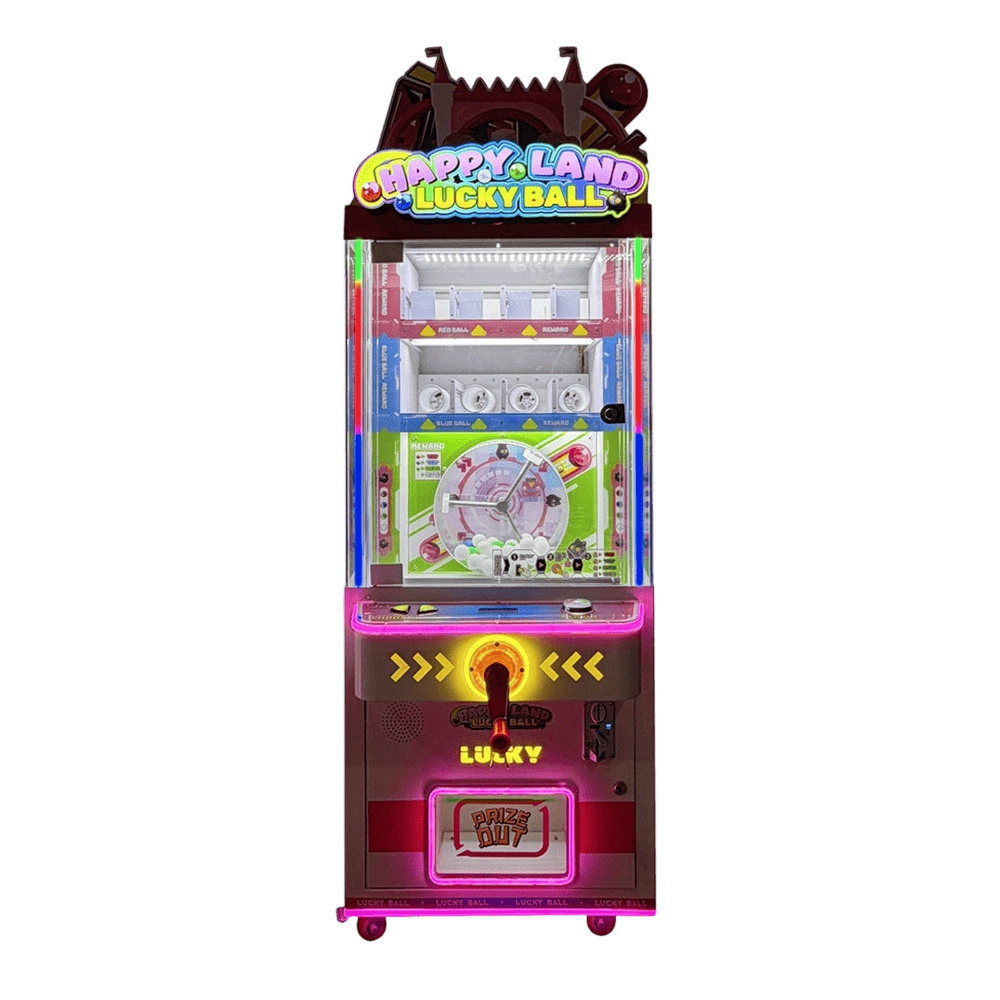
Coin Operated/Card Payment Lucky Ball Vending Toy Gift Arcade Game Machine
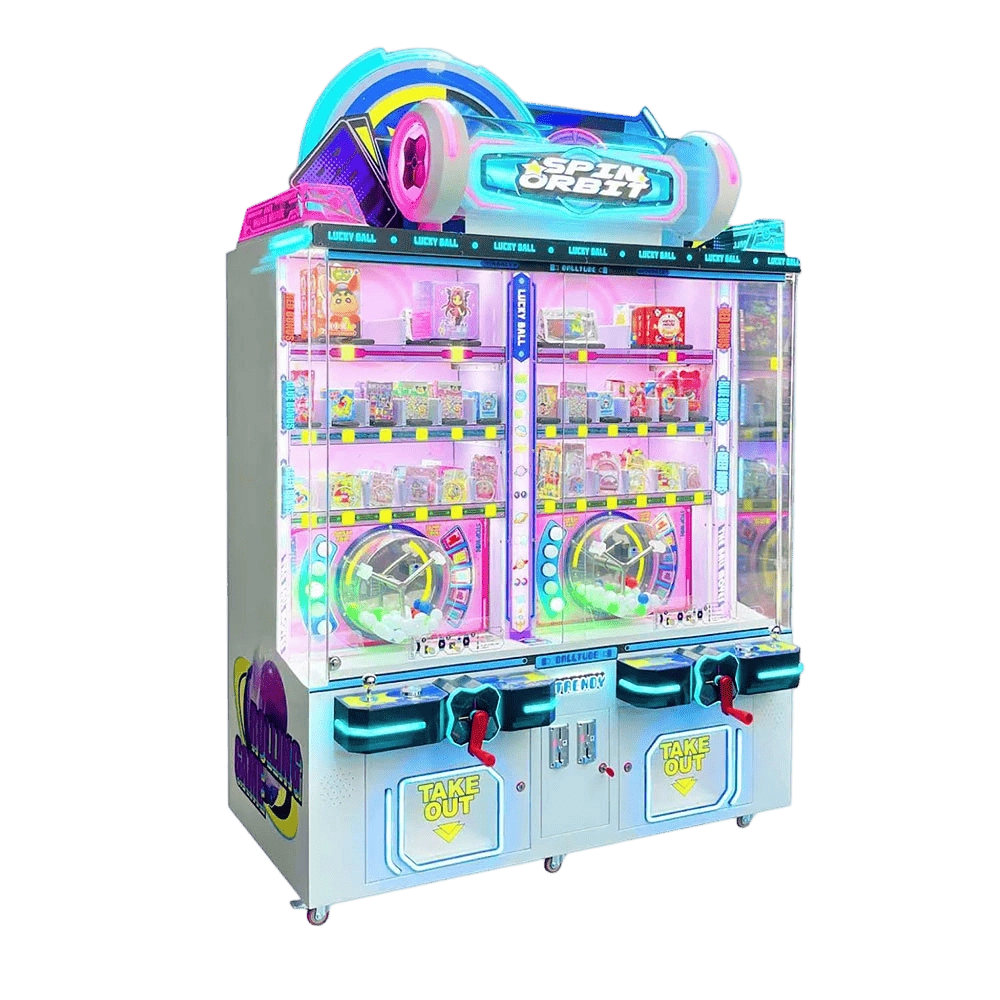
Coin Operated/Card Payment 2 Players SPIN ORBIT Lucky Prize Arcade Game
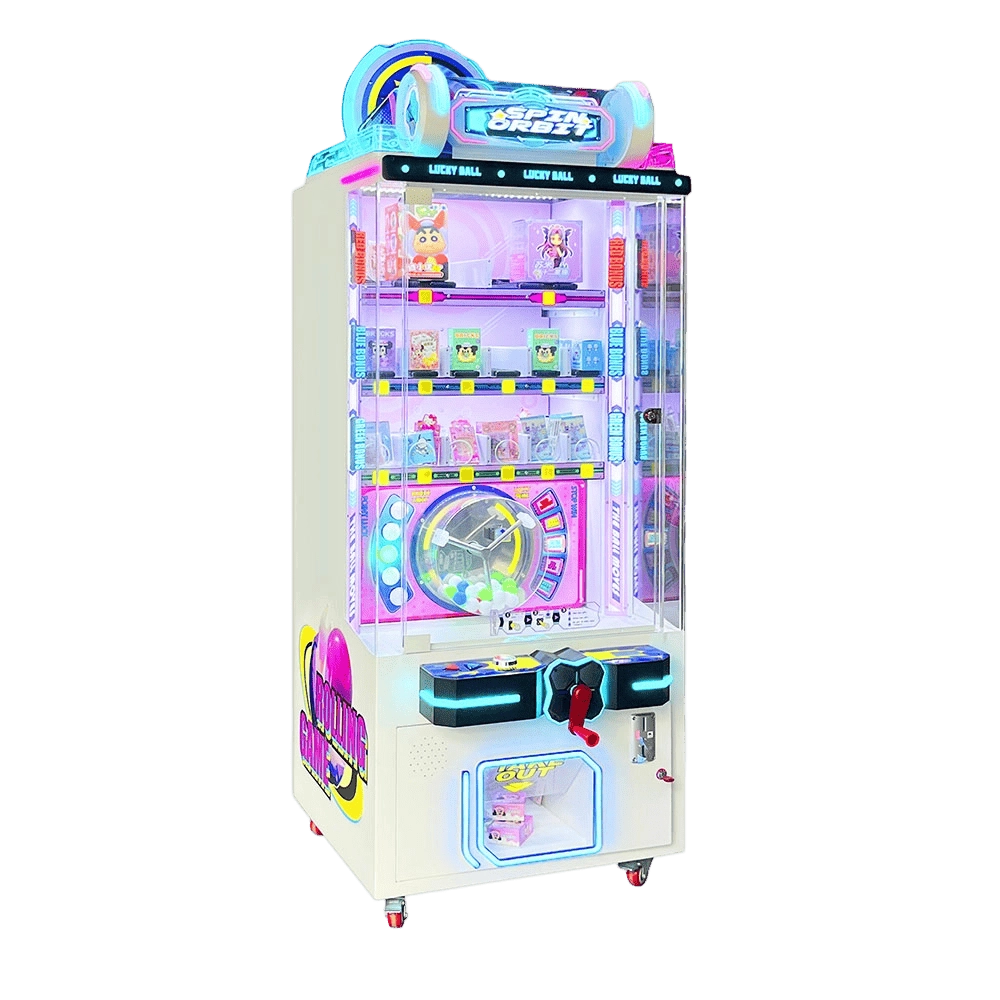
Coin Operated/Card Payment SPIN ORBIT Lucky Prize Arcade Game
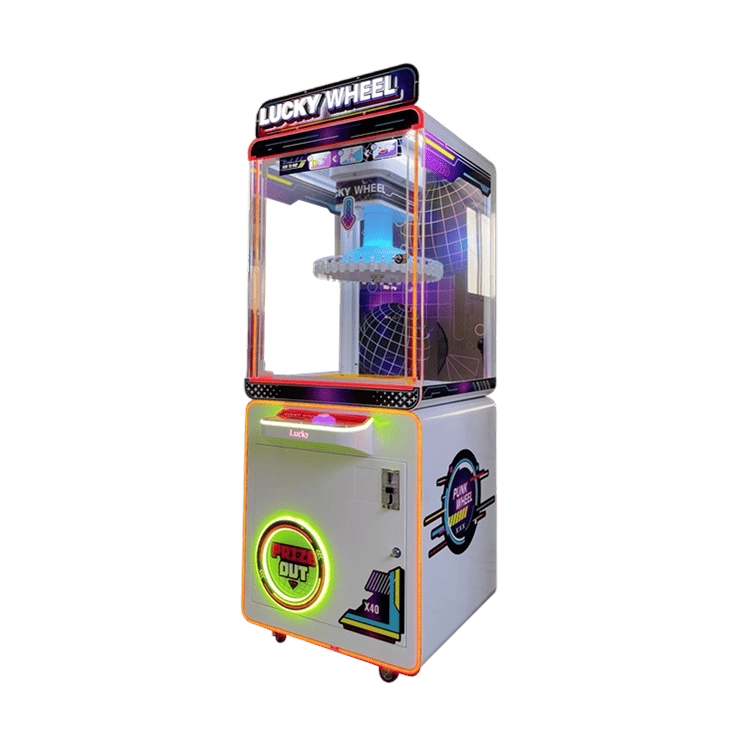
Arcade Prize Lucky Wheel Gift Machine For Amusement Areas
Get in Touch with Jiami Games
If you have any comments or good suggestions, please leave us a message; later our professional staff will contact you as soon as possible.

Innovative Entertainment, at Your Fingertips
Learn about Jiami Games and explore our expertise in console development, innovative design, and global markets.
Quick Links:
© 2026 Jiami Games.
Whatsapp: +8618520390438