







The Secrets of the Coin Machine Arcade Game: How to Win and Is It Really Rigged?
Social Media:
- Introduction
- What is a coin machine arcade game and how does it work?
- How do you win at a coin pusher arcade game?
- Are coin pusher machines rigged?
- Do coin machines at the arcade pay out real money?
- Are coin pusher games considered gambling?
- How do arcades make money on coin pusher machines?
- Can you buy a coin pusher machine for home use?
- Does the amount of coins on the edge matter in a coin pusher?
- Conclusion
- Call to Action
Introduction
The rhythmic clinking of metal, the flashing neon lights, and the tantalizing visual of a silver waterfall teetering right on the edge—these are the unmistakable hallmarks of the classic arcade experience. Few attractions capture our attention and test our patience quite like the iconic coin machine arcade game. Whether you are a casual player looking for a quick thrill or a dedicated arcade enthusiast, the magnetic pull of these machines is impossible to ignore.
Behind the bright lights and satisfying sounds, however, lies a carefully engineered world of physics, psychology, and probability. Many players approach the glass cabinet with a pocket full of tokens and a head full of questions. Is there a secret method to predicting the coin drops, or is it purely a game of chance designed to empty your wallet?
In this comprehensive guide, we will dive deep into the inner workings of the coin machine arcade game. From the fundamental mechanics and winning strategies to the legalities and operator economics, we are peeling back the curtain to reveal how these mesmerizing machines actually operate.
What is a coin machine arcade game and how does it work?
A coin machine arcade game, commonly known as a coin dozer machine or token pusher, is a staple attraction in family entertainment centers and casinos worldwide. The basic premise is brilliantly simple: players insert a coin or token into a slot, which then drops onto a flat, moving playfield. The goal is to time the drop perfectly so that the new coin pushes against the existing mass of tokens, ideally forcing coins or prizes over the front edge and into a payout tray.
Mechanically, the operation relies on a continuous back-and-forth motion. As detailed by Wikipedia, the game features a physical playfield covered in coins that automatically moves. Part of this playfield slides underneath a stationary barricade, pushing newly dropped coins forward to create a chain reaction. This pushing motion gradually inches the massive pile of tokens toward an overhang, creating the illusion of an imminent payout.
Modern arcades have largely evolved the traditional format into closed-loop redemption games. Instead of inserting physical quarters, players often swipe a digital card that triggers the machine to drop a self-contained token or chip. When these items fall off the edge, RFID scanners or optical sensors count them instantly, converting the physical drops into digital tickets loaded directly onto the player's arcade card.
This evolution ensures that the core arcade game mechanics remain intact while dramatically reducing the manual labor of refilling the machines. Whether you are playing a vintage open-loop machine on a seaside pier or a high-tech digital version in a modern arcade, the underlying physics of weight distribution and continuous motion remain the central driving forces behind the gameplay.
How do you win at a coin pusher arcade game?
While the coin machine arcade game relies heavily on physics and pre-determined house advantages, players can absolutely employ strategies to maximize their winning potential. The most critical skill is mastering the timing of the drop. Instead of rapid-firing tokens into the machine, players should watch the oscillating shelf closely and aim to drop their coin just as the moving platform reaches its furthest point backward, ensuring the coin lands flat and transfers maximum pushing force.
Another essential strategy involves analyzing the playfield before you even insert your first token. Look for a machine where the coins are densely packed in the center rather than heavily piled near the sides.
- Target the center: Coins pushed down the middle are far more likely to fall over the front edge.
- Avoid the "shingles": If coins are heavily overlapping each other like roof shingles, they will absorb the pushing force rather than slide forward.
- Look for heavy prizes: Target areas where larger chips, cards, or physical prizes are already precariously close to the edge.
Patience is a virtue when engaging with these redemption games. Many players make the mistake of abandoning a machine just as they have primed the playfield for a massive payout. If you have spent time building up a critical mass of tokens near the edge, it is often worth investing a few more drops to trigger the cascade, rather than walking away and leaving the jackpot for the next person.
Ultimately, winning requires recognizing when a machine is "cold." If you have dropped several tokens perfectly and the pile refuses to budge, the coins may have formed a structural bridge that redirects the force to the sides. Knowing when to cut your losses and move to a more favorable cabinet is just as important as knowing exactly when to drop your coin.
Are coin pusher machines rigged?
The word "rigged" implies that a game actively cheats or defies its own rules to steal from the player, which is a misconception when it comes to the standard coin machine arcade game. These machines operate purely on the principles of gravity, friction, and mechanical force. However, they are meticulously engineered to ensure that the operator always maintains a profitable house edge over the long term.
The primary mechanism that secures this house advantage is the presence of hidden side chutes. While your eyes are glued to the front edge where the winning coins fall, the extreme left and right sides of the playfield are typically open. As the barricade pushes the massive pile forward, the outward pressure forces a significant percentage of the coins to spill off the sides. These side-dropped coins bypass the player's payout tray completely and are funneled directly into the operator's collection bin.
Additionally, commercial machines are equipped with highly sensitive anti-cheat mechanisms. A specialized tilt sensor or "slam switch" is installed to detect any physical manipulation, such as pounding on the glass or shaking the cabinet. If a player attempts to physically force a payout, the sensor triggers an alarm, immediately shuts down the sweeping arm, and closes the payout chute, nullifying any unfairly acquired drops.
Therefore, while the machines are not rigged in a fraudulent sense, the arcade game mechanics guarantee that only a calculated fraction of the inserted tokens will ever reach the player. The game is designed to be a slow bleed of your bankroll, masked by the exciting, intermittent rewards of small coin cascades that keep you reaching for just one more token.
Do coin machines at the arcade pay out real money?
In the vast majority of modern entertainment venues, the coin machine arcade game does not pay out real currency. Historically, vintage machines—often found in boardwalk arcades and early casinos—did allow players to insert actual pennies or quarters and win those exact coins back. However, due to inflation, security risks, and evolving amusement laws, this practice has largely been phased out in commercial settings.
Today, these machines are almost exclusively token pusher or ticket pusher machines. Players use arcade-specific tokens or digital credits to play, and the machine dispenses non-cash rewards. When a cascade occurs, the falling items are either physical arcade tokens, collectible character cards, or plastic chips. These items are inherently worthless outside the four walls of the arcade.
Once a player has finished their session, they take their accumulated tokens or cards to a redemption counter. Here, the winnings are exchanged for prizes ranging from small candies and novelty toys to high-end electronics. This closed-loop economy allows arcades to offer the thrill of a payout without actually dispensing legal tender, protecting the business from massive cash losses.
There are still a few rare exceptions, particularly in strictly regulated casinos or specific international markets where gambling laws permit it. In these highly controlled environments, a coin dozer machine might actually dispense real currency. However, if you are playing in a family-friendly venue or a standard arcade, you can guarantee that your "winnings" will only ever translate to amusement prizes.
Are coin pusher games considered gambling?
The classification of a coin machine arcade game as either innocent amusement or illegal gambling depends entirely on the jurisdiction and exactly what the machine pays out. The defining characteristic of gambling generally involves staking something of value on a game of chance to win a prize of monetary value. Because coin pushers rely heavily on unpredictable physics, the "chance" element is undeniably present.
According to legal resources like LegalFix, many jurisdictions strictly prohibit coin pushers that reward players with actual cash, classifying them alongside slot machines as illegal gambling devices. If a machine takes real money and pays out real money, it typically requires a casino license to operate legally. This strict regulation is why you rarely see cash-based pushers outside of highly regulated markets like Nevada or specific European zones.
To legally operate in a family entertainment center, arcades must rely on the "amusement only" exemption found in most local laws. By ensuring that the machines only dispense tickets, tokens, or merchandise of limited wholesale value, the games bypass strict gambling classifications. The conversion of the payout into a non-transferable amusement prize effectively strips the game of its gambling status in the eyes of the law.
Despite these workarounds, the psychological loop of the game—the near-misses, the flashing lights, and the intermittent rewards—mirrors the experience of traditional gambling. Consequently, lawmakers in some regions still heavily scrutinize even the ticket-dispensing variants, forcing operators to adhere to strict guidelines regarding the maximum value of the prizes that can be won.
How do arcades make money on coin pusher machines?
Arcades generate significant revenue from the coin machine arcade game through a masterful combination of mechanical design and human psychology. As previously mentioned, the hidden side chutes are the operator's best friend. For every ten coins pushed forward by the mechanical arm, several are inevitably squeezed off the hidden sides into the operator's profit bin. This ensures that the machine consistently takes in more value than it dispenses over the front ledge.
The perceived value of the prizes also plays a massive role in the machine's profitability. A player might spend twenty dollars to win enough tickets for a plush toy, but the wholesale cost of that toy to the arcade operator is mere pennies. The gap between the amount the player spends chasing the prize and the actual cost of the redemption item represents a massive profit margin for the business.
Furthermore, these machines are designed for high engagement and rapid turnover. The visual spectacle of the teetering coins naturally draws a crowd, and the gameplay loop is incredibly fast. A player can easily drop dozens of tokens in a matter of minutes. If you are an operator looking to expand your amusement center, understanding these economics is as crucial as knowing How to Choose a Prize Dispenser Machine.
Finally, the introduction of collectible cards into modern ticket pusher machines has skyrocketed operator profits. To win the ultimate jackpot, players must collect a full set of cards. The arcade game mechanics are programmed to drop certain cards frequently while making one specific card extremely rare. Players will spend exorbitant amounts of money trying to find that one missing card, driving up the machine's revenue exponentially.
Can you buy a coin pusher machine for home use?
Yes, arcade enthusiasts absolutely can buy a coin machine arcade game for personal, home use. Recognizing the nostalgic appeal of these mesmerizing cabinets, several manufacturers now produce scaled-down, tabletop versions specifically designed for the consumer market. These home units provide all the visual and auditory thrills of the arcade without requiring a constant influx of real money.
Home versions differ significantly from their commercial counterparts. To keep costs down and avoid legal complications, consumer models generally do not feature industrial-grade coin acceptors or advanced anti-cheat tilt alarms. They are designed purely as "win-win" entertainment devices, where friends and family can endlessly cycle the provided metal tokens through the machine.
When purchasing a unit for your game room, you can typically choose between small, battery-operated plastic toys and more robust, plug-in metal cabinets that closely mimic the real experience. The premium home models often feature adjustable difficulty settings, customizable LED lighting, and the ability to load your own small prizes, candies, or custom chips onto the playfield.
Owning a personal token pusher is a fantastic way to recapture the magic of the arcade in your living room. It serves as a brilliant conversation piece for parties and provides endless, stress-free entertainment, allowing you to finally enjoy the satisfaction of the coin cascade without having to worry about emptying your wallet.
Does the amount of coins on the edge matter in a coin pusher?
When staring down a coin machine arcade game, the massive cluster of tokens hanging precariously over the edge is the ultimate visual hook. It naturally leads players to believe that just one more drop will send the entire mountain crashing down. However, the sheer amount of coins on the edge can actually be highly deceptive due to the physics of weight and friction.
While it is true that a crowded edge means coins are closer to falling, a densely packed layer often works against the player. When dozens of coins are tightly overlapping, they create a heavy, interlocked shelf. Instead of a single coin pushing one other coin over the edge, the force of your dropped token is absorbed and distributed across the entire heavy mass, resulting in zero forward movement.
The ideal scenario is actually a moderate amount of coins resting flat near the ledge, rather than a towering, layered mountain. Flat coins slide against the smooth metal floor with minimal friction, whereas stacked coins press down on each other, exponentially increasing the force required to move them. This is why you will often see a massive pile simply slide side-to-side without ever falling forward.
Understanding this illusion is key to mastering redemption games. The amount of coins on the edge absolutely matters, but it is the arrangement of those coins that determines your success. Learning to spot the difference between a loose, ready-to-fall cluster and a dense, immovable wall of metal will save you countless tokens and endless frustration.
Conclusion
The coin machine arcade game remains one of the most enduring and captivating attractions in the world of amusement. Its brilliant blend of simple, accessible gameplay and complex, underlying physics creates an experience that is both immensely frustrating and incredibly rewarding. While the house always maintains its mechanical advantage, understanding how the game truly works allows you to approach the cabinet with strategy rather than blind hope.
Whether you are carefully timing your drops to maximize ticket payouts at a massive entertainment center or just enjoying the satisfying clink of metal on a home tabletop unit, the appeal of the coin pusher is undeniable. They are a testament to the fact that sometimes, the most entertaining games are the ones that rely on the most basic laws of gravity and motion.
Ultimately, the true secret to the coin dozer machine is to view it as exactly what it is: a form of entertainment. By setting a budget, celebrating the small cascades, and knowing exactly when to walk away, you can ensure that your time spent at the machine is always a winning experience, regardless of how many tokens fall over the edge.
Call to Action
If you are ready to elevate your arcade or home game room with the latest amusement equipment, contact us today for a personalized consultation!
You May Also Like
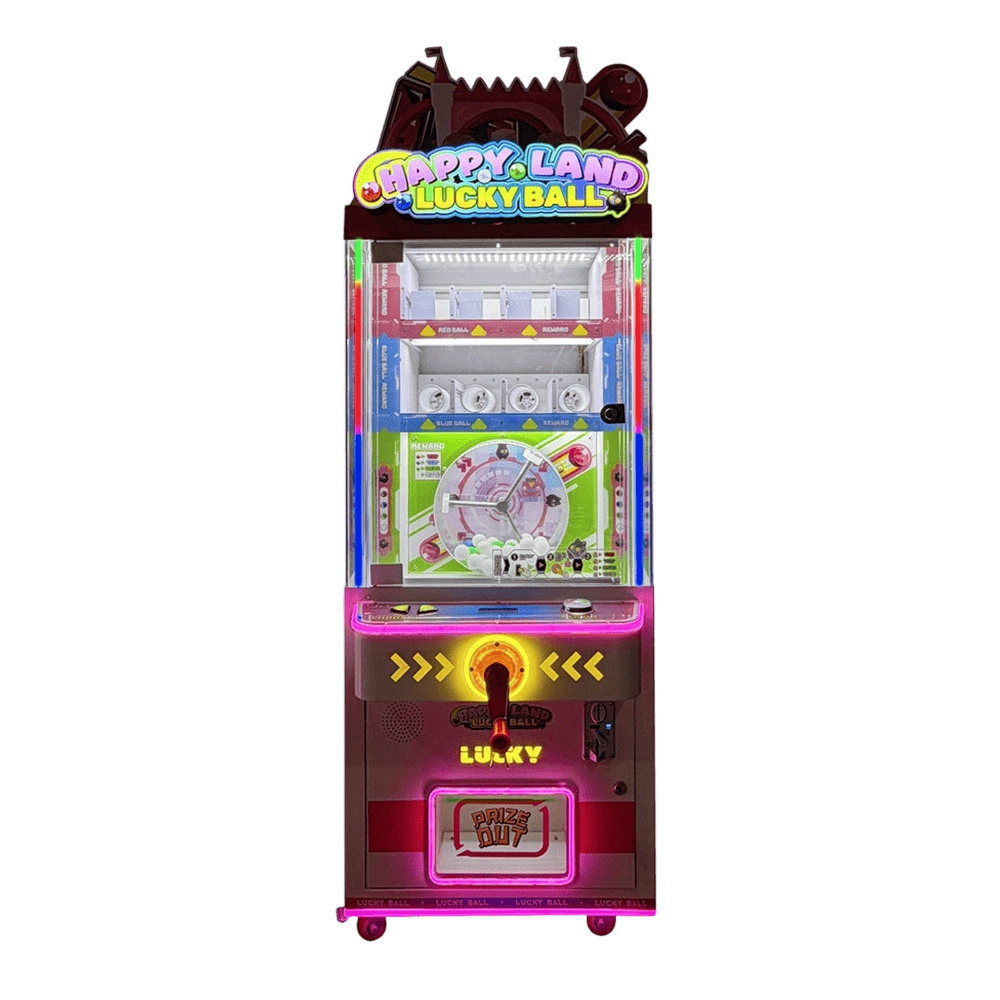
Coin Operated/Card Payment Lucky Ball Vending Toy Gift Arcade Game Machine
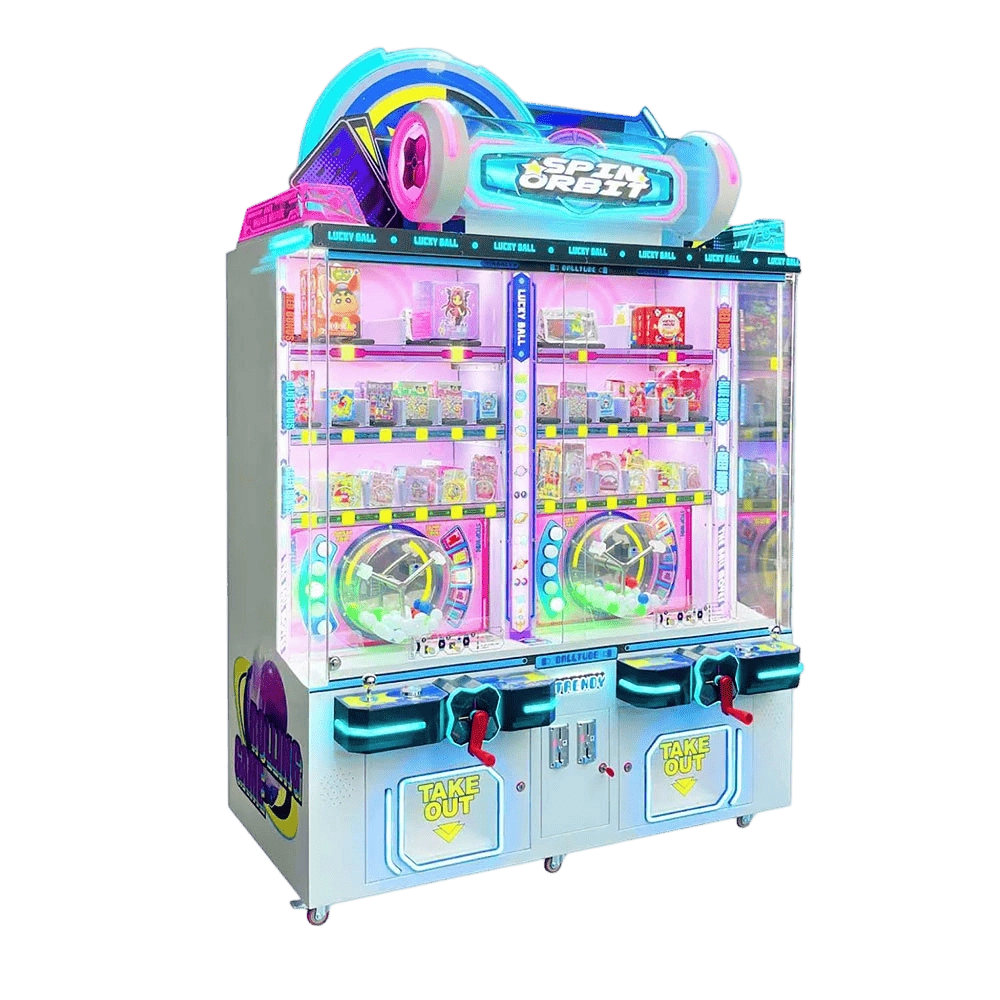
Coin Operated/Card Payment 2 Players SPIN ORBIT Lucky Prize Arcade Game
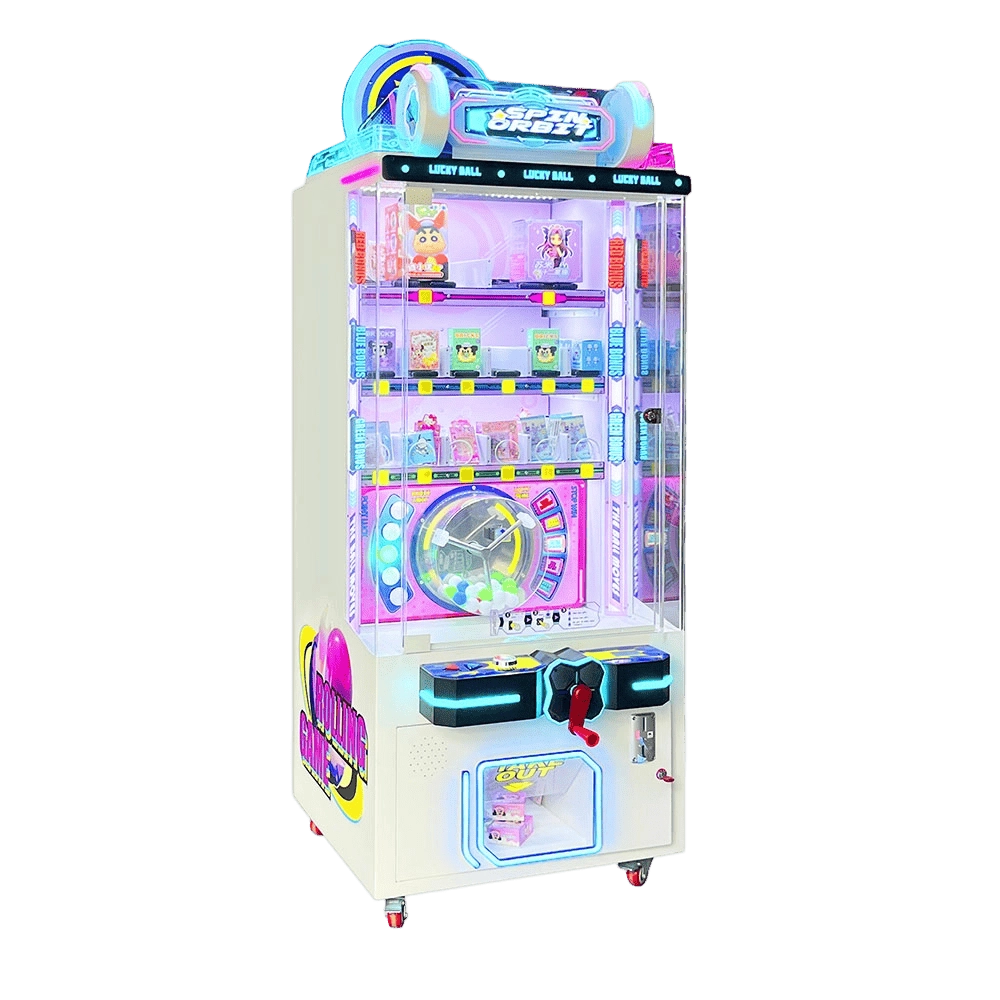
Coin Operated/Card Payment SPIN ORBIT Lucky Prize Arcade Game
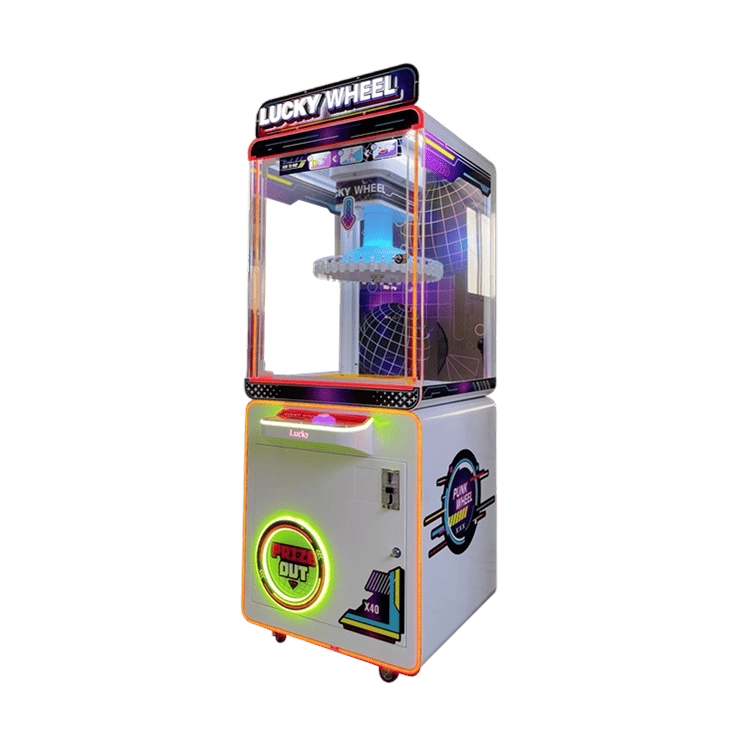
Arcade Prize Lucky Wheel Gift Machine For Amusement Areas
Get in Touch with Jiami Games
If you have any comments or good suggestions, please leave us a message; later our professional staff will contact you as soon as possible.

Innovative Entertainment, at Your Fingertips
Learn about Jiami Games and explore our expertise in console development, innovative design, and global markets.
Quick Links:
© 2026 Jiami Games.
Whatsapp: +8618520390438