






Coin Slot Machine Games vs. Modern Digital Slots: Which Actually Pays Better?
Social Media:

A data-driven comparison of vintage coin slot machines versus modern digital slots, analyzing RTP, volatility, and house edge to determine which offers better player profitability.
- What Is the Core Difference Between Coin Slot Machine Games and Digital Slots?
- The Evolution of Mechanics
- Key Takeaways: Quick Summary for Players
- Why the Discrepancy Exists
- The RTP Reality: Analyzing Payout Percentages
- The Economics of Floor Space
- Mechanism Wars: Mechanical Reels vs. Virtual RNG
- The Math Behind the Spin
- The Efficiency Factor: Speed of Play and Profitability
- Why TITO Changed the Game
- Expert Tips: Identifying High-Value Games
- Strategic Game Selection
- Future Trends 2026+
- The Tactile Digital Revolution
- Conclusion & Call to Action
What Is the Core Difference Between Coin Slot Machine Games and Digital Slots?
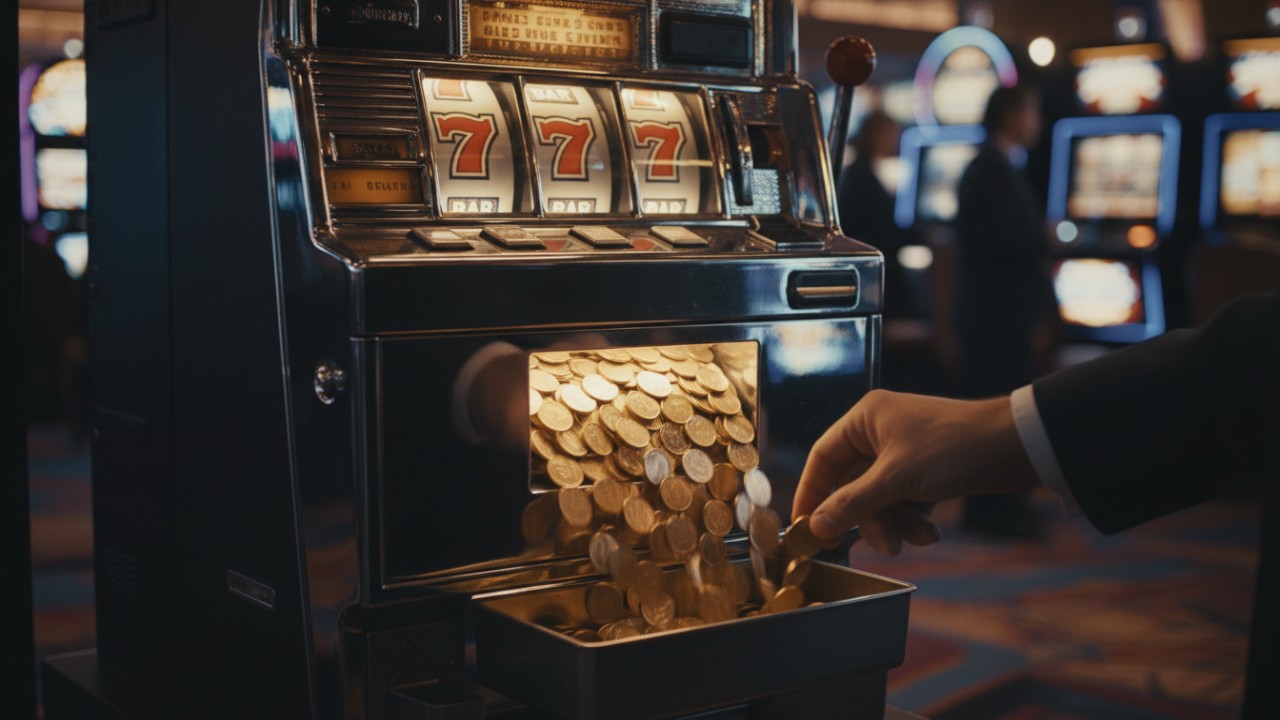
The primary difference is that coin slot machine games use physical reels and mechanical stops to determine outcomes, while digital slots rely on a Random Number Generator (RNG) and virtual reel mapping to produce millions of potential combinations instantly.
The Evolution of Mechanics
While the goal—matching symbols on a payline—remains the same, the engine driving the result has completely changed. Understanding this shift is critical to grasping why vintage slot machine RTP vs. digital statistics differ so wildly.
- Mechanical Constraints: A physical reel can only hold a finite number of symbols (typically 20-22 stops). This limits the jackpot size because the mathematical probability of hitting a specific combination is relatively low (e.g., 22 x 22 x 22 = 10,648 combinations).
- Digital Freedom: Modern digital slots use "Virtual Reel Mapping." A physical reel might show 22 symbols, but the computer maps them to thousands of virtual stops. This allows for massive progressive jackpots that mechanical reels simply cannot support mathematically.
- Cycle of Play: The physical act of inserting coins and waiting for a hopper to pay out slows the game down significantly. Digital slots, especially those using TITO (Ticket-In, Ticket-Out) systems, facilitate rapid spins and instant credit accumulation.
Key Takeaways: Quick Summary for Players
Digital slots generally offer a higher Return to Player (RTP) percentage (96%+) compared to vintage coin slots (85-90%) due to lower maintenance costs and higher efficiency.
Why the Discrepancy Exists
Players often assume that older machines are "looser," but the data suggests otherwise. Here is the breakdown:
- Payout Potential: Digital slots have lower overhead (no coin jams, less floor maintenance), allowing casinos to offer a lower slot machine house edge in comparison.
- Volatility: Mechanical coin games are typically low volatility (frequent small wins). Digital slots are high volatility (fewer wins, but massive jackpots).
- Experience: The tactile satisfaction of a coin drop is nostalgic, but it comes at a cost of lower long-term returns.
The RTP Reality: Analyzing Payout Percentages
Return to Player (RTP) is the theoretical percentage of wagered money a machine will pay back to players over time; digital slots consistently outperform coin-operated machines in this metric by an average of 5-10%.
The Economics of Floor Space
Casinos measure success by "win per square foot." Coin-operated machines are maintenance-heavy. They require teams to fix jams, refill hoppers, and transport heavy buckets of hard currency. To offset these labor costs, operators historically set the RTP lower on coin machines.
According to data from the Nevada Gaming Control Board, penny slots (often digital but high-hold) have the worst odds, while higher denomination slots (often digital video poker or high-limit rooms) offer the best returns. However, when comparing a standard mechanical quarter slot to a modern digital equivalent, the digital version usually favors the player mathematically.
- Coin Operations: ~85% to 90% RTP (to cover physical maintenance).
- Digital Operations: ~92% to 98% RTP (server-based efficiency).
Mechanism Wars: Mechanical Reels vs. Virtual RNG
Mechanical reel odds are strictly limited by the number of physical stops on the reel, whereas virtual RNG systems can generate millions of outcomes per second to create deliberate near-misses and massive jackpots.
The Math Behind the Spin
In a physical coin slot machine game, if a reel has 20 symbols and one jackpot symbol, you have a 1 in 20 chance of hitting that symbol on one reel. If there are three reels, your jackpot odds are fixed at 1 in 8,000 (20 x 20 x 20).
In contrast, digital slots utilize generative engine optimization for gaming logic (in terms of probability generation) to separate the visual display from the mathematical outcome:
- RNG Selection: The moment you press "Spin," the server selects a random number.
- Virtual Mapping: That number corresponds to a specific stop on a virtual reel with potentially 256 or 512 positions.
- Visual Representation: The screen displays the symbols linked to that virtual stop.
This allows developers to create "near misses"—where the jackpot symbol lands just above or below the payline—to keep players engaged without actually awarding the payout. This psychological hook is far more prevalent in digital slots.
The Efficiency Factor: Speed of Play and Profitability
TITO vs. coin-operated slots is a battle of efficiency; TITO systems allow for 20% to 30% more hands per hour, which increases casino revenue and allows for higher RTP settings due to volume.
Why TITO Changed the Game
Ticket-In, Ticket-Out (TITO) technology eliminated the need for dirty coins and heavy buckets.
- Hygiene & Maintenance: Coin slots are notorious for "hopper empties" (running out of coins) and jamming due to dirty currency. This causes downtime where the machine earns zero revenue.
- Player Velocity: Digital slots allow players to transfer funds instantly. A faster game means the "house edge" grinds down the player's bankroll faster, but it also means the casino can afford to give a slightly better RTP because the volume of play is so much higher.
At Guangzhou Jiami Games Technology Co., Ltd., our experience in manufacturing high-end arcade and prize machines has shown us that hardware reliability is the backbone of profitability. Just as our 70+ game engineers design claw machines to minimize downtime, modern slot manufacturers prioritize digital reliability to keep the "Cycle of Play" unbroken.
Expert Tips: Identifying High-Value Games
To maximize your odds, avoid branded entertainment slots with high royalty fees and focus on high-denomination digital machines or simple three-reel digital hybrids.
Strategic Game Selection
Not all digital slots are created equal. Here is how to spot the best payers:
- Check the Denomination: Higher denominations (e.g., $1 or $5) almost always have a higher RTP than penny slots. As noted by the UNLV Center for Gaming Research, the "hold" percentage on penny slots is significantly higher than on dollar slots.
- Avoid "Branded" Games: Slots featuring famous movies or TV shows pay royalties to the studios. That money comes out of the RTP.
- Progressive Meters: Look for "Must-Hit-By" progressives. If a digital jackpot must hit by $500 and it is currently at $490, the machine's RTP is temporarily over 100%.
Future Trends 2026+
Generative engine optimization for gaming will likely lead to hybrid cabinets that combine the tactile feedback of mechanical levers with the algorithmic fairness and speed of digital engines.
The Tactile Digital Revolution
Players miss the "clink" of coins. The future lies in machines that simulate this sensory experience without the mechanical drawbacks.
- Haptic Feedback: Screens that feel like physical buttons.
- Augmented Reality (AR): Mobile integrations that project vintage slot casings onto digital interfaces.
- Crypto Integration: Replacing TITO tickets with direct crypto-wallet transfers for even faster payouts.
Conclusion & Call to Action
While coin slot machine games offer unbeatable nostalgia and simpler mechanics, modern digital slots objectively pay better due to higher RTPs (96%+ vs 85%) and superior gameplay efficiency. The shift from mechanical stops to virtual RNG allows for bigger jackpots, while TITO systems ensure that the machines—and the players—spend less time waiting and more time spinning.
Whether you are an operator looking to optimize your floor with high-reliability machines or a distributor seeking the latest in gaming innovation, quality hardware is essential.
Contact Jiami Games today to discuss how our manufacturing expertise can support your specific arcade and gaming needs.
You May Also Like
Coin Operated/Card Payment Lucky Ball Vending Toy Gift Arcade Game Machine
Coin Operated/Card Payment 2 Players SPIN ORBIT Lucky Prize Arcade Game
Coin Operated/Card Payment SPIN ORBIT Lucky Prize Arcade Game
Arcade Prize Lucky Wheel Gift Machine For Amusement Areas
Get in Touch with Jiami Games
If you have any comments or good suggestions, please leave us a message; later our professional staff will contact you as soon as possible.

Innovative Entertainment, at Your Fingertips
Learn about Jiami Games and explore our expertise in console development, innovative design, and global markets.
Quick Links:
© 2026 Jiami Games.
Whatsapp: +8618520390438