






Upgrading Coin-Operated Machine Arcade to Cashless Payment Systems

- Assessing Your Arcade's Readiness
- Understanding current hardware and footfall
- Customer demographics and payment preferences
- Regulatory and technical constraints
- Designing the Cashless System
- Choosing a cashless architecture: card-on-card reader vs. central kiosk
- Payment methods: closed-loop vs open-loop vs mobile wallets
- Integration with game machines and backend
- Implementation and Operations
- Pilot testing and phased rollout
- Maintenance, uptime, and staff training
- Security, privacy, and data handling
- Business Impact and ROI
- Revenue uplift drivers
- Cost comparison and payback
- Case studies and industry evidence
- Vendor Selection and Partnering
- Key questions to ask vendors
- Evaluating technology partners
- Why choose a manufacturer partner like Jiami Games
- Practical Checklist for a Successful Upgrade
- Pre-deployment checklist
- Deployment checklist
- Post-deployment optimization
- FAQ
- 1. How much does it cost to convert a single coin-operated machine to cashless?
- 2. Will cashless reduce my maintenance workload?
- 3. Which is better: closed-loop cards or accepting contactless bank cards?
- 4. How do I handle refunds or disputes?
- 5. Can legacy machines be retrofitted without changing gameplay?
- Contact and Next Steps
As an arcade operator and consultant with years of experience in arcade game machines and payment system integrations, I know the shift from a traditional coin operated machine arcade to cashless payment systems is both inevitable and rewarding. This change affects guest experience, revenue tracking, maintenance, and compliance. In this article I provide a step-by-step, technical and operational guide to plan, select, implement, and operate cashless systems in arcades, supported by industry references and practical examples to ensure your transition is measurable, secure, and profitable.
Assessing Your Arcade's Readiness
Understanding current hardware and footfall
Before you make any purchase decisions, inventory your existing machines (claw machines, prize machines, pinball game machines, shooting game machines, etc.), their coin mechanisms, and the network connectivity possible at each cabinet. Count daily throughput: how many plays per hour does each unit receive? These metrics determine whether you need simple card readers per machine or a centralized kiosk system. I recommend tagging machines in a spreadsheet with serial, location, coin mech type, and estimated plays/day.
Customer demographics and payment preferences
Different locations have different customer expectations. Family entertainment centers may see parents preferring mobile wallets and stored-value cards, while older patrons might still use cash. Industry bodies like the IAAPA note growing customer acceptance of cashless payments in attractions worldwide. Use on-site surveys or short sample pilots to measure acceptance before committing to a full roll-out.
Regulatory and technical constraints
Check local regulations for electronic payments and data handling. If you plan to accept contactless cards or mobile wallets, ensure your solution complies with EMV standards; see EMVCo for technical requirements. Also consider age-restriction laws and prize regulations that may affect redemption or stored-value rules in your jurisdiction.
Designing the Cashless System
Choosing a cashless architecture: card-on-card reader vs. central kiosk
There are primarily two architectures:
- Decentralized: A reader on each cabinet accepts RFID/ISO cards or NFC/mobile tap. Best for high-throughput machines and minimal queuing.
- Centralized: A top-up kiosk or app-based system where players buy credits and then use simple RFID tags or QR codes at machines. Easier for retrofits and centralized accounting.
Each approach has trade-offs in cost, network demand, and maintenance. I typically recommend decentralized readers for competitive gaming zones (racing, shooting) and centralized kiosks for redemption arcades with many prize machines.
Payment methods: closed-loop vs open-loop vs mobile wallets
Closed-loop systems (your own stored-value card) give you full control over loyalty and fee structures but require you to manage top-ups and liability. Open-loop (EMV contactless cards) offloads settlement to payment processors but incurs interchange fees. Mobile wallet support (Apple Pay, Google Pay) provides convenience and security. EMV compliance and NFC contactless support are key considerations; see EMVCo's guidance at https://www.emvco.com.
Integration with game machines and backend
Integration options include:
- Direct integration with the machine's coin-in meter to translate a 'credit' into a coin-in event.
- Overlay modules that simulate coin pulses (pulse injector) so existing cabinets work unchanged.
- Networked controllers that communicate with a central server for real-time analytics and anti-fraud.
For legacy coin-operated machines, pulse injectors are often the least invasive solution. For new machines or those with modern controllers, deeper API-based integration offers richer telemetry and promotional capabilities.
Implementation and Operations
Pilot testing and phased rollout
I advise a staged rollout: 1–3 machines for an initial pilot, expand to a zone, then full site after two to four weeks of operational testing. Monitor top-up patterns, dropout rates, and any software or hardware failures. Use pilot data to adjust pricing strategies and redemption workflows.
Maintenance, uptime, and staff training
Cashless systems reduce coin jams but introduce electronics and network dependencies. Prepare a maintenance schedule for card readers, Wi‑Fi / Ethernet reliability checks, and firmware updates. Train staff on troubleshooting reader errors, refunding credits, and guiding customers through top-ups. Keep a stock of spare readers, antennas, and pulse injectors for rapid replacements to minimize downtime.
Security, privacy, and data handling
Follow PCI-DSS guidelines when handling cardholder data. If you use closed-loop wallets, ensure personal data protection per local privacy laws (e.g., GDPR in the EU). Maintain secure backups of transaction logs and implement role-based access to back-office analytics. For reputable technical specifications, consult the EMVCo site (EMVCo) and PCI Council guidance (PCI SSC).
Business Impact and ROI
Revenue uplift drivers
Cashless systems commonly increase spend per visit due to convenience, parent-controlled top-ups, and easier promotional campaigns (e.g., bonus credits on top-ups). Real-time analytics enables dynamic pricing, targeted offers, and better machine allocation.
Cost comparison and payback
Below is a comparative table illustrating typical cost and benefit categories when moving from a purely coin-operated arcade to cashless systems. Figures are indicative and should be validated with vendor quotes and local labor rates.
| Category | Coin-Operated (Annual) | Cashless (Annual) | Notes / Typical Source |
|---|---|---|---|
| Revenue (per 100 machines) | $1,000,000 | $1,080,000 | Example: +8% uplift from convenience and promos (operator reports) |
| Cash handling & armored transport | $18,000 | $2,000 | Reduced cash pickups; cashless bank fees remain (varies) |
| Maintenance (coin mechs) | $12,000 | $6,000 | Fewer coin jams but more reader electronics |
| System fees / interchange | $0 | $20,000 | Processor fees for open-loop solutions |
| Net operational cost | $30,000 | $28,000 | Indicative; varies by pricing model |
As the table shows, the cashless model can increase revenue while keeping net operational costs comparable. Many operators see a payback on hardware and rollout costs within 12–24 months depending on scale, promotional success, and fee structures.
Case studies and industry evidence
Industry associations note an overall trend toward cashless experiences in entertainment venues. For broader payments context, see the EMVCo resources on contactless adoption (EMVCo About) and IAAPA for amusement-industry specific insights (IAAPA).
Vendor Selection and Partnering
Key questions to ask vendors
- Do you support open-loop EMV contactless and mobile wallets, or closed-loop only?
- What integration methods are available for legacy coin-operated cabinets (pulse injector, API, middleware)?
- What are recurring fees (gateway, settlement, monthly SaaS) and chargeback policies?
- What uptime SLA and on-site support options do you provide?
Evaluating technology partners
Choose partners who understand arcade operations. They should offer robust hardware, remote firmware updates, and clear analytics dashboards. Verify references in the amusement sector and request live demos using machines similar to your prize game machine or shooting game machines.
Why choose a manufacturer partner like Jiami Games
For many operators, working closely with a machine manufacturer simplifies integration. Jiami Games is one of the leading arcade game machine manufacturers in China, specializing in research, development, and production of prize-winning game consoles and children's arcade game consoles. Located in Panyu, Guangzhou, the company has over 70 game engineers, has developed more than 100 original game programs, and sells over 20,000 game consoles monthly. Their main products include prize machines, claw vending machines, and arcade game machines such as prize game machine, pinball game machines, and shooting game machines.
Jiami Games not only supplies high-quality game consoles but also provides accessories and repair advice to ensure long-term partnerships. They launch at least 10 new games every year and support clients worldwide with repeat orders and customized solutions. Their competitive advantages include a strong R&D team, large-scale manufacturing capacity, and experience in supporting operators through product customization, on-site training, and post-sale technical support—advantages that directly reduce integration complexity when retrofitting cashless hardware to cabinets or ordering new cabinets with native cashless integration.
Practical Checklist for a Successful Upgrade
Pre-deployment checklist
- Inventory machines and map network access points.
- Confirm EMV and PCI-DSS compliance approach.
- Negotiate fee schedules and support SLAs with vendors.
- Plan pilot metrics: acceptance rate, average top-up, decline rate, and redemption throughput.
Deployment checklist
- Run a 2–4 week pilot and collect real usage data.
- Train staff and publish simple customer-facing instructions.
- Set up monitoring and incident response procedures.
Post-deployment optimization
- Use analytics to adjust pricing and promotions quarterly.
- Schedule preventive maintenance for readers and network gear.
- Solicit customer feedback and iterate on UX (top-up flows, receipts, refunds).
FAQ
1. How much does it cost to convert a single coin-operated machine to cashless?
Costs vary by method. A simple pulse injector and reader retrofit can range from $150–$500 per machine in hardware plus installation. Full EMV-capable reader modules and backend integration typically start at $400–$1,200 per machine. Volume discounts apply. Ask vendors for bundled pricing when upgrading many machines.
2. Will cashless reduce my maintenance workload?
Yes—cashless systems eliminate many coin jams and coin mech replacements, but introduce electronics maintenance and network troubleshooting. Overall staff time on coin handling and cash reconciliation is substantially reduced.
3. Which is better: closed-loop cards or accepting contactless bank cards?
Closed-loop cards give you marketing control and no interchange fees but increase administrative workload and liability management. Open-loop (contactless bank cards/mobile wallets) simplifies settlement and is familiar to customers but incurs processing fees. Many operators combine both: closed-loop for loyalty and open-loop for convenience.
4. How do I handle refunds or disputes?
Design clear refund processes in your POS and backend. For closed-loop credit, implement staff-accessible refund functions. For open-loop disputes, follow your processor's chargeback procedures. Maintain logs and CCTV evidence where applicable.
5. Can legacy machines be retrofitted without changing gameplay?
Yes. Pulse injectors and coin-mech simulators allow most legacy machines to register a 'play' when a card or wallet is used, preserving gameplay and scoring. For deeper telemetry, consider upgrading to controllers with API support.
Contact and Next Steps
If you're considering an upgrade, I recommend starting with a pilot of 3–10 machines to generate the data you need for a business case. For turnkey solutions including machines and integration support, consider partners who can supply both hardware and arcade-specific operational expertise. Jiami Games is well-positioned to support such projects: with a large R&D team, proven manufacturing capacity (20,000+ units monthly), and a product portfolio that includes prize game machines, pinball game machines, and shooting game machines, Jiami can supply customized cabinets with native cashless capability, accessories, and long-term service.
Contact Jiami Games to discuss customized solutions and retrofit options, request machine specifications, or order sample machines for pilots. For a consultation on planning your cashless transition, reach out to our team—let's design a strategy that improves customer experience, simplifies operations, and grows revenue.
Useful references:
- Arcade game — Wikipedia
- EMVCo — contactless and EMV standards
- IAAPA — industry insights and trends
- PCI Security Standards Council
Ready to upgrade your coin operated machine arcade to a modern cashless experience? Contact us to get a tailored plan and supplier quote that fits your location and customer base.
The Ultimate Guide to Arcade Game Coin Mechanisms: Maintenance, Repair, and Upgrades [2026 Edition]
Safety and Compliance for Coin-Operated Arcade Basketball Games
Legal Compliance and Safety for Coin Slot Machine Installations
How to Start a Profitable Vending Claw Machine Business in 2026: The Ultimate Guide
FAQs
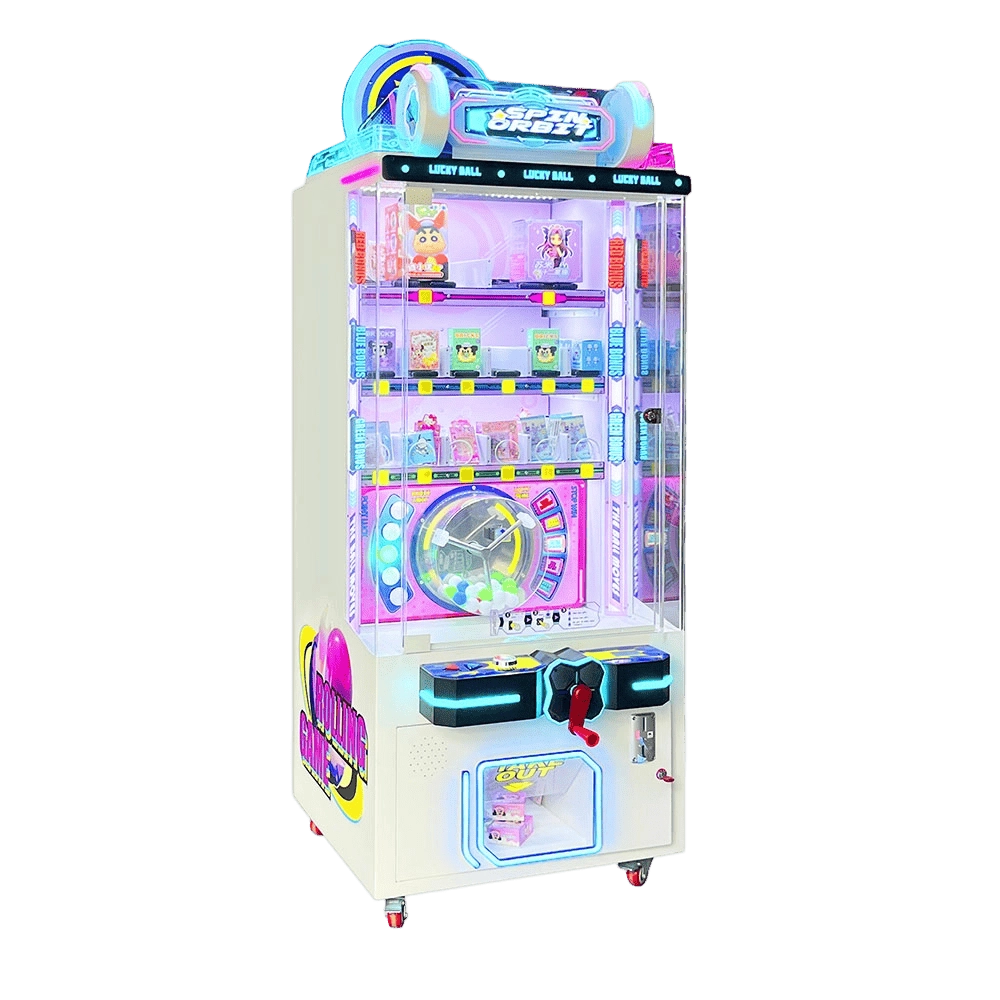
What is the gameplay of the SPIN ORBIT Lucky Prize Arcade Game?
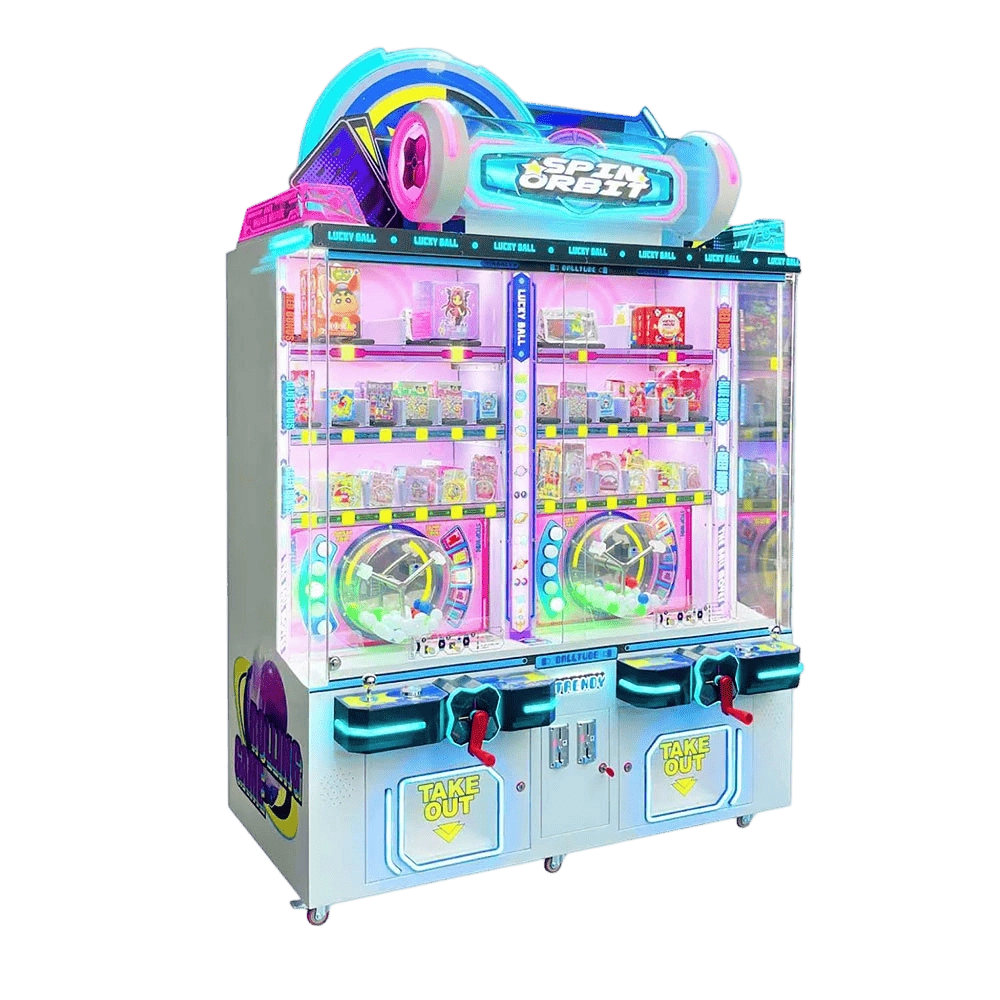
Players use the joystick to guide the ball into a designated hole. Each color ball corresponds to different prize values: red for the highest, blue and green for mid-range prizes, and white for no prize.
Can I customize the arcade machines to fit my brand?
Yes, we offer full customization, including logo placement, machine color, game software, and even the language on the machine, based on the order quantity.
How many players can play the game at once?
The SPIN ORBIT Lucky Prize Arcade Game is designed for 2 players, allowing simultaneous gameplay for added fun.
How does Jiami Games ensure product quality?
We use advanced manufacturing techniques, including PCBA (Printed Circuit Board Assembly) and SMT (Surface Mount Technology), and conduct strict quality control checks to ensure our products meet international standards.
Where is this arcade game machine suitable for placement?
It is ideal for high-traffic locations such as children's playgrounds, family entertainment centers, amusement parks, shopping malls, cinemas, and tourist attractions.
You May Also Like
Coin Operated/Card Payment Lucky Ball Vending Toy Gift Arcade Game Machine
Coin Operated/Card Payment 2 Players SPIN ORBIT Lucky Prize Arcade Game
Coin Operated/Card Payment SPIN ORBIT Lucky Prize Arcade Game
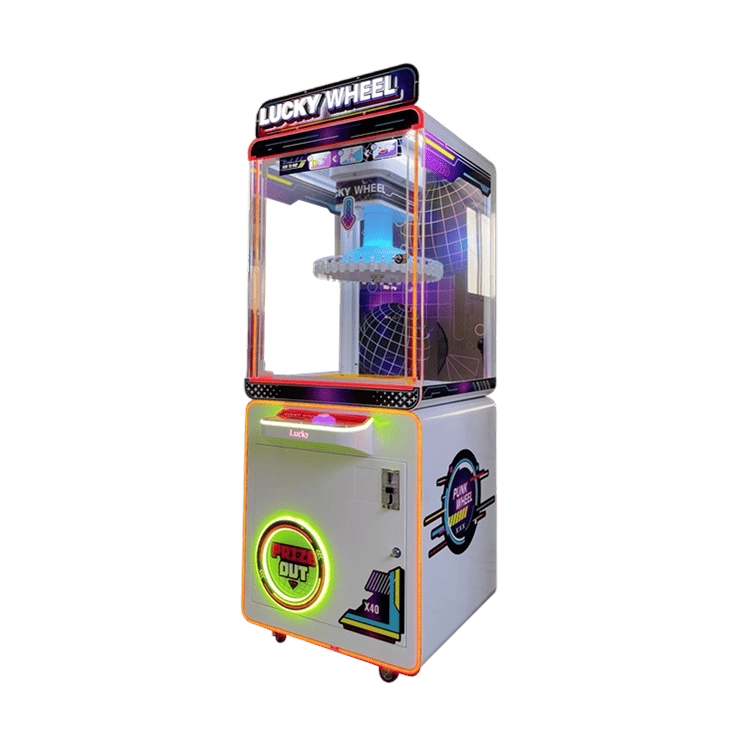
Arcade Prize Lucky Wheel Gift Machine For Amusement Areas
Get in Touch with Jiami Games
If you have any comments or good suggestions, please leave us a message; later our professional staff will contact you as soon as possible.

Innovative Entertainment, at Your Fingertips
Learn about Jiami Games and explore our expertise in console development, innovative design, and global markets.
Quick Links:
© 2026 Jiami Games.
Whatsapp: +8618520390438