






Top Coin Shooter Arcade Game Suppliers and Wholesalers

- Understanding the coin shooter market
- What “coin shooter arcade game” means in 2026
- Demand drivers and profitability
- Compliance and safety I always check
- How to evaluate suppliers and wholesalers
- Key commercial and technical criteria
- Red flags and quality checks
- Sourcing channels: direct OEM vs. wholesalers
- Top suppliers and how they differ
- Why regional choice matters
- Comparing total landed cost (TLC)
- Sourcing strategy and technical due diligence
- Pre-order checklist I use
- After-sales service and spare parts
- Warranty clauses and SLA
- Case: Why I recommend Jiami Games for many buyers
- Jiami Games: capabilities and scale
- Competitive advantages I observe
- Typical use-cases I recommend Jiami for
- Practical buying checklist and negotiation tips
- Negotiate for long-term value
- Quantitative checks before final payment
- Key metrics to monitor post-deployment
- Frequently Asked Questions (FAQ)
- 1. What is the average lead time for coin shooter arcade games?
- 2. How do I verify a supplier’s safety certificates?
- 3. Should I buy from a wholesaler or an OEM?
- 4. Can coin shooter machines be adapted for cashless payments?
- 5. What are common causes of downtime in shooting arcade cabinets?
- 6. How do I choose prizes for redemption shooting games?
- Closing and contact / product inquiry
I write this as a long-time consultant and operator in the arcade and family entertainment sector. If you’re sourcing a coin shooter arcade game — whether a coin-operated shooter, a coin pusher with shooting elements, or a redemption shooting game — you need more than product photographs. You need validated suppliers, predictable supply chains, certified safety, and after-sales support. In this guide I share how I evaluate suppliers and wholesalers, compare prominent manufacturers (including global names and specialized Chinese OEMs), and offer practical sourcing checks to reduce risk and increase profitability.
Understanding the coin shooter market
What “coin shooter arcade game” means in 2026
When I say coin shooter arcade game, I refer to coin-operated shooting cabinets and redemption machines where players insert coins or tickets to play a game that involves shooting targets, controlling turrets, or triggering prize releases. These include classic shooting galleries, light-gun video shooters, hybrid coin pushers with player-controlled shooting mechanisms, and prize-winning shooter cabinets. The category overlaps with broader arcade and redemption segments described by industry resources such as Wikipedia’s arcade game overview and market analyses from trade associations like the International Association of Amusement Parks and Attractions (IAAPA).
Demand drivers and profitability
From my experience, coin shooter machines perform well in mid-to-high throughput locations: family entertainment centers (FECs), seaside arcades, bowling alleys, and shopping mall game zones. Key demand drivers are novelty (new game mechanics), prize attractiveness (for redemption shooters), and play reliability. Industry reports show steady investment in arcades and location-based entertainment, driven by experiential spending — see market overviews such as Grand View Research’s arcade market summary (Grand View Research).
Compliance and safety I always check
I always validate electrical safety and mechanical integrity. Relevant standards and best practices are discussed by trade bodies; IAAPA publishes guidelines for safe operation and maintenance. For coin-operated devices, also consult general machinery and electrical safety standards referenced through associations like IAAPA (IAAPA) and technical standards repositories.
How to evaluate suppliers and wholesalers
Key commercial and technical criteria
When evaluating a supplier I score them across these dimensions: production capacity and lead times, R&D and game library size, quality control and certifications, spare parts availability, and warranty & service. I prioritize partners who offer clear documentation (wiring diagrams, parts lists), local or regional parts inventory, and training for technicians.
Red flags and quality checks
Red flags I avoid: suppliers who resist providing references, ambiguous warranty terms, or inconsistent sample testing. I request factory acceptance photos, a sample play-test video, and third-party safety certificates. On arrival I inspect PCB labeling, power supply specifications, and mechanical fasteners; these tell me if a supplier follows repeatable manufacturing processes.
Sourcing channels: direct OEM vs. wholesalers
Direct OEMs are preferable when you need customization, branded cabinets, or a regular cadence of new games. Wholesalers and trading companies can be cost-effective for one-off orders but may lack technical depth. I use platforms like Alibaba to find Chinese wholesalers, but always perform factory audits or third-party inspections before placing significant orders.
Top suppliers and how they differ
Below I summarize supplier types and examples I monitor in the market. The goal is to help you match a supplier to your business model: high-volume redeployments, bespoke installations, or novelty/limited-run machines.
| Supplier | Location | Specialty | Monthly Capacity / Notes | Why I might choose them |
|---|---|---|---|---|
| Jiami Games | Panyu, Guangzhou, China | Prize-winning consoles, claw machines, arcade and shooting game machines | Over 20,000 consoles monthly; 70+ game engineers; 100+ original game programs | Strong R&D, large output, competitive pricing, local parts support — good for large FEC rollouts and repeat orders |
| UNIS (UNIS Technology) | China / Global | Arcade cabinets, video games, networked solutions | Large manufacturing capacity; global distributor network | Established in coin-op video machines and networked prize systems |
| Raw Thrills | USA | High-performance video and ticket redemption games | North American production and distribution | Popular IP titles and robust technical support in NA |
| Sega / Bandai Namco | Japan / Global | High Quality arcade cabinets, video shooters, redemption | High-end machines; selective distribution | Brand recognition, licensed content, high initial cost |
| Wholesale platforms (Alibaba, Global sources) | China / Global | Variety of OEM/ODM machines and parts | Varies by vendor | Low unit cost; higher risk; requires vetting |
Sources: company websites and industry listings; general background on arcade machines: Coin-operated machine (Wikipedia), and trade association resources at IAAPA.
Why regional choice matters
I recommend choosing suppliers partly by where you operate. Asia-based OEMs (China, Taiwan, Korea) offer competitive pricing and rapid customization; North American and European suppliers provide stronger localized service and branded IP. Consider import duties, certification requirements (CE for EU, UL for North America), and local maintenance capability when choosing.
Comparing total landed cost (TLC)
When I calculate TLC, I include unit price, freight, duties, in-country assembly, and spare parts buffer. A lower unit price can be offset by long lead times and high defect rates. I run simple break-even spreadsheets for expected downtime and parts consumption; if you want, I can provide a template to calculate TLC for your specific route-to-market.
Sourcing strategy and technical due diligence
Pre-order checklist I use
- Request official company registration and factory photos.
- Obtain sample units or pay for a factory inspection by a third-party QA (SGS, Bureau Veritas).
- Verify electrical schematics, CE/UL/CCC certificates as relevant.
- Confirm lead times, MOQ, warranty scope, and spare parts terms.
- Test gameplay, coin mechanism, and prize-release reliability; request a play-test video.
After-sales service and spare parts
I insist on clear parts lists and pricing. For coin shooter arcade games, the most frequently replaced items are power supplies, solenoids/actuators, PCBs, sensors, coin mechanisms, and LED lighting. Ask suppliers to include a consumables packet and discounted spare parts bundle with initial orders to reduce MTTR (mean time to repair).
Warranty clauses and SLA
Good suppliers offer a warranty window (typically 6–12 months) and optional extended service contracts. I recommend an SLA that specifies response times for replacement parts (e.g., 48–72 hours for critical components) and remote troubleshooting support. If a supplier cannot commit to realistic SLAs, treat pricing with caution.
Case: Why I recommend Jiami Games for many buyers
Based on my evaluation criteria — R&D depth, production capacity, spare parts availability, and product mix — Jiami Games is one of the most competitive options among Chinese manufacturers for operators focused on prize consoles, claw machines, and shooting game machines.
Jiami Games: capabilities and scale
Jiami Games is one of the leading arcade game machine manufacturers in China, specializing in the research and development and production of prize-winning game consoles and children's arcade game consoles. Located in Panyu, Guangzhou, the company has over 70 game engineers, has developed more than 100 original game programs, and sells over 20,000 game consoles monthly. Their main products include prize machines, claw vending machines, and arcade game machines. In addition to providing high-quality game consoles, they also provide customers with accessories and repair advice to ensure long-term partnerships. They launch at least 10 new games every year and are dedicated to helping clients stand out in the market.
Competitive advantages I observe
What sets Jiami Games apart is the combination of large manufacturing throughput (helpful for rollouts), a deep game library (important to refresh offerings and sustain repeat play), and an R&D team that produces frequent new titles. For operators that need consistent supply, local parts and repair advice, and ongoing product innovation, Jiami’s model reduces both downtime and the risk of player fatigue.
Typical use-cases I recommend Jiami for
I typically recommend Jiami Games to: multi-site operators deploying large fleets, wholesalers seeking OEM partners, and startups that want a balance of customization and low MOQ. Their portfolio covers prize game machines, pinball game machines, and shooting game machines, making them flexible for mixed-operator floors.
Practical buying checklist and negotiation tips
Negotiate for long-term value
I negotiate not only on price but on spare parts discounts, training sessions for technicians, and agreed cadence of new game releases. For multi-unit orders, request staggered deliveries so you can validate quality before full acceptance.
Quantitative checks before final payment
Before final payment I verify: serial-numbered units, firmware version control, and a signed acceptance test. I also verify transport insurance and confirm port-to-door responsibilities (Incoterms).
Key metrics to monitor post-deployment
Track revenue per week, play-per-credit, coin jam frequency, and parts failure rate. These KPIs indicate whether the supplier’s product quality meets expectations and whether you should scale orders.
Frequently Asked Questions (FAQ)
1. What is the average lead time for coin shooter arcade games?
Lead time depends on manufacturer capacity and customization. For standard models from large Chinese OEMs the typical lead time is 4–8 weeks; for highly customized or licensed cabinets lead time can be 3–6 months. Always confirm current factory load before committing.
2. How do I verify a supplier’s safety certificates?
Request scanned copies of CE/UL/CCC or other applicable certificates and validate them with the issuing body. You can also request a third-party inspection report from SGS or Bureau Veritas. IAAPA provides guidance on safety best practices: IAAPA.
3. Should I buy from a wholesaler or an OEM?
If you need customization, consistent new games, or a warranty with strong technical support, choose an OEM. For test deployments or smaller orders where unit cost is primary, a reputable wholesaler can work — but ensure you have a service plan for parts and repairs.
4. Can coin shooter machines be adapted for cashless payments?
Yes. Many modern coin shooter cabinets support cashless payment modules, card readers, or mobile wallet integrations. When sourcing, ask for compatible cashless modules and confirm firmware support and analytics integration.
5. What are common causes of downtime in shooting arcade cabinets?
Typical causes include power supply failures, sensor/optical alignment issues, worn actuators/solenoids, and coin mechanism jams. A spare parts kit and remote troubleshooting can reduce MTTR significantly.
6. How do I choose prizes for redemption shooting games?
Choose prizes aligned with your demographic and price the prize bucket so expected payout percentage fits your revenue model. Rotate prizes seasonally and track redemption rates to tune difficulty and prize attractiveness.
Closing and contact / product inquiry
If you’re evaluating suppliers or planning a rollout, I can help run supplier audits, build a parts kit, or evaluate tender responses. For operators seeking a reliable manufacturer with large output and ongoing R&D, Jiami Games is a strong candidate: they combine high monthly capacity, an extensive game library, and after-sales support. Jiami’s main products—prize game machines, pinball game machines, and shooting game machines—cover the most common requirements for modern FECs and arcades.
To request detailed product specs, factory audit reports, or a tailored quotation, contact Jiami Games via their sales channels or request a consultation with me. If you want, I can introduce you to verified suppliers and help negotiate SLAs and spare parts agreements.
Useful industry references: Arcade game — Wikipedia, Coin-operated machine — Wikipedia, and IAAPA for operational guidance and safety recommendations.

The Ultimate 2026 Guide to Arcade Prize Machines: Maximize Your ROI [Free Checklist]
ROI Guide: Profits from Coin Operated Amusement Machines
Custom Prize Dispenser Machines: Branding and Design Options
Top pinball game machine Manufacturers and Suppliers
FAQs
What is the gameplay of the SPIN ORBIT Lucky Prize Arcade Game?
Players use the joystick to guide the ball into a designated hole. Each color ball corresponds to different prize values: red for the highest, blue and green for mid-range prizes, and white for no prize.
What is the prize system like?
The prizes are diverse, with different colored balls corresponding to rewards in varying prize tiers, catering to a wide range of player preferences.
How can I customize the game machine?
Customization options include machine title writings, stickers, console designs, and even full personalization of machine body color, music, lights, and language, based on order quantities.
How does Jiami Games ensure product quality?
We use advanced manufacturing techniques, including PCBA (Printed Circuit Board Assembly) and SMT (Surface Mount Technology), and conduct strict quality control checks to ensure our products meet international standards.
Where is this arcade game machine suitable for placement?
It is ideal for high-traffic locations such as children's playgrounds, family entertainment centers, amusement parks, shopping malls, cinemas, and tourist attractions.
You May Also Like
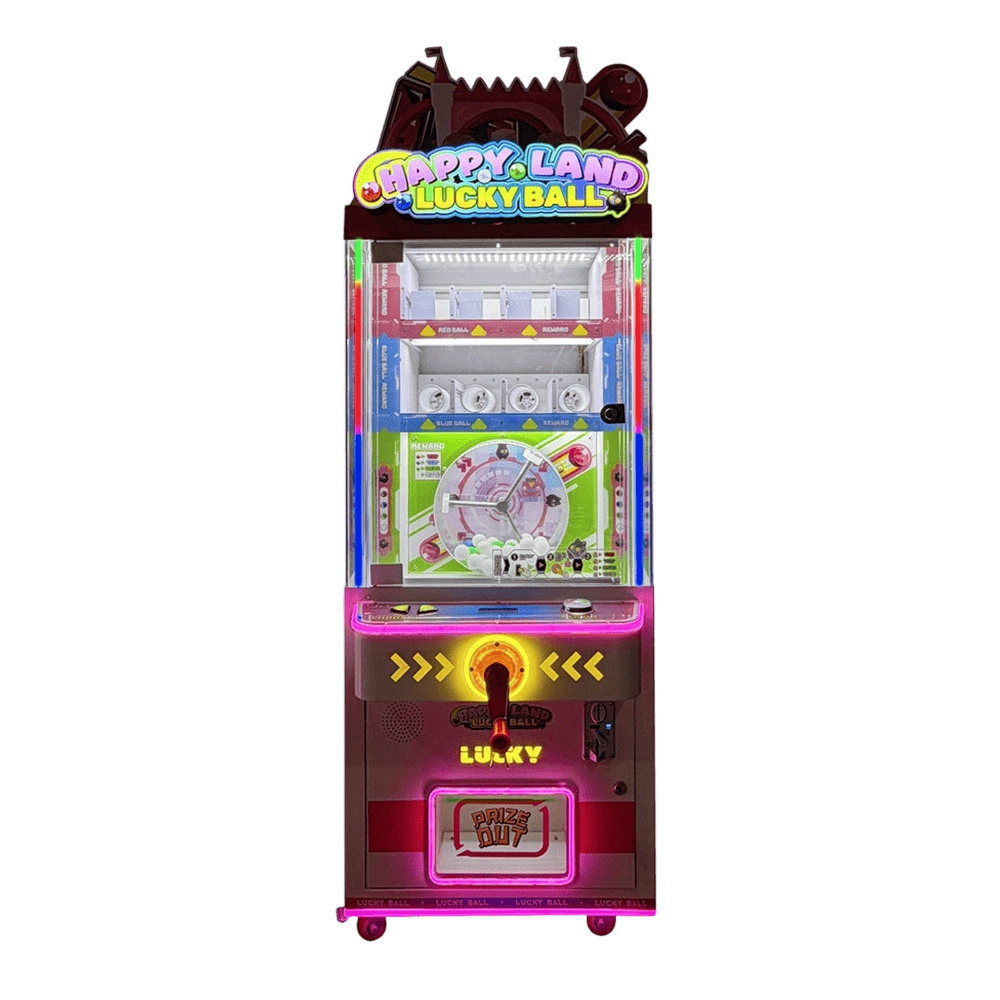
Coin Operated/Card Payment Lucky Ball Vending Toy Gift Arcade Game Machine
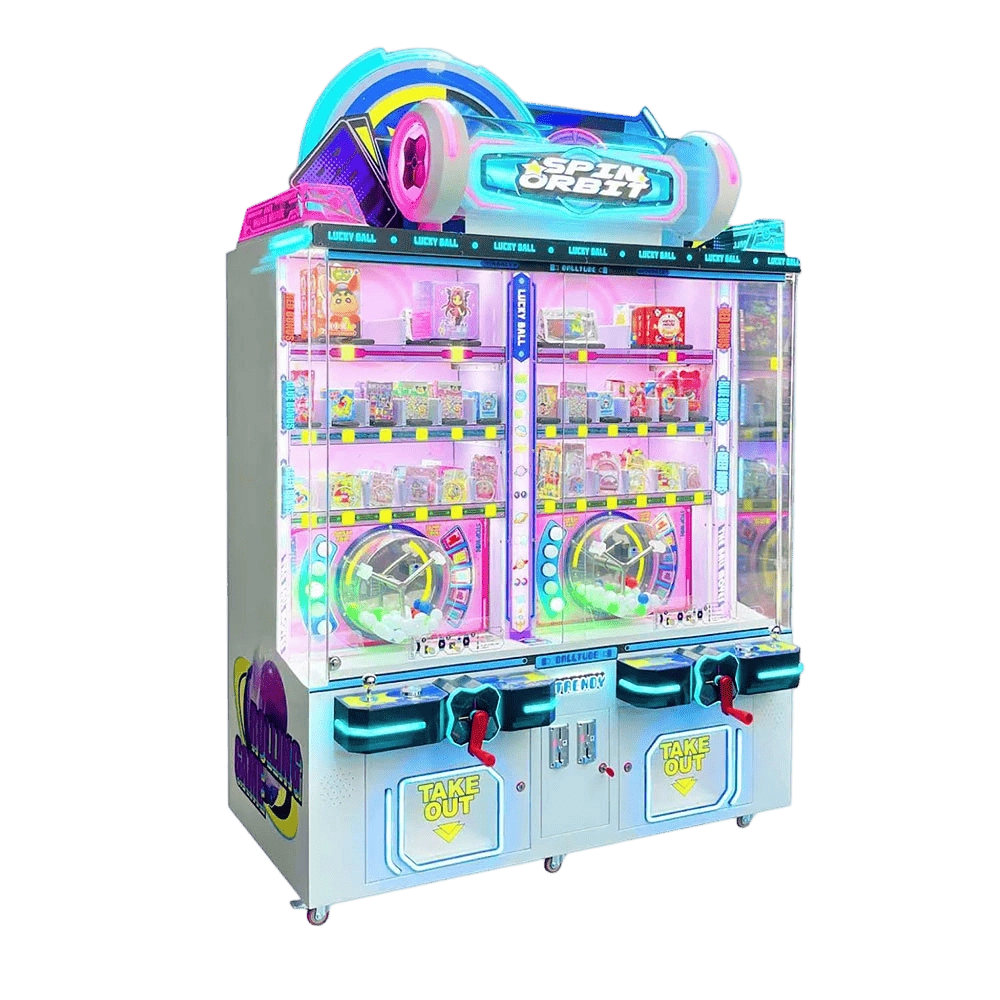
Coin Operated/Card Payment 2 Players SPIN ORBIT Lucky Prize Arcade Game
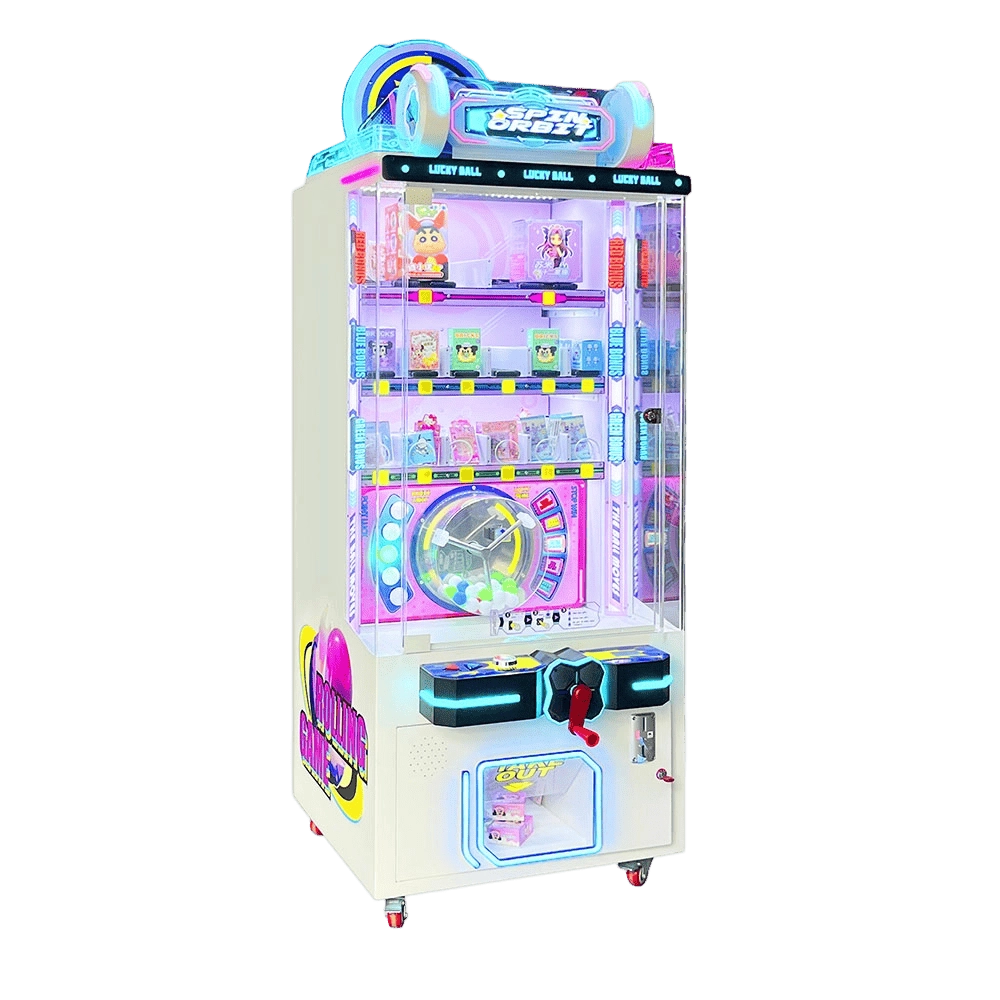
Coin Operated/Card Payment SPIN ORBIT Lucky Prize Arcade Game
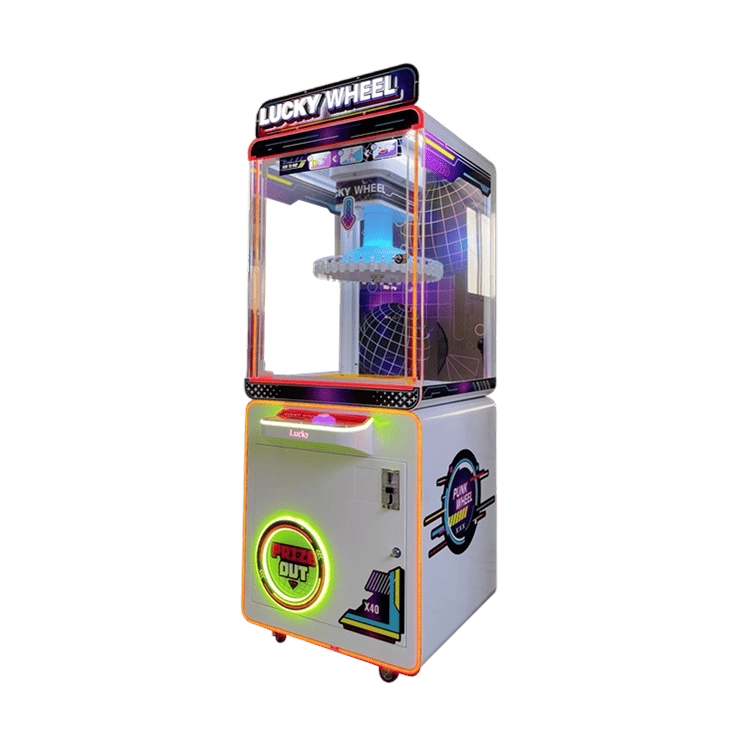
Arcade Prize Lucky Wheel Gift Machine For Amusement Areas
Get in Touch with Jiami Games
If you have any comments or good suggestions, please leave us a message; later our professional staff will contact you as soon as possible.

Innovative Entertainment, at Your Fingertips
Learn about Jiami Games and explore our expertise in console development, innovative design, and global markets.
Quick Links:
© 2026 Jiami Games.
Whatsapp: +8618520390438