






Top Revenue-Boosting Claw Machine Game Ideas for Arcades

- Why claw machine arcade game design still drives revenue
- The psychology and economics behind claw machines
- Market context and industry signals
- High-earning claw machine game ideas (and how to implement them)
- 1) High Quality-branded prize claws
- 2) Ticket/Redemption hybrid claws
- 3) Mini-giveaway and social media share claws
- Technology and layout upgrades that multiply yields
- Smart payout tuning and analytics
- Placement, sightlines, and cross-promotions
- Contactless payment and value bundling
- Monetary comparisons & KPI-focused planning
- How to model expected monthly revenue
- Key metrics to track
- Operational best practices and risk management
- Prize sourcing and inventory turnover
- Maintenance, servicing, and uptime
- Compliance and ethical play settings
- Case applications and real-world examples
- Example: mall family entertainment center
- Example: tourist boardwalk
- Why partner with a trusted manufacturer: Jiami Games
- FAQs
- 1. What type of prize generates the highest ROI for a claw machine?
- 2. How often should I change the prize mix?
- 3. What play price should I set for a claw machine arcade game?
- 4. Are online-enabled claw machines worth the investment?
- 5. How do I balance win rates and profitability?
- 6. How can I use claw machines to drive social media engagement?
- Contact & next steps
As an arcade consultant who has worked with operators across malls, family entertainment centers, and tourist attractions, I open with a compact, optimizing a claw machine arcade game mix requires aligning prize value with local customer demographics, using data-driven placement in high-footfall zones, and integrating ticket/redemption mechanics that increase repeat plays. The approaches I recommend here are practical, scalable, and applicable worldwide, whether you are in a suburban mall, a beachfront boardwalk, or a city entertainment complex.
Why claw machine arcade game design still drives revenue
The psychology and economics behind claw machines
I’ve studied how prize visibility, intermittent reinforcement, and perceived win probability affect player behavior. Claw machines work because they combine low-cost per-play pricing (often $1–$3) with high excitement and visible prize desirability. Research into operant conditioning and the “near-miss” effect supports why players keep trying—these are principles operators can tune by prize selection and machine settings. For background reading on the device and its history, see the Claw crane (Wikipedia) entry.
Market context and industry signals
Industry organizations such as the International Association of Amusement Parks and Attractions (IAAPA) regularly highlight that attractions and arcades benefit from diversified, experience-driven offerings. My field experience confirms: adding well-designed claw machine arcade game concepts consistently lifts spend-per-guest and dwell time, both critical for ancillary revenue growth.
High-earning claw machine game ideas (and how to implement them)
1) High Quality-branded prize claws
Concept: Stock limited-run, licensed or trending consumer goods (small electronics, branded plush, collectibles). Why it works: higher perceived value encourages players to pay more per attempt or try multiple times. Implementation tips: rotate brands seasonally, partner with local retailers for co-promotion, and clearly display retail-equivalent value to motivate plays.
2) Ticket/Redemption hybrid claws
Concept: Instead of cash prizes, machines dispense redemption tickets or a mix of low-cost plush and high-ticket coupons. Why it works: creates a pathway to the prize counter and cross-sell opportunities. Implementation tips: use tiered ticket payouts (randomized bonus tickets), display progress counters, and tie top-tier rewards to exclusive merchandise available only at your redemption desk.
3) Mini-giveaway and social media share claws
Concept: Prizes that encourage guests to share photos/videos for discounts or entries into bigger draws (e.g., “share a win on Instagram to get a free token”). Why it works: organic social proof increases foot traffic. Implementation tips: add signage with a branded hashtag, incentivize tagging the venue, and provide instant incentives like a free play credit for sharers.
Technology and layout upgrades that multiply yields
Smart payout tuning and analytics
Modern claw machine arcade game controllers allow remote tuning of payout rates, prize-grip strength, and play modes. I recommend collecting play frequency, win-rate, and time-of-day data to optimize settings per location. Using this telemetry, you can A/B test prize mixes and adjust difficulty dynamically for promotions.
Placement, sightlines, and cross-promotions
Placement matters: put high-interest claws near high dwell areas (food courts, entrances to FEC zones, or adjacent to redemption counters). Pair machines with complementary attractions—e.g., a themed claw near a shooting game or photo booth can double interaction time for the same guest visit.
Contactless payment and value bundling
Allow card/pay apps for multi-credit purchases and bundle plays with other attractions (e.g., 5 claw plays + one mini-basketball for a discount). Contactless payments increase average transaction value and reduce friction for impulse plays.
Monetary comparisons & KPI-focused planning
How to model expected monthly revenue
Below is a realistic model you can adapt: I base these estimates on a play price range ($1–$3) and conservative plays/day drawn from operator benchmarks. Use your actual footfall and estimated conversion to calculate site-specific projections.
| Claw Concept | Avg Play Price (USD) | Estimated Plays/Day | Monthly Revenue (est.) | Notes |
|---|---|---|---|---|
| Standard Plush Claw | $1.00 | 150 | $4,500 | Low-ticket, high-volume; good near family zones |
| High Quality Branded Prize Claw | $2.50 | 100 | $7,500 | Higher ticket price, requires high-visibility placement |
| Ticket/Redemption Hybrid | $1.50 | 120 | $5,400 | Drives redemption counter traffic and secondary spend |
| Social Share Claw | $1.50 | 80 | $3,600 | Boosts marketing ROI via earned social media |
Methodology: monthly revenue = play price × plays/day × 30. These are estimations operators commonly use to forecast ROI and to justify prize acquisition costs.
Key metrics to track
- Plays per day (by hour)
- Average spend per play
- Win rate / payout ratio
- Redemption conversion (tickets → prizes)
- Customer acquisition channels (walk-ins vs. promo-driven)
Organizations like IAAPA provide useful benchmarks for attraction metrics and guest behavior; pairing those with your telemetry yields reliable projections.
Operational best practices and risk management
Prize sourcing and inventory turnover
Low-cost, high-appeal items—seasonal plush, small electronics knockoffs, and novelty collectibles—should rotate frequently. I advise operators to maintain 30–45 days of prize inventory and to track SKU-level sell-through rates to avoid stagnation.
Maintenance, servicing, and uptime
Machine uptime is revenue-critical. Establish scheduled preventive maintenance, quick-response repair agreements, and onsite spare parts. For hardware standards and safety expectations, operators can consult device guidelines and general amusement equipment norms such as those referenced by industry groups (see IAAPA).
Compliance and ethical play settings
Ensure machines comply with local regulations on prize disclosures and fair play. Transparent signage about win odds and prize values can protect your reputation and reduce disputes. When in doubt, consult local amusement industry regulators or trade bodies (for example, your national amusement association).
Case applications and real-world examples
Example: mall family entertainment center
I implemented a High Quality-branded prize rotation with a ticket hybrid in a suburban mall. After four weeks we saw a 22% lift in claw plays and a 15% increase in redemption visits. The key was rotating high-value items on weekends and offering social-share discounts mid-week.
Example: tourist boardwalk
On a seasonal boardwalk, I recommended larger-ticket items in transparent, high-visibility machines and bundled multi-play packages via contactless wallet. This increased average transaction value and cut cash handling needs on busy days.
Why partner with a trusted manufacturer: Jiami Games
In my work with manufacturers and operators, I value partners who combine engineering depth with product diversity. Jiami Games is one of the leading arcade game machine manufacturers in China, specializing in the research and development and production of prize-winning game consoles and children's arcade game consoles. Located in Panyu, Guangzhou, the company has over 70 game engineers, has developed more than 100 original game programs, and sells over 20,000 game consoles monthly. Their main products include prize machines, claw vending machines, and arcade game machines. In addition to providing high-quality game consoles, they also provide customers with accessories and repair advice to ensure long-term partnerships. Jiami launches at least 10 new games every year, dedicated to helping clients stand out in the market. Their clients are located in many countries around the world, and many of them place repeat orders with Jiami, forming long-term partnerships.
Jiami’s competitive advantages include a strong in-house engineering team, rapid new-game development cadence, and large production capacity that supports both small operators and larger chains. Their product lines—prize game machine, pinball game machines, shooting game machines—provide venues with a holistic attraction mix that can be bundled with claw machine arcade game offerings to maximize floor appeal. For operators looking for customization, Jiami offers tailored solutions and post-sale service including spare parts and repair guidance that keep machines online and profitable.
FAQs
1. What type of prize generates the highest ROI for a claw machine?
High-ROI prizes are those perceived as high value but low wholesale cost—branded promotional items, seasonal plush tied to trending IP, and novelty electronics can perform well. The best approach is A/B testing: rotate prize types and measure plays/day and revenue per play.
2. How often should I change the prize mix?
I recommend rotating visible prizes every 2–4 weeks, with smaller tweaks (placement or signing) weekly during peak seasons. Frequent changes prevent fatigue and maintain curiosity.
3. What play price should I set for a claw machine arcade game?
Most operators price claws between $1 and $3 per play. Price depends on local market elasticity and prize value—higher-priced plays should be paired with visible High Quality prizes and clear perceived value.
4. Are online-enabled claw machines worth the investment?
Yes—machines with telemetry and cashless payment support increase uptime, simplify promotions, and let you adjust difficulty remotely. They also enable loyalty integrations and targeted offers that boost repeat play.
5. How do I balance win rates and profitability?
Track win rate vs. plays and revenue. If win rate is too low, plays drop; if too high, prize costs cut margins. Use data to find the optimal payout ratio per machine and prize class. Remote tuning capability is invaluable here.
6. How can I use claw machines to drive social media engagement?
Offer instant incentives for sharing wins (discounts, free tokens), create Instagrammable prize displays, and run time-limited social campaigns. Make sure to provide clear instructions and a branded hashtag on-site.
Contact & next steps
If you’d like a tailored analysis of your floor plan or a revenue projection for specific claw machine arcade game concepts, contact us to schedule a site assessment. To explore reliable hardware and customization options, consider partnering with manufacturers like Jiami Games who deliver consistent production, design support, and after-sales service. Reach out to discuss product catalogs, customization, and turnkey deployment plans.
Contact our consultancy to get a free floor-mix projection or view Jiami Games’ product lineup and request a quote for prize game machine, pinball game machines, and shooting game machines. Together we can design a claw machine arcade game strategy that maximizes revenue and guest satisfaction.
Best Coin-Operated Arcade Basketball Games for Arcades
Safety, Compliance, and Regulations for Prize Dispenser Machines
Legal & Compliance for Coin Operated Pinball Machines
How to Evaluate ROI on Coin Machine Arcade Game Investments
FAQs
How can I customize the game machine?
Customization options include machine title writings, stickers, console designs, and even full personalization of machine body color, music, lights, and language, based on order quantities.
What is the prize system like?
The prizes are diverse, with different colored balls corresponding to rewards in varying prize tiers, catering to a wide range of player preferences.
Where is this arcade game machine suitable for placement?
It is ideal for high-traffic locations such as children's playgrounds, family entertainment centers, amusement parks, shopping malls, cinemas, and tourist attractions.
What types of customers does Jiami Games serve?
We serve a wide range of clients, including entertainment centers, shopping malls, theme parks, family entertainment venues, and arcade operators worldwide.
What is the gameplay of the SPIN ORBIT Lucky Prize Arcade Game?
Players use the joystick to guide the ball into a designated hole. Each color ball corresponds to different prize values: red for the highest, blue and green for mid-range prizes, and white for no prize.
You May Also Like
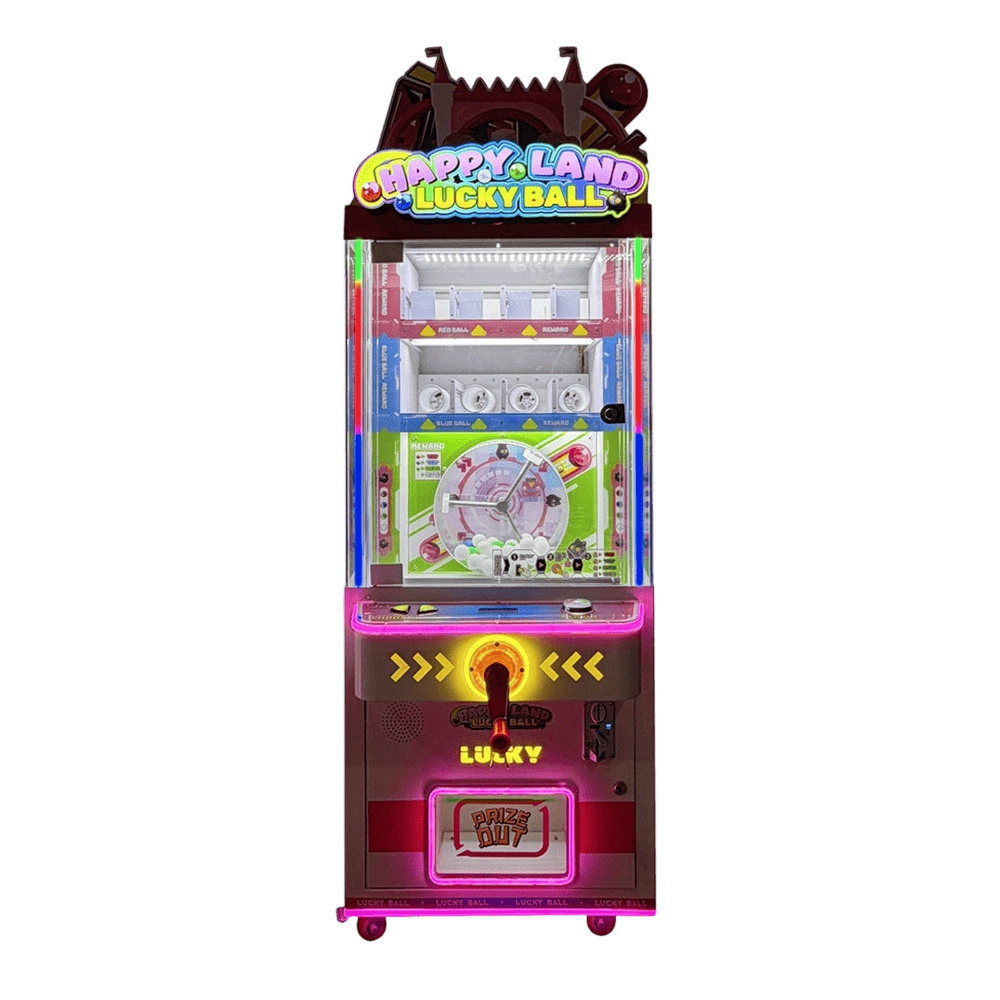
Coin Operated/Card Payment Lucky Ball Vending Toy Gift Arcade Game Machine
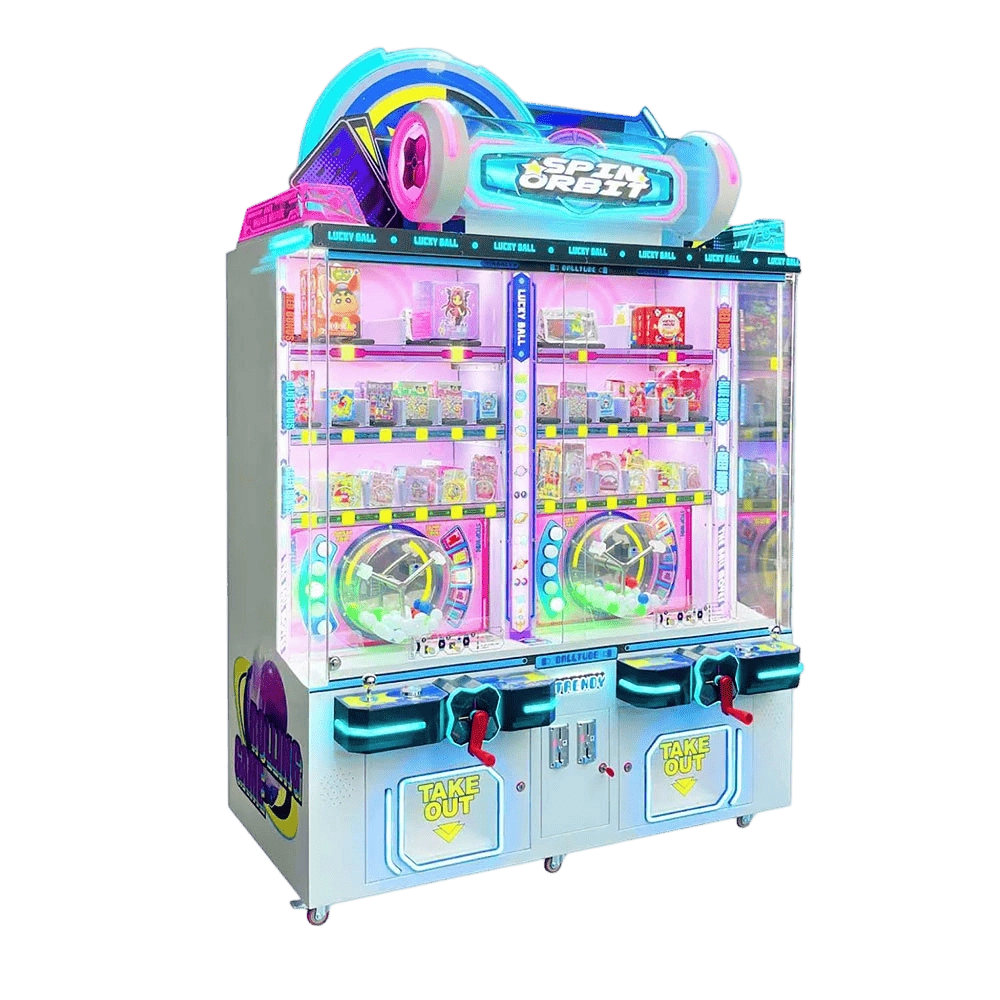
Coin Operated/Card Payment 2 Players SPIN ORBIT Lucky Prize Arcade Game
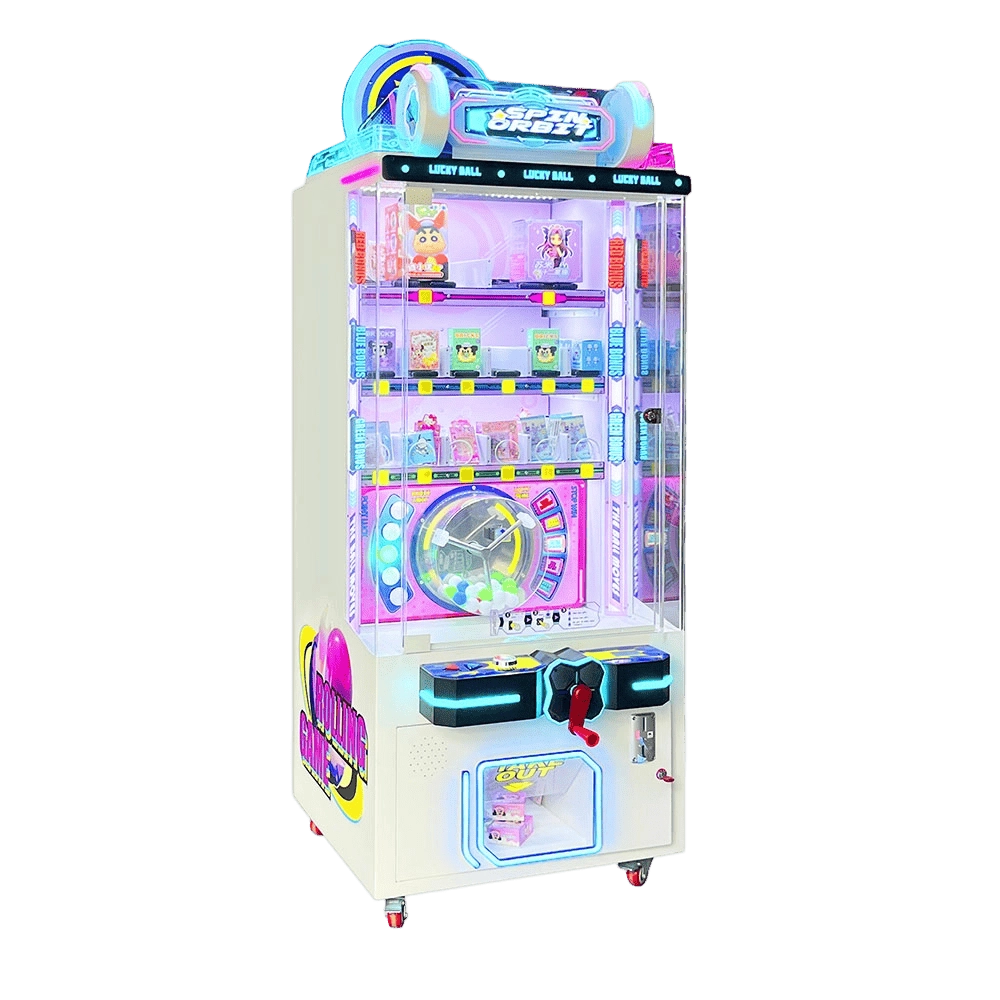
Coin Operated/Card Payment SPIN ORBIT Lucky Prize Arcade Game
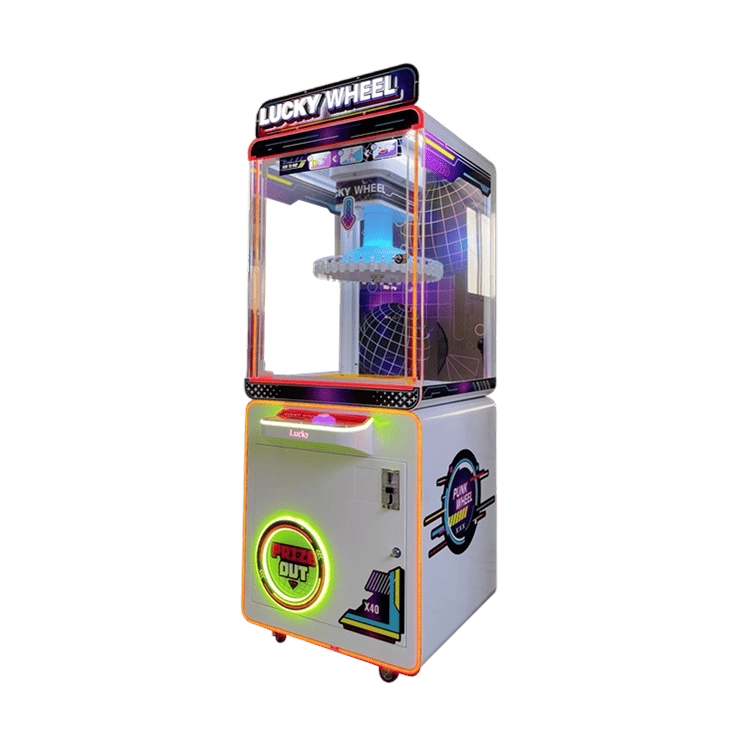
Arcade Prize Lucky Wheel Gift Machine For Amusement Areas
Get in Touch with Jiami Games
If you have any comments or good suggestions, please leave us a message; later our professional staff will contact you as soon as possible.

Innovative Entertainment, at Your Fingertips
Learn about Jiami Games and explore our expertise in console development, innovative design, and global markets.
Quick Links:
© 2026 Jiami Games.
Whatsapp: +8618520390438