






Top 10 Coin-Operated Arcade Games to Boost Your Revenue

- Why coin-operated machines still matter for modern arcades
- Revenue mechanics and user behavior
- Place, price and psychology
- Top 10 Coin-Operated Arcade Games to Boost Your Revenue
- 1. Claw / Prize Crane Machines
- 2. Ticket Redemption Machines (e.g., Skee-Ball variants)
- 3. Racing / Driving Cabinets
- 4. Light-Gun / Shooting Games
- 5. Pinball Machines
- 6. Basketball Shootout
- 7. Air Hockey Tables
- 8. Music / Rhythm Games (e.g., Dance Dance Rhythm)
- 9. Kiddie Rides / Coin-Op Children’s Consoles
- 10. Skill & Redemption Hybrids (e.g., Whack-a-Mole, mini-skill games)
- Comparing the top 10: expected metrics and placement
- Design, operations and compliance — maximize uptime and lifetime value
- Cash vs. cashless systems and telemetry
- Maintenance schedules and spare parts
- Safety, accessibility and local regulations
- Choosing a manufacturer and partner — why Jiami Games
- Company capabilities and scale
- What sets Jiami apart: innovation and service
- Products and suitability
- Implementation roadmap: from floor plan to steady-state revenue
- Step 1: Audit and target metrics
- Step 2: Pilot and iterate
- Step 3: Scale and maintain
- FAQ — Common operator questions
- Q1: Which coin-operated game gives the fastest payback?
- Q2: Should I move to cashless-only systems?
- Q3: How many plays per hour should a machine achieve to be profitable?
- Q4: How often should I refresh my machine lineup?
- Q5: What warranties and support should I expect from manufacturers?
- Closing and next steps
I write this as a consultant who has helped operators worldwide optimize floor plans and machine mixes to lift revenues. Coin machine arcade game choices still determine the majority of on-site spend—when you combine smart placement, appropriate pricing, and reliable hardware, even a modest floor can compound earnings month over month. Below I summarize the highest-ROI machine types, placement and maintenance strategies, and the manufacturer capabilities you should demand when buying at scale.
Why coin-operated machines still matter for modern arcades
Revenue mechanics and user behavior
Coin-operated arcade games (or coin machine arcade games) generate revenue through three linked levers: play price, play volume, and dwell time. Play price is usually $0.25 to $2.00 depending on game type and market; play volume depends on foot traffic and perceived value; dwell time influences ancillary sales (food, merch). Industry research from the International Association of Amusement Parks and Attractions (IAAPA) shows that attractions and arcade-type entertainment drive repeat visits and in-venue spending (IAAPA facts & figures).
Place, price and psychology
Placement matters: entrance funnels, food/beverage adjacencies, and line-of-sight to families increase impulse plays. Machines that offer visible, immediate rewards (ticket/redemption, prize cranes) stimulate higher conversion rates than complex games that require learning. Position high-margin redemption games near counters to convert casual passersby into purchases. For evidence on the historical and behavioral role of arcade games, see the overview on Wikipedia: Arcade game.
Top 10 Coin-Operated Arcade Games to Boost Your Revenue
Below I list ten machine types I recommend, explain why each works, and give operational tips to maximize yield.
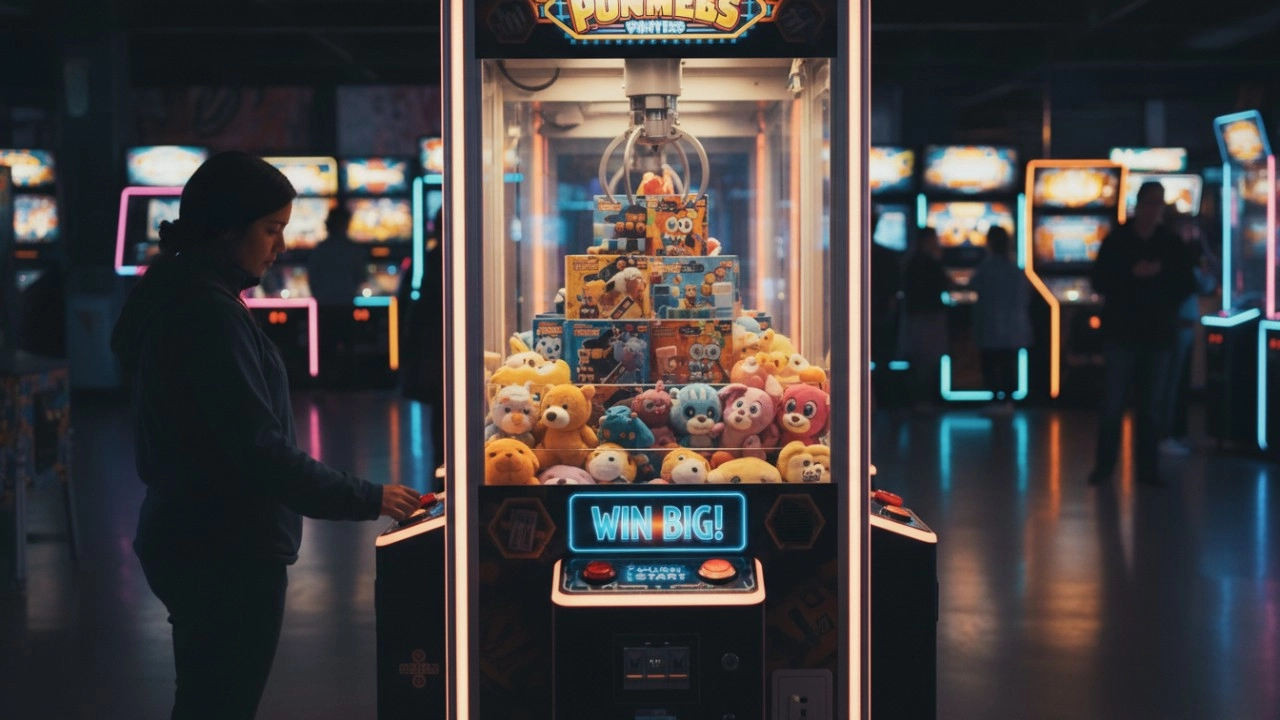
1. Claw / Prize Crane Machines
Why: High visual appeal; prizes create urgency. Claw machines attract diverse demographics and convert window shoppers into buyers. Operational tip: vary prize sizes and colors, rotate high-value items during peak times for an uptick in plays.
2. Ticket Redemption Machines (e.g., Skee-Ball variants)
Why: Strong repeat play and direct link to prize redemption increases perceived value. Tickets drive measurable ROI because players see tangible progress toward a prize. Tip: have a visible prize counter to remind players of attainable goals.
3. Racing / Driving Cabinets
Why: Multiplayer setups increase per-play revenue and dwell time. Local leaderboards stimulate competition and repeat sessions. Tip: keep leaderboards fresh and host casual weekly tournaments to drive return visits.
4. Light-Gun / Shooting Games
Why: High engagement and strong per-play pricing. These are durable revenue generators when maintained properly. Tip: monitor calibration daily and rotate thematic updates to match movie or seasonal trends.
5. Pinball Machines
Why: Nostalgia + skill-based challenge = repeat plays and social sharing. Pinball can command higher price per play and attract enthusiasts who spend on food and merch. Tip: maintain playfield cleanliness and flippers; collectors notice small faults quickly.
6. Basketball Shootout
Why: Quick turnover and easy to understand—great for high-traffic zones and family customers. Tip: ensure hoop trajectories and timing are consistent to avoid player frustration.
7. Air Hockey Tables
Why: Social, head-to-head dynamics produce extended play sessions and spectating. Tip: place with benches and beverage access to increase dwell time and ancillary sales.
8. Music / Rhythm Games (e.g., Dance Dance Rhythm)
Why: High-energy, often draws crowds which increases adjacent machine conversion. Tip: keep song lists fresh and enforce time limits in crowded periods to maximize throughput.
9. Kiddie Rides / Coin-Op Children’s Consoles
Why: Parents are willing to pay for short, safe experiences for small children. These machines are compact, simple to operate, and support cross-promotions with family-oriented businesses. Tip: ensure safety certifications are current and seats are clean.
10. Skill & Redemption Hybrids (e.g., Whack-a-Mole, mini-skill games)
Why: Lower floor space but high play frequency; great for impulse plays by all ages. Tip: use short play windows and clear reward signals (e.g., lights, ticket bursts).
Comparing the top 10: expected metrics and placement
The following table gives a practical comparison you can use to select machines for different venue sizes and objectives. Values are ranges based on operator experience and public industry reports; your local results will vary with foot traffic and pricing strategy. Sources: IAAPA industry insights and operational benchmarks from experienced operators and manufacturers.
| Game Type | Typical Play Price | Ideal Placement | Revenue Strengths |
|---|---|---|---|
| Claw / Prize Crane | $0.50 - $2.00 | Entrances, window displays | High impulse conversion; visible prizes |
| Ticket Redemption (Skee-Ball) | $0.50 - $2.00 | Center floor, near redemption counter | Repeat play; encourages prize sales |
| Racing / Driving | $0.75 - $2.00 | Open zones with seating | High dwell time; multiplayer upsell |
| Shooting Games | $1.00 - $2.00 | High-traffic corridors | Strong per-play revenue; durable |
| Pinball | $0.50 - $2.00 | Dedicated pinball area or nostalgia corner | Attracts enthusiasts; higher price tolerance |
| Basketball | $0.50 - $1.50 | Near group seating | Fast turnover; family-friendly |
| Air Hockey | $1.00 - $2.00 | Open play area | Long sessions; spectator appeal |
| Music / Rhythm | $1.00 - $2.00 | Stage-like area for visibility | Crowd-drawing; event potential |
| Kiddie Rides | $0.50 - $1.50 | Family and retail adjacencies | Frequent parents' spends; low maintenance |
| Skill/Redemption Hybrids | $0.25 - $1.00 | Near registers and food courts | High impulse; low footprint |
For operator benchmarks and insights into consumer behavior around amusement and arcade attractions, IAAPA’s resources are a reliable reference (IAAPA facts & figures), and general context on arcades is available via Wikipedia.
Design, operations and compliance — maximize uptime and lifetime value
Cash vs. cashless systems and telemetry
The move to cashless (card, mobile pay) has accelerated in many markets. Cashless reduces theft, allows dynamic pricing, and enables telemetry so you can measure plays per machine per hour. Telemetry helps identify issues (e.g., sudden drop in plays signaling a fault) and optimize floor mix. When implementing cashless, maintain a small number of coin acceptors to serve tourists and low-tech customers.
Maintenance schedules and spare parts
Routine checks (daily coin drop, weekly sensor calibration, monthly full diagnostics) reduce downtime. Maintain a 30–60 day parts inventory for high-usage machines. Manufacturers like Jiami Games provide accessories and repair advice to support long-term uptime—see manufacturer section below for details.
Safety, accessibility and local regulations
Ensure machines meet local electrical and safety codes. For global context on safety standards and manufacturing expectations, consult standards bodies relevant to your country and industry associations such as the American Amusement Machine Association (AAMA).
Choosing a manufacturer and partner — why Jiami Games
Company capabilities and scale
When selecting a manufacturer, prioritize partners that combine R&D depth, quality control, and reliable after-sales support. Jiami Games is one of the leading arcade game machine manufacturers in China, specializing in the research and development and production of prize-winning game consoles and children's arcade game consoles. Located in Panyu, Guangzhou, the company has over 70 game engineers, has developed more than 100 original game programs, and sells over 20,000 game consoles monthly. Their product range includes prize machines, claw vending machines, and arcade game machines.
What sets Jiami apart: innovation and service
Jiami launches at least 10 new games every year and supplies accessories and repair advice—this reduces downtime and helps operators refresh their floors to keep repeat visitation high. Their technical team and large production capacity mean you can scale quickly: suitable for single-site operators and multi-site rollouts alike. Many international clients place repeat orders, underscoring Jiami’s reputation for reliability and partnership orientation.
Products and suitability
Jiami’s main products—prize game machines, pinball game machines, and shooting game machines—cover the high-margin categories I recommend. Their combination of original game programs and manufacturing volume lets operators trial new concepts without lengthy development cycles. If you want to stand out in your market, consider manufacturers who can provide periodic content updates and spare-part support.
Implementation roadmap: from floor plan to steady-state revenue
Step 1: Audit and target metrics
Start with an audit of foot traffic by hour and guest profile. Set target KPIs: plays per machine per hour, average play price, and redemption conversion. Use these to model expected monthly revenue by machine type.
Step 2: Pilot and iterate
Pilot high-visibility machines (claw, redemption, one marquee racing cabinet) for 30 days, track plays with telemetry or manual counts, then iterate placement and pricing. A successful pilot will yield clear elasticity signals—if plays drop after price increases, consider timed promotions instead of blanket price cuts.
Step 3: Scale and maintain
Scale machines that meet KPIs and maintain an active refresh schedule—swap in new Jiami Games titles seasonally to maintain novelty. Maintain strong spare-part stock and standardized maintenance checklists to maximize uptime.
FAQ — Common operator questions
Q1: Which coin-operated game gives the fastest payback?
A1: Prize cranes and ticket redemption machines typically deliver the fastest payback in small footprints due to high impulse conversion. However, actual payback depends on play price, local demand and prize costs.
Q2: Should I move to cashless-only systems?
A2: Cashless offers security and analytics benefits, but hybrid systems (cash + cashless) often maximize revenue by serving all guest types. Track metrics before switching fully.
Q3: How many plays per hour should a machine achieve to be profitable?
A3: Target 6–15 plays per hour for medium-demand machines. High-demand titles (claw during peak hours) can exceed 30 plays per hour. Profitability calculations must include prize/maintenance costs and lease amortization.
Q4: How often should I refresh my machine lineup?
A4: Introduce new titles or rotated prizes every 3–6 months for best effect; marquee content updates or tournaments every 1–3 months increase repeat visits.
Q5: What warranties and support should I expect from manufacturers?
A5: Look for at least a 12-month warranty on electronics and a clear spare parts policy. Manufacturers who provide remote support, parts kits, and engineering advice (like Jiami Games) reduce total cost of ownership.
Closing and next steps
Choosing the right mix of coin machine arcade game types, optimizing placement, and partnering with a responsive manufacturer are the three pillars of a profitable arcade floor. If you want to discuss floor plans, ROI modeling, or equipment sourcing, I invite you to contact Jiami Games for product catalogs and technical support. Jiami Games’ scale in Guangzhou, R&D capacity and proven shipping volume make them a practical partner for operators seeking reliability, innovation and long-term collaboration.
Contact us to review your venue layout, get custom machine recommendations, or request a quote for prize game machine, pinball game machines, and shooting game machines that match your business goals.
The Ultimate 2026 Guide to Arcade Prize Machines: Maximize Your ROI [Free Checklist]
Top prize game machine Manufacturers and Suppliers
Top 10 prize game machine Manufacturers and Supplier Brands in 2026
Shipping, Installation and Warranty for Coin Operated Pinball Machines
FAQs
What is the minimum order quantity (MOQ)?
The minimum order quantity for our arcade machines is 1 piece. Larger orders qualify for additional customization options.
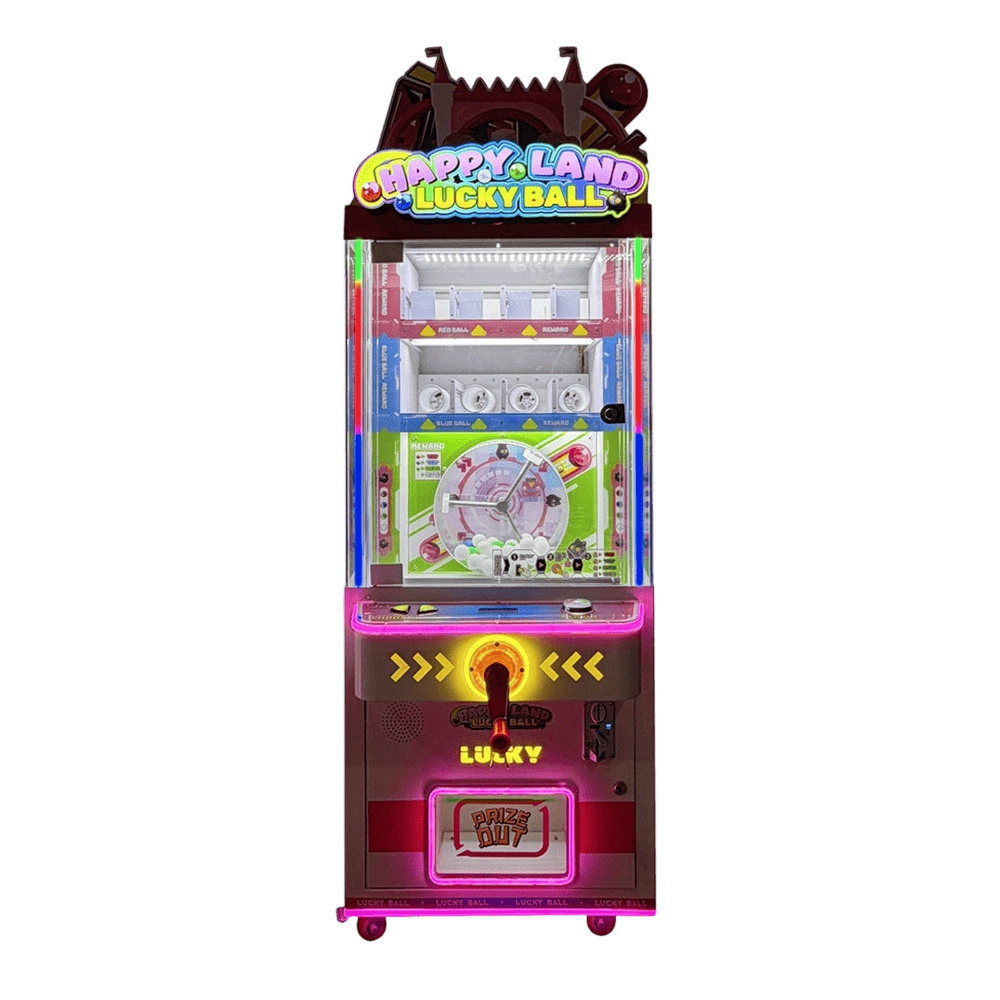
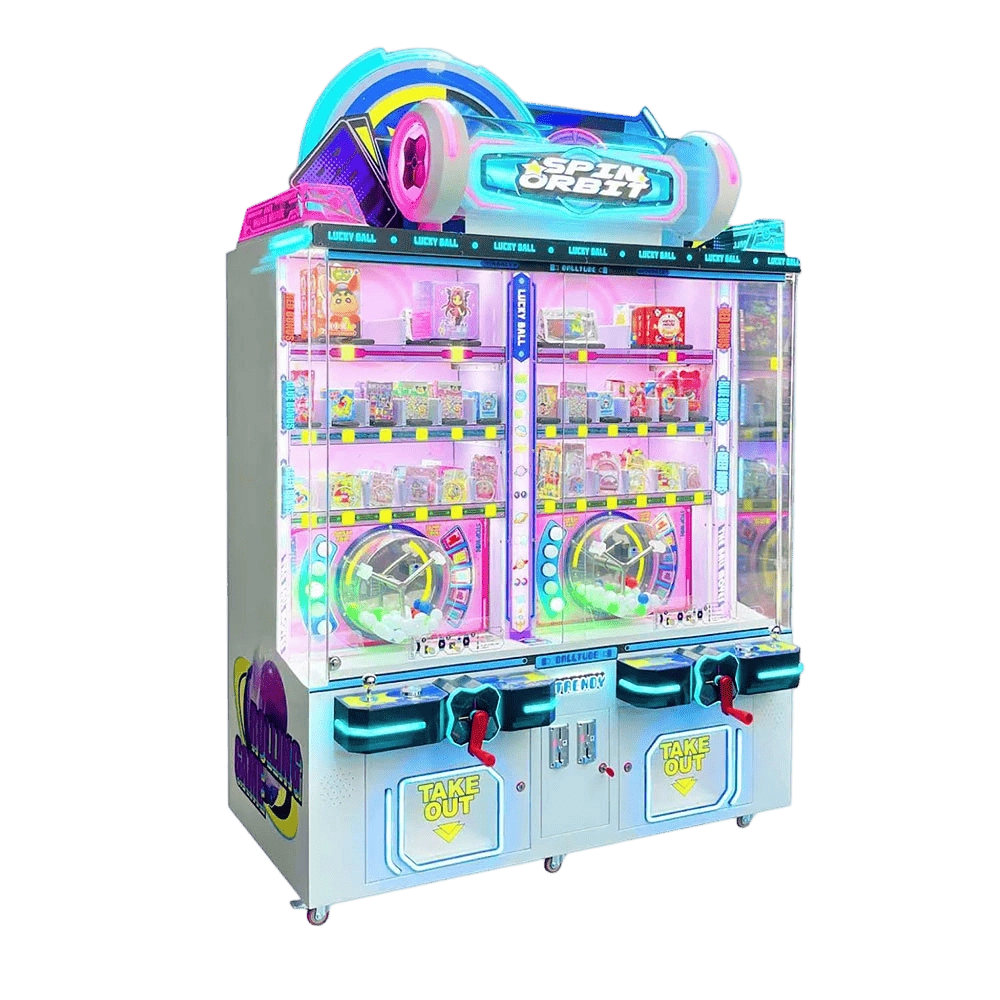
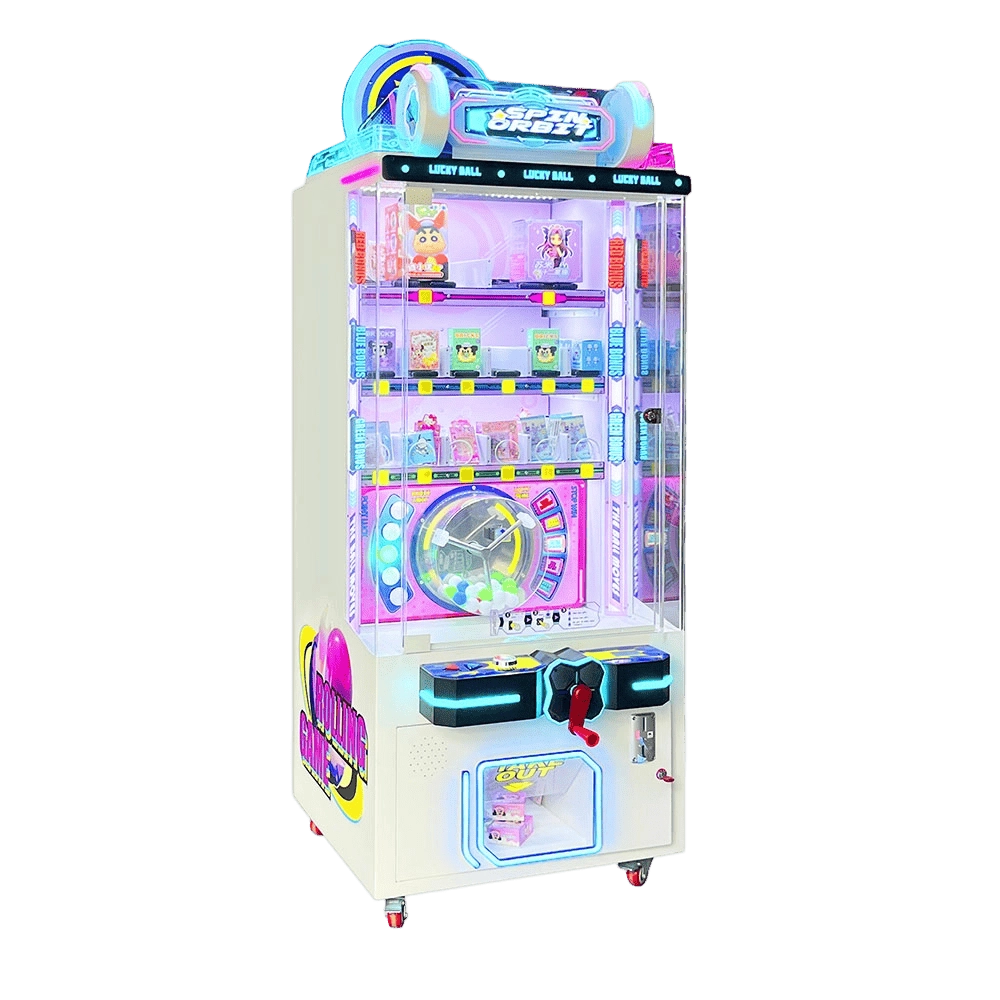
What is the gameplay of the SPIN ORBIT Lucky Prize Arcade Game?
Players use the joystick to guide the ball into a designated hole. Each color ball corresponds to different prize values: red for the highest, blue and green for mid-range prizes, and white for no prize.
What is the prize system like?
The prizes are diverse, with different colored balls corresponding to rewards in varying prize tiers, catering to a wide range of player preferences.
How does Jiami Games ensure product quality?
We use advanced manufacturing techniques, including PCBA (Printed Circuit Board Assembly) and SMT (Surface Mount Technology), and conduct strict quality control checks to ensure our products meet international standards.
How can I customize the game machine?
Customization options include machine title writings, stickers, console designs, and even full personalization of machine body color, music, lights, and language, based on order quantities.
You May Also Like
Coin Operated/Card Payment Lucky Ball Vending Toy Gift Arcade Game Machine
Coin Operated/Card Payment 2 Players SPIN ORBIT Lucky Prize Arcade Game
Coin Operated/Card Payment SPIN ORBIT Lucky Prize Arcade Game
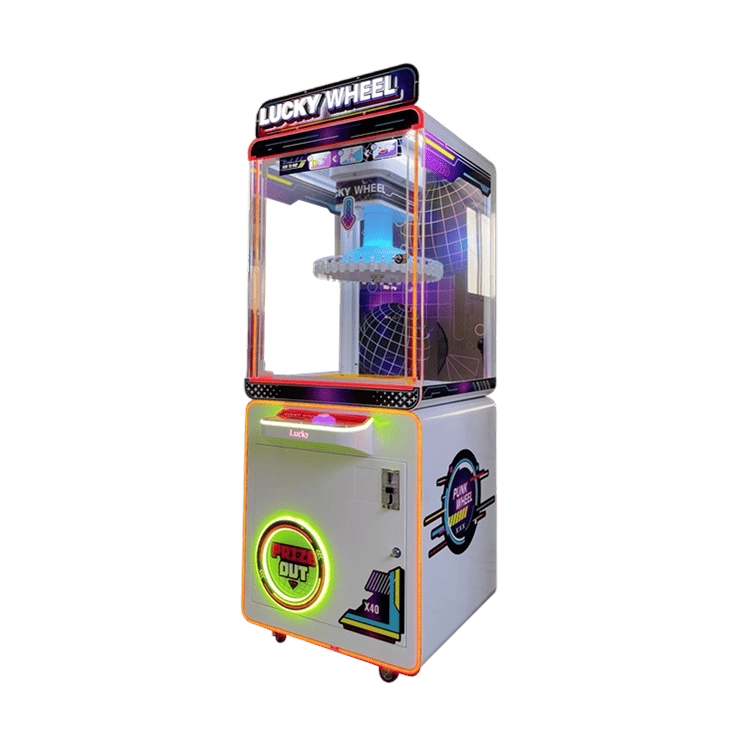
Arcade Prize Lucky Wheel Gift Machine For Amusement Areas
Get in Touch with Jiami Games
If you have any comments or good suggestions, please leave us a message; later our professional staff will contact you as soon as possible.

Innovative Entertainment, at Your Fingertips
Learn about Jiami Games and explore our expertise in console development, innovative design, and global markets.
Quick Links:
© 2026 Jiami Games.
Whatsapp: +8618520390438