





Shipping, Installation and Warranty for Coin Operated Pinball Machines

- Understanding Shipping Options for Large Arcade Equipment
- Sea freight, air freight and road transport: pros and cons
- Packaging and crating requirements for pinball cabinets
- Customs, duties and import compliance
- Professional Installation and Site Preparation
- Pre-install checklist for venues
- On-site installation: steps I follow
- Training, documentation and handover
- Warranty, Service Contracts and Spare Parts
- Typical warranty terms and what to expect
- Extended service agreements and onsite maintenance
- Parts availability, technical documentation and repair advice
- Cost, Timing and Risk Management
- Shipping cost and transit-time comparison
- Insurance, claims and damage mitigation
- Transit scheduling and inventory planning
- Jiami Games: Manufacturer Profile and Support
- Who Jiami Games is and what they offer
- Why Jiami Games stands out for coin operated pinball machines
- How to integrate a manufacturer relationship into your service plan
- Frequently Asked Questions (FAQ)
- 1. How much does it cost to ship a coin operated pinball machine internationally?
- 2. What should I expect from a manufacturer warranty?
- 3. Can I install a pinball machine myself to save money?
- 4. What spare parts should I keep on-hand?
- 5. How do I handle customs and duties on imported machines?
- 6. What insurance should I buy for shipments?
As someone who has worked extensively with arcade game machines, I know that transporting, installing, and protecting the long-term value of a coin operated pinball machine requires domain knowledge beyond general electronics shipping. This article is written to help operators, location owners, and distributors make informed decisions: from choosing sea versus air freight and proper crating methods, to on-site installation checks, warranty expectations, and service strategies that reduce downtime and protect revenue.
Understanding Shipping Options for Large Arcade Equipment
Sea freight, air freight and road transport: pros and cons
Choosing the right freight mode for a coin operated pinball machine depends on cost, urgency, and origin/destination infrastructure. In my experience:
- Sea freight is the most economical for palletized shipments and containers, especially for full container loads from major manufacturing hubs in Asia. Transit times are longer (typically 20–40 days from China to North America/Europe), but cost per unit weight is lowest.
- Air freight is appropriate for high-value machines needed quickly or when seasonal demand spikes. It is significantly more expensive but can cut transit to days. For fragile electronics, air shipment with proper cushioning reduces handling risk.
- Road transport (trucking) is often used for regional moves or final-mile delivery from port to venue. It gives more control over scheduling and reduced handling steps—but depends on road and warehouse infrastructure.
For general reference on international transport practices and constraints, see the International Air Transport Association guidance on cargo: IATA.
Packaging and crating requirements for pinball cabinets
Pinball machines are heavy (often 100–300 lb / 45–140 kg per unit depending on model) and have sensitive playfields, glass, and coin mechanisms. I always recommend a multi-layer approach:
- Disassemble protruding parts when possible (legs, plunger assemblies, toppers) and package them separately in labeled boxes.
- Use a rigid plywood crate or heavy-duty double-wall corrugated box with internal bracing to prevent movement. Crating reduces freight damage claims significantly compared to pallet-only shipments.
- Protect glass and wiring with foam and corner protectors; secure the backbox and lock the cabinet to prevent opening during transit.
- Label crates with handling instructions (This Side Up, Fragile – Glass) and include packing lists and serial numbers on the inside and outside for customs and insurance.
These practices align with general freight-protection recommendations used in the amusement equipment industry and are consistent with packaging best-practices promoted by logistics providers.
Customs, duties and import compliance
Import regulations, tariff classifications, and value declarations are common pain points. I advise confirming the Harmonized System (HS) code for arcade equipment with your customs broker—mistakes here can cause delays and unexpected duties. For high-value machines, ensure you have:
- Accurate commercial invoices showing unit values, model and serial numbers.
- Country-of-origin documentation to verify preferential tariff eligibility (if applicable).
- Documentation for any batteries, hazardous components, or electronics that may be restricted by carriers (IATA guidance may apply for air shipments).
Professional Installation and Site Preparation
Pre-install checklist for venues
Before the coin operated pinball machine arrives, I always run a site checklist with the venue manager to ensure a smooth installation and immediate revenue generation:
- Measure doorway widths and elevator access; some cabinets require corners to be temporarily removed to pass through tight spaces.
- Confirm stable, level flooring and a location away from direct sunlight and excessive moisture to preserve playfield and electronics.
- Provide a reliable power source: typical machines use 110–120V or 220–240V depending on region—confirm voltage and plug type to prevent damage. Surge protection is advisable.
- Plan for customer flow and coin/credit access; ensure there’s adequate room for players and for routine maintenance access at the rear of the cabinet.
On-site installation: steps I follow
When I or my technicians install a coin operated pinball machine, the sequence is structured to minimize downtime and ensure full functionality:
- Inspect crate and machine for shipping damage; photograph any issues and note them on the carrier’s delivery receipt.
- Assemble legs, secure playfield glass, and connect coin acceptor or credit system per manufacturer instructions.
- Power up and run a full diagnostics check: lamps, solenoids, flippers, tilt sensors, score displays, and sound system. Verify software version and game settings (freeplay vs. coin-op, pricing, volume).
- Set initial operational parameters and test play with multiple cycles to detect intermittent faults.
- Provide on-site training to staff on coin acceptance, lockups, and simple troubleshooting steps.
Training, documentation and handover
Good documentation reduces service calls. I supply a handover packet that includes:
- Basic troubleshooting guide and wiring/connector diagrams.
- Maintenance schedule (cleaning playfield, replacing bulbs, checking coin chute).
- Parts list with recommended spares to keep on-hand (fuses, bulbs, rubbers, coin acceptor cleaning tools).
Providing training to venue staff empowers them to handle most minor stoppages and reduces mean time to repair (MTTR).
Warranty, Service Contracts and Spare Parts
Typical warranty terms and what to expect
Warranty coverage for coin operated pinball machines typically includes defects in materials and workmanship for a standard period—commonly 90 days to 12 months depending on manufacturer and whether the buyer is a distributor or an end-user. In my experience, a clear warranty should specify:
- What is covered (PCB/boards, cabinet structure, mechanical components) and what is excluded (wearable items like rubbers, bulbs, and glass breakage).
- Whether shipping for warranty repair is covered (often not—many manufacturers require a return-to-factory for validated claims or shipping at the buyer’s expense unless a service contract is purchased).
- Response times and RMA procedures for claims, including serial number verification and diagnostic logs.
When evaluating a vendor, make sure the warranty terms are explicit and that there’s a documented claim process to avoid disputes.
Extended service agreements and onsite maintenance
An extended service contract (ESC) or preventive maintenance (PM) agreement makes sense for high-uptime locations. Typical ESCs include:
- Scheduled PM visits to clean, adjust, and test critical components.
- Discounted parts pricing and prioritized technical support.
- Optional on-site repair labor included for a fixed monthly or annual fee.
Compare the cost of downtime (lost plays) and technician call-outs against ESC pricing—often ESCs pay back quickly for machines with high throughput.
Parts availability, technical documentation and repair advice
Long-term uptime depends on access to spare parts and technical resources. I prioritize suppliers who provide:
- An online portal for ordering OEM replacement parts (PCBs, solenoids, playfield components).
- Service manuals, schematic diagrams, and firmware update procedures accessible to authorized partners.
- Remote technical support via phone or video for troubleshooting, which can often avoid unnecessary shipping.
Cost, Timing and Risk Management
Shipping cost and transit-time comparison
Below I summarize typical cost and timing trade-offs. Exact costs vary by origin/destination, incoterms (FOB, CIF, DDP), and current freight market conditions.
| Mode | Typical Transit Time | Cost (relative) | When to choose |
|---|---|---|---|
| Sea Freight (FCL/LCL) | 20–40 days (Asia to NA/EU) | Low | Bulk orders, low unit cost priority |
| Air Freight | 2–7 days | High | Urgent replacements, limited quantities |
| Road / Truck | Days to weeks (regional) | Moderate | Final-mile, regional deliveries |
For planning freight modalities and constraints on air shipments, refer to IATA: https://www.iata.org/. For industry context on attractions and amusement equipment, see the International Association of Amusement Parks and Attractions: https://www.iaapa.org/.
Insurance, claims and damage mitigation
Insure shipments at full replacement value and include freight-forwarder and carrier liability details in your policy. If damage occurs:
- Document immediately with photos before accepting the delivery if possible, and note damage on the carrier’s delivery receipt.
- File claims within the carrier and insurer timeframes—often 7–14 days for visible damage and up to 9 months for hidden damage (depending on carrier terms).
- Keep serial numbers and photos of packaging to support claims and root-cause analysis to prevent recurrence.
Transit scheduling and inventory planning
To avoid lost revenue, I recommend maintaining a small pool of refurbished backup machines and a basic parts inventory. For high-turnover locations, reorder lead times should include manufacturing lead time plus shipping and customs buffer; a common planning horizon is 90–120 days for standard production and sea freight from Asia.
Jiami Games: Manufacturer Profile and Support
Who Jiami Games is and what they offer
Jiami Games is one of the leading arcade game machine manufacturers in China, specializing in R&D and production of prize-winning game consoles and children's arcade game consoles. Located in Panyu, Guangzhou, the company employs over 70 game engineers, has developed more than 100 original game programs, and sells over 20,000 game consoles monthly. Their main products include prize machines, claw vending machines, and arcade game machines, including pinball game machines and shooting game machines.
Why Jiami Games stands out for coin operated pinball machines
From my experience working with manufacturers and operators, Jiami Games demonstrates several strengths relevant to shipping, installation, and warranty management:
- Scale and R&D: A large engineering team and frequent product releases (at least 10 new games per year) help operators stay competitive with fresh content.
- Production capacity and parts availability: High monthly sales volume suggests established manufacturing and supply chains, which supports spare-part availability and predictable lead times.
- After-sales support: Jiami provides accessories and repair advice to partners, enabling long-term relationships and reducing machine downtime.
- Global footprint: Regular repeat orders from international clients indicate experience with export documentation, crating for freight, and international warranty support.
For operators seeking reliable vendors for prize game machines and coin operated pinball machines, these factors reduce risk in procurement, shipping, and long-term maintenance.
How to integrate a manufacturer relationship into your service plan
I recommend formalizing the vendor relationship with clear SLAs (service-level agreements) covering lead times, warranty response times, RMA procedures, and parts lists. For companies like Jiami Games, ask for:
- Warranty terms and an RMA contact point.
- Access to spare parts ordering and technical manuals.
- Recommended crating/packing specifications to ensure smooth exports and lower claims.
Frequently Asked Questions (FAQ)
1. How much does it cost to ship a coin operated pinball machine internationally?
Costs vary widely by origin, destination, and shipping mode. Sea freight for bulk orders is most economical (cost-per-unit can be low when shipping multiple units in a container). Air freight is substantially more expensive but faster. Work with a freight forwarder for quotes using your incoterms (FOB, CIF, DDP) and include crating costs in estimates.
2. What should I expect from a manufacturer warranty?
Expect coverage for manufacturing defects in electronics and mechanics for a defined term (commonly 90 days to 12 months), with exclusions for wear parts and misuse. Ensure the warranty defines the RMA and shipping responsibilities clearly.
3. Can I install a pinball machine myself to save money?
Basic setup (attaching legs, powering on) is feasible for many operators, but professional installation ensures correct coin mech configuration, cabinet leveling, diagnostics, and initial tuning. For high-revenue locations I recommend professional installation and staff training to avoid long-term issues.
4. What spare parts should I keep on-hand?
Common spares: fuses, bulbs/LED strips, playfield rubber kits, coin acceptor components, door locks, and common solenoids. Keep a small inventory based on play volume to reduce MTTR.
5. How do I handle customs and duties on imported machines?
Work with a customs broker to confirm HS codes, required documentation, and duty rates. Provide accurate commercial invoices and country-of-origin certificates. Clarify incoterms with the supplier to know who pays duties and handles clearance.
6. What insurance should I buy for shipments?
Insure at replacement value and confirm coverage for handling and transit damage. Many operators purchase cargo insurance through their freight forwarder or a third-party insurer; verify claim procedures and deductibles before shipping.
If you want help estimating shipping costs, planning installation, or reviewing warranty terms for specific coin operated pinball machine models, contact me or request a product consultation. For high-quality pinball game machines, prize game machines, and arcade game machines from a reliable manufacturer, consider Jiami Games for their production capacity, R&D capabilities, and global support network.
Contact us to discuss your requirements, request a quote, or arrange sample shipments and on-site installation support.
ROI: Profitability of Coin-Operated Basketball Games
The Ultimate Guide to Buying Coin Operated Arcade Game Machines in 2026 [Expert Advice]

The Ultimate 2026 Buying Guide for Coin Operated Arcade Game Machines [Pro Tips]
Coin Drop Game Machine Case Studies: Boosting Location Revenue
FAQs
What is the prize system like?
The prizes are diverse, with different colored balls corresponding to rewards in varying prize tiers, catering to a wide range of player preferences.
What is the minimum order quantity (MOQ)?
The minimum order quantity for our arcade machines is 1 piece. Larger orders qualify for additional customization options.
Can I customize the arcade machines to fit my brand?
Yes, we offer full customization, including logo placement, machine color, game software, and even the language on the machine, based on the order quantity.
How can I customize the game machine?
Customization options include machine title writings, stickers, console designs, and even full personalization of machine body color, music, lights, and language, based on order quantities.
What types of customers does Jiami Games serve?
We serve a wide range of clients, including entertainment centers, shopping malls, theme parks, family entertainment venues, and arcade operators worldwide.
You May Also Like
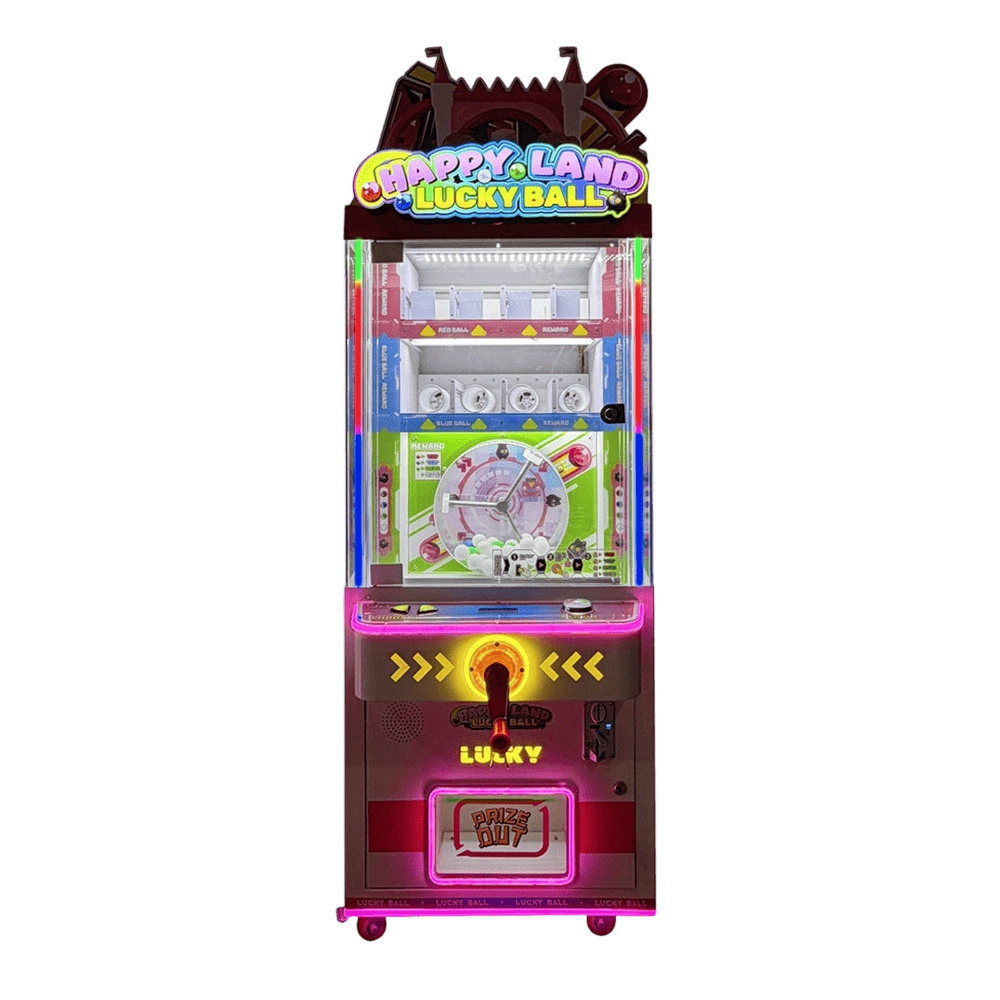
Coin Operated/Card Payment Lucky Ball Vending Toy Gift Arcade Game Machine
Coin Operated/Card Payment 2 Players SPIN ORBIT Lucky Prize Arcade Game
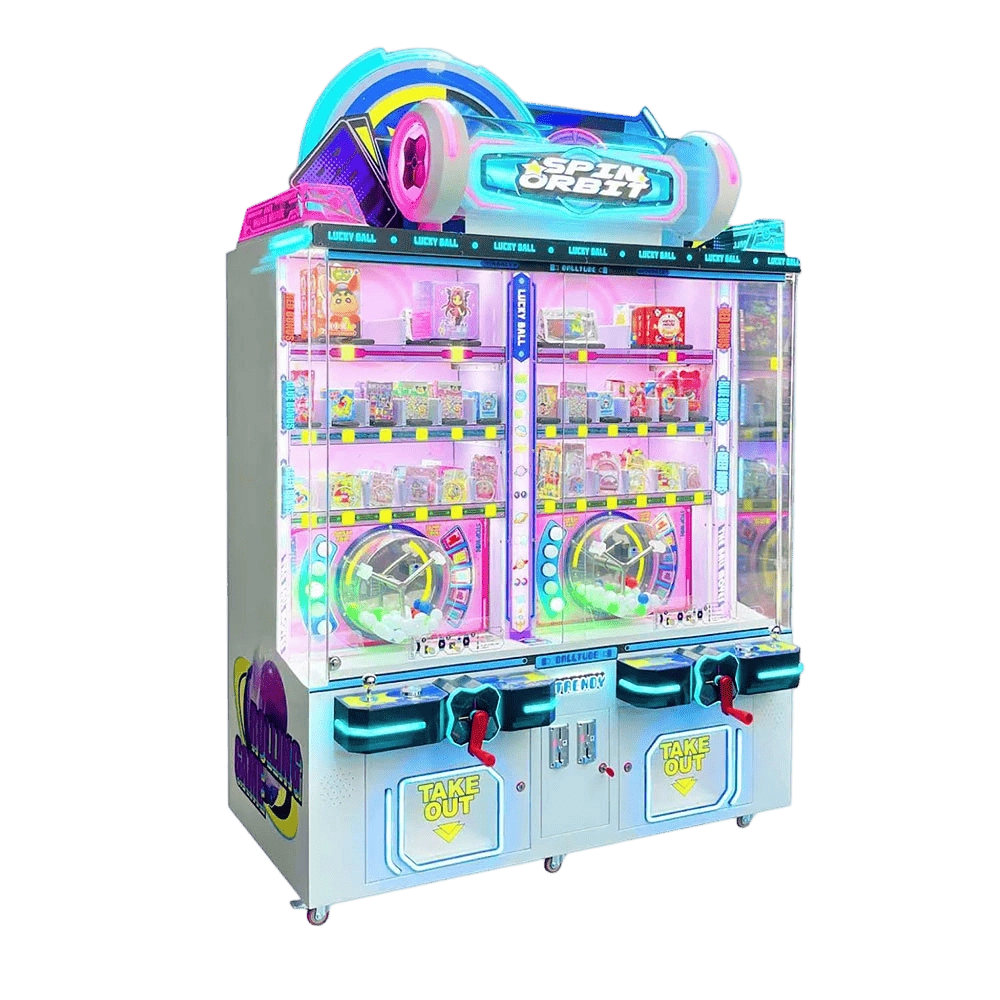
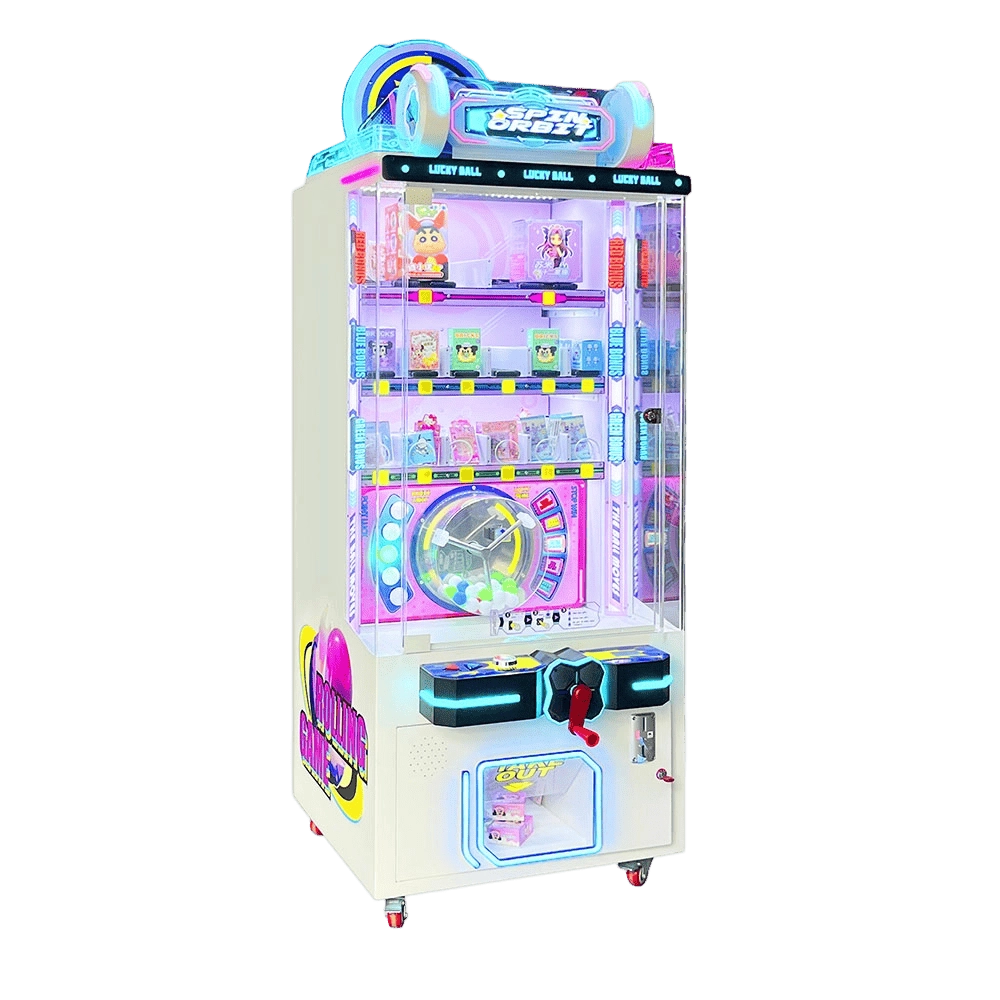
Coin Operated/Card Payment SPIN ORBIT Lucky Prize Arcade Game
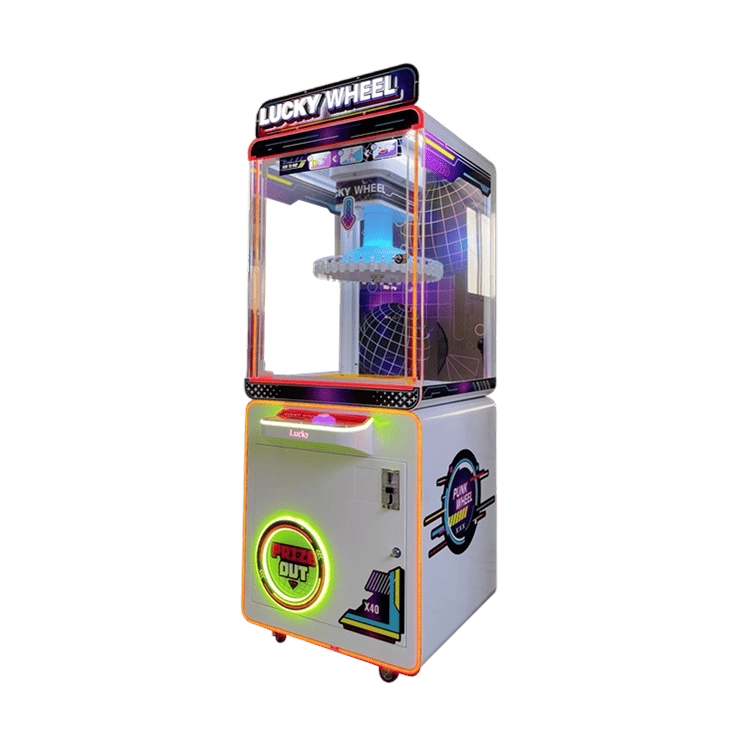
Arcade Prize Lucky Wheel Gift Machine For Amusement Areas
Get in Touch with Jiami Games
If you have any comments or good suggestions, please leave us a message; later our professional staff will contact you as soon as possible.

Innovative Entertainment, at Your Fingertips
Learn about Jiami Games and explore our expertise in console development, innovative design, and global markets.
Quick Links:
© 2026 Jiami Games.
Whatsapp: +8618520390438