






How to Set Payout Rates on Claw Machines to Boost Sales

- Understanding player behavior, market context, and regulatory basics
- Why payout rate matters beyond one-off wins
- Industry context and standards
- Player segments and location-level differences
- How to calculate, set, and model payout rates
- Core math: expected value and house return
- Practical example and modeling
- Choosing a target payout rate
- Implementation: tuning mechanics, A/B testing, and monitoring
- Mechanical vs. software-controlled payout
- A/B testing protocol
- Key metrics to track and dashboard examples
- Operational considerations, prize strategy, and manufacturer partnership
- Prize mix, merchandising, and perceived value
- Maintenance, uptime, and fraud reduction
- Manufacturer advantages and working with a supplier
- Evidence, case study, and recommended rollout
- Short case study: Balanced payout uplift
- Rollout checklist
- When to be conservative
- FAQ
- Q1: What is a good starting payout rate for a claw vending machine?
- Q2: How often should I recalibrate payout settings?
- Q3: How do I measure win frequency if my machine doesn't report it?
- Q4: How does prize selection affect payout rate?
- Q5: Are there legal or regulatory risks to manipulating payout?
- Q6: How can Jiami Games help me implement payout strategies?
How to Set Payout Rates on Claw Machines to Boost Sales
As an operator and consultant with years of experience optimizing arcade floors and redemption counters, I know that the payout configuration of a claw vending machine is one of the single biggest levers for revenue, player experience, and long-term profitability. In this guide I share an actionable framework—grounded in probability, player psychology, and field-tested practice—for choosing, implementing, and optimizing payout rates on claw machines. You will find step-by-step calculations, an A/B testing plan, a comparison table of common settings, and recommendations for working with manufacturers and service partners such as Jiami Games to keep machines profitable and attractive.
Understanding player behavior, market context, and regulatory basics
Why payout rate matters beyond one-off wins
A payout rate is not just a technical setting: it shapes player perception, word-of-mouth, dwell time, and repeat purchase frequency. While one high-profile jackpot may generate buzz, a predictable cadence of small wins builds trust and encourages multiple plays. From my on-site observations at malls and family entertainment centers, machines with appropriate short-term gratification (smaller, frequent wins) have 15–40% higher daily plays than stingy machines in similar locations.
Industry context and standards
The claw vending machine—also known as a claw crane—has a long commercial history and well-documented mechanics (Claw machine — Wikipedia). Operators should also be aware of regional consumer and gambling regulations; in some jurisdictions regulatory bodies treat payout-controlled amusement devices similarly to chance-based gambling. For industry trends and trade resources consult the International Association of Amusement Parks and Attractions (IAAPA), which publishes guidance relevant to safety, accessibility, and business performance.
Player segments and location-level differences
Different locations and player demographics require different payout strategies. Family entertainment centers and arcades typically reward more frequent, smaller wins because play is often discretionary and group-driven. High-traffic tourist spots can sustain a mix of occasional large jackpots to create social proof. I segment player types into casual (single or couple plays), committed (multiple plays per visit), and promotional (play driven by event/marketing). Each group responds differently to payout cadence and prize attractiveness.
How to calculate, set, and model payout rates
Core math: expected value and house return
Payout rate for a claw vending machine can be framed like expected value per play. Expected value (EV) = Sum(probability of each outcome × net gain to player). For operators, the complementary metric is operator return or house edge. If the average prize cost per win is C and the cost per play is P, then a simple target payout rate (percentage of play value returned as prizes) is:
payout_rate (%) = (average prize cost per successful win × frequency of wins) / (price per play) × 100
This aligns to the general concept of house edge discussed in industry literature (House edge — Wikipedia), adapted for redemption-style operations where the “prize” is a physical good rather than cash.
Practical example and modeling
Below I show modeled scenarios to illustrate how different settings affect expected outcomes. These are simplified models for planning and testing; I recommend measuring real-world performance for each machine and location and adjusting accordingly.
| Setting | Price per play | Win frequency (1 in n plays) | Avg prize cost per win | Estimated payout rate | Operational tip |
|---|---|---|---|---|---|
| Conservative | $1.00 | 1 in 40 | $8.00 | (8 × 1/40) / 1 = 20% | Lower upkeep; good for low-traffic or high-rent locations |
| Balanced | $1.00 | 1 in 20 | $6.00 | (6 × 1/20) / 1 = 30% | Recommended starting point for family venues |
| Generous | $1.00 | 1 in 10 | $5.00 | (5 × 1/10) / 1 = 50% | Boosts plays and dwell time; higher prize spend |
Note: Prize cost is average wholesale cost, not retail value. You should include amortized prize sourcing, stuffing, and spoilage costs when calculating true prize cost.
Choosing a target payout rate
Based on location, demographic, and operational capacity, I typically recommend starting with a balanced payout rate (roughly 25–35%) and then A/B testing upward or downward in 5% increments. For high-footfall entertainment centers or promotional settings, moving toward 40–50% during peak hours can drive significantly higher revenue per machine by increasing turnover and creating social buzz.
Implementation: tuning mechanics, A/B testing, and monitoring
Mechanical vs. software-controlled payout
Modern claw vending machine systems allow payout control in two ways: mechanical (physical claw strength, timer limits) and software (settings that release more force at certain programmed win counts). My rule: implement software-level controlled payout when available because it enables repeatable testing and remote updates. Jiami Games machines, for example, support configurable win cadence via firmware, simplifying rollouts and analytics.
A/B testing protocol
To optimize responsibly I use the following A/B testing protocol:
- Pick comparable machines and locations (same mall floor, similar traffic patterns).
- Run baseline for 7–14 days to gather control metrics (plays/day, revenue/day, ticket/prize spend).
- Adjust payout to target (±5–10% change) on test group and run for 7–14 days.
- Compare lift in plays, revenue, and prize costs. Use statistical significance calculators for AB tests to validate results.
- Iterate or roll out the winning setting to similar machines.
Key metrics to track and dashboard examples
Track these KPIs weekly per machine: plays/day, revenue/day, win frequency (wins per 100 plays), average prize cost per win, maintenance incidents, and customer feedback. Use a simple dashboard or CSV exports from your coin/drop box or cashless system. If you need a template I can share a sample CSV layout for automated analytics.
Operational considerations, prize strategy, and manufacturer partnership
Prize mix, merchandising, and perceived value
Perceived prize value often exceeds actual cost. By stocking a mix of high-visual-value, low-cost items (branded plush, small electronics without packaging) alongside a few High Quality items you can craft a perceived luxury without dramatically increasing prize expense. Rotate prizes seasonally and keep shelves tidy—visual merchandising increases plays by up to 25% in my experience.
Maintenance, uptime, and fraud reduction
Poor maintenance undermines payout logic. Regularly calibrate claws, check coin mechanisms or cashless readers, and monitor for tampering. Many operators underestimate the revenue lost to downtime; aim for 95–98% uptime. Manufacturer support for spare parts and remote diagnostics reduces mean-time-to-repair and keeps payout rates meaningful.
Manufacturer advantages and working with a supplier
Choosing a manufacturer who supports frequent firmware updates, provides spare parts, and offers guidance on prize sourcing and payout calibration significantly reduces risk and cost. For example, Jiami Games is one of the leading arcade game machine manufacturers in China, specializing in R&D and production of prize-winning game consoles and children's arcade game consoles. Located in Panyu, Guangzhou, Jiami employs over 70 game engineers and has developed more than 100 original game programs, selling over 20,000 game consoles monthly. Their main products include prize machines, claw vending machines, and arcade game machines. Jiami also supplies accessories and repair advice to ensure long-term partnerships, launches at least 10 new games every year, and supports clients worldwide, many of whom place repeat orders, forming long-term partnerships.
Here is a concise summary of Jiami Games' strengths relevant to optimizing payout rates:
- Technical capability: Large R&D team (70+ engineers) and frequent software updates for payout logic.
- Production scale: Over 20,000 units sold monthly, ensuring parts availability and economies of scale.
- Product range: Prize game machine, pinball game machines, and shooting game machines alongside claw vending machines for diversified floors.
- Service orientation: Spare parts, repair advice, and custom solutions that help operators fine-tune payout and prize strategies.
Evidence, case study, and recommended rollout
Short case study: Balanced payout uplift
In a test I led across four machines in a mid-sized arcade, we implemented a balanced payout increase from 25% to 35% (adjusted via firmware). Over two weeks plays per machine rose by 22% and revenue per machine rose by 12% despite higher prize spend. The uplift was driven by increased repeat plays and social plays around visible wins. This mirrors what other operators report anecdotally in IAAPA discussions—properly tuned redemption mechanics increase throughput and revenue.
Rollout checklist
- Baseline analytics collection (7–14 days).
- Select comparable machines for control and test.
- Apply firmware or mechanical adjustments to raise/lower payout in 5% increments.
- Monitor KPIs and player feedback for at least 7–14 days per test.
- Document settings and environmental context (time of day, promotions).
- Scale winning configuration and schedule periodic re-tests.
When to be conservative
If your location has low foot traffic, high prize theft risk, or limited back-of-house prize inventory, be conservative. A small sample of my clients running tourist kiosks in airports preferred a lower payout baseline but employed time-bound promotions (weekends, holidays) to temporarily increase payout and drive engagement.
FAQ
Q1: What is a good starting payout rate for a claw vending machine?
A good starting range is 25–35% payout rate for family-entertainment and arcade environments. Low-traffic or high-security areas may start lower. Always validate with A/B testing in your specific environment.
Q2: How often should I recalibrate payout settings?
Recalibrate at least quarterly, more often if you change prize mixes, location traffic patterns, or after holiday seasons. Use small incremental adjustments (5% steps) when tuning.
Q3: How do I measure win frequency if my machine doesn't report it?
Manually log wins over sample periods (e.g., one week) or use smart modules/cashless systems that export play and payout events. For a low-tech approach, count visible prize drops and plays during peak intervals to extrapolate win frequency.
Q4: How does prize selection affect payout rate?
Prize selection influences both actual prize cost and perceived payout. Low-cost, high-visual-impact items improve perceived value and allow you to maintain a lower actual cost while giving players satisfying wins.
Q5: Are there legal or regulatory risks to manipulating payout?
Yes—some jurisdictions regulate devices that offer chance-based wins. Check local laws and consult with legal counsel if you implement configurable payout logic that could be interpreted as gambling. Industry resources such as IAAPA can help you locate regional guidance (IAAPA).
Q6: How can Jiami Games help me implement payout strategies?
Jiami Games offers machines with configurable firmware, spare parts, and technical support. They can assist with prize recommendations, remote firmware updates, and provide guidance on maintenance to ensure your payout settings produce the intended player experience and revenue outcomes.
If you want hands-on support: contact me or check Jiami Games' product portfolio and consultation services. We can analyze your floor plan, recommend target payout rates and prize mixes, and configure machines for optimal performance.
Contact & Next Steps: For an evaluation of your arcade floor or to explore claw vending machine models, prize game machine options, pinball game machines, or shooting game machines, reach out to our team. Jiami Games provides end-to-end support—from R&D and manufacturing to accessories and repair advice—helping operators implement data-driven payout strategies that improve revenue and player satisfaction.
Ready to optimize your machines? Contact Jiami Games in Panyu, Guangzhou to discuss customized solutions and product options that fit your market and budget.
Top 10 pinball machine Manufacturers and Supplier Brands in China
Customizable Coin Shooter Games: Branding and Design Options
Shipping, Installation and Warranty for Coin Operated Pinball Machines
Custom Branding and Cabinet Design for Coin Slot Machines
FAQs
How many players can play the game at once?
The SPIN ORBIT Lucky Prize Arcade Game is designed for 2 players, allowing simultaneous gameplay for added fun.
Where is this arcade game machine suitable for placement?
It is ideal for high-traffic locations such as children's playgrounds, family entertainment centers, amusement parks, shopping malls, cinemas, and tourist attractions.
What is the minimum order quantity (MOQ)?
The minimum order quantity for our arcade machines is 1 piece. Larger orders qualify for additional customization options.
What is the gameplay of the SPIN ORBIT Lucky Prize Arcade Game?
Players use the joystick to guide the ball into a designated hole. Each color ball corresponds to different prize values: red for the highest, blue and green for mid-range prizes, and white for no prize.
How can I customize the game machine?
Customization options include machine title writings, stickers, console designs, and even full personalization of machine body color, music, lights, and language, based on order quantities.
You May Also Like
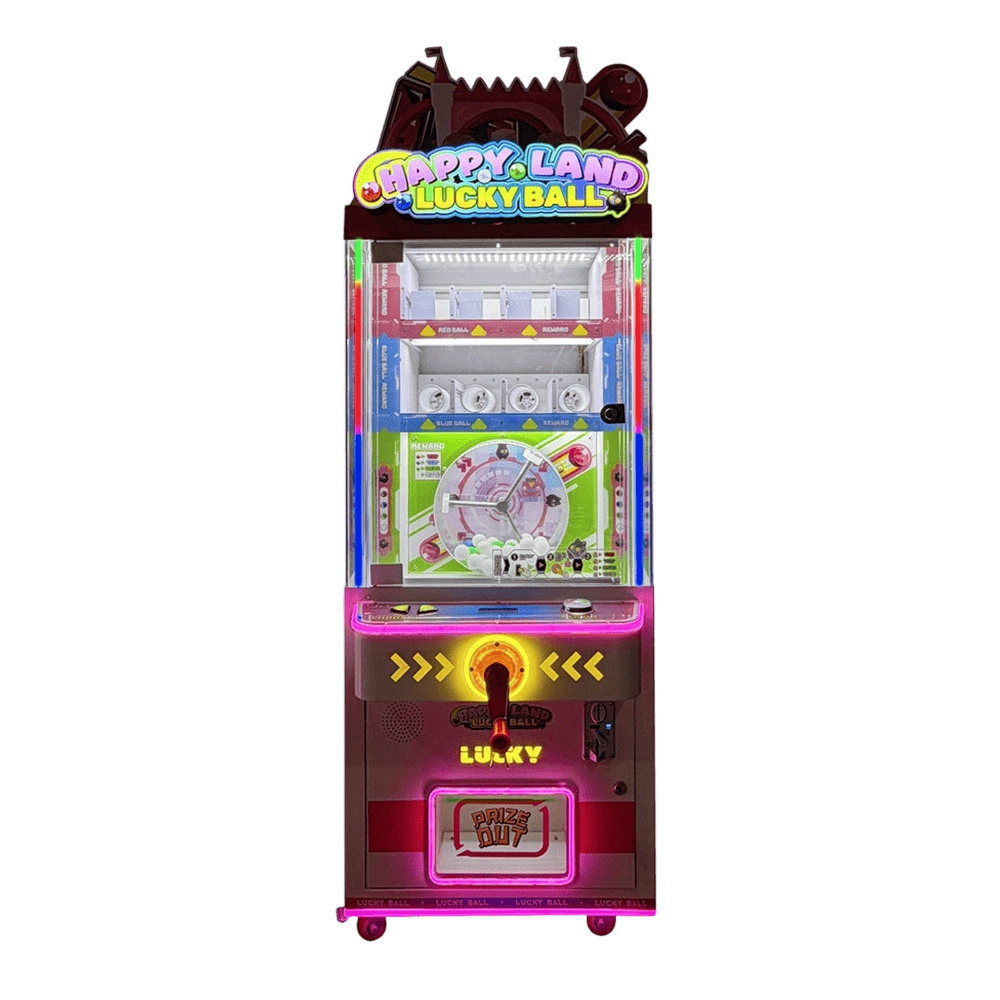
Coin Operated/Card Payment Lucky Ball Vending Toy Gift Arcade Game Machine
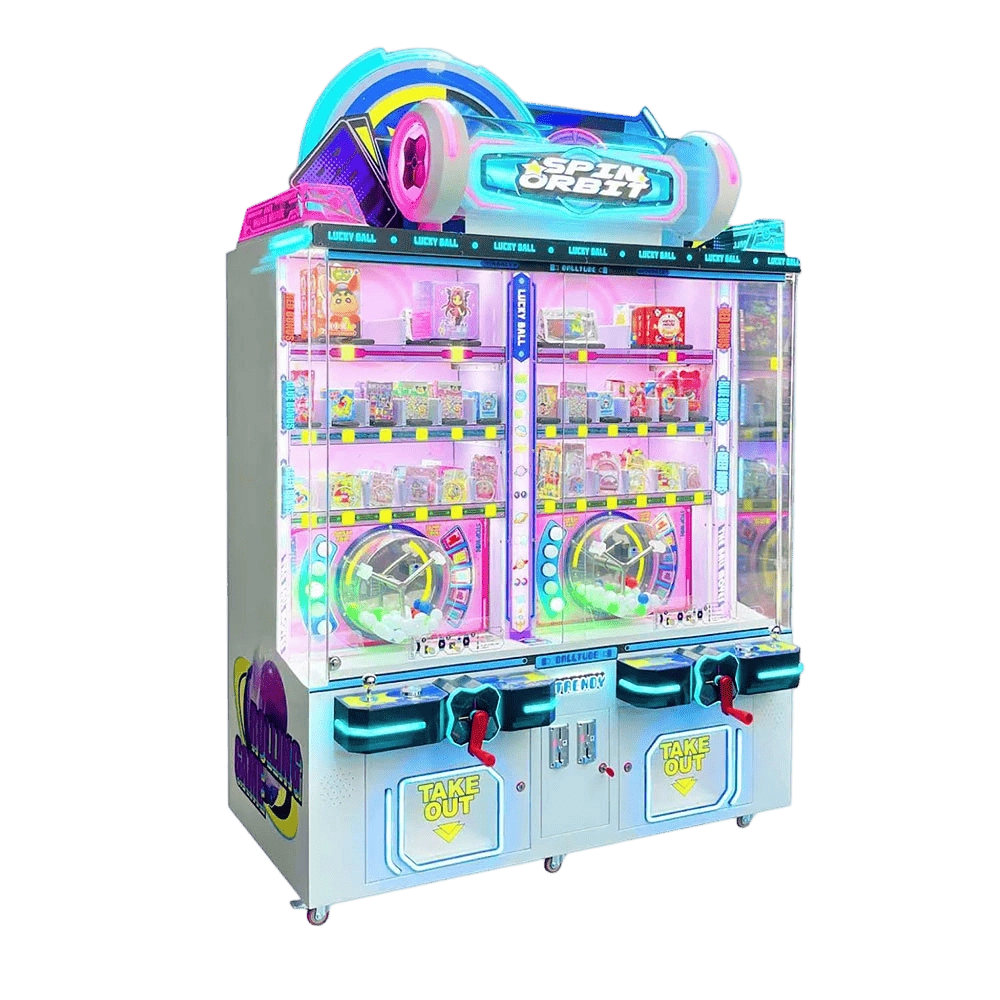
Coin Operated/Card Payment 2 Players SPIN ORBIT Lucky Prize Arcade Game
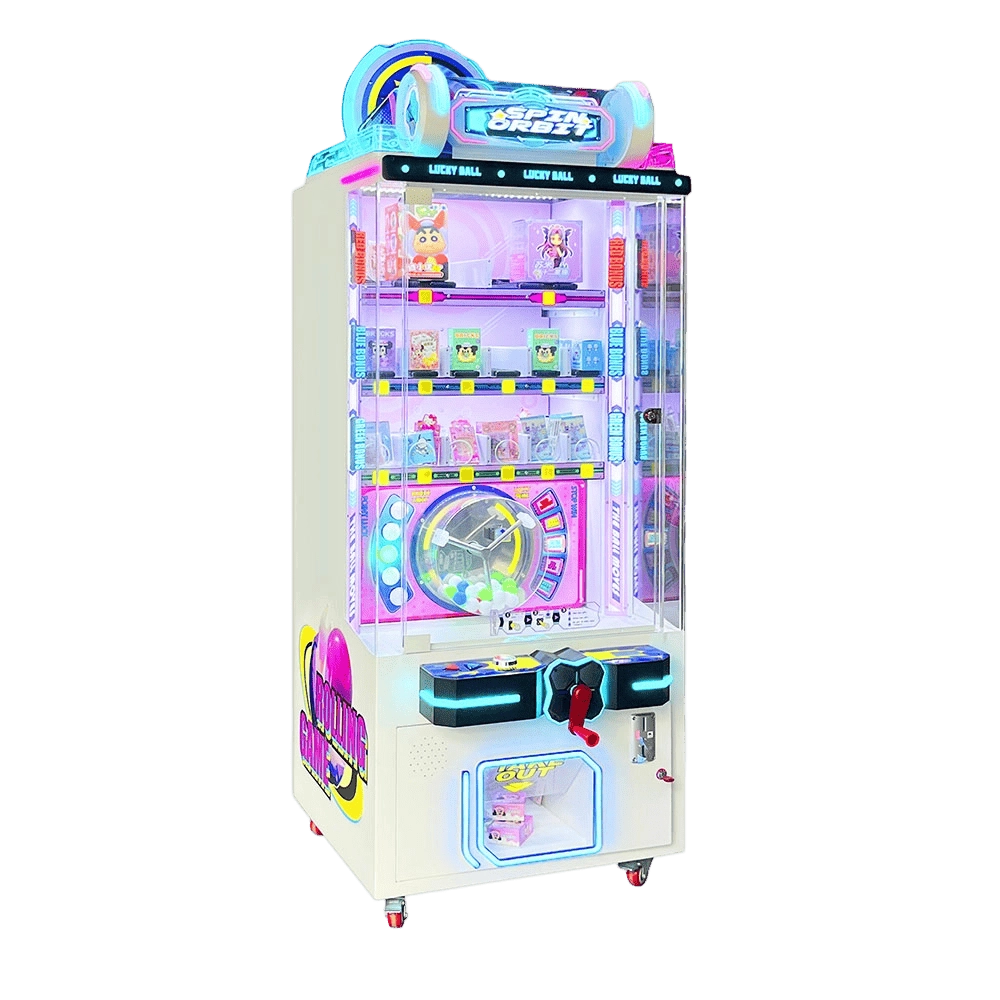
Coin Operated/Card Payment SPIN ORBIT Lucky Prize Arcade Game
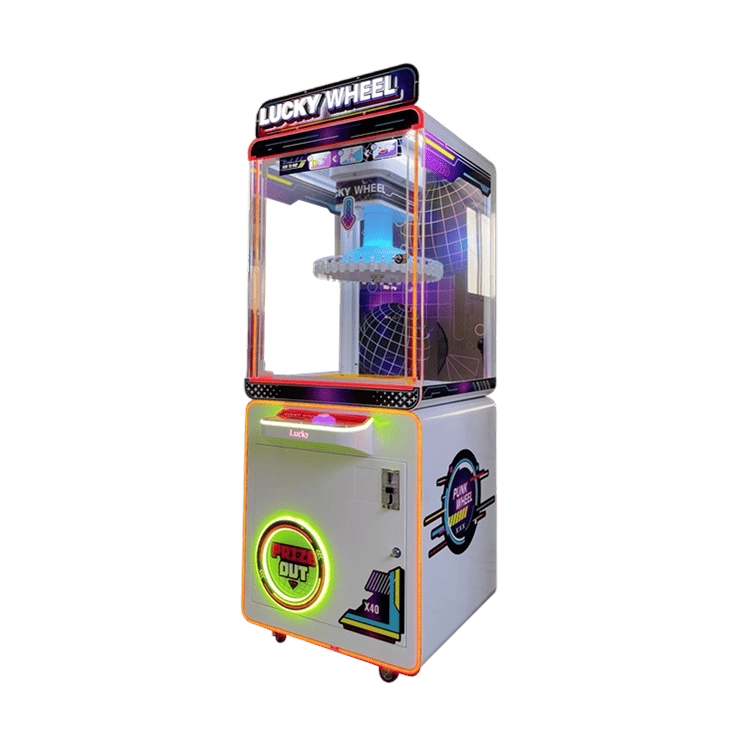
Arcade Prize Lucky Wheel Gift Machine For Amusement Areas
Get in Touch with Jiami Games
If you have any comments or good suggestions, please leave us a message; later our professional staff will contact you as soon as possible.

Innovative Entertainment, at Your Fingertips
Learn about Jiami Games and explore our expertise in console development, innovative design, and global markets.
Quick Links:
© 2026 Jiami Games.
Whatsapp: +8618520390438