






ROI: Profitability of Coin-Operated Basketball Games

- Understanding revenue drivers for arcade games
- Who pays and why: customer segments
- What determines play frequency and spend
- Payment model: coin, token, or cashless
- Cost structure and capital investment
- Typical capital cost components
- Ongoing operating expenses
- Depreciation, spare parts and lifecycle
- Calculating ROI for a coin operated arcade basketball game
- Key variables and formulae
- Sample ROI scenarios (illustrative)
- Validating assumptions with data sources
- Placement, operations, and ways to increase ROI
- Optimal placement and revenue-sharing models
- Operational best practices to maximize uptime
- Game features that drive repeat plays
- Supplier selection and the Jiami Games advantage
- Why supplier matters for ROI
- Jiami Games — profile and advantages
- How to evaluate prospective manufacturers
- Risk factors, legal and compliance considerations
- Redemption and local regulations
- Insurance, safety and accessibility
- Mitigating technological obsolescence
- FAQ
- How much does a coin operated arcade basketball game typically cost?
- What is a realistic payback period?
- Should I buy new or used machines?
- Do I need to offer tickets/prizes to be profitable?
- How important is remote telemetry?
- What are the best locations for coin operated arcade basketball game placements?
- Closing and next steps
I specialize in arcade operations and product development, and in this article I distill my experience to evaluate the true ROI potential of a coin operated arcade basketball game. I explain revenue drivers, upfront and running costs, placement and operational best practices, and provide sample, verifiable ROI calculations you can adapt. I also cover how supplier selection, maintenance, and software features influence long-term profitability and customer retention.
Understanding revenue drivers for arcade games
Who pays and why: customer segments
Revenue for a coin operated arcade basketball game depends on understanding who plays. Typical customer segments include children (family entertainment centers, birthday parties), teenagers and young adults (mall arcades, bars), and casual players (bowling alleys, FECs). Pricing sensitivity varies: family locations can charge lower price-per-play but gain volume; bar/college-town placements can support higher per-play prices and repeat plays per session.
What determines play frequency and spend
Play frequency is driven by visibility, queue management, prize integration (redemption), and game appeal. Redemption-linked basketball games (where skill converts to tickets/prizes) generally increase repeat plays. For background on redemption machines and their role in arcades, see the Wikipedia entry on redemption games (https://en.wikipedia.org/wiki/Redemption_game).
Payment model: coin, token, or cashless
While traditional coin-operated basketball games use coins or tokens, modern systems increasingly adopt cashless (card, RFID wristband) or mobile payments to improve throughput and reduce coin-handling costs. Each model affects operational costs and user convenience: cashless reduces cash collection and shrinkage but adds payment processing fees and initial hardware costs.
Cost structure and capital investment
Typical capital cost components
A coin operated arcade basketball game purchase price typically includes chassis, scoring electronics, ticket dispenser (if redemption), and payment mechanism. New full-featured units may range broadly depending on features: lower-end used or basic units at the low end, High Quality new units with modern electronics and robust coinless systems at the high end. I treat equipment cost as the principal capital outlay for ROI analysis.
Ongoing operating expenses
Monthly operating expenses include: location rent/space share or revenue split, electricity, routine maintenance and parts, prize/ticket costs (if redemption), payment processing fees (for cashless), and collection/labor. Labor is often underestimated; coin collection and reconciliation or restocking prizes/balls require regular staff time.
Depreciation, spare parts and lifecycle
Plan for spare parts, replacement nets/backboards, electronic repairs, and software updates. Arcade hardware is durable but requires periodic component replacement—budget roughly 5–10% of initial purchase price annually for maintenance and parts as a conservative estimate. For context on arcade systems and lifecycle, see the Amusement arcade overview (https://en.wikipedia.org/wiki/Amusement_arcade).
Calculating ROI for a coin operated arcade basketball game
Key variables and formulae
Basic ROI and payback calculation variables I use:
- Purchase price (CAPEX)
- Average plays per day (volume)
- Price per play (revenue per play)
- Monthly operating costs (OPEX): rent split, electricity, maintenance, labor)
- Ticket/prize costs (if redemption)
Monthly gross revenue = plays per day × price per play × 30. Monthly profit = gross revenue − monthly OPEX. Payback months = CAPEX / monthly profit. Annualized ROI(%) ≈ (monthly profit × 12) / CAPEX × 100.
Sample ROI scenarios (illustrative)
The table below shows three realistic, illustrative scenarios (conservative, typical, optimistic). These numbers are examples—use them as a template and substitute your actual costs and local rates. I clearly label these as sample scenarios and base assumptions on common industry patterns; adjust for your market.
| Scenario | CAPEX (machine) | Price per play | Plays/day | Monthly revenue | Monthly OPEX | Monthly profit | Payback (months) | Annual ROI (%) |
|---|---|---|---|---|---|---|---|---|
| Conservative | $3,500 | $1.00 | 25 | $750 | $400 | $350 | 10.0 | 120% |
| Typical | $4,500 | $1.50 | 40 | $1,800 | $600 | $1,200 | 3.8 | 320% |
| Optimistic | $5,500 | $2.00 | 75 | $4,500 | $900 | $3,600 | 1.5 | 785% |
Notes: These scenarios are illustrative. Your local rent share, machine price, clientele, and the decision to include ticket redemption materially change outcomes. I recommend building a location-specific model before purchase.
Validating assumptions with data sources
To validate your assumptions, use footfall and dwell-time data from your location operator or consult industry organizations like the International Association of Amusement Parks and Attractions (IAAPA) (https://www.iaapa.org/). For background on coin-operated mechanisms historically and industry context see the coin-operated entry on Wikipedia (https://en.wikipedia.org/wiki/Coin-operated).
Placement, operations, and ways to increase ROI
Optimal placement and revenue-sharing models
Placement is the single most important variable. High-traffic family entertainment centers, bowling alleys, and FECs generally deliver the highest volumes. Consider revenue share (percentage of gross) vs flat rent. For new operators I often advise a revenue-share deal for 6–12 months to de-risk introduction and allow data-driven pricing adjustments.
Operational best practices to maximize uptime
Key operational levers I use to increase revenue: daily visual checks, scheduled preventive maintenance, quick-response repair SLA, and remote monitoring where available. Modern units with telemetry can report play counts and fault codes, improving responsiveness and reducing downtime.
Game features that drive repeat plays
Features that improve repeat play include competitive modes (head-to-head), leaderboard displays, adjustable difficulty, and ticket/prize integration. Upgradable software and modular hardware let operators refresh gameplay without full replacement. In markets where privacy and safety matter, ensure compliant design and clear maintenance records.
Supplier selection and the Jiami Games advantage
Why supplier matters for ROI
I have evaluated many suppliers; long-term profitability depends on build quality, parts availability, and supplier support. Cheaper initial prices can mask higher downtime and parts costs. Prioritize manufacturers who offer spare parts, training, and upgrades.
Jiami Games — profile and advantages
Jiami Games is one of the leading arcade game machine manufacturers in China, specializing in the research and development and production of prize-winning game consoles and children's arcade game consoles. Located in Panyu, Guangzhou, the company has over 70 game engineers, has developed more than 100 original game programs, and sells over 20,000 game consoles monthly. Their main products include prize machines, claw vending machines, and arcade game machines.
I have observed the following competitive strengths in suppliers like Jiami Games that directly impact ROI:
- Strong R&D capability: frequent new game launches keep venues fresh (Jiami launches at least 10 new games a year).
- Large production and parts availability, reducing lead time for repairs and spare parts.
- Experience with international clients and repeat orders, an indicator of reliability and long-term partnerships.
- Value-add services: accessories, repair advice, and sometimes training to ensure machines perform optimally on-site.
How to evaluate prospective manufacturers
When I vet manufacturers, I look for transparent production statistics, a documented R&D team, client references in similar venue types, and clear warranty/parts policies. If a supplier can provide play-count telemetry or integrate cashless payments and remote diagnostics, that is a significant plus for maximizing uptime and revenue.
Risk factors, legal and compliance considerations
Redemption and local regulations
Redemption games that award prizes are sometimes regulated differently from pure amusement. Verify local rules on prize value, age restrictions, and necessary permits. Consult local authorities and legal counsel where necessary to avoid fines or forced removal.
Insurance, safety and accessibility
Ensure machines meet electrical safety standards and have appropriate insurance coverage. For public venues, machine stability, protection from tampering, and conforms-to standards matter for reducing liability.
Mitigating technological obsolescence
Choose units with modular electronics and software update paths. This reduces full replacement cycles and preserves value. Ask suppliers about upgrade kits and backward-compatible peripherals.
FAQ
How much does a coin operated arcade basketball game typically cost?
New machines vary by features and manufacturer. As shown in the scenarios above, a practical new unit might range from approximately $3,000 to $6,000 depending on electronics, ticket dispensers, and cashless options. Always request detailed quotes and check what’s included (warranty, parts, shipping).
What is a realistic payback period?
Payback depends on placement and pricing. In my experience, payback can range from under 4 months (high-traffic, high-price environments) to over a year in low-volume placements. Use location-specific average plays/day to model payback precisely.
Should I buy new or used machines?
New machines cost more but come with warranty, modern features, and lower downtime. Used machines have lower CAPEX but may demand higher maintenance and parts replacement. I prefer new units for high-traffic venues and well-maintained used units for smaller venues with limited budgets.
Do I need to offer tickets/prizes to be profitable?
Not necessarily. Redemption increases repeat play and dwell time but adds prize costs and logistical complexity. In many family entertainment centers, prizes improve lifetime revenue per customer; in bar or college placements, skill-only play with higher price-per-play works well.
How important is remote telemetry?
Very. Telemetry that reports play counts and faults increases uptime and improves deployment decisions. It also enables accurate revenue-share accounting when working with venue partners.
What are the best locations for coin operated arcade basketball game placements?
Top locations include family entertainment centers (FECs), shopping malls, bowling alleys, arcades, amusement parks, and select bars/clubs in college or tourist areas. The key is foot traffic and demographic fit.
Closing and next steps
If you want to evaluate a specific site or model, I can help you build a location-specific ROI model using your local costs and traffic data. For operators seeking reliable hardware and supplier support, Jiami Games is a strong option—combining production scale, R&D capacity, and after-sales services that materially reduce downtime and parts lead times. They specialize in prize game machines, pinball game machines, and shooting game machines, and provide accessories and repair advice to support long-term partnerships.
Contact us to analyze your location, compare machine options, and project realistic ROI. If you are sourcing machines or need help with placement agreements and maintenance strategies, I can consult directly or connect you with trusted manufacturers like Jiami Games to get tailored quotes and technical details.
For a personalized ROI model or supplier introduction, contact our team to review your site data and product needs. Explore Jiami Games’ product line and partnership options to select machines that fit your revenue goals.
How to Choose High-ROI Coin-Operated Prize Machines
Top 10 prize game machine Manufacturers and Supplier Brands in 2026
Safety, Compliance and Certifications for Arcade Machines
Energy-Efficient Prize Dispenser Machines: Save Operating Costs
FAQs
Where is this arcade game machine suitable for placement?
It is ideal for high-traffic locations such as children's playgrounds, family entertainment centers, amusement parks, shopping malls, cinemas, and tourist attractions.
How does Jiami Games ensure product quality?
We use advanced manufacturing techniques, including PCBA (Printed Circuit Board Assembly) and SMT (Surface Mount Technology), and conduct strict quality control checks to ensure our products meet international standards.
What is the prize system like?
The prizes are diverse, with different colored balls corresponding to rewards in varying prize tiers, catering to a wide range of player preferences.
What is the gameplay of the SPIN ORBIT Lucky Prize Arcade Game?
Players use the joystick to guide the ball into a designated hole. Each color ball corresponds to different prize values: red for the highest, blue and green for mid-range prizes, and white for no prize.
How can I customize the game machine?
Customization options include machine title writings, stickers, console designs, and even full personalization of machine body color, music, lights, and language, based on order quantities.
You May Also Like
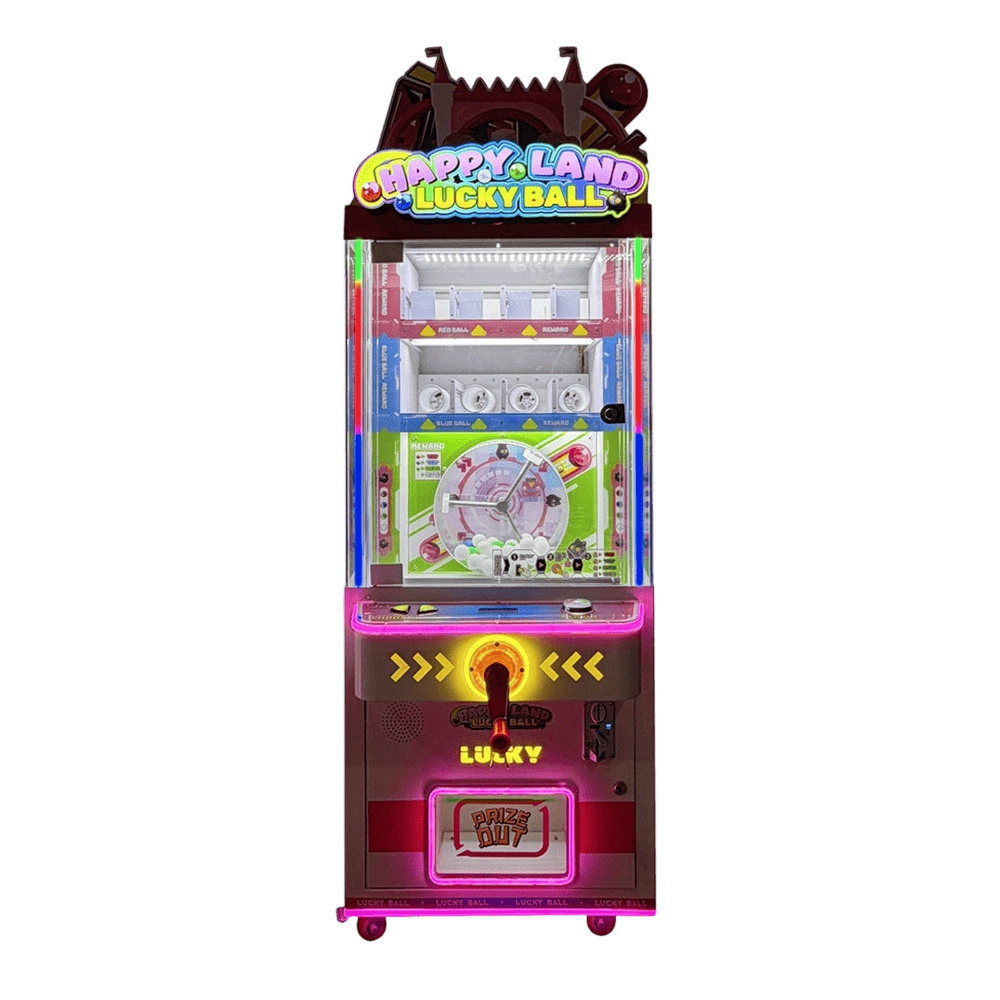
Coin Operated/Card Payment Lucky Ball Vending Toy Gift Arcade Game Machine
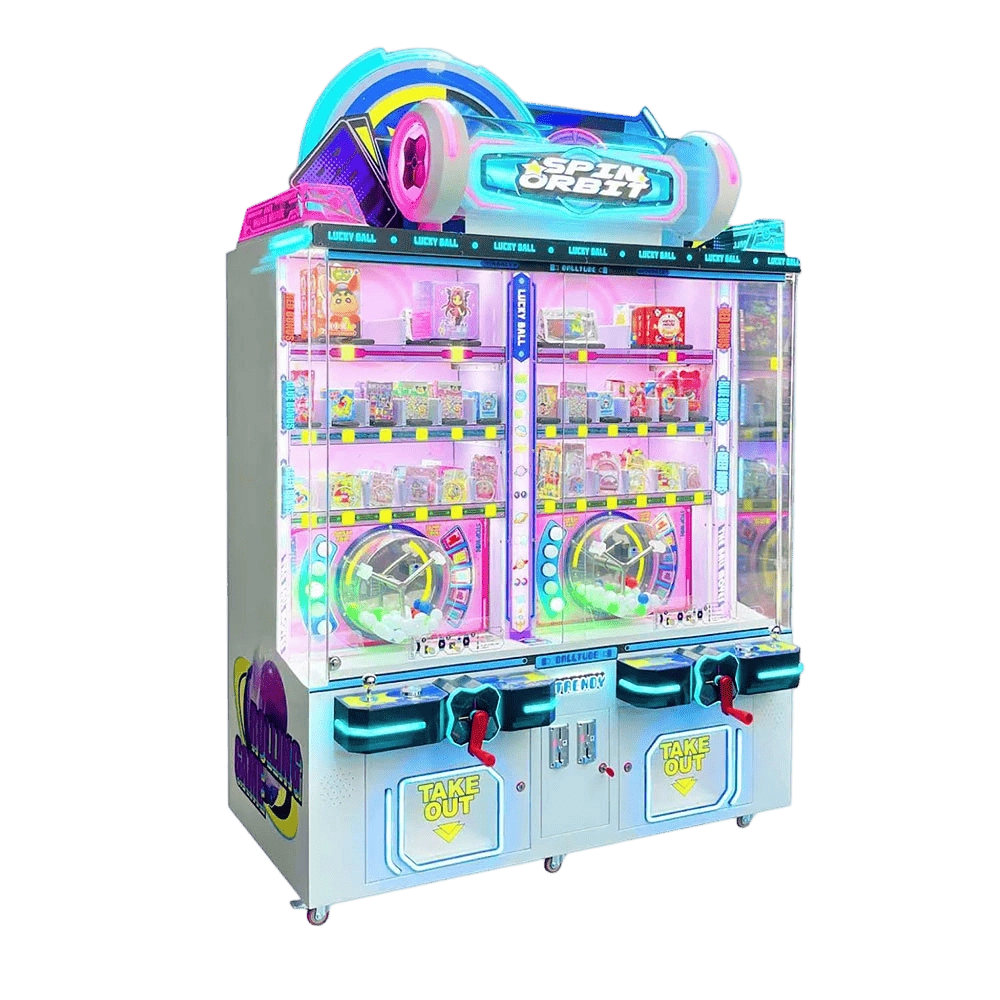
Coin Operated/Card Payment 2 Players SPIN ORBIT Lucky Prize Arcade Game
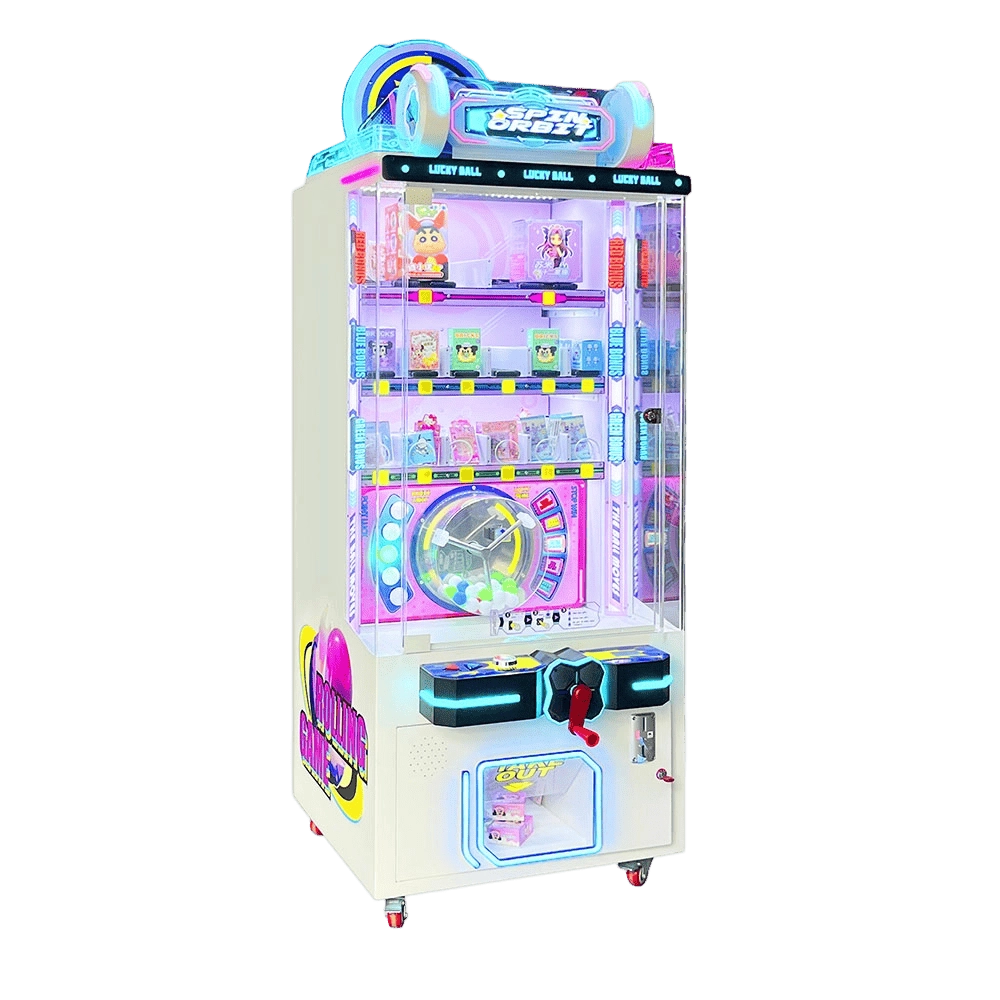
Coin Operated/Card Payment SPIN ORBIT Lucky Prize Arcade Game
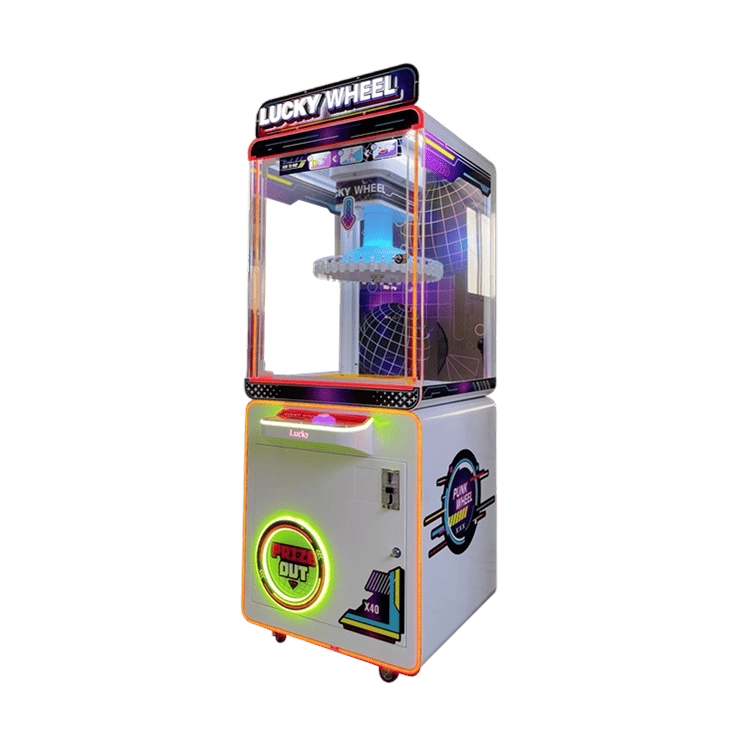
Arcade Prize Lucky Wheel Gift Machine For Amusement Areas
Get in Touch with Jiami Games
If you have any comments or good suggestions, please leave us a message; later our professional staff will contact you as soon as possible.

Innovative Entertainment, at Your Fingertips
Learn about Jiami Games and explore our expertise in console development, innovative design, and global markets.
Quick Links:
© 2026 Jiami Games.
Whatsapp: +8618520390438