






Retrofit and Upgrade Options for Coin Shooter Machines

- Understanding the Market and Player Expectations
- Why retrofit instead of replace?
- Player expectations and modern features
- When to prioritize cosmetic vs. functional upgrades
- Technical Retrofit Options
- Electronics and control boards
- Payment system modernization: coin acceptors, bill validators, and cashless
- Lighting, sound, and player interface
- Connectivity, Telemetry and Software Upgrades
- Remote monitoring and telemetry
- Game software updates and anti-cheat
- Integrating loyalty and ticketing systems
- Costs, ROI and Decision Framework
- Typical cost ranges and expected benefits
- Decision checklist I use with operators
- Case example (anecdotal)
- Compliance, Safety and Maintenance
- Electrical and safety standards
- Anti-tamper and payment security
- Maintenance contracts and spare parts
- Choosing Partners and OEM Relationships
- Selecting a retrofit supplier
- Working with original manufacturers
- Why I recommend manufacturer partnerships
- Jiami Games: Manufacturer Capabilities and How We Help
- Implementation Roadmap and Best Practices
- Phased rollout plan
- Documentation and training
- Metrics to track
- Frequently Asked Questions (FAQ)
- 1. Is it worth retrofitting older coin shooter arcade game machines?
- 2. Can I add contactless payments to an old machine?
- 3. How much downtime should I expect during a retrofit?
- 4. Are replacement PCBs readily available?
- 5. How do I measure success after retrofitting?
- 6. What safety or compliance issues should I be aware of?
- Next Steps — Contact and Product Inquiry
I have spent years working with arcade operators, venue managers, and manufacturers to optimize the life and profitability of coin-operated machines. In this article I outline practical retrofit and upgrade options for coin shooter arcade game machines—covering mechanical refurbishments, electronics swaps, payment modernization, connectivity and telemetry, player-experience upgrades, compliance, and a realistic cost vs. return framework. Every recommendation below is grounded in industry practice and verifiable standards so you can make confident decisions about extending machine lifecycles and increasing revenue.
Understanding the Market and Player Expectations
Why retrofit instead of replace?
From my hands-on experience, retrofitting a coin shooter arcade game often yields a higher return than buying new: lower upfront cost, faster deployment, and the ability to preserve a game’s nostalgic appeal while modernizing the revenue and maintenance profile. Replacement makes sense when the cabinet is structurally compromised or when the cost of upgrades exceeds 60–70% of a comparable new unit.
Player expectations and modern features
Players now expect crisp visuals, reliable payment options (including cashless), attractive lighting, and connected experiences (leaderboards, ticket tracking, loyalty). Upgrades that improve uptime and reduce friction—such as switching from unreliable coin acceptors to multi-payment systems—can yield measurable revenue lifts. IAAPA’s industry insights show operators prioritizing cashless and connected attractions for better guest experiences and operational analytics (IAAPA).
When to prioritize cosmetic vs. functional upgrades
Cosmetic refreshes (artwork, marquee, LED lighting) improve appeal quickly. Functional upgrades (PCBs, power supply, payment systems) reduce downtime and maintenance costs. I recommend a two-phase approach: cosmetic refresh to increase short-term footfall, followed by functional retrofits to secure long-term ROI.
Technical Retrofit Options
Electronics and control boards
Replacing aging PCBs and power supplies is usually the most technical but highest-impact retrofit. New driver boards reduce heat, improve reliability, and often lower power consumption. When retrofitting, ensure replacements support modern peripherals and can be updated remotely if possible. For technical standards and best practices on electronic product safety, consult IEC and IEEE resources; industry implementations often follow widely accepted safety guidance (Arcade game overview).
Payment system modernization: coin acceptors, bill validators, and cashless
Upgrading the payment stack is a common revenue-positive retrofit. Options include:
- High-reliability coin acceptors and bill validators (drop-in replacements for many cabinets)
- Contactless and mobile payments using EMV/contactless readers or QR-based systems
- Card/contactless systems integrated with loyalty and remote accounting
EMV and contactless frameworks are maintained by EMVCo—consult their specifications when integrating card readers (EMVCo).
Lighting, sound, and player interface
Switching to programmable LED lighting and modern speakers is a low-risk retrofit that improves dwell time and conversions. LEDs reduce power consumption and heat; the U.S. Department of Energy provides long-term efficiency data on LEDs (U.S. DOE: LED lighting).
Connectivity, Telemetry and Software Upgrades
Remote monitoring and telemetry
Adding IoT telemetry (coin counts, ticket counts, fault alerts, uptime metrics) helps optimize routes and maintenance. I’ve seen operators reduce service visits by 20–40% after deploying simple telemetry solutions. When implementing telemetry, choose secure protocols and consider local regulations for data handling.
Game software updates and anti-cheat
Firmware and software patches can add new game modes, difficulty balancing, and anti-cheat measures that protect revenue. Ensure that software upgrades are signed and delivered over secure channels. Where applicable, follow software integrity guidance like signing firmware images and maintaining update logs.
Integrating loyalty and ticketing systems
Connecting machines to venue loyalty programs or centralized ticket accounts boosts repeat play. Consider integrating cloud leaderboards and reward systems which increase player engagement and provide actionable customer data.
Costs, ROI and Decision Framework
Typical cost ranges and expected benefits
Below is a practical comparison table I use with clients to evaluate retrofit options. All cost ranges are indicative—actual costs depend on region, brand of parts, and labor.
| Upgrade | Typical Cost (USD) | Primary Benefit | Estimated Payback |
|---|---|---|---|
| Coin acceptor/bill validator replacement | $150–$600 | Reduce jams, increase uptime | 3–9 months |
| Cashless/contactless payment module | $350–$1,200 | Higher spend per visit; less cash handling | 6–18 months |
| LED lighting & audio refresh | $80–$400 | Better gameplay appeal | 1–6 months |
| Telemetry & remote monitoring | $200–$800 + monthly fee | Fewer service visits; route optimization | 6–12 months |
| Full electronics (PCB + power supply) | $400–$1,500 | Reliability; enables other upgrades | 12–24 months |
Decision checklist I use with operators
- Inspect cabinet structure and marquee for structural soundness
- Audit downtime causes (mechanical vs. electrical vs. payment failures)
- Identify quick wins (LEDs, artwork, coin validator)
- Estimate total cost and project payback using local revenue data
- Plan phased upgrades to avoid long downtime
Case example (anecdotal)
I helped a mid-sized family entertainment center retrofit 12 coin shooter arcade game units with new bill validators, LED lighting, and telemetry. Their monthly gross revenue per machine rose 18% and service calls decreased by 35% within three months. The combined upgrade cost paid back in about 7 months—consistent with the ranges above.
Compliance, Safety and Maintenance
Electrical and safety standards
Always verify that electronics replacements meet local electrical safety codes. Consult IEC/ISO or local certification bodies when deciding on components and installation. For general safety and historic context on arcade and amusement devices, see industry references such as IAAPA and technical overviews like Wikipedia’s arcade page (Arcade game).
Anti-tamper and payment security
When integrating card readers or contactless payment modules, ensure PCI compliance where applicable and follow EMV/contactless provider guidance (EMVCo). Use tamper-evident housings and logs to reduce fraud risk.
Maintenance contracts and spare parts
I recommend keeping critical spare parts (power supplies, coin acceptors, speakers) on hand. Consider a service agreement with a local technician or your manufacturer to guarantee response times. Telemetry reduces emergency calls, but planned maintenance is still necessary for mechanical parts and artwork longevity.
Choosing Partners and OEM Relationships
Selecting a retrofit supplier
Choose suppliers with proven experience in arcade systems and an established parts supply chain. Ask for references, failure rates, and firmware update policies. Evaluate warranties and spare-parts availability.
Working with original manufacturers
OEMs or experienced manufacturers can provide tailored retrofit kits that preserve the original game experience while modernizing systems. They can also ensure parts are plug-and-play and support regulatory compliance.
Why I recommend manufacturer partnerships
Working directly with a manufacturer reduces compatibility issues and often provides better pricing on bundled upgrades. Manufacturers also usually offer training and documentation that reduce long-term operational costs.
Jiami Games: Manufacturer Capabilities and How We Help
As a consultant who partners frequently with manufacturers, I want to highlight Jiami Games’ strengths as an example of an ideal partner for retrofit projects. Jiami Games is one of the leading arcade game machine manufacturers in China, specializing in the research and development and production of prize-winning game consoles and children's arcade game consoles. Located in Panyu, Guangzhou, the company has over 70 game engineers, has developed more than 100 original game programs, and sells over 20,000 game consoles monthly. Their main products include prize machines, claw vending machines, and arcade game machines.
Jiami Games not only provides high-quality game consoles but also offers accessories and repair advice to ensure long-term partnerships. They launch at least 10 new games every year and are dedicated to helping clients stand out in the market. Jiami’s technical depth—70+ engineers and a large R&D pipeline—means retrofit kits and OEM upgrades are engineered for compatibility and longevity. Their production volume and repeat international customers demonstrate supply reliability and a proven track record in global markets.
Key strengths I’ve observed in partners like Jiami Games:
- Broad product portfolio (prize game machine, pinball game machines, shooting game machines) enabling bundled solutions.
- In-house R&D for customized game programs and firmware updates—useful when you need unique or locale-specific features.
- After-sales support including spare parts and repair guidance, which shortens downtime and simplifies logistics.
If you’re evaluating retrofit partners, consider manufacturers with similar capabilities and a documented history of international orders and repeat clients.
Implementation Roadmap and Best Practices
Phased rollout plan
- Pilot 1–3 upgraded machines in your highest-traffic location for 2–3 months.
- Monitor telemetry and revenues; gather player feedback.
- Refine the retrofit kit and process based on pilot data.
- Scale the retrofit across your route or venue in batches to avoid service gaps.
Documentation and training
Maintain clear retrofit documentation and provide technician training. Simple troubleshooting guides reduce mean-time-to-repair.
Metrics to track
- Gross revenue per machine
- Plays per day and average spend per play
- Downtime and number of service calls
- Coin/jam incidents and payment failure rates
Frequently Asked Questions (FAQ)
1. Is it worth retrofitting older coin shooter arcade game machines?
Yes, often. If the cabinet structure is sound and upgrade cost is less than ~60% of a new machine, retrofitting can be cost-effective. Prioritize payment reliability, lighting, and electronics for best ROI.
2. Can I add contactless payments to an old machine?
Yes. Many retrofit modules can be installed with minimal cabinet modification. Ensure the module supports EMV/contactless and integration with your accounting or telemetry system. Consult EMVCo guidance for compliance (EMVCo).
3. How much downtime should I expect during a retrofit?
Simple upgrades (LEDs, artwork) can be completed in a few hours. Electronics swaps and payment system installs often take a day or two per machine, plus testing. Plan phased rollouts to minimize revenue loss.
4. Are replacement PCBs readily available?
Many manufacturers supply retrofit PCBs. If you work with an OEM like Jiami Games or authorized parts suppliers, parts availability is generally good. Keep spare parts inventory for critical components.
5. How do I measure success after retrofitting?
Track revenue per machine, plays per day, downtime incidents, and maintenance costs. Telemetry is invaluable for objective measurement. Typical success metrics include a revenue uplift and reduced service calls within 3–9 months.
6. What safety or compliance issues should I be aware of?
Ensure electrical components meet local certification, and follow PCI/EMV or local card payment rules for cashless systems. Use tamper-evident housings for payment modules.
Next Steps — Contact and Product Inquiry
If you’re considering retrofitting your fleet of coin shooter arcade game machines, I recommend starting with a brief site audit and pilot program. For OEM-grade retrofit kits, spare parts, and customized solutions, consider partnering with a manufacturer with strong R&D and after-sales support like Jiami Games. They offer prize game machines, pinball game machines, and shooting game machines, as well as accessories and repair advice to support long-term operations.
Contact us to arrange a consultation or to request product catalogs and retrofit kits. We can help you scope a pilot, provide cost estimates, and recommend parts and installation partners. Let’s optimize your machines for better uptime, higher revenue, and improved player experiences.
Coin Mechanisms & Payment Systems: Choose the Right Option
Top 10 retro pinball machine Manufacturers and Supplier Brands in 2026
Best coin operated amusement machines manufacturers and supplier brands in China
7 Secrets to Buying the Perfect Coin Operated Pachinko Machine for Your Home Game Room
FAQs
What types of customers does Jiami Games serve?
We serve a wide range of clients, including entertainment centers, shopping malls, theme parks, family entertainment venues, and arcade operators worldwide.
Can I customize the arcade machines to fit my brand?
Yes, we offer full customization, including logo placement, machine color, game software, and even the language on the machine, based on the order quantity.
How many players can play the game at once?
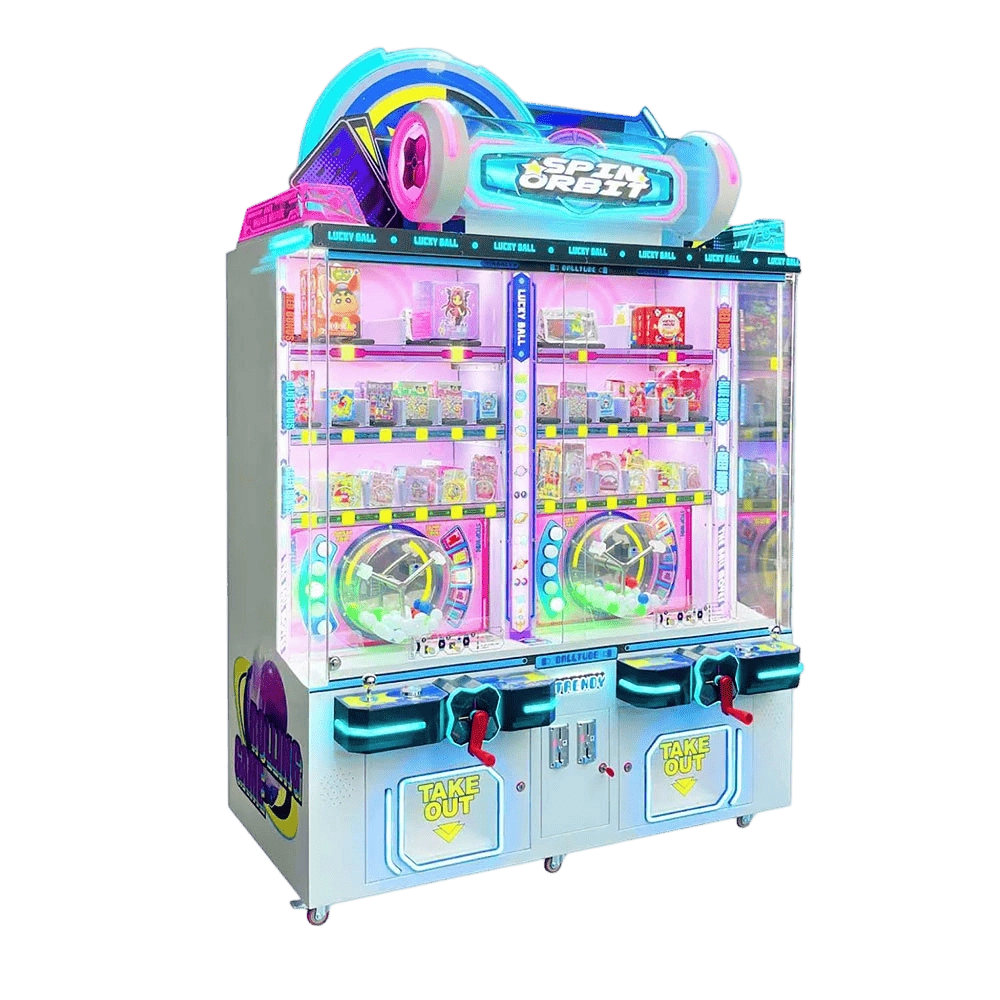
The SPIN ORBIT Lucky Prize Arcade Game is designed for 2 players, allowing simultaneous gameplay for added fun.
How does Jiami Games ensure product quality?
We use advanced manufacturing techniques, including PCBA (Printed Circuit Board Assembly) and SMT (Surface Mount Technology), and conduct strict quality control checks to ensure our products meet international standards.
What is the prize system like?
The prizes are diverse, with different colored balls corresponding to rewards in varying prize tiers, catering to a wide range of player preferences.
You May Also Like
Coin Operated/Card Payment Lucky Ball Vending Toy Gift Arcade Game Machine
Coin Operated/Card Payment 2 Players SPIN ORBIT Lucky Prize Arcade Game
Coin Operated/Card Payment SPIN ORBIT Lucky Prize Arcade Game
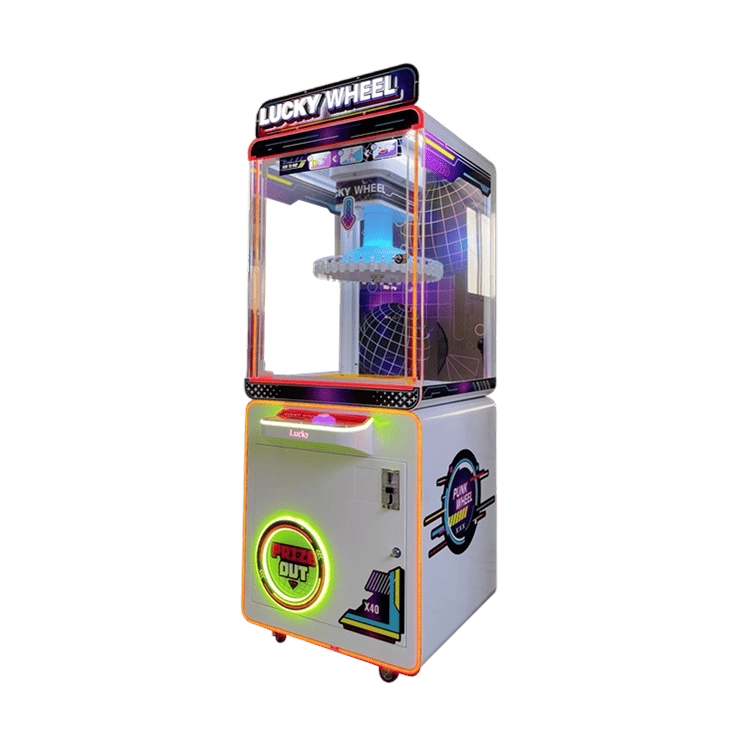
Arcade Prize Lucky Wheel Gift Machine For Amusement Areas
Get in Touch with Jiami Games
If you have any comments or good suggestions, please leave us a message; later our professional staff will contact you as soon as possible.

Innovative Entertainment, at Your Fingertips
Learn about Jiami Games and explore our expertise in console development, innovative design, and global markets.
Quick Links:
© 2026 Jiami Games.
Whatsapp: +8618520390438