






Regulations and Age Restrictions for Coin Drop Game Machines

- Why operators must understand local legal distinctions
- Prize skill game vs. gambling: the critical legal difference
- How classification affects age restrictions and access
- Why written policies and documentation matter
- Common regulatory themes across markets
- Age restrictions: common thresholds and practical enforcement
- Licensing and permits for operators
- Fairness, payout disclosure and consumer protection
- Technical and safety standards you must consider
- Electrical and mechanical safety
- Accessibility and anti-harm features
- Maintenance, software integrity and audit trails
- Country-by-country snapshot and a compliance comparison table
- Practical compliance checklist I use with clients
- Step 1 — Classify the device
- Step 2 — Confirm age restrictions and signage
- Step 3 — Ensure safety standards and record-keeping
- Business implications and risk management
- Location strategy and revenue impacts
- Insurance and liability considerations
- Training and customer experience
- Jiami Games: manufacturing expertise and compliance support
- Frequently asked questions (FAQ)
- Q1: Are coin drop game machines considered gambling?
- Q2: What is the typical minimum age for players?
- Q3: Do I need a license to operate coin drop machines?
- Q4: What safety certificates should I ask from manufacturers?
- Q5: How can I reduce regulatory risk when deploying new machines?
- Q6: Where can I find authoritative guidance?
I have worked with arcade operators, manufacturers, and location-based entertainment venues for years, and one recurring issue I advise on is how regulations and age restrictions shape the deployment and profitability of coin drop game machines. Coin drop game machines (often called coin pushers or prize drop machines) sit at the intersection of amusement, prize-giving and—depending on local law—gambling. In this article I explain the regulatory landscape, how age restrictions are applied in major markets, the technical and consumer-safety standards you should consider, and practical compliance steps you can take to operate legally and responsibly.
Why operators must understand local legal distinctions
Prize skill game vs. gambling: the critical legal difference
One of the most important distinctions I make when advising clients is whether a coin drop game machine is treated as a prize skill game or as gambling. Many jurisdictions exempt prize skill games from gambling laws if the outcome depends primarily on skill, if prizes have limited monetary value, or if the game meets specific statutory definitions. Where a device is classified as gambling, licensing, age limits, anti-money laundering rules, and much stricter controls usually apply. For background on how coin pusher / coin drop devices are described in public sources, see the Coin Pusher (coin drop) article on Wikipedia: https://en.wikipedia.org/wiki/Coin_pusher.
How classification affects age restrictions and access
If a machine is considered gambling, age restrictions typically mirror those for casinos and betting (often 18 or 21). If it is an amusement-with-prizes device, age access may be unrestricted or limited only for safety reasons. I always recommend operators determine legal classification first, because that informs location strategy (arcades vs. adult gaming centers), signage, staff training, and hardware choices (e.g., ticket dispensers vs. cash-out mechanisms).
Why written policies and documentation matter
Authorities and partners (landlords, malls, family entertainment centers) commonly ask for compliance documentation. I advise maintaining a compliance folder: written classification analysis, copies of product safety certificates, maintenance logs, staff training records, and a local legal opinion where classification is uncertain. These documents reduce enforcement risk and help secure High Quality placement within family locations.
Common regulatory themes across markets
Age restrictions: common thresholds and practical enforcement
Typical age thresholds for devices that are regulated as gambling are 18 or 21 depending on jurisdiction. For amusement-with-prizes devices, operators often set their own rules (for example, restricting certain machines to ages 12+ due to small parts or adult-oriented prizes). In practice I recommend using clear signage, staff oversight during peak hours, and software locks (e.g., requiring operator unlock for cash-out functions) to enforce limits.
Licensing and permits for operators
When a device is regulated, you may need an operator license, an onsite permit, or both. In the UK, for example, the Gambling Act 2005 and Gambling Commission guidance set out when machines require licensing; see the Gambling Commission guidance pages: https://www.gamblingcommission.gov.uk/. In many U.S. states, regulation occurs at the state level and licences vary considerably. I always check the local regulator's website and, when necessary, obtain a written determination.
Fairness, payout disclosure and consumer protection
Regulators may require transparency about chances, payout rates, or prize values. Even where not required, transparent payout policy builds trust with venue operators and customers. Some jurisdictions also prohibit games where the player cannot reasonably know the odds or where machines are adjustable to change payout rates without regulatory oversight.
Technical and safety standards you must consider
Electrical and mechanical safety
Arcade machines must meet local electrical and mechanical safety standards. Globally-recognized technical standards such as IEC 62368-1 (safety of audio/video, information and communication technology equipment) are often used as references; see background on IEC 62368-1: https://en.wikipedia.org/wiki/IEC_62368-1. For toy-like consoles intended for young children, other standards can apply (for example, EN or ISO family standards for toy safety).
Accessibility and anti-harm features
To reduce misuse, I advise integrating anti-tamper locks, clear prize-value displays, timers for continuous play, and accessible emergency stop switches. These provisions not only improve safety but also demonstrate a proactive compliance approach to regulators and landlords.
Maintenance, software integrity and audit trails
Where payout or prize-dispensing is electronically controlled, maintain tamper-evident seals, signed software release notes, and logs of any parameter changes. Audit trails help resolve disputes and satisfy regulatory audits. For larger operators I recommend a centralized device-management system that records firmware versions and timestamps of configuration changes.
Country-by-country snapshot and a compliance comparison table
Regulation for coin drop game machines varies widely. Below is a concise comparison of how several major markets commonly treat these machines. Note: local rules can differ by state, province or municipality; always consult the relevant regulator or legal counsel.
| Jurisdiction | Typical classification | Common age restriction | Operator obligations / notes |
|---|---|---|---|
| United Kingdom | Often amusement with prizes if no cash gambling; can be regulated by Gambling Commission if prizes convertible to cash | 18+ if regulated as gambling; otherwise none specific for amusements | Potential licensing, must follow Gambling Commission rules where applicable; disclosure and safe operation recommended. See Gambling Commission. |
| United States | Varies state-by-state; frequently treated as amusement devices but some states regulate prize-value thresholds | Often 18+ for gambling-classified devices; otherwise no federal age limit | Comply with state gaming laws; industry association guidance available from the American Amusement Machine Association: AAMA. |
| Australia | Varies by state; prize machines may be regulated depending on prize type and chance element | 18+ where treated as gambling; otherwise venue discretion | Check state-level regulators and research centres such as the Australian Gambling Research Centre for guidance: AGRC. |
| China | Often treated as amusement equipment; prize distribution may be regulated; local authorities can impose restrictions | Varies by location; some venues restrict minors in certain arcades | Local cultural market / public security bureaus sometimes issue venue-level rules; obtain local approval and safety certificates. |
Sources: general industry guidance, national regulators and technical standard summaries cited above. Because the table is a summary, use it as a starting point, not a definitive legal determination for your exact location.
Practical compliance checklist I use with clients
Step 1 — Classify the device
Start by documenting how the machine works and what prizes are awarded. Does outcome depend on skill? Are prizes cash-equivalent? I typically prepare a one-page classification memo that can be shown to regulators or venue partners.
Step 2 — Confirm age restrictions and signage
Based on classification, decide on age restrictions. Use consistent signage (e.g., 18+ where required or Children allowed), and install physical barriers if necessary. Staff training procedures should include how to check IDs responsibly.
Step 3 — Ensure safety standards and record-keeping
Collect electrical/safety certificates, provide maintenance schedules, and keep software logs. Where applicable, get a recognized conformity assessment (CE, UL, or local equivalent) and retain certificates for audit.
Business implications and risk management
Location strategy and revenue impacts
Where age restrictions apply, your choice of location (family entertainment centers vs. adult gaming arcades) will materially affect revenue and the suitable machine mix. I measure expected daily plays by location footfall and demographics; machines with tickets/prizes often perform better in family venues, while cash-convertible games may do better in adult gaming spaces provided licensing is secured.
Insurance and liability considerations
Make sure your insurance covers premises liability, product liability, and, where relevant, gaming exposure. I recommend discussing policy language with brokers experienced in amusement-industry risks.
Training and customer experience
Staff training reduces regulatory exposure and improves guest experience. Training should cover age verification, dispute handling, and emergency procedures. A well-trained attendant can turn a regulatory obligation into a reputation advantage.
Jiami Games: manufacturing expertise and compliance support
As a manufacturer and consultant I often recommend partners who combine product quality with compliance support. Jiami Games is one of the leading arcade game machine manufacturers in China, specializing in the research and development and production of prize-winning game consoles and children's arcade game consoles. Located in Panyu, Guangzhou, the company has over 70 game engineers, has developed more than 100 original game programs, and sells over 20,000 game consoles monthly. Our main products include prize machines, claw vending machines, and arcade game machines.
Working with Jiami Games, operators benefit from:
- Product differentiation — Jiami launches at least 10 new games every year to help clients stand out in the market.
- Technical capacity — a large engineering team and a library of over 100 original programs means faster customization and firmware support.
- Operational support — beyond hardware, Jiami provides accessories, spare parts, and repair advice to ensure long-term partnerships and higher uptime.
- Global client base — many clients across multiple countries place repeat orders, reflecting trust in quality and service consistency.
Jiami Games' competitive edge lies in rapid product development cycles, a focus on prize-game mechanics that balance fun with compliance, and a reliable supply-chain for spare parts. Key product lines include prize game machines, pinball game machines, and shooting game machines — all designed with operator-friendly maintenance access and configurable prize logic to accommodate local regulatory requirements.
Frequently asked questions (FAQ)
Q1: Are coin drop game machines considered gambling?
A1: It depends on jurisdiction and machine design. If the outcome is mostly chance and prizes are cash-convertible, many regulators treat the device as gambling. If outcome depends on skill and prizes are non-cash or low-value, it may be classified as amusement-with-prizes. Always confirm with local regulators or obtain a legal opinion.
Q2: What is the typical minimum age for players?
A2: Where machines are regulated as gambling, minimum ages are often 18 or 21. For amusement devices, there may be no statutory minimum, but operators should set sensible limits for safety (e.g., 3+ or 8+) and post clear signage.
Q3: Do I need a license to operate coin drop machines?
A3: If the device is classified as gambling in your jurisdiction, an operator license is commonly required. If it’s an amusement machine, licenses are less likely but local permits or venue approvals may still apply.
Q4: What safety certificates should I ask from manufacturers?
A4: Request electrical safety certification (CE, UL or local equivalent), EMC test reports if relevant, and any conformity documents for toy-safety standards if the product targets children. Also ask for the bill of materials and a maintenance manual.
Q5: How can I reduce regulatory risk when deploying new machines?
A5: Key steps: perform a local classification memo, get a legal opinion if uncertain, use clear signage and staff training for age checks, maintain technical safety and software logs, and select machines with configurable prize logic to meet local limits.
Q6: Where can I find authoritative guidance?
A6: Start with national regulators (e.g., the UK Gambling Commission https://www.gamblingcommission.gov.uk/), industry associations (e.g., American Amusement Machine Association https://www.aama.org/), and technical standard summaries (see IEC 62368-1 background). For country-specific legal determinations, I recommend consulting a local lawyer experienced in gaming or amusement law.
If you have a specific market in mind, a machine model to review, or want help preparing compliance documentation, contact me to discuss a practical next step. If you're looking for reliable, compliant hardware, view Jiami Games' product catalog or request a quote — we can advise on machine configuration to align with your local regulations and target audience.
Contact / Request a Quote: Email sales@jiamigames.com or visit Jiami Games to view prize game machine, pinball game machines, and shooting game machines suitable for family entertainment centers and adult arcades.
Top coin operated prize machine Manufacturers and Suppliers in China
Best vending machine prizes manufacturers and supplier brands in China
Maximizing Revenue: Placement & Pricing for Redemption Machines
Custom Branding and Cabinets for Coin-Operated Arcades
FAQs
Can I customize the arcade machines to fit my brand?
Yes, we offer full customization, including logo placement, machine color, game software, and even the language on the machine, based on the order quantity.
How many players can play the game at once?
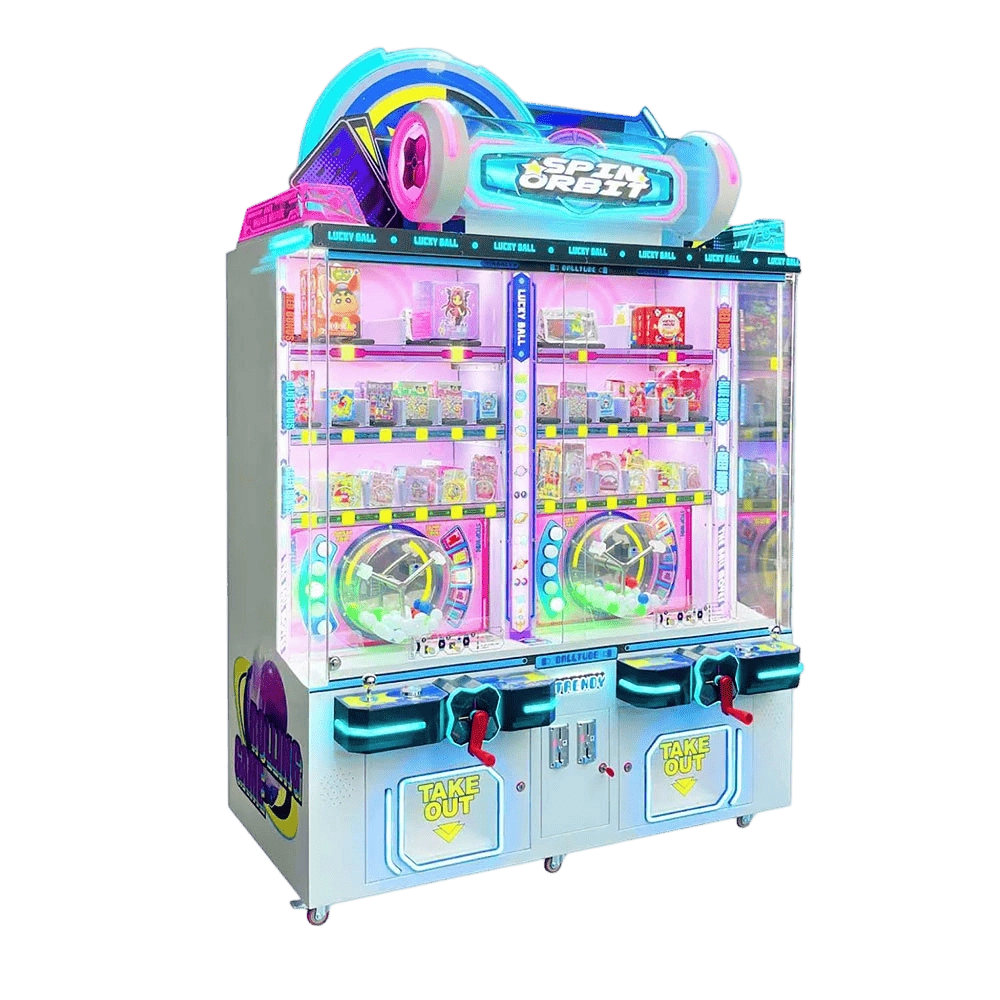
The SPIN ORBIT Lucky Prize Arcade Game is designed for 2 players, allowing simultaneous gameplay for added fun.
What types of customers does Jiami Games serve?
We serve a wide range of clients, including entertainment centers, shopping malls, theme parks, family entertainment venues, and arcade operators worldwide.
What is the prize system like?
The prizes are diverse, with different colored balls corresponding to rewards in varying prize tiers, catering to a wide range of player preferences.
What is the gameplay of the SPIN ORBIT Lucky Prize Arcade Game?
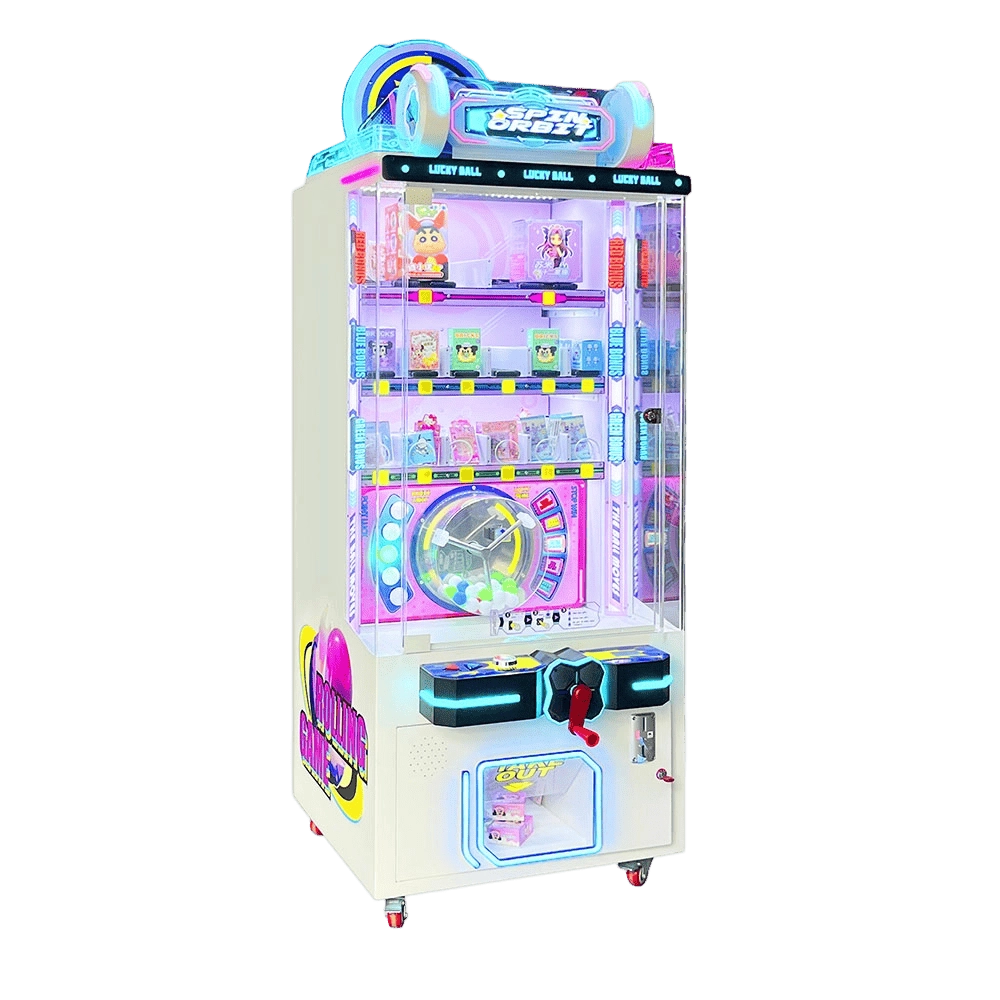
Players use the joystick to guide the ball into a designated hole. Each color ball corresponds to different prize values: red for the highest, blue and green for mid-range prizes, and white for no prize.
You May Also Like
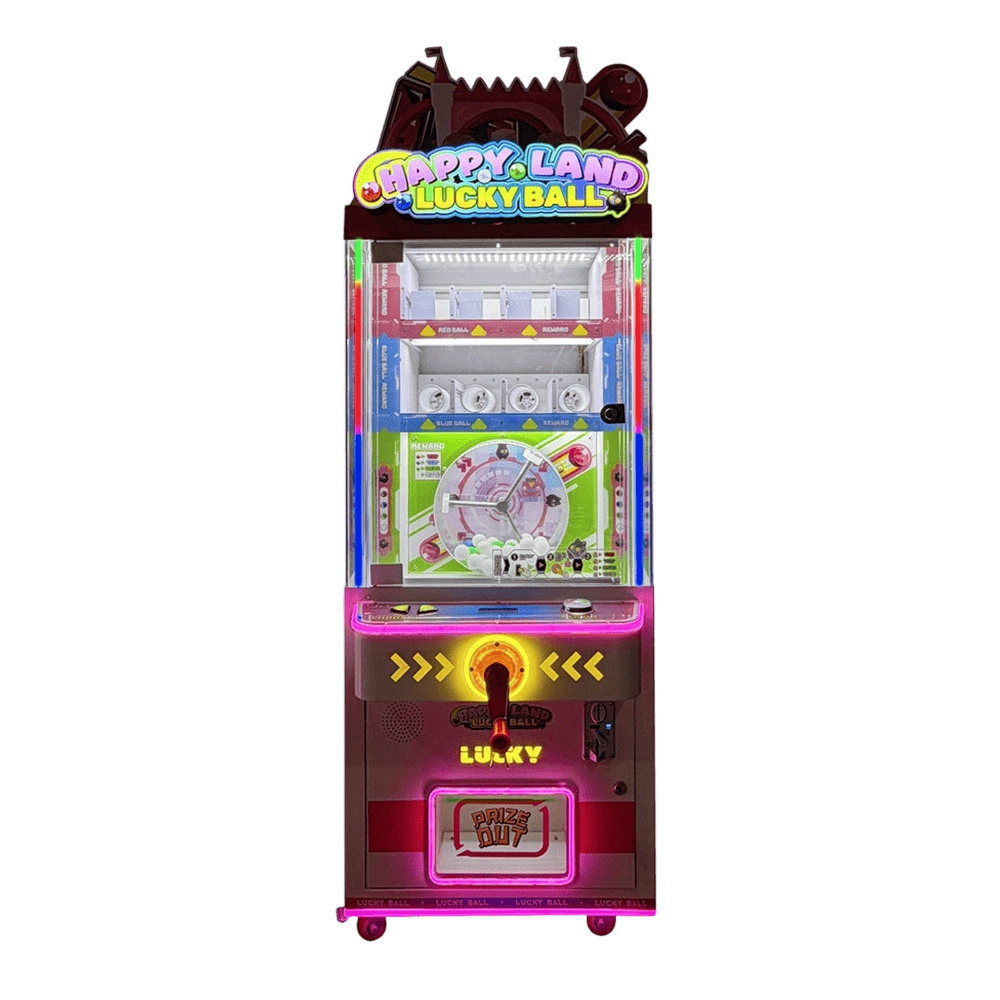
Coin Operated/Card Payment Lucky Ball Vending Toy Gift Arcade Game Machine
Coin Operated/Card Payment 2 Players SPIN ORBIT Lucky Prize Arcade Game
Coin Operated/Card Payment SPIN ORBIT Lucky Prize Arcade Game
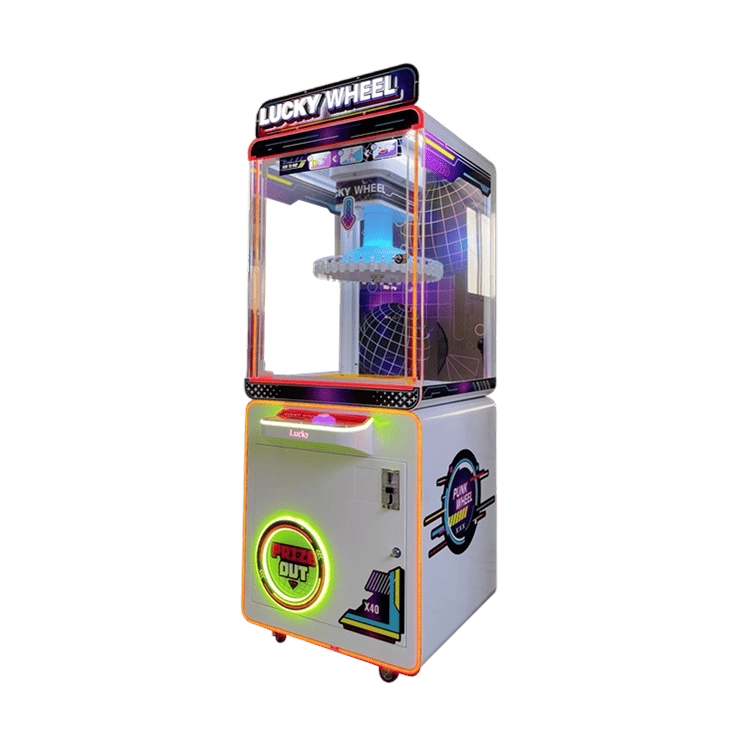
Arcade Prize Lucky Wheel Gift Machine For Amusement Areas
Get in Touch with Jiami Games
If you have any comments or good suggestions, please leave us a message; later our professional staff will contact you as soon as possible.

Innovative Entertainment, at Your Fingertips
Learn about Jiami Games and explore our expertise in console development, innovative design, and global markets.
Quick Links:
© 2026 Jiami Games.
Whatsapp: +8618520390438