






Safety, Compliance, and Regulations for Prize Dispenser Machines

- Why safety and compliance matter for arcade operators and manufacturers
- Safety reduces legal and financial risk
- User trust and commercial uptime
- Regulatory requirements shape design and market access
- Regulatory landscape and applicable standards
- Key international standards
- Regional directives and regulators
- Industry context and background
- Design, manufacturing and operational best practices
- Mechanical design and user interaction
- Electrical safety, EMC, and fire prevention
- Age-appropriate design, accessibility and labeling
- Testing, inspection, documentation and liability management
- Testing protocols and recommended inspection intervals
- Labeling, declarations and technical documentation
- Warranty, recalls and incident handling
- Practical checklist for manufacturers and operators
- Pre-launch manufacturer checklist
- Operator daily/weekly checklist
- How Jiami Games supports compliance and long-term partnerships
- References and further reading
- FAQ
- 1. What certifications should a prize dispenser machine have?
- 2. How often should prize dispenser machines be inspected?
- 3. Who is responsible if a machine causes injury — manufacturer or operator?
- 4. Are there specific rules for machines placed in public spaces vs private arcades?
- 5. Can retrofitting older prize dispenser machines meet current standards?
- 6. What documentation should I expect from a reputable manufacturer?
As someone who has worked on the design, testing and commercial deployment of arcade equipment for years, I understand that a prize dispenser machine must be safe, reliable, and compliant before it can be profitable. A well-managed compliance program reduces liability, prevents downtime, and builds customer trust. In this article I explain the key standards and regulations that affect prize dispenser machines, practical engineering and operational controls, and actionable steps for manufacturers and operators to demonstrate compliance while maintaining engaging player experiences.
Why safety and compliance matter for arcade operators and manufacturers
Safety reduces legal and financial risk
Prize dispenser machines may appear benign, but they combine moving parts, electrical systems, coin/payment devices, and often elements intended for children. Failures can cause injuries, electrical hazards, data breaches (if payment information is stored), or fires. Non-compliance risks include fines, forced recalls, repair costs, and reputational damage. In short, safety is a business requirement, not just an engineering checkbox.
User trust and commercial uptime
Operators depend on machine uptime and repeat customers. Machines that frequently break, or generate safety complaints, lose revenue and location partners. Clear maintenance procedures, visible safety labels, and certified components help build trust and minimize downtime.
Regulatory requirements shape design and market access
Without meeting regional electrical, mechanical, and product safety standards, a prize dispenser machine may not be legally sold or placed in many markets. Understanding which directives and standards apply early in product development avoids costly redesigns and delays at market entry.
Regulatory landscape and applicable standards
Key international standards
Several international standards provide a baseline for risk assessment and machine safety. ISO 12100 sets out general principles for risk assessment and risk reduction for machinery (ISO 12100). For electronic and audiovisual equipment that includes arcade consoles and prize dispensers, IEC 62368-1 addresses safety requirements for audio/video, information and communication technology equipment (IEC 62368-1).
Regional directives and regulators
Different markets add specific requirements. In the European Union, the Machinery Directive 2006/42/EC and related CE marking obligations are often applicable for mechanical aspects and general safety (EU Machinery Directive). For consumer safety in the U.S., the Consumer Product Safety Commission (CPSC) provides guidance and enforces safety laws (CPSC). Electromagnetic compatibility (EMC) and radio/telecom modules must comply with regional EMC and telecom rules (e.g., EU EMC Directive, FCC rules in the U.S.).
Industry context and background
Amusement and arcade devices are discussed in general terms on public resources such as the Amusement arcade overview on Wikipedia, which provides useful background information on typical machine configurations and hazards (Amusement arcade — Wikipedia).
Design, manufacturing and operational best practices
Mechanical design and user interaction
Design for safety starts with mechanical engineering: guard moving parts, control pinch points, and limit access to hazardous internal components. Prize dispenser mechanisms should include tamper-resistant covers and interlocks that cut power when an access panel is open. Consider forced-entry scenarios: coin boxes and prize hoppers should be secured to prevent theft while ensuring authorized maintenance access.
Electrical safety, EMC, and fire prevention
Use components certified to recognized standards and design to minimize risk of short circuits and overheating. Thermal management, fusing, and properly rated wires/connectors are basic requirements. For arcade electronics, compliance to IEC 62368-1 (or regional equivalents) is recommended. EMC filters and proper grounding reduce interference with payment readers and nearby machines.
Age-appropriate design, accessibility and labeling
If the machine is intended for children (e.g., prize clamping or kiddie ride attachments), follow relevant child-safety guidance and labeling requirements. Clear warnings, age recommendations, and emergency stop instructions should be visible. Provide accessible controls and consider inclusive design for differently-abled users.
Testing, inspection, documentation and liability management
Testing protocols and recommended inspection intervals
Establishing a testing and maintenance schedule is essential for both manufacturers (prior to shipment) and operators (in situ). Typical protocols include electrical safety testing (insulation resistance, earth continuity), mechanical load and endurance testing for prize mechanisms, and EMC pre-compliance checks.
| Aspect | Relevant Standard / Regulator | Why it matters | Recommended schedule |
|---|---|---|---|
| Risk assessment & design review | ISO 12100 | Identifies hazards & mitigations early | Once per product revision; documented |
| Electrical safety | IEC 62368-1 | Prevents shocks & fire | At manufacture; in-field annually or per incident |
| Mechanical endurance | Best practice / internal test plans | Ensures prize mechanisms survive duty cycles | Type testing pre-production; spot-checks monthly |
| EMC / Radio | Region-specific (FCC, EU EMC) | Prevents interference & regulatory violations | At design validation; after major changes |
Labeling, declarations and technical documentation
Maintain a Technical File (or equivalent) that documents design rationale, risk assessments, test reports, component certifications, and user/maintenance manuals. For EU market access, CE marking requires a Declaration of Conformity backed by technical documentation. For U.S. distribution, retain evidence of compliance and inspection logs to satisfy CPSC or other inquiries.
Warranty, recalls and incident handling
Have a clear incident reporting procedure and recall plan. Timely response to hazards reduces liability and preserves customer relationships. Maintain traceability from serial numbers to production batches and component suppliers to enable targeted recalls where necessary.
Practical checklist for manufacturers and operators
Pre-launch manufacturer checklist
- Complete a formal risk assessment per ISO 12100.
- Certify electronics to applicable safety standards (IEC 62368-1 or regional equivalent).
- Perform endurance testing of prize mechanisms to expected duty cycles.
- Prepare complete technical documentation and user/maintenance manuals.
- Label machines clearly with warnings, emergency stop locations, and manufacturer contact.
Operator daily/weekly checklist
- Visual inspection for loose panels, exposed wiring, or jammed mechanisms.
- Verify emergency stop and interlocks function correctly.
- Log incidents, maintenance and cash collection events for traceability.
- Schedule periodic professional electrical inspections annually or per local requirements.
How Jiami Games supports compliance and long-term partnerships
Jiami Games is one of the leading arcade game machine manufacturers in China, specializing in the research and development and production of prize-winning game consoles and children's arcade game consoles. Located in Panyu, Guangzhou, the company has over 70 game engineers, has developed more than 100 original game programs, and sells over 20,000 game consoles monthly. Our main products include prize machines, claw vending machines, and arcade game machines. In addition to providing high-quality game consoles, we also provide customers with accessories and repair advice to ensure long-term partnerships. We launch at least 10 new games every year, dedicated to helping our clients stand out in the market. Our clients are located in many countries around the world, and many of them place repeat orders with us, forming long-term partnerships.
We prioritize long-term customer relationships and strive to offer customized solutions that help businesses stand out. Our commitment to quality, innovation, and customer service has earned us a strong reputation in the amusement industry. Jiami Games strengths include in-house engineering, rapid game iteration, and robust quality controls aligned with international safety expectations. Our main product lines—prize game machines, pinball game machines, and shooting game machines—are designed with maintainability and safety in mind, and we provide detailed maintenance guides, spare parts, and repair consultancy to every customer.
References and further reading
For regulatory texts and standards, consult the primary sources directly:
- ISO 12100 — Safety of machinery: Risk assessment
- IEC 62368-1 — Audio/video and IT equipment safety
- EU Machinery Directive 2006/42/EC
- U.S. Consumer Product Safety Commission (CPSC)
- Amusement arcade — background on machine types
FAQ
1. What certifications should a prize dispenser machine have?
At minimum, machines should meet applicable electrical safety standards (e.g., IEC 62368-1 or local equivalents), EMC requirements for electronic devices, and regional directives such as the EU Machinery Directive for mechanical safety. Products intended for children should also consider toy safety or child-specific guidance where applicable. Maintain test reports and a Technical File to demonstrate conformity.
2. How often should prize dispenser machines be inspected?
Perform daily visual checks by on-site staff for obvious hazards. Monthly checks for mechanical wear and monthly-to-quarterly software/firmware review are common. Annual professional electrical inspections and a formal review after any incident are recommended. The exact schedule should be based on duty cycle and location conditions.
3. Who is responsible if a machine causes injury — manufacturer or operator?
Liability depends on jurisdiction and circumstances. Manufacturers are typically responsible for design defects and inadequate warnings, while operators can be liable for poor maintenance or ignoring known hazards. Keeping maintenance logs, following manufacturer instructions, and using certified components reduces legal exposure for both parties.
4. Are there specific rules for machines placed in public spaces vs private arcades?
Public installations may be subject to additional municipal safety codes, fire regulations, and accessibility requirements. Always check local building codes and venue rules. Operators placing machines in venues should have written agreements that clarify maintenance responsibilities and compliance expectations.
5. Can retrofitting older prize dispenser machines meet current standards?
Often yes, but feasibility depends on the machine's design. Common retrofits include replacing non-compliant power supplies, adding interlocks, updating grounding, and improving guarding. A formal risk assessment should guide retrofits, and any changes should be documented and tested to demonstrate compliance.
6. What documentation should I expect from a reputable manufacturer?
You should receive a user manual, maintenance guide, safety warnings, component certificates (e.g., power supply safety), test reports for electrical and EMC compliance, and traceability information like serial numbers and batch records. For EU sales, ask for the Declaration of Conformity and access to the Technical File on request.
If you have additional questions or want to discuss compliance for a specific prize dispenser machine model, contact our technical team. To view our product range or request a quote, please reach out to Jiami Games — we provide customized solutions, spare parts, and repair guidance to ensure your machines remain safe, compliant, and profitable.
Contact us to evaluate your machines, request compliance documentation, or learn more about our prize game machine, pinball game machines, and shooting game machines.
Setting Up Coin-Operated Arcade Areas: Compliance & Profit Tips
Ticket Redemption vs Prize Dispensing: Which Coin-Op to Buy?
Anti-Counterfeit Features for Arcade Game Coins
ROI Guide: Profits from Coin Operated Amusement Machines
FAQs
How does Jiami Games ensure product quality?
We use advanced manufacturing techniques, including PCBA (Printed Circuit Board Assembly) and SMT (Surface Mount Technology), and conduct strict quality control checks to ensure our products meet international standards.
What is the minimum order quantity (MOQ)?
The minimum order quantity for our arcade machines is 1 piece. Larger orders qualify for additional customization options.
How can I customize the game machine?
Customization options include machine title writings, stickers, console designs, and even full personalization of machine body color, music, lights, and language, based on order quantities.
How many players can play the game at once?
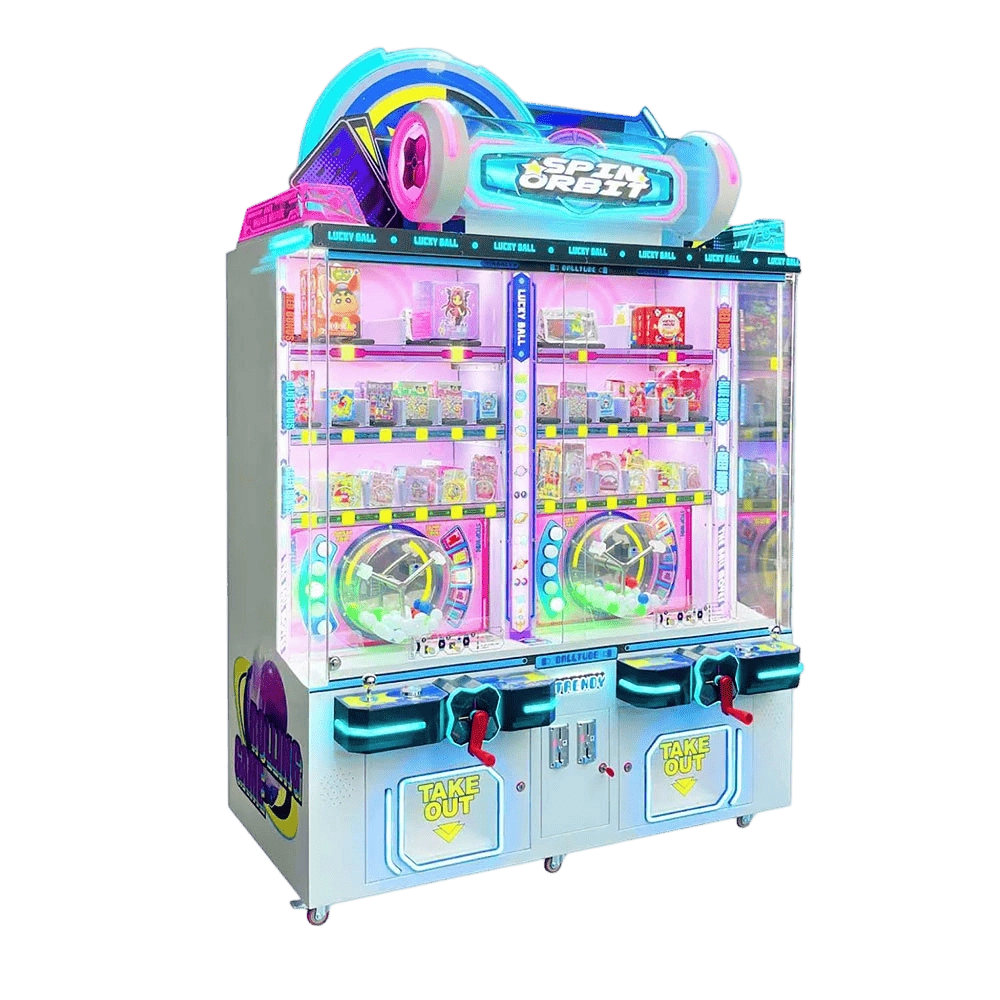
The SPIN ORBIT Lucky Prize Arcade Game is designed for 2 players, allowing simultaneous gameplay for added fun.
What is the gameplay of the SPIN ORBIT Lucky Prize Arcade Game?
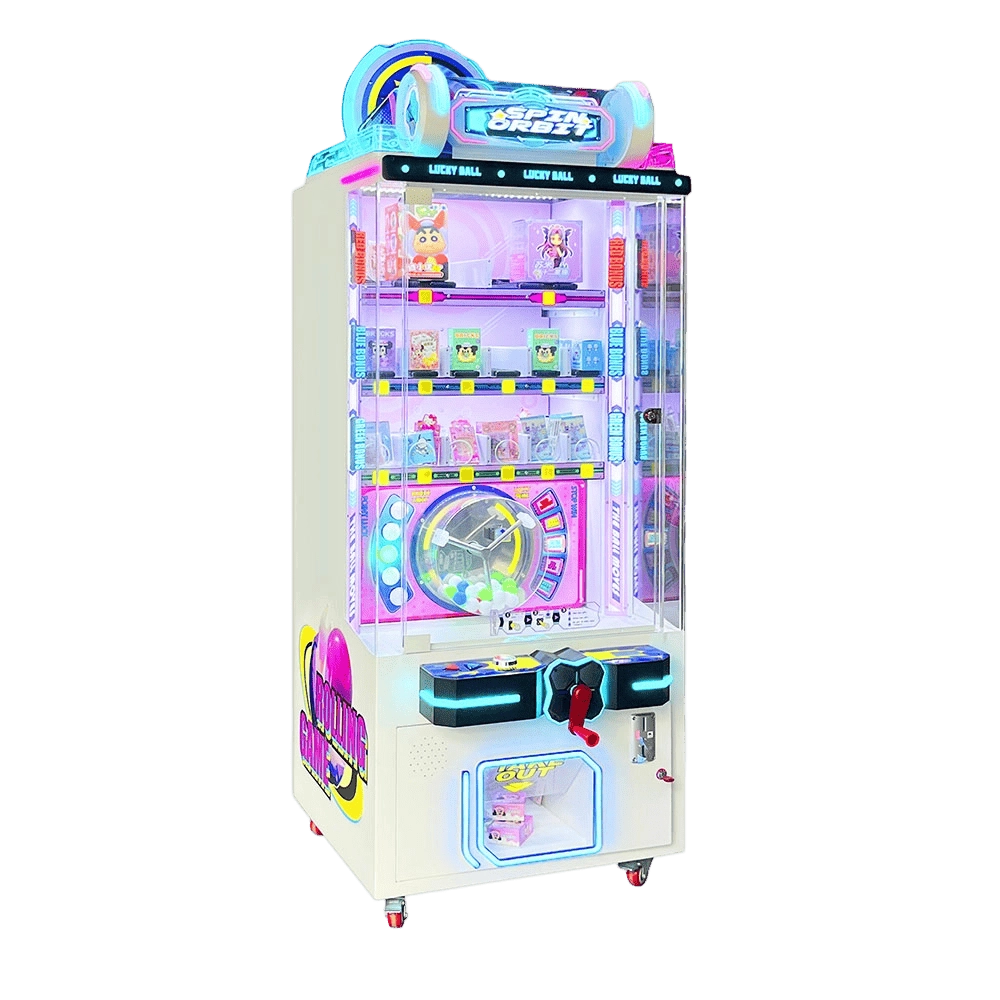
Players use the joystick to guide the ball into a designated hole. Each color ball corresponds to different prize values: red for the highest, blue and green for mid-range prizes, and white for no prize.
You May Also Like
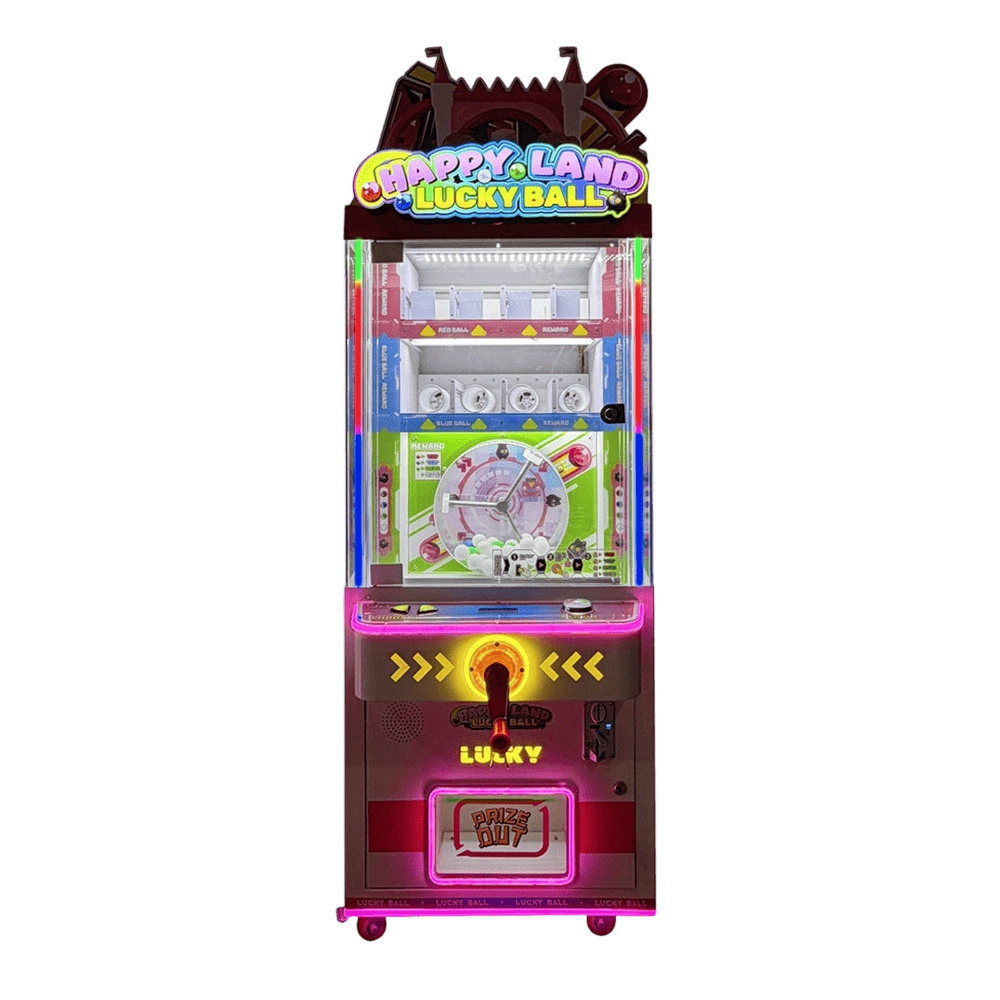
Coin Operated/Card Payment Lucky Ball Vending Toy Gift Arcade Game Machine
Coin Operated/Card Payment 2 Players SPIN ORBIT Lucky Prize Arcade Game
Coin Operated/Card Payment SPIN ORBIT Lucky Prize Arcade Game
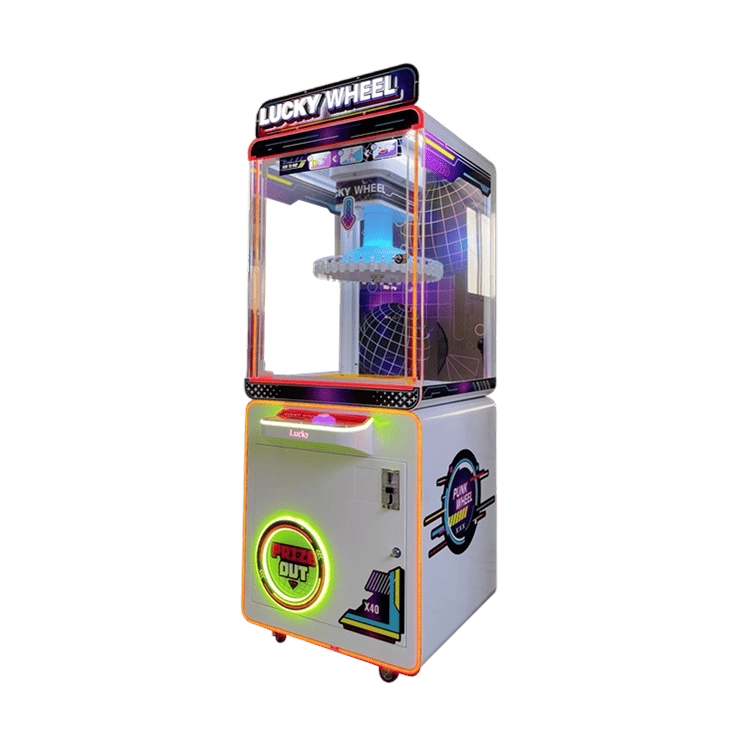
Arcade Prize Lucky Wheel Gift Machine For Amusement Areas
Get in Touch with Jiami Games
If you have any comments or good suggestions, please leave us a message; later our professional staff will contact you as soon as possible.

Innovative Entertainment, at Your Fingertips
Learn about Jiami Games and explore our expertise in console development, innovative design, and global markets.
Quick Links:
© 2026 Jiami Games.
Whatsapp: +8618520390438