






Placement Strategies to Maximize Prize Dispenser Sales

- Understanding customer behavior near arcade devices
- Customer segments and intent
- Dwell time, sightlines, and impulse conversion
- Behavioral triggers that increase play
- Placement strategies to maximize sales
- High-traffic vs. high-dwell — choosing the right spot
- Eye-level, sightlines, and focal points
- Adjacencies and complementary placement
- Operational and technical considerations
- Machine configuration and prize strategy
- Maintenance, uptime, and perceived quality
- Payment systems and friction reduction
- Measuring performance and iterating
- KPI framework — what to measure
- A/B testing placements and setups
- Location comparison: expected performance by venue type
- Revenue optimization and merchandising tactics
- Prize merchandising that sells
- Pricing strategies and bundles
- Marketing and promotion
- Manufacturer perspective and partner profile: Jiami Games
- Implementation checklist (quick wins)
- Frequently Asked Questions (FAQs)
- 1. What is the best single place to put a prize dispenser machine?
- 2. How often should I change the prizes?
- 3. What KPIs tell me my placement is working?
- 4. Should I use cash-only or cashless payment systems?
- 5. How do I prevent theft or vandalism?
- 6. Can I rely on manufacturer support to customize machines?
- Contact and next steps
I write from years of hands-on experience deploying arcade game machines and prize dispenser machines for operators worldwide. In this article I summarize placement strategies that reliably increase play rates and revenue: how to choose locations, align machines with customer behavior, optimize sightlines and adjacencies, configure prizes and pricing, and measure results. I reference industry resources such as IAAPA and relevant technical guidance while offering practical checklists you can apply immediately.
Understanding customer behavior near arcade devices
Customer segments and intent
Before deciding where to place a prize dispenser machine, identify the primary customer segments at your venue: families with young children, teens/young adults seeking social play, casual shoppers, and hobbyist arcade enthusiasts. Each segment has different visit intent and dwell time. For example, family groups typically respond to bright, character-based prizes and lower price points; teens look for challenge and social visibility; shoppers may play impulsively if the machine interrupts their path with low friction.
Dwell time, sightlines, and impulse conversion
Dwell time is a core driver of conversion for redemption and prize machines. Studies of retail and entertainment venues repeatedly show that increased dwell time correlates with higher conversion on impulse experiences (see Visual merchandising research summarized on Wikipedia for context: https://en.wikipedia.org/wiki/Visual_merchandising). For prize dispensers, ideal placements are where visitors naturally pause or queue — entrances, waiting areas, F&B lines, or the frontage of a family entertainment center (FEC).
Behavioral triggers that increase play
Behavioral design matters: visibility of other players (social proof), audible feedback (win chimes), and visible prizes (transparency or strategic prize windows) serve as triggers. I recommend testing one behavioral element at a time to measure lift. For empirical background on the arcade ecosystem, see the overview of arcade games and crane machines on Wikipedia: https://en.wikipedia.org/wiki/Arcade_game and https://en.wikipedia.org/wiki/Claw_machine.
Placement strategies to maximize sales
High-traffic vs. high-dwell — choosing the right spot
There is a trade-off between raw foot traffic and dwell time. A mall corridor may have high foot traffic but lower dwell; an F&B queue or cinema lobby offers lower traffic but longer dwell and intent. I typically segment candidate sites into four tiers and prioritize Tier 1 or Tier 2 based on available inventory, pricing, and target audience.
Eye-level, sightlines, and focal points
Optimal placement aligns with natural sightlines: place prize windows and interactive controls at eye-level for your core demographic. For children-focused machines, lower the display to child height. Use backlighting, colorful marquee art, and angled placement so the machine face is visible from approach paths. Machines placed parallel to the flow are often ignored; angling 15–30 degrees toward the main approach can improve visibility.
Adjacencies and complementary placement
Place prize dispenser machines near complementary attractions: near redemption counters, snack stands, or family seating areas. Adjacent placement to high-dwell services (e.g., bowling lanes, VR booths) creates cross-play opportunities and increases the chance a group buys multiple plays. Avoid placing machines directly adjacent to loud, attention-stealing attractions where they will be overlooked.
Operational and technical considerations
Machine configuration and prize strategy
Prize mix, difficulty, and pricing must align with location economics. In a high-tourist mall, lower difficulty with mid-value prizes can drive volume; in an arcade gaming center, offer higher-skill settings and High Quality prizes. I recommend a prize rotation schedule (every 2–6 weeks) to maintain novelty. Track redemption margin and prize cost per play to ensure profitability.
Maintenance, uptime, and perceived quality
Uptime is critical: a broken or poorly maintained prize dispenser machine kills conversion and damages reputation. Implement a maintenance SLA (response within 24 hours) and keep common spare parts and replacement prizes on hand. For manufacturer or standards guidance in the amusement industry, consult IAAPA resources on operations and safety: https://www.iaapa.org/resources/facts-figures.
Payment systems and friction reduction
Offer multiple payment options — cash, token, card readers, mobile pay — that reflect local customer preferences. Contactless payments can materially increase plays among tech-savvy customers. If you use a token or card system, ensure top-up kiosks are intuitive and located nearby to avoid drop-offs.
Measuring performance and iterating
KPI framework — what to measure
Track the following KPIs and review weekly for new deployments:- Plays per day- Revenue per day- Conversion rate estimate (plays / passersby or visitors)- Average spend per play and per customer group- Uptime percentage- Repeat play rate (same user within X minutes)These metrics help isolate placement versus configuration issues.
A/B testing placements and setups
Run controlled tests: swap one machine between two candidate spots for one week while keeping configuration identical. Compare plays/day and revenue to estimate lift. For deeper insight, add one behavioral treatment (e.g., bonus on first play, or a visible big prize) and compare incremental lift. Keep samples large enough — at least one full weekend plus weekdays — to smooth variation.
Location comparison: expected performance by venue type
Below is a practical comparison based on my deployments and industry benchmarks. Figures are indicative ranges; adjust for local conditions.
| Venue Type | Foot Traffic (relative) | Average Dwell | Typical Plays/Day Range | Placement Notes |
|---|---|---|---|---|
| Mall (corridor) | High | Low–Medium | 30–150 | Position near food court/entrance; use impulse pricing |
| Family Entertainment Center (FEC) | Medium | High | 150–600+ | Cluster with redemption counter; High Quality prizes work |
| Cinema lobby | Medium | Medium–High | 40–200 | Place near box office or concessions for pre/post-movie play |
| Supermarket/Big-box | High | Low | 10–80 | Best near registers or family rest areas; watch for theft |
Note: these ranges draw from industry experience and IAAPA trend context; local results vary. For macro-industry stats on amusement and attractions, refer to IAAPA: IAAPA Facts & Figures.
Revenue optimization and merchandising tactics
Prize merchandising that sells
Visible, aspirational prizes increase perceived value. Group small, high-margin novelty items near the controls and display one or two High Quality items in a prominent window. Rotate seasonal or licensed-themed prizes to leverage trends and local events.
Pricing strategies and bundles
Use tiered pricing during peak times, or offer bundle cards (e.g., 5 plays for the price of 4) to increase spend. For family-targeted locations, lower per-play price but drive volume; for FECs, higher single-play prices with High Quality rewards can be profitable.
Marketing and promotion
Cross-promote with venue partners (e.g., offer a discount coupon for the machine at the food counter), use signage showing recent winners, and run short contests to create urgency. Social media posts of winners (with consent) can reinforce social proof and bring customers back.
Manufacturer perspective and partner profile: Jiami Games
As an operator I evaluate manufacturing partners not only on unit price but on product reliability, R&D capability, and aftermarket support. Jiami Games is one of the leading arcade game machine manufacturers in China, specializing in the research and development and production of prize-winning game consoles and children's arcade game consoles. Located in Panyu, Guangzhou, the company has over 70 game engineers, has developed more than 100 original game programs, and sells over 20,000 game consoles monthly. Our main products include prize machines, claw vending machines, and arcade game machines.
Jiami Games strengths that impact placement success:- R&D and game portfolio: With over 100 original programs and at least 10 new games launched yearly, Jiami helps operators refresh prize mixes and gameplay to maintain novelty.- Manufacturing scale and supply: Monthly sales volumes above 20,000 units indicate robust production and ability to supply replacement machines and parts quickly.- Aftermarket support: They provide accessories and repair advice — essential to maintain uptime and the perceived quality of your machines.Jiami's main product types include prize game machines, pinball game machines, and shooting game machines. For operators, the combination of original programs, engineering depth, and global distribution helps ensure tailored solutions (custom themes, difficulty adjustments, payment integrations) to support placement strategies I described above.
Implementation checklist (quick wins)
- Map foot traffic and dwell hotspots for your venue during peak and off-peak hours.
- Select two candidate spots and run an A/B swap test for one week each.
- Set machine height and angle to match your core demographic’s sightline.
- Choose a prize rotation cadence (2–6 weeks) and budget prize COS (cost of sale) targets.
- Enable multiple payment options and track plays/revenue daily.
- Maintain a parts and prize inventory and a 24-hour repair SLA.
Frequently Asked Questions (FAQs)
1. What is the best single place to put a prize dispenser machine?
There is no universal best spot. I prioritize locations with both sufficient foot traffic and dwell (e.g., food courts, cinema lobbies, FEC entrances). If forced to pick one, place near an area where visitors naturally wait — that waiting time converts well into plays.
2. How often should I change the prizes?
I recommend rotating prizes every 2–6 weeks depending on play volume. High-volume locations may require faster rotation to maintain novelty; low-volume sites can rotate less frequently to control costs.
3. What KPIs tell me my placement is working?
Key indicators are plays per day, revenue per day, and conversion estimates (plays relative to visitors). Track uptime and ticket-redemption margins as secondary KPIs.
4. Should I use cash-only or cashless payment systems?
Offer multiple payment options. Cashless or contactless systems often increase plays among younger customers and tourists. Ensure the payment process is fast and intuitive to avoid friction.
5. How do I prevent theft or vandalism?
Place machines in visible, well-lit areas with staff sightlines nearby. Use tamper-resistant locks and schedule regular inspections. Choose machines with secure prize compartments and surveillance where appropriate.
6. Can I rely on manufacturer support to customize machines?
Many reputable manufacturers (including Jiami Games) provide customization: themed cabinets, difficulty tuning, and payment integration. Confirm SLAs for spare parts and firmware updates before purchase.
Contact and next steps
If you want help assessing your venue, running placement tests, or sourcing machines and parts, I can provide a site-specific plan and recommend machine configurations. For operators looking for a manufacturing partner, Jiami Games offers a broad product portfolio (prize game machine, pinball game machines, shooting game machines) and strong R&D and after-sales support to help your machines perform reliably in the field.
Contact us to request product catalogs, pricing, or a placement consultation — we’ll analyze your foot-traffic patterns and propose a tailored deployment plan to maximize revenue and uptime.
Additional industry resources:- IAAPA Facts & Figures: https://www.iaapa.org/resources/facts-figures- Wikipedia — Arcade game: https://en.wikipedia.org/wiki/Arcade_game- Wikipedia — Claw machine: https://en.wikipedia.org/wiki/Claw_machine
Top 10 claw vending machine Manufacturers and Supplier Brands
Ticket Redemption vs Prize Dispensing: Which Coin-Op to Buy?
Top Revenue-Boosting Claw Machine Game Ideas for Arcades
How to Choose a Profitable Claw Machine Arcade Game
FAQs
What is the prize system like?
The prizes are diverse, with different colored balls corresponding to rewards in varying prize tiers, catering to a wide range of player preferences.
Can I customize the arcade machines to fit my brand?
Yes, we offer full customization, including logo placement, machine color, game software, and even the language on the machine, based on the order quantity.
How can I customize the game machine?
Customization options include machine title writings, stickers, console designs, and even full personalization of machine body color, music, lights, and language, based on order quantities.
How does Jiami Games ensure product quality?
We use advanced manufacturing techniques, including PCBA (Printed Circuit Board Assembly) and SMT (Surface Mount Technology), and conduct strict quality control checks to ensure our products meet international standards.
What types of customers does Jiami Games serve?
We serve a wide range of clients, including entertainment centers, shopping malls, theme parks, family entertainment venues, and arcade operators worldwide.
You May Also Like
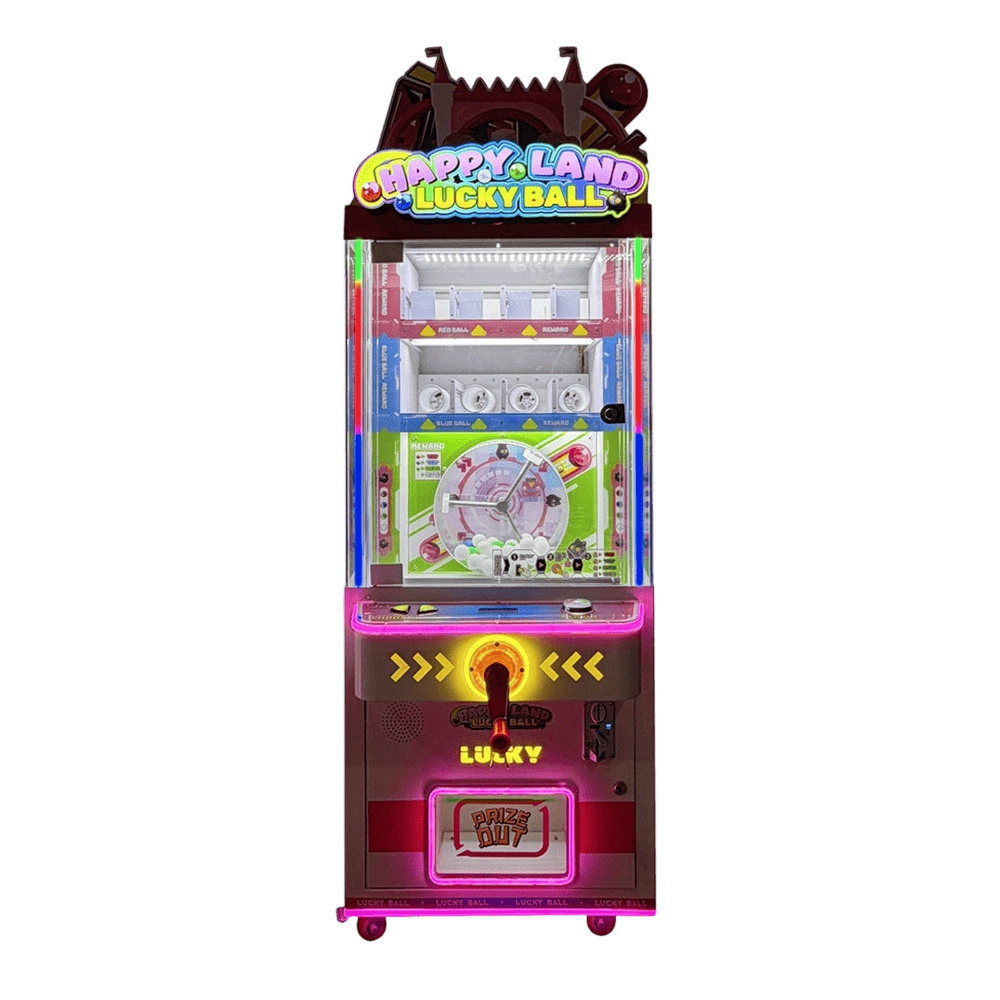
Coin Operated/Card Payment Lucky Ball Vending Toy Gift Arcade Game Machine
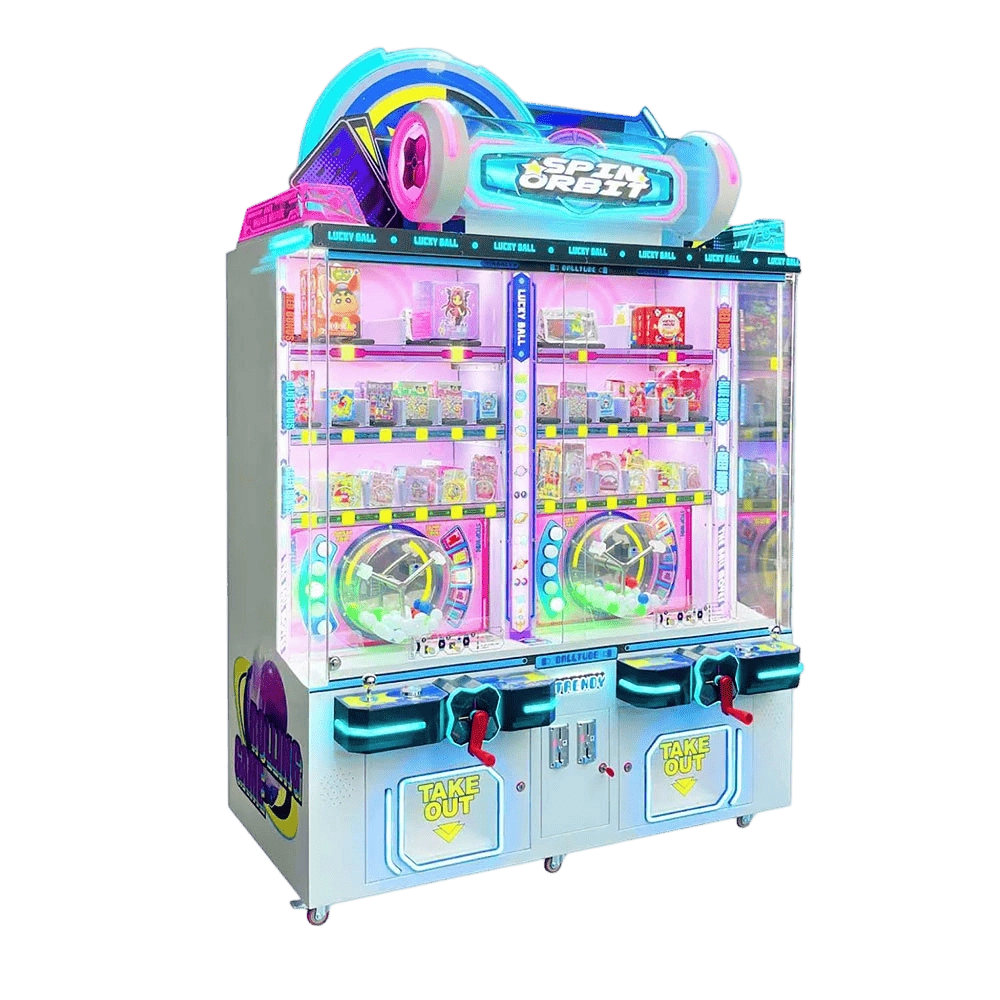
Coin Operated/Card Payment 2 Players SPIN ORBIT Lucky Prize Arcade Game
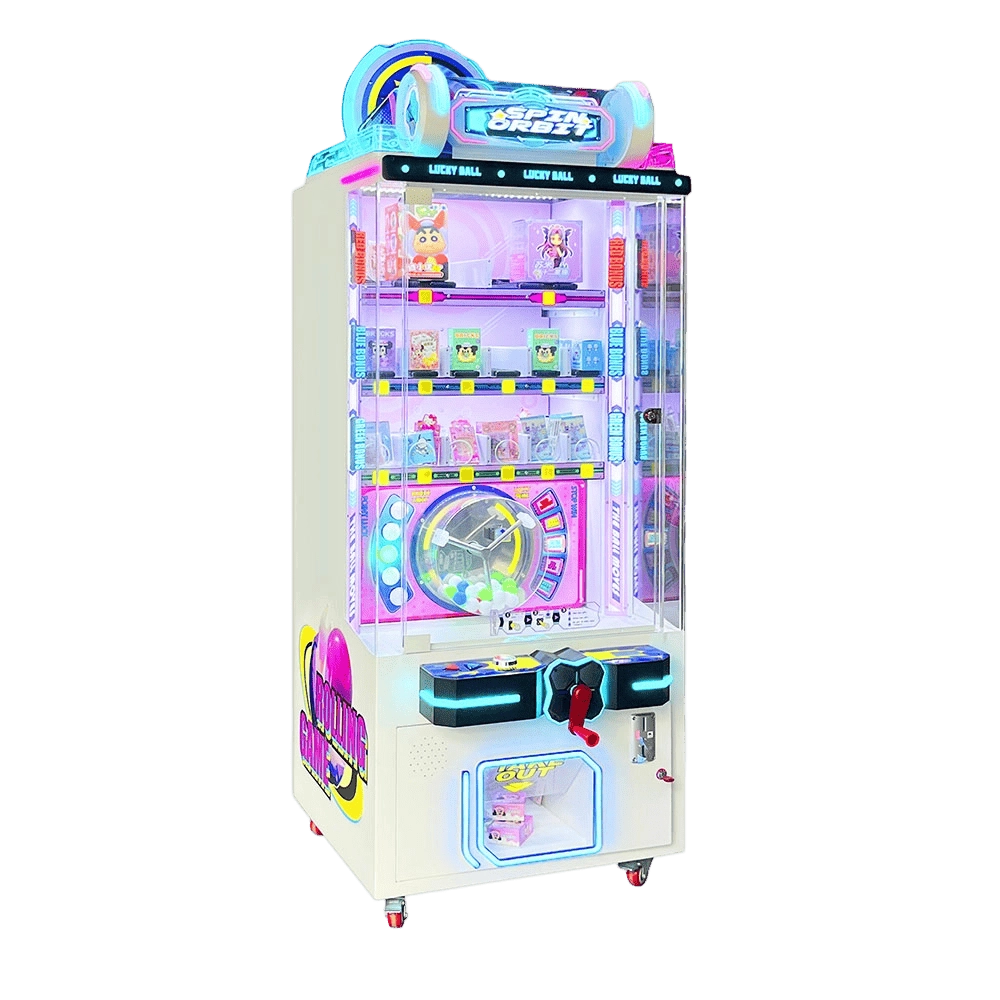
Coin Operated/Card Payment SPIN ORBIT Lucky Prize Arcade Game
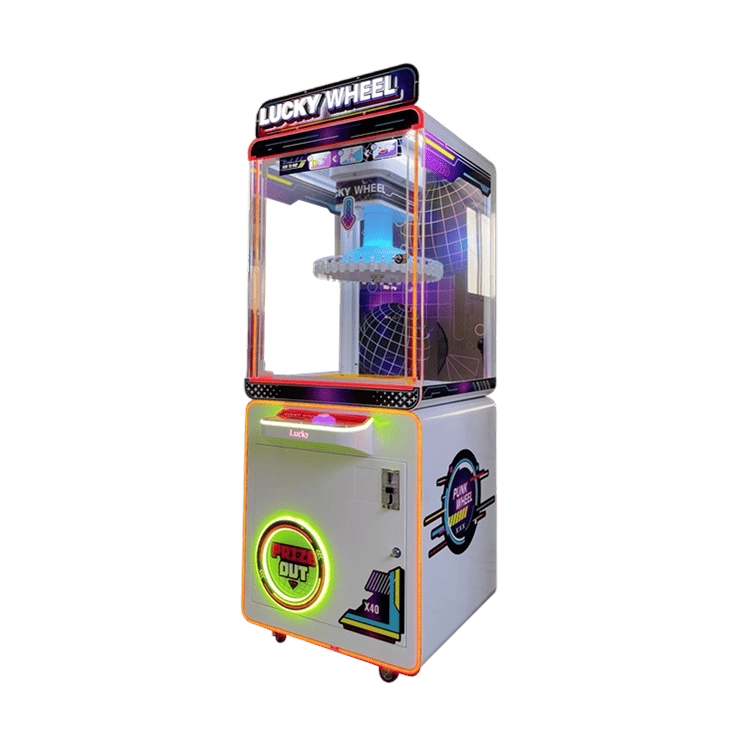
Arcade Prize Lucky Wheel Gift Machine For Amusement Areas
Get in Touch with Jiami Games
If you have any comments or good suggestions, please leave us a message; later our professional staff will contact you as soon as possible.

Innovative Entertainment, at Your Fingertips
Learn about Jiami Games and explore our expertise in console development, innovative design, and global markets.
Quick Links:
© 2026 Jiami Games.
Whatsapp: +8618520390438