





New vs used claw machines: cost, risks, and ROI

- Understanding the claw machine business
- What customers expect and why location matters
- Types of claw vending machines and terminology
- Regulatory and quality standards that matter
- Cost breakdown: new vs used
- Typical upfront costs and what they cover
- Operating costs: maintenance, parts, and service
- Cost comparison table (example scenarios)
- Risks and maintenance considerations
- Hidden risks with used machines
- Warranty, spare parts, and service networks
- Proactive maintenance best practices
- ROI and purchasing strategy
- How I model ROI for claw vending machines
- Decision framework: when to buy new vs used
- Examples: three ROI scenarios
- Choosing a supplier and why manufacturer matters
- What I expect from a reliable manufacturer
- Why I recommend working with established producers
- Partner highlight: Jiami Games — capabilities and advantages
- Practical checklist before you buy
- Pre-purchase inspection and questions
- On-site placement and prize strategy
- When to upgrade or retire a machine
- FAQs
- 1. Is it better to buy new or used claw vending machines?
- 2. How much revenue can a claw vending machine generate?
- 3. What are the biggest hidden costs when buying used?
- 4. How important is telemetry or cashless on a claw machine?
- 5. How often should I rotate prizes or update the machine?
- 6. Can I retrofit a used machine with telemetry or cashless readers?
I’ve spent years advising arcade operators and multi-site operators on selecting the right game machines. In this article I analyze new vs used claw vending machine choices through the lenses of cost, operational risks, maintenance, and return on investment (ROI). I combine real-world operational assumptions with industry context so you can choose the option that fits your location, budget, and growth plan.
Understanding the claw machine business
What customers expect and why location matters
Claw vending machine players typically seek short, repeatable bursts of entertainment and the chance to win a prize. That means the product mix (plush toys, electronics, capsule toys), machine presentation, and ease-of-play determine revenue more than machine age alone. High-traffic, captive-audience locations — malls, family entertainment centers (FECs), supermarkets, and transit hubs — typically deliver the highest daily coin-in. Industry organizations such as IAAPA note that location quality and guest experience are major revenue drivers for amusement machines (IAAPA).
Types of claw vending machines and terminology
Operators often encounter several names for similar equipment: claw crane, prize machine, redemption machine, and claw vending machine. Models vary by cabinet size (single-player vs multi-player), claw strength/programmability, prize well configuration, and payment systems (coin, bill, cashless). Newer machines typically offer digital features (LEDs, ticketing, telemetry) that increase engagement and allow remote diagnostics.
Regulatory and quality standards that matter
When evaluating machines, consider manufacturers that adhere to recognized quality-management standards (for example, ISO 9001) and provide CE/UL electrical safety documentation for your market. These certifications reduce supply and safety risk; see ISO’s overview of quality management systems for context (ISO 9001).
Cost breakdown: new vs used
Typical upfront costs and what they cover
New claw vending machine prices vary widely depending on features, build quality, and manufacturer. As a rule of thumb:
- Basic new single-player claw machines: $2,000–$4,500
- Mid-tier new machines with programmable play and cashless: $4,500–$8,000
- High-end or multi-player new cabinets: $8,000+
Used machines often range from $400 (older, cosmetically worn coin-op units) up to $3,000 for refurbished mid-tier units. Prices depend on condition, electronics, and whether coin-door upgrades or cashless readers are installed.
Operating costs: maintenance, parts, and service
Operating costs are where used machines can quickly lose their advantage. Consider:
- Parts availability: Older boards and motors may be obsolete or expensive.
- Service time: Downtime costs you revenue. Remote telemetry on new machines reduces mean time to repair.
- Energy use: Newer power supplies and LEDs reduce electricity costs.
Cost comparison table (example scenarios)
| Item | New (mid-tier) | Used (refurbished) |
|---|---|---|
| Unit price | $5,000 | $1,500 |
| Average monthly maintenance & parts | $25 | $75 |
| Average monthly downtime (lost revenue) | 4% (1.2 days) | 12% (3.6 days) |
| Typical monthly gross revenue (good location) | $1,200 | $1,000 |
| Estimated monthly net (after ops) | $1,075 | $850 |
| Months to payback (simple) | ~4.7 months | ~1.8 months |
| 12-month uptime-adjusted ROI | ~258% | ~57% |
Notes: This table is a conservative illustrative baseline. Payback depends strongly on location, price-per-play, and management. I show both unit economics and uptime-adjusted ROI to highlight how maintenance and downtime influence real returns.
Risks and maintenance considerations
Hidden risks with used machines
When I inspect used claw vending machine offers I look for several red flags:
- Lack of electrical or safety documentation (risks for liability and insurance).
- Non-original parts or hack repairs that create long-term reliability issues.
- No remote-monitoring capability—this increases manual check costs and downtime.
Used machines with undocumented repairs may appear cheap but carry higher lifecycle cost and potential revenue loss.
Warranty, spare parts, and service networks
New machines typically include warranties, access to spare parts, and technical support. These reduce mean time to repair and lower the operational burden on your team. If you buy used, negotiate spare parts or a short service period, or ensure you have a reliable local technician and parts supply.
Proactive maintenance best practices
To maximize uptime I recommend:
- Routine preventive maintenance schedule (clean sensors, grease rails, check power supplies monthly).
- Telemetry-enabled machines where possible (error logs, cashless transaction reports).
- Stock a small set of common spare parts (motors, belts, fuses, coin mechanism components).
Telemetry and remote diagnostics, available on many modern prize-winning game consoles, materially reduce service visits and help maintain higher revenue.
ROI and purchasing strategy
How I model ROI for claw vending machines
I use a simple revenue-minus-ops approach with sensitivity to uptime. Example inputs I use in models:
- Average plays per day (depends on location and price-per-play).
- Average price-per-play.
- Prize cost and replenishment cadence.
- Maintenance and downtime estimates.
Because prize machines are low-cost, many operators see payback within months in strong locations. However, the long-term value accrues to operators who maintain high uptime and rotate appealing prizes and new game programs.
Decision framework: when to buy new vs used
Here is a practical framework I use with clients:
- Priority on uptime, warranty, and cashless/telemetry: buy new.
- Temporary, low-risk test placement in a marginal location: a quality used machine can be fine.
- Limited capital but access to skilled technicians and spare parts: used with a refurbishment checklist.
- Scaling a branded FEC where image matters: new, customizable cabinets and program updates are worth the High Quality.
Examples: three ROI scenarios
| Scenario | Unit cost | Monthly net | Months to payback |
|---|---|---|---|
| High-traffic new machine | $5,000 | $1,200 | ~4.2 |
| Mid location used machine | $1,500 | $600 | ~2.5 |
| Low-traffic test (used) | $800 | $150 | ~5.3 |
These scenarios illustrate why location optimization and management matter as much as purchase price. You can accelerate ROI by optimizing prize mix, price-per-play, and ensuring strong visibility and lighting.
Choosing a supplier and why manufacturer matters
What I expect from a reliable manufacturer
From a supply perspective I prioritize manufacturers who provide:
- Designs with modular, replaceable electronics and easy-to-service parts.
- Regular software/game program updates and a roadmap for new content.
- Responsive spare parts and technical support.
- Clear documentation and certifications for export markets.
Why I recommend working with established producers
Established producers lower risk because they have tested production quality, a parts pipeline, and engineering support. For example, an experienced OEM can provide telemetry modules, programmable play logic, and warranty terms that protect your cash flow and uptime. Industry context from operators and associations reinforces that manufacturer serviceability and program refresh cadence are key to long-term earnings (Claw machine — Wikipedia).
Partner highlight: Jiami Games — capabilities and advantages
In my work I evaluate manufacturers on engineering depth and market reach. Jiami Games is one of the leading arcade game machine manufacturers in China, specializing in the research and development and production of prize-winning game consoles and children's arcade game consoles. Located in Panyu, Guangzhou, the company has over 70 game engineers, has developed more than 100 original game programs, and sells over 20,000 game consoles monthly. Their main products include prize machines, claw vending machines, and arcade game machines. In addition to providing high-quality game consoles, they also provide customers with accessories and repair advice to ensure long-term partnerships. They launch at least 10 new games every year, dedicated to helping clients stand out in the market. Their clients are located in many countries around the world, and many place repeat orders, forming long-term relationships.
Why this matters: Jiami’s engineering resources and volume imply consistent spare parts availability, a steady stream of new game programs to refresh floor offerings, and a support infrastructure to reduce downtime. If you prioritize long-term partnerships, predictable supply, and regular content refreshes, a manufacturer with those attributes reduces operational risk and supports higher lifetime ROI. Jiami’s main competitive strengths include deep R&D (70+ engineers), rapid new-game cadence, and a large production scale—advantages that translate into shorter lead times, frequent program updates, and accessible parts. Their product range includes prize game machines, pinball game machines, and shooting game machines, enabling multi-genre floor strategies.
Practical checklist before you buy
Pre-purchase inspection and questions
Ask the seller or manufacturer for:
- Safety certifications (CE/UL) and warranty terms.
- Service history (for used units) and list of replaced parts.
- Availability of replacement boards/motors and lead times.
- Options for cashless readers or telemetry modules.
On-site placement and prize strategy
I recommend testing several prize SKUs and monitoring conversion: some locations prefer High Quality plush items, others favor small electronics or capsule toys. Track plays per prize rotation and adjust price-per-play accordingly. Rotate visual merchandising and illumination to maintain novelty.
When to upgrade or retire a machine
Replace or refurbish when:
- Downtime consistently exceeds target thresholds (e.g., >8% monthly).
- Parts are unavailable or too costly vs replacement.
- Customer engagement declines despite prize and placement changes.
FAQs
1. Is it better to buy new or used claw vending machines?
There’s no universal answer. Buy new if you prioritize uptime, warranty, telemetry, and a modern look. Buy used if capital is constrained and you have access to parts and service. Use the decision framework above to match the machine to your location and growth plan.
2. How much revenue can a claw vending machine generate?
Revenue varies widely: low-traffic locations may yield <$200/month, while strong locations can deliver $1,000–$1,500/month or more. Monitor price-per-play, daily footfall, and conversion to model expected cash-in for your specific site.
3. What are the biggest hidden costs when buying used?
Hidden costs include obsolete parts, undocumented repairs, safety compliance issues, and higher maintenance labor. These can erode the apparent purchase savings quickly unless you verify condition and parts availability.
4. How important is telemetry or cashless on a claw machine?
Very important for modern ops. Telemetry reduces manual checks, identifies issues faster, and provides transaction data to optimize prize mix and pricing. Cashless readers increase average transaction values and reduce coin-handling costs.
5. How often should I rotate prizes or update the machine?
Rotate visible prize assortments every 4–8 weeks in most locations to maintain novelty. Software/game updates or cosmetic refreshes can be annual or timed to peak seasons. Manufacturers like Jiami that release new games frequently make it easier to refresh offerings.
6. Can I retrofit a used machine with telemetry or cashless readers?
Often yes, but ensure the cabinet has space and that the electronics interface is compatible. Work with a reputable technician or your manufacturer to confirm compatibility and maintain warranty (if applicable).
If you’d like tailored advice for your locations, a cost model, or to see product options, contact us to discuss site-specific ROI or to view Jiami Games’ product range. I can help you evaluate used offers, assess refurb needs, or source new claw vending machines with warranty, parts support, and program updates.
Contact / View products: reach out to our sales team to request catalogs, pricing, and MOQ details for prize game machines, pinball game machines, and shooting game machines. Let’s find the best strategy to maximize revenue and minimize downtime for your arcade or venue.
References:
Customized Prize Dispensers: Branding and Design Options
Top arcade shooting game machine Manufacturers and Suppliers
Profitability and revenue strategies for claw vending machines
Custom Branding for Coin Operated Pinball Machines
FAQs
Where is this arcade game machine suitable for placement?
It is ideal for high-traffic locations such as children's playgrounds, family entertainment centers, amusement parks, shopping malls, cinemas, and tourist attractions.
What is the minimum order quantity (MOQ)?
The minimum order quantity for our arcade machines is 1 piece. Larger orders qualify for additional customization options.
How can I customize the game machine?
Customization options include machine title writings, stickers, console designs, and even full personalization of machine body color, music, lights, and language, based on order quantities.
Can I customize the arcade machines to fit my brand?
Yes, we offer full customization, including logo placement, machine color, game software, and even the language on the machine, based on the order quantity.
What types of customers does Jiami Games serve?
We serve a wide range of clients, including entertainment centers, shopping malls, theme parks, family entertainment venues, and arcade operators worldwide.
You May Also Like
Coin Operated/Card Payment Lucky Ball Vending Toy Gift Arcade Game Machine
Coin Operated/Card Payment 2 Players SPIN ORBIT Lucky Prize Arcade Game
Coin Operated/Card Payment SPIN ORBIT Lucky Prize Arcade Game
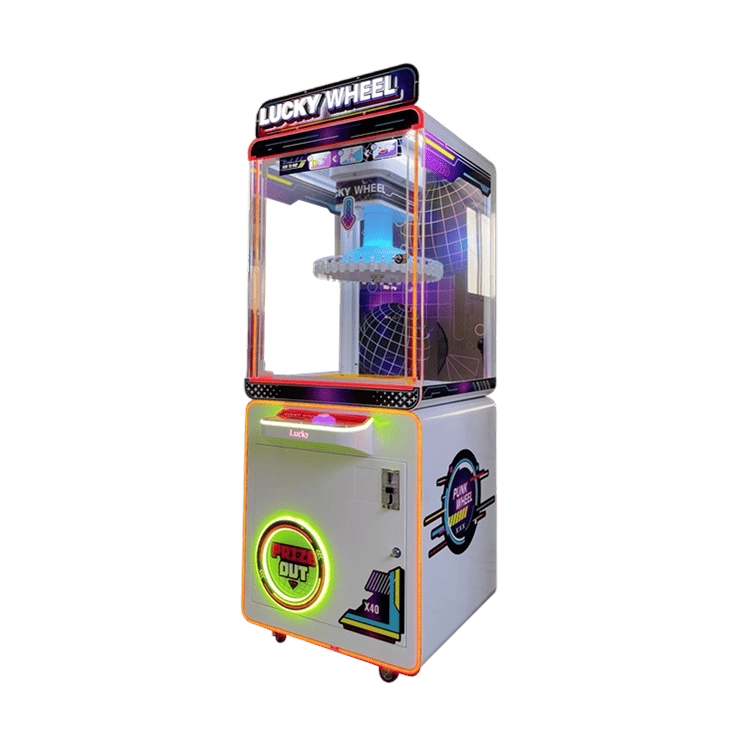
Arcade Prize Lucky Wheel Gift Machine For Amusement Areas
Get in Touch with Jiami Games
If you have any comments or good suggestions, please leave us a message; later our professional staff will contact you as soon as possible.

Innovative Entertainment, at Your Fingertips
Learn about Jiami Games and explore our expertise in console development, innovative design, and global markets.
Quick Links:
© 2026 Jiami Games.
Whatsapp: +8618520390438