





New vs Refurbished Coin Operated Pinball Machines: Pros and Cons

- Understanding the coin operated pinball machine market
- Who searches for coin operated pinball machine and why
- Industry context and trends
- New vs Refurbished Coin Operated Pinball Machines: Pros and Cons
- What I mean by new and refurbished
- Pros of buying new
- Cons of buying new
- Pros of buying refurbished
- Cons of buying refurbished
- Maintenance, parts and long-term costs
- Expected maintenance tasks and schedules
- Parts lifecycle and sourcing
- Cost of ownership: an illustrative comparison
- How to choose: decision framework for operators and collectors
- Step 1 — Define your objective
- Step 2 — Evaluate total cost and ROI
- Step 3 — Inspect and verify (for refurbished purchases)
- Vendor selection, logistics and legal considerations
- Choosing reputable sellers and manufacturers
- Shipping, installation and coin mechanisms
- Regulatory and safety notes
- Why consider Jiami Games (manufacturer profile)
- Practical buying checklist (quick reference)
- For new machines
- For refurbished machines
- For both
- Frequently Asked Questions (FAQ)
- 1. How much does a commercial coin operated pinball machine typically cost?
- 2. Are refurbished pinball machines reliable for location-based entertainment?
- 3. How long do pinball machines last?
- 4. Is it better to buy new for an arcade or refurbished to save money?
- 5. Can I convert a coin operated pinball machine to cashless payments?
- 6. Where can I find parts and repair help?
As someone who has consulted with arcade operators, family entertainment centers, and collectors for over a decade, I understand the commercial and emotional value behind every coin operated pinball machine. In this article I evaluate new versus refurbished machines across cost, durability, parts availability, warranty, player appeal and total cost of ownership so you can choose the right route for your venue or collection.
Understanding the coin operated pinball machine market
Who searches for coin operated pinball machine and why
typically falls into three buckets: commercial operators seeking reliable revenue-generating units, collectors searching for specific titles or rarity, and DIY hobbyists interested in restoration. Operators prioritize uptime, warranty and predictable cash flow; collectors prioritize authenticity and provenance; hobbyists focus on learning and cost-effective restoration.
Industry context and trends
Pinball is a niche yet resilient segment of the arcade market. Historical context can be found on Wikipedia, while broader arcade and location-based entertainment trends are regularly tracked by the International Association of Amusement Parks and Attractions (IAAPA), which highlights how operators diversify floor mixes to drive repeat visits. New machine innovation and modern rule set designs have also revived interest among younger players, influencing ROI for new purchases.
New vs Refurbished Coin Operated Pinball Machines: Pros and Cons
What I mean by new and refurbished
By new I mean factory-fresh, commercial-grade machines bought directly from manufacturers or authorized distributors (for example, contemporary manufacturers like Stern Pinball maintain current product lines and factory warranties—see Stern Pinball). Refurbished refers to machines restored to reliable working condition; refurbishing can range from a basic mechanical tune-up to full electronic, cabinet, and cosmetic restoration often documented by specialized technicians and communities such as Pinside.
Pros of buying new
- Reliability and warranty: New machines typically come with factory warranties and standardized quality control, which reduces downtime during the critical early months of operation. This is important for coin-op businesses that measure revenue daily.
- Modern features and player appeal: Contemporary new pinball machines have advanced electronics, LCDs, and modern themes that can attract a wider audience.
- Parts support: Manufacturers provide parts, software updates, and technical support for current models, simplifying maintenance.
Cons of buying new
- Higher upfront cost: New commercial machines commonly retail in the mid-to-high thousands of USD depending on model and features. For many operators, the capital outlay is significant.
- Depreciation: Like most electronics, new machines depreciate over time; if a theme becomes unpopular, resale can be challenging.
Pros of buying refurbished
- Lower initial cost: Refurbished machines often cost a fraction of a new unit, improving short-term cash flow and lowering break-even time.
- Classic appeal: For collectors and venues seeking nostalgia, well-restored vintage machines can drive strong, dedicated play patterns and branding opportunities.
- Faster ROI for certain machines: If you find a popular classic restored to excellent condition, it can deliver strong margins because acquisition cost is lower.
Cons of buying refurbished
- Variable quality and unknown history: The term refurbished spans a wide quality range. Without thorough inspection, you may inherit recurring faults, obsolete parts, or prior damage.
- Parts availability: Older electromechanical or early solid-state machines can use discontinued components; sourcing these parts can be time-consuming and sometimes expensive.
- Warranty and support limitations: Refurbished units often come with limited or no warranty unless sold by a reputable refurbisher.
Maintenance, parts and long-term costs
Expected maintenance tasks and schedules
Pinball machines require routine maintenance: playfield cleaning, rubber replacement, coil and flipper inspections, switch adjustments, and periodic board-level diagnostics. For a high-use commercial machine, I recommend weekly visual checks and cleaning, monthly deeper maintenance, and a full service quarterly. For details on mechanical behavior and electronics, community resources like Pinside provide repair guides and parts links.
Parts lifecycle and sourcing
New machines typically use parts covered by manufacturers; many vendors stock spares. For refurbished or vintage units, parts can be sourced through specialty suppliers, salvage networks, or community marketplaces. In some cases, modern equivalents or reproduction parts are available, but quality varies. When evaluating refurbished machines, verify access to critical parts (flipper coils, MPU boards, power supplies) before purchase.
Cost of ownership: an illustrative comparison
Below is a typical lifecycle cost comparison I use with clients. These figures are illustrative ranges based on industry experience and public pricing patterns; your actual figures will vary by model, location, and usage.
| Metric | New Machine | Refurbished Machine |
|---|---|---|
| Typical purchase price (USD) | $6,000 – $12,000 (modern commercial models) | $1,200 – $6,000 (varies by condition & rarity) |
| Initial downtime risk | Low (covered by warranty) | Medium-High (depends on refurbishment quality) |
| Annual maintenance (parts & labor) | $200 – $800 | $400 – $1,200 |
| Typical warranty | Manufacturer 6–24 months | Varies (often limited or none) |
| Resale value after 5 years | 50%–70% (if popular model) | 40%–80% (depends on rarity/condition) |
Sources and context: new machine price ranges are consistent with contemporary manufacturer pricing (see Stern Pinball) and industry resale observations documented on community marketplaces like Pinside. For broader industry context, consult arcade game historical summaries and IAAPA market resources (IAAPA).
How to choose: decision framework for operators and collectors
Step 1 — Define your objective
Ask: Am I buying for maximum uptime, branding and modern appeal (operator) or for authenticity and collector value? If your goal is steady revenue from a family entertainment center, prioritize new or thoroughly certified refurbished machines with service guarantees. If you are a collector, authenticity and historical significance may trump short-term uptime.
Step 2 — Evaluate total cost and ROI
Estimate average plays per day, price per play, and expected downtime. Example: a machine that averages 80 plays/day at $0.50 yields about $1,200/month gross. Subtract venue share, maintenance and capital amortization to estimate payback. For new machines, the predictability of warranty and parts support often shortens effective downtime and simplifies ROI calculations.
Step 3 — Inspect and verify (for refurbished purchases)
When buying refurbished, insist on a written checklist: detailed photos, a service log, any replaced parts (with receipts), and a functional warranty period (30–90 days minimum). If possible, witness a test run at the seller's site or request a video showing multiple game cycles. Confirm the coin mechanism, power supply, and MPU boot sequence. Use communities like Pinside to cross-reference serial numbers and known issues.
Vendor selection, logistics and legal considerations
Choosing reputable sellers and manufacturers
Work with authorized distributors or well-reviewed refurbishers. Manufacturers like Stern and established vendors maintain product documentation and parts inventories, while experienced refurbishers provide transparent service histories. For industry-level guidance, IAAPA resources and standards offer best practices for location-based entertainment operators (IAAPA).
Shipping, installation and coin mechanisms
Pinball machines are heavy and delicate. Ensure the seller provides secure crating and insured shipping. For coin-operated units, verify that the coin chute, mech and hopper are tuned for your local coinage or token system; alternatively, consider cashless conversion kits if you operate in high-card environments. Installation should include leveling, playfield tuning and initial calibration.
Regulatory and safety notes
Comply with local electrical safety regulations and venue insurance requirements. For public locations, ensure machines are anchored where necessary and that any modifications (like adding a cashless system) meet local standards. For general safety and equipment standards context, review manufacturer documentation and local electrical codes.
Why consider Jiami Games (manufacturer profile)
Jiami Games is one of the leading arcade game machine manufacturers in China, specializing in the research and development and production of prize-winning game consoles and children's arcade game consoles. Located in Panyu, Guangzhou, the company has over 70 game engineers, has developed more than 100 original game programs, and sells over 20,000 game consoles monthly. Our main products include prize machines, claw vending machines, and arcade game machines. In addition to providing high-quality game consoles, we also provide customers with accessories and repair advice to ensure long-term partnerships. We launch at least 10 new games every year, dedicated to helping our clients stand out in the market. Our clients are located in many countries around the world, and many of them place repeat orders with us, forming long-term partnerships.
From my perspective working with international operators, Jiami Games stands out for predictable manufacturing capacity, rapid new-game development cycles, and strong after-sales support. If your venue mixes prize machines with pinball and shooting games, Jiami's ability to supply accessories, replacement parts and repair guidance can materially reduce downtime and simplify operations. Their core products relevant to this discussion include prize game machines, pinball game machines and shooting game machines—making them a one-stop supplier for diversified arcade floors.
Practical buying checklist (quick reference)
For new machines
- Confirm warranty length and coverage.
- Ask about lead time, shipping, and setup support.
- Verify parts availability for 3–5 years.
For refurbished machines
- Request a service log and test videos.
- Insist on a short warranty and return policy.
- Verify critical components (MPU, power supply, flippers, coin mech) are functional or replaced.
For both
- Estimate expected plays/day and model ROI accordingly.
- Plan for routine maintenance and allocate budget for consumables (rubber rings, bulbs, fuses).
- Ensure shipping and installation plans include testing on-site.
Frequently Asked Questions (FAQ)
1. How much does a commercial coin operated pinball machine typically cost?
New commercial machines commonly range from about $6,000 to $12,000 depending on features and manufacturer. Refurbished machines can range widely from $1,200 for older electromechanical titles to $6,000 for high-quality restorations. For current manufacturer pricing, see examples from established vendors like Stern Pinball.
2. Are refurbished pinball machines reliable for location-based entertainment?
They can be, if refurbished by a reputable technician and sold with a clear service history and warranty. The variability in refurb quality is the main risk; always insist on testing and documentation.
3. How long do pinball machines last?
With proper maintenance, pinball machines can operate reliably for decades. Electromechanical machines from the mid-20th century still operate in many collections today. Electronic components may require replacement over time, so plan for parts and skilled labor.
4. Is it better to buy new for an arcade or refurbished to save money?
If you need minimal downtime, predictable support, and modern player features, new is usually the safer option. If budget is constrained and you can verify the refurbisher's quality, a refurbished unit can offer a faster payback. It depends on your risk tolerance and venue goals.
5. Can I convert a coin operated pinball machine to cashless payments?
Yes. There are retrofit cashless and contactless payment solutions compatible with many machines. Conversions vary in complexity and cost, and some manufacturers or third-party vendors offer kits and integration services.
6. Where can I find parts and repair help?
Parts and repair guides are available from manufacturers, specialty suppliers, and enthusiast communities such as Pinside. For commercial operations, establish a relationship with a parts supplier or manufacturer distributor to ensure fast turnaround.
If you’re evaluating options for your venue or collection and want tailored advice, I invite you to contact Jiami Games for product specifications, pricing, and after-sales support. Whether you need prize game machines, pinball game machines, or shooting game machines, our team can provide quotes, sample programs, and maintenance guidance to help you make an informed purchase and keep machines earning for years.
Contact Jiami Games to discuss customized solutions or view our product catalog and service offerings.
ROI Guide: Profits from Coin Operated Amusement Machines
Best arcade prize machine manufacturers and supplier brands in China
How to Choose Durable Coin Operated Arcade Machines
Customizing Coin Operated Machines for Your Venue
FAQs
Can I customize the arcade machines to fit my brand?
Yes, we offer full customization, including logo placement, machine color, game software, and even the language on the machine, based on the order quantity.
What is the minimum order quantity (MOQ)?
The minimum order quantity for our arcade machines is 1 piece. Larger orders qualify for additional customization options.
How does Jiami Games ensure product quality?
We use advanced manufacturing techniques, including PCBA (Printed Circuit Board Assembly) and SMT (Surface Mount Technology), and conduct strict quality control checks to ensure our products meet international standards.
Where is this arcade game machine suitable for placement?
It is ideal for high-traffic locations such as children's playgrounds, family entertainment centers, amusement parks, shopping malls, cinemas, and tourist attractions.
How many players can play the game at once?
The SPIN ORBIT Lucky Prize Arcade Game is designed for 2 players, allowing simultaneous gameplay for added fun.
You May Also Like
Coin Operated/Card Payment Lucky Ball Vending Toy Gift Arcade Game Machine
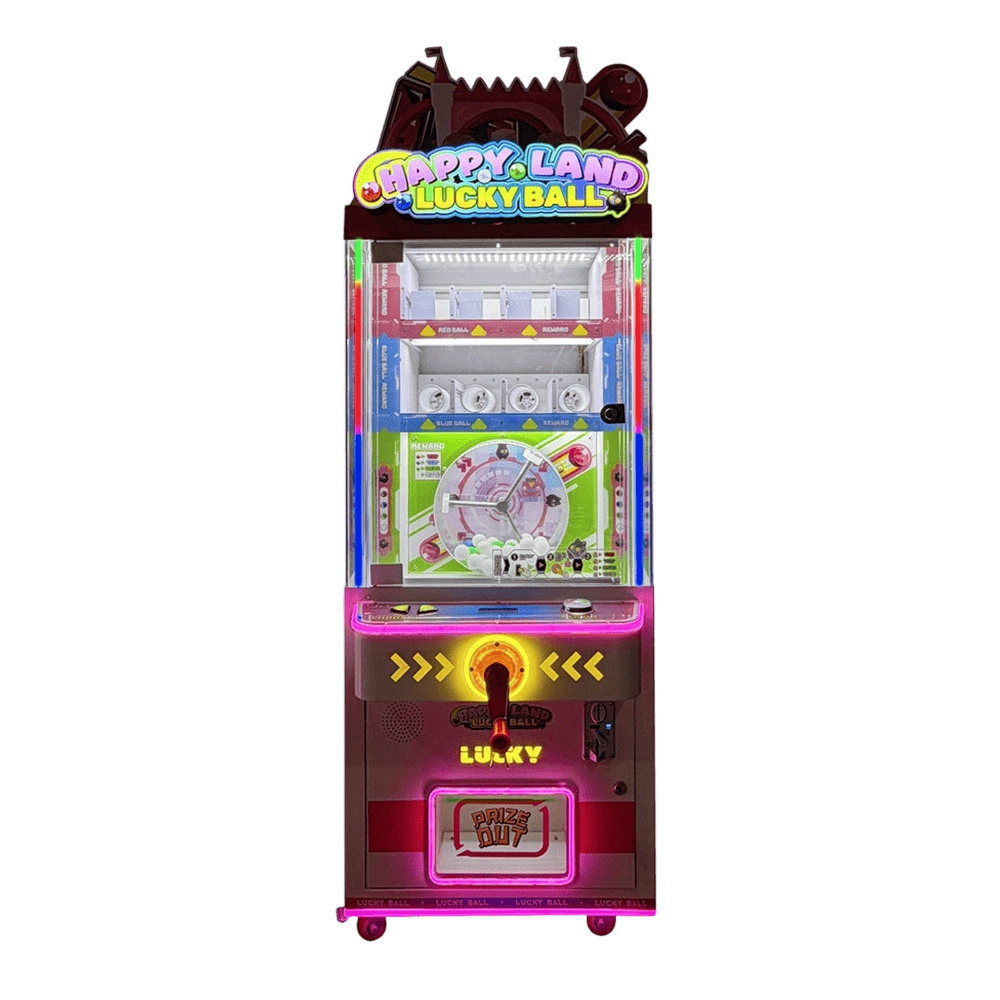
Coin Operated/Card Payment 2 Players SPIN ORBIT Lucky Prize Arcade Game
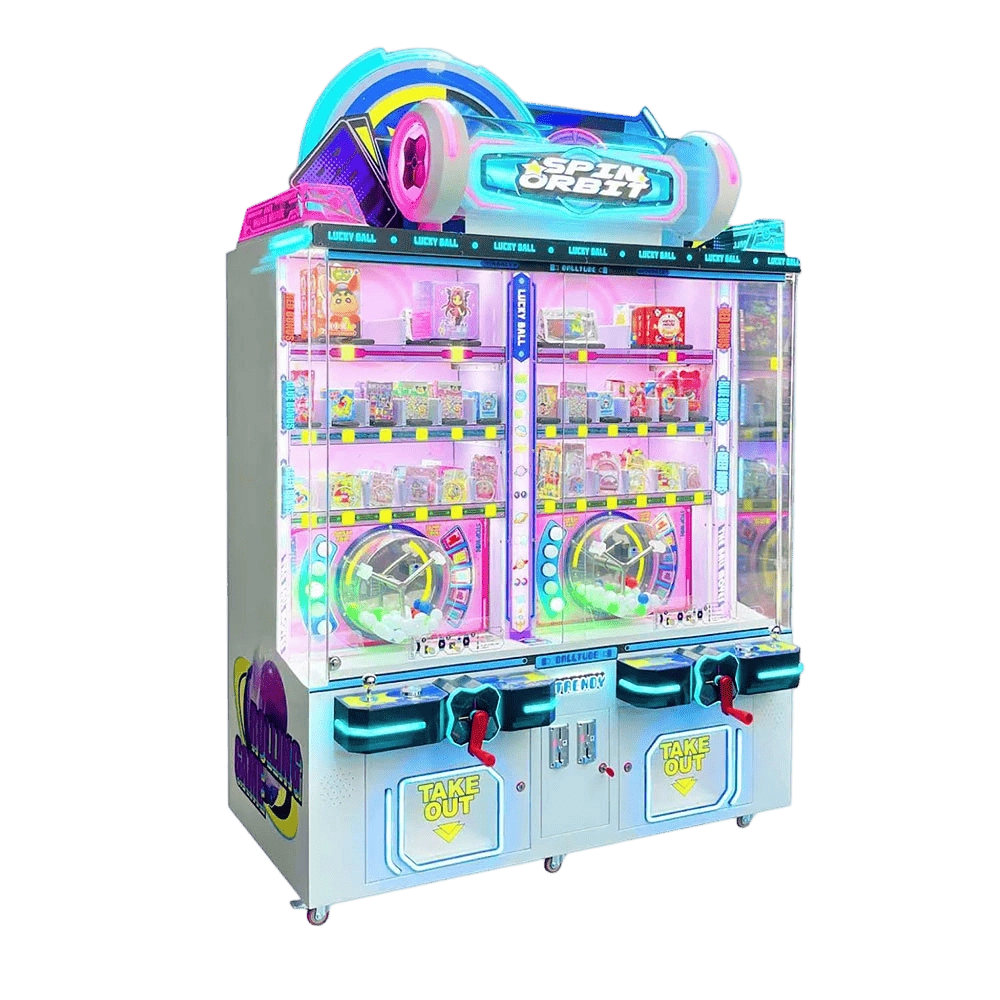
Coin Operated/Card Payment SPIN ORBIT Lucky Prize Arcade Game
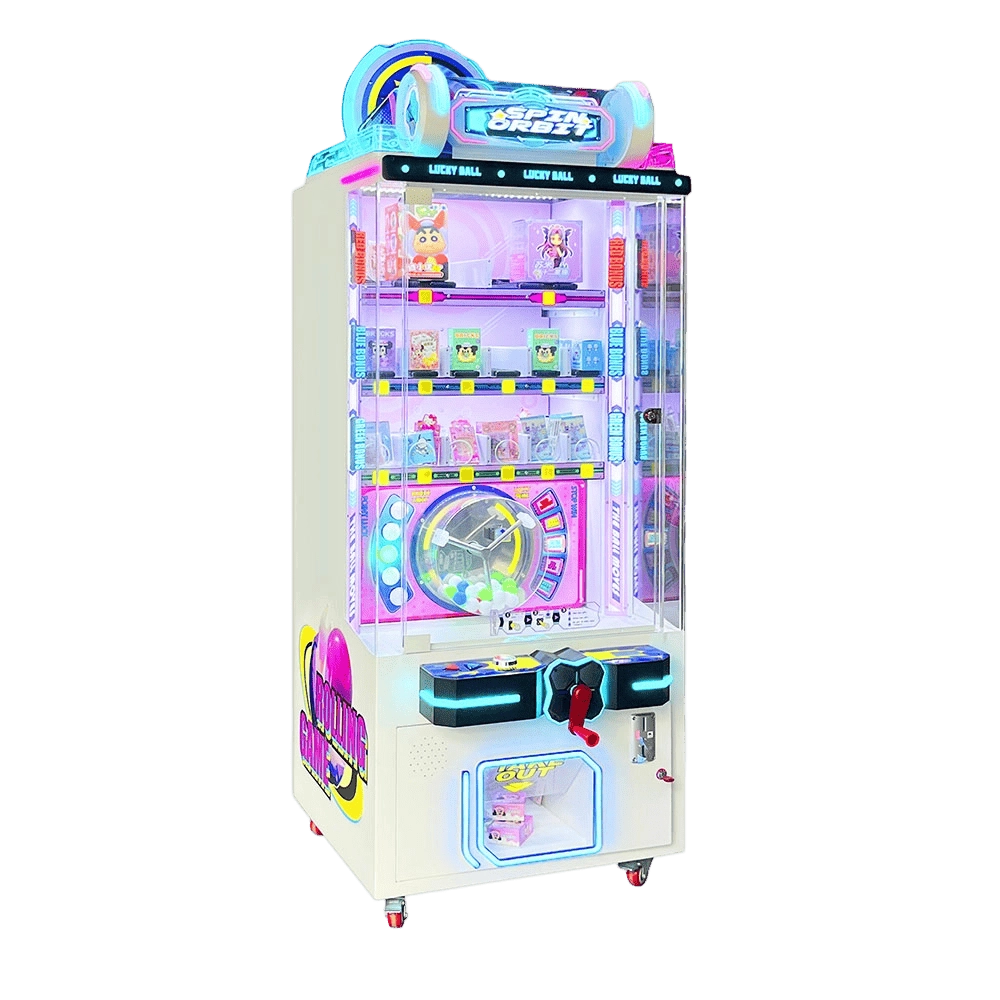
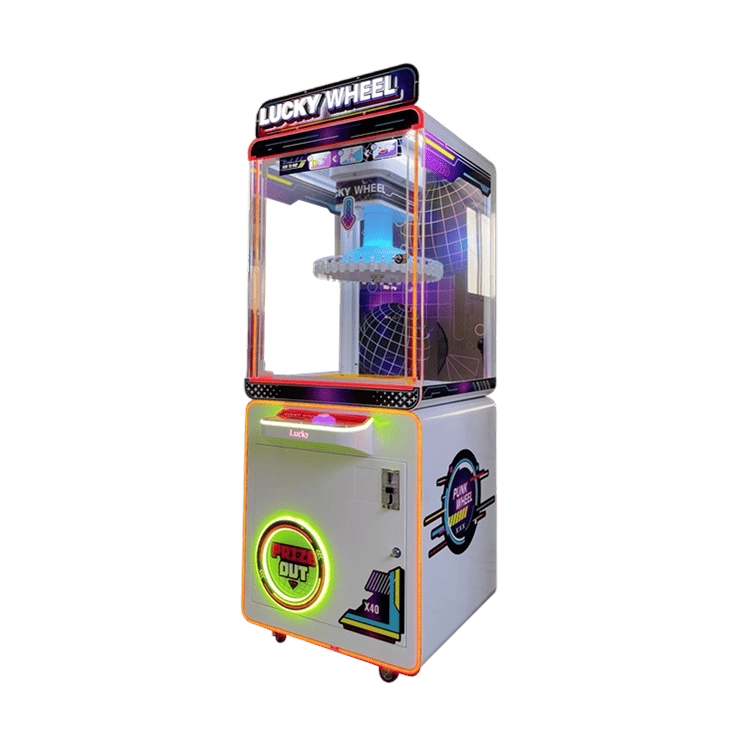
Arcade Prize Lucky Wheel Gift Machine For Amusement Areas
Get in Touch with Jiami Games
If you have any comments or good suggestions, please leave us a message; later our professional staff will contact you as soon as possible.

Innovative Entertainment, at Your Fingertips
Learn about Jiami Games and explore our expertise in console development, innovative design, and global markets.
Quick Links:
© 2026 Jiami Games.
Whatsapp: +8618520390438