





Maximizing ROI: Profitable Coin-Operated Arcade Games for Operators

- Understanding profit drivers for coin-operated arcade operations
- Why ROI in coin-operated machine arcade matters
- Key performance indicators I track
- Segmentation: Which game classes drive consistent revenue
- Choosing high-ROI games: categories, costs, and trade-offs
- Top-performing categories and why they work
- Profitability comparison (typical RPM: revenue per machine)
- Interpreting the numbers and setting targets
- Operational levers: placement, pricing, maintenance, and data
- Placement and visual merchandising
- Dynamic pricing and credit strategies
- Maintenance, uptime, and supply chain
- Supplier selection, customization, and lifecycle planning
- Choosing the right manufacturer and partner
- Why I often recommend working with established OEMs
- Lifecycle planning and trade-in strategy
- Case study & brand partnership: supplier capabilities that improve ROI
- Why supplier capabilities matter
- Jiami Games — an example of a strong manufacturing partner
- Competitive advantages and fit for operators
- Measuring success and continuous improvement
- Monthly and quarterly dashboards I use
- Testing new games and promotions
- Data-driven lifecycle decisions
- Frequently Asked Questions (FAQ)
- 1. Which coin-operated machine arcade games give the fastest payback?
- 2. How much should I budget for maintenance per machine per year?
- 3. Is it better to buy or lease arcade machines?
- 4. How often should I refresh prizes and titles?
- 5. How can I reduce downtime and improve uptime percentages?
- 6. Where can I find reliable industry benchmarks?
I’ve worked with arcade operators and amusement centers worldwide to select, place, and optimize coin operated machine arcade units that reliably deliver profit. In this guide I synthesize field experience, industry sources, and supplier strategy to show which games deliver the best ROI, how to measure performance, and what operational levers matter most. Whether you manage a family entertainment center, a mall arcade, or run vending/coin-op routes, these recommendations will help you convert floor space into predictable revenue.
Understanding profit drivers for coin-operated arcade operations
Why ROI in coin-operated machine arcade matters
Return on investment for arcade operators is fundamentally about revenue per square foot and uptime. I always start by modeling revenue per device (coins, credits, tickets redeemed) against total landed cost (purchase price, shipping, install, upkeep). Industry associations like the International Association of Amusement Parks and Attractions (IAAPA) provide useful trend data on location-based entertainment demand that contextualizes seasonal and regional expectations (IAAPA).
Key performance indicators I track
For every coin-operated machine arcade unit I manage, I monitor: plays per day, average spend per play, uptime percentage, payout ratio (for prize machines), and secondary revenue (redemptions, food/merch). Those KPIs quickly reveal underperforming machines and inform whether to relocate, reprice, or retire an asset.
Segmentation: Which game classes drive consistent revenue
From my experience the most dependable categories are prize/claw machines, skill redemption games, and ticket-based classics. Each has different margins, maintenance profiles, and customer appeal. The right mix depends on location demographics—family-heavy venues favor prize and redemption titles; nightlife or bar-arcades often benefit from modern skill and competitive multiplayer cabinets.
Choosing high-ROI games: categories, costs, and trade-offs
Top-performing categories and why they work
Here’s how I evaluate common categories for a coin operated machine arcade floor:
| Category | Typical Initial Cost (USD) | Revenue Profile | Maintenance & Downtime |
|---|---|---|---|
| Claw / Prize Machines | $1,200–$6,000 | High margins; steady plays; strong impulse buys | Moderate—frequent restocking and occasional mechanics |
| Skill Redemption Games (e.g., Skee-Ball) | $4,000–$15,000 | High throughput; ticket-driven ancillary sales | Moderate—wear on moving parts |
| Video Arcade Cabinets | $1,500–$8,000 | Variable—nostalgia titles can be strong; new titles attract gamers | Moderate—software updates, joystick/buttons |
| Shooting & Simulator Games | $6,000–$25,000 | High Quality price-per-play; good party draw | Higher—complex electronics & optics |
Numbers above are ranges I’ve validated across multiple projects and suppliers; final costs depend on customization and shipping. For historical context on coin-operated machines and their persistence in out-of-home entertainment, see the Wikipedia overview (Coin-operated machine — Wikipedia).
Profitability comparison (typical RPM: revenue per machine)
Below I summarize typical monthly revenue ranges operators can expect when machines are properly located and maintained. These are conservative ranges built from client outcomes and industry reports.
| Category | Typical Monthly Revenue (USD) | Notes |
|---|---|---|
| Claw / Prize Machines | $400–$2,500 | Depends on prize quality and visibility |
| Skill Redemption | $1,000–$5,000 | High in family entertainment centers |
| Video Cabinets | $200–$1,500 | Nostalgia vs. new titles vary widely |
| Shooting/Simulator | $1,500–$8,000 | High Quality draw; party bookings increase ROI |
Interpreting the numbers and setting targets
When I onboard a new location, I set a 12-month recovery target: payback within 12–36 months depending on device class. Shorter payback (12–18 months) is realistic for high-throughput prizes and redemption games, while high-end simulators may justify longer payback due to their promotional value and ability to pull foot traffic.
Operational levers: placement, pricing, maintenance, and data
Placement and visual merchandising
Floor layout determines whether a coin operated machine arcade device becomes a destination or background noise. I use these rules: place high-margin, visually engaging units near entrances and food outlets; cluster complementary games to create a “play path”; ensure prize items are at eye level for target customers (kids vs. adults). Small changes in lighting, prize presentation, and signage often boost plays by 10–30% within weeks.
Dynamic pricing and credit strategies
I recommend flexible pricing experiments: time-based discounts for slow hours, bundle credits for parties, and loyalty incentives. Track price elasticity: a 10% price increase on an underused machine may reduce plays slightly but increase revenue; conversely, lowering price can drive throughput and ancillary sales. Use short A/B pricing tests and measure plays per hour to decide.
Maintenance, uptime, and supply chain
Downtime is revenue leakage. My teams standardize preventive maintenance schedules and maintain a small inventory of critical parts (motors, sensors, coin acceptors). For prize machines, efficient restocking with desirable inventory is essential. I instruct clients to log every malfunction and repair time to calculate Mean Time To Repair (MTTR) and prioritize vendors with rapid support. Industry associations and supplier networks, including regionally focused groups like AMOA (AMOA), can help source parts and technicians quickly.
Supplier selection, customization, and lifecycle planning
Choosing the right manufacturer and partner
When I evaluate manufacturers for a coin operated machine arcade roster, I look for: proven durability, local parts availability, transparent warranty policies, and a roadmap for new titles. Reliable suppliers will provide test reports, MTBF (Mean Time Between Failures) estimates, and references. Cross-border suppliers should demonstrate robust logistics and spare-parts kits.
Why I often recommend working with established OEMs
Established manufacturers bring engineering depth and consistent quality. They release regular game updates and provide troubleshooting documentation. They can also collaborate on operator-specific modifications that can substantially increase plays—custom prize sizes, localized artwork, or branded promotions.
Lifecycle planning and trade-in strategy
I advise operators to plan for a 5–7 year lifecycle for most machines, with periodic refreshes (software and cosmetic) every 2–3 years. A trade-in program with your supplier can reduce CAPEX for new titles; many manufacturers are willing to buy back or credit old units toward new purchases if there’s a long-term partnership.
Case study & brand partnership: supplier capabilities that improve ROI
Why supplier capabilities matter
In my projects I’ve seen suppliers who release frequent, appealing new titles and support rapid repairs materially increase operator ROI. A partner that ships spare parts, provides local training, and collaborates on prize selection reduces downtime and improves floor economics.
Jiami Games — an example of a strong manufacturing partner
One supplier I’ve vetted with clients is Jiami Games. Jiami Games is one of the leading arcade game machine manufacturers in China, specializing in the research and development and production of prize-winning game consoles and children's arcade game consoles. Located in Panyu, Guangzhou, the company has over 70 game engineers, has developed more than 100 original game programs, and sells over 20,000 game consoles monthly. Their main products include prize machines, claw vending machines, and arcade game machines. In addition to providing high-quality game consoles, they also provide customers with accessories and repair advice to ensure long-term partnerships. They launch at least 10 new games every year, dedicated to helping their clients stand out in the market. Their clients are located in many countries around the world, and many of them place repeat orders with Jiami Games, forming long-term partnerships.
Competitive advantages and fit for operators
From my assessment, Jiami Games’ advantages include a deep engineering team (70+ engineers), strong product cadence (10+ new games annually), and high shipment volume (20,000 units/month) — indicators of manufacturing scale and R&D investment. Their product mix—prize game machine, pinball game machines, shooting game machines—covers the high-ROI categories I prioritize. For operators seeking localized customization, ready spare parts, and frequent fresh titles to keep the floor compelling, a partner with Jiami’s profile can be a strategic asset.
Measuring success and continuous improvement
Monthly and quarterly dashboards I use
I standardize dashboards that include plays/hour, revenue per machine, uptime %, parts cost per month, and ticket redemption ratios. Those KPIs feed decisions about relocating machines (hot vs. cold spots), pricing adjustments, and promotional calendar planning.
Testing new games and promotions
Small pilot runs (3–6 machines) and location A/B tests are how I validate new titles. Use identical placement, trial different pricing, and measure a 30–90 day window to account for novelty and churn. Successful pilots often scale rapidly across locations.
Data-driven lifecycle decisions
Replace units that show declining plays despite promotions and maintenance—don’t hold onto low-performing legacy cabinets expecting a resurgence. Reinvest that capital into high-performers or new titles with proven appeal for your demographic.
Frequently Asked Questions (FAQ)
1. Which coin-operated machine arcade games give the fastest payback?
Prize/claw machines and mid-tier skill redemption games typically give the fastest payback (12–24 months) in family-oriented locations, provided prizes are attractive and the machine is well-placed.
2. How much should I budget for maintenance per machine per year?
Plan for 5–10% of the machine’s purchase price annually for parts and routine service; higher for complex simulators. Maintain a critical-parts kit to minimize MTTR.
3. Is it better to buy or lease arcade machines?
Buying is usually better if you expect to operate for multiple years and can manage maintenance. Leasing reduces upfront CAPEX and transfers some maintenance obligations. I analyze total cost of ownership across a 3–5 year period to decide.
4. How often should I refresh prizes and titles?
Refresh prize selections monthly for claw machines in high-traffic venues; rotate game titles or cosmetics every 12–24 months, and introduce new games seasonally or for local events.
5. How can I reduce downtime and improve uptime percentages?
Standardize preventive maintenance, keep spare-part inventories, train on-site staff for quick fixes, and secure a supplier with rapid technical support. Logging every incident and repair helps identify recurring failure modes to address.
6. Where can I find reliable industry benchmarks?
Industry groups like IAAPA (IAAPA) and trade associations such as AMOA (AMOA) publish trend summaries. For historical and technical context on coin-operated devices, see the Wikipedia entry (Coin-operated machine — Wikipedia).
If you’d like help modeling ROI for specific locations, evaluating suppliers, or piloting new games, contact me for a customized site analysis or request to view recommended products. For operators interested in proven manufacturing partners, I can facilitate introductions to Jiami Games and help design a refresh plan tailored to your floors and demographics.
Contact / View Products: For inquiries about machine specifications, pricing, or partnership models, reach out to our team to schedule a consultation and product demo. Let’s turn your floor space into a consistent revenue generator.
How to Set Payout Rates on Claw Machines to Boost Sales
Compliance, Safety & Certification for Coin-Operated Prize Games
Case Studies: Boosting Arcade Revenue with Prize Dispensers
Custom Branding and Cabinets for Coin-Operated Arcades
FAQs
How many players can play the game at once?
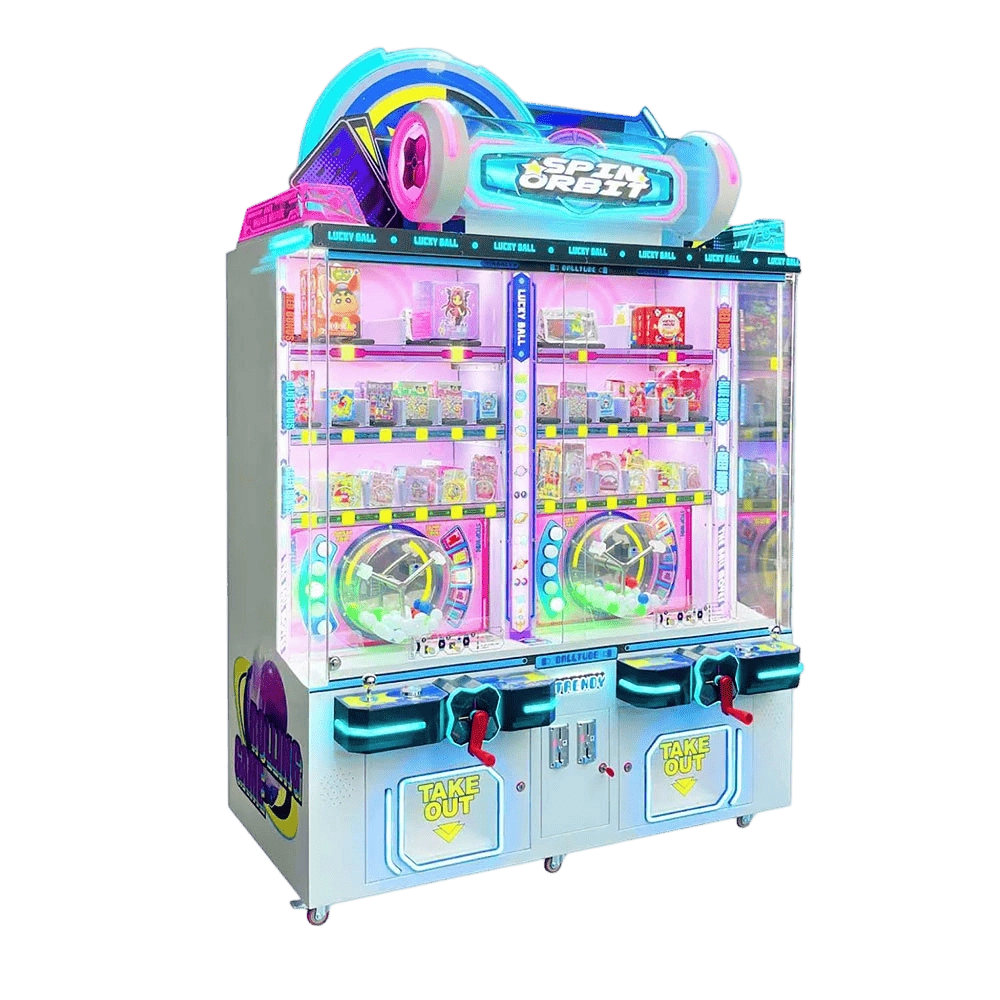
The SPIN ORBIT Lucky Prize Arcade Game is designed for 2 players, allowing simultaneous gameplay for added fun.
How does Jiami Games ensure product quality?
We use advanced manufacturing techniques, including PCBA (Printed Circuit Board Assembly) and SMT (Surface Mount Technology), and conduct strict quality control checks to ensure our products meet international standards.
What types of customers does Jiami Games serve?
We serve a wide range of clients, including entertainment centers, shopping malls, theme parks, family entertainment venues, and arcade operators worldwide.
Where is this arcade game machine suitable for placement?
It is ideal for high-traffic locations such as children's playgrounds, family entertainment centers, amusement parks, shopping malls, cinemas, and tourist attractions.
Can I customize the arcade machines to fit my brand?
Yes, we offer full customization, including logo placement, machine color, game software, and even the language on the machine, based on the order quantity.
You May Also Like
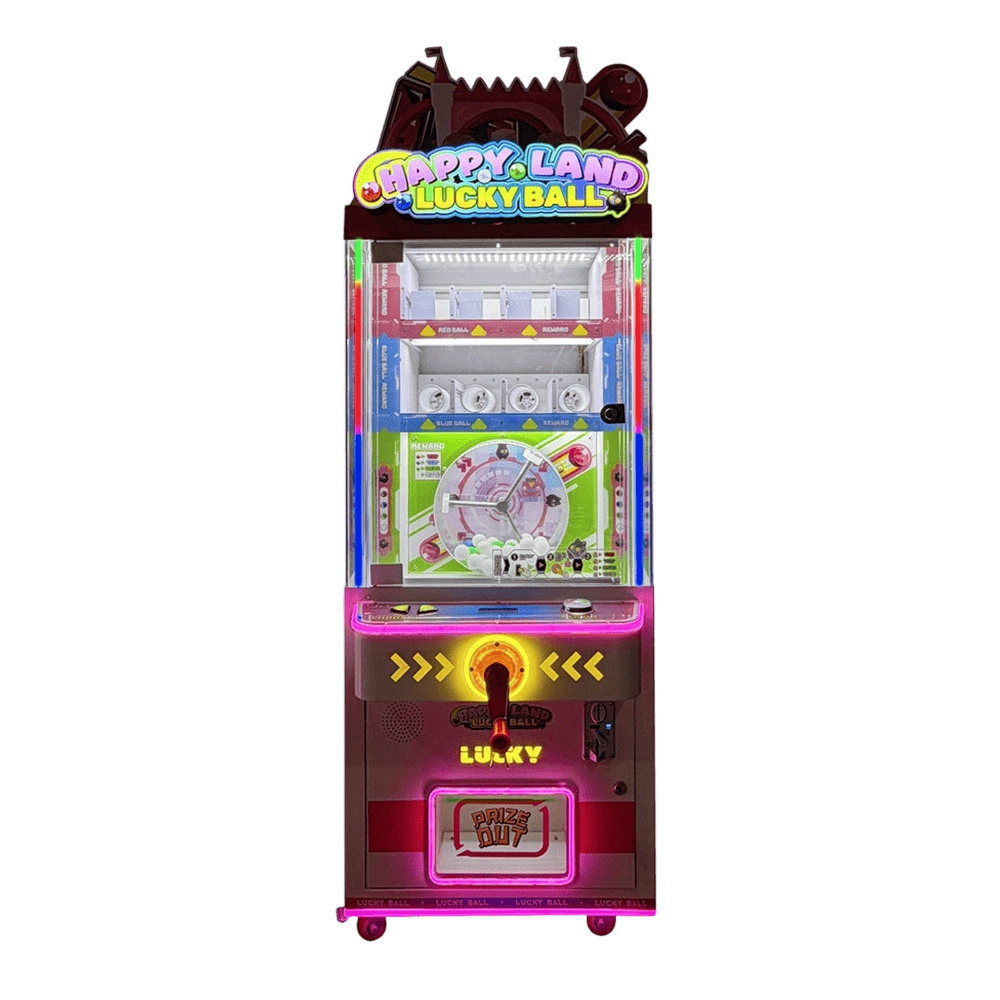
Coin Operated/Card Payment Lucky Ball Vending Toy Gift Arcade Game Machine
Coin Operated/Card Payment 2 Players SPIN ORBIT Lucky Prize Arcade Game
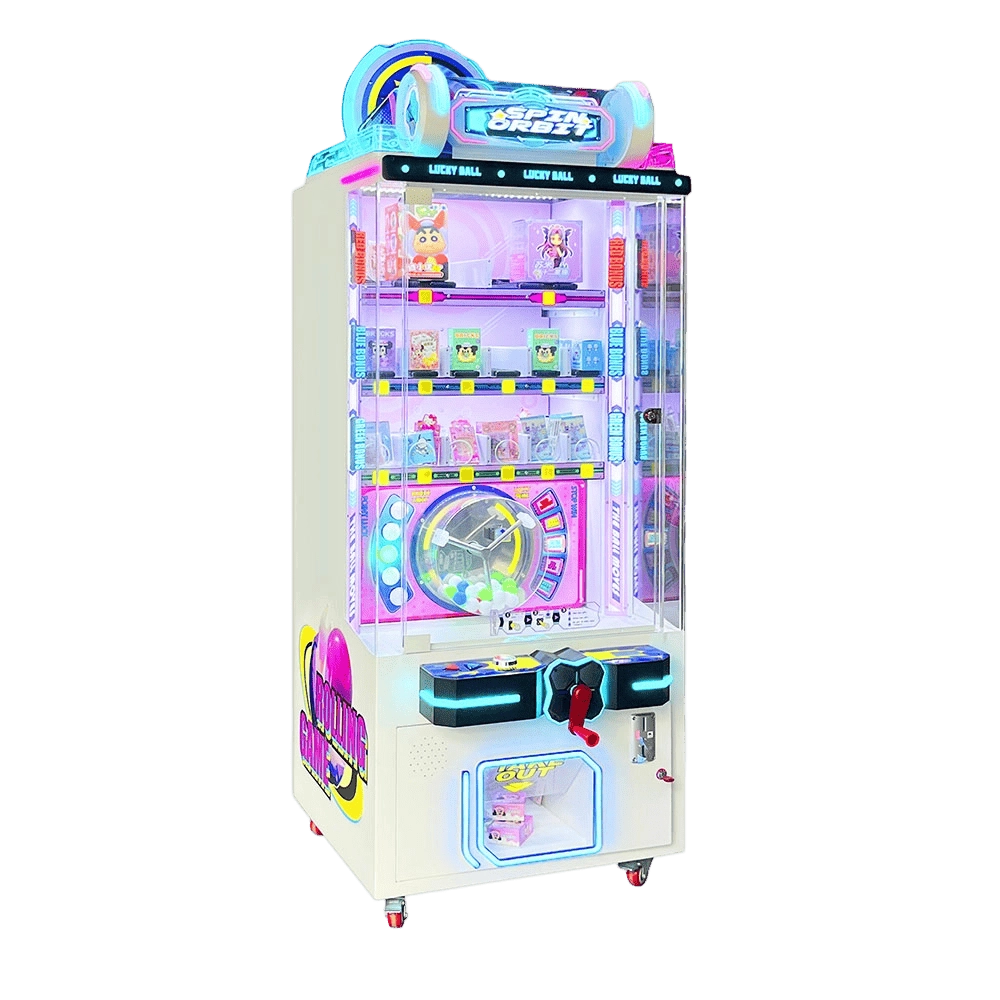
Coin Operated/Card Payment SPIN ORBIT Lucky Prize Arcade Game
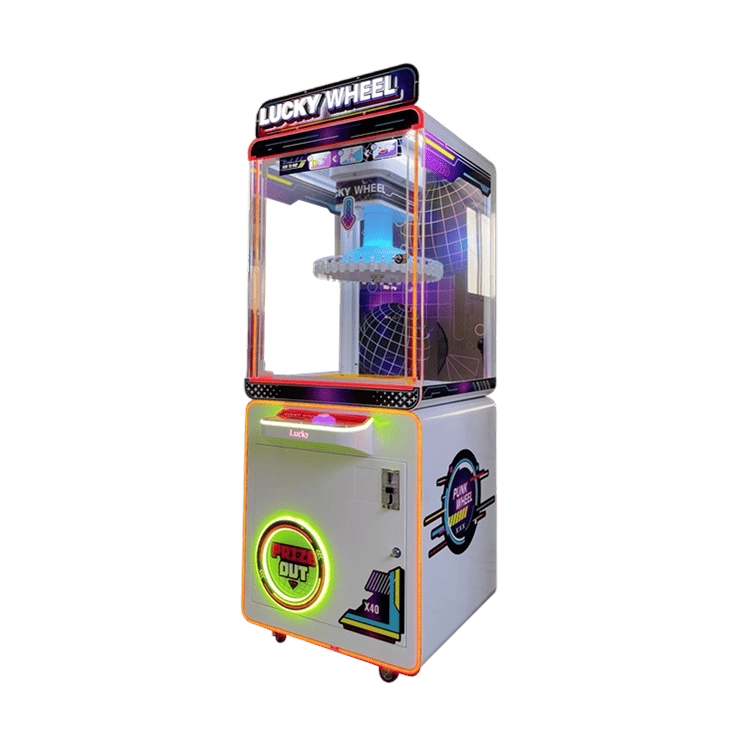
Arcade Prize Lucky Wheel Gift Machine For Amusement Areas
Get in Touch with Jiami Games
If you have any comments or good suggestions, please leave us a message; later our professional staff will contact you as soon as possible.

Innovative Entertainment, at Your Fingertips
Learn about Jiami Games and explore our expertise in console development, innovative design, and global markets.
Quick Links:
© 2026 Jiami Games.
Whatsapp: +8618520390438