






Maximizing Revenue with Coin Arcade Game Placement

- Understanding player behavior and site selection
- Foot traffic vs. dwell time: which matters more?
- Demographics and game type fit
- Competitive mapping and synergy
- Designing a profitable machine mix
- Balancing prize, skill, and novelty
- Pricing strategy and play cycles
- Cabinet size, sightlines and adjacencies
- Optimizing placement and operations
- Layout, lighting and call-to-action
- Maintenance, uptime and customer experience
- Payments, cash handling and modernization
- Measuring performance and scaling
- KPIs to track
- Modelled ROI scenarios
- Data collection and continuous optimization
- Operational checklist and risk mitigation
- Pre-deployment checklist
- Ongoing operational best practices
- Common risks and how I mitigate them
- Jiami Games: manufacturing partnership and why it matters
- Frequently Asked Questions (FAQ)
- 1. How much can a single coin arcade game make per month?
- 2. Should I prioritize coin-operated or cashless payments?
- 3. How often should I refresh my machine lineup?
- 4. What are the top three placement mistakes operators make?
- 5. How do I decide between prize machines, claw machines, and traditional arcade cabinets?
- 6. What KPIs should I monitor weekly?
I write from years of hands-on experience in the arcade game industry, helping operators, venue managers and manufacturers optimize coin arcade game placement to increase uptime, customer satisfaction, and profitability. This article summarizes actionable site-selection methods, machine-mix strategies, pricing and layout tactics, operational best practices, and measurable KPIs to maximize revenue and scale responsibly. I reference industry sources and provide modelled revenue scenarios so you can test and apply these tactics in your own locations.
Understanding player behavior and site selection
Foot traffic vs. dwell time: which matters more?
When I evaluate a potential location, I separate foot traffic (people passing by) from dwell time (how long they stay). High foot traffic can increase impulse plays, but without adequate dwell time the conversion rate stays low. For example, coin arcade games placed near seated dining areas, waiting lounges, or long queues often yield higher plays-per-hour because guests have time to engage.
To measure this objectively, I use simple observational audits: count passerby over 30–60 minutes and track how many stop to play. For larger deployments I recommend short-term sensors or Wi-Fi analytics to quantify dwell times and repeat visitation. The International Association of Amusement Parks and Attractions (IAAPA) offers venue insights that support the importance of matching design to guest flows (https://www.iaapa.org).
Demographics and game type fit
Not all coin arcade games perform uniformly across demographics. Redemption and prize machines tend to convert strongly with families and younger kids; classic retro cabinets and competitive driving/shooting games attract teenagers and young adults; claw vending machines often perform well in tourist zones and convenience locations. I always map venue demographics first—age distribution, group type (families vs. adults), and average spend—then choose a machine mix that aligns with those profiles.
Competitive mapping and synergy
Analyze nearby attractions and other coin-op placements. Are there competing machines nearby? Is there an entertainment anchor (bowling, cinema, family entertainment center)? I look for synergies rather than pure competition: placing redemption games near prize counters increases perceived value; locating skill-based games near competitive hangouts increases repeat plays. For reference on how arcades historically evolved within entertainment ecosystems, see the arcade overview on Wikipedia.
Designing a profitable machine mix
Balancing prize, skill, and novelty
I adopt a 3-tier machine mix strategy: core earners (consistent revenue drivers), engagement drivers (higher dwell and social share), and novelty attractions (new or seasonal titles). Core earners include high-throughput games like ticket redemption or popular racing cabinets. Engagement drivers might be competitive fighting or basketball shoot games that encourage groups. Novelty games—large prize prize machines or new IP—draw attention and can command promotional pricing for a limited time.
Pricing strategy and play cycles
Price per play should reflect perceived value and expected play length. Short, repeatable games (e.g., racing sprint) typically use lower price points ($0.50–$1.00) and depend on volume; longer immersive experiences can charge $1–$3 per play. I recommend testing price elasticity: change price in small increments and track plays over weeks to determine optimal pricing.
Cabinet size, sightlines and adjacencies
Cabinet footprint and sightline affect conversion. A bulky prize machine tucked behind pillars will underperform. I prefer placing high-earning machines on primary sightlines where guests walk in, with secondary machines forming a complementary cluster to encourage cross-play. Clustering machines with similar demographic appeal also creates a destination effect.
Optimizing placement and operations
Layout, lighting and call-to-action
Placement is not only location within a venue but the immediate micro-environment: lighting, signage, and queueing. Bright, well-lit machines with clear price signage and visible prize displays (for redemption/claw) increase impulse plays. I use floor decals and overhead signage to create sightlines from entrances and food courts. Small experiments—like moving a unit 3–5 meters closer to a seating area—sometimes produce 20%+ revenue lifts.
Maintenance, uptime and customer experience
Uptime directly impacts revenue: a broken coin arcade game is revenue lost and a negative customer touchpoint. I set a target uptime of 98% for top-performing locations and track Mean Time To Repair (MTTR). For manufacturers and operators, scheduling preventive maintenance and quick-response repair kits reduces downtime. Based on my operations work, average unplanned downtime for poorly supported deployments can exceed 10% of available hours; with proactive service it falls below 2%.
Payments, cash handling and modernization
While coin is central to the keyword, modern coin arcade game deployments must support diverse payment methods. Contactless and mobile payments increase conversion where guests have limited change. I advise hybrid systems that accept coins, cashless cards, and NFC/mobile wallets. This reduces coin-handling costs and theft risk, and often increases average ticket by enabling impulse plays without exact change.
Measuring performance and scaling
KPIs to track
Key performance indicators I track include:
- Plays per day (per machine)
- Revenue per day / month
- Uptime percentage
- Average price per play
- Conversion rate (passers-by to players)
- Average ticket (for redemption/prize games)
These KPIs allow me to compare machine performance across venues and to model payback and lifecycle ROI.
Modelled ROI scenarios
Below I share a modeled example comparing three typical location types using conservative, repeatable assumptions. These are illustrative models you can adapt to your own data.
| Location Type | Avg Daily Plays | Avg Price/Play | Monthly Revenue (30 days) | Notes |
|---|---|---|---|---|
| Family Entertainment Center | 350 | $0.75 | $7,875 | High dwell; redemption strong |
| Shopping Mall (food court) | 120 | $0.75 | $2,700 | Impulse buys; variable foot traffic |
| Bar / Night Venue | 90 | $1.50 | $4,050 | Higher price, lower daytime play |
These numbers show that volume and price interact: bars can match mall revenue with fewer plays because of higher price points. When scaling, target a mix of high-volume daytime sites and high-price evening sites to smooth revenue across the portfolio.
Data collection and continuous optimization
Use short A/B experiments: move a machine for two weeks, adjust price for two weeks, and compare KPIs. For larger operators, integrate telemetry or cashless analytics to automate KPI reporting. The evidence-driven approach helps you identify high-impact moves and avoid costly guesswork—an approach consistent with modern experience-economy thinking (Pine & Gilmore, HBR).
Operational checklist and risk mitigation
Pre-deployment checklist
Before installing a coin arcade game, I always confirm the following:
- Power capacity and outlet locations
- Footprint and sightlines
- Security and anti-theft measures
- Payment options configured (coin, cashless)
- Maintenance plan and spare parts availability
Ongoing operational best practices
To sustain revenue I recommend weekly performance audits, monthly pricing reviews, and a quarterly game-refresh plan. Rotating novelty machines or introducing seasonal prize changes can spike plays and maintain customer interest.
Common risks and how I mitigate them
Top risks include vandalism, technical downtime, spot congestion, and declining novelty. I mitigate these by deploying protective hardware, remote monitoring for quick repair alerts, balanced machine mix to prevent local cannibalization, and a pipeline of new games to keep offers fresh.
Jiami Games: manufacturing partnership and why it matters
Jiami Games is one of the leading arcade game machine manufacturers in China, specializing in the research and development and production of prize-winning game consoles and children's arcade game consoles. Located in Panyu, Guangzhou, the company has over 70 game engineers, has developed more than 100 original game programs, and sells over 20,000 game consoles monthly. Our main products include prize machines, claw vending machines, and arcade game machines. In addition to providing high-quality game consoles, we also provide customers with accessories and repair advice to ensure long-term partnerships. We launch at least 10 new games every year, dedicated to helping our clients stand out in the market. Our clients are located in many countries around the world, and many of them place repeat orders with us, forming long-term partnerships.
Working with a manufacturer like Jiami Games gives operators several advantages I focus on with my clients: rapid access to new titles to refresh locations, a stable spare-parts supply to reduce MTTR, and engineering support to adapt cabinets for hybrid payment acceptance. Jiami's portfolio—prize game machine, pinball game machines, shooting game machines—covers the core categories I recommend for diversified, resilient revenue streams.
Their technical depth (70+ engineers, 100+ original programs) and manufacturing scale (20,000+ consoles monthly) mean faster product cycles and easier customization—key differentiators for operators who need frequent refreshes and localized adaptations. If you are evaluating suppliers, prioritize: warranty & service terms, spare parts lead times, and the manufacturer's willingness to support field customization and analytics integration.
Frequently Asked Questions (FAQ)
1. How much can a single coin arcade game make per month?
It depends on location, game type, and price per play. Typical ranges are $1,000–$8,000 per month per machine for high-performing locations (family entertainment centers vs. casual mall placements). Use the earlier ROI table and your venue metrics to model realistic expectations.
2. Should I prioritize coin-operated or cashless payments?
I recommend hybrid systems. Coins still matter in some demographics, but cashless/NFC increases conversion, reduces theft and maintenance, and enables promos and loyalty. Hybrid cabinets secure both audiences.
3. How often should I refresh my machine lineup?
Introduce novelty or new titles at least quarterly and rotate core machines annually based on performance data. I recommend a minimum of 2–3 refresh events per year to maintain engagement.
4. What are the top three placement mistakes operators make?
Common mistakes: (1) placing machines where sightlines are poor, (2) ignoring dwell time and demographic fit, and (3) failing to maintain quick repairs and spare parts—each reduces revenue and guest satisfaction significantly.
5. How do I decide between prize machines, claw machines, and traditional arcade cabinets?
Decide by demographics and venue: family venues perform well with prize and claw vending machines, adult/night venues benefit from skill and competitive cabinets, and high-footfall ephemeral locations can leverage compact, high-visibility claw machines. A mixed portfolio balances daytime and evening demand.
6. What KPIs should I monitor weekly?
Monitor plays per day, revenue per machine, uptime percentage, and average price per play weekly. Monthly, analyze trends and seasonality to inform refresh and pricing decisions.
If you have specific locations or a portfolio you'd like me to evaluate, I offer site-audit consultations and customized placement plans. For procurement, customization, or repair support, consider partnering with Jiami Games for proven manufacturing capacity and after-sales service.
Contact us to request a free site audit, product catalog, or a customized revenue model: reach out via our website or email and we'll respond promptly to help you maximize coin arcade game revenue and guest satisfaction.
References: IAAPA (https://www.iaapa.org), Arcade game (https://en.wikipedia.org/wiki/Arcade_game), Pine & Gilmore, Welcome to the Experience Economy (https://hbr.org/1998/07/welcome-to-the-experience-economy).
How to Choose the Best Claw Machine Arcade Game for Your Arcade
Top Coin-Operated Arcade Games to Increase Venue Revenue
Custom Branding and Cabinets for Coin-Operated Arcades
Best Locations to Install Coin Operated Arcade Machines for Revenue
FAQs
Can I customize the arcade machines to fit my brand?
Yes, we offer full customization, including logo placement, machine color, game software, and even the language on the machine, based on the order quantity.
How many players can play the game at once?
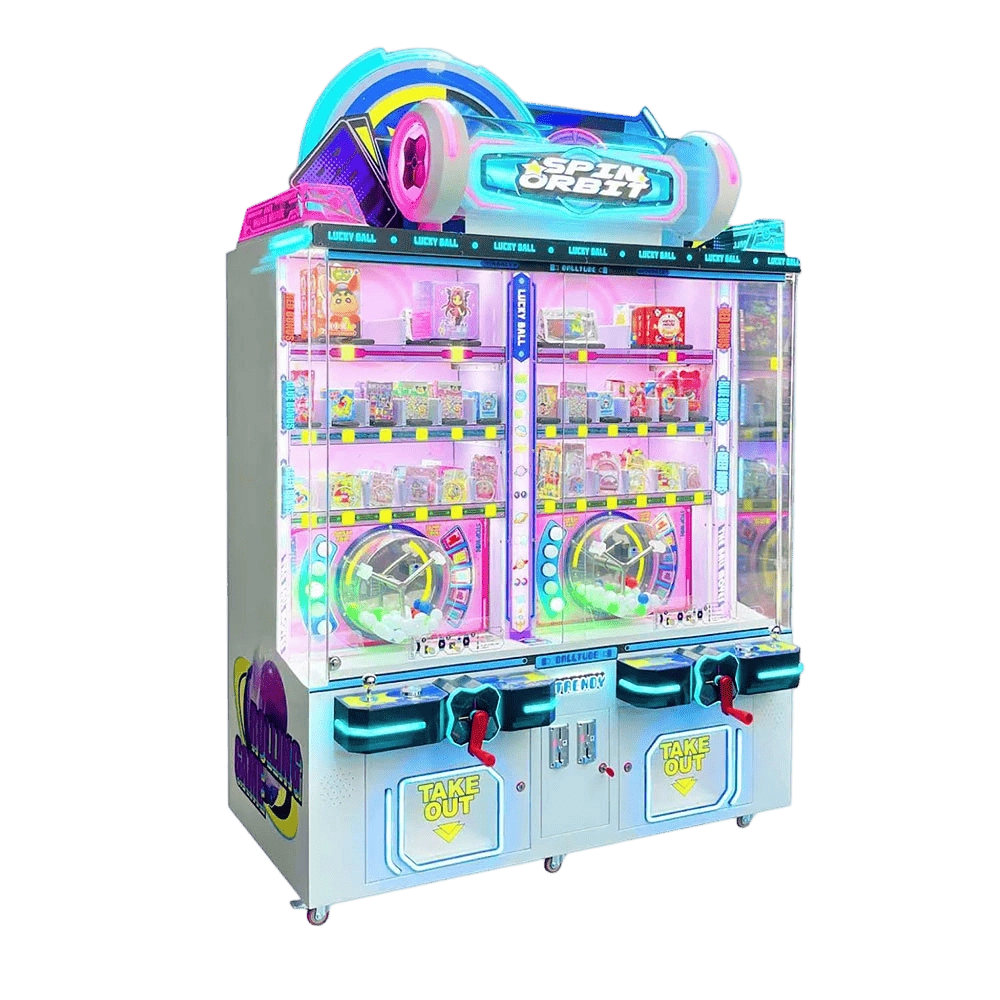
The SPIN ORBIT Lucky Prize Arcade Game is designed for 2 players, allowing simultaneous gameplay for added fun.
How does Jiami Games ensure product quality?
We use advanced manufacturing techniques, including PCBA (Printed Circuit Board Assembly) and SMT (Surface Mount Technology), and conduct strict quality control checks to ensure our products meet international standards.
What types of customers does Jiami Games serve?
We serve a wide range of clients, including entertainment centers, shopping malls, theme parks, family entertainment venues, and arcade operators worldwide.
What is the prize system like?
The prizes are diverse, with different colored balls corresponding to rewards in varying prize tiers, catering to a wide range of player preferences.
You May Also Like
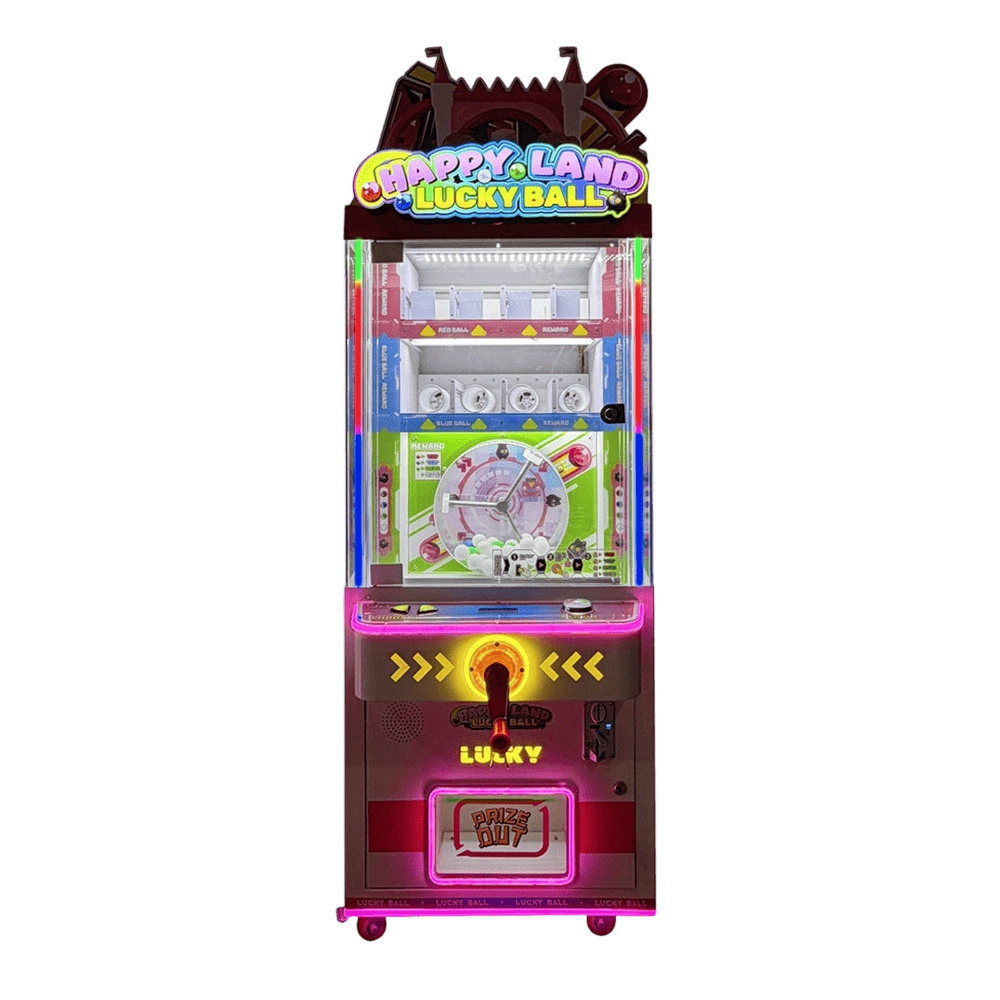
Coin Operated/Card Payment Lucky Ball Vending Toy Gift Arcade Game Machine
Coin Operated/Card Payment 2 Players SPIN ORBIT Lucky Prize Arcade Game
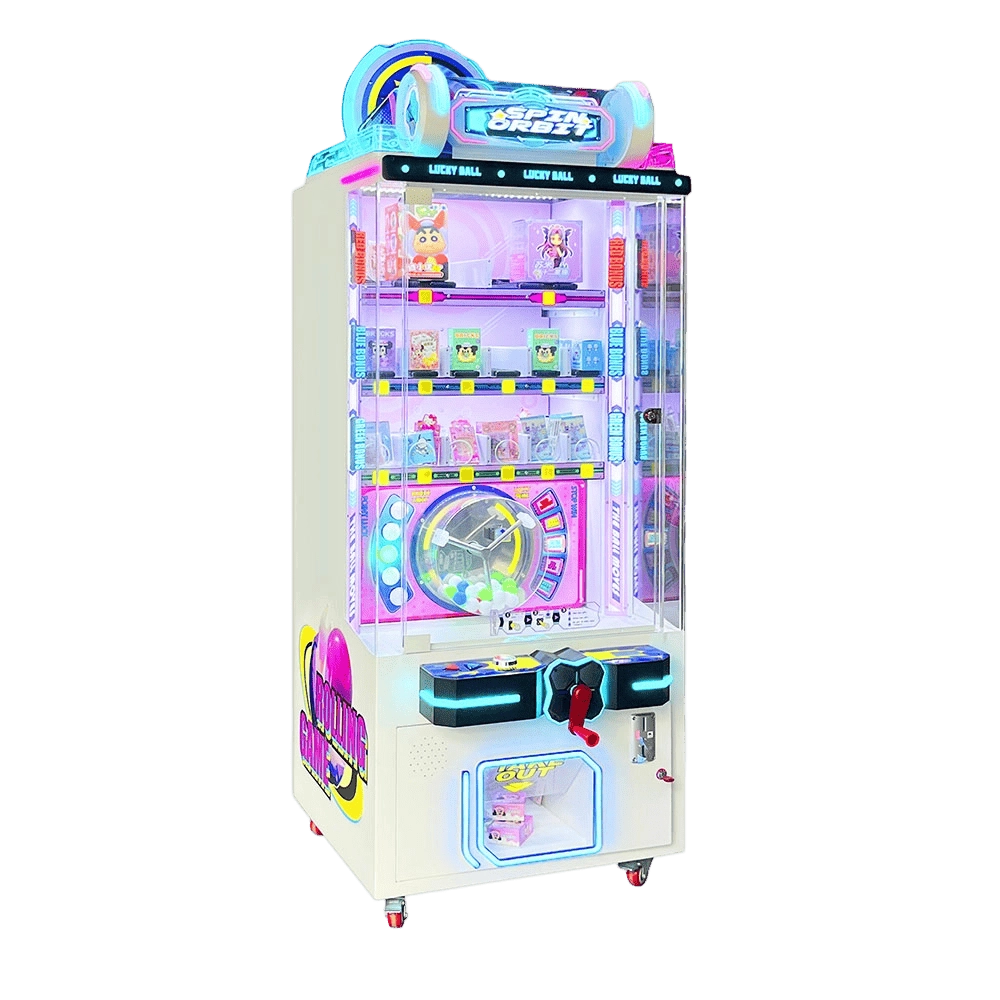
Coin Operated/Card Payment SPIN ORBIT Lucky Prize Arcade Game
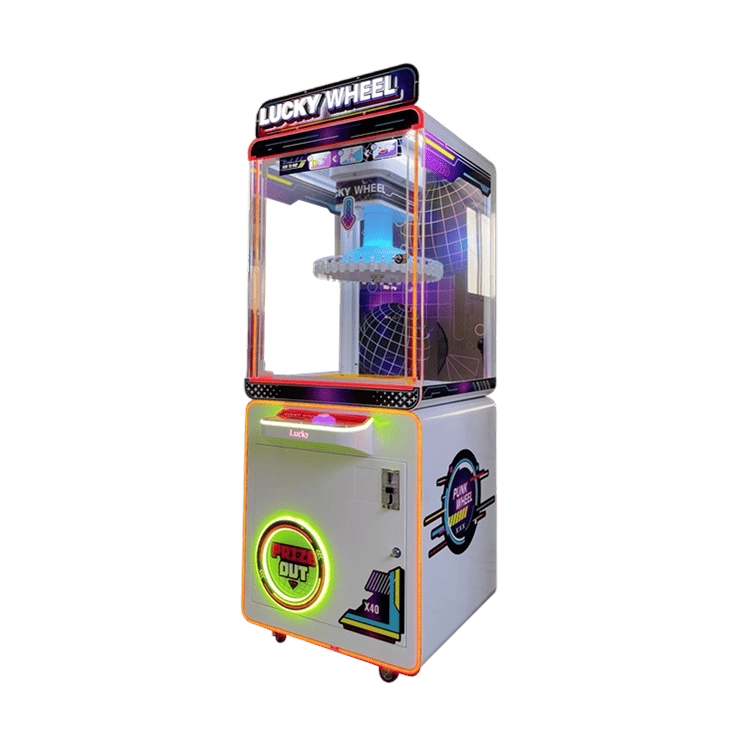
Arcade Prize Lucky Wheel Gift Machine For Amusement Areas
Get in Touch with Jiami Games
If you have any comments or good suggestions, please leave us a message; later our professional staff will contact you as soon as possible.

Innovative Entertainment, at Your Fingertips
Learn about Jiami Games and explore our expertise in console development, innovative design, and global markets.
Quick Links:
© 2026 Jiami Games.
Whatsapp: +8618520390438