





Legal & Compliance for Coin Operated Pinball Machines

- Regulatory landscape for arcade and amusement devices
- International safety and electrical standards
- Regional compliance: US, EU, UK, China
- Age restrictions, gambling and prize rules
- Design, manufacturing and product safety best practices
- Safety engineering: electrical, mechanical, and ingress protection
- Materials, fire, and chemical compliance (RoHS, REACH)
- Testing, certification and documentation
- Operations, placement and legal responsibilities
- Operator permits, location agreements and local ordinances
- Revenue reporting, coin collection and financial compliance
- Accessibility, ADA and consumer protection
- Maintenance, recalls, and incident response
- Preventive maintenance and recordkeeping
- Incident handling and product recalls
- Warranty, liability and insurance considerations
- Compliance comparison by region
- Practical compliance checklist (actionable steps)
- Jiami Games: manufacturing capability and how we support compliance
- Frequently Asked Questions (FAQ)
- 1. Do I need certification to sell a coin operated pinball machine?
- 2. Is a pinball machine considered gambling?
- 3. How do I handle recalls or safety incidents?
- 4. What records should I keep to prove compliance?
- 5. Do I need different versions of machines for different markets?
- 6. How can Jiami Games help with compliance?
I build and advise on arcade equipment and have worked hands-on with operators and manufacturers of coin operated pinball machines worldwide. In this article I summarize the core legal and compliance considerations you must manage — from international electrical and safety standards to local prize and gambling rules, accessibility, tax and location agreements, preventive maintenance and recall procedures. The goal is practical: enable manufacturers, distributors and site operators to reduce liability, meet regulatory obligations, and keep machines in service profitably.
Regulatory landscape for arcade and amusement devices
International safety and electrical standards
As a manufacturer or importer of coin operated pinball machines, you must design to recognized electrical and mechanical safety standards. Key references include IEC standards for electrical safety (IEC/ISO product safety work), and regional conformity frameworks such as the European CE marking process (European Commission — CE marking) and the U.S. safety testing under UL or equivalent labs. Compliance reduces product liability and eases customs clearance.
Regional compliance: US, EU, UK, China
Different jurisdictions have different dominant requirements. In the United States, the U.S. Consumer Product Safety Commission (CPSC) and FCC (for electromagnetic compatibility) are relevant. In the EU, CE marking and specific EN standards apply; RoHS/REACH regulate hazardous substances. The UK has its own conformity marking (UKCA) and the Gambling Commission oversees gambling-related matters in Britain. China enforces CCC and related standards for electronics and electrical safety. Knowing the entry rules for your target market is fundamental.
Age restrictions, gambling and prize rules
Pinball machines can straddle the boundary between amusement and gambling depending on prize structure and player expectations. In many countries, when elements of chance determine a monetary or monetary-equivalent prize, local gambling laws apply. I always advise reviewing local gaming statutes and, when in doubt, consulting legal counsel. The UK Gambling Commission (Gambling Commission) and U.S. state statutes provide useful starting points to determine if a machine is a game of skill or chance.
Design, manufacturing and product safety best practices
Safety engineering: electrical, mechanical, and ingress protection
From my engineering background, I require that machines incorporate clear protections: proper grounding, overcurrent protection, secure coin box locking, fan and heat management to avoid thermal events, and tamper-resistant enclosures to protect players. Consider IP (ingress protection) ratings if machines will be outdoors or in humid environments. Refer to IEC/EN standards for electrical safety testing and to UL guidance for arcade equipment.
Materials, fire, and chemical compliance (RoHS, REACH)
Material selection affects not only durability but compliance. In the EU, RoHS restricts hazardous substances and REACH governs chemicals in materials. Use compliant wiring, flame-retardant cabinet materials where required, and document material declarations (e.g., SDS sheets) for all components to support regulatory audits and customer inquiries.
Testing, certification and documentation
Practical compliance is documentation-heavy. Maintain a technical file including design drawings, component part lists, test reports from accredited labs (safety, EMC), risk assessments, and a Declaration of Conformity (for CE) or equivalent. I recommend third-party testing (UL, TÜV, Intertek) rather than self-declarations where possible; these provide stronger legal protection and customer confidence.
Operations, placement and legal responsibilities
Operator permits, location agreements and local ordinances
Operators must secure permits that may relate to vending, amusements, or business licensing. Location agreements with site owners should assign responsibilities clearly: who handles electrical connections, who maintains the machine, how revenue is split, and who is responsible for compliance with local laws (for example, age-restricted locations). Include indemnity clauses and insurance requirements in contracts.
Revenue reporting, coin collection and financial compliance
Cash collection raises tax and anti-money-laundering considerations. Keep transparent records of coin drops, reconciliation logs, and deposit procedures. For larger operations, employ secure cash boxes with tamper-evident seals and dual-control collection. Consult local tax guidance regarding vending revenue and sales tax rules — they vary considerably by jurisdiction.
Accessibility, ADA and consumer protection
In the United States, the Americans with Disabilities Act (ADA) can affect placement and machine accessibility in public venues. In the EU, national accessibility laws and consumer protection rules may apply. Design and placement should consider wheelchair access, reachable controls, and clear consumer information. Providing a visible operator contact and clear instructions reduces consumer disputes and regulatory attention.
Maintenance, recalls, and incident response
Preventive maintenance and recordkeeping
Routine inspections reduce safety incidents and extend uptime. I recommend a maintenance log per machine (date, actions, technician, replaced parts), an annual safety inspection, and quick-response procedures for reported hazards. Good records also help demonstrate due diligence if an incident occurs.
Incident handling and product recalls
If a safety defect is identified, have a recall and communication plan. In the U.S., recalls are coordinated with the CPSC; in the EU, authorities are notified under RAPEX for serious consumer product risks. Swift action — notification to operators, repair instructions, and if necessary, removal from service — reduces liability. Preserve investigation records and test results to support corrective actions.
Warranty, liability and insurance considerations
Define warranty scope clearly: what is covered (electrical components, game logic), what voids warranty (unauthorized repair, water damage), and typical remedy (repair, replacement, refund). Obtain product liability insurance and require operators to hold venue insurance naming the manufacturer as additional insured where practical. Insurance and clear warranty terms protect cash flow and reputation.
Compliance comparison by region
Below is a concise table summarizing typical certification and regulatory touchpoints per major market. Use it only as a starting checklist — local variations and sector-specific rules may apply.
| Region | Typical Required Certifications / Agencies | Notes |
|---|---|---|
| United States | UL testing or equivalent; FCC (EMC); CPSC oversight (CPSC) | State-level gambling laws vary; check local statutes for prize/skill/game rules. |
| European Union | CE marking (safety & EMC); EN standards; RoHS/REACH compliance (EC CE guidance) | Prize rules and national gaming authorities may apply. Documentation in EU languages recommended. |
| United Kingdom | UKCA marking (transitioning from CE); Gambling Commission rules for games of chance (Gambling Commission) | Also consider local authority permits for amusements and arcades. |
| China | CCC or other national certifications; local quality and import regulations | Manufacturer HQs should ensure export documentation and factory QC processes comply with destination market rules. |
Practical compliance checklist (actionable steps)
- Determine whether your machine is considered a gambling device in each target market and obtain legal opinion if uncertain.
- Prepare a technical file: schematics, BOM, risk assessment, test reports, user manual and Declaration of Conformity.
- Engage an accredited test lab for electrical safety and EMC; obtain third-party reports when practical.
- Register products with relevant authorities if required (e.g., CPSC, RAPEX notification for EU risks).
- Draft operator agreements specifying maintenance, revenue split, permit responsibility and indemnities.
- Implement preventive maintenance schedules and incident reporting channels; keep logs for every unit.
- Design for accessibility and clear consumer communications; include operator contact details on each machine.
- Procure product liability insurance and define warranty terms clearly.
Jiami Games: manufacturing capability and how we support compliance
Jiami Games is one of the leading arcade game machine manufacturers in China, specializing in the research and development and production of prize-winning game consoles and children's arcade game consoles. Located in Panyu, Guangzhou, the company has over 70 game engineers, has developed more than 100 original game programs, and sells over 20,000 game consoles monthly. Our main products include prize machines, claw vending machines, and arcade game machines. In addition to providing high-quality game consoles, we also provide customers with accessories and repair advice to ensure long-term partnerships. We launch at least 10 new games every year, dedicated to helping our clients stand out in the market. Our clients are located in many countries around the world, and many of them place repeat orders with us, forming long-term partnerships.
As someone who has consulted for manufacturers and operators, I value partners that combine engineering depth, production capacity, and after-sales support. Jiami Games emphasizes long-term customer relationships and offers customized solutions to help businesses stand out. Their technical team and in-house engineers facilitate documentation, testing coordination, and parts supply — practical strengths when you need to meet CE/UL/FCC or local certification requirements. Main competitive advantages include rapid new-game development (10+ new titles annually), high volume production (20,000 units/month), and a global repeat-customer base that signals trust and product reliability. Their primary product lines include prize game machine, pinball game machines, and shooting game machines, and they provide accessories and repair guidance to support compliance and uptime.
Frequently Asked Questions (FAQ)
1. Do I need certification to sell a coin operated pinball machine?
Yes — in most markets you will need to demonstrate electrical safety and EMC compliance. For the EU, CE marking (with applicable EN standards) is required. In the U.S., third-party testing (UL, Intertek) and FCC compliance for EMI are common expectations. Additionally, confirm whether local gaming laws apply if prizes or chance elements are involved.
2. Is a pinball machine considered gambling?
That depends on jurisdiction and on whether prizes are awarded based on chance or skill. Many pinball machines are considered skill games, but if the machine awards monetary-equivalent prizes based on chance, gambling laws may apply. Consult local regulators or legal counsel for definitive classification.
3. How do I handle recalls or safety incidents?
Create a documented incident and recall plan: immediately remove affected machines from service, notify affected operators and customers, inform the relevant safety authority if required (e.g., CPSC in the U.S. or RAPEX in the EU), and carry out corrective repairs or replacements. Keep detailed logs of communications, repairs and testing results.
4. What records should I keep to prove compliance?
Maintain a technical file with design documents, component lists, test reports, risk assessments, user manuals, maintenance logs, and Declarations of Conformity. For operators, keep revenue and coin-drop records, maintenance logs, and local permits.
5. Do I need different versions of machines for different markets?
Often yes. EMC and power-supply requirements differ (voltages, plugs), labelling and manuals may require local languages, and legal rules for prizes vary. Manufacturers often produce region-specific SKUs to simplify compliance and customer support.
6. How can Jiami Games help with compliance?
Jiami Games provides engineering support, accessories, and repair advice, which helps customers meet long-term service and documentation needs. Their in-house engineers and production scale help implement design-for-compliance practices and manage parts supply for repairs.
If you need hands-on compliance help, technical documentation, or compliant game consoles ready for your market, contact our team for consultation or to view our product catalog. For product inquiries, bespoke development, or repair support, please reach out to Jiami Games — we prioritize long-term partnerships and compliance-driven design to keep your machines safe and profitable.
Contact us today to request compliance documentation, order samples, or discuss OEM/ODM solutions.
How to Choose an OEM Custom Claw Machine Manufacturer
Top 10 shooting arcade game machine Manufacturers and Supplier Brands in 2026
Buyer's Guide: Choosing the Best Coin Drop Game Machine
Custom Branding and Cabinet Design for Coin Slot Machines
FAQs
Where is this arcade game machine suitable for placement?
It is ideal for high-traffic locations such as children's playgrounds, family entertainment centers, amusement parks, shopping malls, cinemas, and tourist attractions.
How does Jiami Games ensure product quality?
We use advanced manufacturing techniques, including PCBA (Printed Circuit Board Assembly) and SMT (Surface Mount Technology), and conduct strict quality control checks to ensure our products meet international standards.
What is the minimum order quantity (MOQ)?
The minimum order quantity for our arcade machines is 1 piece. Larger orders qualify for additional customization options.
What is the prize system like?
The prizes are diverse, with different colored balls corresponding to rewards in varying prize tiers, catering to a wide range of player preferences.
What types of customers does Jiami Games serve?
We serve a wide range of clients, including entertainment centers, shopping malls, theme parks, family entertainment venues, and arcade operators worldwide.
You May Also Like
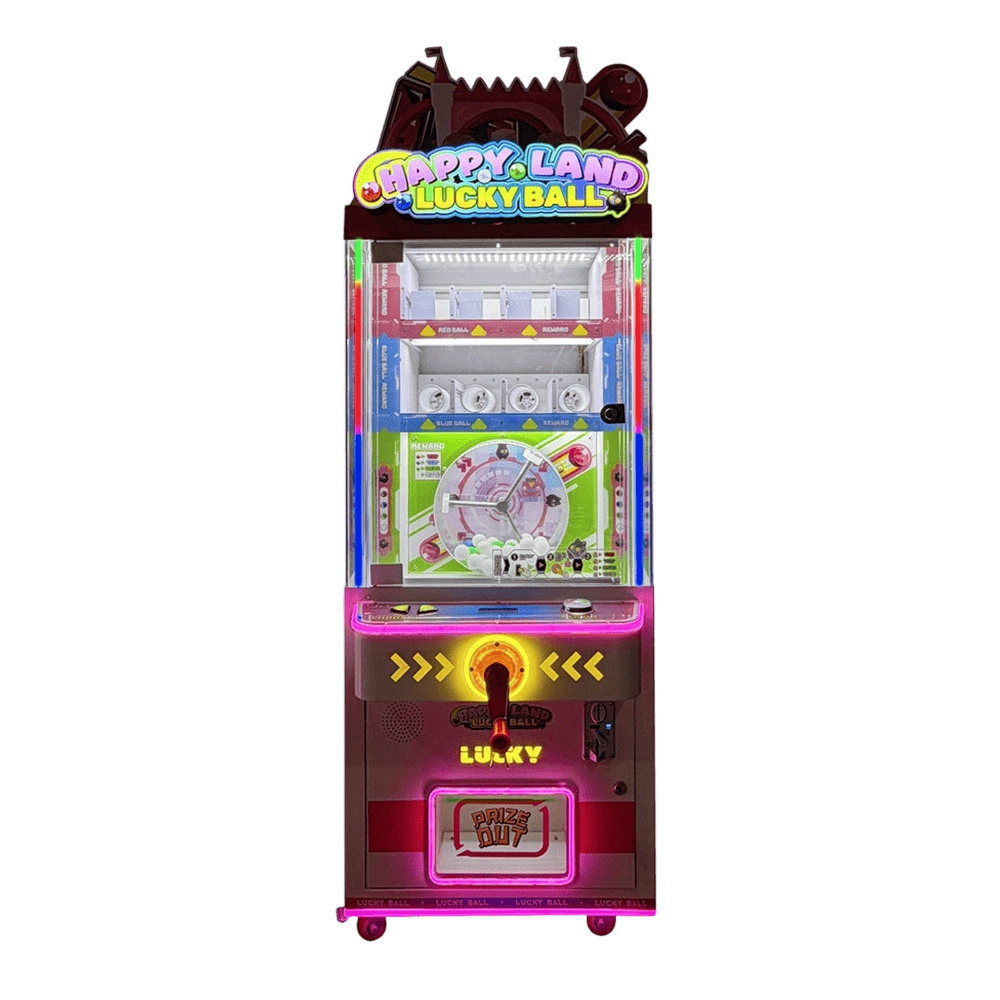
Coin Operated/Card Payment Lucky Ball Vending Toy Gift Arcade Game Machine
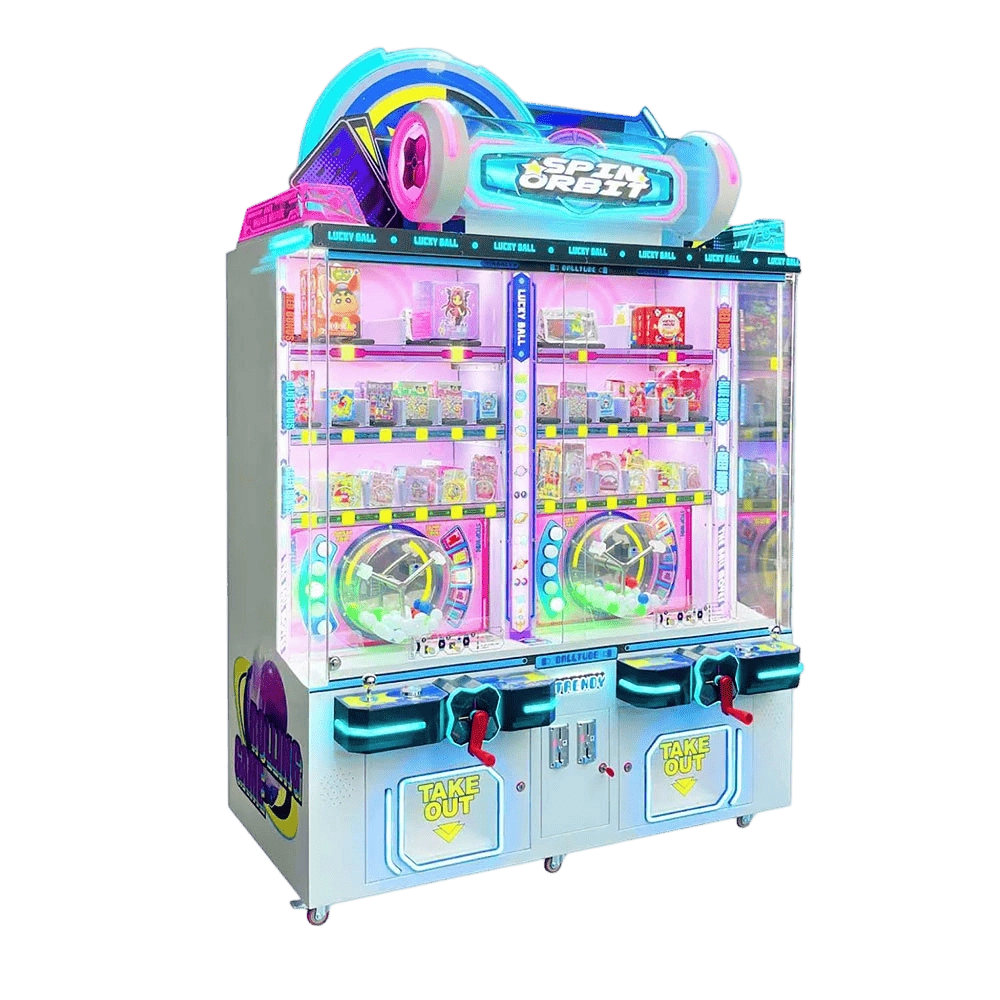
Coin Operated/Card Payment 2 Players SPIN ORBIT Lucky Prize Arcade Game
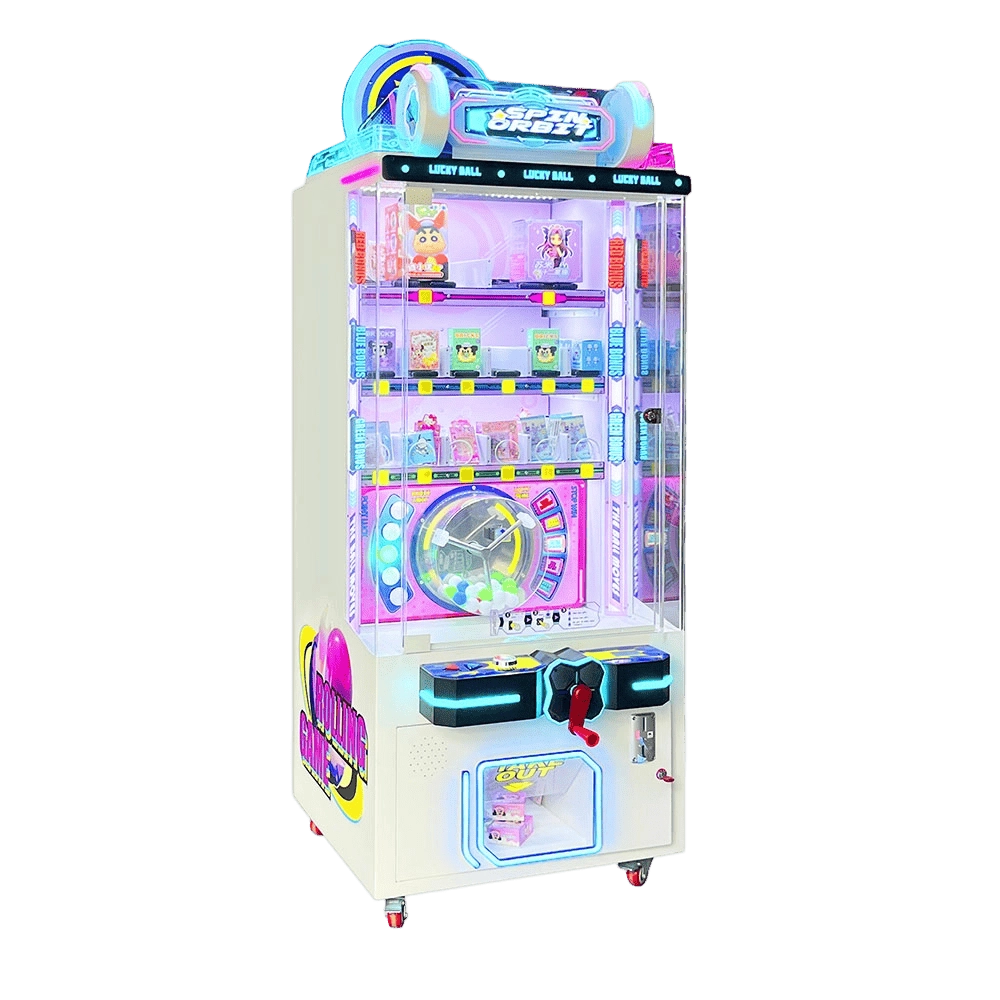
Coin Operated/Card Payment SPIN ORBIT Lucky Prize Arcade Game
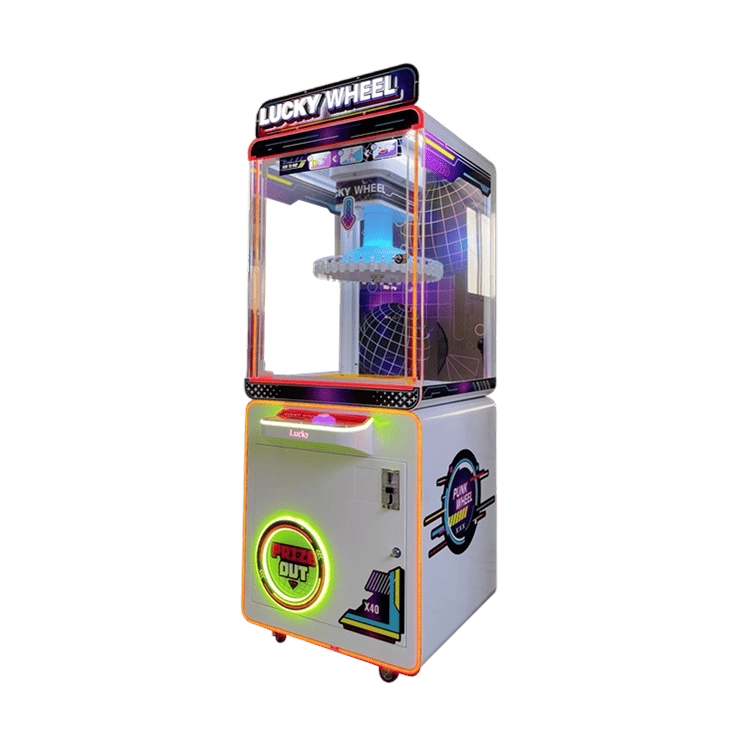
Arcade Prize Lucky Wheel Gift Machine For Amusement Areas
Get in Touch with Jiami Games
If you have any comments or good suggestions, please leave us a message; later our professional staff will contact you as soon as possible.

Innovative Entertainment, at Your Fingertips
Learn about Jiami Games and explore our expertise in console development, innovative design, and global markets.
Quick Links:
© 2026 Jiami Games.
Whatsapp: +8618520390438