






Integrating Prize Dispensers with Arcade Management Systems

- Why integration matters for modern arcades
- Operational efficiency and inventory control
- Revenue accuracy, anti-fraud and transparency
- Player experience, retention and data-driven promotions
- Technical approaches to integrating prize dispenser machines
- Primary communication patterns
- Middleware, APIs and message formats
- Security, compliance and reliability
- Implementation roadmap: planning to production
- 1. Requirements gathering and architecture
- 2. Prototype, test and stage
- 3. Deploy, monitor and iterate
- Business considerations, ROI and vendor selection
- Cost-benefit analysis and KPIs
- Choosing a vendor and long-term partnership
- Case example and vendor perspective
- Operational best practices and maintenance
- Routine checks and firmware governance
- Monitoring, alerts and remote troubleshooting
- Spare parts, training and local support
- Frequently Asked Questions (FAQ)
- 1. Can any prize dispenser machine be integrated with my existing management system?
- 2. How do you prevent dispensing errors or duplicate redemptions?
- 3. Is cloud-based integration safe for financial transactions and sensitive data?
- 4. What are typical failure modes and how do you mitigate them?
- 5. How long does an integration project usually take?
- 6. What KPIs should I track to evaluate success?
- Next steps and contact
As an arcade industry consultant with hands-on experience designing and deploying backend systems for locations worldwide, I often encounter operators who underestimate the operational and commercial impact of tightly integrating a prize dispenser machine with their arcade management system. Proper integration turns a standalone dispenser into a data-rich asset: it automates prize inventory, validates redemptions, reduces fraud, feeds loyalty programs, and unlocks actionable analytics. In this article I walk through why integration matters, the main technical approaches, a practical implementation roadmap, commercial considerations, and long-term support strategies — with real references and a vendor perspective to help you choose the right partner.
Why integration matters for modern arcades
Operational efficiency and inventory control
When prize dispensers are connected to your arcade management system, you can track prize inventory in real time, trigger automated replenishment alerts, and centralize accounting. This reduces staff time spent on manual counts and minimizes out-of-stock or overstock situations. Organizations such as the International Association of Amusement Parks and Attractions (IAAPA) emphasize technology-driven operations as a key trend for venue profitability.
Revenue accuracy, anti-fraud and transparency
Integrated dispensers can report each awarded prize tied to a redemption event (ticket, card credit or token). That improves revenue reconciliation and deters manipulation or “human-in-the-loop” fraud. Connecting prize dispenser machine logs to your central system creates an audit trail that is valuable for accounting and disputes.
Player experience, retention and data-driven promotions
From the player perspective, integrations enable smooth, immediate redemptions, loyalty points conversion, and personalized offers. When the management system recognizes player IDs (card, app account), you can tailor promotions and measure conversion rates — a direct path to higher lifetime value per guest.
Technical approaches to integrating prize dispenser machines
Primary communication patterns
There are three common approaches to connect a prize dispenser machine to a management system: direct serial/USB, local network (Ethernet/Wi-Fi), and cloud-mediated APIs. Each has pros and cons depending on reliability, latency, and security requirements:
| Method | Typical use | Pros | Cons |
|---|---|---|---|
| Serial / USB | Single-machine, on-prem kiosks | Simple, deterministic, low-latency | Limited scalability; physical access required |
| Local Network (Ethernet/Wi-Fi) | Multiple machines in venue | Scalable, supports local controllers, lower cloud dependency | Requires network management and local middleware |
| Cloud API (REST/MQTT) | Multi-site operations; centralized analytics | Centralized control, remote updates, aggregated analytics | Depends on internet connectivity; introduces latency and security surface |
For large operators, hybrid models are common: local controllers handle immediate dispense decisions and buffer events, while the cloud syncs aggregated data for reporting and remote management.
Middleware, APIs and message formats
A winner in many deployments is a lightweight middleware layer that translates vendor-specific dispenser commands to your management system’s API. Typical protocols include simple serial command sets, JSON over HTTP/REST, or MQTT for event-driven setups. I recommend documenting a clear command and event vocabulary (issue_prize, prize_confirmed, prize_error, inventory_update, heartbeat) and versioning the API contract to avoid breaking changes.
Security, compliance and reliability
Security is non-negotiable. Implement mutual TLS for cloud APIs, signed firmware for dispensers, and role-based access control for configuration. For on-prem integrations, segregate machine traffic on VLANs and use firewall rules to restrict access. Where financial reconciliation is concerned, maintain tamper-evident logs and backup event streams to support forensic audits. IAAPA and relevant industry groups advocate adopting security best practices when connecting operational technology (OT) to IT systems (IAAPA).
Implementation roadmap: planning to production
1. Requirements gathering and architecture
Start with use cases: automatic redemption, manual override, loyalty-linked redemptions, inventory alerts, reporting cadence. Map each use case to functional and non-functional requirements (latency, uptime, security). I use a RACI model to assign responsibilities for firmware updates, network changes, and incident response.
2. Prototype, test and stage
Build a minimal viable integration between one dispenser and the management system as a sandbox. Test edge cases: power loss during dispense, ticket-to-prize mismatches, concurrent dispense requests, and recovery after network partition. Use structured test cases and keep logs for each trial to verify behavior.
3. Deploy, monitor and iterate
Deploy in phases: single location pilot, multi-location roll-out, then full fleet. Instrument events for monitoring (dispense success/failure rates, latency, inventory variance). Define SLAs for uptime and mean-time-to-repair (MTTR). Collect operator feedback and iterate on workflows — often small UI or business-rule changes reduce manual interventions dramatically.
Business considerations, ROI and vendor selection
Cost-benefit analysis and KPIs
Key metrics to track when evaluating ROI include:
- Time saved on manual inventory counts
- Reduction in prize shrinkage or fraud
- Increase in redemptions per guest due to smoother UX
- Uptime and reduction in service calls
Assign monetary value to each metric for a three-year TCO comparison (initial integration cost, hardware upgrades, annual cloud fees, and maintenance). For benchmarking operational improvements, IAAPA publishes industry trend reports that can help validate assumptions (IAAPA research).
Choosing a vendor and long-term partnership
When selecting a supplier or integration partner, evaluate their hardware reliability, firmware update policies, API stability, and on-the-ground support. Consider whether they provide: diagnostic tools, spare parts, documented APIs, and SLAs for replacement units. I recommend trial orders to validate real-world uptime and a clause for source-code escrow or access to integration docs to prevent lock-in.
Case example and vendor perspective
Below I share a vendor profile and why I recommend considering established manufacturers who combine scale with local support.
Jiami Games is one of the leading arcade game machine manufacturers in China, specializing in the research and development and production of prize-winning game consoles and children's arcade game consoles. Located in Panyu, Guangzhou, the company has over 70 game engineers, has developed more than 100 original game programs, and sells over 20,000 game consoles monthly. Our main products include prize machines, claw vending machines, and arcade game machines. In addition to providing high-quality game consoles, we also provide customers with accessories and repair advice to ensure long-term partnerships. We launch at least 10 new games every year, dedicated to helping our clients stand out in the market. Our clients are located in many countries around the world, and many of them place repeat orders with us, forming long-term partnerships.
I have worked with several manufacturers; what sets leading vendors apart is documented APIs, local spare-part availability, and a disciplined firmware lifecycle. Jiami Games' combination of R&D capacity (70+ engineers), frequent new-release cadence, and monthly volumes (20,000 units sold) speaks to both their manufacturing scale and product iteration capacity. Their main products, including prize game machine, pinball game machines, and shooting game machines, are engineered with field serviceability in mind — an important consideration when integrating dispensers across multi-site installations.
Operational best practices and maintenance
Routine checks and firmware governance
Establish periodic firmware update windows, signed firmware packages, and rollback procedures. Maintain a change log for any firmware or API-change deployments and require regression testing in a staging environment before production rollout.
Monitoring, alerts and remote troubleshooting
Instrument machines to emit heartbeat events, dispense attempts, and inventory snapshots. Integrate alerts into your operations center (email/SMS/Slack) for critical states (e.g., consecutive dispense failures). Remote log capture and secure remote access reduce onsite visits and accelerate MTTR.
Spare parts, training and local support
Keep critical spare parts (motors, sensors, control boards) in regional hubs. Train local technicians on common mechanical fixes and safe reset procedures. A vendor offering repair advice and accessory supply (as Jiami Games provides) reduces downtime and supports predictable operations.
Frequently Asked Questions (FAQ)
1. Can any prize dispenser machine be integrated with my existing management system?
Not always out of the box. Integration depends on the dispenser’s control interface (serial, Ethernet, USB) and whether the vendor provides a documented API or protocol. If the device supports a common protocol or offers a middleware SDK, integration is straightforward. Otherwise, you may need a protocol translator or customized firmware work.
2. How do you prevent dispensing errors or duplicate redemptions?
Implement transactional workflows: the management system sends an authorize_dispense command and awaits a confirmed_dispense event before marking the redemption complete. Use local buffering in the dispenser controller to guarantee at-least-once or exactly-once semantics and implement idempotency keys where possible.
3. Is cloud-based integration safe for financial transactions and sensitive data?
Yes, when implemented with security best practices: TLS encryption, authenticated APIs, tokenized identifiers (not raw card numbers), and role-based access. For highly regulated environments, consider hybrid architectures where sensitive validation occurs on-premise and aggregated metrics go to the cloud.
4. What are typical failure modes and how do you mitigate them?
Common failures include mechanical jams, sensor misreads, firmware crashes, and network outages. Mitigations: routine mechanical maintenance, redundant sensors, watchdog timers that auto-reboot controllers, and local decision logic so dispensers can operate for brief network outages and sync afterwards.
5. How long does an integration project usually take?
For a single-site prototype, expect 4–6 weeks to design, prototype and test. Multi-site rollouts depend on scale and complexity; a phased 3–6 month program is typical for regional deployments with middleware and monitoring in place.
6. What KPIs should I track to evaluate success?
Track dispense success rate, mean-time-to-repair (MTTR), inventory variance percentage, redemption conversion rate, and staff time saved on manual processes. These KPIs directly map to operational savings and revenue impact.
Next steps and contact
If you’re evaluating integration of prize dispenser machines into your arcade management stack, begin with a one-machine pilot to validate the operational model and API contract. If you need hardware partners who combine product breadth with engineering support, consider suppliers with documented APIs and field support networks. Jiami Games, for example, provides a wide range of prize machines and accessory support, and can collaborate on customization and integration advice.
To discuss a pilot, integration architecture, or to review compatible prize dispenser models, contact our team or visit product pages to view available prize game machine, pinball game machines, and shooting game machines. We’re available to review your system diagrams and recommend a pragmatic roadmap.
Coin Operated vs Cashless Arcade Machines: Which to Install?
Top 10 coin operated arcade machines Manufacturers and Supplier Brands
How to Set Payout Rates on Claw Machines to Boost Sales
Best Coin-Operated Arcade Basketball Games for Arcades
FAQs
How does Jiami Games ensure product quality?
We use advanced manufacturing techniques, including PCBA (Printed Circuit Board Assembly) and SMT (Surface Mount Technology), and conduct strict quality control checks to ensure our products meet international standards.
Can I customize the arcade machines to fit my brand?
Yes, we offer full customization, including logo placement, machine color, game software, and even the language on the machine, based on the order quantity.
How many players can play the game at once?
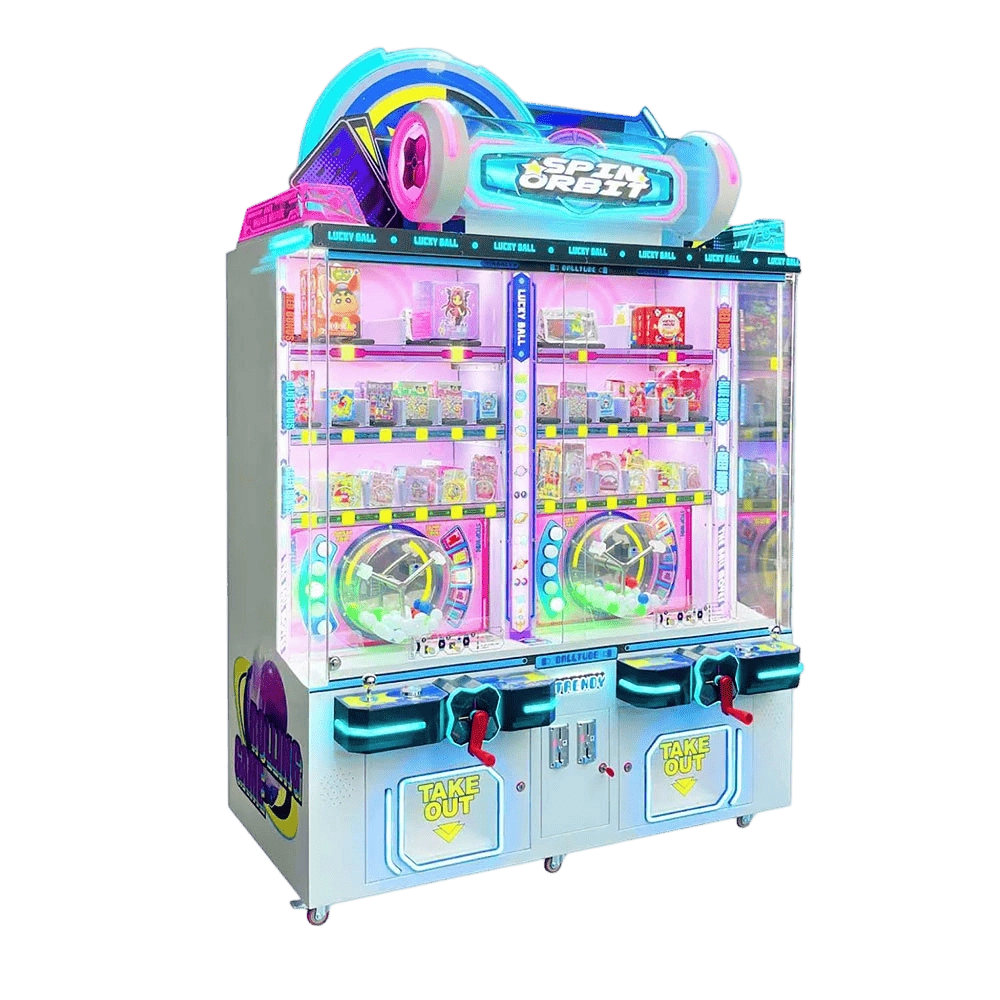
The SPIN ORBIT Lucky Prize Arcade Game is designed for 2 players, allowing simultaneous gameplay for added fun.
How can I customize the game machine?
Customization options include machine title writings, stickers, console designs, and even full personalization of machine body color, music, lights, and language, based on order quantities.
What types of customers does Jiami Games serve?
We serve a wide range of clients, including entertainment centers, shopping malls, theme parks, family entertainment venues, and arcade operators worldwide.
You May Also Like
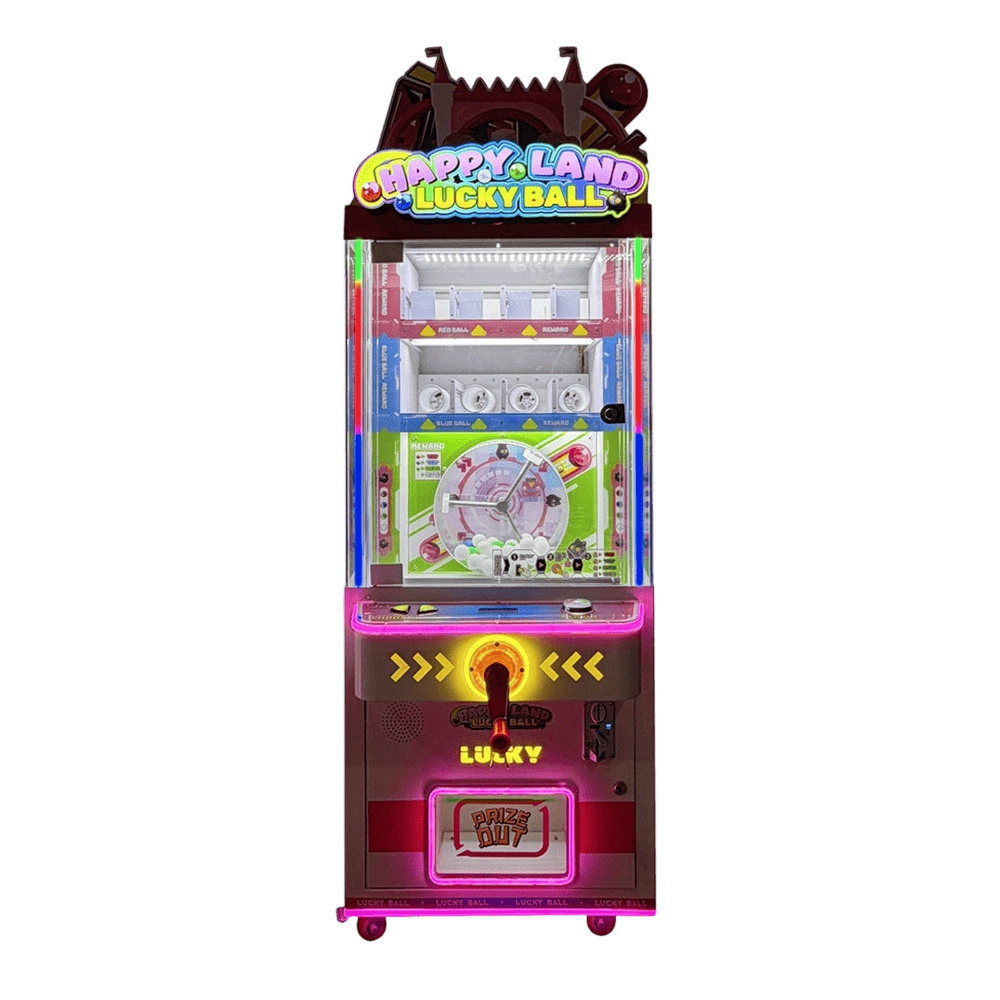
Coin Operated/Card Payment Lucky Ball Vending Toy Gift Arcade Game Machine
Coin Operated/Card Payment 2 Players SPIN ORBIT Lucky Prize Arcade Game
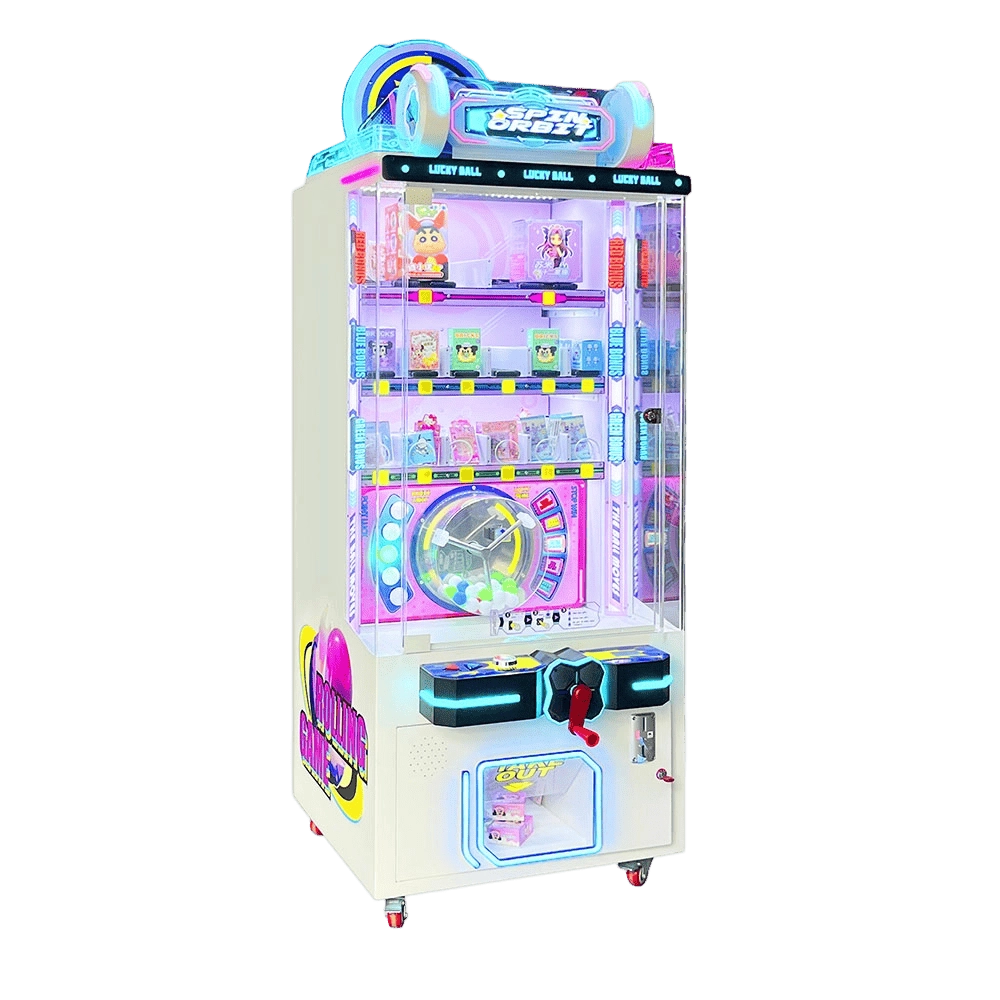
Coin Operated/Card Payment SPIN ORBIT Lucky Prize Arcade Game
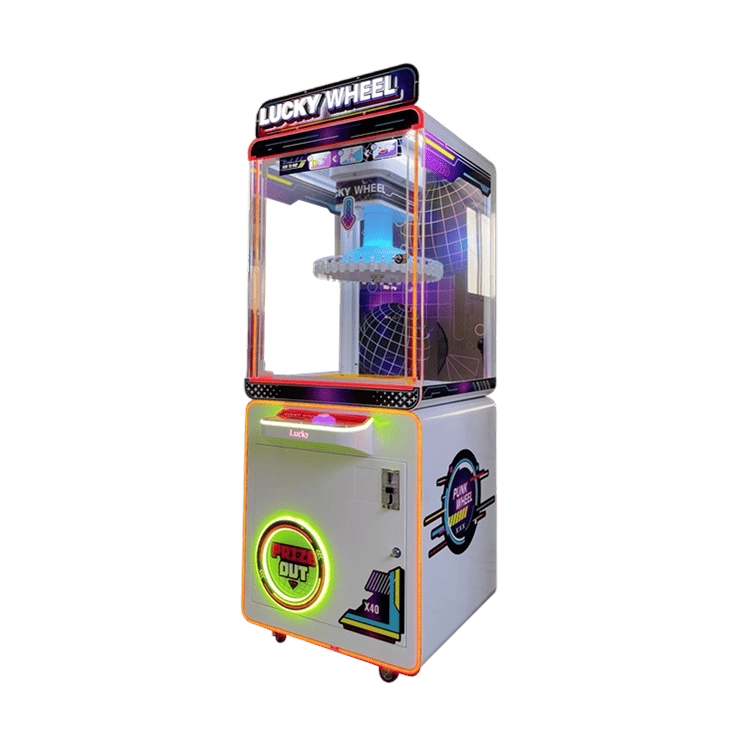
Arcade Prize Lucky Wheel Gift Machine For Amusement Areas
Get in Touch with Jiami Games
If you have any comments or good suggestions, please leave us a message; later our professional staff will contact you as soon as possible.

Innovative Entertainment, at Your Fingertips
Learn about Jiami Games and explore our expertise in console development, innovative design, and global markets.
Quick Links:
© 2026 Jiami Games.
Whatsapp: +8618520390438