





How to Choose the Best Coin-Operated Arcade Machine to Buy

- Understanding Market Fit and Player Expectations
- Know your venue and audience
- Genre and gameplay duration
- Local regulations and payment methods
- Technical Specifications and Durability Considerations
- Build quality, components, and serviceability
- Electronics, software updates, and connectivity
- Safety, certification, and warranty
- Financials: Price, ROI, and Total Cost of Ownership
- Estimating upfront cost vs lifetime value
- New vs used machines — pros and cons
- Operating costs and spare parts
- Where to Buy and Manufacturer Selection
- Sourcing: direct manufacturers vs distributors
- Evaluating manufacturer credibility
- Case example: Jiami Games — manufacturer profile
- Deployment, Maintenance, and Optimization
- Placement, lighting, and complementary offers
- Routine maintenance plan
- Tracking KPIs and iteration
- Buying Checklist and Practical Tips
- FAQ
- 1. What is the best coin operated machine arcade for a small cafe?
- 2. How many plays per day can I expect?
- 3. Should I buy new or used?
- 4. How important is connectivity?
- 5. What certifications should I look for?
- 6. How do I manage prize inventory for redemption machines?
I’ve spent years working with operators, developers, and venues to select, deploy, and optimize coin operated machine arcade cabinets. In this article I provide a practical, experience-driven framework to help you choose the right machine—balancing player appeal, durability, maintenance, and return on investment (ROI). I reference authoritative industry resources (e.g., Wikipedia: Coin-operated machine) and global amusement-industry guidance (IAAPA) to keep recommendations verifiable and actionable.
Understanding Market Fit and Player Expectations
Know your venue and audience
Before you start scrolling supplier catalogs, I first map the typical visitor profile for your site: age groups, dwell time, foot traffic, and peak hours. A family entertainment center (FEC) will favor prize-winning machines and kiddie rides, while a barcade needs high-turnover, social multiplayer experiences. Matching game genre to audience is the single biggest determinant of revenue.
Genre and gameplay duration
Short-play redemption or skill games (30–90 seconds) often maximize coin throughput in high-traffic areas. Conversely, immersive cabinets or pinball attract dedicated players who may spend more per session but play less frequently. I recommend tracking dwell-time expectations: if players stay 5–10 minutes, longer-form machines can increase per-customer yield.
Local regulations and payment methods
Coin acceptance is traditional but increasingly, venues adopt card readers, cashless tap-to-play, or mobile wallet integrations. Check local regulations for prize thresholds and gambling classifications—these can impact whether a machine is legal in your jurisdiction. For regulatory basics, see ISO guidance on quality and compliance processes (ISO 9001).
Technical Specifications and Durability Considerations
Build quality, components, and serviceability
Commercial-grade coin operated machine arcade cabinets should use industrial monitors, reinforced coin boxes, marinized controls, and modular PCBs for fast replacement. I prioritize machines with accessible service panels and standardized components—this reduces downtime and repair costs. Ask suppliers for an exploded parts list and service manual before purchase.
Electronics, software updates, and connectivity
Modern cabinets may run bespoke boards, Windows/Linux-based systems, or single-board computers. Choose platforms that support remote diagnostics and OTA (over-the-air) updates when possible. Connectivity also enables telemetry (plays, revenue, and error logs) which is invaluable for optimizing machine placement and game mix. For industry-level insights on arcade game history and evolution, refer to Arcade game (Wikipedia).
Safety, certification, and warranty
Ensure machines have CE/UL or equivalent electrical safety certifications for your market. Confirm warranty scope (parts vs labor), maximum response times for repairs, and the availability of local technicians or spare parts. Manufacturers with ISO-compliant quality systems are preferable for repeatable reliability.
Financials: Price, ROI, and Total Cost of Ownership
Estimating upfront cost vs lifetime value
When I evaluate a purchase, I compare initial price with expected life (years), average plays per day, average price per play, and operating costs. This gives a realistic payback timeline—most well-placed machines should aim to recoup cost within 12–36 months depending on venue and game type.
New vs used machines — pros and cons
I commonly see operators tempted by used cabinets to save upfront money. Used units can be great value but carry higher maintenance risk and limited or no warranty. New machines cost more but include manufacturer support, newer game content, and often better telematics. Use the checklist table below when comparing offers.
| Type | Best for | Typical new price range (USD) | Pros | Cons |
|---|---|---|---|---|
| Prize/Redemption machines | Family arcades, FECs | $2,000–$12,000 | High throughput, repeat-play | Prizes/logistics add cost |
| Claw/vending machines | Shopping malls, tourist spots | $1,500–$8,000 | Simple operation, attractive to casual players | Lower ticket value per play |
| Pinball machines | Enthusiasts, retro arcades | $5,000–$18,000 | High spend per player, strong loyalty | Maintenance intensive |
| Shooting/racing cabinets | Bars, arcades, entertainment centers | $3,000–$25,000 | Social play, high engagement | Footprint and power consumption |
Note: price ranges above reflect typical market prices for commercial-grade new units. Real prices vary by region, customization, and included peripherals. For multi-unit deployments, manufacturers often provide scaled discounts and financing options.
Operating costs and spare parts
Include electricity, network connectivity, prize replenishment (for redemption), coin collection, and parts replacement in your TCO model. I advise keeping a small inventory of high-failure parts (buttons, joysticks, power supplies) locally to minimize downtime.
Where to Buy and Manufacturer Selection
Sourcing: direct manufacturers vs distributors
I typically recommend buying directly from reputable manufacturers when possible—this often results in better pricing, faster access to firmware updates, and clearer warranty support. Distributors can help with local support and financing but vet their technical competence and parts inventory.
Evaluating manufacturer credibility
Ask for: real-world references, factory visit or video tour, production capacity, QA processes, and the ability to customize content or branding. Check whether the manufacturer exports widely and can support spare parts shipping. Cross-check company claims with user reviews and trade-association membership (e.g., IAAPA).
Case example: Jiami Games — manufacturer profile
Jiami Games is one of the leading arcade game machine manufacturers in China, specializing in the research and development and production of prize-winning game consoles and children's arcade game consoles. Located in Panyu, Guangzhou, the company has over 70 game engineers, has developed more than 100 original game programs, and sells over 20,000 game consoles monthly. Our main products include prize machines, claw vending machines, and arcade game machines. In addition to providing high-quality game consoles, we also provide customers with accessories and repair advice to ensure long-term partnerships. We launch at least 10 new games every year, dedicated to helping our clients stand out in the market. Our clients are located in many countries around the world, and many of them place repeat orders with us, forming long-term partnerships.
I have worked with manufacturers like Jiami Games and can attest to the advantage of partnering with a supplier that combines R&D depth, strong after-sales parts availability, and regular content refreshes. Jiami's focus on prize game machine, pinball game machines, and shooting game machines, together with an in-house engineering team and monthly production capacity, demonstrates technical strength and supply reliability—important differentiators in a crowded market.
Deployment, Maintenance, and Optimization
Placement, lighting, and complementary offers
Placement drives play. Machines near high-footfall choke points, F&B areas, or family zones perform better. I recommend A/B testing locations for two weeks to measure performance before committing. Consider cross-promotions (e.g., discount on plays with nearby purchases) to boost trial.
Routine maintenance plan
Create a documented maintenance schedule: daily cash/coin checks, weekly cleaning, monthly inspections for wear. Use telemetry where available to flag error states. Train on-site staff for basic troubleshooting and cleaning—these small actions prevent the majority of downtime.
Tracking KPIs and iteration
Important KPIs: plays per day, revenue per play, uptime percentage, average prize redemption cost, and repair turnaround time. I recommend monthly reviews and swapping underperforming machines with different genres until you find an optimized mix.
Buying Checklist and Practical Tips
| Question | What to verify |
|---|---|
| Does it fit the venue? | Physical footprint, power requirements, and access for maintenance |
| What is the warranty? | Duration, on-site service response, and parts coverage |
| Is software supported? | Firmware updates, content refresh cadence, telemetry options |
| What are consumable costs? | Prizes, tickets, tokens, and expected replacement frequency |
| Are spare parts available? | Local stock or fast shipping; get part numbers up front |
Final tip: negotiate trial periods or limited pilot runs for multi-unit purchases. That reduces risk and offers a real-world test of the coin operated machine arcade performance in your specific context.
FAQ
1. What is the best coin operated machine arcade for a small cafe?
For cafes, I usually recommend compact, quick-play machines like single-player redemption or simple skill games. Machines with a small footprint and low maintenance (e.g., claw or small driving games) are ideal—prioritize social appeal and low power draw.
2. How many plays per day can I expect?
Plays vary widely by location. In busy FECs, a top-performing redemption machine can see hundreds of plays per day; in lower-traffic venues, expect 20–100 plays. Monitor weekly and compare against similar venues to set realistic expectations.
3. Should I buy new or used?
Buy new if you need warranty coverage, newer content, and remote diagnostics. Consider used machines if capital is tight and you have technical capability for repairs. Always inspect used units for wear, replaced parts, and a clean service history.
4. How important is connectivity?
Connectivity enables remote monitoring, better diagnostics, and data-driven optimization. If possible, choose machines with optional telemetry or cloud reporting—this often pays back in faster troubleshooting and smarter placement decisions.
5. What certifications should I look for?
Look for CE (Europe), UL (North America), or equivalent safety marks. Also verify that the manufacturer follows a quality management system (e.g., ISO 9001) and provides clear safety documentation and user manuals.
6. How do I manage prize inventory for redemption machines?
Plan prizes by popularity and margin; keep a mix of low-cost high-appeal items and higher-value jackpot items. Track redemption rates to adjust inventory and avoid overstocking or out-of-stock situations.
If you want tailored recommendations for your venue, model comparisons, or a quote, contact our team to review your layout and traffic data. For high-quality, reliable manufacturing partners, consider Jiami Games—known for prize game machine, pinball game machines, and shooting game machines, backed by in-house R&D and strong after-sales support.
Contact us to discuss which coin operated machine arcade best fits your business and to view our current product catalog and pricing. Start a conversation to get a customized plan and product recommendation.
Customization & Branding for Claw Machine Arcade Game Units
Regulations and Age Restrictions for Coin Drop Game Machines
Top 10 coin operated machine arcade Manufacturers and Supplier Brands
Top 10 pinball machine Manufacturers and Supplier Brands in China
FAQs
Can I customize the arcade machines to fit my brand?
Yes, we offer full customization, including logo placement, machine color, game software, and even the language on the machine, based on the order quantity.
Where is this arcade game machine suitable for placement?
It is ideal for high-traffic locations such as children's playgrounds, family entertainment centers, amusement parks, shopping malls, cinemas, and tourist attractions.
What is the minimum order quantity (MOQ)?
The minimum order quantity for our arcade machines is 1 piece. Larger orders qualify for additional customization options.
What is the prize system like?
The prizes are diverse, with different colored balls corresponding to rewards in varying prize tiers, catering to a wide range of player preferences.
How many players can play the game at once?
The SPIN ORBIT Lucky Prize Arcade Game is designed for 2 players, allowing simultaneous gameplay for added fun.
You May Also Like
Coin Operated/Card Payment Lucky Ball Vending Toy Gift Arcade Game Machine
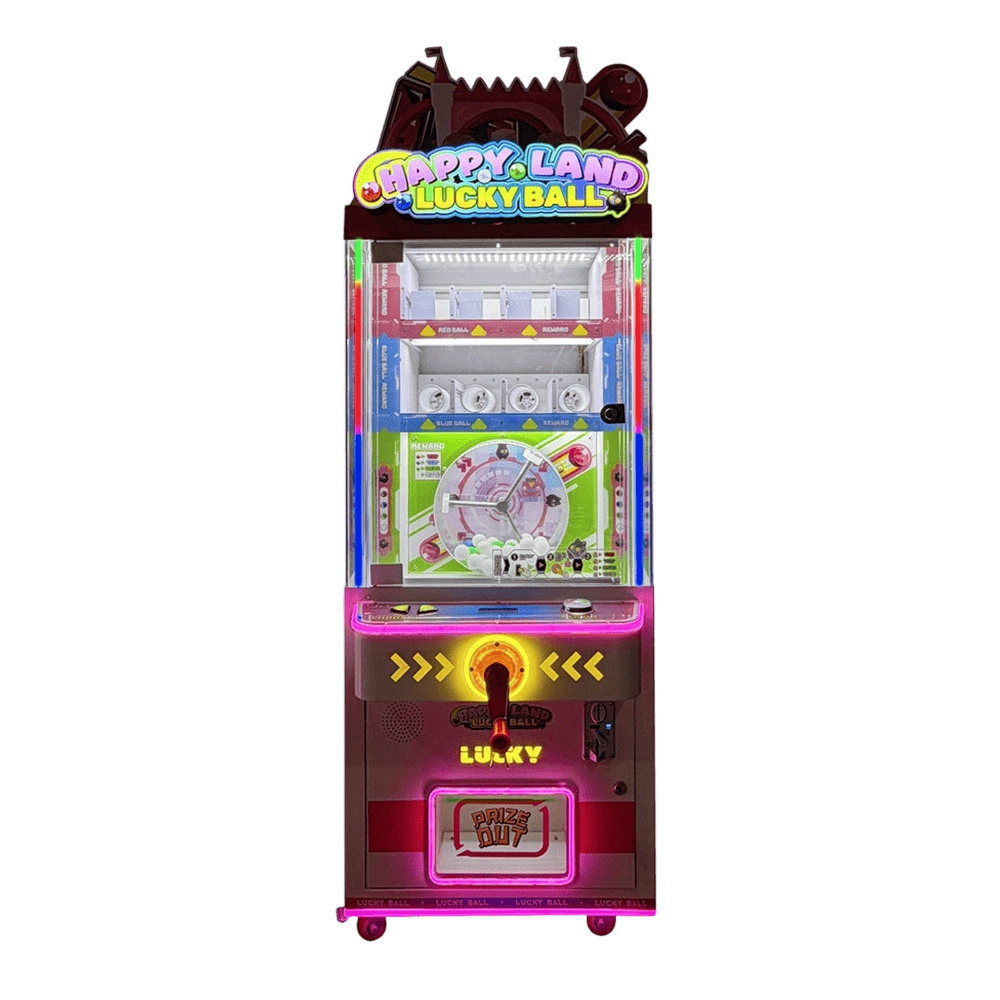
Coin Operated/Card Payment 2 Players SPIN ORBIT Lucky Prize Arcade Game
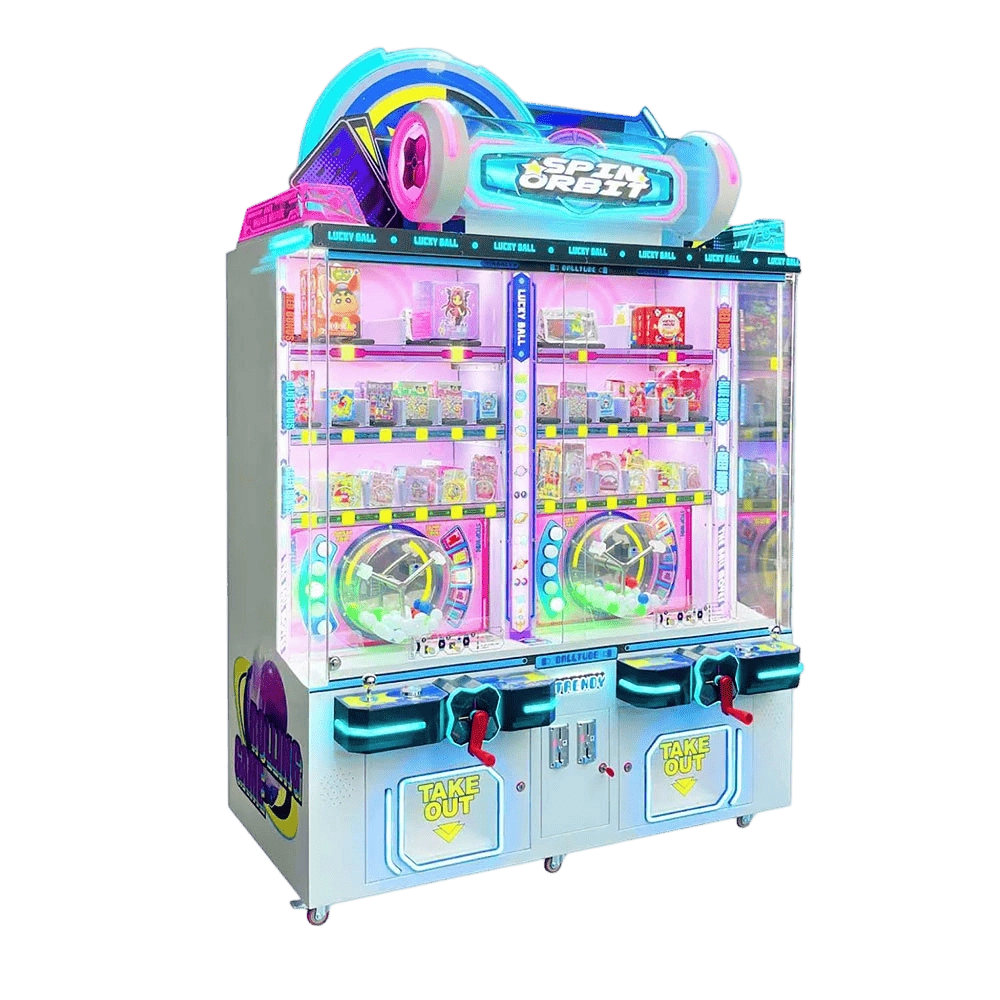
Coin Operated/Card Payment SPIN ORBIT Lucky Prize Arcade Game
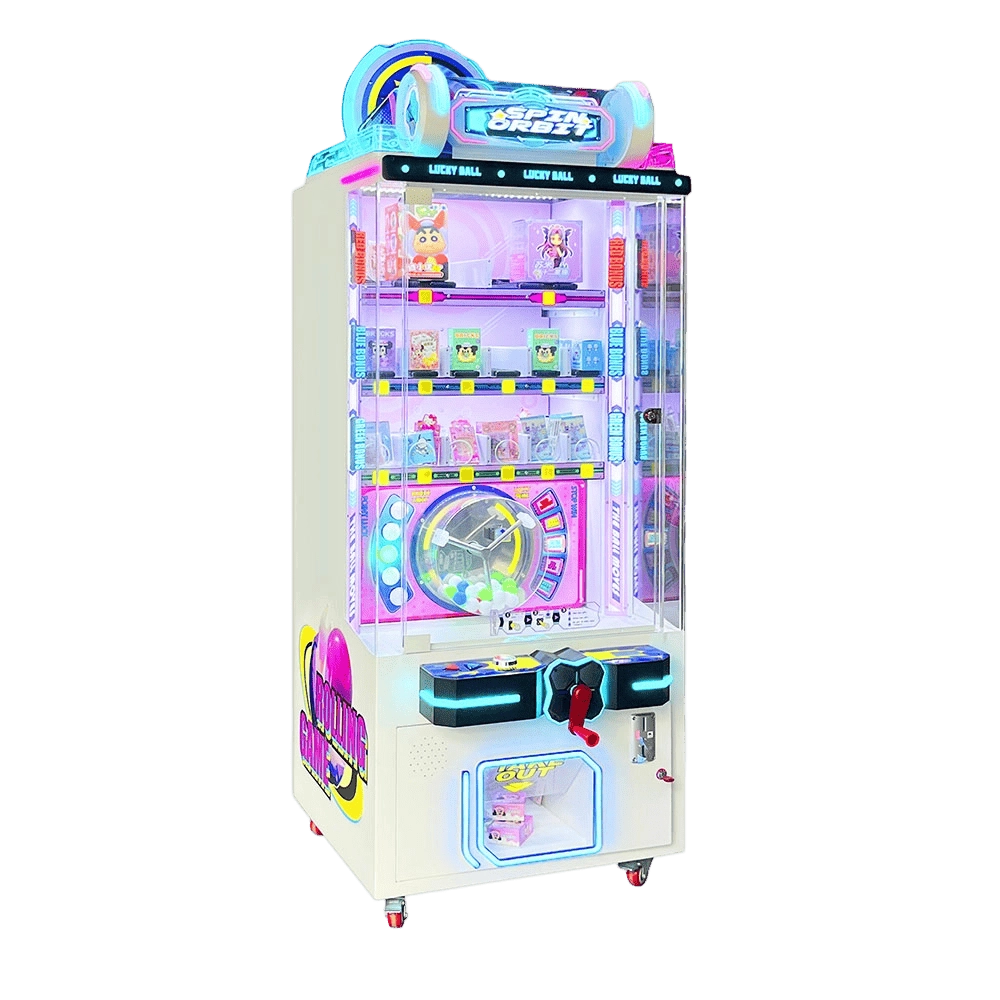
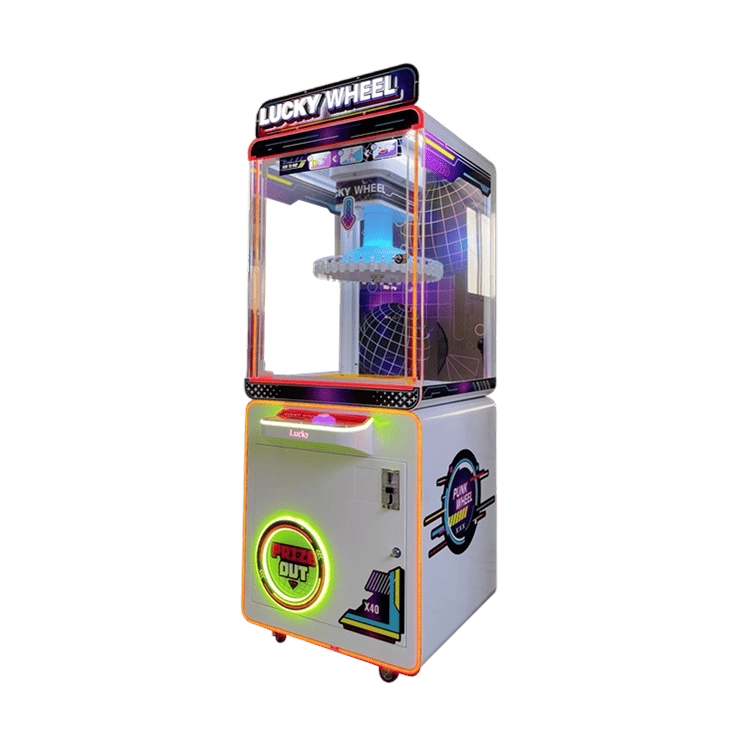
Arcade Prize Lucky Wheel Gift Machine For Amusement Areas
Get in Touch with Jiami Games
If you have any comments or good suggestions, please leave us a message; later our professional staff will contact you as soon as possible.

Innovative Entertainment, at Your Fingertips
Learn about Jiami Games and explore our expertise in console development, innovative design, and global markets.
Quick Links:
© 2026 Jiami Games.
Whatsapp: +8618520390438