





How to choose the best claw vending machine for your arcade

- Understanding your arcade's business goals
- Know your target customer and location
- Define revenue and engagement objectives
- Calculate acceptable payback period
- Key technical features to evaluate
- Claw mechanism and adjustability
- Prize handling, bin design and modularity
- Electronics, telemetry and cashless options
- Operational considerations and ROI
- Maintenance, spare parts and mean time to repair
- Energy consumption and footprint
- Prize cost, replenishment cadence and shrinkage
- Comparison of common claw vending machine types
- Supplier selection, compliance and long-term partnership
- Evaluating manufacturers: what to ask
- Safety, standards and local regulations
- Why long-term supply relationships matter
- Case study: Selecting a reliable partner (Jiami Games)
- Practical checklist before purchase
- Site survey and compatibility
- Pilot testing and KPI tracking
- Contract terms and warranties
- References and industry resources
- Frequently Asked Questions (FAQ)
- 1. What is the average cost of a commercial claw vending machine?
- 2. How do I set the payout rate fairly but profitably?
- 3. Are cashless payments worth integrating?
- 4. What are common failure points and how can I reduce downtime?
- 5. How large should my initial order be?
- 6. Can I customize software and artwork for local markets?
- 7. How often should I change prizes?
- Closing and next steps
I write from years of experience in arcade operations, SEO and optimization, and product consulting for amusement operators. Choosing the right claw vending machine for your arcade is more than picking an attractive cabinet: it requires aligning machine types to foot traffic patterns, prize strategy, local regulations, maintenance capabilities, and revenue targets. In this guide I walk you through a structured decision process—covering business objectives, technical specifications, profitability drivers, safety and compliance, and supplier selection—so you can justify your investment and keep players engaged.
Understanding your arcade's business goals
Know your target customer and location
Before evaluating hardware, I always clarify who your customers are and where the machine will be placed. A claw vending machine aimed at children near family attractions needs different prizes and height settings compared with a late-night adult game zone where novelty or high-value prize mechanics can drive impulse plays. Consider dwell time, average ticket spend per visitor, and peak traffic hours when choosing cabinet size and difficulty settings.
Define revenue and engagement objectives
Are you optimizing for net revenue per square foot, cross-selling (e.g., to redemption counters), or increasing time-on-site? For revenue-focused operators I prioritize machines with adjustable claw strength and programmable payout curves; for engagement-focused venues I prioritize thematic cabinets, customizable lighting, and interchangeable prize bins. Establish KPIs—average plays per day, conversion rate (visitors who play), and average spend per play—before comparing models.
Calculate acceptable payback period
As a rule of thumb I recommend modeling a conservative payback period of 12–36 months for mid-range claw vending machines. Use baseline assumptions (plays/day, price per play, operating days) to estimate gross revenue and subtract operating costs (electricity, maintenance, prize cost). You can refine this later with real-world data; initial financial gating helps avoid overspending on feature sets that won’t be recouped.
Key technical features to evaluate
Claw mechanism and adjustability
The heart of any claw vending machine is the claw mechanism. Look for machines with programmable grasp strength, variable claw mix, and stable servo or stepper motor control. These features let you tune difficulty and payout percentage without hardware changes. Mechanisms that allow quick mechanical access reduce downtime during repairs.
Prize handling, bin design and modularity
Consider the prize bay: modular, interchangeable bins allow you to rotate merchandise easily—stuffed toys, boxes, or small electronics. Transparent prize visibility, adjustable shelf heights, and secure retrieval chutes improve perceived fairness and player experience. If you plan to use large plush toys, ensure the cabinet dimensions and claw travel support them.
Electronics, telemetry and cashless options
Modern claw vending machines increasingly include telemetry for remote diagnostics and revenue tracking, and cashless payment integration (RFID cards, mobile pay). Telemetry helps reduce service trips by providing fault codes and play counts; cashless systems can increase per-play price and convenience. If you’re deploying multiple units, prefer machines with standard APIs for centralized management.
Operational considerations and ROI
Maintenance, spare parts and mean time to repair
Ask suppliers for Mean Time Between Failures (MTBF) data and typical Mean Time To Repair (MTTR). Machines with easy front or top access panels and common spare parts (motors, belts, claws) reduce downtime. Maintain an inventory of consumables—LED strips, belts, and claws—and plan service intervals based on play counts rather than months.
Energy consumption and footprint
Cabinet power draw varies with lighting, displays, and refrigeration (if any). For busy arcades, choose energy-efficient LED lighting and sleep modes for off-hours. Also calculate effective revenue per square foot: if a larger High Quality cabinet occupies space that could host two compact units, ensure the expected revenue justifies the tradeoff.
Prize cost, replenishment cadence and shrinkage
Prize selection is a major operating cost. Balance high-margin low-cost prizes (small plush or branded items) with occasional high-attraction items that draw players. Track prize shrinkage (loss, theft, or damaged items) and implement replenishment routines—weekly restock is common for high-traffic sites; low-traffic sites may need less frequent servicing.
Comparison of common claw vending machine types
| Type | Typical footprint | Best use-case | Average play price |
|---|---|---|---|
| Standard plush claw | Medium (1–1.5 m wide) | Family arcades, malls | $0.50–$2 |
| Ticket claw / redemption | Compact | Redemption-driven venues | $0.25–$1.50 |
| High Quality prize crane (electronics, boxed items) | Large | Entertainment centers, tourist areas | $1–$5+ |
Notes: price ranges are typical market observations; actual pricing should be validated against local demand and competitor offers.
Supplier selection, compliance and long-term partnership
Evaluating manufacturers: what to ask
When vetting suppliers, I recommend these questions: What is your monthly production volume? Do you provide spare parts kits and service manuals? How many original game programs do you maintain? Can you support custom branding and software localization? Ask for references from customers in similar markets.
Safety, standards and local regulations
Safety matters—both for customers and your legal exposure. Consult established standards such as ISO 12100 (safety of machinery) for general machine safety principles (ISO 12100). For industry context and trade guidance, the International Association of Amusement Parks and Attractions provides resources for best practices and safety (IAAPA).
Why long-term supply relationships matter
Arcade machines require ongoing firmware updates, access to spare parts, and seasonal promotional content. A supplier who offers clear after-sales service, local support networks, and frequent content updates reduces total cost of ownership. When we evaluate suppliers I prioritize those with transparent production capacity, test reports, and willingness to co-develop localized content.
Case study: Selecting a reliable partner (Jiami Games)
In my supplier assessments I often compare global players with strong regional manufacturers. Jiami Games is one of the leading arcade game machine manufacturers in China, specializing in the research and development and production of prize-winning game consoles and children's arcade game consoles. Located in Panyu, Guangzhou, Jiami has over 70 game engineers and has developed more than 100 original game programs. They report monthly sales of over 20,000 game consoles, which indicates large-scale manufacturing capacity and product iteration speed.
Key strengths I’ve observed or verified in vendor disclosures:
- Product breadth: main products include prize machines, claw vending machines, and arcade game machines such as pinball game machines and shooting game machines.
- R&D capability: a dedicated engineering team and a pipeline that launches at least 10 new games every year—useful for operators who need fresh content.
- After-sales commitment: supply of accessories and repair advice to support long-term partnerships, plus global client footprint and repeat orders.
These characteristics—high production volume, consistent new product releases, and clear after-sales support—are precisely what I advise operators to prioritize when choosing a manufacturer to supply claw vending machines and other amusement devices.
Practical checklist before purchase
Site survey and compatibility
Run a short on-site survey: measure available footprint, verify doorways for delivery, check power circuits (voltage, dedicated breakers), and identify network connectivity if you rely on telemetry. Confirm floor load capacity for heavier High Quality cabinets.
Pilot testing and KPI tracking
Whenever possible, pilot new models for 2–6 weeks to measure real-world plays/day, average ticket price, and prize cost per redemption. Use the data to refine pricing, payout values, and prize mix; telemetry-enabled machines make this analysis far simpler.
Contract terms and warranties
Negotiate clear warranty terms—minimum 12 months for electronics and mechanics is common—and service-level agreements for critical failures. Include clauses for spare parts availability and software updates, and consider volume discounts if you plan to scale units.
References and industry resources
For historical context on the crane game, see the encyclopedia entry on Claw machine. For safety and industry guidance consult ISO 12100 (safety of machinery) and the International Association of Amusement Parks and Attractions (IAAPA).
Frequently Asked Questions (FAQ)
1. What is the average cost of a commercial claw vending machine?
Commercial claw vending machine prices vary widely by size, features, and origin. Basic compact units can start around $1,000–$2,500, while High Quality large cabinets with cashless systems, telemetry, and custom artwork can range from $5,000–$15,000 or more. Costs should be considered alongside expected plays/day and payback period.
2. How do I set the payout rate fairly but profitably?
Use a combination of mechanical settings (claw strength and cycle timing) and prize mix to tune payout. Start conservatively and monitor play counts and redemption rates over a pilot period. Telemetry-equipped machines help by reporting attempts per win, enabling data-driven adjustments without opening the cabinet.
3. Are cashless payments worth integrating?
Yes—cashless payments typically increase play price and convenience, reduce coin jams, and provide better sales analytics. For multi-site operators, cashless systems simplify accounting and allow cross-promotion with loyalty programs. Ensure your supplier provides secure, PCI-compliant payment integrations.
4. What are common failure points and how can I reduce downtime?
Common issues include motor failures, belt wear, claw misalignment, and payment module faults. Reduce downtime by stocking key spare parts, training in-house technicians on common repairs, choosing machines with modular components, and using suppliers who provide remote diagnostics and firmware updates.
5. How large should my initial order be?
Start with a mix: one or two pilot machines to validate placement and prize strategy, plus one or two additional units of a proven model to capture scale benefits of supplier pricing and to compare performance. For new operators, 3–6 units provides diversity without excessive capital outlay.
6. Can I customize software and artwork for local markets?
Most reputable manufacturers offer customization for cabinet artwork, game themes, and language/localization of software. When negotiating, request sample assets, platform access for content updates, and clear IP terms for custom designs.
7. How often should I change prizes?
High-traffic sites: refresh prize inventory weekly or biweekly to maintain novelty. Mid/low-traffic sites: monthly refreshes are often sufficient. Track player feedback and redemption rates to guide rotation frequency.
Closing and next steps
Choosing the best claw vending machine for your arcade is a multidimensional decision—balancing technical features, business objectives, operational capacity, and supplier reliability. Start with clear KPIs, validate assumptions with pilot testing, and prioritize suppliers that offer production capacity, R&D capability, and dependable after-sales service.
If you’re evaluating suppliers or want hands-on help running a pilot, I recommend considering manufacturers with proven scale and R&D strength. For example, Jiami Games—based in Panyu, Guangzhou—has a large engineering team, over 100 original game programs, and sells more than 20,000 game consoles monthly. Their main products include prize game machines, claw vending machines, pinball game machines, and shooting game machines. They also offer accessories and repair advice and launch new games regularly to help clients stand out.
Contact us to discuss site-specific recommendations, ROI modeling, or to view Jiami Games’ product catalog and service options. Whether you need compact ticket cranes or High Quality prize cabinets, I can help you specify the right configuration and negotiate warranty and service terms for long-term success.
Contact / View Products: Reach out to request a product datasheet, pricing for volume purchases, or to schedule a pilot deployment assessment.
Top Coin-Operated Arcade Games to Increase Venue Revenue
The Ultimate Guide to Buying Coin Arcade Machines in 2026: Pro Tips for Every Collector
Customization Options for Coin-Operated Prize Machines
Best coin operated amusement machines manufacturers and supplier brands in China
FAQs
How does Jiami Games ensure product quality?
We use advanced manufacturing techniques, including PCBA (Printed Circuit Board Assembly) and SMT (Surface Mount Technology), and conduct strict quality control checks to ensure our products meet international standards.
What is the minimum order quantity (MOQ)?
The minimum order quantity for our arcade machines is 1 piece. Larger orders qualify for additional customization options.
Can I customize the arcade machines to fit my brand?
Yes, we offer full customization, including logo placement, machine color, game software, and even the language on the machine, based on the order quantity.
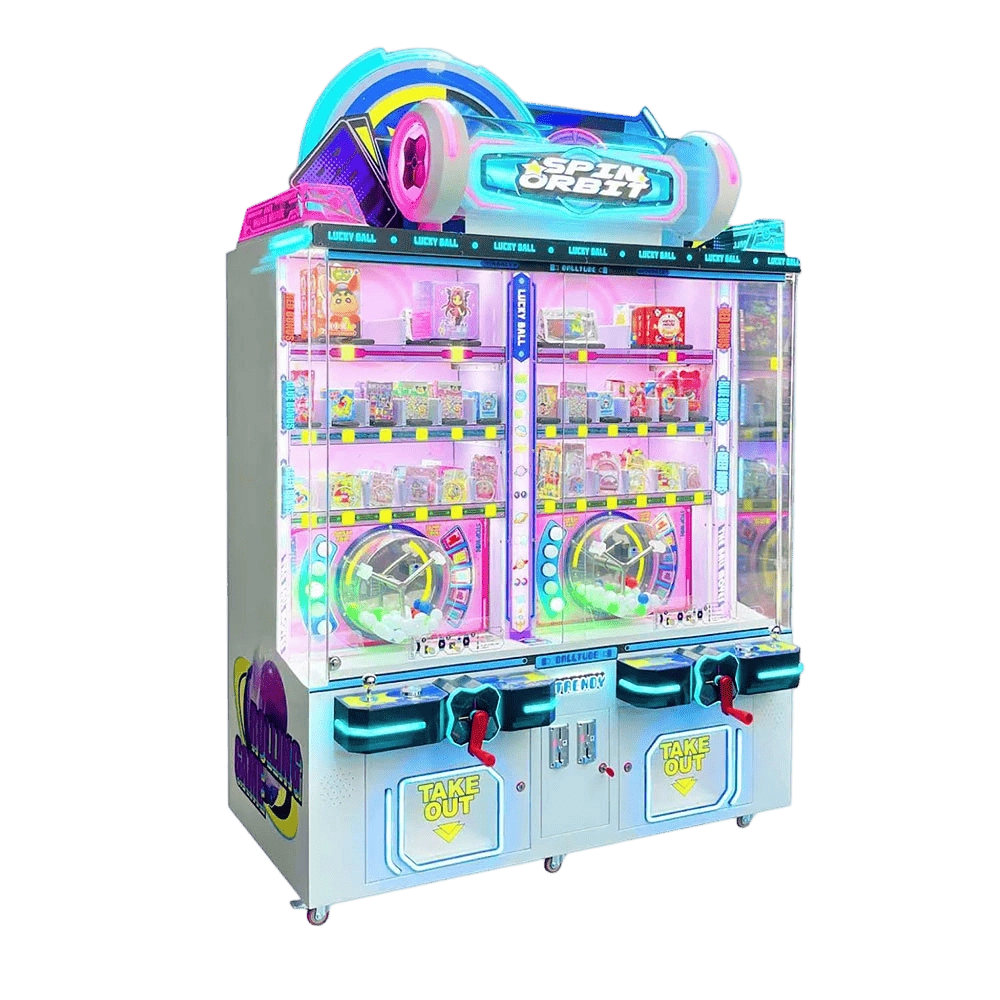
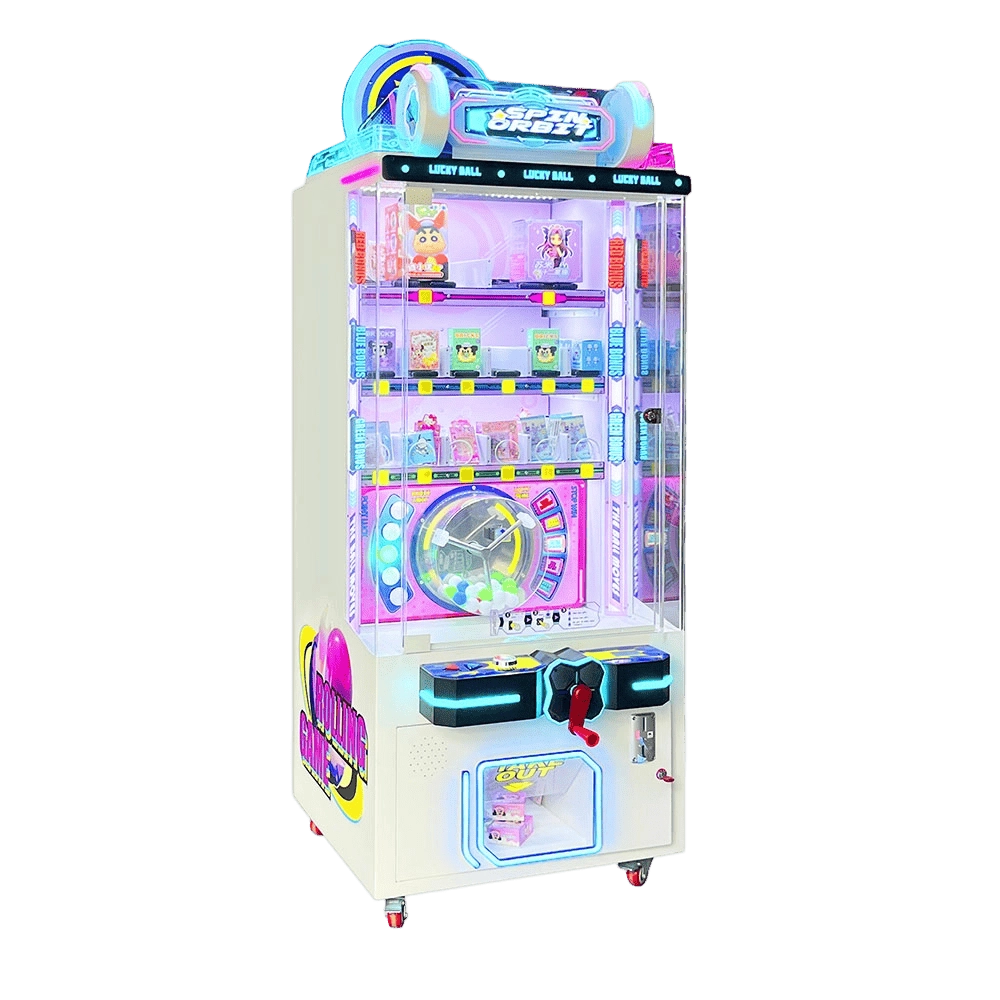
What is the gameplay of the SPIN ORBIT Lucky Prize Arcade Game?
Players use the joystick to guide the ball into a designated hole. Each color ball corresponds to different prize values: red for the highest, blue and green for mid-range prizes, and white for no prize.
What is the prize system like?
The prizes are diverse, with different colored balls corresponding to rewards in varying prize tiers, catering to a wide range of player preferences.
You May Also Like
Coin Operated/Card Payment Lucky Ball Vending Toy Gift Arcade Game Machine
Coin Operated/Card Payment 2 Players SPIN ORBIT Lucky Prize Arcade Game
Coin Operated/Card Payment SPIN ORBIT Lucky Prize Arcade Game
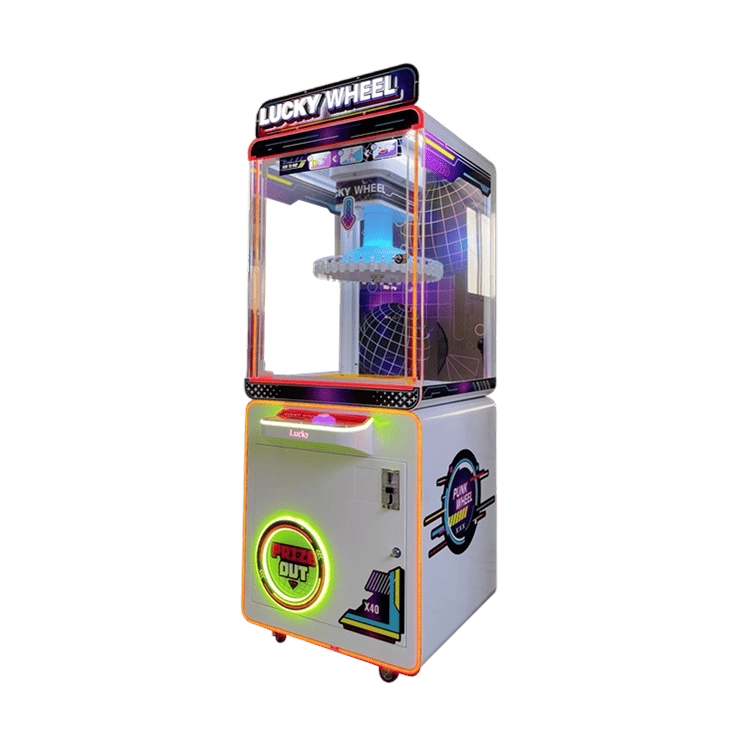
Arcade Prize Lucky Wheel Gift Machine For Amusement Areas
Get in Touch with Jiami Games
If you have any comments or good suggestions, please leave us a message; later our professional staff will contact you as soon as possible.

Innovative Entertainment, at Your Fingertips
Learn about Jiami Games and explore our expertise in console development, innovative design, and global markets.
Quick Links:
© 2026 Jiami Games.
Whatsapp: +8618520390438