






How to Evaluate ROI on Coin Machine Arcade Game Investments

- Why ROI Matters for Arcade Owners and Investors
- Understanding the business model of coin machine arcade game operations
- Why accurate ROI calculation changes decisions
- Key financial concepts you should use
- Calculating ROI for Coin Machine Arcade Game Investments
- Step 1 — Build the revenue model
- Step 2 — Calculate annual operating costs
- Step 3 — Include depreciation and capital costs
- Metrics, Examples, and a Comparison Table
- Core metrics to track
- Example scenario (illustrative)
- Using NPV for multi-year decisions
- Reducing Risk & Improving Returns
- Location selection and revenue optimization
- Maintenance, downtimes, and spare parts strategy
- Game mix and lifecycle management
- Supplier Choice, Warranty & the Jiami Games Example
- Why manufacturer selection affects ROI
- Working with established suppliers
- Jiami Games — supplier profile and how they help ROI
- How to benchmark suppliers
- Practical Checklist & Next Steps
- Pre-purchase checklist
- Post-purchase monitoring
- When to upgrade or replace
- FAQ
- 1. What is a reasonable payback period for a coin machine arcade game?
- 2. How do I estimate plays per day before installing a machine?
- 3. Should I lease or buy arcade machines?
- 4. How much should I budget for maintenance and parts?
- 5. What role does content refresh play in ROI?
- 6. Are there standards or associations I should consult?
- Contact / Next Steps
I evaluate coin machine arcade game investments from a practical operator's perspective, focusing on how to measure return on investment (ROI) in ways that are verifiable, repeatable, and aligned with market realities. In this article I outline the key metrics, provide worked examples, compare machine types, and explain how to use financial tools such as payback period and net present value (NPV). I also cover operational levers—location, maintenance, game mix—and explain why supplier choice matters when you aim to optimize long-term returns.
Why ROI Matters for Arcade Owners and Investors
Understanding the business model of coin machine arcade game operations
Coin machine arcade games typically earn revenue per play. Revenue drivers include price-per-play, plays per day, and location foot traffic. Costs include initial purchase price (CAPEX), installation, ongoing maintenance, parts, coin collection or card system costs, and potential revenue share with venue owners. For background on arcade venues and coin-operated machines, see the Amusement arcade overview on Wikipedia.
Why accurate ROI calculation changes decisions
Proper ROI calculation enables you to compare machine types (claw/prize machines vs. pinball vs. video/shooting machines), determine optimal pricing strategies, decide lease vs. buy, and allocate capital across locations. Poorly measured investments can lead to long payback periods and capital tied up in underperforming machines.
Key financial concepts you should use
Use return on investment (ROI), payback period, gross margin per play, and net present value (NPV) for longer-term comparisons. For formula definitions and financial context, see Investopedia’s ROI and NPV explanations: ROI, NPV.
Calculating ROI for Coin Machine Arcade Game Investments
Step 1 — Build the revenue model
Start with a conservative estimate for plays/day and price per play. Example variables:
- Price-per-play (P): $1.00
- Average plays per day (V): 50
- Days of operation per year (D): 365
Step 2 — Calculate annual operating costs
Operating costs include: maintenance & parts, electricity, location commission (if landlord takes a percentage), cash handling, and software/cards costs. Typical categories:
- Maintenance & parts: 5–15% of gross revenue (varies by machine complexity)
- Location commission: 0–30% of gross revenue (depends on agreement)
- Electricity: often minor per machine but add for budgeting
Step 3 — Include depreciation and capital costs
Treat the purchase price as CAPEX and allocate depreciation (for accounting) or use cash basis for payback. For example, a new prize/claw machine may cost $2,000–$8,000 while a complex racing or shooting cabinet can be $6,000–$20,000. These ranges will vary by manufacturer and customization. To evaluate investments over time, compute NPV using a discount rate aligned with your cost of capital.
Metrics, Examples, and a Comparison Table
Core metrics to track
Track the following per machine:
- Gross revenue per day
- Net revenue after commissions and variable costs
- Downtime and mean time between failures (MTBF)
- Parts & labor per year
- Payback period and NPV (over typical useful life, e.g., 5 years)
Example scenario (illustrative)
Here’s a conservative illustrative calculation for a prize/claw machine and a shooting game. These are examples to demonstrate methodology; replace inputs with your actual quotes, location data, and agreements.
| Item | Prize/Claw Machine (Example) | Shooting Game (Example) |
|---|---|---|
| Purchase price (CAPEX) | $4,000 | $12,000 |
| Price per play | $1.00 | $0.50 |
| Avg plays/day | 60 | 200 |
| Annual gross revenue | $21,900 | $36,500 |
| Location commission (20%) | $4,380 | $7,300 |
| Maintenance & parts (10%) | $2,190 | $3,650 |
| Net annual cash flow | $15,330 | $25,550 |
| Simple payback period | ~0.26 years (≈ 3.1 months) | ~0.47 years (≈ 5.6 months) |
Notes: These examples are hypothetical to demonstrate calculation technique. Actual payback will vary with real plays/day, pricing, commissions, downtime, and seasonal patterns.
Using NPV for multi-year decisions
If you plan a 5-year holding period, discount future cash flows with your cost of capital (e.g., 8–12%). NPV helps compare different machine types or refurbishment vs. new purchase decisions. For NPV formulas and guidance see Investopedia’s NPV page: NPV.
Reducing Risk & Improving Returns
Location selection and revenue optimization
Location is often the single biggest determinant of revenue. High-traffic entertainment centers, family restaurants, and malls generally produce more plays than secondary locations. Negotiate low fixed rent plus revenue share rather than high upfront placement fees. Use foot-traffic counts or ask venue managers for daily visitors to estimate conversion rates.
Maintenance, downtimes, and spare parts strategy
Minimizing downtime preserves revenue. Track MTBF and keep commonly needed spare parts on hand. If your supplier offers local technical support, that reduces downtime. For operators, a preventive maintenance schedule and real-time fault reporting (if machines support telemetry) can improve uptime and ROI.
Game mix and lifecycle management
Rotate machines based on performance: move underperformers to test locations or trade with other operators. New content attracts repeat players—manufacturers that launch new games annually help sustain novelty; this is particularly relevant for prize and arcade video machines.
Supplier Choice, Warranty & the Jiami Games Example
Why manufacturer selection affects ROI
Supplier reliability, spare parts availability, engineering support, and software updates affect both operating costs and revenue. A lower purchase price can be false economy if maintenance costs or downtime are high.
Working with established suppliers
I recommend partnering with manufacturers that provide clear warranty terms, spare parts availability, and a pipeline of fresh games. Manufacturers that release several new titles per year help keep player interest high and reduce churn.
Jiami Games — supplier profile and how they help ROI
I often evaluate suppliers by engineering capability and product breadth. Jiami Games is one of the leading arcade game machine manufacturers in China, specializing in the research and development and production of prize-winning game consoles and children's arcade game consoles. Located in Panyu, Guangzhou, the company has over 70 game engineers, has developed more than 100 original game programs, and sells over 20,000 game consoles monthly. Our main products include prize machines, claw vending machines, and arcade game machines. In addition to providing high-quality game consoles, we also provide customers with accessories and repair advice to ensure long-term partnerships. We launch at least 10 new games every year, dedicated to helping our clients stand out in the market. Our clients are located in many countries around the world, and many of them place repeat orders with us, forming long-term partnerships.
Why Jiami Games can improve your ROI:
- Productivity: High production volumes can shorten lead times and improve parts availability.
- R&D & content: With 70+ engineers and 100+ original programs, Jiami delivers frequent new content that sustains player engagement.
- Support: They provide accessories and repair advice to lower downtime and maintenance costs.
- Global footprint and repeat orders: Many international clients and repeat business indicate credibility and long-term support capability.
How to benchmark suppliers
Request references from operators in your region, ask for MTBF data, and review available game titles. Compare warranty length and what it covers, parts lead times, on-site training, and remote diagnostics capability. Suppliers like Jiami that emphasize lifecycle support often deliver better long-term ROI than low-cost vendors without support.
Practical Checklist & Next Steps
Pre-purchase checklist
Before buying:
- Collect plays/day estimates from venue manager.
- Request full quotes: CAPEX, shipping, customs, install, and warranty.
- Run low/medium/high revenue scenarios and compute payback and NPV.
- Ask supplier about spare parts availability and emergency tech support.
Post-purchase monitoring
After deployment, log daily plays, downtime incidents, and repair costs. Compare actual vs. forecast and adjust pricing or location if needed. Regular reporting enables you to redeploy capital from underperformers into higher-yield machines.
When to upgrade or replace
If net annual cash flows drop below expectations for two consecutive periods, or if parts become scarce and repairs expensive, consider replacement. Also evaluate trade-in offers, refurbishment cost vs. new machine purchase, and if new game content could revive revenue.
FAQ
1. What is a reasonable payback period for a coin machine arcade game?
It varies by machine type and location. In many good locations, payback for a popular prize or video machine can be under 1 year; in others, 1–3 years is common. Use conservative scenario modeling and include commissions and maintenance in your calculations.
2. How do I estimate plays per day before installing a machine?
Ask the venue manager for daily visitor counts and demographic info. Use conversion assumptions (e.g., 1–5% of visitors play on average for non-primary-entertainment venues) and validate by testing with short-term placements or pilot machines.
3. Should I lease or buy arcade machines?
Leasing can reduce upfront risk, provide upgrade flexibility, and bundle maintenance. Buying is usually cheaper long-term if you can manage maintenance and have reliable locations. Compare total cost of ownership, not just monthly payments.
4. How much should I budget for maintenance and parts?
Budget 5–15% of gross revenue as a starting point. Complex interactive cabinets trend toward the higher end; simple prize machines are often on the lower end. Track your actuals and adjust.
5. What role does content refresh play in ROI?
New games or prize rotations increase repeat play and sustain revenue. Suppliers that release multiple new titles per year help operators maintain novelty—this is a key value-add when choosing a manufacturer.
6. Are there standards or associations I should consult?
Industry bodies like the International Association of Amusement Parks and Attractions (IAAPA) publish market insights and best practices. For technical specs and historical context, see the Amusement arcade overview.
Contact / Next Steps
If you want help modeling the ROI for your specific locations, or to review supplier quotes, I can assist with a customized financial model and supplier evaluation. To explore reliable manufacturing partners and product lines—including prize game machines, pinball game machines, and shooting game machines—contact us or view product catalogs. Partnering with experienced manufacturers like Jiami Games, who supply thousands of units monthly and launch new games every year, can materially improve uptime, content freshness, and long-term ROI.
Contact me to schedule a consultation or request product information and sample ROI spreadsheets.
Quality testing and anti-counterfeit measures for arcade coins
Best arcade tokens and coins for commercial arcade operations
Top 10 coin slot machine game Manufacturers and Supplier Brands
Coin Slot vs Cashless Slot Machines: Which to Buy for Arcades
FAQs
What is the minimum order quantity (MOQ)?
The minimum order quantity for our arcade machines is 1 piece. Larger orders qualify for additional customization options.
Can I customize the arcade machines to fit my brand?
Yes, we offer full customization, including logo placement, machine color, game software, and even the language on the machine, based on the order quantity.
How many players can play the game at once?
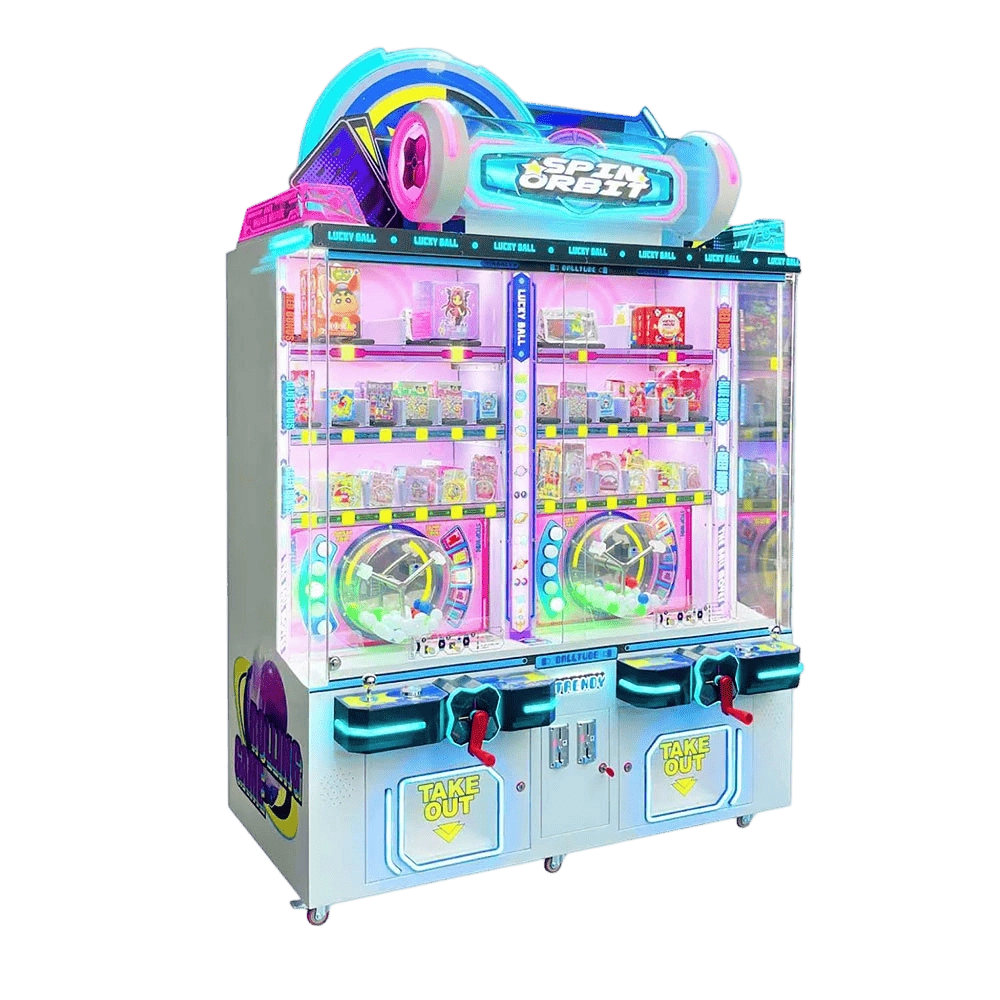
The SPIN ORBIT Lucky Prize Arcade Game is designed for 2 players, allowing simultaneous gameplay for added fun.
What is the gameplay of the SPIN ORBIT Lucky Prize Arcade Game?
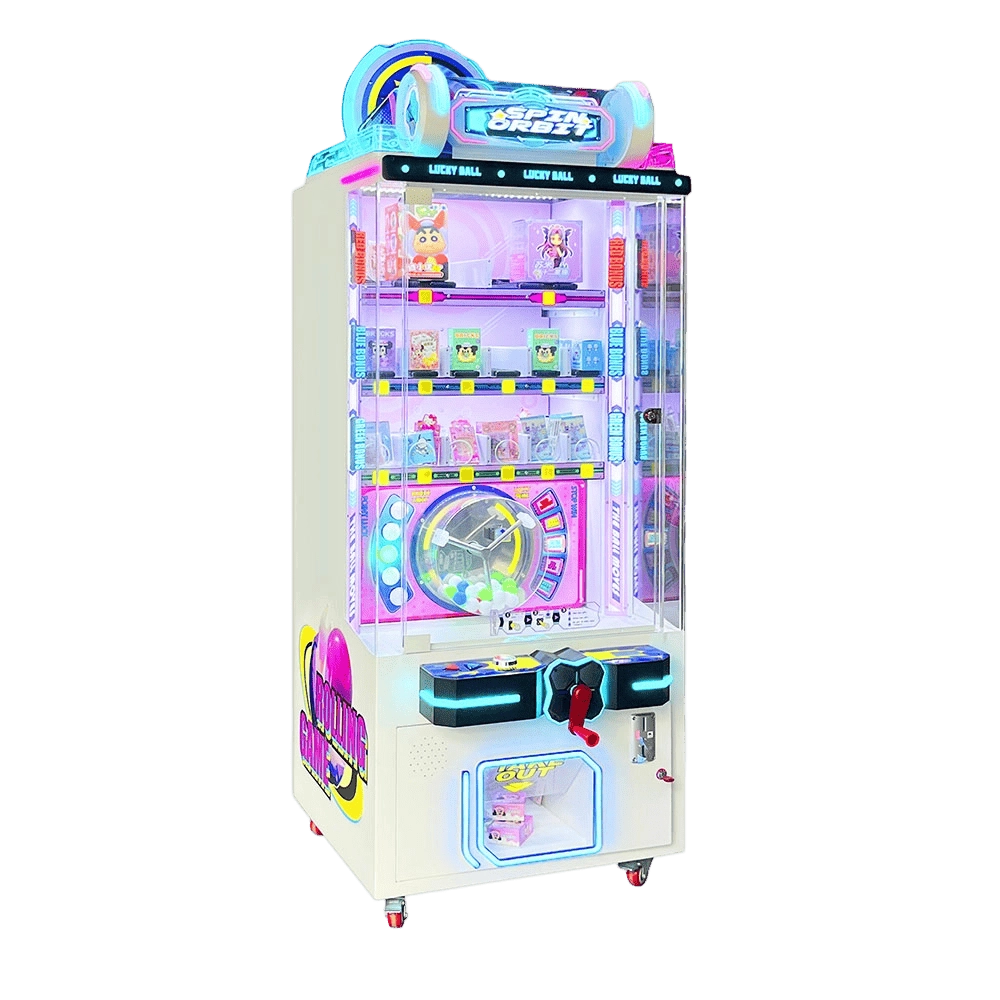
Players use the joystick to guide the ball into a designated hole. Each color ball corresponds to different prize values: red for the highest, blue and green for mid-range prizes, and white for no prize.
How can I customize the game machine?
Customization options include machine title writings, stickers, console designs, and even full personalization of machine body color, music, lights, and language, based on order quantities.
You May Also Like
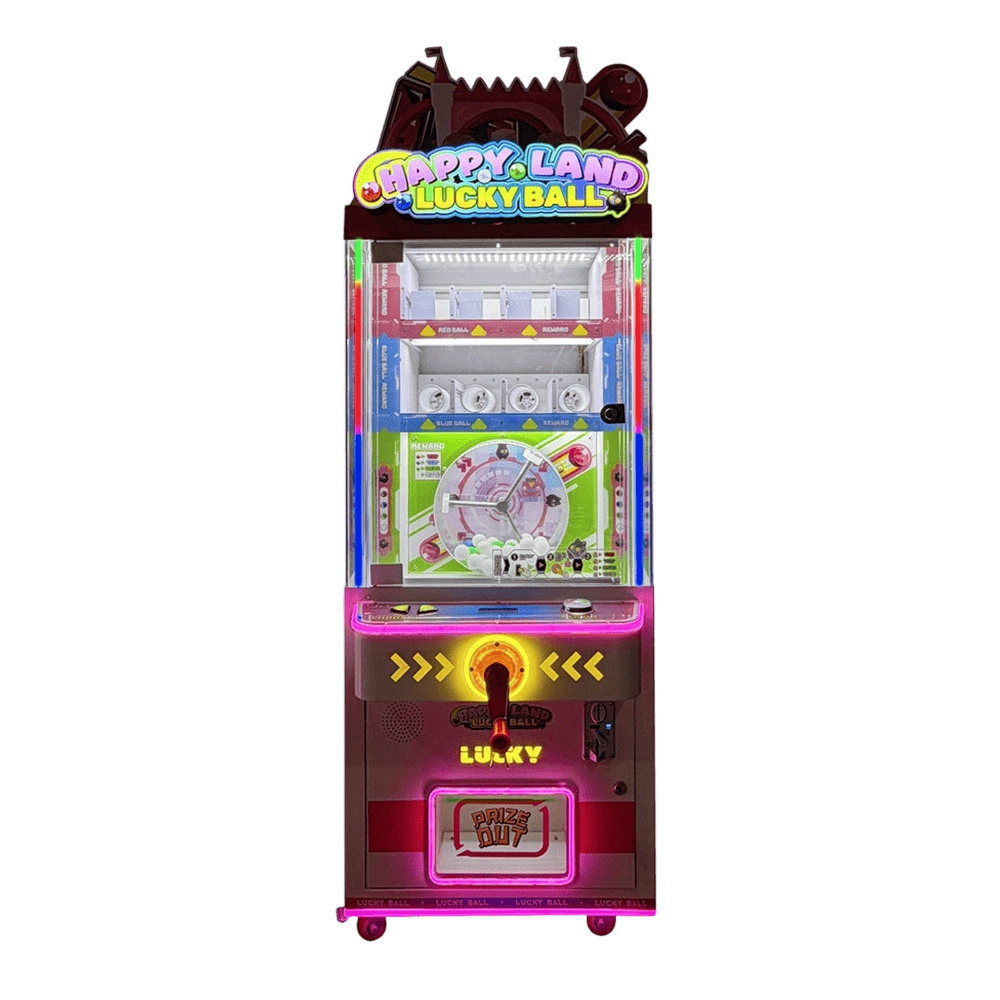
Coin Operated/Card Payment Lucky Ball Vending Toy Gift Arcade Game Machine
Coin Operated/Card Payment 2 Players SPIN ORBIT Lucky Prize Arcade Game
Coin Operated/Card Payment SPIN ORBIT Lucky Prize Arcade Game
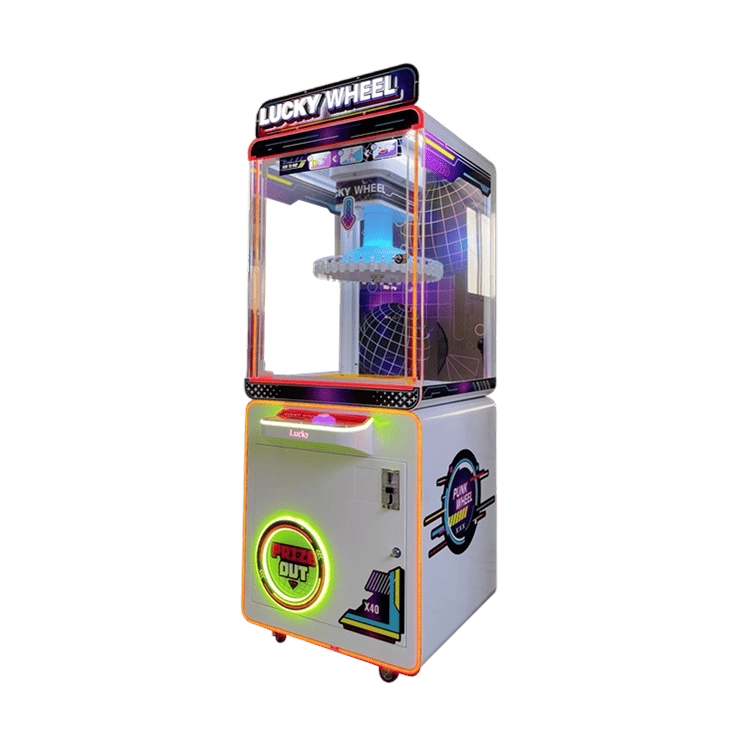
Arcade Prize Lucky Wheel Gift Machine For Amusement Areas
Get in Touch with Jiami Games
If you have any comments or good suggestions, please leave us a message; later our professional staff will contact you as soon as possible.

Innovative Entertainment, at Your Fingertips
Learn about Jiami Games and explore our expertise in console development, innovative design, and global markets.
Quick Links:
© 2026 Jiami Games.
Whatsapp: +8618520390438