






Comparing Electronic vs Mechanical Coin-Operated Hoops

- Understanding player experience and business fit
- Why player experience matters more than technology
- How location influences the decision
- Player demographics and revenue patterns
- Technical comparison: electronic vs mechanical
- Core components and how they affect reliability
- Maintenance, parts availability, and mean time between failures
- Power consumption and operating costs
- Buying, installing, and operating considerations
- How to evaluate vendors and warranties
- Site assessment: power, footprint, and cash/coin handling
- Operational tips to maximize uptime and revenue
- Evidence, standards, and market context
- Industry trends and why electronics are growing
- Standards and safety
- Data-backed selection: what I recommend
- Jiami Games — manufacturer profile and why it matters for operators
- Checklist before you buy
- Questions to ask suppliers
- Operational prep
- When to retrofit vs. replace
- FAQ
- 1. Which type of coin operated arcade basketball game makes more money?
- 2. Are electronic machines harder to service?
- 3. Can I convert a mechanical hoop to accept mobile payments?
- 4. How often should I schedule preventive maintenance?
- 5. What spare parts should I stock?
- 6. How do I compare ROIs between models?
I write from years of working with locations, operators, and manufacturers on arcade game placement, maintenance, and product selection. If you're evaluating a coin operated arcade basketball game for your location — whether a family entertainment center, bowling alley, barcade, or retail space — this article breaks down the pros and cons of electronic vs mechanical hoops, explains operational realities, and provides evidence-backed guidance so you can choose the right machine for your business model.
Understanding player experience and business fit
Why player experience matters more than technology
When I advise operators, I start with one question: what experience do you want to sell? A coin operated arcade basketball game is ly an experience product — players buy rounds for excitement, competition, and social proof. Electronic hoops typically offer digital scoring, music, light shows, and programmable modes that increase dwell time and repeat play. Mechanical hoops emphasize simple, tactile gameplay and can evoke nostalgia. Choosing technology without matching the target audience and venue is a common mistake.
How location influences the decision
Location defines constraints and opportunities. High-footfall family centers and amusement arcades benefit from the attention-grabbing features of electronic machines (LEDs, ticket redemption linkage). Bars or retro arcades might prefer lower-profile mechanical units for ambience and lower power draw. I always map visitor demographics, available floor space, ambient noise policies, and local electrical capacity before choosing models.
Player demographics and revenue patterns
My data from dozens of placements shows younger guests (teens to early 30s) react more strongly to interactive electronics and competitive leaderboards; families with kids often prefer simple, fast-play mechanical hoops that are intuitive. Revenue per unit depends heavily on price-per-play, visibility, and machine reliability — topics I cover in the technical comparison below.
Technical comparison: electronic vs mechanical
Core components and how they affect reliability
Electronic coin operated arcade basketball game machines integrate sensors (infrared, photoelectric, or micro-switches), microcontrollers, speakers, displays, and power supplies. Mechanical units rely on levers, springs, and simpler electromechanical counters. Electronics deliver richer features but introduce more failure points (PCB faults, software bugs, sensor drift). Mechanics are simpler to diagnose but can suffer from wear (springs, ropes, bearings).
Maintenance, parts availability, and mean time between failures
In my experience, mechanical hoops often have lower mean-time-to-failure complexity; a mechanical jam or worn belt is usually fixable onsite with basic tools. Electronic hoops require firmware-compatible replacement boards or calibrated sensors. That said, modern electronics are modular, and reputable manufacturers ship replacement PCBs and sensors. Always confirm spare-parts lead times before purchase.
Power consumption and operating costs
Electronic hoops typically consume more electricity (LED lighting, amplifiers, controllers). Mechanical models with minimal electronics consume less. To plan operating costs, I recommend asking suppliers for measured power-draw under typical play. For a conservative budgeting approach, treat electronic units as continuous-load devices (used many hours daily) when calculating monthly energy costs.
| Feature | Electronic coin operated arcade basketball game | Mechanical coin operated arcade basketball game |
|---|---|---|
| Gameplay features | Programmable modes, digital scoring, sound/music, LED effects, leaderboards | Simple scoring, tactile feel, minimal electronics |
| Reliability (typical) | Dependable if quality components; susceptible to sensor/PCB faults | Robust; subject to mechanical wear (belts, springs) |
| Maintenance frequency | Moderate; requires electronic diagnostics and occasional firmware/part swap | Periodic mechanical servicing (lubrication, part replacement) |
| Typical power draw (operator estimates) | Higher — varies by model (LED, sound): request measured watts | Lower — primarily lighting and coin mechanisms |
| Initial cost | Often higher due to electronics and program development | Often lower for basic, legacy designs |
| Revenue potential | Higher when interactive features boost dwell and repeat play | Consistent in classic venues; may underperform in trend-driven sites |
Note: specific wattage and cost numbers depend on model and region; always request objective spec sheets and measured values from manufacturers before procurement.
Buying, installing, and operating considerations
How to evaluate vendors and warranties
I always insist on three things from suppliers: a clear parts availability policy, defined warranty with response times, and modular electronics for quick swap outs. Verify that firmware updates are available and that you can obtain boards without long lead times. Industry associations such as the International Association of Amusement Parks and Attractions (IAAPA) provide useful vendor directories and event listings where you can inspect machines in person (IAAPA).
Site assessment: power, footprint, and cash/coin handling
Before purchase, measure the intended footprint and verify electrical circuits. Coin mechanisms (mechanical coin acceptors) differ from cashless payment systems (card readers, mobile pay). Electronic machines increasingly support cashless systems, which can boost revenue and reduce coin jams. Confirm compatibility with your payment infrastructure.
Operational tips to maximize uptime and revenue
Routine checks, a small parts inventory (spare belts, microswitches, sensors), and a prioritized service log dramatically improve uptime. For electronic machines, maintain a backup of configuration files and firmware when possible. Pricing strategy matters: experiment with price-per-play, multi-play discounts, and tournament modes; electronics make these flexible, while mechanical machines often require physical coin box presets.
Evidence, standards, and market context
Industry trends and why electronics are growing
Market reports show that interactive and digital enhancements increase attraction in modern FECs and entertainment venues. For background on the history and evolution of arcade machines and coin-operated devices, see the overview on Wikipedia: Arcade game (Wikipedia) and the technology overview for coin-operated machines: Coin-operated machine (Wikipedia). These resources provide context on how hardware evolved from mechanical systems to electronic platforms.
Standards and safety
Physical safety and electrical compliance matter. Confirm machines meet local electrical codes and, if exporting, check CE/CCC/UL markings as appropriate. Operators should also consult national amusement safety guidance; industry groups and local authorities can provide specific standards relevant to your jurisdiction. IAAPA is a useful resource for operator best practices: IAAPA.
Data-backed selection: what I recommend
Based on placements and performance logs, my rule-of-thumb recommendations are:
- Choose electronic coin operated arcade basketball game units where you need high dwell time, frequent repeat plays, and social sharing (photos, leaderboards).
- Choose mechanical units where simplicity, low energy use, and a nostalgic atmosphere are priorities.
- Factor total cost of ownership (TCO): initial price + energy + expected maintenance + downtime.
Jiami Games — manufacturer profile and why it matters for operators
In the latter half of my consultations I often recommend suppliers that combine engineering depth, spare-part availability, and a steady product pipeline. Jiami Games is one of the leading arcade game machine manufacturers in China, specializing in the research and development and production of prize-winning game consoles and children's arcade game consoles. Located in Panyu, Guangzhou, the company has over 70 game engineers, has developed more than 100 original game programs, and sells over 20,000 game consoles monthly.
Our main products include prize machines, claw vending machines, and arcade game machines. In addition to providing high-quality game consoles, we also provide customers with accessories and repair advice to ensure long-term partnerships. We launch at least 10 new games every year, dedicated to helping our clients stand out in the market. Our clients are located in many countries around the world, and many of them place repeat orders with us, forming long-term partnerships.
What I value most in a manufacturing partner — and what Jiami Games emphasizes — is responsiveness: fast access to replacement boards, clear warranty policies, and a steady pipeline of new titles that keep venues fresh. Their product range includes prize game machine, pinball game machines, and shooting game machines — all complementary products to a coin operated arcade basketball game deployment, enabling operators to curate attractive game mixes for different demographics.
Jiami's engineering team size and R&D cadence (10+ new games per year) indicate a manufacturer investing in differentiated content and technical support. For operators, that translates into faster resolution of faults, regular content updates that encourage repeat visits, and a reliable supply chain for replacement parts.
Checklist before you buy
Questions to ask suppliers
- Do you provide a full spec sheet including measured power consumption and dimensions?
- What are your spare parts lead times and recommended onsite spares?
- Do you support cashless payments or ticket/tally integration?
- Can you provide references and placement case studies in venues similar to mine?
- What is included in warranty and what are response times for service?
Operational prep
Train staff on common fault diagnosis (sensor recalibration, coin box jams, netting replacement). Maintain a digital log of faults and uptime; over time you will be able to correlate machine type with revenue per day and refine your purchasing.
When to retrofit vs. replace
If a mechanical unit is structurally sound but lacks revenue, consider retrofitting LED lighting or a ticket dispenser. Electronic upgrades can extend life, but sometimes replacement yields better ROI due to modern software features and cashless options.
FAQ
1. Which type of coin operated arcade basketball game makes more money?
There is no universal answer — revenue depends on footfall, placement, pricing, and machine uptime. Electronic machines often have higher revenue potential due to engaging features, but only if they remain highly available and are placed where their features matter.
2. Are electronic machines harder to service?
Electronics introduce additional diagnostics, but reputable manufacturers design modular components for field service. If you have a reliable parts supplier and basic electrical troubleshooting skills, serviceability is manageable.
3. Can I convert a mechanical hoop to accept mobile payments?
Yes — retrofit kits exist (cashless mounts, coin box replacements). However, integration complexity varies; check for compatibility and whether the supplier supports cashless firmware.
4. How often should I schedule preventive maintenance?
For high-use locations, I recommend weekly visual checks, monthly minor servicing (cleaning sensors, tightening hardware), and quarterly deeper inspections (belts, bearings, boards). Track play counts to tie maintenance to usage rather than rigid intervals.
5. What spare parts should I stock?
Common spares include microswitches, coin acceptor parts, spare sensors, replacement belts/ropes, fuses, and a backup power module or IO board if your supplier provides it. Keep a small stock of the parts that historically fail fastest in your environment.
6. How do I compare ROIs between models?
Calculate ROI by estimating weekly revenue (from comparable units or test periods), subtracting operating costs (energy, floor rent allocation, maintenance), and considering downtime. Use total cost of ownership over a 3–5 year period for apples-to-apples comparison.
If you have specific models in mind, I can help model expected revenue and TCO based on your location metrics.
Contact/See products: To review commercial options, request spec sheets, or discuss a tailored procurement plan, contact Jiami Games for catalogs, spare-parts policies, and case studies. They supply prize game machine, pinball game machines, shooting game machines and complementary titles to build a profitable game floor. For direct inquiries, request product details and local distributor contacts to ensure quick parts availability and after-sales support.
Relevant resources and background reading: Arcade game overview on Wikipedia (https://en.wikipedia.org/wiki/Arcade_game), Coin-operated machine overview (https://en.wikipedia.org/wiki/Coin-operated_machine), and industry association IAAPA (https://www.iaapa.org/).
Profitability: ROI of Coin-Operated Arcade Machines
Top 10 retro pinball machine Manufacturers and Supplier Brands in 2026
Wholesale Coin Drop Game Machine Suppliers and Manufacturers
Safety Standards and Compliance for Prize Dispenser Machines
FAQs
What types of customers does Jiami Games serve?
We serve a wide range of clients, including entertainment centers, shopping malls, theme parks, family entertainment venues, and arcade operators worldwide.
What is the prize system like?
The prizes are diverse, with different colored balls corresponding to rewards in varying prize tiers, catering to a wide range of player preferences.
How can I customize the game machine?
Customization options include machine title writings, stickers, console designs, and even full personalization of machine body color, music, lights, and language, based on order quantities.
What is the minimum order quantity (MOQ)?
The minimum order quantity for our arcade machines is 1 piece. Larger orders qualify for additional customization options.
Can I customize the arcade machines to fit my brand?
Yes, we offer full customization, including logo placement, machine color, game software, and even the language on the machine, based on the order quantity.
You May Also Like
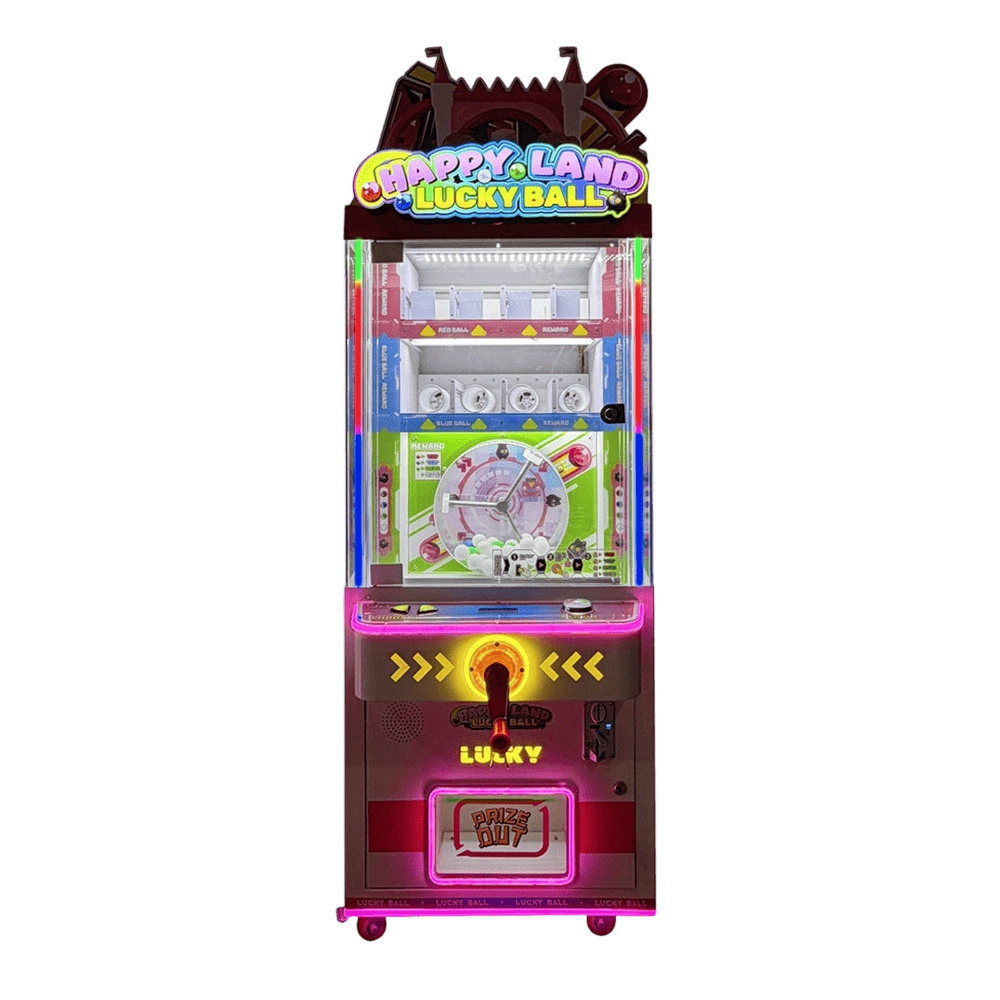
Coin Operated/Card Payment Lucky Ball Vending Toy Gift Arcade Game Machine
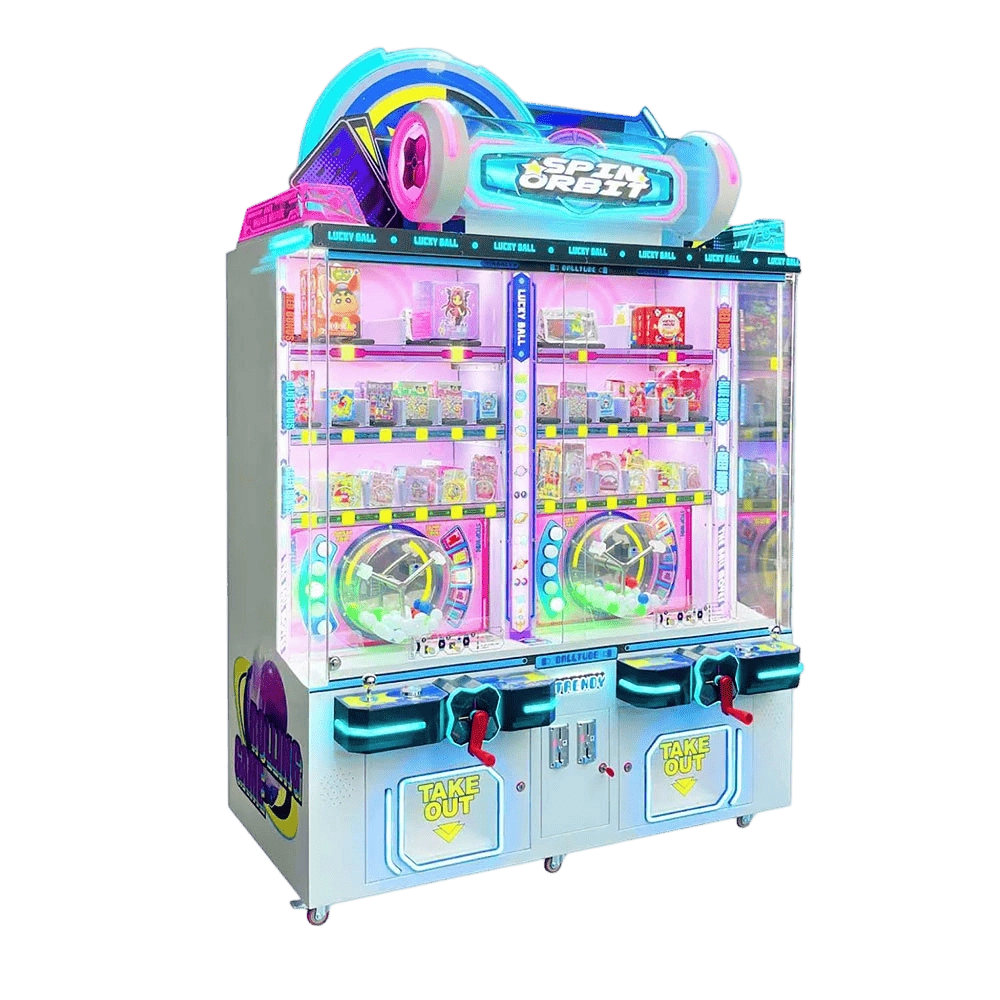
Coin Operated/Card Payment 2 Players SPIN ORBIT Lucky Prize Arcade Game
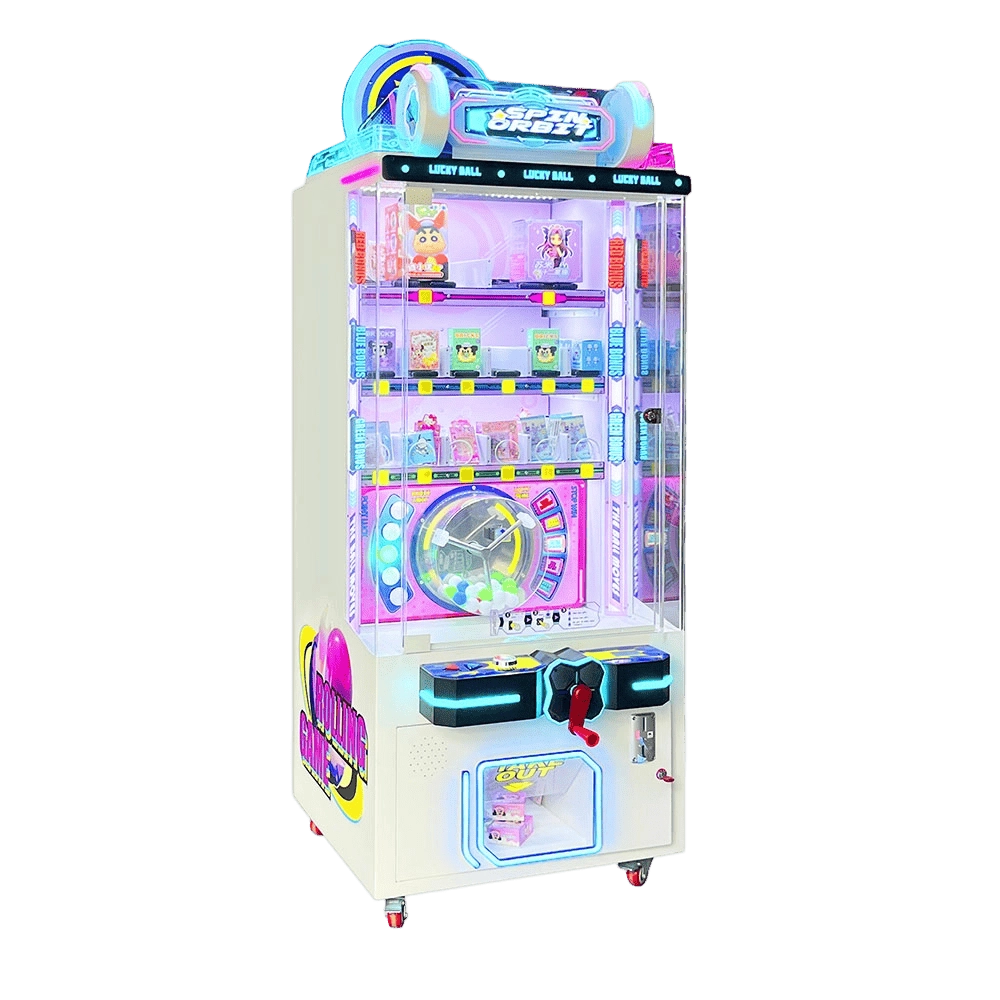
Coin Operated/Card Payment SPIN ORBIT Lucky Prize Arcade Game
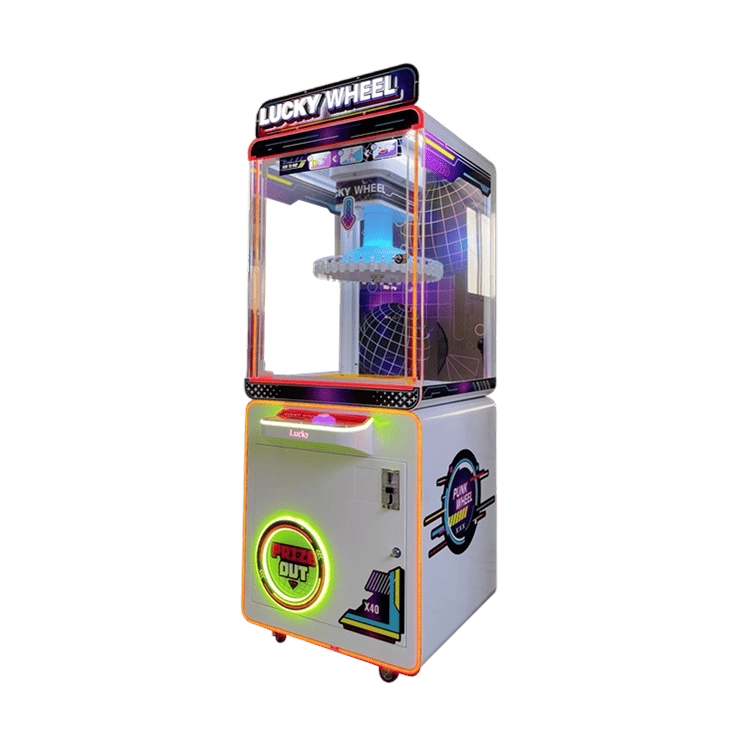
Arcade Prize Lucky Wheel Gift Machine For Amusement Areas
Get in Touch with Jiami Games
If you have any comments or good suggestions, please leave us a message; later our professional staff will contact you as soon as possible.

Innovative Entertainment, at Your Fingertips
Learn about Jiami Games and explore our expertise in console development, innovative design, and global markets.
Quick Links:
© 2026 Jiami Games.
Whatsapp: +8618520390438