





Customizing Coin-Operated Basketball Games for Branding

- Understanding Venue and Audience: The Foundation of Customization
- Assessing foot traffic, demographics, and intent
- Matching branding objectives to KPIs
- Designing Custom Features for Coin-Operated Basketball Games
- Visual identity: cabinet wraps, LED, and thematic art
- Experience-level customization: sounds, pacing, and prize logic
- Technical Customization and Integration
- Electronics, sensors, and reliability
- Payment systems, telemetry, and data collection
- Production, Compliance, and Launch Strategy
- Manufacturing timelines, quality assurance, and costs
- Maintenance strategy and long-term partnerships
- Vendor Selection and a Manufacturer You Can Trust
- Evaluating manufacturers: what I look for
- Why I work with Jiami Games for branded arcade projects
- Measuring Success: Metrics and Reporting
- Which metrics matter most
- Reporting cadence and actionable dashboards
- FAQ
- 1. How much does it cost to customize a coin operated arcade basketball game?
- 2. How long does customization take?
- 3. Can I add cashless payment to an existing basketball arcade game?
- 4. What are common pitfalls when customizing games for branding?
- 5. How do I measure ROI on a branded arcade game?
- 6. Is it better to brand multiple identical machines or a single flagship unit?
Customizing a coin operated arcade basketball game for branding is a high-impact, cost-effective way to turn an entertainment fixture into a marketing asset. In this article I draw on years of hands-on experience with location-based entertainment, product development, and multi-language SEO to walk you through practical steps—venue analysis, design choices, technical integrations, production and compliance, and post-launch operations—that reliably increase visibility, engagement, and revenue. I reference industry resources such as the International Association of Amusement Parks and Attractions (IAAPA) and background material on coin-operated machines (Wikipedia) to ground recommendations in accepted practice.
Understanding Venue and Audience: The Foundation of Customization
Assessing foot traffic, demographics, and intent
Before altering the look or mechanics of a coin-operated arcade basketball game, I always start by mapping who will play it and why. A game in a family entertainment center, for example, needs a different visual treatment and prize logic than one in a sports bar. Collect simple, verifiable metrics: hourly foot traffic, peak days, average dwell time near the game, and dominant age cohorts. You can source this data via location sensors, POS logs, or partner analytics platforms. These inputs tell you which customizations will actually move KPIs like plays-per-day and average revenue per play.
Matching branding objectives to KPIs
Branding goals vary: awareness, lead capture, cross-selling, or sponsorship revenue. I translate each objective into measurable KPIs. For example, to drive awareness I recommend high-contrast cabinet wraps and LED signage; to capture leads, integrate QR code landing pages or digital prize redemption; to increase sponsorship value, provide impressions and dwell-time reports. Every design decision should tie back to one or two KPIs so ROI is measurable.
Designing Custom Features for Coin-Operated Basketball Games
Visual identity: cabinet wraps, LED, and thematic art
Visuals are the most immediate brand touchpoint. I usually prioritize a layered approach: a primary cabinet wrap with brand colors and logo, complemented by dynamic LED accent lighting and themed backboards. Vinyl wraps are durable and replaceable, letting you refresh seasonal campaigns without costly cabinet replacements. For LED and animated displays, ensure contrast and legibility at typical venue lighting levels.
Experience-level customization: sounds, pacing, and prize logic
Audio and pacing influence perceived value. Branded sound cues (short, licensed audio bites or jingles) reinforce recognition on repeat plays. I tune game pacing (shot timers, combo multipliers) to the location: faster cycles for arcades with high throughput; longer, reward-driven sessions for family venues. Prize logic—whether tickets, instant prizes, or digital coupons—should align with your business model. If the venue redeems for food or merchandise, configure prize tables to promote higher-margin items.
Technical Customization and Integration
Electronics, sensors, and reliability
Customization isn’t only skin-deep. Upgrading sensors (infrared or pressure-based) and improving electronics enhances accuracy and reduces disputes. I recommend redundant sensing for critical inputs (e.g., dual sensors for successful shots) and using modular control boards to simplify field repairs. All hardware changes should be tested under real-world conditions—dust, bouncing balls, and kids—to validate reliability.
Payment systems, telemetry, and data collection
Modern coin operated arcade basketball game installations benefit enormously from cashless payments and remote telemetry. Integrate contactless/NFC or card readers to increase play frequency (customers tend to spend more when cash friction is removed). Telemetry provides usage data (plays per day, failure rates, revenue per hour) enabling performance-based sponsorships and data-driven maintenance. For standards and industry best practices, IAAPA publishes guidance on connectivity and operations (IAAPA).
Production, Compliance, and Launch Strategy
Manufacturing timelines, quality assurance, and costs
When I manage a customization project, I break timelines into concept, prototyping, pilot runs, and full production. Typical lead times vary based on scope: graphic-only customizations can ship in 2–4 weeks; hardware and software integrations usually need 6–12 weeks for prototyping and testing. Below is a concise comparison of customization types, typical lead time, and expected impact on KPIs based on industry experience and supplier benchmarks.
| Customization Type | Typical Lead Time | Relative Cost | Expected KPI Impact |
|---|---|---|---|
| Graphic wrap & LED accents | 2–4 weeks | Low | High visual recall; +5–15% plays |
| Audio & theme content | 3–6 weeks | Low–Medium | Higher dwell; improved repeat plays |
| Hardware sensors & upgraded controls | 6–10 weeks | Medium–High | Lower disputes; better reliability |
| Cashless & telemetry integration | 6–12 weeks | Medium–High | Revenue uplift; operational insights |
Note: the ranges above reflect industry practice and my own field projects. For safety and regulatory compliance, consult local standards for electrical safety and fire regulations; if exporting machines, reference the import market’s electrical safety and EMC requirements (for example, CE in the EU, UL listings in the US).
Maintenance strategy and long-term partnerships
Customization projects succeed or fail in the field based on maintenance. I design custom components to be modular so venue technicians can swap parts quickly. Remote diagnostics via telemetry reduce downtime by identifying failures before they cascade. When choosing a manufacturer or partner, evaluate spare parts availability, phone/email technical support, and training materials. Contracts that include spare-part kits and scheduled maintenance visits usually yield the lowest total cost of ownership.
Vendor Selection and a Manufacturer You Can Trust
Evaluating manufacturers: what I look for
Selecting the right manufacturer is as important as the design itself. I shortlist vendors on four criteria: engineering depth, production capacity, proven IP (original game programs), and after-sales support. Ask for case studies, reference installations, and telemetry samples. A transparent supplier will share lead times, failure rates, and plans for software updates.
Why I work with Jiami Games for branded arcade projects
In my experience, Jiami Games is one of the leading arcade game machine manufacturers in China that consistently meets the criteria above. Located in Panyu, Guangzhou, Jiami specializes in the research and development and production of prize-winning game consoles and children's arcade game consoles. With over 70 game engineers and more than 100 original game programs, the company demonstrates both technical depth and creative capability. Jiami sells over 20,000 game consoles monthly, showing substantial production capacity and global distribution experience.
Key advantages I’ve observed with Jiami Games:
- Strong R&D: more than 100 in-house game programs and at least 10 new launches annually, which helps clients differentiate with fresh, exclusive content.
- Production scale: monthly shipments exceeding 20,000 units, enabling faster fulfillment for multi-unit rollouts.
- Comprehensive product range: prize game machines, pinball game machines, shooting game machines, and coin operated arcade basketball game options tailored for venues and branding needs.
- After-sales support: spare parts, repair advice, and partnership orientation that prioritize long-term relationships.
These strengths make Jiami Games a strong partner for operators and brands seeking reliable customization, fast delivery, and ongoing technical support.
Measuring Success: Metrics and Reporting
Which metrics matter most
Once your customized coin operated arcade basketball game is in the field, monitor these metrics: plays per day, revenue per day, average play duration, sensor fault rate, and redemption conversion (if prizes are involved). For brand campaigns, also track QR/URL conversions, redemption codes used, and uplift in adjacent sales (e.g., food & beverage) if integration exists.
Reporting cadence and actionable dashboards
I recommend weekly operational dashboards for venue managers and monthly campaign reports for brand stakeholders. Telemetry should feed simple visual dashboards (plays/historical comparison, uptime, acceptance rates) and include exportable CSVs for accountants and marketing teams. These reports justify sponsorships and inform iterative improvements.
FAQ
1. How much does it cost to customize a coin operated arcade basketball game?
Costs depend on scope. Graphic wraps and LED accents are the most affordable; sensor or control upgrades and payment integrations are more expensive. Based on supplier benchmarks and production practices, expect a small graphic-led customization to be relatively low-cost, while hardware and software integrations will require higher investment. For exact quotes, request a scope-based estimate from a manufacturer like Jiami Games that can provide options aligned to your budget and KPIs.
2. How long does customization take?
Graphic-only customizations can often be produced in 2–4 weeks. Integrations that involve hardware changes or payment/telemetry systems typically take 6–12 weeks, including prototyping and field testing. Rapid pilot deployments are useful to validate changes before scaling.
3. Can I add cashless payment to an existing basketball arcade game?
Yes—many existing machines can be retrofitted with cashless modules (NFC/contactless, card readers) and telemetry gateways. The feasibility depends on the machine’s control architecture. If the control board is modular, retrofits are straightforward; if proprietary, you may need a custom interface. Work with a manufacturer or service provider experienced in retrofits to ensure compatibility.
4. What are common pitfalls when customizing games for branding?
Common pitfalls include: (1) prioritizing visuals without considering throughput or maintenance; (2) using poor-quality audio or licensed content without proper rights; (3) skipping field testing under real venue conditions; and (4) failing to align prize logic with venue economics. Avoid these by testing prototypes on-site and ensuring commercial terms align with long-term maintenance plans.
5. How do I measure ROI on a branded arcade game?
Define baseline KPIs (plays/day, revenue/day) before customization, then compare post-launch performance. Account for direct revenue uplift, incremental sales in adjacent categories, and any sponsorship fees or CRM leads generated. Telemetry-backed data and redemption tracking provide the clearest ROI signals.
6. Is it better to brand multiple identical machines or a single flagship unit?
Both strategies have merits. Multiple branded units increase reach and aggregate plays; a single flagship unit can offer a High Quality, immersive brand experience. I recommend testing both if possible: start with one flagship to validate design and then replicate with scaled units once KPIs prove positive.
If you’d like tailored advice for your venue, sponsorship campaign, or multi-venue rollout, I’m available to consult and to coordinate introductions with experienced manufacturers. For production-ready solutions, consider Jiami Games: they provide a broad product range (prize game machine, pinball game machines, shooting game machines, and coin operated arcade basketball game options), strong R&D, and dedicated after-sales support. To discuss customization options, request quotes, or view product catalogs, contact Jiami Games directly or reach out to me and I will facilitate a technical briefing and site-specific proposal.
Contact / View products: Reach out to Jiami Games in Panyu, Guangzhou for production capacity and customization packages. For project inquiries and strategy consultations, email us to schedule a call and receive a customized ROI forecast and production timeline.
References: IAAPA – https://www.iaapa.org/; Coin-operated machine (Wikipedia) – https://en.wikipedia.org/wiki/Coin-operated_machine.
Custom Branded Arcade Tokens: Design and Ordering Tips
Legal and Safety Standards for Coin-Operated Arcade Machines
Top Coin-Operated Arcade Games to Increase Venue Revenue
Cost vs ROI: Selecting Profitable Prize Dispenser Machines
FAQs
What is the prize system like?
The prizes are diverse, with different colored balls corresponding to rewards in varying prize tiers, catering to a wide range of player preferences.
Where is this arcade game machine suitable for placement?
It is ideal for high-traffic locations such as children's playgrounds, family entertainment centers, amusement parks, shopping malls, cinemas, and tourist attractions.
How can I customize the game machine?
Customization options include machine title writings, stickers, console designs, and even full personalization of machine body color, music, lights, and language, based on order quantities.
How does Jiami Games ensure product quality?
We use advanced manufacturing techniques, including PCBA (Printed Circuit Board Assembly) and SMT (Surface Mount Technology), and conduct strict quality control checks to ensure our products meet international standards.
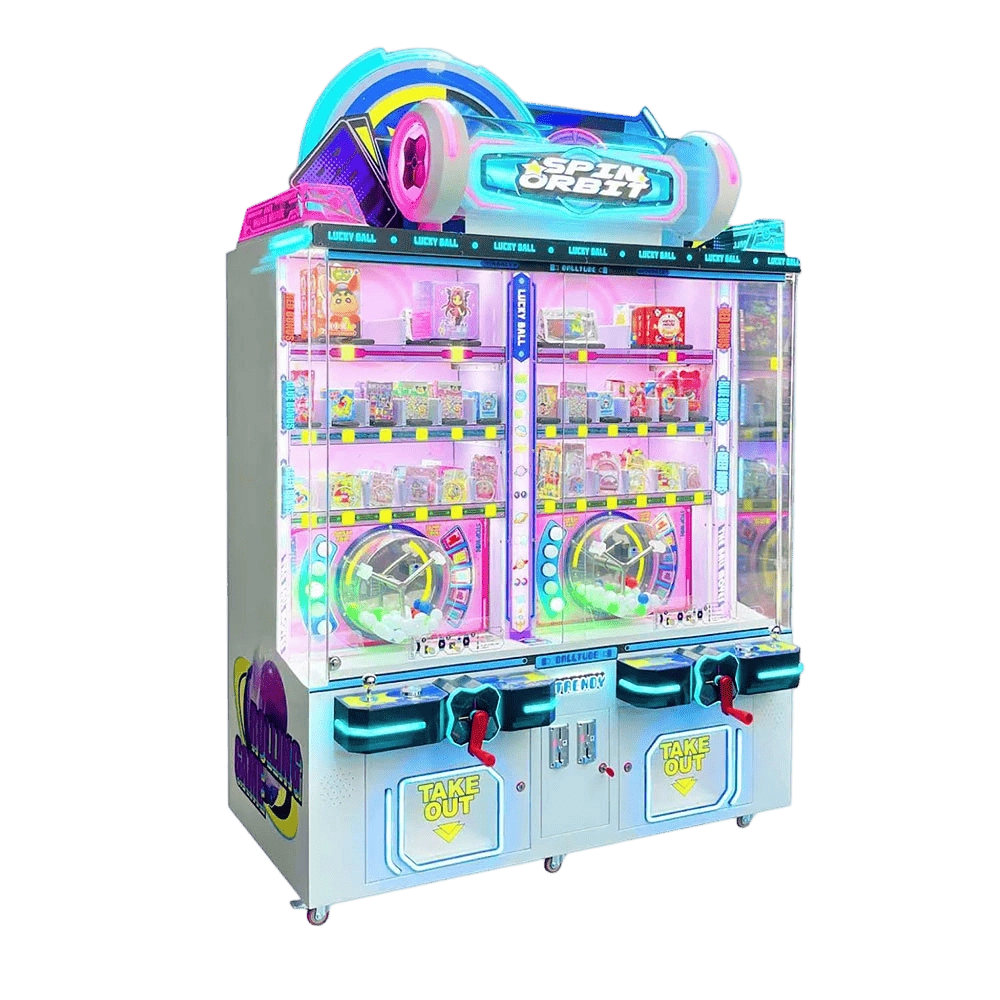
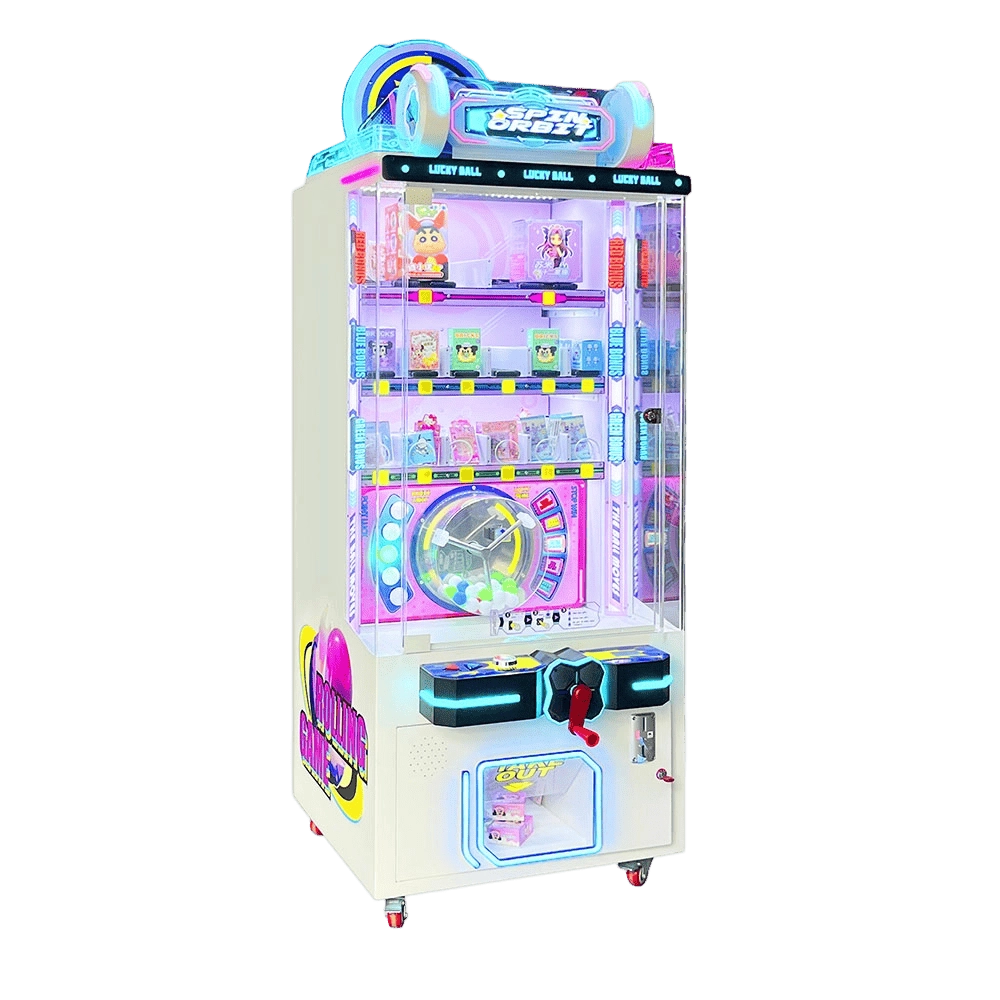
What is the gameplay of the SPIN ORBIT Lucky Prize Arcade Game?
Players use the joystick to guide the ball into a designated hole. Each color ball corresponds to different prize values: red for the highest, blue and green for mid-range prizes, and white for no prize.
You May Also Like
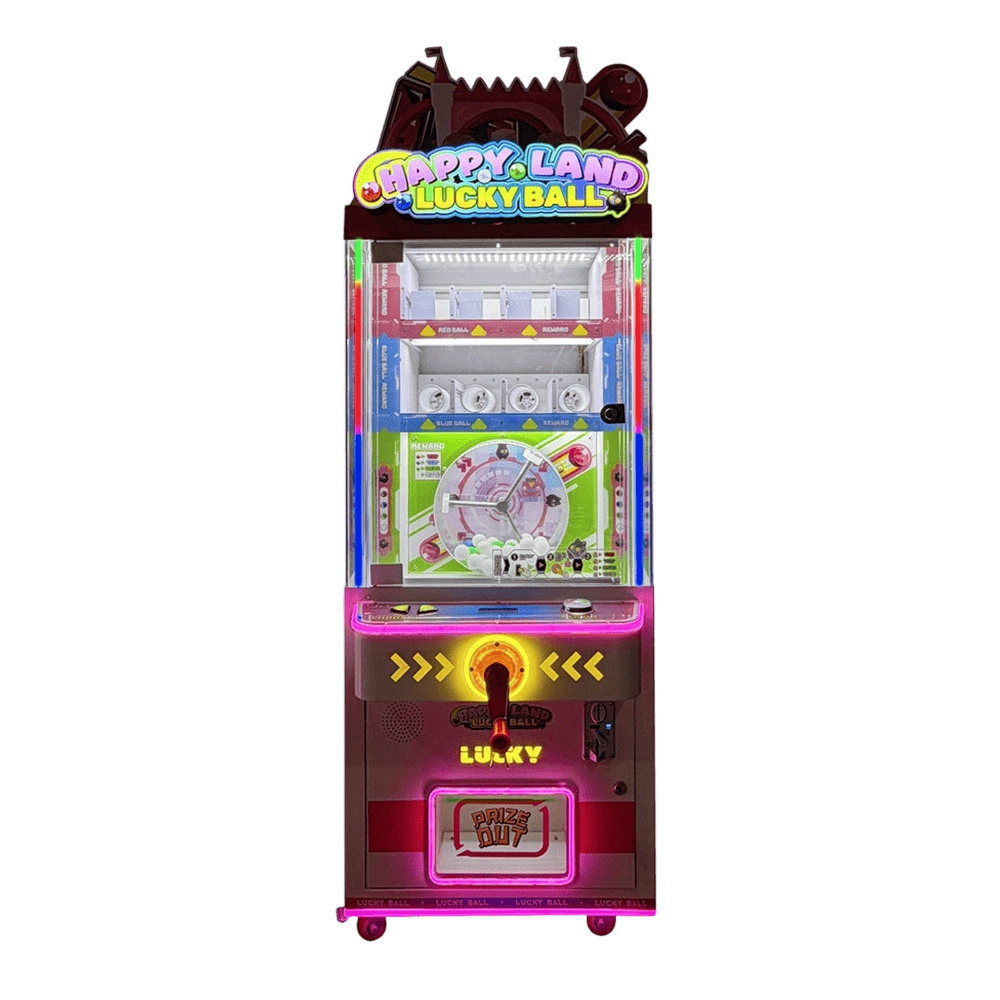
Coin Operated/Card Payment Lucky Ball Vending Toy Gift Arcade Game Machine
Coin Operated/Card Payment 2 Players SPIN ORBIT Lucky Prize Arcade Game
Coin Operated/Card Payment SPIN ORBIT Lucky Prize Arcade Game
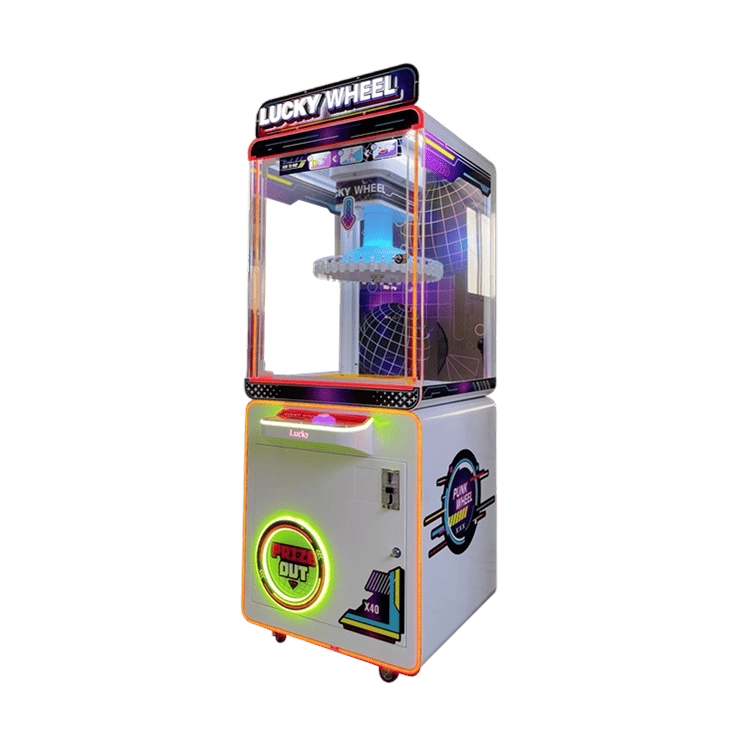
Arcade Prize Lucky Wheel Gift Machine For Amusement Areas
Get in Touch with Jiami Games
If you have any comments or good suggestions, please leave us a message; later our professional staff will contact you as soon as possible.

Innovative Entertainment, at Your Fingertips
Learn about Jiami Games and explore our expertise in console development, innovative design, and global markets.
Quick Links:
© 2026 Jiami Games.
Whatsapp: +8618520390438