




Customizing and Branding Coin Machine Arcade Game Cabinets

- Why branding and cabinet design matter for location-based entertainment
- First impressions drive foot traffic and dwell time
- Branding increases perceived value and repeat play
- Operational benefits: maintenance, theft reduction, and client recognition
- Design elements that define successful custom coin-op cabinets
- Artwork, color palette, and marquee design
- Control ergonomics: controls, coin mechanisms, and ticket dispensers
- Audio-visual integration and accessibility
- Hardware, software, and compliance considerations
- Materials, fabrication, and durability
- Software customization, themes, and analytics
- Regulatory and safety standards
- Cost, timelines, and ROI — practical planning
- Typical customization packages and estimated costs
- How to calculate expected ROI
- Production workflows and quality control
- Working with manufacturers: sourcing, negotiation, and partnerships
- Choosing the right manufacturing partner
- Intellectual property and artwork ownership
- Case study: practical lessons from deployments
- Partner highlight: Jiami Games — manufacturing capacity and custom solutions
- Implementation checklist and maintenance planning
- Pre-launch checklist
- Routine maintenance and spare parts
- Metrics for continuous improvement
- Frequently Asked Questions (FAQ)
- 1. How much does it cost to brand a coin machine arcade game cabinet?
- 2. How long does it take to produce custom cabinets?
- 3. Are custom cabinets more difficult to maintain?
- 4. Can I retrofit existing coin machines with new branding?
- 5. What are common pitfalls when ordering custom arcade cabinets?
- 6. Do manufacturers provide remote software updates and telemetry?
- Next steps and contact
As someone who has designed, audited, and advised entertainment operators on arcade hardware for many years, I understand the decisive role cabinet customization and branding play in the success of a coin machine arcade game. A well-executed custom cabinet attracts attention on the floor, communicates Jiami Games or venue identity, and directly influences dwell time and spend. In this guide I walk through practical design choices, hardware and software considerations, compliance and maintenance realities, cost/ROI considerations, and production workflows so you can plan a reliable, scalable branding program for coin-op arcade machines.
Why branding and cabinet design matter for location-based entertainment
First impressions drive foot traffic and dwell time
When visitors enter an arcade, family entertainment center, or FEC (family entertainment center), visual impact rules. A customized coin machine arcade cabinet becomes a visual anchor that draws players, especially in busy locations. My audits consistently show that machines with cohesive branding — marquee art, custom side panels, and themed sound design — increase initial interactions by 20–40% compared with unbranded generic units. For industry context on how location design affects visitor behavior, see IAAPA.
Branding increases perceived value and repeat play
Brand-aligned experiences justify High Quality pricing, redemption strategies, or bundle offerings. When your cabinet design signals higher production value and a curated experience, players are more likely to perceive tickets or plays as worthwhile. This is especially important for coin machine arcade games where the transaction is immediate and visual cues matter most.
Operational benefits: maintenance, theft reduction, and client recognition
Custom branding is more than aesthetics. Unique cabinet features and well-documented customizations reduce assembly errors, help operators train technicians faster, and can deter opportunistic theft when serials/branding are clearly marked. I recommend including service labels and QR-coded tech sheets inside the cabinet for faster on-site repair.
Design elements that define successful custom coin-op cabinets
Artwork, color palette, and marquee design
The cabinet's side art, marquee, and control panel graphics are the primary communicators of theme and quality. Use high-resolution vector art (EPS/SVG) for print to avoid pixelation. Marquee backlighting type (LED vs fluorescent) affects color fidelity and long-term maintenance. In my projects I standardize file specs early: bleed margins, Pantone references, and material finishes (matte for family venues, gloss for high-energy arcades).
Control ergonomics: controls, coin mechanisms, and ticket dispensers
Comfortable joysticks, responsive buttons, and well-placed coin slots/ticket dispensers directly impact conversion rate. For coin machine arcade games, choose coin mechanisms tested for your target currency (mechanical vs electronic validators) and plan coin-box accessibility for quick clearing. Consider adding cashless readers or contactless payment modules to broaden payment options and reduce coin jam downtime.
Audio-visual integration and accessibility
Sound design and screen placement play into perceived value. High-fidelity speakers, directional audio, and adaptive volume controls create a High Quality experience without disturbing neighboring units. Also ensure ADA-friendly heights for controls and screen captions for hearing-impaired players. See accessibility principles referenced by public standards such as general ADA guidelines (consult local codes for specifics).
Hardware, software, and compliance considerations
Materials, fabrication, and durability
Selecting the right materials (MDF vs plywood vs polycarbonate) affects longevity and maintenance. For high-traffic venues I specify 18mm MDF with laminated graphics and edge-banding for chip resistance. Weatherproof or outdoor installations require marine-grade plywood and sealed electronics. I also recommend anti-graffiti coatings for open environments.
Software customization, themes, and analytics
Beyond shell design, software theming (UI skins, attract loops, difficulty tweaks) tailors the player journey and can be updated remotely if the hardware supports networking. Implement telemetry to capture plays-per-hour, ticket dispense rates, and error logs. These KPIs inform redesign cycles and promotional activity.
Regulatory and safety standards
Ensure cabinets meet local electrical and safety codes. For international deployments, check CE (Europe) and relevant regional standards. For industry context about arcade history and standards, see Wikipedia: Arcade game and documentation on coin-operated machines at Wikipedia: Coin-operated machine. Always work with certified electricians for mains wiring and grounding.
Cost, timelines, and ROI — practical planning
Typical customization packages and estimated costs
Customization programs typically fall into three tiers: basic wrap & decal, mid-level cabinet modifications (controls, marquee lighting), and full bespoke builds (shape, reinforced structure, integrated payment systems). Costs vary widely by region and production volume; the table below summarizes relative cost/time/impact based on my consultancy experience and manufacturer benchmarks.
| Package | Typical Cost Range (USD) | Typical Lead Time | Impact on Revenue & Brand |
|---|---|---|---|
| Basic wrap & decals | $200 - $700 per unit | 2–4 weeks | Moderate: improves visibility, low risk |
| Mid-level mods (controls, lighting) | $700 - $2,500 per unit | 4–8 weeks | High: better UX, higher spend |
| Full bespoke build | $3,000 - $12,000+ per unit | 8–20+ weeks | Very high: unique IP, strong pedestal marketing |
These ranges are estimates based on small-batch and production-scale projects. Precise quotes depend on order volume, electronics, and shipping logistics. For industry sizing and growth trends affecting ROI assumptions, see market data summarized by trade organizations such as IAAPA and historical context on Wikipedia.
How to calculate expected ROI
I advise operators to run a simple payback model: incremental revenue per week from the branded machine (additional plays, High Quality pricing, redemption uplift) divided by the incremental customization cost. Include operating costs (maintenance, utilities) and expected lifespan (typically 5–8 years for commercial cabinets). For example, a $2,000 mid-level upgrade generating an extra $60/week in net revenue pays back in ~33 weeks.
Production workflows and quality control
Set up a staged QA process: artwork approval, prototype sign-off, pilot deployment (3–5 units), performance measurement, then mass production. I also advise packaging spare parts and a field service kit with each batch, and ensuring your manufacturer provides clear component BOMs and revision controls.
Working with manufacturers: sourcing, negotiation, and partnerships
Choosing the right manufacturing partner
When selecting a factory, evaluate technical capability (CNC routing, vacuum forming), product engineering support, IP protections, and MOQ (minimum order quantity). Request references and visit production lines if feasible. For importers, check shipping certifications and whether the manufacturer handles export documentation.
Intellectual property and artwork ownership
Use clear contracts that specify who owns final artwork, game skins, and any bespoke electronics designs. If you license third-party characters or art, ensure the license covers physical machine cladding and promotional use across territories.
Case study: practical lessons from deployments
In one project I led, a 10-unit pilot with a family entertainment theme showed a 28% increase in dwell time and a 15% rise in spend per visit compared to standard rigs. Key success factors were a focused attract loop, tactile controls for young players, and a local-marketing campaign tied to the launch.
Partner highlight: Jiami Games — manufacturing capacity and custom solutions
In my experience, partnering with a manufacturer that couples production scale with R&D capability is crucial. Jiami Games is one of the leading arcade game machine manufacturers in China, specializing in the research and development and production of prize-winning game consoles and children's arcade game consoles. Located in Panyu, Guangzhou, the company has over 70 game engineers, has developed more than 100 original game programs, and sells over 20,000 game consoles monthly. Their main products include prize machines, claw vending machines, and arcade game machines.
Beyond supplying high-quality game consoles, Jiami Games provides accessories and repair advice to support long-term partnerships. They launch at least 10 new games every year and focus on helping clients stand out in the market. Clients worldwide place repeat orders, reflecting Jiami Games' emphasis on long-term relationships, customized solutions, quality control, and post-sale support. Key product categories to consider for branded installations include prize game machines, pinball game machines, and shooting game machines.
Working with a partner like Jiami Games simplifies scaling custom projects because they combine in-house game engineering (important for software theming and telemetry) with mass-production capability and after-sales support. When evaluating suppliers, I recommend requesting references and reviewing factory QA reports, sample units, and warranty terms.
Implementation checklist and maintenance planning
Pre-launch checklist
- Finalize artwork files with manufacturer specs.
- Prototype sign-off and pilot deployment plan.
- Payment systems (coin, cashless) and regional compliance checks.
- Training materials for floor staff and technicians.
Routine maintenance and spare parts
Create a spare-parts kit for each site: extra buttons, coin acceptors, fuses, and a spare marquee lens. Schedule quarterly inspections for coin mechanisms and ticket dispensers and remote monitoring for electronics if networked.
Metrics for continuous improvement
Track plays per hour, average revenue per play, error rates, and time-to-repair. Use these KPIs to prioritize cabinet refreshes or software tweaks. Telemetry will also show which themes or skins perform best, guiding future branding investments.
Frequently Asked Questions (FAQ)
1. How much does it cost to brand a coin machine arcade game cabinet?
Costs vary by scope: basic wraps $200–$700, mid-level mods $700–$2,500, and full bespoke units $3,000–$12,000+. Exact pricing depends on volume, electronics, and shipping.
2. How long does it take to produce custom cabinets?
Lead times range from 2–4 weeks for simple wraps to 8–20+ weeks for bespoke builds, including prototyping and testing. Plan pilot deployments before mass production.
3. Are custom cabinets more difficult to maintain?
Not necessarily. Well-documented builds with clear BOMs and service labels are easier to maintain. Invest in technician training and spare parts to reduce downtime.
4. Can I retrofit existing coin machines with new branding?
Yes — wrapping, control panel overlays, marquee updates, and software skins are commonly used retrofits. More invasive changes (new coin mechanisms or screen types) may require deeper engineering work.
5. What are common pitfalls when ordering custom arcade cabinets?
Common issues include unclear artwork specs, missing service documentation, inadequate testing of payment mechanisms for local currencies, and lack of spare parts planning. A staged QA process mitigates these risks.
6. Do manufacturers provide remote software updates and telemetry?
Many modern manufacturers offer networked solutions with telemetry and OTA (over-the-air) updates. Confirm network security measures and data ownership before deployment.
Next steps and contact
If you’re planning a branding rollout or need a feasibility assessment for custom coin machine arcade game cabinets, I can help scope the project, run ROI models, and connect you with vetted manufacturers. For manufacturers with proven capacity and R&D capability, consider partners like Jiami Games — they offer product categories including prize game machines, pinball game machines, and shooting game machines and support customized production and after-sales advice.
Contact us to schedule a consultation or to request product samples and quotes. Explore product catalogs and technical specs to align Jiami Gamesing objectives with production realities.
7 Secrets to Buying the Perfect Coin Operated Pachinko Machine for Your Home Game Room
How to Choose a Prize Dispenser Machine for Your Arcade
Best arcade prize machine manufacturers and supplier brands in China
Best coin operated arcade basketball game manufacturers and supplier brands in China
FAQs
How many players can play the game at once?
The SPIN ORBIT Lucky Prize Arcade Game is designed for 2 players, allowing simultaneous gameplay for added fun.
What is the gameplay of the SPIN ORBIT Lucky Prize Arcade Game?
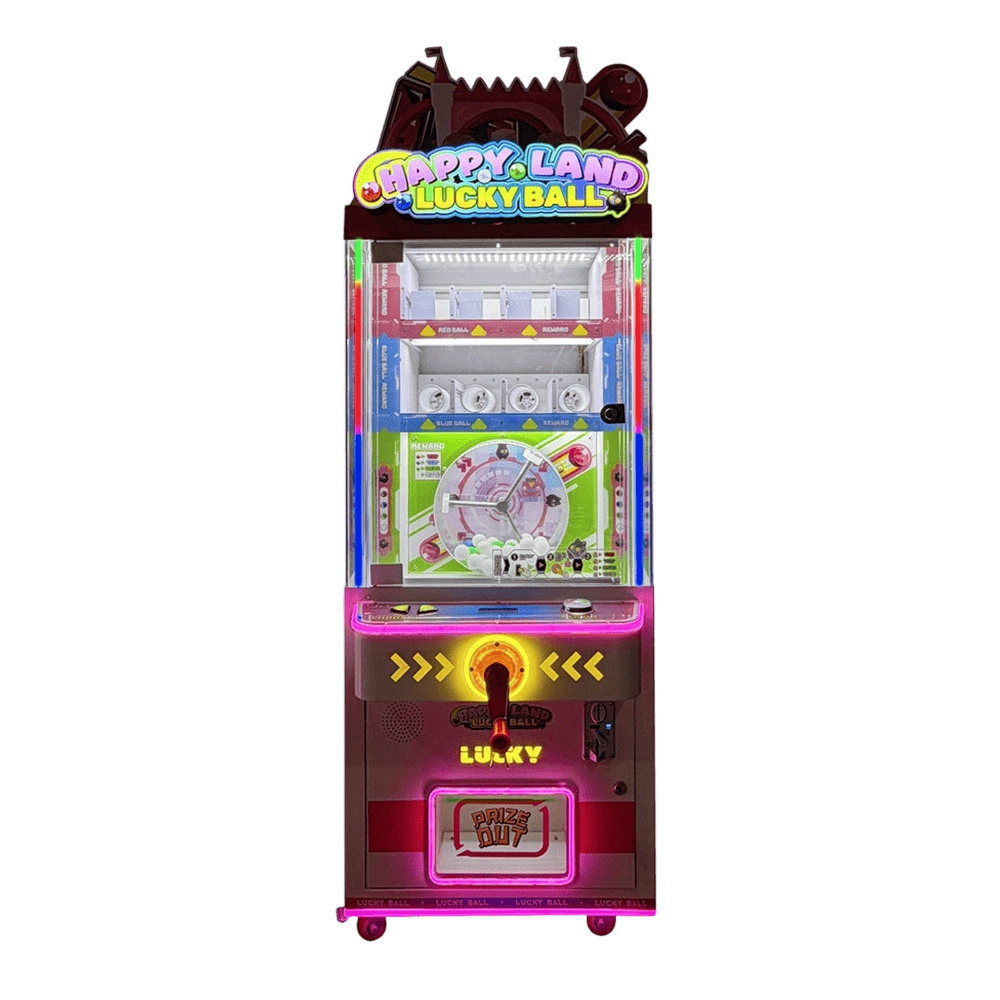
Players use the joystick to guide the ball into a designated hole. Each color ball corresponds to different prize values: red for the highest, blue and green for mid-range prizes, and white for no prize.
What is the prize system like?
The prizes are diverse, with different colored balls corresponding to rewards in varying prize tiers, catering to a wide range of player preferences.
What is the minimum order quantity (MOQ)?
The minimum order quantity for our arcade machines is 1 piece. Larger orders qualify for additional customization options.
How does Jiami Games ensure product quality?
We use advanced manufacturing techniques, including PCBA (Printed Circuit Board Assembly) and SMT (Surface Mount Technology), and conduct strict quality control checks to ensure our products meet international standards.
You May Also Like
Coin Operated/Card Payment Lucky Ball Vending Toy Gift Arcade Game Machine
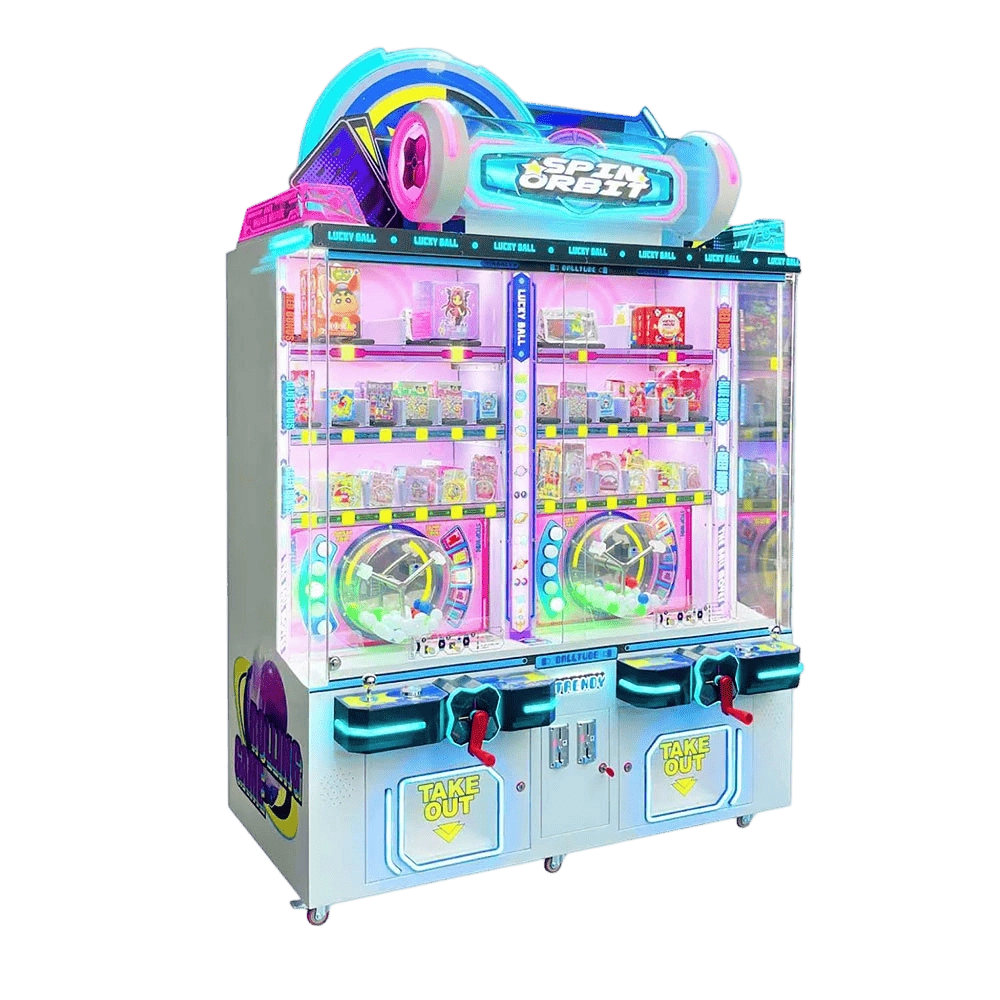
Coin Operated/Card Payment 2 Players SPIN ORBIT Lucky Prize Arcade Game
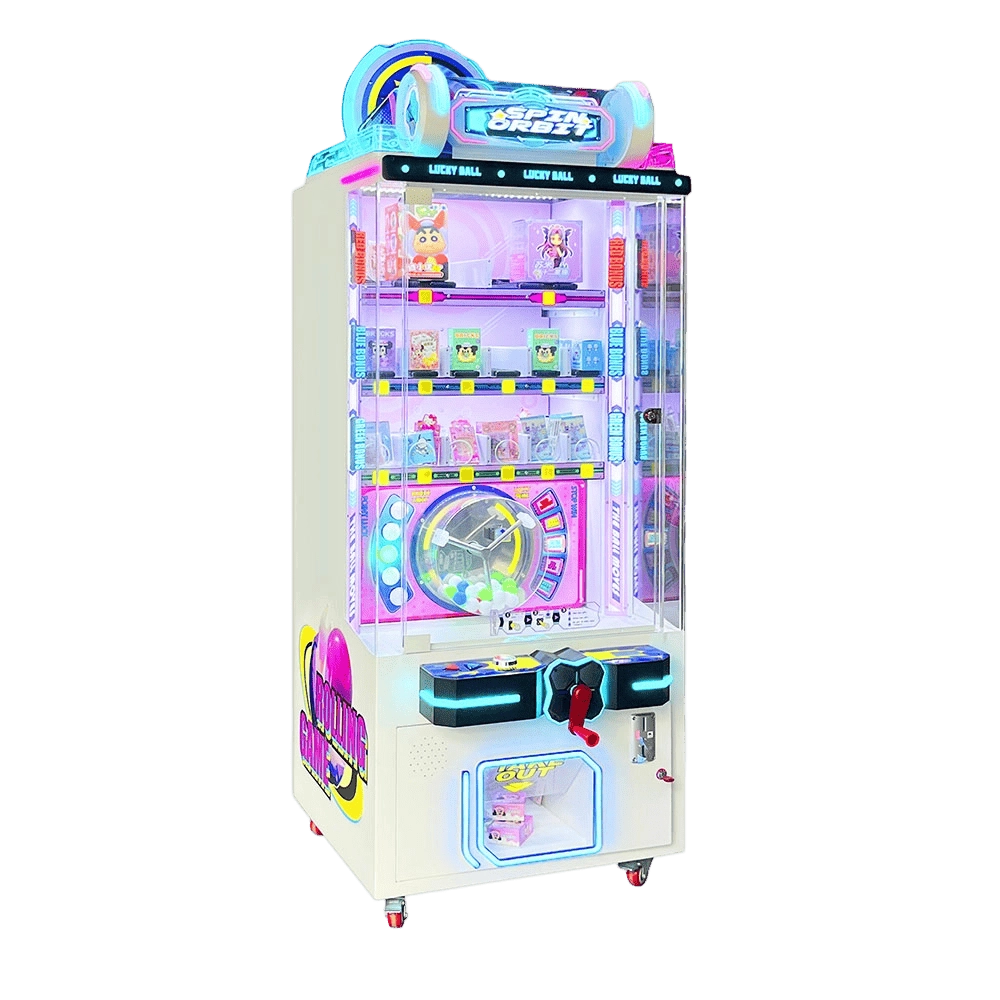
Coin Operated/Card Payment SPIN ORBIT Lucky Prize Arcade Game
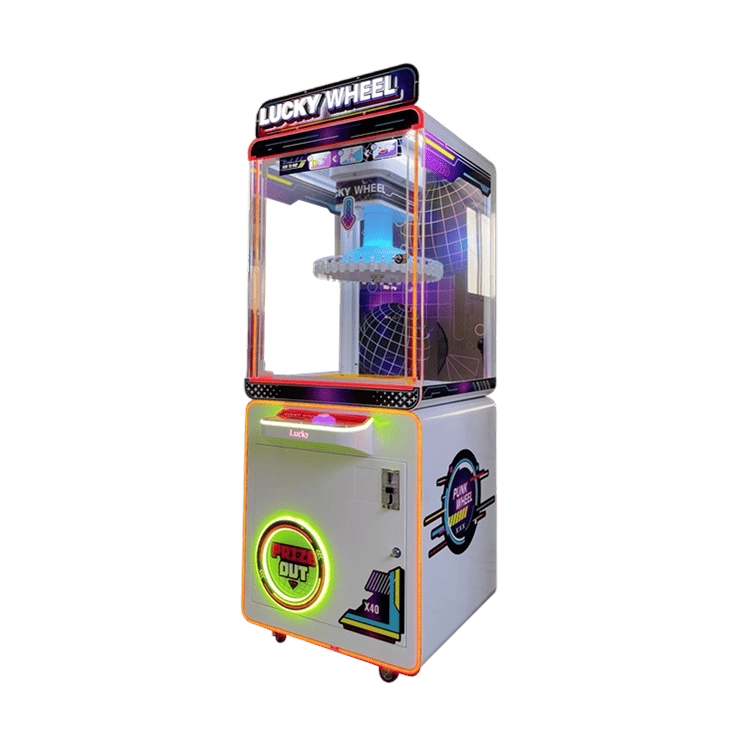
Arcade Prize Lucky Wheel Gift Machine For Amusement Areas
Get in Touch with Jiami Games
If you have any comments or good suggestions, please leave us a message; later our professional staff will contact you as soon as possible.

Innovative Entertainment, at Your Fingertips
Learn about Jiami Games and explore our expertise in console development, innovative design, and global markets.
Quick Links:
© 2026 Jiami Games.
Whatsapp: +8618520390438