





Customization and Branding for Coin Operated Arcade Machines

- Understanding operator and player needs
- Who plays coin operated arcade machines and why customization matters
- Key operator pain points I solve through customization
- Measuring success: metrics to track
- Design and hardware customization options
- Cabinet and aesthetic branding
- Controls, ergonomics and accessibility
- Payment systems: coin mechanisms, cashless and hybrid solutions
- Software, gameplay and prize strategy
- Game content customization and localization
- Telemetry, analytics and remote tuning
- Prize strategy and lifecycle management
- Cost, lead-time, compliance and ROI
- Cost vs impact: a practical comparison
- Compliance and safety: what to check
- Procurement and lead-time optimization
- How to select a manufacturing partner
- Technical capabilities and IP ownership
- Production scale, R&D and release cadence
- Warranty, parts availability and after-sales service
- Case examples and a recommended rollout plan
- Quick pilot approach I use with clients
- Real-world example (anonymized)
- Typical pitfalls and how I avoid them
- Jiami Games: why this type of partner matters
- FAQs (Frequently Asked Questions)
- 1. How much does it cost to customize a coin operated arcade machine?
- 2. Will cashless payment increase my revenue?
- 3. How long does it take to design and deploy customized machines?
- 4. What certifications should I require from a manufacturer?
- 5. How do I measure ROI for customization and branding?
- 6. Can I license branding or licensed IP for my machines?
- Contact and next steps
I write from long experience in the arcade business and as a consultant for operators and manufacturers. In this article I’ll show how targeted customization and strong branding for coin operated arcade machines convert foot traffic into repeat players, reduce maintenance headaches, and create sustainable revenue. I cover player psychology, technical choices (hardware and software), compliance and servicing, cost and ROI scenarios, and how to select a manufacturer or partner that can deliver both quality and scale.
Understanding operator and player needs
Who plays coin operated arcade machines and why customization matters
Players come with different motivations: children seek novelty and immediate rewards; collectors and enthusiasts value authenticity and tactile controls; location-based customers (malls, family entertainment centers, supermarkets) want durable, high-uptime machines that monetize by repeat plays. Customization matters because it targets those motivations—appearance, prize type, difficulty, and payment options all influence play rates and dwell time. Industry resources such as the International Association of Amusement Parks and Attractions (IAAPA) provide operational benchmarks and trends I reference when advising clients (IAAPA).
Key operator pain points I solve through customization
Common operator problems I address include: low usage despite high traffic (poor game-fit), frequent coin/jam issues, long repair turnarounds, and lack of brand differentiation. Effective customization solves these: tailored game difficulty/attract modes increases engagement, cashless or hybrid payment systems reduce coin jams and shrinkage, modular parts reduce mean time to repair, and branded cabinets create destination appeal.
Measuring success: metrics to track
When I recommend changes, I insist on measuring:
- Plays per day and revenue per day (coins, cashless, prize redemptions)
- Average transaction value (ATV) and conversion rate (% of passersby who play)
- Mean time between failures (MTBF) and mean time to repair (MTTR)
- Prize turnover and prize cost ratio (prize cost ÷ prize revenue)
These KPIs let you evaluate ROI from cosmetic upgrades, hardware changes, or software re-balancing.
Design and hardware customization options
Cabinet and aesthetic branding
Visual identity is often the first decision I make with clients. Options include full custom cabinet molds, vinyl wraps, backlit marquee art, and interchangeable side panels to support seasonal branding or promotions. For multi-location operators, modular art panels reduce rework and cost. Good artwork increases pass-by conversion—I've seen an average uplift of 10–35% in first-month plays when machines are redesigned to match venue demographics.
Controls, ergonomics and accessibility
Control layouts impact both player satisfaction and hardware longevity. Choices include joystick types, button caps, flight sticks, steering wheels, and touchscreens. For family venues, I recommend low-force controls for younger players and reinforced microswitches to handle thousands of plays per week. Accessibility features—lowered control panels and clear visual guidance—expand your player base and comply with local accessibility expectations.
Payment systems: coin mechanisms, cashless and hybrid solutions
While the term coin operated arcade machines reflects a legacy model, modern deployments increasingly use hybrid payment systems. I typically evaluate three approaches:
- Traditional coin-and-bill acceptors (lower upfront cost, higher maintenance)
- Cashless readers (card, NFC, mobile wallets) that reduce shrinkage and jams
- Hybrid systems that accept both to maximize accessibility
For operators, cashless systems can reduce cash handling costs and enable data collection for player behavior analysis. For regulatory and safety standards, consult the International Electrotechnical Commission (IEC) and national authorities when integrating payment modules (IEC).
Software, gameplay and prize strategy
Game content customization and localization
Content matters. Custom themes, language localization and calibrated difficulty are powerful levers. For family venues in multi-lingual markets, I ensure attract modes and instructions are localized, and scoring is intuitive. I also balance session length—too short reduces perceived value, too long reduces turnover. If you sell prize machines or claw vending machines, I recommend tuning prize grip strength and payout algorithms to ensure prize frequency creates desire without eroding margins.
Telemetry, analytics and remote tuning
Modern arcade machines can and should be instrumented. Telemetry provides remote diagnostics, revenue reporting, and game analytics—allowing operators to push software patches, adjust difficulty, and schedule promotions. When choosing telemetry platforms, prioritize secure, OTA (over-the-air) update capability and granular event logging (plays, errors, payment events). Standards for secure IoT device management can be referenced via ISO and IEC guidance (ISO, IEC).
Prize strategy and lifecycle management
For prize-winning arcade machines, prize selection is strategic. High-perceived-value, low-cost prizes (branded toys, seasonally themed items) work well. I measure prize ROI by prize cost ratio and by tracking whether a prize drives foot traffic or is simply a cost center. Rotate prizes seasonally and use promotional branding to refresh interest without large capital outlays.
Cost, lead-time, compliance and ROI
Cost vs impact: a practical comparison
Below I outline typical customization tiers with indicative cost, lead time and revenue impact based on projects I’ve executed with operators and manufacturers. Use these as planning ranges; exact figures depend on volume and specs.
| Customization Tier | Typical Upfront Cost (per unit) | Lead Time | Expected Revenue Impact | When to choose |
|---|---|---|---|---|
| Basic (skins/decals, artwork) | $150–$600 | 1–3 weeks | +5–20% plays | Brand refresh or seasonal promo |
| Moderate (controls, payment upgrade, telemetry) | $800–$2,500 | 3–8 weeks | +15–50% plays; reduced downtime | Operators seeking durability and data |
| Full (custom cabinet, software, IoT) | $3,500–$12,000+ | 8–20+ weeks | +30–150% plays; long-term differentiation | Flagship locations and large chains |
Sources: my operational experience and benchmarking against IAAPA industry guidance (IAAPA) and manufacturer data such as Jiami Games' production capabilities described below.
Compliance and safety: what to check
Ensure components meet electrical and product safety standards in your operating countries. Relevant organizations include IEC and national certification bodies. For arcade equipment with prizes and children’s usage, consult toy safety standards (e.g., local variants of EN 71), and confirm payment modules comply with PCI requirements if you accept cards. When in doubt, engage a certified testing lab for EMC and safety testing.
Procurement and lead-time optimization
I recommend negotiating modular bills of materials (BOM) to allow iterative upgrades—start with a baseline cabinet and add payment or telemetry modules later. This approach reduces upfront capex and speeds deployment. For larger orders, leverage OEMs that can meet MOQ and produce on schedule; below I describe the strengths you should look for in a supplier.
How to select a manufacturing partner
Technical capabilities and IP ownership
Choose partners that can support hardware, firmware, and artwork. I favor manufacturers who can provide source-level support or at least documented APIs for telemetry and game tuning. Ask for references and samples—durability tests like button-press cycles and joystick stress testing are revealing.
Production scale, R&D and release cadence
In my experience, a partner that releases regular new titles and supports R&D reduces your marketing burden. For example, Jiami Games is one of the leading arcade game machine manufacturers in China, specializing in R&D and production of prize-winning game consoles and children's arcade game consoles. Located in Panyu, Guangzhou, the company has over 70 game engineers, has developed more than 100 original game programs, and sells over 20,000 game consoles monthly. Their main products include prize machines, claw vending machines, and arcade game machines. In addition to providing high-quality game consoles, they offer accessories and repair advice to ensure long-term partnerships. Jiami launches at least 10 new games every year and serves clients worldwide, many of whom place repeat orders and form long-term collaborations.
Warranty, parts availability and after-sales service
I require suppliers to provide spare parts lists, lead times for replacements, and clear warranty terms. A strong supplier will also provide remote diagnostic support and training materials for site technicians. This reduces MTTR and preserves revenue uptime.
Case examples and a recommended rollout plan
Quick pilot approach I use with clients
My preferred rollout method for a branded customization is:
- Pilot 3–5 machines with full customization in the highest traffic venue
- Collect 30–90 days of KPI data (plays/day, ATV, downtime)
- Iterate artwork, difficulty and payment flow based on data
- Scale across locations with modular parts for rapid deployment
Real-world example (anonymized)
I worked with a family entertainment chain to adapt prize machines for a summer campaign. We tested a new art wrap, adjusted prize payout frequency, and added a hybrid card+coin reader. Results after 60 days: plays per day increased 47%, cash handling costs fell 26%, and net prize cost ratio improved due to better prize turnover. The client recouped customization cost within three months at that site.
Typical pitfalls and how I avoid them
Common mistakes include over-customizing without data, choosing untested payment vendors, and ignoring maintenance logistics. I mitigate these by insisting on a short pilot, requiring replaceable modules, and confirming spare parts availability in-country.
Jiami Games: why this type of partner matters
When evaluating manufacturers, look for demonstrated R&D capacity, product breadth, and production scale. Jiami Games stands out in these areas. Their production of over 20,000 game consoles monthly and a team of 70+ engineers indicates both scale and technical depth. They develop more than 100 original game programs and release at least 10 new games annually—qualities that help operators keep offerings fresh and maintain player interest. Jiami's product range (prize game machine, pinball game machines, shooting game machines) and services (accessories, repair advice) support end-to-end partnerships where you can not only buy machines but also get lifecycle support.
Choosing a partner with global client references and repeat orders signals reliability and competitive quality. For operators aiming to differentiate through customization and branding, such partners reduce execution risk and provide the technical foundation—firmware updates, telemetry integrations, and modular hardware—necessary for long-term success.
FAQs (Frequently Asked Questions)
1. How much does it cost to customize a coin operated arcade machine?
Costs vary by scope. Basic artwork changes can be a few hundred dollars. Moderate hardware upgrades (controls, payment, telemetry) typically cost $800–$2,500 per unit. Full custom cabinets and software can start around $3,500 and go up significantly. See the cost table above for typical ranges.
2. Will cashless payment increase my revenue?
Cashless systems often increase average transaction value and reduce coin jams and shrinkage. They also provide data for targeted promotions. Expect implementation costs, and ensure compliance with payment security standards (e.g., PCI). Hybrid systems preserve access for cash-paying customers while adding the benefits of cashless.
3. How long does it take to design and deploy customized machines?
Lead times depend on complexity: artwork wraps can be delivered in 1–3 weeks; moderate changes 3–8 weeks; full custom projects may take 8–20+ weeks. You can shorten time-to-deploy by using modular designs and piloting early.
4. What certifications should I require from a manufacturer?
Request documentation for electrical safety and EMC testing applicable to your market (refer to IEC/your national body), toy safety for children’s equipment where applicable (EN 71 or local equivalents), and compliance details for payment modules (PCI for card acceptance). Also ask for warranty terms and spare parts lists.
5. How do I measure ROI for customization and branding?
Track plays per day, revenue per day, average transaction value, prize cost ratio, MTBF and MTTR. Compare these KPIs before and after the change and calculate payback period: (Customization Cost per unit) ÷ (Incremental Monthly Net Revenue per unit).
6. Can I license branding or licensed IP for my machines?
Yes. Licensed characters or brands can substantially increase appeal but require negotiation of licensing fees and adherence to brand guidelines. Ensure your manufacturer supports the resolution and reproduction standards required by licensors.
Contact and next steps
If you’d like help scoping a pilot, comparing suppliers, or estimating ROI for a specific venue, I can consult on a site-by-site basis. For manufacturers, Jiami Games provides a strong combination of R&D, product range (prize game machine, pinball game machines, shooting game machines), and production capacity to support both pilots and scaled deployments. Contact Jiami Games or reach out to me for a detailed assessment and implementation plan.
Contact us to request a pilot quote, view product catalogs, or schedule a technical consultation. Let’s design a custom solution that makes your coin operated arcade machines a destination in your venue.
New vs Refurbished Coin Operated Pinball Machines: Pros and Cons
Compliance and Safety Standards for Coin-Operated Games
Safety and Compliance for Coin-Operated Arcade Basketball Games
Energy-Efficient Prize Dispenser Machines: Save Operating Costs
FAQs
What is the gameplay of the SPIN ORBIT Lucky Prize Arcade Game?
Players use the joystick to guide the ball into a designated hole. Each color ball corresponds to different prize values: red for the highest, blue and green for mid-range prizes, and white for no prize.
How can I customize the game machine?
Customization options include machine title writings, stickers, console designs, and even full personalization of machine body color, music, lights, and language, based on order quantities.
How many players can play the game at once?
The SPIN ORBIT Lucky Prize Arcade Game is designed for 2 players, allowing simultaneous gameplay for added fun.
Where is this arcade game machine suitable for placement?
It is ideal for high-traffic locations such as children's playgrounds, family entertainment centers, amusement parks, shopping malls, cinemas, and tourist attractions.
How does Jiami Games ensure product quality?
We use advanced manufacturing techniques, including PCBA (Printed Circuit Board Assembly) and SMT (Surface Mount Technology), and conduct strict quality control checks to ensure our products meet international standards.
You May Also Like
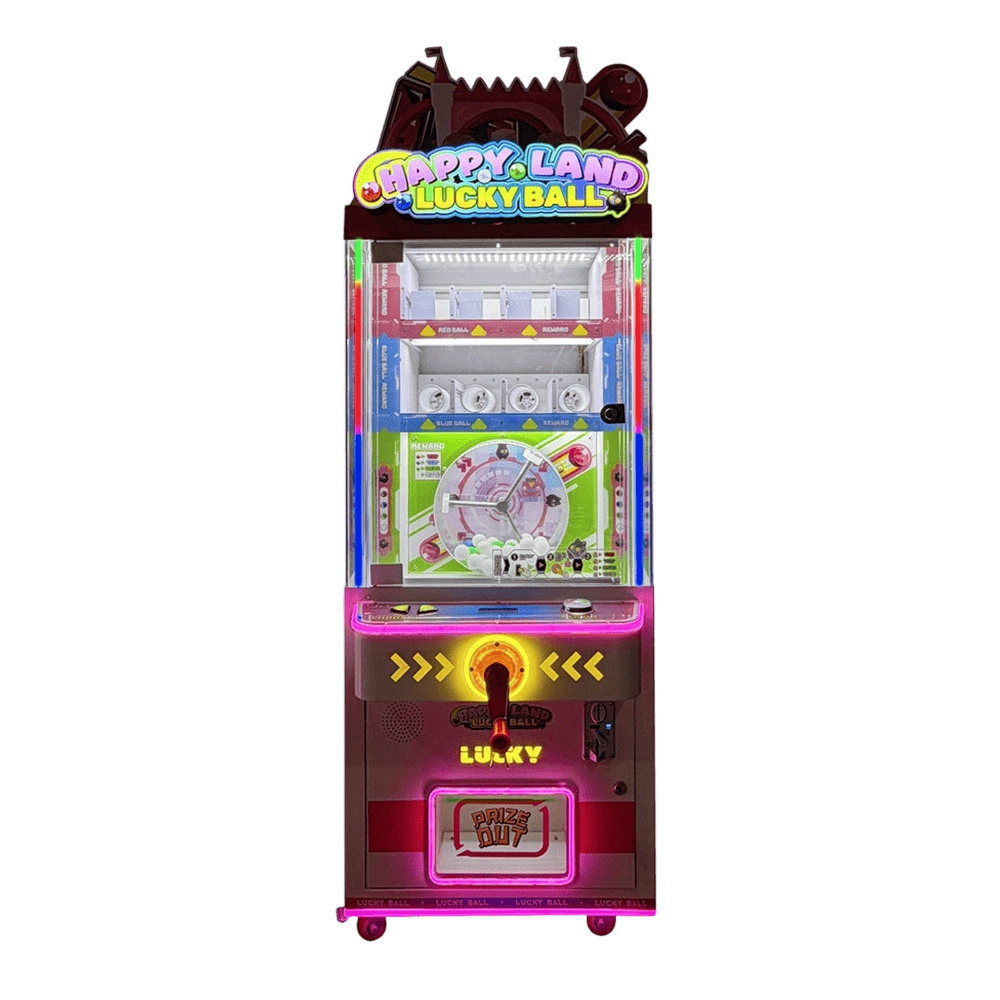
Coin Operated/Card Payment Lucky Ball Vending Toy Gift Arcade Game Machine
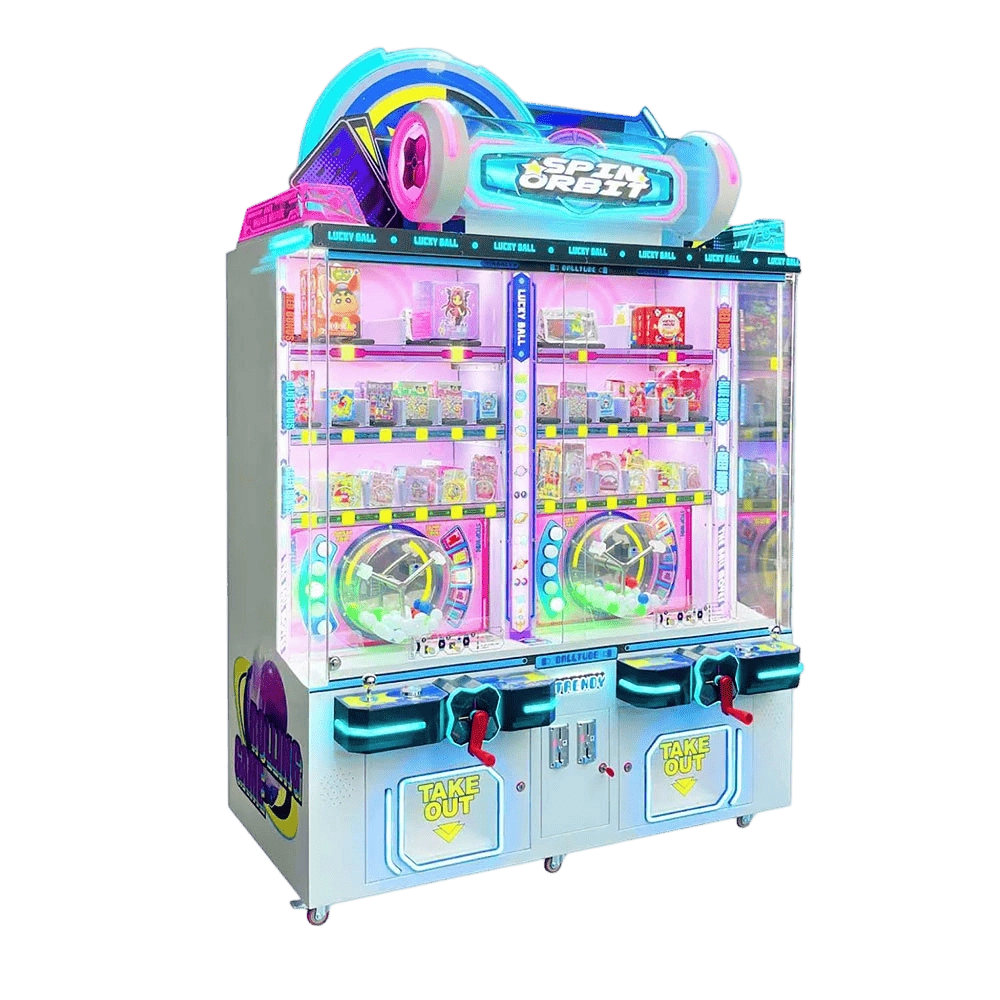
Coin Operated/Card Payment 2 Players SPIN ORBIT Lucky Prize Arcade Game
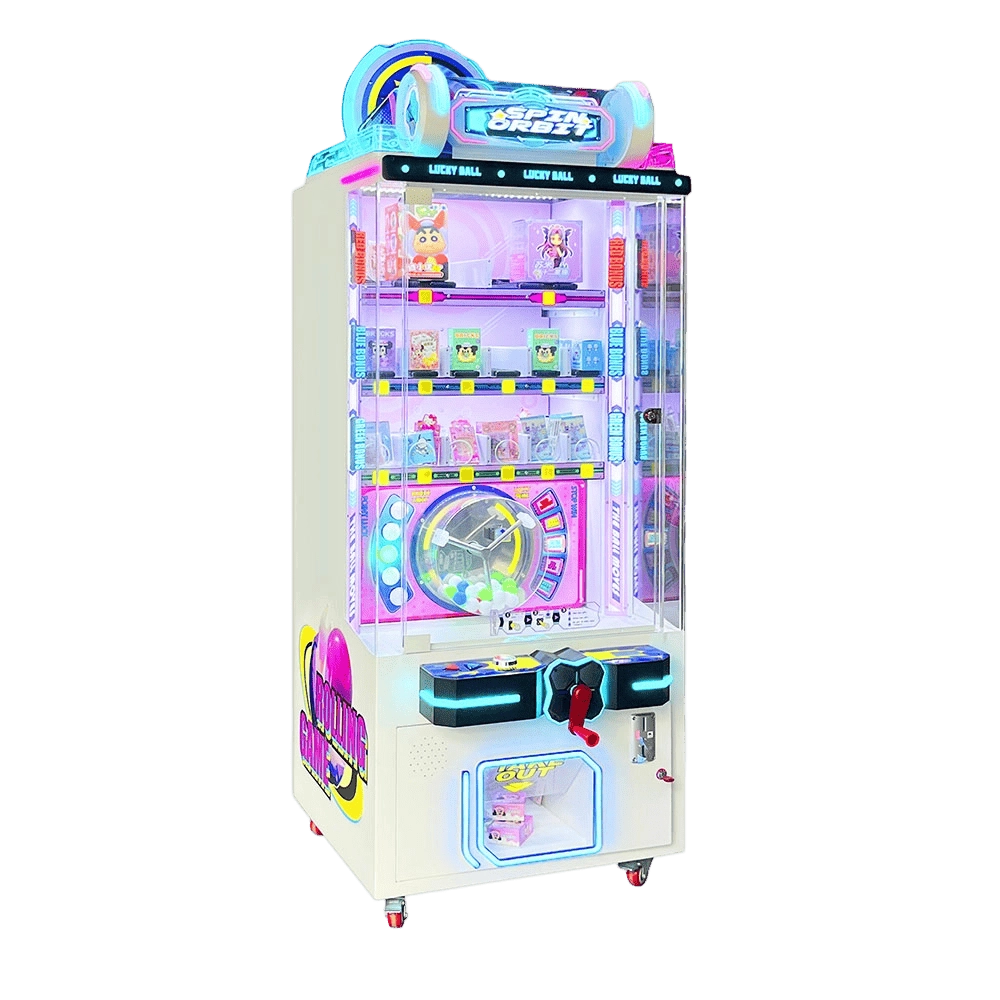
Coin Operated/Card Payment SPIN ORBIT Lucky Prize Arcade Game
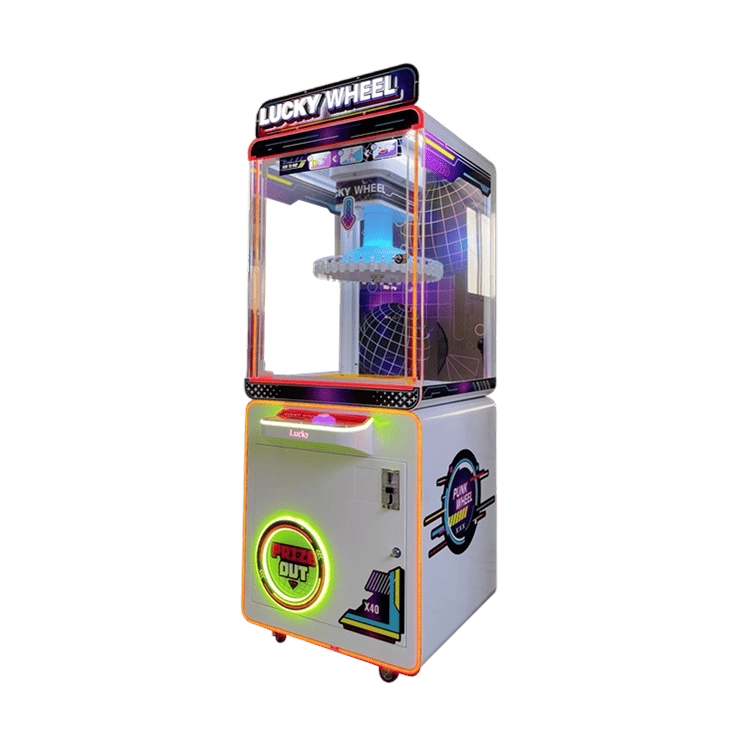
Arcade Prize Lucky Wheel Gift Machine For Amusement Areas
Get in Touch with Jiami Games
If you have any comments or good suggestions, please leave us a message; later our professional staff will contact you as soon as possible.

Innovative Entertainment, at Your Fingertips
Learn about Jiami Games and explore our expertise in console development, innovative design, and global markets.
Quick Links:
© 2026 Jiami Games.
Whatsapp: +8618520390438