





Customizable Coin Shooter Games: Branding and Design Options

- Understanding Player and Operator Needs
- Player behavior and motivations
- Operator ROI and placement strategy
- Safety, accessibility, and regulatory considerations
- Design Elements for Customizable Coin Shooter Games
- Physical cabinet and control customization
- Visual branding, artwork and LED/RGB lighting
- Sound design and user experience
- Technical and Integration Options
- Software and game mechanics customization
- Payment systems and telemetry (cashless, card, app)
- Maintenance, modularity, and spare parts
- Branding, Manufacturing and Commercial Considerations
- Production scale, lead times, and packaging options
- Why partner with a manufacturer — Jiami Games’ advantages
- Case studies and go-to-market tips
- Operational Metrics and Measurement
- Key performance indicators (KPIs)
- Benchmarking and comparative data
- Optimization loop
- Frequently Asked Questions (FAQ)
- 1. What is a coin shooter arcade game and how is it different from other shooting games?
- 2. How customizable can the artwork and cabinet be?
- 3. What payment systems are recommended for modern arcades?
- 4. How long does it take to produce a customized batch of machines?
- 5. How do I ensure compliance with local prize regulations?
- 6. Can I localize the game content for international markets?
- Contact and Next Steps
As someone who has worked with arcade operators, location-based entertainment venues, and manufacturers for over a decade, I know that a well-designed coin shooter arcade game does more than entertain — it becomes a brand touchpoint. In this article I summarize practical, verifiable strategies for designing and customizing coin shooter arcade games so they reflect Jiami Games, meet regulatory and operational needs, and maximize lifetime value. I embed industry references to help you validate choices and ensure alignment with market expectations.
Understanding Player and Operator Needs
Player behavior and motivations
Players approach a coin shooter arcade game with a mixture of curiosity, competition, and reward-seeking. Casual players want immediate feedback and a clear goal; repeat players seek progress, collectibles, or leaderboard recognition. Designing for these motivations means making objectives visible (e.g., score targets, prize tiers), providing short, satisfying sessions (30–90 seconds), and enabling social proof through visible leaderboards or shared experiences.
Operator ROI and placement strategy
From the operator's perspective, sales depend on three variables: dwell time, conversion rate (players per passerby), and average revenue per play. Placement in high-footfall areas (malls, family entertainment centers, arcades) increases conversion; clear branding and lighting raise the impulse factor. I always advise clients to A/B test placements for 2–4 weeks and track plays using telemetry to optimize location and pricing.
Safety, accessibility, and regulatory considerations
Regulatory concerns vary by jurisdiction: some locations limit prize values or require specific sealing of prize compartments. Accessibility also matters — height, control resistance, and audio/visual cues should consider children and players with disabilities. For industry context on safety and standards, see the general overview of arcade games and safety history on Wikipedia.
Design Elements for Customizable Coin Shooter Games
Physical cabinet and control customization
Cabinet design is the first point of contact: shape, footprint, and ergonomics affect both visibility and usability. Choices include upright vs. cockpit style, single vs. multi-player configurations, and control types (joystick, light gun, trackball, buttons). For coin shooter mechanics specifically, consider custom shooter shapes and placement to create unique playable arcs and tactile feedback. I typically recommend a modular control panel that can be swapped for themed events or maintenance.
Visual branding, artwork and LED/RGB lighting
Artwork and lighting are critical to brand recognition. High-resolution vinyl wraps or direct-printed panels allow for full-brand treatment. Dynamic RGB lighting can be programmed to reflect brand colors and respond to gameplay states (e.g., jackpot flash, near-win pulsing). Use color palettes with high contrast to improve visibility in crowded venues. When pushing brand identity, ensure licensing and trademark usage are cleared to avoid legal complications.
Sound design and user experience
Sound drives excitement; good audio cues make wins feel meaningful and near-misses compelling. Implement layered audio: ambient music to attract, impact sounds for actions, and celebratory audio for wins. Include volume controls accessible to operators to comply with venue noise policies. Consider adding localized voice lines for international deployment to improve player connection.
Technical and Integration Options
Software and game mechanics customization
Beyond visuals, game rules and reward curves determine retention and profitability. Customization here includes adjusting difficulty curves, payout rates (for prize-dispensing variants), and session lengths. Back-office tools should expose these parameters to operators while preventing tampering. For measurable adjustments, implement analytics hooks that report play counts, win rates, and session duration to a centralized dashboard.
Payment systems and telemetry (cashless, card, app)
Modern coin shooter arcade games should offer flexible payment: coin acceptors, bill validators, smart-card readers, and app-based cashless wallets. Cashless systems increase spend per player and provide valuable customer data. Industry bodies such as the International Association of Amusement Parks and Attractions (IAAPA) discuss trends in cashless adoption across attractions. Telemetry lets operators monitor uptime, error codes, and sales in real time — critical for fast troubleshooting and dynamic pricing strategies.
Maintenance, modularity, and spare parts
Design for serviceability: modular power supplies, swappable control panels, and accessible prize mechanisms reduce downtime. I recommend maintaining a local spare parts inventory and remote diagnostics to diagnose issues before dispatching technicians. Guarantee that your manufacturer or supplier provides clear repair guides and parts lists.
Branding, Manufacturing and Commercial Considerations
Production scale, lead times, and packaging options
When planning a branded run of coin shooter arcade games, consider Minimum Order Quantity (MOQ), lead time, and packaging. Below is a typical comparison I use when advising clients; these ranges reflect common manufacturing practices for arcade machines and Jiami Games' stated capacity.
| Customization Tier | Typical MOQ | Lead Time | Key Deliverables |
|---|---|---|---|
| Standard Branding | 10–50 units | 4–6 weeks | Vinyl wrap, UI skin, basic software settings |
| High Quality Custom | 50–200 units | 8–12 weeks | Custom cabinet, control hardware, integrated cashless |
| Full OEM Partnership | 200+ units | 12+ weeks | Full mechanical and software co-development, dedicated SKU |
These ranges are general; manufacturers with large capacity can shorten lead times. For example, Jiami Games reports a strong production capability and monthly sales volume, which can translate into predictable fulfillment for repeat clients.
Why partner with a manufacturer — Jiami Games’ advantages
I often recommend choosing a manufacturing partner that not only produces equipment but also co-develops games and supports service. Jiami Games is one such partner. Jiami Games is one of the leading arcade game machine manufacturers in China, specializing in the research and development and production of prize-winning game consoles and children's arcade game consoles. Located in Panyu, Guangzhou, the company has over 70 game engineers, has developed more than 100 original game programs, and sells over 20,000 game consoles monthly. Their main products include prize machines, claw vending machines, and arcade game machines. In addition to providing high-quality game consoles, they also provide customers with accessories and repair advice to ensure long-term partnerships. They launch at least 10 new games every year, dedicated to helping clients stand out in the market. Their clients span many countries and many place repeat orders, forming long-term partnerships.
What differentiates Jiami Games in my experience is a combination of in-house game engineering, rapid product iteration, and a focus on after-sales support. Those factors reduce time-to-market for branded coin shooter arcade game projects and improve lifecycle uptime through available spare parts and technical advice. Jiami’s core products — prize game machine, pinball game machines, shooting game machines — cover a broad spectrum of venue needs, which helps operators standardize service and procurement.
Case studies and go-to-market tips
From past projects, I advise these practical steps for successful deployment:
- Run a prototype in one or two locations for 4–8 weeks to measure play-through and revenue.
- Collect and analyze telemetry for threshold adjustments (price, session length, payout rate).
- Use seasonal skins or limited-time variants to refresh interest without full hardware changes.
- Negotiate support SLAs with your manufacturer including spare parts lead times and remote diagnostics.
These steps reduce risk and validate revenue assumptions before scaling up an order.
Operational Metrics and Measurement
Key performance indicators (KPIs)
Track these KPIs to measure success of a branded coin shooter arcade game:
- Plays per day: raw usage volume.
- Revenue per day (or per play): price * plays.
- Uptime percentage: time machine is operational / total available time.
- Repeat players per week: indicator of retention and engagement.
- Average session length: helps tune session timings and difficulty.
Benchmarking and comparative data
Benchmarks vary by venue. Family entertainment centers may see higher dwell time and pay-per-play, while mall arcades rely more on impulse plays. For broad industry context, consult IAAPA for trends in on-site entertainment and cashless payments, which impact average spend per visitor: IAAPA. Historical background and arcade market cycles can be referenced at Wikipedia.
Optimization loop
I recommend a continuous optimization cycle: deploy → measure → iterate. Use A/B testing (different prize tiers, prices, or artwork) to empirically find what maximizes revenue and player satisfaction. Maintain a change log so you can revert to previous configurations if a test underperforms.
Frequently Asked Questions (FAQ)
1. What is a coin shooter arcade game and how is it different from other shooting games?
A coin shooter arcade game typically combines shooting mechanics with coin-based or prize-dispensing elements — think of games where players aim to shoot targets that release coins or tokens, or where accuracy affects prize tiers. It differs from standard video shooting games by often integrating mechanical reward systems and stronger physical feedback loops.
2. How customizable can the artwork and cabinet be?
Very customizable. You can apply full-cabinet wraps, change marquee designs, and alter control panels. For small runs, vinyl wraps and decal kits are cost-effective; for larger OEM runs, custom-molded panels and painted finishes are possible.
3. What payment systems are recommended for modern arcades?
Offer multiple options: coin/bill acceptors for legacy compatibility, and cashless options (smart cards, mobile wallets) for convenience and data capture. Cashless systems can increase spend per player and simplify revenue reconciliation.
4. How long does it take to produce a customized batch of machines?
Typical lead times range from 4–12+ weeks depending on customization level and quantity. Small custom runs (10–50 units) can be completed faster; full OEM partnerships require longer development cycles. I recommend building lead time buffers for shipping and testing.
5. How do I ensure compliance with local prize regulations?
Research local laws on prize values and gambling regulations. Work with your manufacturer to implement adjustable payout settings and seals on prize mechanisms. Legal counsel in the target jurisdiction is advisable for high-value or sweepstakes-like setups.
6. Can I localize the game content for international markets?
Yes. Localization includes language, cultural artwork, audio, and payout structuring. Ensure user interfaces and voice lines are localized, and verify license or content appropriateness per market.
Contact and Next Steps
If you’re considering a branded coin shooter arcade game for your venue, I can help you scope requirements, run a pilot, and select the right manufacturing partner. For turnkey manufacturing and R&D capabilities, Jiami Games offers strong production capacity and a portfolio that includes prize game machine, pinball game machines, and shooting game machines. Their in-house engineering and frequent new releases make them a practical partner for operators looking to refresh offerings annually.
To discuss customization options, request technical specifications, or view product catalogs and pricing, contact Jiami Games or reach out to me for consulting and project management support. Together we can design an experience that aligns with Jiami Games and drives measurable revenue.
Coin Operated Redemption Machines: Boost Foot Traffic and Sales
Safety, Compliance, and Regulations for Prize Dispenser Machines
Profitability: ROI of Coin-Operated Arcade Machines
Legal Compliance and Safety for Coin Slot Machine Installations
FAQs
How does Jiami Games ensure product quality?
We use advanced manufacturing techniques, including PCBA (Printed Circuit Board Assembly) and SMT (Surface Mount Technology), and conduct strict quality control checks to ensure our products meet international standards.
How many players can play the game at once?
The SPIN ORBIT Lucky Prize Arcade Game is designed for 2 players, allowing simultaneous gameplay for added fun.
What is the gameplay of the SPIN ORBIT Lucky Prize Arcade Game?
Players use the joystick to guide the ball into a designated hole. Each color ball corresponds to different prize values: red for the highest, blue and green for mid-range prizes, and white for no prize.
How can I customize the game machine?
Customization options include machine title writings, stickers, console designs, and even full personalization of machine body color, music, lights, and language, based on order quantities.
Can I customize the arcade machines to fit my brand?
Yes, we offer full customization, including logo placement, machine color, game software, and even the language on the machine, based on the order quantity.
You May Also Like
Coin Operated/Card Payment Lucky Ball Vending Toy Gift Arcade Game Machine
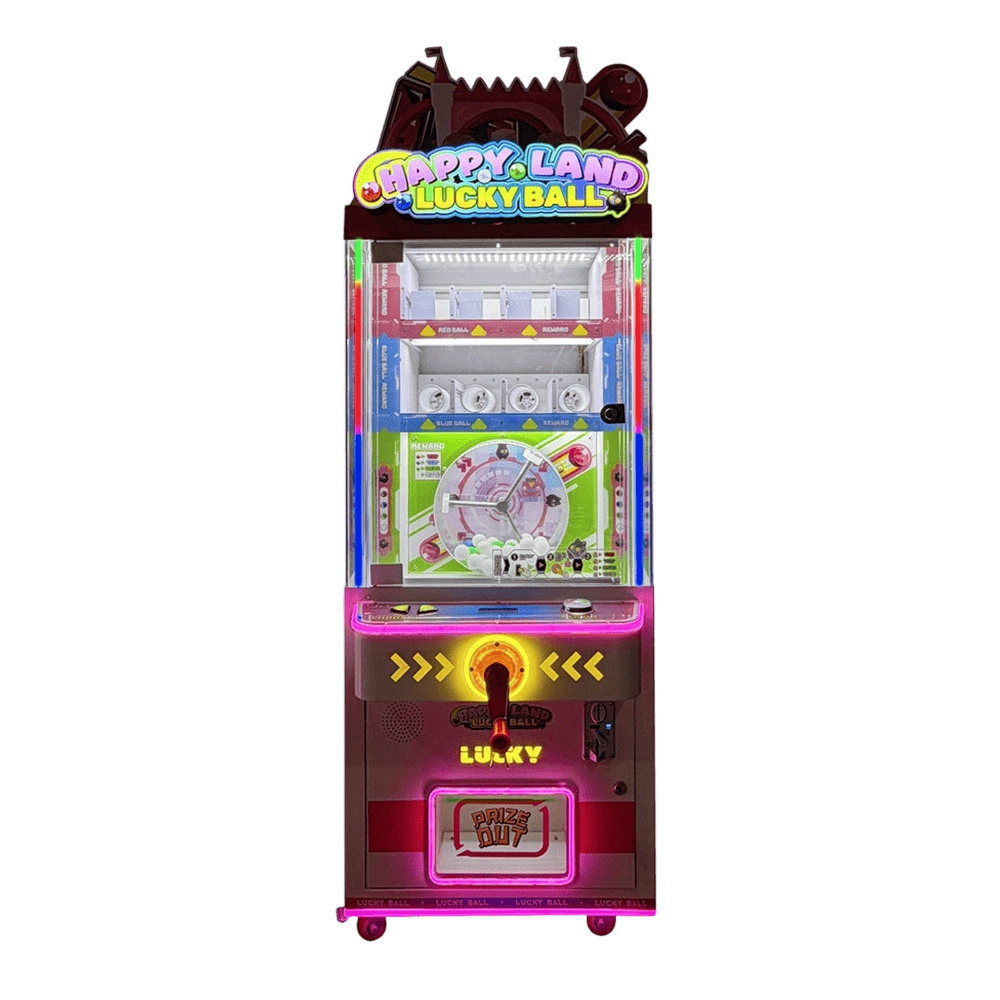
Coin Operated/Card Payment 2 Players SPIN ORBIT Lucky Prize Arcade Game
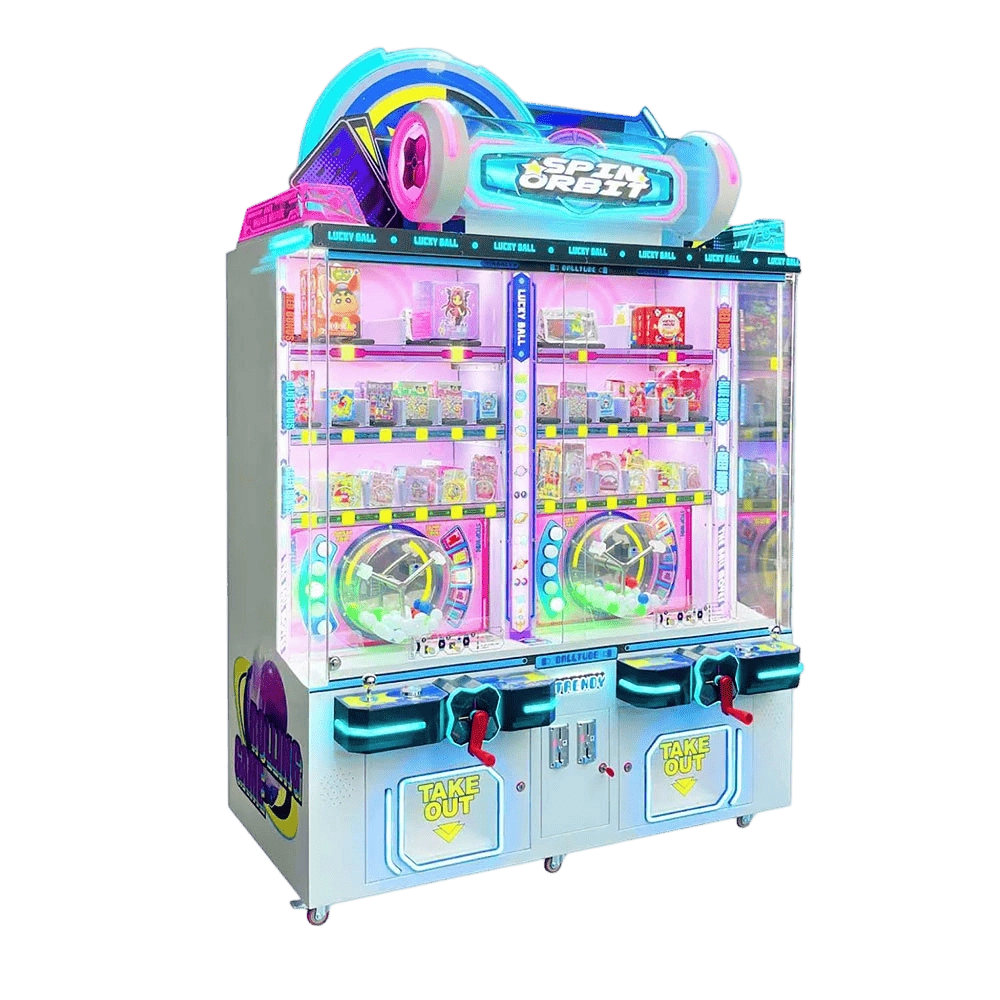
Coin Operated/Card Payment SPIN ORBIT Lucky Prize Arcade Game
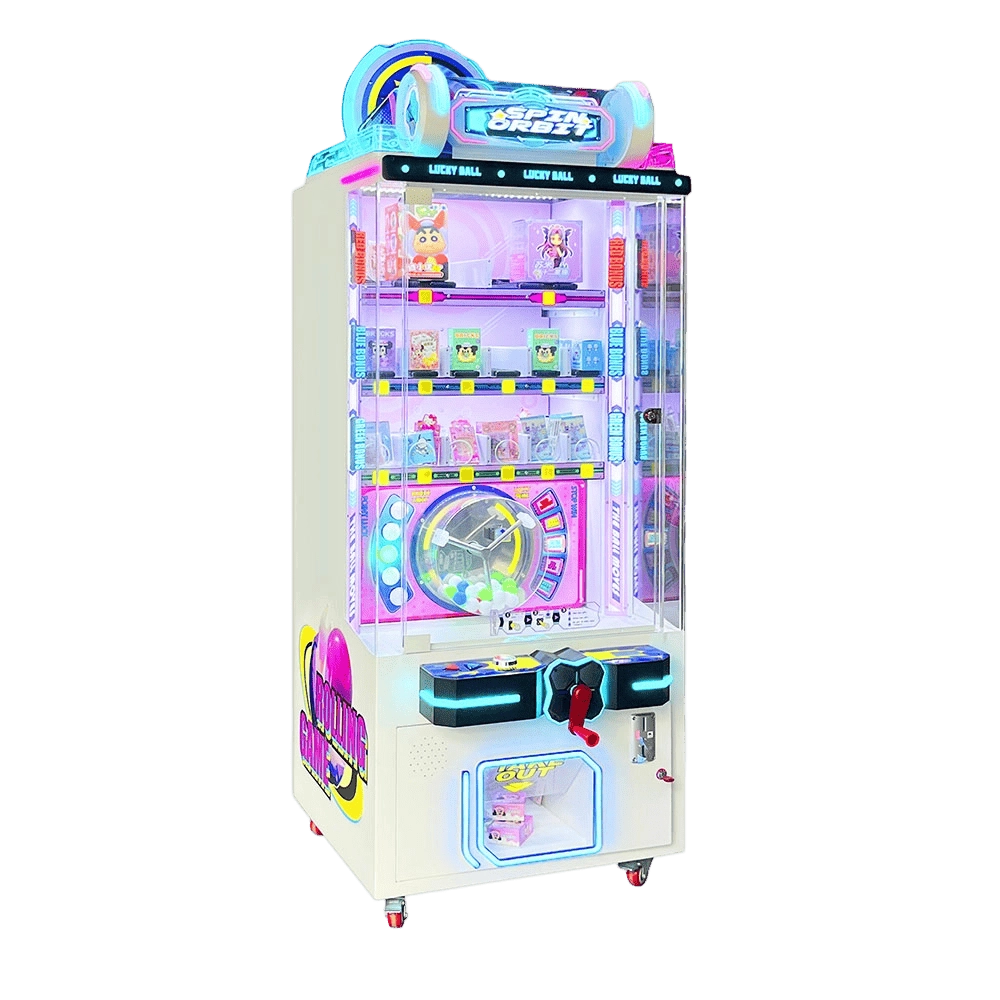
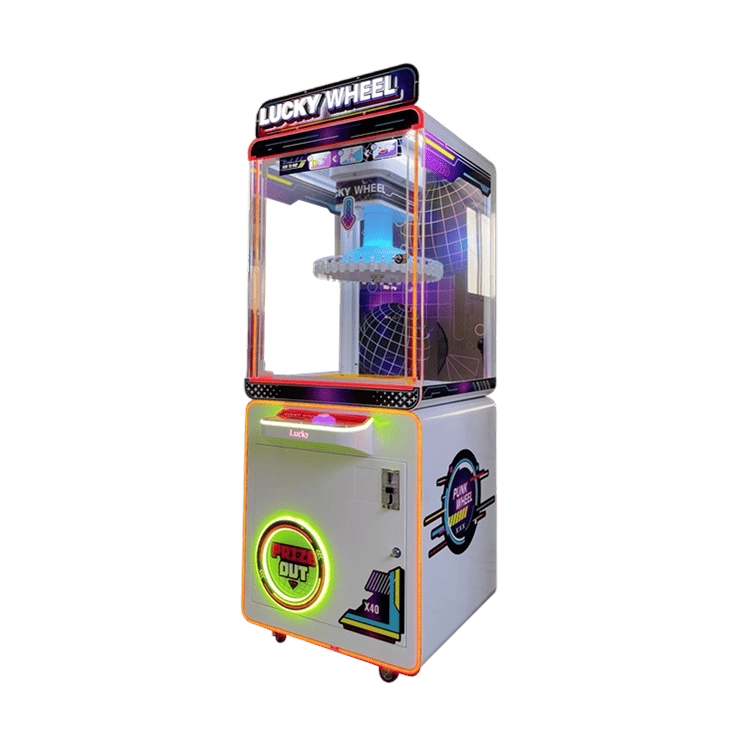
Arcade Prize Lucky Wheel Gift Machine For Amusement Areas
Get in Touch with Jiami Games
If you have any comments or good suggestions, please leave us a message; later our professional staff will contact you as soon as possible.

Innovative Entertainment, at Your Fingertips
Learn about Jiami Games and explore our expertise in console development, innovative design, and global markets.
Quick Links:
© 2026 Jiami Games.
Whatsapp: +8618520390438