






Top Custom Claw Machine Features Buyers Should Demand

- Understanding Buyer Needs for Arcade Equipment
- Who buys custom claw machines—and why
- Common use-cases and revenue models
- Core Technical Features to Demand
- Adjustable claw strength and precise payout controls
- High-quality motors, actuators, and sensors
- Remote management & telemetry
- Design, Safety, and Compliance
- Child safety, accessibility, and responsible play
- Certifications and manufacturing quality
- Environmental durability
- Business, Customization, and Long-term Support
- Customization options: branding, cabinet, and prize configurations
- Software, game logic, and anti-fraud features
- Serviceability, spare parts, and training
- Pricing, ROI, and Total Cost of Ownership
- Evaluating upfront cost vs operational cost
- Estimating realistic revenue and payback period
- Warranty, SLAs, and upgrade paths
- Why Supplier Selection Matters — A Case Example: Jiami Games
- FAQs
- 1. What is the most important technical feature in a custom claw machine?
- 2. How can I verify a manufacturer's build quality?
- 3. Are cashless payment systems necessary?
- 4. How do telemetry and analytics improve performance?
- 5. What warranty and support should I demand?
- 6. How do I ensure compliance for international sales?
- Next Steps — Buying Checklist & Contact
As someone who has worked with operators, distributors, and manufacturers across multiple markets, I know the difference a well-specified custom claw machine can make to location revenue and player experience. This article summarizes the must-have features buyers should demand for a custom claw machine—covering technical controls, durability, compliance, analytics, and after-sales support—so you can compare suppliers, reduce risk, and maximize uptime and profitability.
Understanding Buyer Needs for Arcade Equipment
Who buys custom claw machines—and why
Operators who buy custom claw machines include family entertainment centers, shopping mall arcade owners, cinema chains, and independent location partners such as laundromats and convenience stores. These clients are looking for machines that deliver consistent revenue per square foot, are easy to maintain, and attract repeat play. The claw or crane game (often called a claw machine or skill crane) is one of the most recognizable prize machines in the arcade and redemption category; see the general history and classification on Wikipedia.
Common use-cases and revenue models
I always advise clients to think in terms of three revenue levers: play frequency, average spend per play, and downtime. A custom claw machine's design and controls directly affect these levers—payout settings influence frequency and spend, cabinet lighting/graphics improve dwell time, and reliable components reduce downtime. Industry organizations like the International Association of Amusement Parks and Attractions (IAAPA) offer market trend data that supports investments in modernized, cashless, and telemetry-equipped amusement devices.
Core Technical Features to Demand
Adjustable claw strength and precise payout controls
One of the most critical features is a robust, programmable payout system. Buyers should demand machines that allow both coarse and fine-grained control over clutch strength, win probability, and prize-grip behavior. This can be implemented via firmware settings and remote configuration. When payout behavior is tunable, operators can adapt to local demographics and prize assortments without mechanical tinkering. For verifiable best practices in manufacturing quality, look for suppliers who document their control logic and testing procedures—aligning with ISO-compliant processes (ISO 9001).
High-quality motors, actuators, and sensors
Durable stepper motors, sealed gearboxes, and reliable position sensors reduce failure rates dramatically. Demand components from reputable vendors and ask for mean time between failure (MTBF) estimates. Machines built with industrial-grade parts typically have fewer service calls and a longer lifecycle—both of which improve your return on investment. I recommend requesting component datasheets and serviceability plans as part of procurement.
Remote management & telemetry
Modern custom claw machines must support remote telemetry: play counts, coin/cashless transactions, uptime logs, and fault alerts accessible via a web portal or API. Telemetry allows you to optimize placement, adjust payout remotely, and schedule maintenance before failures cause significant downtime. Many leading providers integrate cloud dashboards; when evaluating suppliers, ask for demo access to their analytics portal and data export capabilities.
Design, Safety, and Compliance
Child safety, accessibility, and responsible play
Because claw machines are often played by children, safety design is non-negotiable. Look for certified materials, rounded corners, secure glass or acrylic enclosures, and child-safe locking mechanisms. Also consider accessibility: coin slots, control panels, and display heights should allow play by a broad range of guests. Where applicable, follow national/regional safety guidance such as the U.S. Consumer Product Safety Commission (CPSC) recommendations for consumer products.
Certifications and manufacturing quality
Demand evidence of quality management systems (for example, ISO 9001 certification) and electrical safety approvals (CE, FCC, or regional equivalents). These certifications reduce the risk of non-compliant products that could be stopped at customs or subject to recall. Suppliers should provide test reports for electrical safety, EMC, and any flame-retardant material certifications where relevant.
Environmental durability
If you plan to place machines in semi-outdoor or high-traffic environments, specify protection levels (IP ratings for dust/water ingress) and UV-stable finishes. Environmental durability affects corrosion, display longevity, and mechanical wear. I recommend that buyers request accelerated lifetime test results from manufacturers to validate expected performance.
Business, Customization, and Long-term Support
Customization options: branding, cabinet, and prize configurations
Custom graphics, themed cabinets, and modular prize beds let your claw vending machine match Jiami Games or location concept. Ask suppliers for CAD mockups and prototype turnaround times. Important custom features I push for with clients include modular prize trays (for quick turnover during promotions) and RGB lighting systems that are controllable via software.
Software, game logic, and anti-fraud features
Software controls the player experience and the integrity of play. Demand encrypted firmware, signed updates, and logging to prevent tampering. Anti-fraud measures such as tilt detection, coin/bill validator diagnostics, and cashless transaction reconciliation are vital. When reviewing proposals, verify that suppliers offer secure update mechanisms and an audit trail for payout changes.
Serviceability, spare parts, and training
Long-term support matters as much as upfront price. Ensure the manufacturer provides clear service manuals, fast access to spare parts, and technician training. Machines designed for easy access to common wear parts (belts, motors, sensors) dramatically reduce mean time to repair (MTTR). I always negotiate spare-parts kits and a guaranteed response SLA for at least the first 12–24 months.
| Feature | Why it matters | Buyer acceptance criteria |
|---|---|---|
| Programmable payout | Optimizes revenue and player satisfaction | Remote-tunable settings; documented test logs |
| Telemetry & analytics | Enables placement and maintenance optimization | Cloud dashboard + API + data export |
| Industrial-grade motors | Reduces downtime and maintenance costs | MTBF data and serviceability design |
| Certifications (CE/UL/ISO) | Regulatory compliance and quality assurance | Certification documents and test reports |
Data sources for quality frameworks and industry trends include the ISO 9001 standards for manufacturing quality and the IAAPA for industry benchmarks and events.
Pricing, ROI, and Total Cost of Ownership
Evaluating upfront cost vs operational cost
Price is only one component of total cost of ownership (TCO). I break TCO into initial capital, average monthly uptime, parts & maintenance, and software/telemetry subscription fees. A cheaper machine with high downtime or expensive parts can be more costly over three years than a well-built, slightly more expensive machine.
Estimating realistic revenue and payback period
When modeling ROI, use conservative throughput numbers and factor in seasonality. For example, a family entertainment center will see different peaks than a shopping mall. Telemetry history from similar deployments (often available from manufacturers or industry partners) improves forecast accuracy. IAAPA and regional market reports can provide data on foot-traffic trends to refine projections.
Warranty, SLAs, and upgrade paths
Negotiate clear warranty terms and service-level agreements. Ask whether firmware updates are included, and what the cost is for major feature upgrades. Machines should have an upgrade path for cashless payments and telemetry as market requirements change.
Why Supplier Selection Matters — A Case Example: Jiami Games
In my experience choosing a manufacturer is as important as the technical specification. One supplier that consistently meets the criteria I recommend is Jiami Games. Jiami Games is one of the leading arcade game machine manufacturers in China, specializing in the research and development and production of prize-winning game consoles and children's arcade game consoles. Located in Panyu, Guangzhou, the company has over 70 game engineers, has developed more than 100 original game programs, and sells over 20,000 game consoles monthly. Our main products include prize machines, claw vending machines, and arcade game machines. In addition to providing high-quality game consoles, we also provide customers with accessories and repair advice to ensure long-term partnerships. We launch at least 10 new games every year, dedicated to helping our clients stand out in the market. Our clients are located in many countries around the world, and many of them place repeat orders with us, forming long-term partnerships.
Jiami Games emphasizes long-term customer relationships and offers customized solutions that help businesses stand out. Their competitive strengths include an experienced R&D team (70+ engineers), a library of over 100 proprietary game programs, and a strong monthly production/sales capacity (20,000+ units). Main product lines such as prize game machines, pinball game machines, and shooting game machines are supported by spare parts, documented service procedures, and training—key differentiators for operators who require dependable after-sales support.
If you evaluate Jiami or similar manufacturers, ask for references from existing international clients, evidence of consistent production output, and examples of custom projects that match Jiami Games and revenue model.
FAQs
1. What is the most important technical feature in a custom claw machine?
Programmable payout and reliable mechanical components matter most. Payout flexibility lets you tune revenue and player experience, while industrial-grade motors and sensors keep downtime low.
2. How can I verify a manufacturer's build quality?
Request ISO 9001 certificates, electrical safety test reports (CE/UL/FCC), MTBF estimates, and references. You should also ask for factory photos, sample inspection reports, and a trial machine or demo unit.
3. Are cashless payment systems necessary?
Cashless systems broaden spending options, reduce theft, and provide transaction data. I recommend machines that support both cash and cashless modes with remote reconciliation features.
4. How do telemetry and analytics improve performance?
Telemetry provides play counts, revenue per location, and fault alerts, allowing you to optimize placement, pricing, and maintenance. This data helps increase revenue and reduce downtime.
5. What warranty and support should I demand?
Negotiate at least a 12-month warranty on parts and labor, clear SLAs for response time, spare-parts availability, and optional extended support packages. Training for on-site technicians is also highly valuable.
6. How do I ensure compliance for international sales?
Confirm the machine has the necessary regional approvals (CE for Europe, FCC/UL for the U.S., CCC for China where applicable), and request test certificates. Also verify packaging and documentation meet customs and import requirements.
Next Steps — Buying Checklist & Contact
Use this short checklist before signing an order:
- Obtain a written spec sheet that includes payout controls, motor specs, and telemetry features.
- Verify certifications and request test reports.
- Ask for spare parts pricing and lead times.
- Request demo access to cloud dashboards and firmware update process.
- Negotiate warranty, SLAs, and training.
If you want to see proven manufacturing capability and strong aftermarket support, consider discussing your project with Jiami Games. They combine a large engineering team, regular new-game releases, and high production throughput with after-sales accessories and repair advice aimed at building long-term partnerships. To get a custom quotation, view product samples, or request a technical consultation, contact Jiami Games directly or ask your preferred supplier for a detailed proposal.
Contact us to review your location plan and get a tailored recommendation: request demo units, ROI models, and a spare-parts kit quote to make an informed purchase decision.
How to Choose High-ROI Coin-Operated Prize Machines
Case Studies: Boosting Arcade Revenue with Prize Dispensers
Top 10 shooting arcade game machine Manufacturers and Supplier Brands in 2026
Case Studies: Boost Revenue With Prize Coin-Operated Machines
FAQs
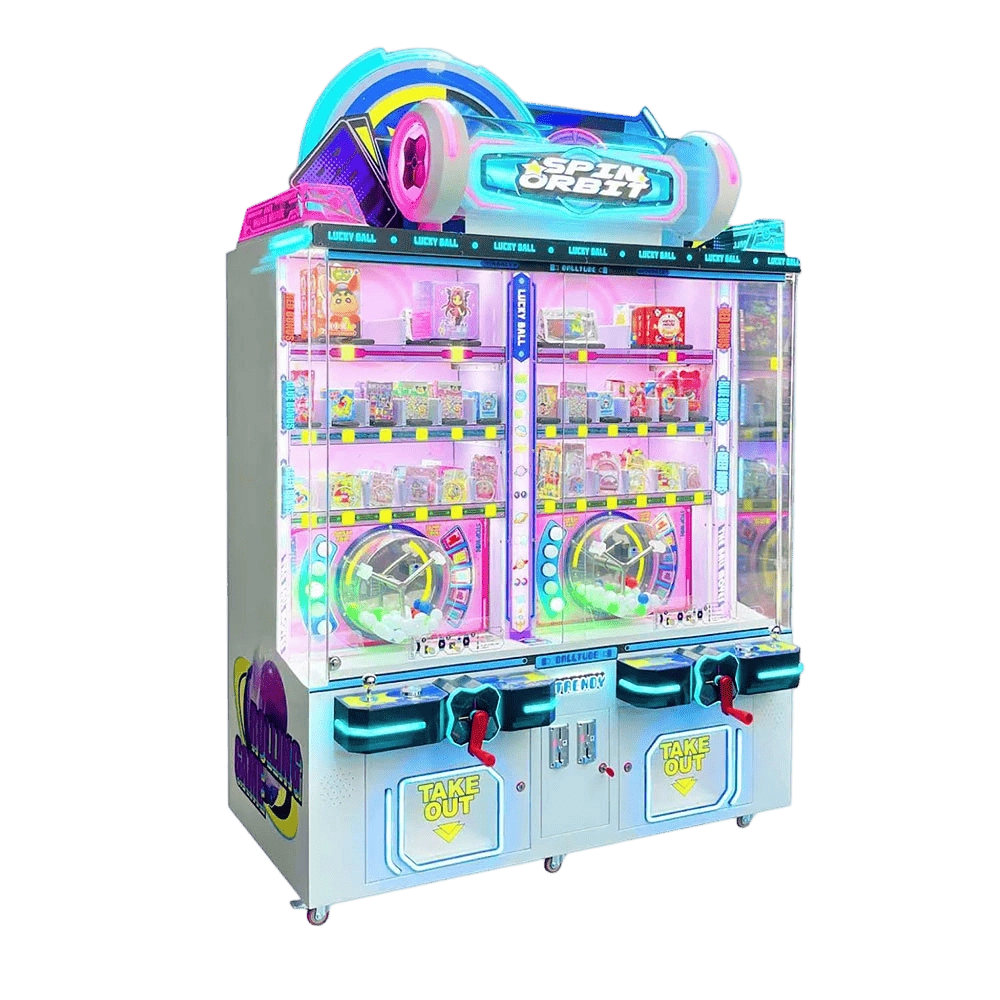
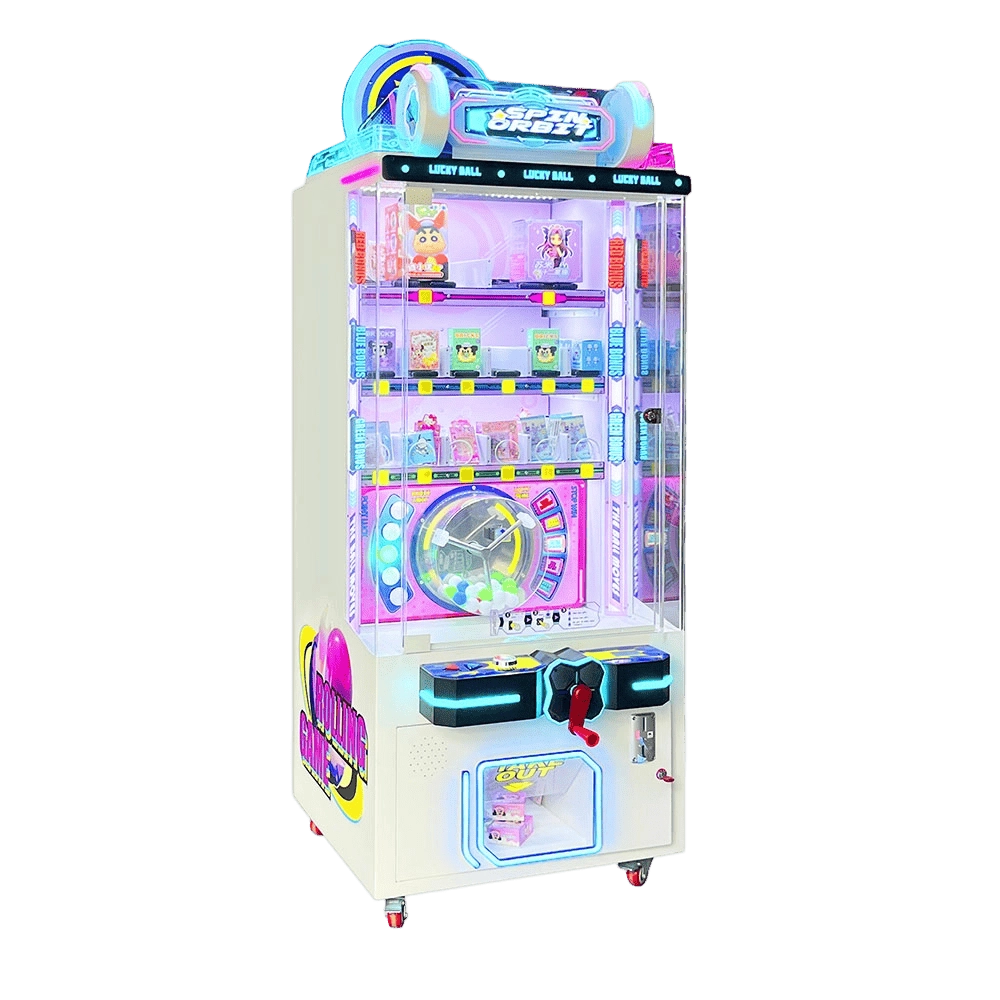
What is the gameplay of the SPIN ORBIT Lucky Prize Arcade Game?
Players use the joystick to guide the ball into a designated hole. Each color ball corresponds to different prize values: red for the highest, blue and green for mid-range prizes, and white for no prize.
What is the prize system like?
The prizes are diverse, with different colored balls corresponding to rewards in varying prize tiers, catering to a wide range of player preferences.
How does Jiami Games ensure product quality?
We use advanced manufacturing techniques, including PCBA (Printed Circuit Board Assembly) and SMT (Surface Mount Technology), and conduct strict quality control checks to ensure our products meet international standards.
How can I customize the game machine?
Customization options include machine title writings, stickers, console designs, and even full personalization of machine body color, music, lights, and language, based on order quantities.
What types of customers does Jiami Games serve?
We serve a wide range of clients, including entertainment centers, shopping malls, theme parks, family entertainment venues, and arcade operators worldwide.
You May Also Like
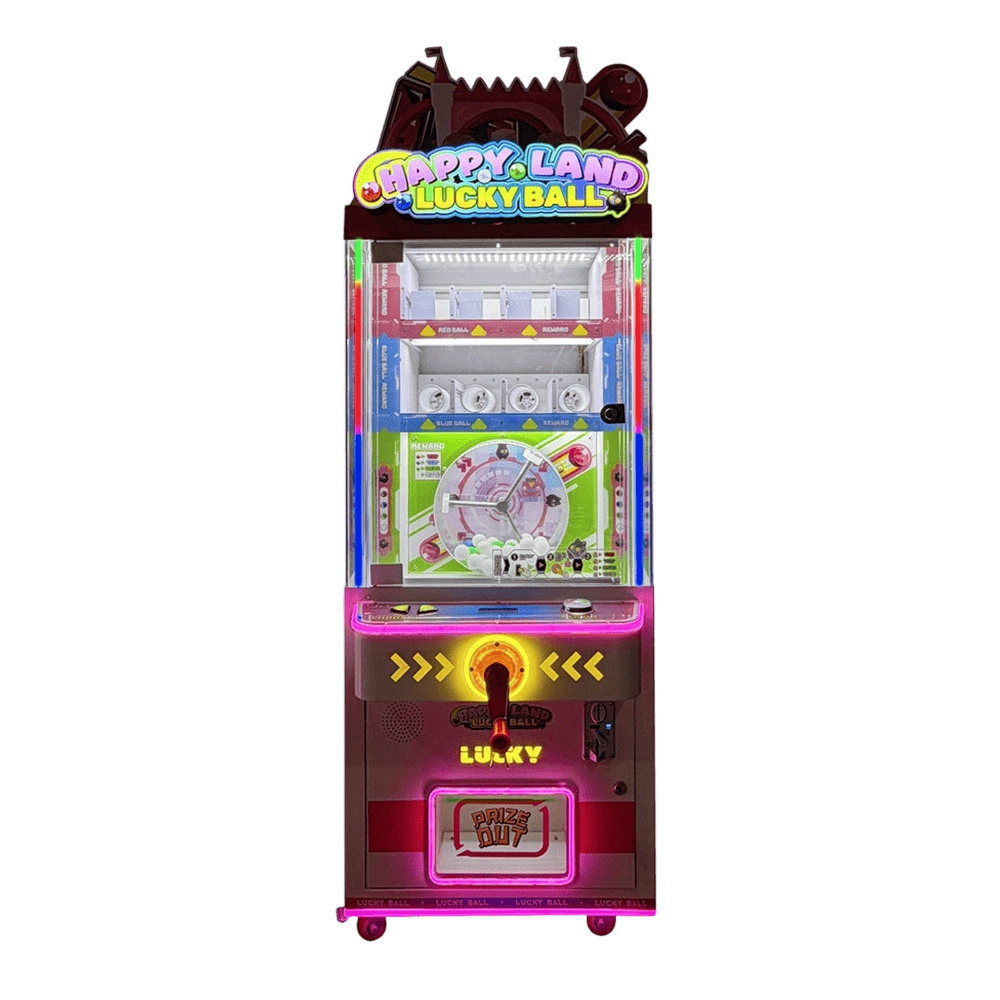
Coin Operated/Card Payment Lucky Ball Vending Toy Gift Arcade Game Machine
Coin Operated/Card Payment 2 Players SPIN ORBIT Lucky Prize Arcade Game
Coin Operated/Card Payment SPIN ORBIT Lucky Prize Arcade Game
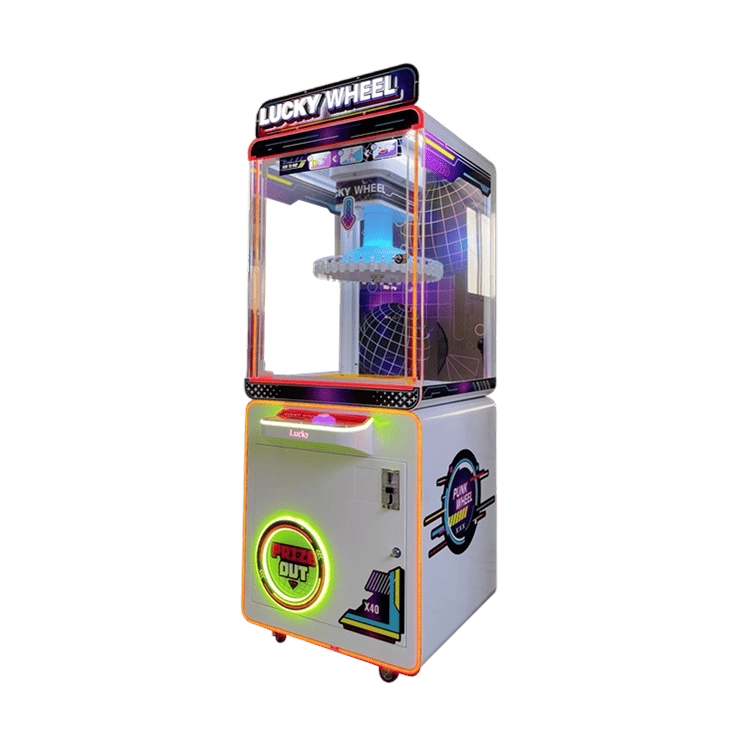
Arcade Prize Lucky Wheel Gift Machine For Amusement Areas
Get in Touch with Jiami Games
If you have any comments or good suggestions, please leave us a message; later our professional staff will contact you as soon as possible.

Innovative Entertainment, at Your Fingertips
Learn about Jiami Games and explore our expertise in console development, innovative design, and global markets.
Quick Links:
© 2026 Jiami Games.
Whatsapp: +8618520390438