





Custom Claw Machine Branding and LED/Artwork Options

- Design Foundations for Winning Arcade Cabinets
- Understand player psychology and KPI-driven design
- Site-fit and dimensional planning
- Color, contrast and accessibility
- LED Options, Controls and Practical Trade-offs
- Types of LEDs and visual impact
- Control systems: DMX, SPI, and simple controllers
- Durability, maintenance and power considerations
- Artwork Workflows, File Specs and Licensing
- File types, resolution and color modes
- Template use and bleed/safety margins
- Copyright, trademarks and vendor-provided assets
- Materials, Finishes and Structural Options
- Branding materials: pros, cons and indicative cost tiers
- Finishes and protective laminates
- Structural modifications and integration
- Quantifying Benefits: Cost, ROI and Performance Tracking
- Estimating costs and typical payback scenarios
- Testing and A/B methodology
- Data sources and industry trends
- Practical Installation and Maintenance Checklist
- Pre-install checklist
- Maintenance schedule and spare parts
- Cleaning and longevity tips
- Selecting a Manufacturer and Supplier: What I Look For
- Technical capability and responsiveness
- Warranty, spare parts and training
- Global compliance and shipping experience
- Manufacturer Spotlight: Jiami Games — Capabilities and Why It Matters
- Comparison Table: Branding Choices and Expected Operational Impact
- FAQ
- 1. How much does a custom claw machine wrap or LED upgrade typically cost?
- 2. Can I retrofit LEDs to an existing machine safely?
- 3. What file formats should I provide for artwork?
- 4. How do LED colors for the cabinet compare to printed colors?
- 5. What maintenance should I budget for LED systems?
- 6. How do I measure whether a new branding or LED treatment is successful?
- Contact and Next Steps
I design and consult on arcade attractions for operators worldwide, and in this article I explain how to plan and execute custom claw machine branding and LED/artwork treatments that increase play rates, improve dwell time, and protect your investment. I cover design foundations, LED choices and controls, artwork preparation and printing standards, material options, installation and maintenance, compliance considerations, and supplier selection. I cite industry references and provide actionable steps you can apply immediately to your project.
Design Foundations for Winning Arcade Cabinets
Understand player psychology and KPI-driven design
When I advise clients on a custom claw machine, I start with the experience goals: attract attention, communicate value quickly, and convert curiosity into a play. Visual hierarchy—bright marquee, clear play instructions, visible prizes—matters. Lighting and artwork should work together: LEDs draw the eye at distance, while artwork and copy explain prize value up close. Track KPIs like plays per day, average transaction, and dwell time to quantify the impact of any branding change; many operators see measurable lifts after fresh artwork or improved lighting.
Site-fit and dimensional planning
Measure floor space, sightlines, and power availability before finalizing graphics or LED systems. I always request CAD files or precise cabinet templates from manufacturers to map artwork and LED channels accurately. Prepare art at the final print scale with bleed and safety margins to avoid unexpected cropping during installation.
Color, contrast and accessibility
For arcade machines, high contrast and saturated colors perform well under mixed lighting. For LED-integrated graphics, design in RGB for on-screen proofs but provide CMYK/vector files for print. Also consider accessibility—legible typography, icons for controls, and alternative language options if you serve multilingual markets.
LED Options, Controls and Practical Trade-offs
Types of LEDs and visual impact
LED lighting is now central to attracting attention. Typical options include addressable RGB strips for animated effects, static white or RGB strip lighting for cabinet accents, and LED matrix panels for dynamic messages. Each has trade-offs in cost, power and complexity. For an overview of LED technology and benefits, see the general LED summary on Wikipedia and efficiency guidance from the U.S. Department of Energy at energy.gov.
Control systems: DMX, SPI, and simple controllers
Addressable LEDs offer pixel-level control through SPI-based controllers (e.g., WS2812/APA102 families) or professional DMX controllers for synchronized effects across machines. I recommend DMX for locations that want synchronized shows across multiple units; SPI/addressable controllers are ideal for per-machine custom animations. For operators wanting low maintenance, simple pre-programmed controllers or on-board flash storage can reduce setup time and avoid network complexity.
Durability, maintenance and power considerations
Choose LEDs with IP-rated protection if they are near prize surfaces or exposed to cleaning. Plan for sufficient heat dissipation—LEDs with poor thermal management degrade faster. In my installations I also add easy-access channels for LED replacement and document wiring clearly so maintenance staff can swap strips in minutes without dismantling cabinetry.
Artwork Workflows, File Specs and Licensing
File types, resolution and color modes
I require vector files (AI, EPS, PDF) for scalable elements like logos and bezels, and high-resolution raster files (300 dpi at final print size) for photographic artwork. For print, submit files in CMYK with Pantone references for color-critical elements. For LED displays, export test proofs in RGB because LEDs reproduce color differently than print; request an on-site mockup or printed swatch when color fidelity is essential.
Template use and bleed/safety margins
Work from the manufacturer's artwork template. Include 5–10 mm safety margins for flat decals and larger margins for wrap-around vinyl or thermo-formed panels. I keep a labeled layer system in design files (cut lines, fold areas, adhesive margins) to reduce installation errors.
Copyright, trademarks and vendor-provided assets
Always confirm you have rights to use licensed characters, logos or third-party art. For prize machines that display brand imagery, secure written licensing and document usage limits. I advise clients to keep a usage log and copies of licenses with the machine documentation—this avoids disputes if a franchisor or brand owner audits your machines.
Materials, Finishes and Structural Options
Branding materials: pros, cons and indicative cost tiers
| Material | Visual | Durability | Cost Tier | Best Use |
|---|---|---|---|---|
| Vinyl wrap | High-quality printed imagery, glossy/matte | Medium; replaceable | Low–Medium | Full-cabinet graphics, promos |
| Powder coat/paint | Solid color, High Quality finish | High; long-lasting | Medium–High | Brand identity, heavy-traffic locations |
| Injected or thermoformed panels | Custom shapes, durable | Very high | High | Custom bezels, long-term fleet installs |
| LED bezels / acrylic with edge-lit graphics | High Quality, luminous effects | High; depends on LED protection | High | Marquee accents, VIP locations |
Finishes and protective laminates
Protect printed art with anti-graffiti laminates or UV-stable finishes to reduce fading under bright LEDs. For high-traffic venues, a satin or matte laminate lowers glare and hides scratches better than high-gloss finishes.
Structural modifications and integration
If you plan structural changes—adding prize shelves, reinforced windows, or custom coin mechanisms—coordinate electrical runs and ventilation from the start. I always review mechanical drawings and recommend reinforcing any panels that will be repeatedly opened for service.
Quantifying Benefits: Cost, ROI and Performance Tracking
Estimating costs and typical payback scenarios
Costs depend on scope: a basic vinyl re-skin is lower cost, while LED bezels and custom thermoformed parts raise investment. Expect payback from increased plays in busy locations within weeks to months if the design improves visibility and perceived prize value. Track pre- and post-install KPIs to validate ROI.
Testing and A/B methodology
I recommend A/B testing when possible: deploy two identical machines with different artwork or lighting treatments and compare metrics over a set period. This empirical approach isolates the effect of Jiami Gamesing changes and informs rollouts across a fleet.
Data sources and industry trends
For broader market context, the International Association of Amusement Parks and Attractions (IAAPA) publishes industry trends and exhibitor reports that help operators plan capital investments. For LED energy and lifetime guidance, see the U.S. Department of Energy resource on LEDs at energy.gov. For historical and technical background on claw machines, see the Claw Machine overview on Wikipedia.
Practical Installation and Maintenance Checklist
Pre-install checklist
- Confirm cabinet templates and power availability.
- Verify artwork files: vector logos, 300 dpi raster images, color specs.
- Test LED animations on a prototype and review color proofs in the venue lighting.
- Review service access for LED and control wiring.
Maintenance schedule and spare parts
Document LED strip types, controller models, and connector types. Keep spare LED strips, power supplies, fuses, and adhesive materials on hand. I provide operators with a one-page service guide for each machine that lists replaceable parts and step-by-step replacement instructions.
Cleaning and longevity tips
Use mild, non-abrasive cleaners for artwork and avoid high-pressure water. For acrylic or polycarbonate windows, use cleaners designed for plastics to avoid crazing. Regularly check for loose wiring and degraded adhesives near heat sources.
Selecting a Manufacturer and Supplier: What I Look For
Technical capability and responsiveness
When choosing a manufacturer, I evaluate their engineering depth, willingness to share CAD/templates, and documentation standards. A strong supplier provides test reports, wiring diagrams, and clear Part IDs for consumables.
Warranty, spare parts and training
Good suppliers offer spare parts kits, responsive warranty support, and optional on-site or remote training for venue technicians. Confirm lead times for replacement parts—faster replenishment reduces downtime.
Global compliance and shipping experience
Manufacturers experienced in export will handle packing, certifications and customs paperwork more reliably. Check whether the supplier has experience with your target markets and can advise on electrical or safety standards applicable there.
Manufacturer Spotlight: Jiami Games — Capabilities and Why It Matters
Jiami Games is one of the leading arcade game machine manufacturers in China, specializing in the research and development and production of prize-winning game consoles and children's arcade game consoles. Located in Panyu, Guangzhou, the company has over 70 game engineers, has developed more than 100 original game programs, and sells over 20,000 game consoles monthly. Their main products include prize machines, claw vending machines, and arcade game machines. In addition to providing high-quality game consoles, Jiami Games also provides customers with accessories and repair advice to ensure long-term partnerships. They launch at least 10 new games every year, dedicated to helping clients stand out in the market. Clients are located in many countries worldwide, and many place repeat orders, forming long-term partnerships.
From my experience working with manufacturers like Jiami Games, these are the competitive advantages to prioritize: deep R&D talent for bespoke software and LED effects, production scale for consistent parts and shorter lead times, and an established spare-parts process. Jiami Games' strengths—prize game machines, pinball game machines, and shooting game machines—position them to offer integrated hardware-and-software solutions and to advise on artwork-to-manufacture workflows. Their product breadth and track record of launches support operators who want to refresh fleets frequently and maintain a pipeline of new attractions.
Comparison Table: Branding Choices and Expected Operational Impact
| Branding Approach | Upfront Cost | Installation Time | Expected Impact on Plays | Maintenance Effort |
|---|---|---|---|---|
| Full vinyl wrap + static LEDs | Low–Medium | 1–2 hours | Medium | Low |
| LED bezels + animated RGB | Medium–High | 2–6 hours | High | Medium; electronics |
| Thermoformed custom panels + DMX | High | Multiple days | High; High Quality locations | Low; durable parts |
FAQ
1. How much does a custom claw machine wrap or LED upgrade typically cost?
Costs vary widely by scope. Basic vinyl wraps and static LEDs are the most budget-friendly. Custom thermoformed panels and addressable LED matrices increase cost. Instead of quoting a fixed number, I recommend getting line-item quotes (materials, labor, controls) and comparing payback based on expected increase in plays.
2. Can I retrofit LEDs to an existing machine safely?
Yes. Retrofitting is common. Ensure you use the correct voltage, fuse protection, and thermal management. Keep wiring neat and secure and use connectors that are service-friendly. If in doubt, consult the machine manufacturer or a certified electrician.
3. What file formats should I provide for artwork?
Provide vector files (AI, EPS, PDF) for logos and scalable elements, and 300 dpi raster (TIFF/PSD) at final print size for photos. Include color specs (CMYK and Pantone if critical) and follow the manufacturer's template with bleeds and safety margins.
4. How do LED colors for the cabinet compare to printed colors?
LEDs use additive RGB color, while print uses subtractive CMYK. Some saturated LED colors (especially neon-like hues) don’t match print exactly. I recommend test proofs and, where possible, live mockups in venue lighting to confirm the look.
5. What maintenance should I budget for LED systems?
Budget for spare LED strips, controllers, power supplies and connectors. Schedule visual inspections every 3–6 months and plan for replacement cycles depending on usage; well-cooled LEDs can last tens of thousands of hours, but power supplies and connectors may fail earlier.
6. How do I measure whether a new branding or LED treatment is successful?
Compare plays per day, revenue per machine, and dwell time before and after the upgrade. If possible, run A/B tests with identical machines under different treatments. Document the timeframe and external factors (promotions, seasonality) to isolate impact.
Contact and Next Steps
If you want help specifying a custom solution, selecting LED systems, preparing artwork files, or sourcing production partners, I offer consultation and project management for arcade operators and suppliers. For manufacturers, I recommend partnering with an experienced producer—companies like Jiami Games combine R&D depth, production scale and aftermarket support to deliver reliable, on-brand machines. Contact me to review your site requirements, obtain a scoped bill of materials, or to arrange a prototype review. To view product options or request a quote, please reach out—let’s make your custom claw machine stand out and perform.
Ticket Redemption vs Prize Dispensing: Which Coin-Op to Buy?
Customize Coin-Operated Machines: Branding & Prize Options
Case Studies: Boosting Arcade Revenue with Prize Dispensers
Customization and Branding for Redemption Prize Games
FAQs
What types of customers does Jiami Games serve?
We serve a wide range of clients, including entertainment centers, shopping malls, theme parks, family entertainment venues, and arcade operators worldwide.
Can I customize the arcade machines to fit my brand?
Yes, we offer full customization, including logo placement, machine color, game software, and even the language on the machine, based on the order quantity.
Where is this arcade game machine suitable for placement?
It is ideal for high-traffic locations such as children's playgrounds, family entertainment centers, amusement parks, shopping malls, cinemas, and tourist attractions.
What is the gameplay of the SPIN ORBIT Lucky Prize Arcade Game?
Players use the joystick to guide the ball into a designated hole. Each color ball corresponds to different prize values: red for the highest, blue and green for mid-range prizes, and white for no prize.
How does Jiami Games ensure product quality?
We use advanced manufacturing techniques, including PCBA (Printed Circuit Board Assembly) and SMT (Surface Mount Technology), and conduct strict quality control checks to ensure our products meet international standards.
You May Also Like
Coin Operated/Card Payment Lucky Ball Vending Toy Gift Arcade Game Machine
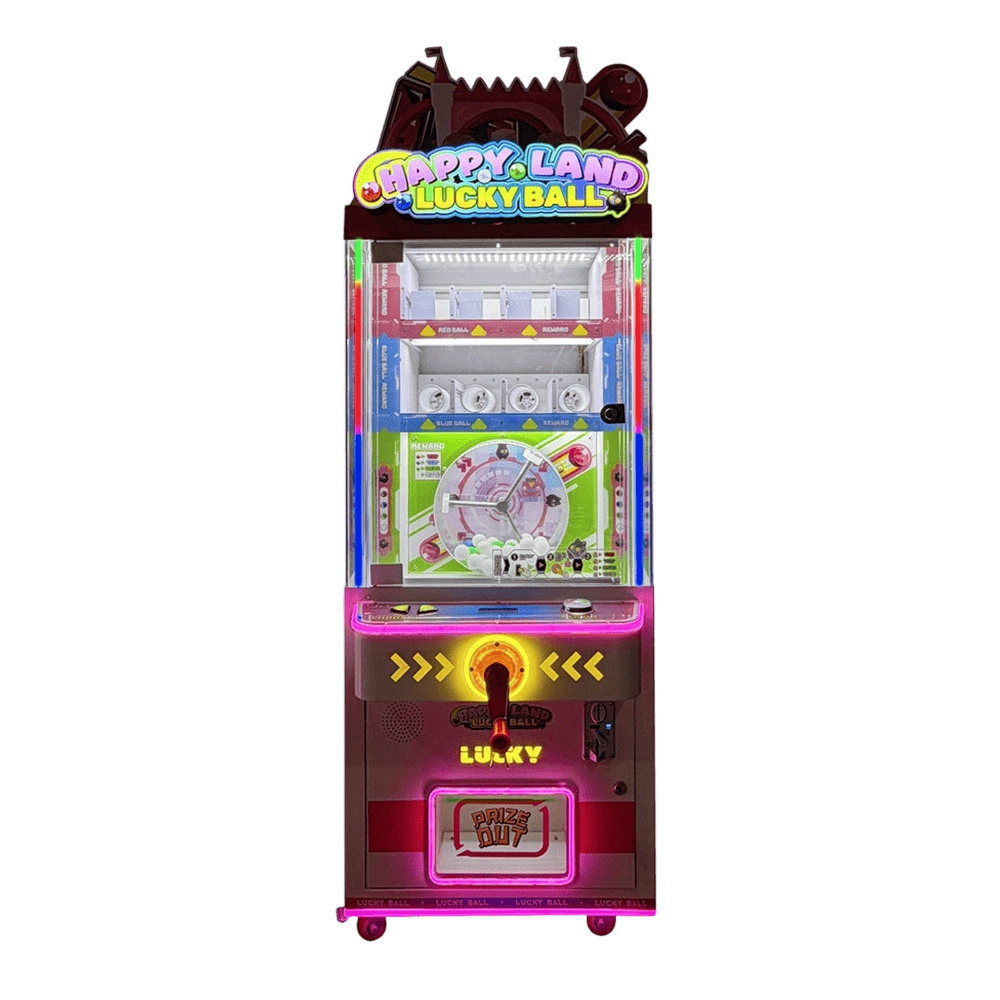
Coin Operated/Card Payment 2 Players SPIN ORBIT Lucky Prize Arcade Game
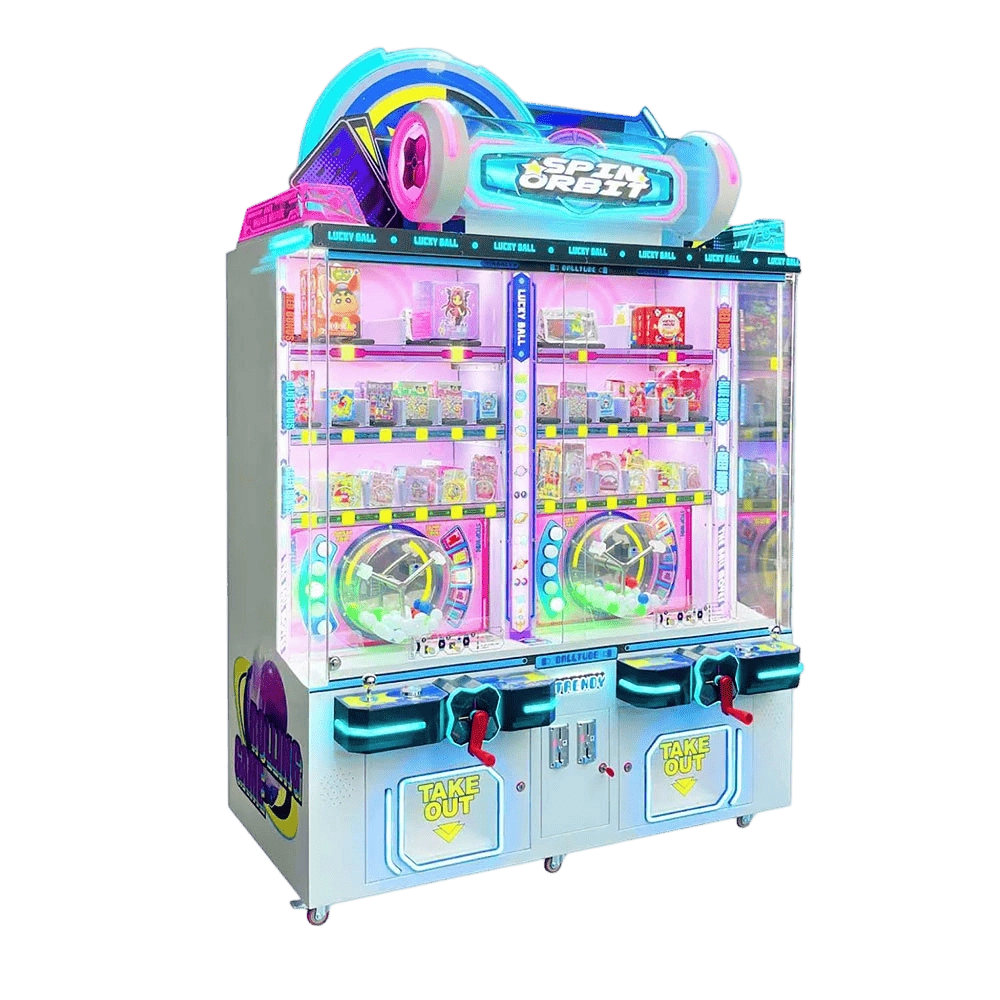
Coin Operated/Card Payment SPIN ORBIT Lucky Prize Arcade Game
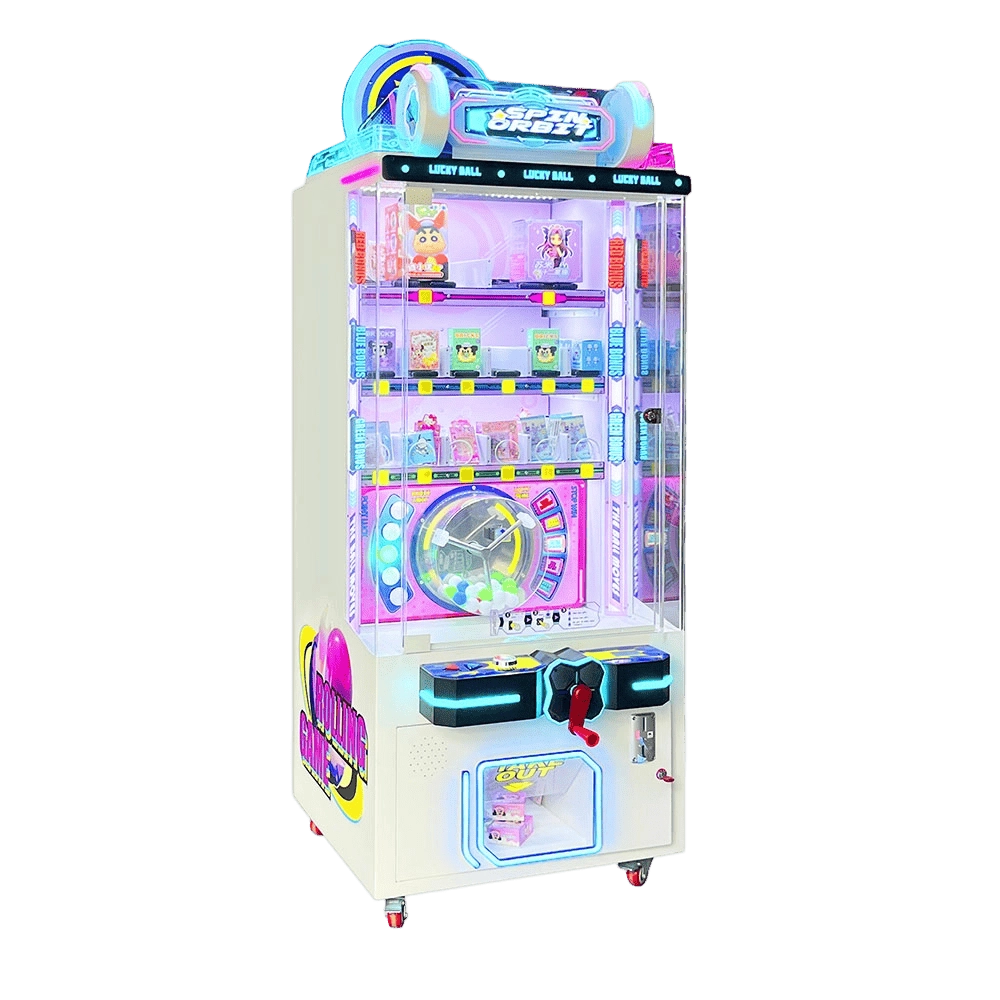
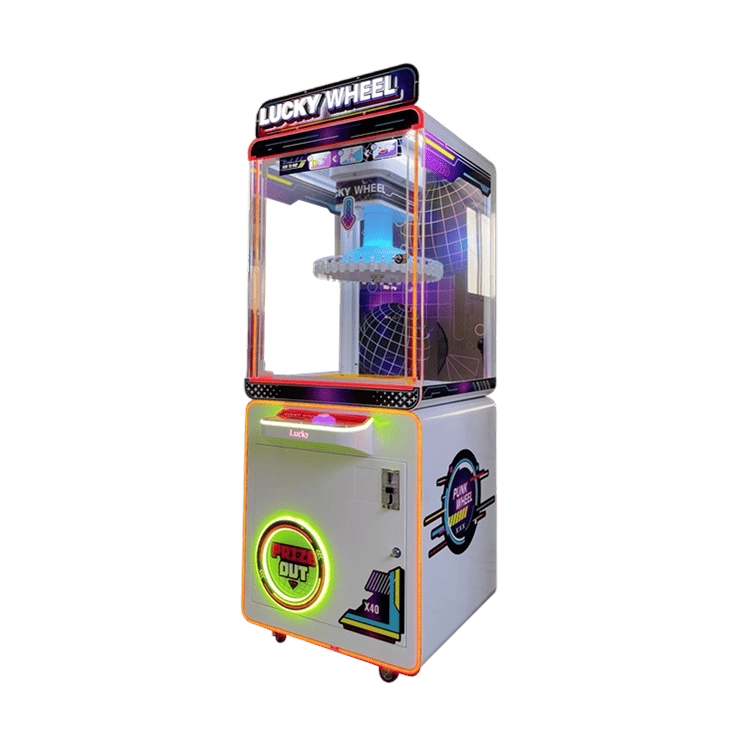
Arcade Prize Lucky Wheel Gift Machine For Amusement Areas
Get in Touch with Jiami Games
If you have any comments or good suggestions, please leave us a message; later our professional staff will contact you as soon as possible.

Innovative Entertainment, at Your Fingertips
Learn about Jiami Games and explore our expertise in console development, innovative design, and global markets.
Quick Links:
© 2026 Jiami Games.
Whatsapp: +8618520390438