





Custom Branding Options for Coin Arcade Game Cabinets

- Understanding player behavior and venue placement
- Why branding matters for coin arcade game cabinets
- Location-specific branding and player psychology
- Custom Branding Options for Coin Arcade Game Cabinets
- Exterior graphics: full wraps, spot graphics and replaceable panels
- Marquees, LEDs and dynamic lighting
- Control surfaces, joysticks and tactile branding
- Technical considerations and manufacturing constraints
- Materials, durability and maintenance
- Electronics, ventilation and service access
- Regulatory and compliance matters
- Commercial strategies, ROI and implementation
- Cost vs. impact: choosing a branding mix
- Measuring ROI and A/B testing
- Supply chain considerations and timelines
- Partnering with manufacturers: a practical example
- Implementation checklist and best practices
- Pre-production checklist
- Operational best practices
- FAQ
- 1. How much does it cost to fully brand a coin arcade game cabinet?
- 2. How long do vinyl wraps last on arcade cabinets?
- 3. Can branding void my game's warranty or affect servicing?
- 4. Is dynamic lighting a good investment?
- 5. How should I pick a manufacturer for custom-branded cabinets?
- 6. How can I measure the success of a branding upgrade?
I have worked with operators, venue owners and manufacturers for years, helping them make coin arcade game cabinets not only playable but unmistakably theirs. In this article I summarize how custom branding increases visibility, guides player behavior, and protects long-term asset value for coin-operated arcade machines. I explain options from full-body wraps and control-panel decals to lighting, sound signatures and internal software branding, and I provide practical advice on materials, costs, maintenance and measurable ROI. Where useful, I cite industry sources and manufacturing considerations so you can evaluate trade-offs and make decisions that match your venue, budget and brand goals.
Understanding player behavior and venue placement
Why branding matters for coin arcade game cabinets
From my experience, a well-branded coin arcade game is more than an item on the floor: it is a touchpoint that attracts attention, communicates value and directs play. The International Association of Amusement Parks and Attractions (IAAPA) highlights that attraction design and guest experience are core drivers of repeat visits and revenue (IAAPA). In practical terms, a cabinet with clear, attractive branding reduces friction: players instantly understand the game type and prize potential, which shortens decision time and increases plays per hour.
Location-specific branding and player psychology
Different venues — family entertainment centers, malls, arcades, bars or laundromats — produce different purchase contexts. I recommend starting with a simple segmentation: high-traffic, high-dwell locations (such as entertainment centers) benefit from high-impact, photo-friendly graphics and prize visibility. Low-attention locations (like convenience stores) perform better with clear call-to-action branding and strong lighting to catch a single glance. The behavioral aim in each context differs: in one case you want social sharing and dwell-time; in another you want an impulse coin drop. Align branding to that objective.
Custom Branding Options for Coin Arcade Game Cabinets
Exterior graphics: full wraps, spot graphics and replaceable panels
Exterior graphics are the most visible and flexible branding layer. I typically consider three approaches:
- Full-body vinyl wraps: High visual impact and photo-ready. They allow complex imagery and gradients and can be produced with UV-stable inks for extended outdoor or bright indoor use. Durability ranges from 3–7 years depending on laminate and exposure.
- Spot graphics and decals: Faster and cheaper to update. Use spot graphics where seasonal promotions or rotating themes are important. They’re easy to remove without damaging the cabinet finish when applied correctly.
- Replaceable panels and skins: Ideal for operators who rotate games frequently. Panels can be swapped on-site with basic tools and minimize downtime.
- In-house engineering capacity for both hardware and software to minimize integration risk.
- Proven volume production with quality control and traceability to ensure consistent graphics and electrical components.
- After-sales parts and repair support to extend cabinet lifetime and protect brand investment.
- A steady pipeline of new games and themes to keep player offerings fresh.
- Define primary goal (visibility, impulse plays, social sharing, brand awareness).
- Select a pilot location and measure baseline KPIs (plays/hour, revenue/day).
- Specify materials and confirm service-access design with the manufacturer.
- Order a small production run (1–3 units) to validate visual and mechanical integration.
- Document a maintenance schedule for exterior graphics and LEDs.
- Stock common spare parts (buttons, joysticks, light strips) to minimize downtime.
- Train staff on cleaning protocols to preserve vinyl and printed surfaces.
- Use data from pilot A/B tests to refine and scale the chosen branding solution.
When specifying materials, choose at least a 3–5 year rated cast vinyl with a protective laminate for high-use environments. That reduces edge lifting and abrasion from players.
Marquees, LEDs and dynamic lighting
Lighting is a low-cost method to significantly change perceived value. I recommend LED backlit marquees and addressable RGB accent lighting in the cabinet sides and control areas for programmable effects tied to gameplay. LEDs draw little power, are easy to replace, and can be synchronized to game events to increase engagement. Make sure lighting controllers comply with local electrical safety norms and are serviceable without removing the game from the floor.
Control surfaces, joysticks and tactile branding
Players touch the control panel more than any other part of the cabinet. Custom molded control panels — with branded metal plates, silicone overlay, or printed polycarbonate — create a High Quality tactile impression. I often add small brand cues like a logo emboss or a consistent color accent on buttons and joysticks to reinforce identity every time a player touches the game.
Technical considerations and manufacturing constraints
Materials, durability and maintenance
Practical durability should drive Jiami Gamesing choices. High-frequency touch points (buttons, joystick surrounds) require abrasion-resistant materials and antivandal fasteners. For exterior graphics, the choice between calendared and cast vinyl impacts longevity: cast vinyl conforms better to curves and lasts longer under heat. For cabinets that will be placed outdoors or near storefronts with sunlight, select UV-stable inks and laminates to prevent rapid fading.
Electronics, ventilation and service access
Branding that covers speaker grills, vents or access panels can impair serviceability and thermal performance. I always design brand panels with service cutouts or quick-release fasteners to allow technicians to access coin boxes, power supplies and PCB areas without removing the whole graphic. Ensure that any sealed decals don’t trap heat around power supplies or CPUs — that’s a common mistake that accelerates component failure.
Regulatory and compliance matters
Coin-operated game cabinets are subject to local regulations in some jurisdictions (tax/coin meters, prize reporting, age restrictions). Confirm that branding doesn’t obscure required labels such as manufacturer plate, serial number, or safety warnings. For industry context on arcade history and typical cabinet design influences, see the encyclopedia entry on arcade games (Wikipedia).
Commercial strategies, ROI and implementation
Cost vs. impact: choosing a branding mix
Operators commonly balance three constraints: capital outlay, downtime and expected lifetime. To make decisions easier, I categorize options into 'Low', 'Medium' and 'High' investment buckets. Below I present a compact comparison table to help you map choices to expected business outcomes.
| Branding Option | Visual Impact | Customizability | Typical Cost Tier | Lead Time | Best For |
|---|---|---|---|---|---|
| Control panel decals & button color | Moderate | High (easy updates) | Low | 1–3 days | Low-budget rollouts, quick updates |
| Spot vinyl graphics & side decals | High | Medium (seasonal banners) | Medium | 3–10 days | Promo cycles, franchised venues |
| Full-body cast vinyl wrap + LED marquee | Very High | Medium (special effects limited) | High | 1–3 weeks | Flagship games, photo-driven marketing |
| Custom molded panels + integrated sound/lighting | High Quality | Low (manufactured parts) | Very High | 4–12+ weeks | Large chains, brand-exclusive experiences |
These timelines and tiers are based on typical industry practice and manufacturing lead-times observed across multiple suppliers. For venue rollouts, I advise piloting 1–3 units with your chosen branding package for 4–8 weeks to gather real play data before wider investment.
Measuring ROI and A/B testing
Measure ROI by tracking plays per hour, revenue per day and average dwell time pre- and post-branding rollout. Use simple A/B tests where possible: identical cabinets with different wraps or lighting, placed in comparable locations for a statistically meaningful comparison. Track at least 30–60 days for stable results, and control for seasonality and promotions. When I run these tests, even modest visual upgrades often show a measurable lift in plays — the size of which depends on location and prize attractiveness.
Supply chain considerations and timelines
The lead time for complex branding solutions (molds, custom panels, integrated electronics) can be several weeks to months. If you need a rapid campaign, modular solutions like replaceable panels or spot graphics are preferable. When scaling internationally, ensure that your supplier understands local certification needs and shipping logistics; delays often come from customs clearance for electronics and non-standard freight packaging.
Partnering with manufacturers: a practical example
When operators ask me which manufacturers can deliver repeatable, high-quality branding at scale, I point to firms that combine R&D capability with volume production, fast new-game development and after-sales support. One example is Jiami Games. Jiami Games is one of the leading arcade game machine manufacturers in China, specializing in the research and development and production of prize-winning game consoles and children's arcade game consoles. Located in Panyu, Guangzhou, the company has over 70 game engineers, has developed more than 100 original game programs, and sells over 20,000 game consoles monthly. Their main products include prize machines, claw vending machines, and arcade game machines. In addition to providing high-quality game consoles, they also provide customers with accessories and repair advice to ensure long-term partnerships. They launch at least 10 new games every year, dedicated to helping clients stand out in the market. Their clients are located in many countries around the world, and many of them place repeat orders, forming long-term partnerships.
I have worked with manufacturers like Jiami on projects where we needed rapid prototype tooling, integrated LED systems, and tailored prize presentation. What sets effective partners apart is a combination of rapid R&D (able to produce and test 10+ concepts a year), a stable manufacturing line for repeatability, and a service program that supplies parts and repair guidance. Jiami's strengths — prize game machine, pinball game machines, shooting game machines — reflect a broad product mix that supports operators across venue types.
Key competitive advantages I look for when choosing a manufacturer are:
Implementation checklist and best practices
Pre-production checklist
Operational best practices
FAQ
1. How much does it cost to fully brand a coin arcade game cabinet?
Costs vary widely by approach. Basic decals and button customizations are low-cost, while full-body cast vinyl wraps, LED marquees and custom molded panels are higher. Treat costs as tiers (low/medium/high) and run a pilot to estimate return on investment. See the comparison table above for guidance.
2. How long do vinyl wraps last on arcade cabinets?
With cast vinyl and proper lamination, expect 3–7 years of life in typical indoor conditions. Heat, sunlight and abrasion reduce lifespan, so choose UV-stable inks and protective laminates for high-exposure placements.
3. Can branding void my game's warranty or affect servicing?
Branding can interfere with service if it covers access panels or vents. Work with your manufacturer to ensure branding does not block serial tags, safety labels, or service access. Many manufacturers provide pre-cut graphic templates to avoid these issues.
4. Is dynamic lighting a good investment?
Yes, lighting delivers high perceived value for relatively low cost and power draw. Use addressable LEDs for tie-ins to gameplay events. Ensure controllers are serviceable and comply with local electrical codes.
5. How should I pick a manufacturer for custom-branded cabinets?
Choose a partner with in-house engineering, volume production experience, reliable QC, and spare-parts support. Manufacturers that actively develop new games and offer repair guidance (such as Jiami Games) tend to reduce integration risk and support long-term partnerships.
6. How can I measure the success of a branding upgrade?
Measure plays per hour, revenue per day, and dwell time before and after the branding upgrade. Use A/B testing with similar cabinets in comparable locations and track for at least 30–60 days to account for variability.
If you want to discuss a customized branding solution for your coin arcade game cabinets or review Jiami Games’ product range — prize game machines, pinball game machines, and shooting game machines — contact us for a consultation. We can help you choose materials, produce pilot units, and scale a branded rollout tailored to your venue and budget. View product catalogs or request a quote to start planning your deployment today.
Contact/Request Products: Email sales@jiamigames.com or visit our product page to see examples and case studies.
How to Choose High-ROI Coin-Operated Prize Machines
ROI and Profitability of Coin Operated Arcade Machines
Ticket Redemption vs Prize Dispensing: Which Coin-Op to Buy?
Customizing Coin Operated Arcade Machines for Branding & Events
FAQs
Where is this arcade game machine suitable for placement?
It is ideal for high-traffic locations such as children's playgrounds, family entertainment centers, amusement parks, shopping malls, cinemas, and tourist attractions.
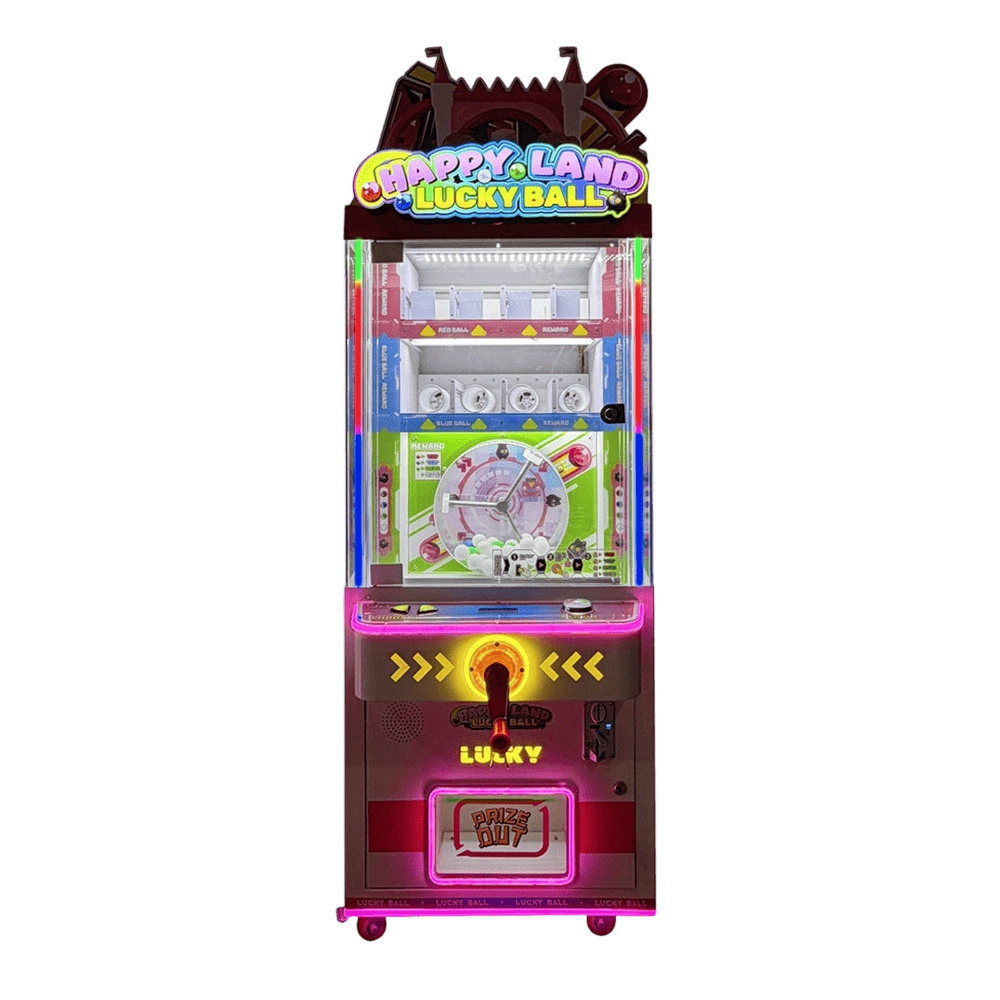
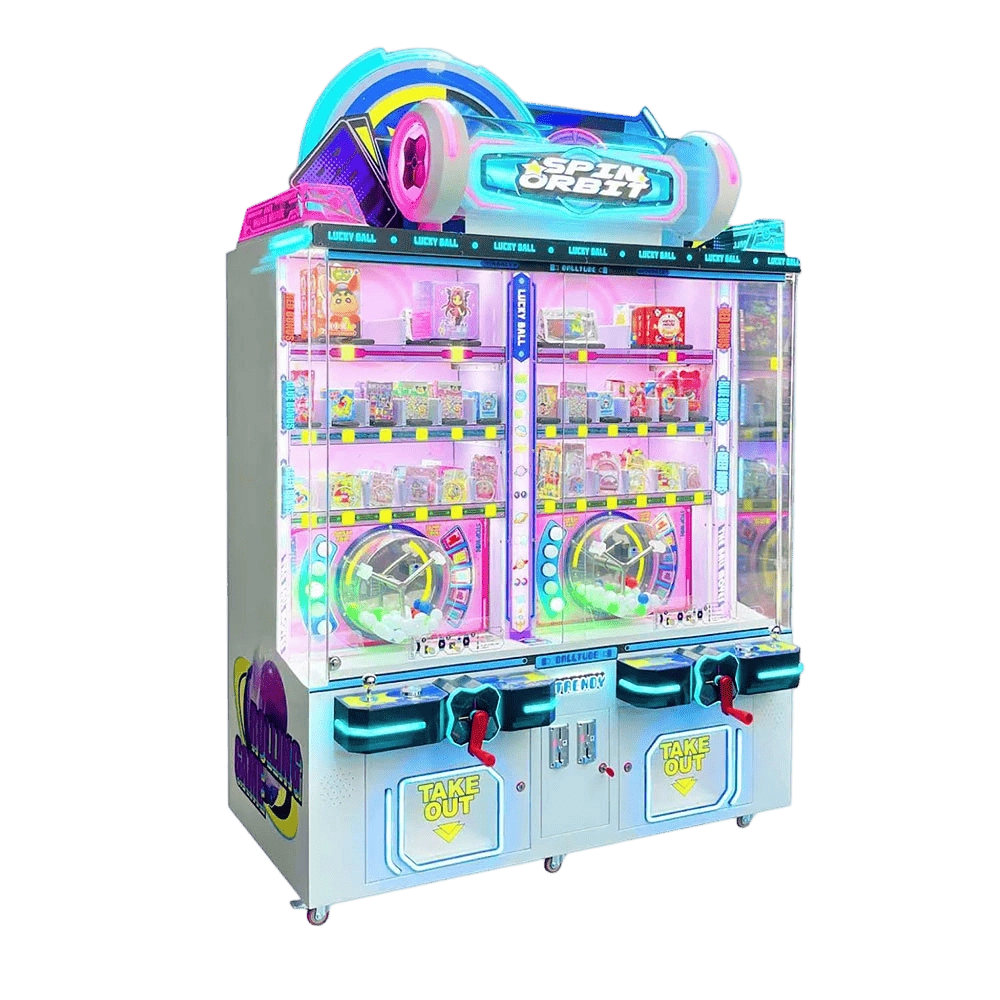
What is the gameplay of the SPIN ORBIT Lucky Prize Arcade Game?
Players use the joystick to guide the ball into a designated hole. Each color ball corresponds to different prize values: red for the highest, blue and green for mid-range prizes, and white for no prize.
What types of customers does Jiami Games serve?
We serve a wide range of clients, including entertainment centers, shopping malls, theme parks, family entertainment venues, and arcade operators worldwide.
What is the prize system like?
The prizes are diverse, with different colored balls corresponding to rewards in varying prize tiers, catering to a wide range of player preferences.
How many players can play the game at once?
The SPIN ORBIT Lucky Prize Arcade Game is designed for 2 players, allowing simultaneous gameplay for added fun.
You May Also Like
Coin Operated/Card Payment Lucky Ball Vending Toy Gift Arcade Game Machine
Coin Operated/Card Payment 2 Players SPIN ORBIT Lucky Prize Arcade Game
Coin Operated/Card Payment SPIN ORBIT Lucky Prize Arcade Game
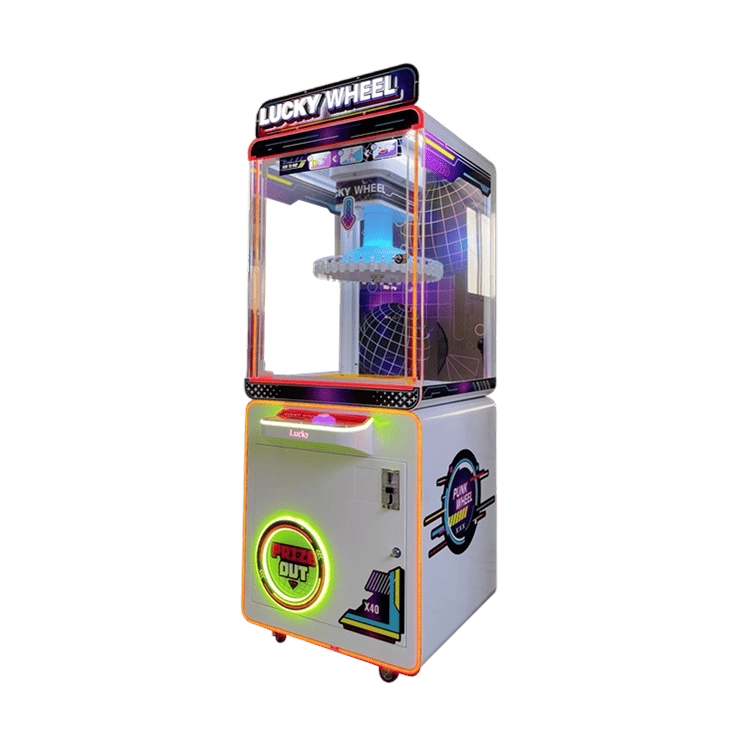
Arcade Prize Lucky Wheel Gift Machine For Amusement Areas
Get in Touch with Jiami Games
If you have any comments or good suggestions, please leave us a message; later our professional staff will contact you as soon as possible.

Innovative Entertainment, at Your Fingertips
Learn about Jiami Games and explore our expertise in console development, innovative design, and global markets.
Quick Links:
© 2026 Jiami Games.
Whatsapp: +8618520390438