





Custom Branding and Cabinet Options for Redemption Games

- Why Cabinet Design Matters for Player Experience
- Ergonomics and Accessibility
- Visual Impact and Branding
- Durability and Maintenance
- Custom Branding Strategies for Redemption Games
- Graphic Wraps vs. Full Paint
- Digital Branding and LED Integration
- Localization and Multilingual Messaging
- Cabinet Options and Materials: Choosing What Works
- Wood vs. Metal vs. Composite
- Size, Footprint, and Layout Considerations
- Security and Prize Dispensing Systems
- Cost, Compliance, and Deployment — Practical Guide
- Budgeting and ROI for coin operated redemption prize winning games
- Regulatory and Safety Standards
- Maintenance, Spare Parts, and After-sales Support
- How a Trusted Manufacturer Can Accelerate Your Project
- Implementation Checklist: From Concept to Live
- Design and Prototype
- Compliance and Testing
- Deployment and Monitoring
- Frequently Asked Questions (FAQ)
- 1. How much does custom branding add to the cost of a redemption cabinet?
- 2. Which cabinet material is best for high-traffic family entertainment centers?
- 3. Can I change branding or artwork after deployment?
- 4. What safety standards should I check for exporting coin operated machines?
- 5. How do I choose prizes to maximize profitability?
- 6. How can Jiami Games help with custom projects?
I specialize in helping arcade operators and entertainment venues maximize revenue and player engagement through thoughtful cabinet design and tailored branding for coin operated redemption prize winning games. In this article I explain why cabinet choices matter, compare materials and customization paths, walk through compliance and ROI calculations, and share practical maintenance and deployment advice. I also describe how partnering with an experienced manufacturer like Jiami Games can accelerate product development, lower risk, and help you stand out in crowded family entertainment centers and arcades.
Why Cabinet Design Matters for Player Experience
Ergonomics and Accessibility
As a designer and consultant, I always start with ergonomics. Cabinet height, control placement, viewing angle, and prize access directly influence session length and repeat plays for coin operated redemption prize winning games. For example, a cabinet that places controls too high or a prize delivery bin that is hard to reach will frustrate casual players and families, reducing repeat spend. I recommend designing for a 5th–95th percentile user range and ensuring ADA-friendly options when possible. Guidance on public-access design can be cross-checked with general accessibility resources and venue requirements.
Visual Impact and Branding
Visual identity is the first moment of engagement. A well-branded cabinet can increase pull-in rates by creating clarity about the game's theme and prize value. I advise using bold, high-contrast visuals, motion-aware LED accents, and clear prize displays. For coin operated redemption prize winning games, communicating the prize immediately—through illuminated bins or transparent prize windows—boosts perceived value and conversion.
Durability and Maintenance
Cabinet materials and internal layout determine lifespan and total cost of ownership. I prefer designs that balance accessibility for repair (modular panels, front-service doors) with theft-resistance. Durable joystick and button components, vandal-resistant coin acceptors, and accessible prize dispensing mechanisms reduce downtime. I always specify spare-parts kits and a maintenance checklist aligned with typical usage patterns in family entertainment centers.
Custom Branding Strategies for Redemption Games
Graphic Wraps vs. Full Paint
Two common branding routes are vinyl graphic wraps and full custom paint. Wraps are cost-effective, fast to change, and ideal for seasonal promotions or localized branding. Full paint offers High Quality finish and longevity but higher upfront cost. From my experience with dozens of arcade deployments, vinyl wrap is the most flexible option for operators who run rotating events or co-branded promotions with malls and brands.
Digital Branding and LED Integration
LED matrixes, animated marquee displays, and small embedded LCDs allow dynamic messaging—promotions, jackpot alerts, and sponsor logos—without changing the cabinet shell. In coin operated redemption prize winning games, using dynamic displays to show win probability, current top prize, or countdown timers increases engagement. I recommend integrating low-power, high-contrast panels and offering simple content-management tools so operators can update messaging remotely.
Localization and Multilingual Messaging
Localization is essential when deploying globally. Simple changes like language-specific instructions, culturally relevant artwork, and region-appropriate prize types increase acceptance and gameplay. When I work with operators expanding into new markets, we create modular artwork templates and language packs so the same cabinet can be quickly adapted for different countries.
Cabinet Options and Materials: Choosing What Works
Wood vs. Metal vs. Composite
Material choice affects cost, durability, and shipping. Below is a practical comparison I use with clients when selecting materials for coin operated redemption prize winning games. Cost ranges are approximate and reflect industry averages for small to medium production runs.
| Material | Pros | Cons | Typical Use | Estimated Cost Impact |
|---|---|---|---|---|
| Painted MDF/PLY (wood) | Cost-effective, easy to shape, good finish | Sensitive to moisture, heavier | Most redemption cabinets | Baseline (lowest) |
| Sheet Metal (steel/aluminum) | Very durable, tamper-resistant | Higher cost, requires anti-corrosion finish | High-traffic venues, outdoor kiosks | +20% to +60% |
| Plastic/ABS/Composite | Lightweight, molded shapes, impact-resistant | Mold tooling cost, can fade | Children's arcades, themed attractions | +10% to +40% |
Sources on material properties: plywood and MDF comparisons are summarized on Wikipedia: Plywood and metal cabinet practices are standard in industrial design references.
Size, Footprint, and Layout Considerations
Floor space directly impacts throughput and revenue per square foot. I model expected dwell time and turnover to recommend cabinet footprint. For example, a large, prize-heavy crane-style redemption game might generate long dwell times but fewer turns per hour compared to a fast-play ticket redemption unit. Optimize arrangement to encourage cross-play; place complementary cabinets near each other to increase multi-game sessions.
Security and Prize Dispensing Systems
Security options include reinforced prize windows, tamper switches, and smart locks. Prize dispensing choices—single-dispense chutes, conveyor bins, or gravity chutes—affect prize variety and maintenance. I favor modular dispensing modules that can be swapped quickly during service visits to minimize downtime.
Cost, Compliance, and Deployment — Practical Guide
Budgeting and ROI for coin operated redemption prize winning games
When estimating ROI, include capital expenditure (cabinet, branding, electronics), operating costs (prize cost, power, maintenance), and expected revenue per day. A simple ROI model I use:
Daily Gross Revenue = Average plays/day × Price per play
Daily Net Revenue = Daily Gross Revenue − (Prize Cost + Coin Collection/Payment fees + Power + Maintenance accrual)
For many mid-size venues, a well-branded redemption game can reach payback in 3–12 months depending on site traffic and prize strategy. Track KPIs such as plays per day, average spend per customer, and prize cost per payout to fine-tune pricing and prize tiers.
Regulatory and Safety Standards
Compliance is non-negotiable. Electrical safety, mechanical guarding, and consumer safety labeling must meet local and international standards. Common standards and resources I reference include the machinery safety standard ISO 12100 for risk assessment and general safety principles, and industry best-practices promoted by associations like the International Association of Amusement Parks and Attractions (IAAPA). For electronic safety and EMC, consult IEC/EN standards such as IEC 62368-1 for audio/video and information technology equipment.
Always engage a certified testing house if you plan to export machines; different markets may require CE, FCC, or other marks.
Maintenance, Spare Parts, and After-sales Support
Plan for spare parts: coin mechanisms, power supplies, control boards, motors, and any bespoke modules. I advise stocking a basic repair kit per 10 machines on site. A preventative maintenance schedule reduces downtime. Documented service steps and diagrams saved in a cloud-accessible portal make technician training faster and reduce mean time to repair (MTTR).
How a Trusted Manufacturer Can Accelerate Your Project
Partnering with a reliable manufacturer changes the risk profile of custom projects. In my practice I look for suppliers who combine engineering depth, production scale, and responsiveness. One example is Jiami Games. Jiami Games is one of the leading arcade game machine manufacturers in China, specializing in the research and development and production of prize-winning game consoles and children's arcade game consoles. Located in Panyu, Guangzhou, the company has over 70 game engineers, has developed more than 100 original game programs, and sells over 20,000 game consoles monthly. Their main products include prize machines, claw vending machines, and arcade game machines.
What makes a supplier like Jiami Games competitive in my assessment:
- Engineering Capacity: Over 70 dedicated game engineers and a pipeline of new titles—Jiami launches at least 10 new games yearly—means faster prototyping and fresh content for players.
- Production Scale: Monthly sales of 20,000 units indicate strong manufacturing throughput, which lowers unit costs for custom options and shortens lead times.
- After-sales Support: Jiami provides accessories and repair advice, which I consider essential to build long-term partnerships and reduce venue downtime.
- Global Reach: Repeat orders from international clients demonstrate product acceptance and the ability to meet diverse compliance needs.
Jiami Games' strengths—original game programs, production scale, and service orientation—make them a practical partner when you need custom branding, specialized cabinets, or new game mechanics that differentiate your location. Their product categories (prize game machines, pinball game machines, shooting game machines) cover a broad spectrum of revenue-generating formats that I often recommend mixing in a location to optimize dwell and cross-play.
Implementation Checklist: From Concept to Live
Design and Prototype
- Define target audience and expected dwell time.- Choose cabinet material and service access strategy.- Prototype artwork and test visibility from typical walking paths.
Compliance and Testing
- Perform a risk assessment per ISO 12100 and confirm electrical compliance (eg. IEC/EN/CE/FCC as required).- Complete functional and endurance testing before full production.
Deployment and Monitoring
- Train staff on prize management and basic troubleshooting.- Collect KPI data (plays/day, revenue/day, downtime) and iterate on prize strategy and pricing.
Frequently Asked Questions (FAQ)
1. How much does custom branding add to the cost of a redemption cabinet?
Custom vinyl wraps typically add a modest percentage to the base cabinet cost (often 5–15%) depending on the complexity and size. Full custom paint and molded plastics can increase cost by 20–60% depending on tooling and finish requirements. These are general ranges; I recommend getting itemized quotes to compare.
2. Which cabinet material is best for high-traffic family entertainment centers?
For high-traffic sites I prefer sheet metal or reinforced MDF with protective finishes. Metal offers superior tamper resistance and longevity, while reinforced MDF with polyurethane coatings provides good cost/durability balance. The right choice depends on budget and venue conditions (humidity, outdoor exposure).
3. Can I change branding or artwork after deployment?
Yes. Vinyl wraps and modular graphic panels make post-deployment rebranding straightforward. Dynamic digital displays also offer instant updates without physical rework. Plan for modular artwork attachment points during the cabinet design phase.
4. What safety standards should I check for exporting coin operated machines?
Common certifications include CE (Europe), FCC (USA) for emissions, and local electrical safety marks. Also verify conformity with machinery and consumer safety standards such as ISO 12100 and relevant IEC standards like IEC 62368-1. Consult a testing laboratory early in the project for market-specific requirements.
5. How do I choose prizes to maximize profitability?
Balance perceived value and prize cost. Use a mix of low-cost high-appeal items and a few aspirational prizes. Track prize-per-payout metrics and adjust the prize mix quarterly. Localize prizes to cultural preferences to increase conversion rates.
6. How can Jiami Games help with custom projects?
Jiami Games offers R&D, production, and after-sales support. With 70+ engineers, 100+ original game programs, and monthly sales over 20,000 units, they can prototype custom cabinets, provide localized artwork and software, and supply spare parts and repair guidance to ensure long-term partnerships and rapid time-to-market.
If you want to discuss a specific site, cabinet concept, or get a tailored quote for custom-branded coin operated redemption prize winning games, contact us to review your requirements and view product options. Explore Jiami Games' prize game machines, pinball game machines, and shooting game machines to find the right mix for your venue.
Contact / Request a Quote: For personalized consultation and product details, please reach out to our sales team to arrange design review, sample artwork, and pricing estimates.
Top coin operated prize machine Manufacturers and Suppliers in China
Top Coin-Operated Prize Games to Boost Arcade Revenue
Top 10 coin operated redemption prize winning games Manufacturers and Supplier Brands
Energy-Efficient Prize Dispenser Machines: Save Operating Costs
FAQs
Where is this arcade game machine suitable for placement?
It is ideal for high-traffic locations such as children's playgrounds, family entertainment centers, amusement parks, shopping malls, cinemas, and tourist attractions.
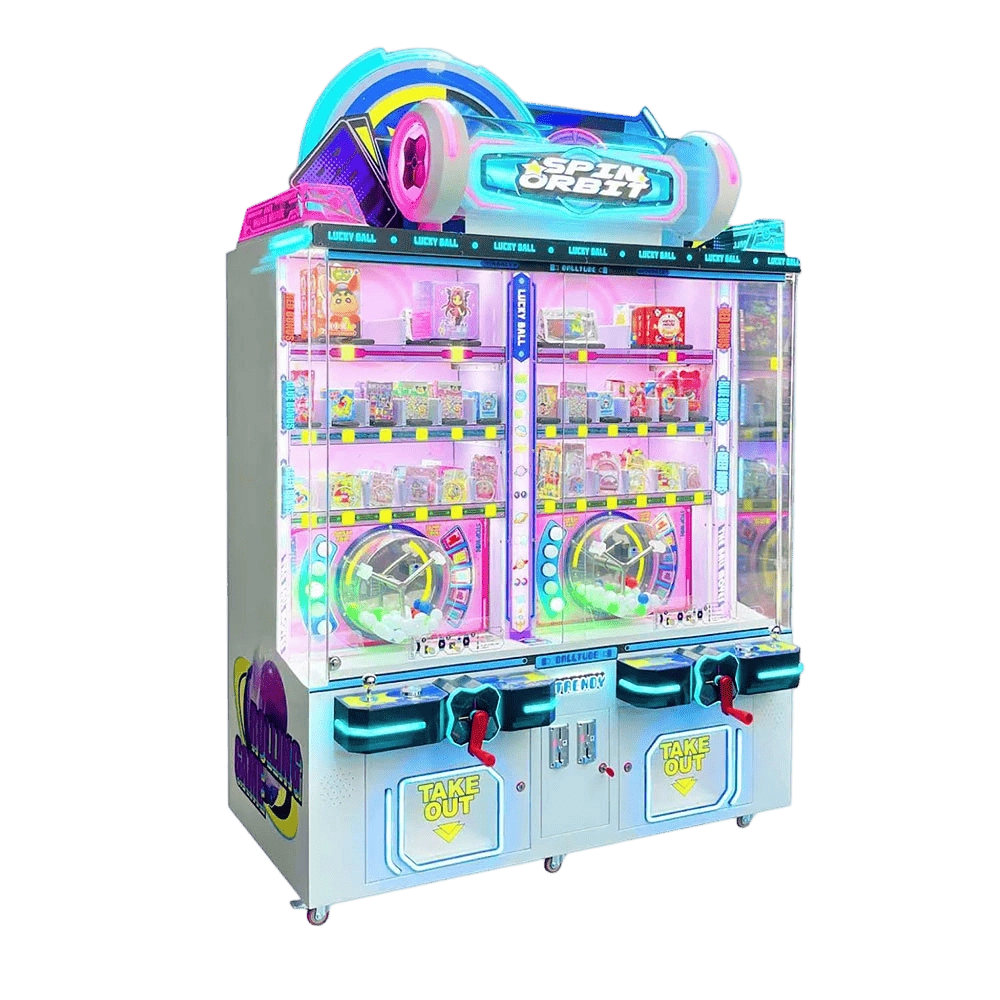
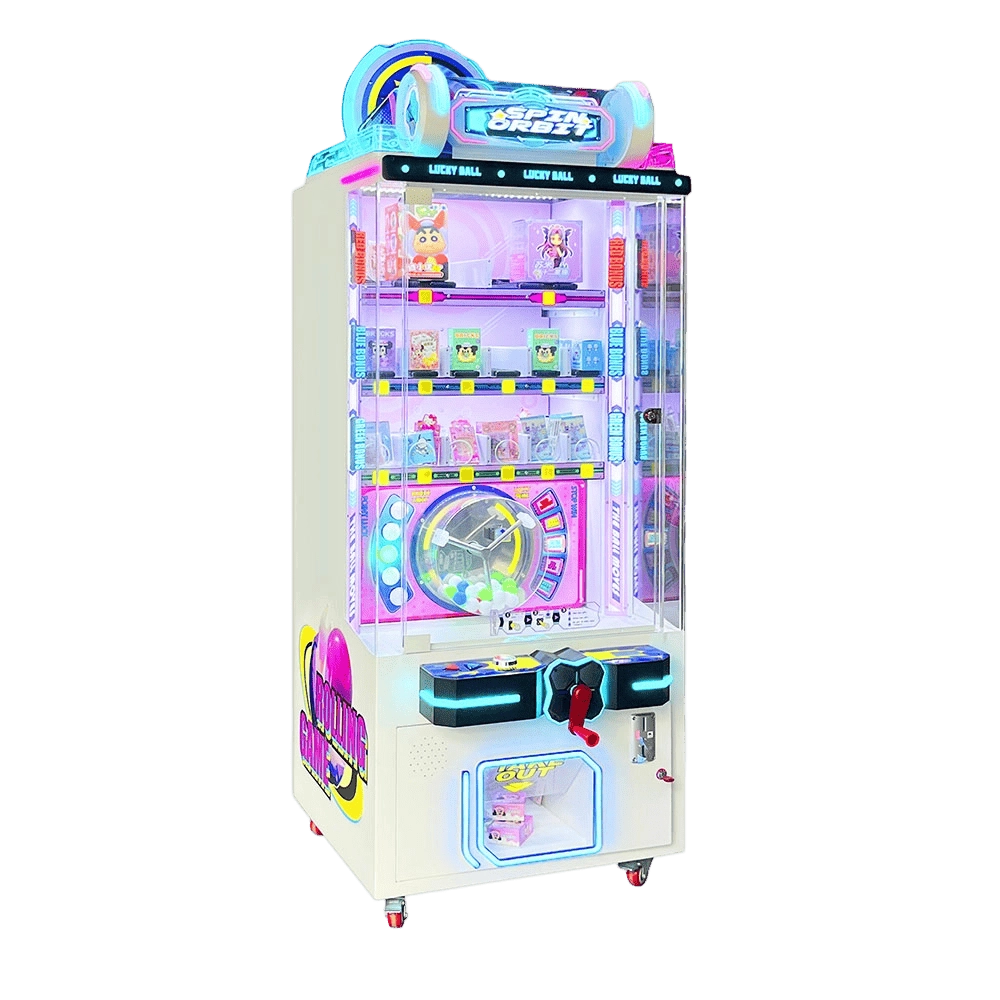
What is the gameplay of the SPIN ORBIT Lucky Prize Arcade Game?
Players use the joystick to guide the ball into a designated hole. Each color ball corresponds to different prize values: red for the highest, blue and green for mid-range prizes, and white for no prize.
How does Jiami Games ensure product quality?
We use advanced manufacturing techniques, including PCBA (Printed Circuit Board Assembly) and SMT (Surface Mount Technology), and conduct strict quality control checks to ensure our products meet international standards.
Can I customize the arcade machines to fit my brand?
Yes, we offer full customization, including logo placement, machine color, game software, and even the language on the machine, based on the order quantity.
What is the minimum order quantity (MOQ)?
The minimum order quantity for our arcade machines is 1 piece. Larger orders qualify for additional customization options.
You May Also Like
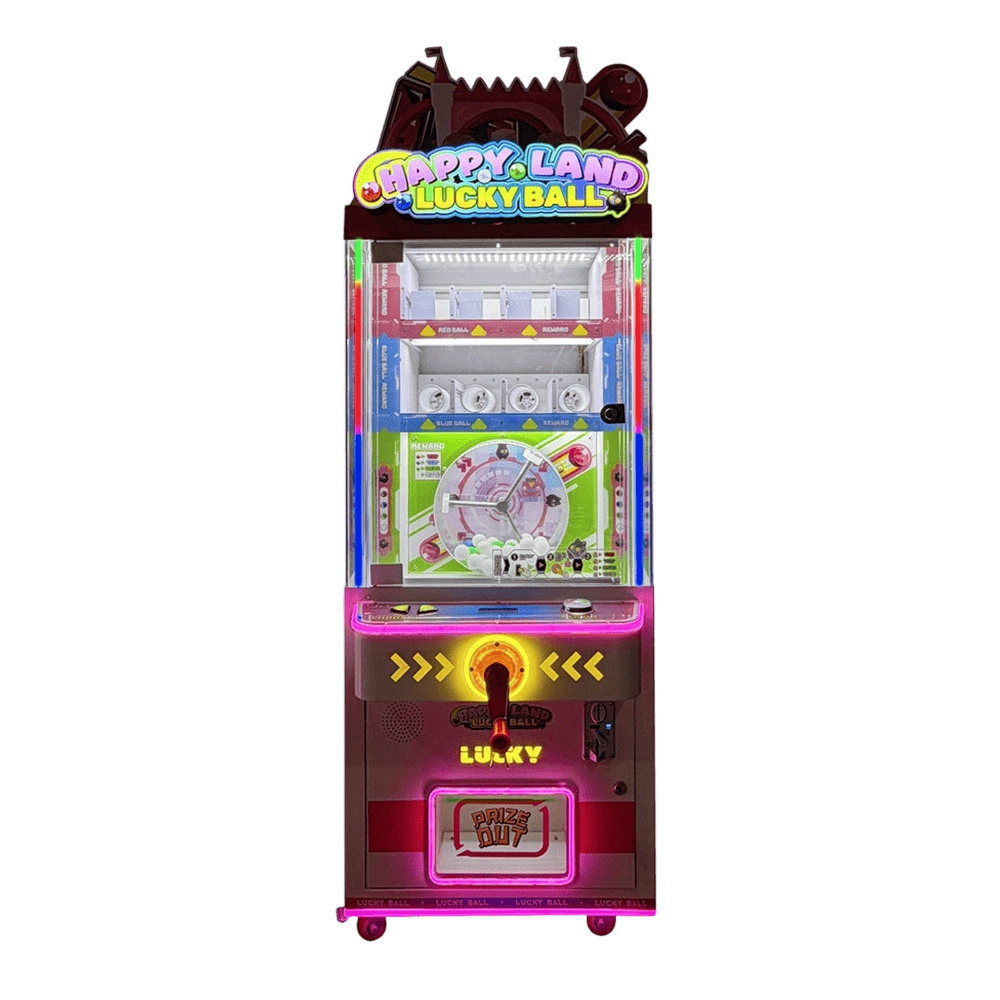
Coin Operated/Card Payment Lucky Ball Vending Toy Gift Arcade Game Machine
Coin Operated/Card Payment 2 Players SPIN ORBIT Lucky Prize Arcade Game
Coin Operated/Card Payment SPIN ORBIT Lucky Prize Arcade Game
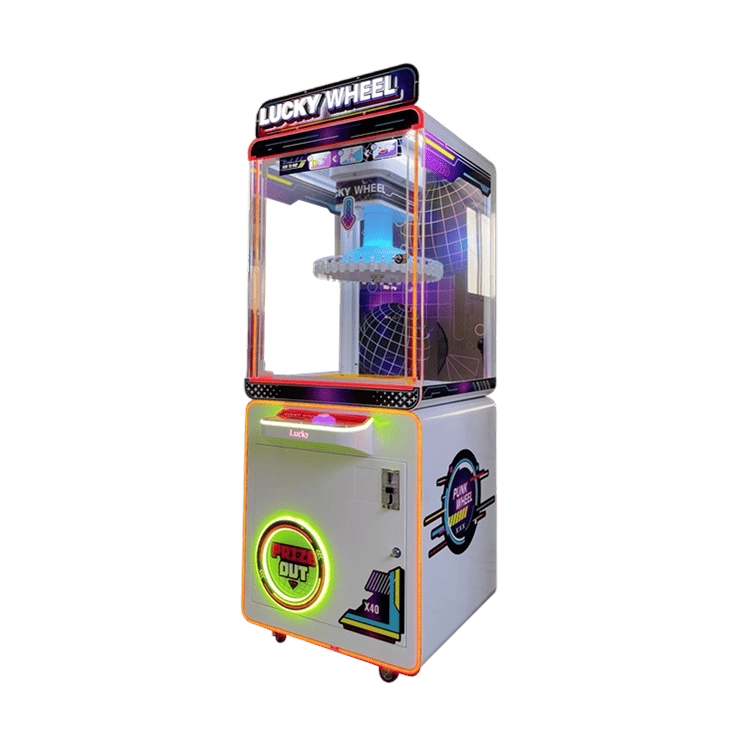
Arcade Prize Lucky Wheel Gift Machine For Amusement Areas
Get in Touch with Jiami Games
If you have any comments or good suggestions, please leave us a message; later our professional staff will contact you as soon as possible.

Innovative Entertainment, at Your Fingertips
Learn about Jiami Games and explore our expertise in console development, innovative design, and global markets.
Quick Links:
© 2026 Jiami Games.
Whatsapp: +8618520390438