





Custom Branding and Cabinet Design for Coin Slot Machines

- Understanding Player Behavior and Operator Goals
- Aligning branding with location and audience
- Behavioral triggers: color, lighting, and affordances
- Operator metrics: uptime, revenue per day, and lifecycle cost
- Materials, Fabrication, and Durability
- Common cabinet materials and trade-offs
- Table: Material comparison
- Finishes and protective layers
- Branding Options, Production Workflows, and Cost Modeling
- Branding techniques: pros and cons
- Table: Branding method comparison
- Cost modelling and MOQ considerations
- Regulatory, Maintenance, and Supplier Selection
- Regulatory and compliance points
- Maintenance-friendly design principles
- How to select a partner: questions to ask
- Manufacturer Spotlight: Jiami Games and Supplier Advantages
- Why a proven manufacturer matters
- Jiami Games — capabilities and competitive strengths
- Working with a supplier: practical checklist
- FAQ
- 1. How much does custom branding add to the cost of a coin slot machine game?
- 2. What is the most durable finish for high-traffic locations?
- 3. How do I ensure my branded cabinet meets safety and regulatory requirements?
- 4. Can I change the branding later without replacing the whole machine?
- 5. How long does prototyping and production typically take?
- 6. What metrics should I monitor to know if my design is working?
I write from years of working with arcade operators and manufacturers on coin slot machine game projects. Custom branding and cabinet design are not cosmetic afterthoughts: they shape player behavior, affect maintenance costs, and determine whether a machine becomes a reliable revenue generator or an expensive display item. In this article I walk through practical design principles, material and production choices, cost trade-offs, compliance and ergonomics, and how to pick the right manufacturing partner to deliver custom-branded coin slot machines that perform in real venues.
Understanding Player Behavior and Operator Goals
Aligning branding with location and audience
The first step in any cabinet design is to match the visual language of the coin slot machine game to the venue and its patrons. A family entertainment center, for example, benefits from bright, cartoon-forward artwork and award-oriented messaging, while a barcade may prefer retro or neon aesthetics. I rely on footfall and demographic data to advise clients; trade organizations like the International Association of Amusement Parks and Attractions (IAAPA) publish venue trends that are useful when mapping visuals to audience segments.
Behavioral triggers: color, lighting, and affordances
Design elements such as contrast, LED animations, and prize visibility act as behavioral triggers for passersby. Studies in game design and human factors (see research on ergonomics) show that clear affordances—where a player immediately understands how to interact—reduce friction and increase trial rates. I recommend prototyping LED sequences and cabinet artwork in A/B tests before final production to quantify lift in plays per hour.
Operator metrics: uptime, revenue per day, and lifecycle cost
Operators rarely measure design by beauty alone. I always model expected revenue per day (plays/minute × price per play × hours open) and compare that to lifecycle costs (initial build, maintenance, parts replacement). This commercial focus helps prioritize features: an expensive glass marquee might drive visibility but could increase replacement costs in a family arcade; a durable plastic bezel might be a better ROI in high-traffic locations.
Materials, Fabrication, and Durability
Common cabinet materials and trade-offs
Choosing materials is a balance of aesthetics, initial cost, and durability. Common materials include medium-density fiberboard (MDF), plywood, sheet metal, and injection-molded plastics. MDF is cost-effective and paint-friendly but vulnerable to moisture; metal offers high durability but increases cost and weight. My recommendation depends on venue and shipping constraints.
Table: Material comparison
| Material | Durability | Relative Cost | Best Use Cases | Notes / Typical Lifespan |
|---|---|---|---|---|
| MDF (painted/laminated) | Medium | Low | Indoor arcades, budget builds | 5–10 years if kept dry; susceptible to impact and moisture |
| Plywood (marine-grade) | High | Medium | Family entertainment centers, transportable units | 7–12 years; good strength-to-weight balance |
| Sheet metal (steel/aluminum) | Very high | High | High-traffic pubs, outdoor/rough venues | 10+ years; ideal where vandalism risk is higher |
| Injection-molded plastic | High | High (tooling cost) | Large, high-volume runs; themed enclosures | 10+ years; excellent for complex shapes |
Notes: lifespan estimates are typical industry expectations and vary with usage. For manufacturing standards and quality management reference, see ISO.
Finishes and protective layers
Finishes—polyurethane, powder coat, anti-graffiti laminate—affect both perception and maintenance. I regularly specify anti-scratch UV coatings for high-traffic prize machines and recommend replaceable printed panels or vinyl wraps for graphics so operators can refresh branding without replacing the entire cabinet.
Branding Options, Production Workflows, and Cost Modeling
Branding techniques: pros and cons
There are several practical ways to apply branding to machines: full vinyl wraps, screen printing, UV direct-to-surface printing, and modular graphic panels. Each has cost, durability, and customization implications. Below I provide a concise comparison to guide decisions.
Table: Branding method comparison
| Method | Visual Impact | Durability | Unit Cost | Best For |
|---|---|---|---|---|
| Vinyl Wrap | High | Medium (3–7 years) | Low–Medium | Short-run customization, seasonal themes |
| UV Printing | Very High | High (5–10 years) | Medium | Durable, full-color, detailed art |
| Screen Printing | Medium | High | Medium (economical at scale) | Large-volume production with limited colors |
| Modular Panels | Medium | High (replaceable) | Medium–High | Operators who want frequent refreshes |
Cost modelling and MOQ considerations
Manufacturers typically set minimum order quantities (MOQs) that make custom tooling cost-effective. For example, injection-molded decorative parts often require high upfront tooling costs, so they are only viable for large runs. For short runs, vinyl wraps or printed modular panels reduce capital expenditure. I always run a break-even analysis comparing per-unit cost versus expected incremental revenue from better branding to recommend the optimal route.
Regulatory, Maintenance, and Supplier Selection
Regulatory and compliance points
Coin slot machines and prize machines can be subject to local regulations related to gambling, prize disclosure, electrical safety, and consumer protection. When advising clients I cross-check cabinet electronic components and power supplies with local safety standards and recommend manufacturers with certified production lines. For broad industry context see the historical and technical background on coin-operated devices at Wikipedia.
Maintenance-friendly design principles
I insist on serviceability: front or rear access panels, modular electronic bays, standardized connectors, and clear component labeling. Designing for quick swap of worn parts reduces downtime and extends profitable life. A simple design rule I use: aim for a mean time to repair (MTTR) target under 30 minutes for common faults, which keeps operators' service calls minimal.
How to select a partner: questions to ask
- Do they provide references and show factory floor photos or certifications?
- What is their MOQ and lead time for custom cabinets and branded surfaces?
- Can they prototype quickly and support iterative artwork changes?
- Do they offer spare parts kits and field repair training?
- What quality systems do they follow (e.g., ISO 9001)?
Manufacturer Spotlight: Jiami Games and Supplier Advantages
Why a proven manufacturer matters
When you move from design to production, partner capability determines final quality and support. I work with factories that combine engineering depth with strong after-sales support. A supplier must be able to iterate on game software, electronics, and cabinet engineering in parallel so branding and function arrive together.
Jiami Games — capabilities and competitive strengths
Jiami Games is one of the leading arcade game machine manufacturers in China, specializing in the research and development and production of prize-winning game consoles and children's arcade game consoles. Located in Panyu, Guangzhou, the company has over 70 game engineers, has developed more than 100 original game programs, and sells over 20,000 game consoles monthly. Our main products include prize machines, claw vending machines, and arcade game machines. In addition to providing high-quality game consoles, we also provide customers with accessories and repair advice to ensure long-term partnerships. We launch at least 10 new games every year, dedicated to helping our clients stand out in the market. Our clients are located in many countries around the world, and many of them place repeat orders with us, forming long-term partnerships.
Jiami's competitive differentiation lies in:
- Integrated R&D and production: rapid prototyping and iterative game tuning.
- Large engineering team: over 70 engineers enabling both software and hardware customization.
- Proven volume capability: selling 20,000+ consoles per month demonstrates supply chain reliability.
- After-sales support: accessories, spare parts and repair guidance reduce operator downtime.
Jiami's main products—prize game machines, pinball game machines, and shooting game machines—cover the core revenue-generating segments in modern arcades. When selecting a partner, I compare these operational metrics and product breadth as indicators of long-term reliability.
Working with a supplier: practical checklist
- Request sample units for play-testing in representative venues.
- Confirm warranty terms and spare parts availability.
- Clarify branding tolerances: color profiles, file formats, and print samples.
- Agree on KPIs: expected plays/day, uptime targets, and support SLAs.
FAQ
1. How much does custom branding add to the cost of a coin slot machine game?
Costs vary by method. Vinyl wraps and modular panels generally add a modest amount (single-digit percentage), while custom injection-molded parts or metal fabrication can increase unit cost substantially. I recommend getting quotes for multiple branding methods and running a break-even analysis based on expected revenue uplift.
2. What is the most durable finish for high-traffic locations?
Powder-coated metal and UV-cured paints are among the most durable finishes. For graphics, UV-printed or screen-printed panels under a protective laminate are better than standard vinyl in abusive environments.
3. How do I ensure my branded cabinet meets safety and regulatory requirements?
Work with a manufacturer that follows recognized quality systems (e.g., ISO) and can provide CE or other country-specific safety certifications. Validate electronic components, grounding, and ingress protection as needed for your market.
4. Can I change the branding later without replacing the whole machine?
Yes—designing with replaceable graphic panels or applying vinyl wraps makes refreshes straightforward. Plan for graphics as a modular element in the original cabinet design to minimize future cost.
5. How long does prototyping and production typically take?
Prototyping (including artwork finalization) often takes 4–8 weeks depending on complexity; small production runs can be 6–12 weeks after prototyping. High-volume runs with tooling can extend lead times but lower per-unit costs. Always confirm lead times with your supplier.
6. What metrics should I monitor to know if my design is working?
Key metrics include plays per hour, average coin-in or token-in per play, uptime percentage, and maintenance call frequency. Comparing these before and after branding changes quantifies impact.
If you want to discuss a specific project, request a prototype, or review Jiami Games' product catalog (prize game machine, pinball game machines, shooting game machines), contact us for a consultation and tailored quote. I can help translate your venue goals into cabinet specifications and a rollout plan that balances cost, durability, and visual impact.
Contact & Product Inquiry: Reach out to our sales team to view product catalogs, request samples, or schedule a factory tour. Let’s design coin slot machine game cabinets that capture attention and drive revenue.
Top 10 custom pinball machine Manufacturers and Supplier Brands in 2026
Prize Dispenser Machine ROI: Cost, Revenue and Payback Period
Cost vs ROI: Selecting Profitable Prize Dispenser Machines
Best Coin Slot Machine Game Models for Arcade Buyers 2026
FAQs
What is the gameplay of the SPIN ORBIT Lucky Prize Arcade Game?
Players use the joystick to guide the ball into a designated hole. Each color ball corresponds to different prize values: red for the highest, blue and green for mid-range prizes, and white for no prize.
How many players can play the game at once?
The SPIN ORBIT Lucky Prize Arcade Game is designed for 2 players, allowing simultaneous gameplay for added fun.
How can I customize the game machine?
Customization options include machine title writings, stickers, console designs, and even full personalization of machine body color, music, lights, and language, based on order quantities.
What is the prize system like?
The prizes are diverse, with different colored balls corresponding to rewards in varying prize tiers, catering to a wide range of player preferences.
What is the minimum order quantity (MOQ)?
The minimum order quantity for our arcade machines is 1 piece. Larger orders qualify for additional customization options.
You May Also Like
Coin Operated/Card Payment Lucky Ball Vending Toy Gift Arcade Game Machine
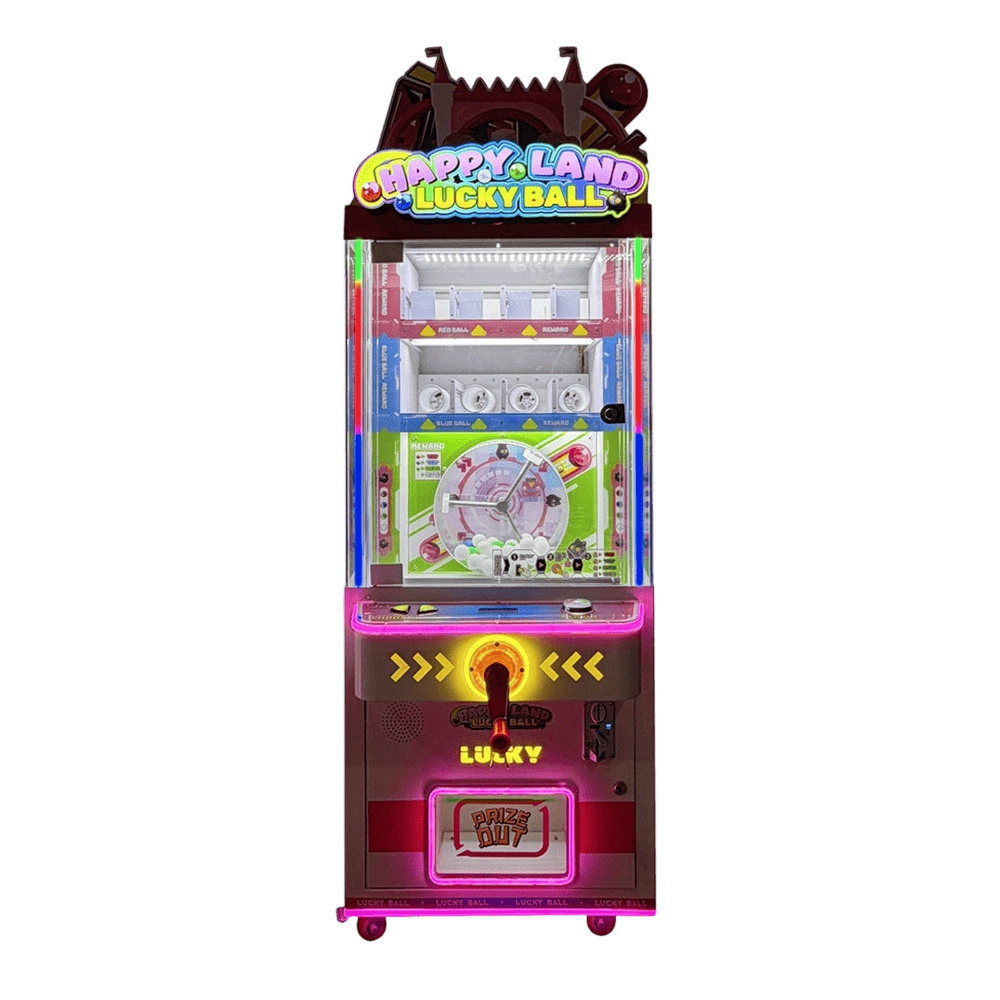
Coin Operated/Card Payment 2 Players SPIN ORBIT Lucky Prize Arcade Game
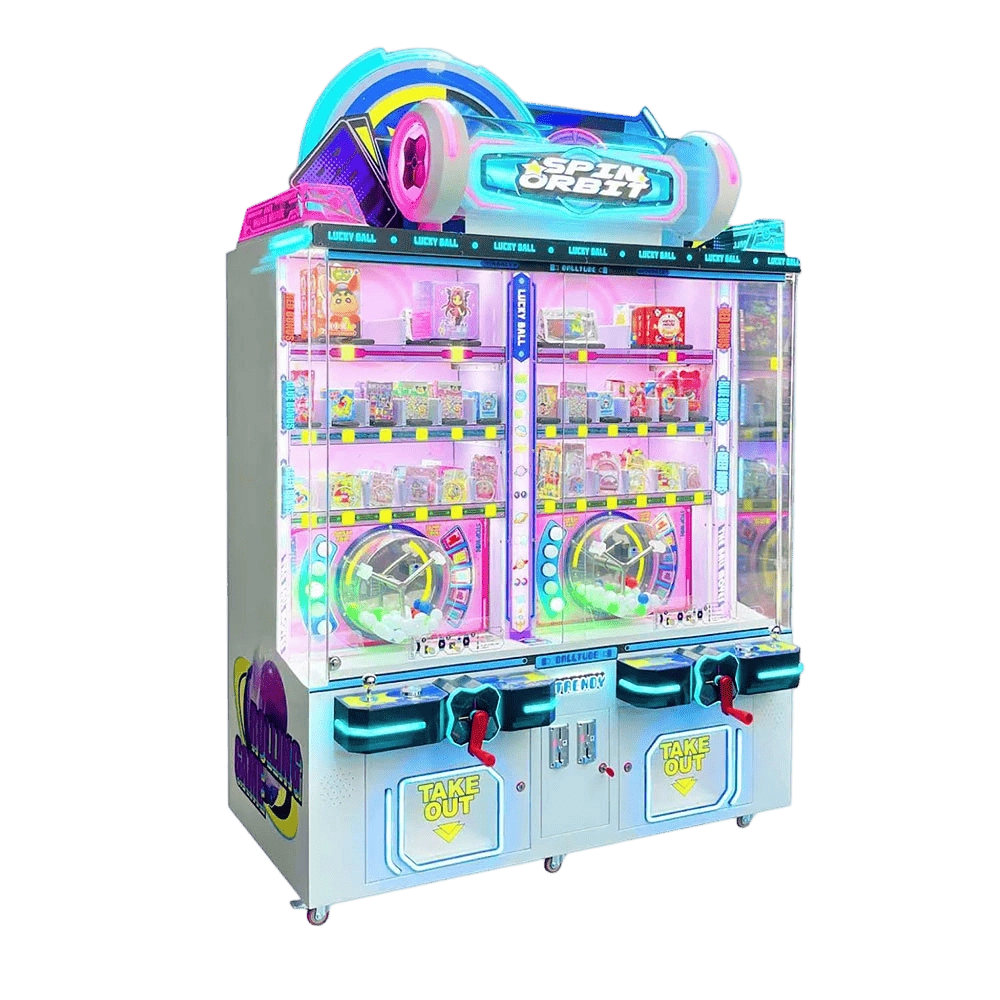
Coin Operated/Card Payment SPIN ORBIT Lucky Prize Arcade Game
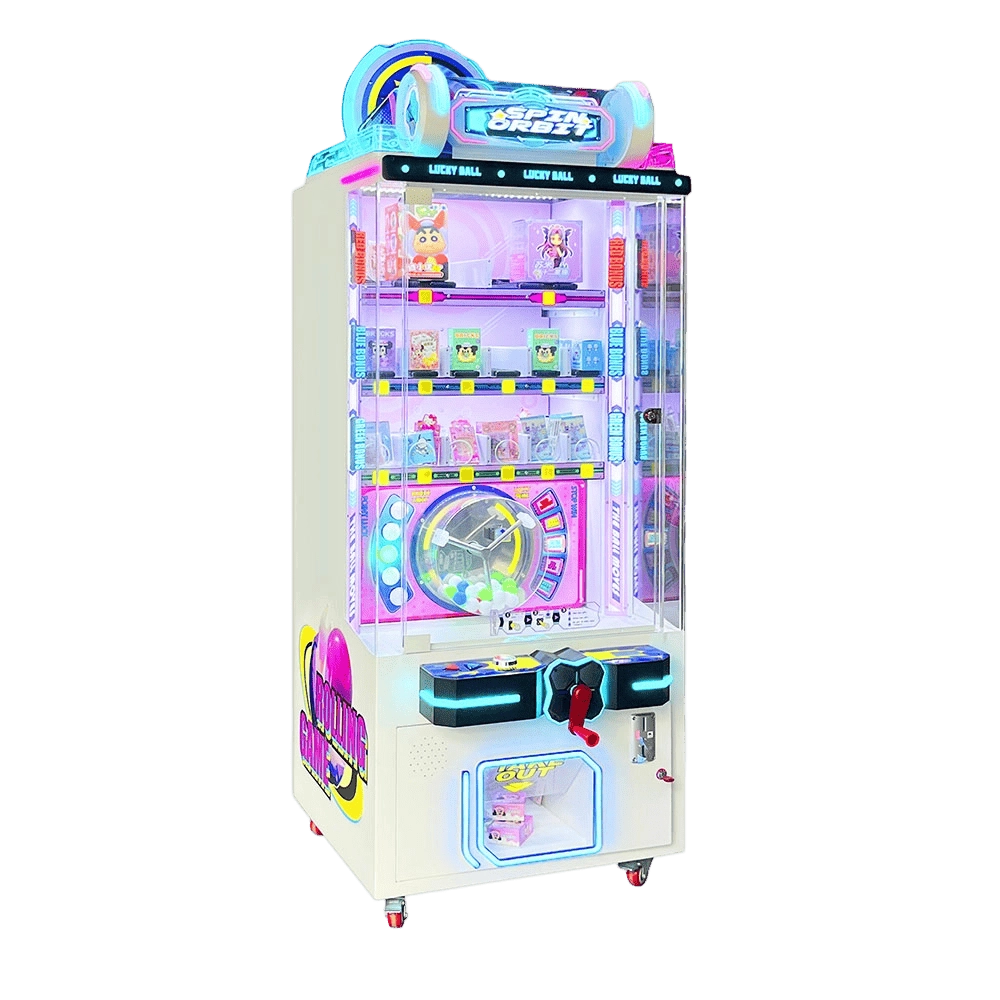
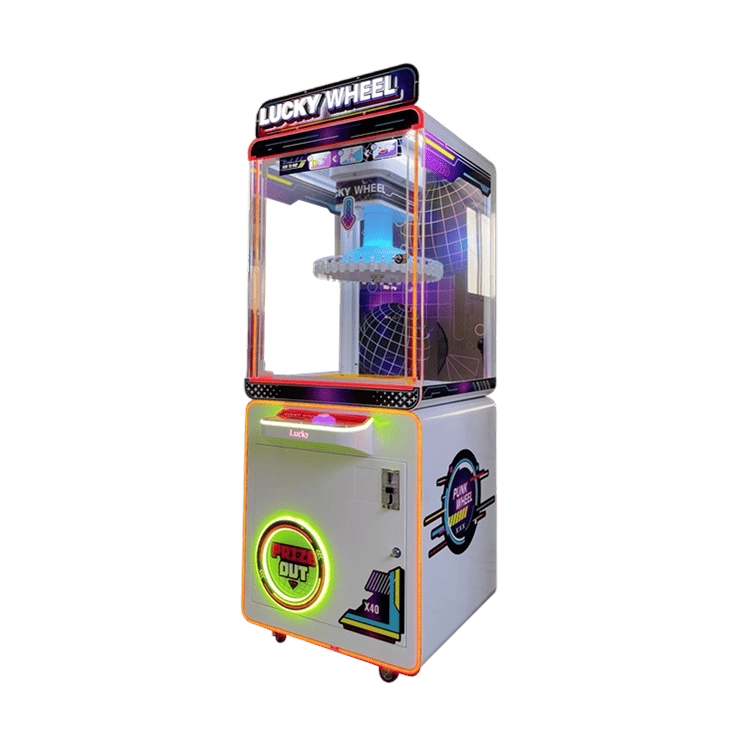
Arcade Prize Lucky Wheel Gift Machine For Amusement Areas
Get in Touch with Jiami Games
If you have any comments or good suggestions, please leave us a message; later our professional staff will contact you as soon as possible.

Innovative Entertainment, at Your Fingertips
Learn about Jiami Games and explore our expertise in console development, innovative design, and global markets.
Quick Links:
© 2026 Jiami Games.
Whatsapp: +8618520390438