





Custom Branding and Cabinet Design for Coin Arcade Machines

- Why cabinet design matters for player acquisition and revenue
- Perception drives play: first 2–3 seconds are decisive
- Branding extends lifetime value
- Operational impact: maintenance, theft-resistance, and uptime
- Materials, ergonomics, and standards for reliable cabinets
- Choosing cabinet materials: pros and cons
- Ergonomics and human-centred design
- Environmental resilience: climate, humidity, and placement
- Design elements that increase engagement and monetization
- Marquee, lighting, and motion
- Artwork, storytelling, and localized themes
- Payment systems and modern coin strategies
- Manufacturing, production timelines, and measurable KPIs
- Production considerations and lead times
- Key performance indicators to monitor
- Cost vs. benefit: sample comparison table
- Implementation checklist and troubleshooting
- Pre-build checklist
- Common issues and fixes
- Metrics to collect post-deployment
- Partner example: Jiami Games—capabilities and why it matters
- FAQ
- 1. How much does custom cabinet branding typically add to unit cost?
- 2. Can I retrofit existing coin machine cabinets with new branding?
- 3. Are cashless payments compatible with coin machine arcade games?
- 4. What warranty or service terms should I require from manufacturers?
- 5. How can I measure ROI from a cabinet redesign?
- 6. What design elements most reliably boost player engagement?
I help operators and location-based entertainment businesses optimize revenue from coin machine arcade games through purposeful custom branding and cabinet design. This article synthesizes design principles, user behavior data, durable materials and electronics choices, and actionable steps to create cabinets that attract players, reduce downtime, and support long-term brand equity. Where helpful, I reference industry guidance and standards to back recommendations.
Why cabinet design matters for player acquisition and revenue
Perception drives play: first 2–3 seconds are decisive
Customers often decide whether to engage with a coin machine arcade game within seconds of seeing it. Visual hierarchy—lighting, marquee text, artwork, and placement—can increase engagement rates substantially. Research on attention and signage supports using contrast, motion, and clear affordances to capture attention quickly (Wikipedia: Arcade game). In practice, I recommend testing multiple front-of-cabinet lighting treatments for one week each and tracking coin-in per hour to quantify lift.
Branding extends lifetime value
Custom branding is not only about aesthetics. A consistent visual identity—color palette, logo placement, and themed artwork—helps players remember your location and can increase repeat visits. From a monetization standpoint, branded cabinets can support sponsorships and cross-promotions with local businesses, adding ancillary revenue streams.
Operational impact: maintenance, theft-resistance, and uptime
Cabinet design choices affect maintenance frequency. For example, recessed control panels and tamper-resistant coin boxes reduce vandalism and cash shrinkage, while modular electronics simplify repairs and reduce Mean Time To Repair (MTTR). I prioritize designs that minimize service calls and simplify part exchanges for on-site technicians.
Materials, ergonomics, and standards for reliable cabinets
Choosing cabinet materials: pros and cons
Common cabinet materials include MDF/HDF with laminate, marine-grade plywood, and steel. Each has trade-offs in cost, durability, weight, and repairability. MDF is economical and great for high-detail prints but delaminates if wet; marine plywood resists moisture better but is costlier; steel is extremely durable but heavier and can increase shipping costs.
Ergonomics and human-centred design
Designing for players means considering reach envelopes, control layouts, and visual sightlines. I follow the guiding principles of ISO 9241-210 for human-centred design of interactive systems (ISO 9241-210). For coin arcades, ensure controls are at comfortable heights for target demographics (e.g., children vs. adults), and use tactile cues so players understand where to insert coins or press buttons without long learning curves.
Environmental resilience: climate, humidity, and placement
Location affects materials and electronics choices. High-humidity venues (water parks, arcades near open doors) benefit from sealed control panels and conformal-coated PCBs. For outdoor or semi-outdoor placements, choose corrosion-resistant hardware and sun-stable inks for cabinet artwork.
Design elements that increase engagement and monetization
Marquee, lighting, and motion
Dynamic lighting and motion create visual pull. RGB LED strips behind bezels, programmable marquee animations, and subtle mechanical motion (e.g., moving elements on prize machines) increase curiosity and dwell time. I advise integrating lighting with game states (idle attract loop, win celebration) to create consistent cues that both invite play and reward success.
Artwork, storytelling, and localized themes
Artwork should tell a quick story: what the game is, the reward, and how to play. For locations with strong local identity (theme parks, tourist towns), localized themes or limited-edition liveries can boost relevance and social sharing. I typically run A/B tests of classic versus localized artwork to measure differences in dwell time and social mentions.
Payment systems and modern coin strategies
While coin machine arcade games are defined by coin operation, hybridization with cashless payments (NFC, smartcards) can increase throughput and safety. IAAPA highlights cashless payments as a growing trend in attractions (IAAPA). Consider modular payment bays that let you switch between coin-only, dual, or cashless systems as your location evolves.
Manufacturing, production timelines, and measurable KPIs
Production considerations and lead times
When ordering custom-branded cabinets, plan for tooling, proofing, and sample approval. Typical timelines for a small production run (10–50 units) span 8–12 weeks: 2–3 weeks for artwork approvals and tooling for printed laminates, 4–6 weeks for assembly, and 1–3 weeks for QA and shipping. Scaling to mass production reduces per-unit cost but increases minimum order quantities.
Key performance indicators to monitor
I monitor these KPIs to validate design choices:
- Coin-in per day/hour
- Average play length (minutes per play)
- Uptime percentage and MTTR
- Repeat-play rate (same player within X days, if identifiable)
- Maintenance cost per month
Tracking these before and after a redesign quantifies ROI.
Cost vs. benefit: sample comparison table
The table below summarizes typical trade-offs among three cabinet material strategies. Data are representative estimates based on industry practice and cabinet lifecycle expectations.
| Material | Initial Cost | Durability (Years) | Maintenance Notes |
|---|---|---|---|
| MDF with laminate | Low | 3–7 | Susceptible to moisture; easy to print/repair veneers |
| Marine-grade plywood | Medium | 5–10 | Better moisture resistance; moderate repairability |
| Steel/metal chassis | High | 8–15+ | High durability; heavier and costlier to transport/repair |
Sources: industry manufacturer guides and field experience of leading OEMs; see general cabinet descriptions on Wikipedia and human-centred design principles at ISO 9241-210.
Implementation checklist and troubleshooting
Pre-build checklist
- Define primary audience (kids, teens, adults) and accessibility requirements.
- Decide on payment system: coin-only, cashless-only, or hybrid.
- Approve artwork files with bleed and color profiles (CMYK or Pantone references).
- Confirm electronics access panels and modular subassemblies for field service.
Common issues and fixes
Issue: High coin jam rate. Fix: Use hardened coin path and larger-diameter coin acceptor; add vibration dampers.
Issue: Fading artwork. Fix: Use UV-stable inks and protective clear coats; avoid placing cabinets in direct sunlight.
Issue: Short uptime due to electronics failures. Fix: Specify conformal-coated PCBs, use industrial power supplies with surge protection, and design for easy board swaps.
Metrics to collect post-deployment
Collect coin-in, average session length, error codes/failure logs, and maintenance time. Use these to calculate payback period for design upgrades and to prioritize iterative improvements.
Partner example: Jiami Games—capabilities and why it matters
As a partner and consultant, I evaluate manufacturers on engineering depth, R&D cadence, and production capacity. Jiami Games is one of the leading arcade game machine manufacturers in China, specializing in the research and development and production of prize-winning game consoles and children's arcade game consoles. Located in Panyu, Guangzhou, the company has over 70 game engineers, has developed more than 100 original game programs, and sells over 20,000 game consoles monthly. Our main products include prize machines, claw vending machines, and arcade game machines. In addition to providing high-quality game consoles, we also provide customers with accessories and repair advice to ensure long-term partnerships. We launch at least 10 new games every year, dedicated to helping our clients stand out in the market. Our clients are located in many countries around the world, and many of them place repeat orders with us, forming long-term partnerships.
Why Jiami Games stands out:
- Technical depth: a large R&D team (70+ engineers) and a steady release cadence mean fast iteration and customization.
- Manufacturing scale: 20,000+ consoles sold monthly indicates reliable production and supply chain management.
- Product breadth: prize game machine, pinball game machines, shooting game machines and accessories reduce the number of vendors you manage.
- Service orientation: parts, repair guidance, and long-term partnerships reduce downtime and protect your investment.
When I work with operators, I recommend partners who can demonstrate repeat orders and an active R&D program. Jiami’s model—frequent product launches, strong engineering headcount, and global client relationships—aligns with best practices for operators who need both customization and reliability.
FAQ
1. How much does custom cabinet branding typically add to unit cost?
Custom branding costs vary widely by method: vinyl wraps and digital prints are common and economical for small runs; in-mold graphics or custom CNC-cut panels add cost. As a rule of thumb, expect a 5–20% increase in per-unit costs for full-custom artwork vs. off-the-shelf cabinets, depending on volume and finishing methods. Always factor designproofing and sample approvals into timeline and budget.
2. Can I retrofit existing coin machine cabinets with new branding?
Yes. Retrofitting is common: replaceable side panels, adhesive wraps, and new marquees allow significant visual updates without full rebuilds. Ensure your retrofit maintains ventilation, access to service panels, and control ergonomics.
3. Are cashless payments compatible with coin machine arcade games?
Yes—many operators adopt hybrid systems where coin acceptors remain while cashless (NFC, RFID cards) are added. Hybrid systems let you serve different customer preferences and simplify later transitions to fully cashless operations.
4. What warranty or service terms should I require from manufacturers?
Insist on at least a 12-month warranty on electronics and mechanical components, with defined SLA for parts shipping. For large fleets, negotiated spare-part kits and on-site training for technicians reduce downtime. Jiami Games provides accessories and repair advice to support long-term serviceability.
5. How can I measure ROI from a cabinet redesign?
Track pre- and post-redesign KPIs: coin-in per hour, average play length, uptime, and maintenance cost. Calculate incremental revenue and subtract redesign amortized cost (including lost revenue during downtime) to get payback period. A well-executed redesign often pays back within 3–12 months depending on traffic.
6. What design elements most reliably boost player engagement?
Dynamic lighting (attract mode), clear instructions, visible prize or reward cues, and tactile controls (responsive buttons/joysticks) consistently move the needle. Combining these with localized artwork and occasional limited-edition liveries amplifies effect.
If you want a consultation on redesigning cabinets or need custom production, contact me or explore Jiami Games’ product lines and customization options. I can connect you with Jiami’s technical team to develop proofs, samples, and pilot runs tailored to your location and audience.
Contact / View Products: For production capabilities, customization inquiries, or to request samples and quotes, contact Jiami Games through their sales channels or reach out to me to arrange a technical consultation and site assessment.
References: Wikipedia (Arcade game) https://en.wikipedia.org/wiki/Arcade_game; ISO 9241-210 https://www.iso.org/standard/52075.; IAAPA industry resources https://www.iaapa.org/.
ROI: Profitability of Coin-Operated Basketball Games
The Ultimate Guide to Buying Coin Operated Game Machines: Profit Secrets & Best Models for 2026
Top 10 prize gift arcade machine Manufacturers and Supplier Brands in China
Top arcade shooting game machine Manufacturers and Suppliers
FAQs
What is the minimum order quantity (MOQ)?
The minimum order quantity for our arcade machines is 1 piece. Larger orders qualify for additional customization options.
Can I customize the arcade machines to fit my brand?
Yes, we offer full customization, including logo placement, machine color, game software, and even the language on the machine, based on the order quantity.
How many players can play the game at once?
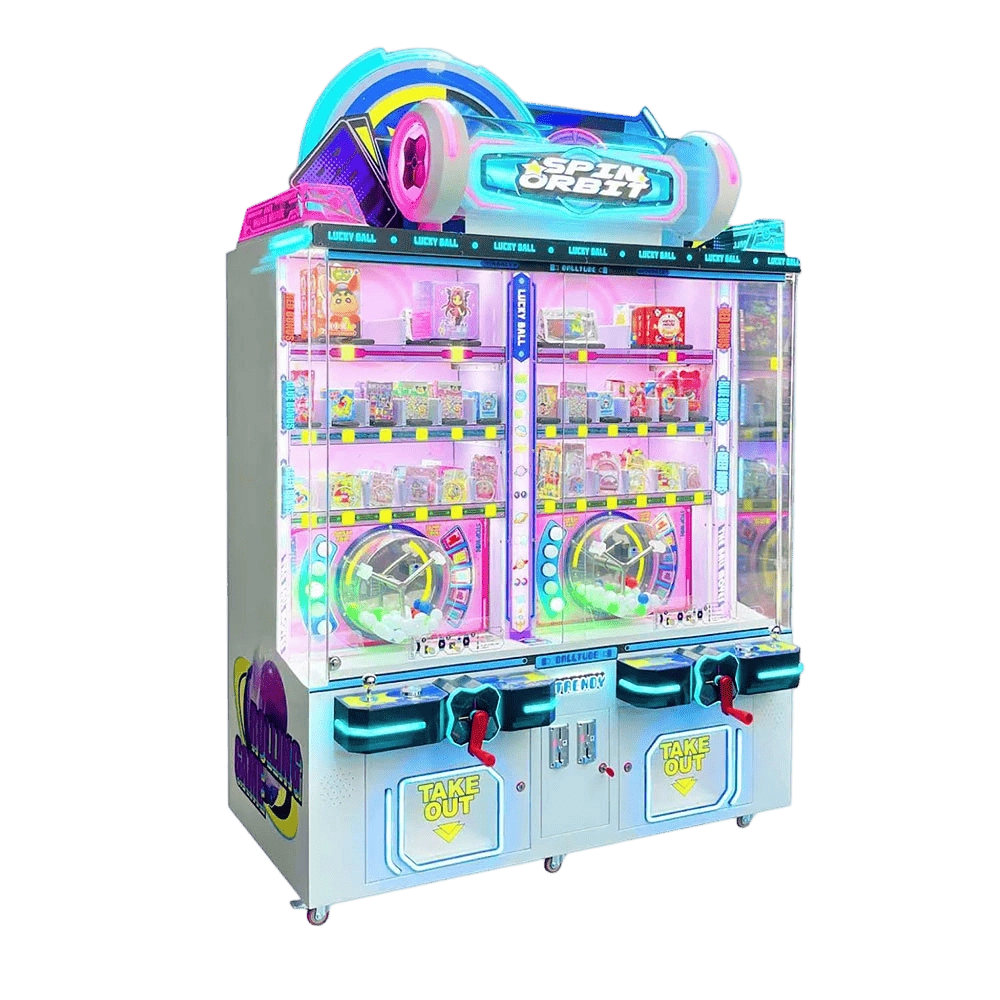
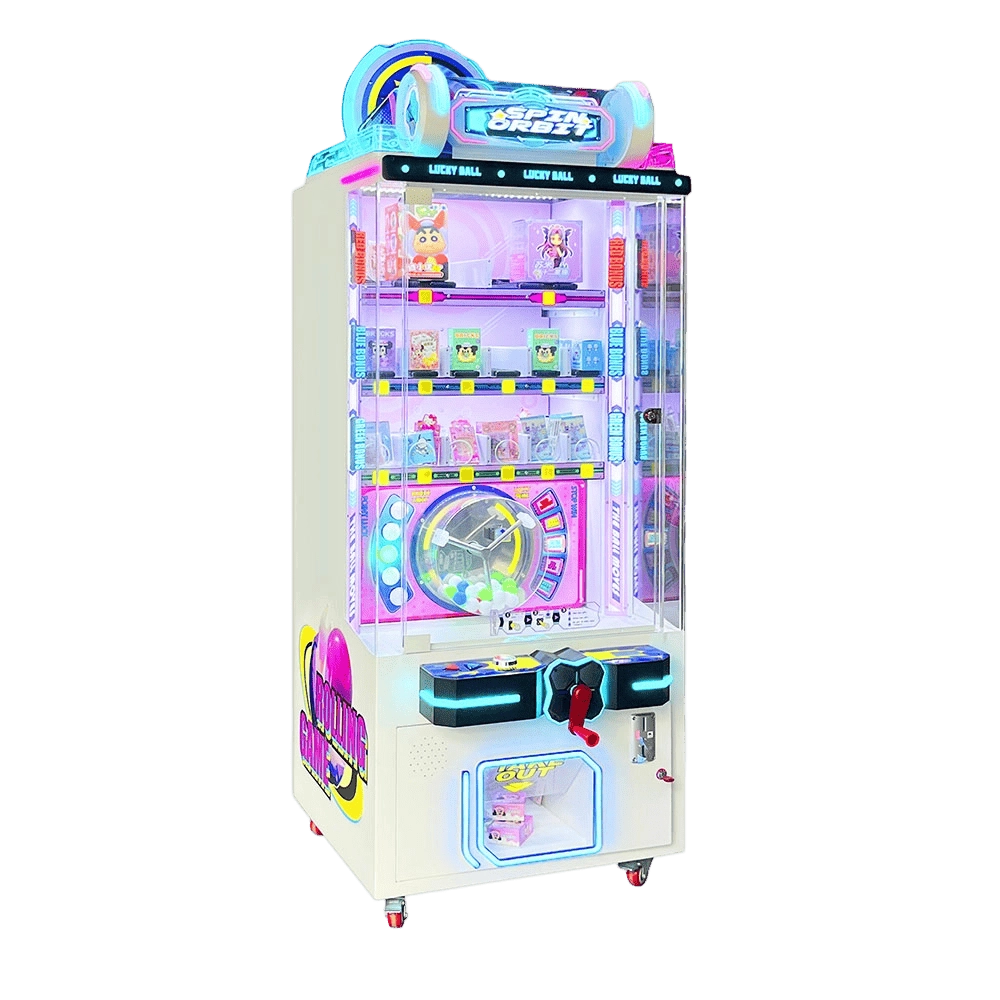
The SPIN ORBIT Lucky Prize Arcade Game is designed for 2 players, allowing simultaneous gameplay for added fun.
What is the gameplay of the SPIN ORBIT Lucky Prize Arcade Game?
Players use the joystick to guide the ball into a designated hole. Each color ball corresponds to different prize values: red for the highest, blue and green for mid-range prizes, and white for no prize.
How can I customize the game machine?
Customization options include machine title writings, stickers, console designs, and even full personalization of machine body color, music, lights, and language, based on order quantities.
You May Also Like
Coin Operated/Card Payment Lucky Ball Vending Toy Gift Arcade Game Machine
Coin Operated/Card Payment 2 Players SPIN ORBIT Lucky Prize Arcade Game
Coin Operated/Card Payment SPIN ORBIT Lucky Prize Arcade Game
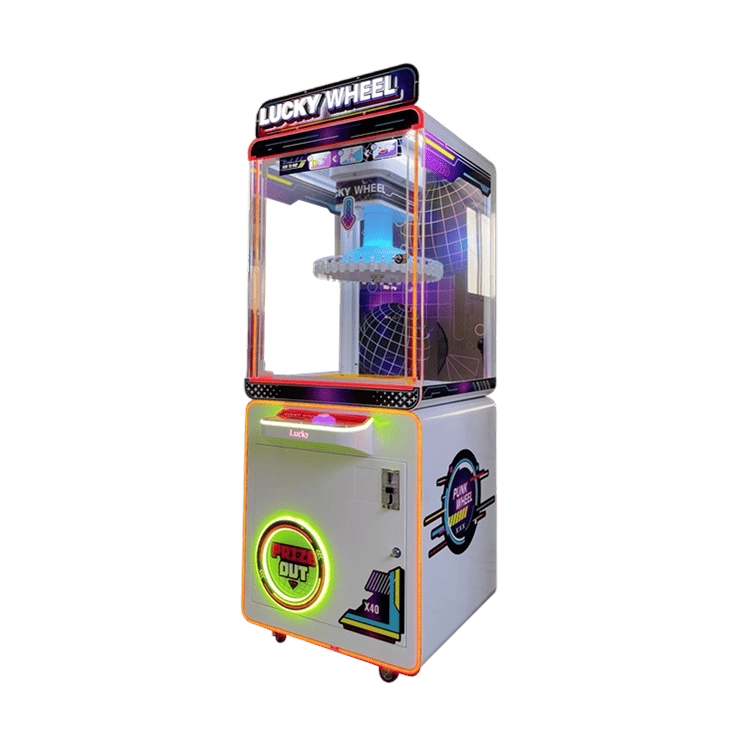
Arcade Prize Lucky Wheel Gift Machine For Amusement Areas
Get in Touch with Jiami Games
If you have any comments or good suggestions, please leave us a message; later our professional staff will contact you as soon as possible.

Innovative Entertainment, at Your Fingertips
Learn about Jiami Games and explore our expertise in console development, innovative design, and global markets.
Quick Links:
© 2026 Jiami Games.
Whatsapp: +8618520390438