




Custom branding and cabinet design for coin slot machines

- Understanding player psychology and venue needs
- Why players respond to custom-branded coin slot machine games
- How venue type drives cabinet choices
- Mapping player flow and placement for maximum impact
- Design fundamentals: from cabinet shell to user interface
- Structural considerations: materials, ergonomics, and serviceability
- Visual language: branding placement, lighting, and signability
- Controls and HMI: balancing familiarity and novelty
- Compliance, durability, and maintenance strategies
- Electrical and safety standards to consider
- Design for maintainability and fast field service
- Protective finishes and anti-vandal features
- Customization packages, costs, and ROI
- Typical customization tiers and deliverables
- Estimating ROI: metrics to track
- Cost-saving approaches and phased rollouts
- Manufacturing partnerships and what to ask your supplier
- Key questions for manufacturers
- Data and testing: prototypes, life-cycle, and IP
- Why local manufacturing matters (and when offshore makes sense)
- Jiami Games — partner profile and how we help
- Practical checklist to implement a custom cabinet project
- Before design
- During design and prototyping
- Deployment and operations
- References and further reading
- Frequently Asked Questions (FAQ)
- 1. How much does custom branding for a coin slot machine game typically cost?
- 2. Will custom cabinets affect regulatory approvals?
- 3. How long does a typical custom cabinet project take from design to deployment?
- 4. What materials resist vandalism and wear best in high-traffic locations?
- 5. Can I license popular IP (characters or shows) for my coin slot machine game cabinet?
- 6. What KPIs should I track to evaluate a new branded cabinet?
- Contact and next steps
I work with operators, distributors, and venue owners across Asia and beyond to optimize arcade floors and prize zones. In Panyu, Guangzhou — one of China's largest manufacturing hubs for amusement equipment — I've seen how strategic custom branding and robust cabinet design for coin slot machine games can transform underperforming locations into high-earning attractions. This article explains the why and how: player motivations, design choices, materials, safety and compliance considerations, cost vs. return on investment (ROI), and practical customization packages you can apply immediately to boost revenue and guest satisfaction.
Understanding player psychology and venue needs
Why players respond to custom-branded coin slot machine games
Players are drawn to machines that feel relevant, trustworthy, and aspirational. A coin slot machine game with a well-executed brand treatment signals quality and familiarity — especially when branding echoes popular IP, local culture, or a venue's theme. Visual salience (colors, lighting, motion) and tactile feedback (button feel, coin chute response) increase perceived value and time-on-device. For more context on player engagement and mechanical gambling history, see Slot machine — Wikipedia.
How venue type drives cabinet choices
Different venues have distinct performance drivers. Family entertainment centers prioritize safety, durability, and child-appeal graphics; bars and adult arcades favor compact cabinets, striking LED schemes, and higher-stakes audiovisual draws; shopping malls emphasize brand alignment and prize visibility. I always start with a site survey to quantify foot traffic, dwell time, and competitor mix before recommending design options.
Mapping player flow and placement for maximum impact
Placement matters as much as design. Hot zones (near entrances, F&B, or prize redemption counters) justify higher-cost High Quality cabinets with bespoke branding. I use simple heat-map observations and dwell-time counts to determine which machines merit a standout cabinet wrap or custom marquee.
Design fundamentals: from cabinet shell to user interface
Structural considerations: materials, ergonomics, and serviceability
Cabinet frames typically use MDF, plywood, or steel-reinforced structures. Choice depends on volume, expected wear, and transport frequency. For family and high-traffic installations I recommend plywood with a sealed, scratch-resistant laminate and steel reinforcement at high-stress points (coin chute, legs). Ergonomics—button placement, screen tilt, coin return height—directly affect play comfort and conversion.
Visual language: branding placement, lighting, and signability
Great branding integrates marquee, side art, bezel, and prize display into a cohesive story. Backlit marquees, RGB accent lighting, and animated LED strips guide attention. Use contrasting palettes for prize visibility and ensure brand elements are legible at typical approach distances (2–5 meters in malls, 0.5–2 meters in arcades).
Controls and HMI: balancing familiarity and novelty
Players like a mix of predictable control layouts and fresh interactions. Preserve common controls for coin slot machine games (start, spin/press, collect) but consider adding a novelty element—motion sensors, tactile haptics, or an extra skill button—to differentiate a branded cabinet. Ensure firmware supports remote updates so you can tweak UI/UX without returning the machine to a factory.
Compliance, durability, and maintenance strategies
Electrical and safety standards to consider
Arcade machines are electronic appliances: you should verify compliance with relevant safety and EMC standards in target markets. For general background on safety and product standards, see ISO standards. In many regions, CE (Europe), FCC (USA for EMC), and local electrical safety approvals are required. I recommend working with your manufacturer to ensure cabinets meet the destination country's requirements before shipping.
Design for maintainability and fast field service
Design cabinets with service panels, modular harnesses, and standardized connectors to reduce downtime. Label wiring harnesses and include online schematics. I advise stocking common spare parts (power supplies, LED strips, coin mechanisms) locally. My clients see measurable uptime improvements when maintenance-friendly features are included.
Protective finishes and anti-vandal features
High-traffic environments need impact-resistant coatings, tamper screws, and reinforced glass or polycarbonate for displays and prize windows. Anti-graffiti laminates and replaceable side art panels minimize long-term refresh costs.
Customization packages, costs, and ROI
Typical customization tiers and deliverables
Below is a practical breakdown of three common customization packages operators can choose from. These are modular — upgrades can be implemented over time as revenue proves the investment.
| Package | Typical elements | Ideal for | Estimated relative cost |
|---|---|---|---|
| Basic | Custom vinyl side art, marquee sticker, standard lights | Test-market locations, small venues | Low |
| Standard | Branded molded bezel, upgraded LEDs, prize display branding, remote telemetry | Mid-sized arcades, malls | Medium |
| High Quality | Full custom cabinet shell, IP licensing, dynamic lighting, haptics, service-friendly engineering | Flagship venues, FECs, high-rent locations | High |
Estimating ROI: metrics to track
Track key performance indicators (KPIs) before and after branding: plays per day, average coin-in per play, uptime percentage, and prize redemption rate. A well-branded cabinet often increases plays per day by 10–40% in the first 60 days when combined with placement changes. I recommend running A/B comparisons across identical units where possible.
Cost-saving approaches and phased rollouts
If budget is constrained, begin with high-impact, low-cost changes: marquee upgrades, LED accent lighting, and side art. Reserve full shell replacements for proven top performers. Phased rollouts reduce risk and allow you to measure lift and payback period before committing to broader deployment.
Manufacturing partnerships and what to ask your supplier
Key questions for manufacturers
When selecting a manufacturing partner for custom cabinets, ask about design-for-manufacture (DFM) capabilities, sample lead time, warranty terms, tooling costs, and after-sales support. Confirm their ability to provide CE/FCC or local approvals and ask for references from clients in comparable markets.
Data and testing: prototypes, life-cycle, and IP
Insist on prototype reviews and life-cycle testing plans. Fatigue testing for buttons, humidity tests for electronics, and abrasion tests for art surfaces are all good practices. Protect your intellectual property with clear contracts—especially if you use licensed characters or proprietary mechanics.
Why local manufacturing matters (and when offshore makes sense)
Local manufacturers reduce lead times and simplify warranty logistics. Offshore production offers unit-cost advantages for large runs. I often recommend a hybrid approach: produce initial batches locally (or regionally) for market fit and quality assurance, then scale offshore if volumes justify lower unit costs.
Jiami Games — partner profile and how we help
Jiami Games is one of the leading arcade game machine manufacturers in China, specializing in the research and development and production of prize-winning game consoles and children's arcade game consoles. Located in Panyu, Guangzhou, the company has over 70 game engineers, has developed more than 100 original game programs, and sells over 20,000 game consoles monthly. Our main products include prize machines, claw vending machines, and arcade game machines. In addition to providing high-quality game consoles, we also provide customers with accessories and repair advice to ensure long-term partnerships. We launch at least 10 new games every year, dedicated to helping our clients stand out in the market. Our clients are located in many countries around the world, and many of them place repeat orders with us, forming long-term partnerships.
I work closely with Jiami Games on cabinet and branding projects. Their competitive strengths include a large R&D team (70+ engineers), a strong pipeline of original game programs (100+), and manufacturing scale (20,000+ units/month). The company's product mix—prize game machine, pinball game machines, shooting game machines—allows operators to source complementary machines that match a venue's demographic needs and branding strategy.
What sets Jiami Games apart in my experience is practical engineering for serviceability, consistent product updates (10+ new titles yearly), and proactive aftermarket support—spare parts and repair guidance—so partners maintain uptime and guest satisfaction. If you need a partner that manages both creative customization and predictable manufacturing delivery, Jiami is a reliable option.
Practical checklist to implement a custom cabinet project
Before design
- Conduct a site survey and gather KPIs (footfall, current plays, revenue per machine).
- Define target audience and brand alignment (family, teen, adult, mall shoppers).
- Set budget, rollout phasing, and ROI targets.
During design and prototyping
- Create artwork templates and approve marquee/spec sheets.
- Build a prototype unit and run a short field test for 30–90 days.
- Perform safety and lifecycle tests as required for the target market.
Deployment and operations
- Train local technicians and stock critical spare parts.
- Monitor KPIs and compare against baseline; iterate on firmware and artwork as needed.
- Plan a refresh schedule for high-wear surfaces every 12–24 months.
References and further reading
For background on machine types and the broader history of gaming devices, see Slot machine — Wikipedia and Arcade game — Wikipedia. For market trend insights, consult industry analyses such as the arcade and entertainment market report available at Grand View Research.
Frequently Asked Questions (FAQ)
1. How much does custom branding for a coin slot machine game typically cost?
Costs vary with scope. Basic vinyl wraps and marquee updates are low-cost. Full custom cabinets with molded parts and electronics upgrades are high-cost. Use the table above to match packages to budget. Expect a low-to-medium payback period (3–12 months) for high-traffic placements when branding increases plays.
2. Will custom cabinets affect regulatory approvals?
Design changes that alter electrical systems, coin mechanisms, or player interaction may trigger additional compliance requirements. Cosmetic changes alone usually do not. Always consult with your manufacturer and check local certification requirements.
3. How long does a typical custom cabinet project take from design to deployment?
From initial design brief to first field-ready prototype typically 6–12 weeks. Small cosmetic runs can be faster; full tooling and large-volume production may take 3–6 months depending on complexity and shipping logistics.
4. What materials resist vandalism and wear best in high-traffic locations?
Reinforced plywood or steel frames, polycarbonate glazing, anti-scratch laminates, and tamper-resistant hardware provide the best longevity. Replaceable art panels also reduce long-term refurbishment costs.
5. Can I license popular IP (characters or shows) for my coin slot machine game cabinet?
Yes, but licensing involves additional costs and legal agreements. Ensure you have clear rights for the territories where machines will operate and implement approved artwork to comply with the licensor’s guidelines.
6. What KPIs should I track to evaluate a new branded cabinet?
Track plays per day, coins-in/per play, revenue per week/month, uptime, and prize redemption rates. Compare these against baseline units to measure the branding lift.
Contact and next steps
If you’re ready to evaluate a custom branding or cabinet redesign project for your coin slot machine game fleet, I can help scope a phased plan and connect you with reliable manufacturers. Jiami Games offers proven manufacturing capacity, R&D support, and aftermarket service to ensure your project succeeds. Contact us to request a quote, view sample cabinets, or arrange a site assessment. Click to view our products and get in touch for a personalized consultation.
Customizing Coin Operated Machines for Your Venue
Top Coin-Operated Arcade Games to Increase Venue Revenue
Anti-Counterfeit Features for Arcade Game Coins
Top coin games machine Manufacturers and Suppliers in China
FAQs
Where is this arcade game machine suitable for placement?
It is ideal for high-traffic locations such as children's playgrounds, family entertainment centers, amusement parks, shopping malls, cinemas, and tourist attractions.
What is the minimum order quantity (MOQ)?
The minimum order quantity for our arcade machines is 1 piece. Larger orders qualify for additional customization options.
How can I customize the game machine?
Customization options include machine title writings, stickers, console designs, and even full personalization of machine body color, music, lights, and language, based on order quantities.
What is the gameplay of the SPIN ORBIT Lucky Prize Arcade Game?
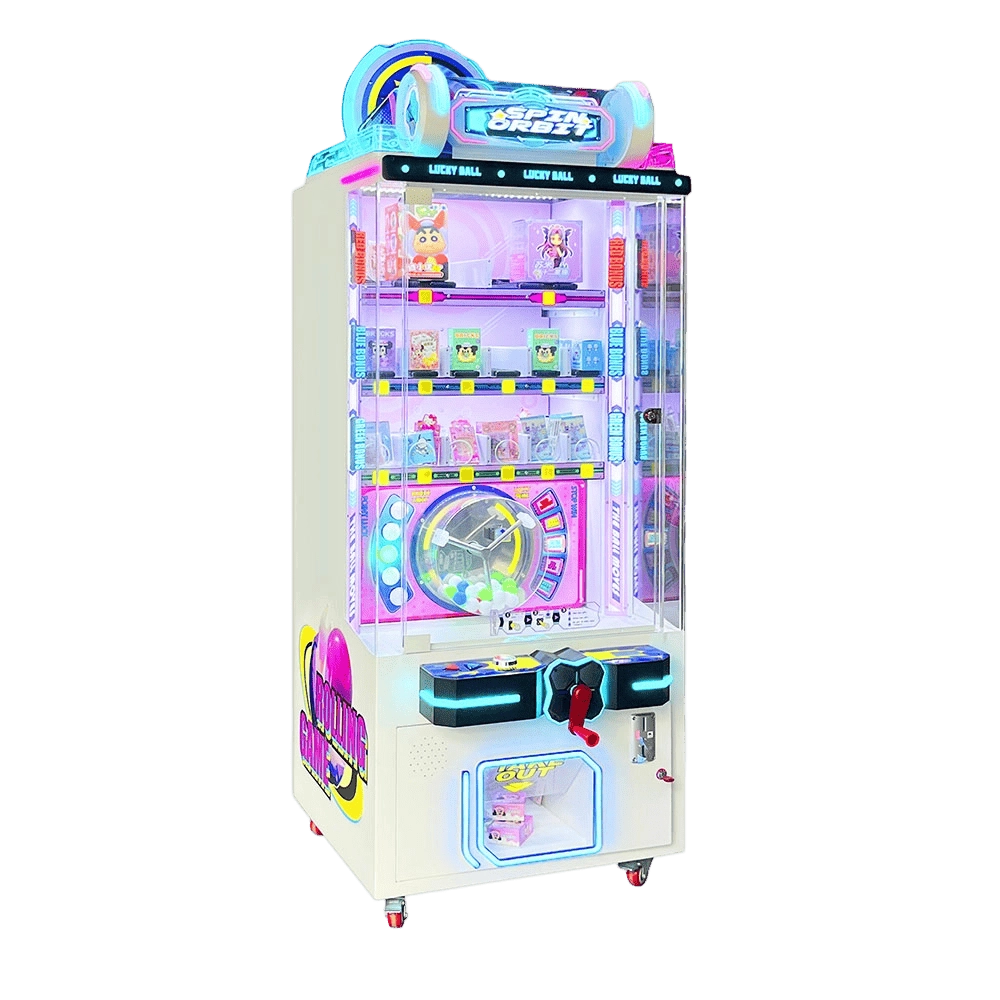
Players use the joystick to guide the ball into a designated hole. Each color ball corresponds to different prize values: red for the highest, blue and green for mid-range prizes, and white for no prize.
What types of customers does Jiami Games serve?
We serve a wide range of clients, including entertainment centers, shopping malls, theme parks, family entertainment venues, and arcade operators worldwide.
You May Also Like
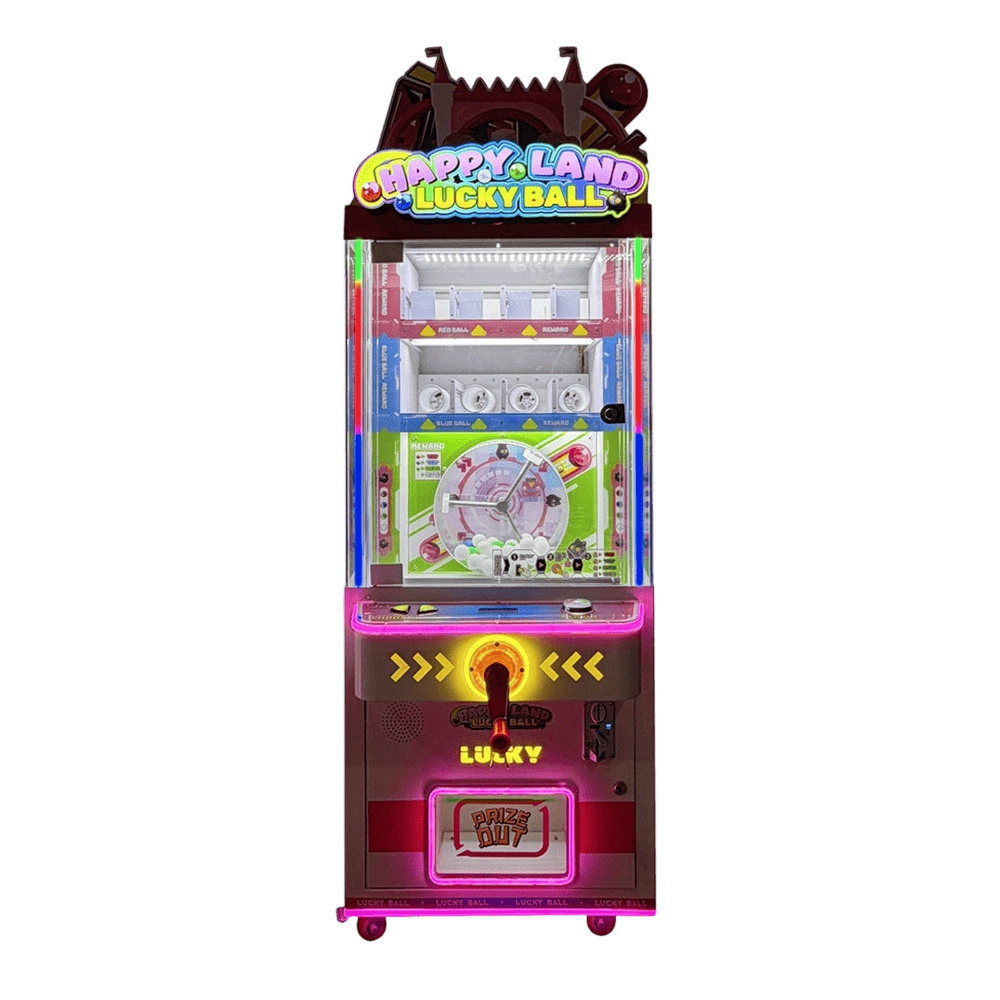
Coin Operated/Card Payment Lucky Ball Vending Toy Gift Arcade Game Machine
Coin Operated/Card Payment 2 Players SPIN ORBIT Lucky Prize Arcade Game
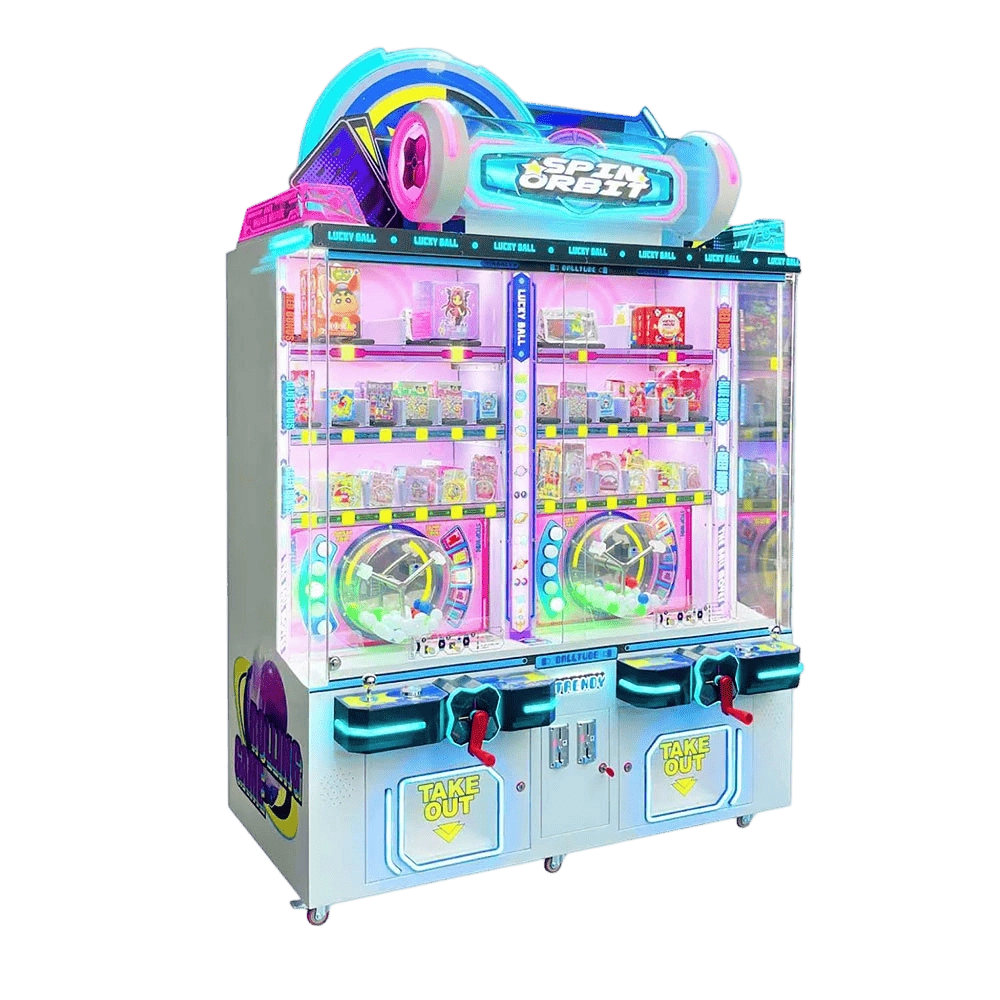
Coin Operated/Card Payment SPIN ORBIT Lucky Prize Arcade Game
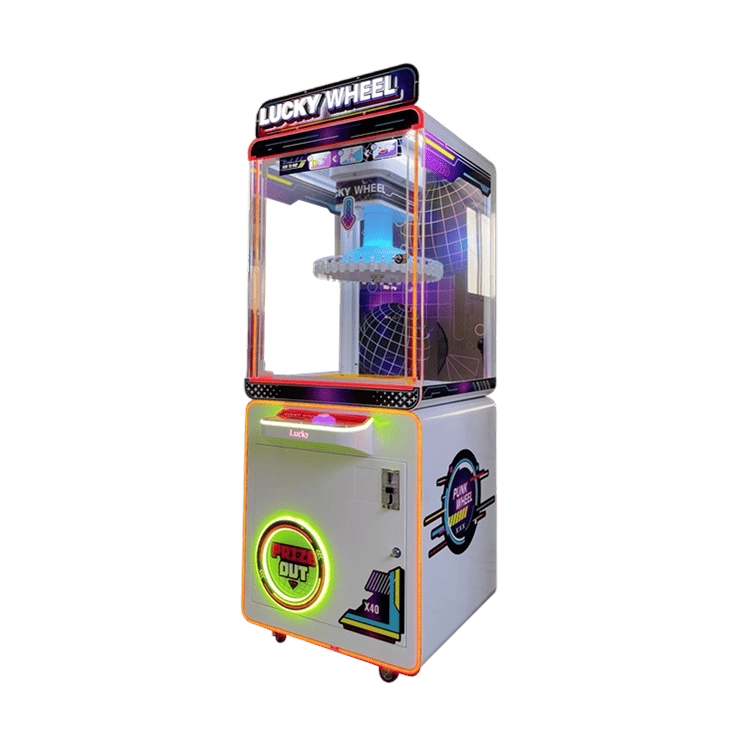
Arcade Prize Lucky Wheel Gift Machine For Amusement Areas
Get in Touch with Jiami Games
If you have any comments or good suggestions, please leave us a message; later our professional staff will contact you as soon as possible.

Innovative Entertainment, at Your Fingertips
Learn about Jiami Games and explore our expertise in console development, innovative design, and global markets.
Quick Links:
© 2026 Jiami Games.
Whatsapp: +8618520390438