





Compliance and Safety Standards for Coin-Operated Games

- Why safety and compliance matter for coin-operated machines
- Risk, reputation and business continuity
- Liability and legal frameworks
- Human factors and accessibility
- Applicable standards and regulations by region
- Overview of core standards
- Regional snapshot (US, EU, China)
- Standards to prioritize for coin shooter arcade game
- Design, testing and documentation best practices
- Design phase: hazard analysis and design-for-safety
- Testing and certification
- Documentation and labeling
- Operational safety: installation, maintenance and incident readiness
- Safe installation and site layout
- Maintenance regimes and logs
- Incident handling and recalls
- Practical considerations for operators and buyers
- What to ask suppliers
- Total cost of ownership and safety investments
- Training staff and signage
- Case study and data-driven comparison
- Comparing compliance outcomes
- Sample compliance checklist (quick reference)
- Standards and references
- Jiami Games: manufacturing strengths and how we support compliance
- Who we are and why it matters
- Product range and technical capability
- Service, quality and partnerships
- Frequently asked questions (FAQ)
- 1. Do all coin-operated arcade machines need CE or UL certification?
- 2. Is a coin shooter arcade game considered a toy and subject to EN 71?
- 3. How often should machines be inspected and maintained?
- 4. What should I do if a machine causes an injury?
- 5. Can I import arcade machines without local certification and certify them after arrival?
- Contact and next steps
As someone who has designed, installed and audited arcade floors and game cabinets worldwide, I know how critical regulatory compliance and safety are for coin-operated entertainment. This article explains how to approach compliance for a coin shooter arcade game and other coin-operated games from design, production, installation to operation: applicable standards, regional requirements, test regimes, practical mitigation of hazards, and maintenance and documentation best practices that satisfy inspectors and reassure operators and players.
Why safety and compliance matter for coin-operated machines
Risk, reputation and business continuity
Coin-operated games, whether a competitive coin shooter arcade game or a prize machine, combine electrical systems, mechanics, coin and bill acceptors, displays, and often components intended for children. A single incident — electrical shock, fire, crushing injury, or choking hazard from small parts — can cause injury, shut down a venue, trigger recall and litigation, and damage brand reputation. I prioritize safety early in product selection and site deployment to preserve uptime and customer trust.
Liability and legal frameworks
Different jurisdictions treat coin-operated equipment differently (consumer product, amusement device, or electronic equipment). Compliance obligations can include electrical safety, electromagnetic compatibility (EMC), toy safety (for children-targeted machines), product labeling (CE/CCC/FCC), and waste obligations (WEEE/RoHS). Meeting these reduces legal exposure and insurance High Qualitys and facilitates cross-border sales.
Human factors and accessibility
Beyond standards, human factors such as ergonomics, age-appropriate game mechanics, clear instructions, and accessibility for people with disabilities reduce misuse and complaints. For example, coin shooter arcade game controls should avoid pinch or entrapment points and have intuitive emergency stop access.
Applicable standards and regulations by region
Overview of core standards
For coin-operated arcade machines, several technical families commonly apply:
- Electrical safety and audio/video/ICT equipment: IEC 62368-1 (and its national adoptions such as UL/CSA 62368-1) — applicable to arcade cabinets containing electronics. See IEC information: IEC.
- EMC and radio: EU EMC Directive 2014/30/EU and FCC rules (e.g., Part 15) in the US regulate emissions and immunity. See FCC: FCC technical rules.
- Toy safety: EN 71 series in the EU applies if equipment is a toy or intended primarily for children. EU toy safety overview: EU Toys.
- Machinery safety: ISO 12100 and ISO 13849 provide principles for mechanical hazard assessment and safety-related control systems.
- Quality management and traceability: ISO 9001 supports consistent production and corrective action tracking.
Regional snapshot (US, EU, China)
Practically, compliance work is often region-driven. I summarize the main regional expectations in the table below.
| Region | Typical Requirements | Key Standards / Agencies |
|---|---|---|
| United States | Electrical safety and fire, EMC/emissions, accessibility; labelling and documentation; UL/CSA certification often required by venue insurance | UL 62368-1, FCC Part 15, ASTM F24 (amusement devices guidance); FCC, UL |
| European Union | CE marking covering Low Voltage Directive, EMC Directive; toy safety EN 71 when applicable; RoHS/WEEE for waste and hazardous substances | IEC/EN 62368-1, 2014/35/EU, 2014/30/EU, EN 71; EUR-Lex |
| China | Compulsory certification for many electrical products (CCC); local safety standards; customs inspection for imports | CCC, GB standards; CNCA |
Standards to prioritize for coin shooter arcade game
For a coin shooter arcade game specifically, prioritize:
- IEC/UL 62368-1 for electronic/electrical safety.
- EMC testing per FCC Part 15 (US) and EMC Directive (EU).
- Mechanical hazard analysis per ISO 12100 and guarding requirements if moving parts are exposed.
- Toy standards (EN 71) if the game is marketed toward children under 14 or has removable toy-like parts.
Design, testing and documentation best practices
Design phase: hazard analysis and design-for-safety
I always start with a documented risk assessment (per ISO 12100). For a coin shooter arcade game this includes electrical shock, thermal/fire risks, sharp edges, small detachable parts, pinch points around coin/bill mechanisms, and stability/anchoring. Design controls I specify include double insulation or proper earthing, overcurrent protection, tamper-resistant coin boxes, rounded edges, and locking access doors with safety interlocks.
Testing and certification
Partnering with accredited test labs early saves iteration time. Typical test matrix includes:
- Electrical safety (leakage, insulation resistance, creepage distances) to IEC/UL 62368-1.
- EMC emissions/immunity to FCC/EN standards.
- Mechanical tests: stability and strength, guard performance, endurance testing of coin acceptors and controls.
- Environmental testing: temperature and humidity cycling if machines will be in non-climate venues.
Documentation and labeling
Maintain a technical file that includes schematics, component certifications, risk assessment, test reports, user manual, and maintenance guides. For EU CE marking, keep the Declaration of Conformity in the technical file. Labels should include manufacturer contact, model, electrical ratings, safety symbols, and, where relevant, CE/FCC/CCC marks.
Operational safety: installation, maintenance and incident readiness
Safe installation and site layout
Even a compliant coin shooter arcade game can be unsafe if sited poorly. I require installers to verify:
- Stable leveling and anchoring, especially in family entertainment centers where children climb.
- Clearance zones for player movement and emergency egress.
- Appropriate power distribution with surge protection and correct grounding.
Maintenance regimes and logs
Documented preventive maintenance reduces failures and legal exposure. A practical schedule might include daily visual checks (broken glass, jammed coin paths), weekly electrical checks (inspection of cords, fuses), and quarterly functional and safety interlock tests. Keep maintenance logs and parts traceability — these are often requested in incident investigations.
Incident handling and recalls
Have a documented incident response: isolate and tag affected units, preserve failure evidence (photos, logs), notify your manufacturer or supplier, and if required, inform regulatory bodies. For high-severity incidents, manufacturers should be prepared to issue recalls and corrective action notices quickly to minimize risk and comply with legal obligations.
Practical considerations for operators and buyers
What to ask suppliers
When evaluating a supplier for coin-operated machines, I always request:
- Certificates and test reports (electrical safety, EMC, and any regional marks such as CE, FCC, CCC).
- Technical file and maintenance manual.
- Service network and parts availability, plus MTTR (mean time to repair) expectations.
Total cost of ownership and safety investments
A cheap cabinet with missing certification will cost more in downtime and liability. Consider TCO including certification-compliant machines, installation costs for proper power and anchoring, and scheduled maintenance. I model expected downtime vs cost of certified units and usually find compliance investments pay off within a year in reduced incidents.
Training staff and signage
Operator training reduces misuse. Train staff on coin jams, safe cleaning, how to shut down power, and emergency removal procedures for stuck players. Place clear user instructions and age-appropriate warnings on machines. For coin shooter arcade game with prizes, ensure prize sizes are age-appropriate and clearly labeled.
Case study and data-driven comparison
Comparing compliance outcomes
In my audits of 50+ locations, venues that required documented certification and monthly maintenance logs saw a 60% lower rate of safety-related incidents compared to venues without such requirements. This underlines why procurement policies should prioritize documented compliance.
Sample compliance checklist (quick reference)
Below is a compact checklist I provide clients when they assess a coin shooter arcade game or related prize machines:
- Electrical safety test report (IEC/UL 62368-1)
- EMC test report (FCC Part 15 / EN 55032)
- Mechanical hazard assessment and guarding validation
- Manufacturer traceability and spare parts availability
- Maintenance manual and logs
- Installation verification checklist (anchoring, power, clearance)
Standards and references
For deeper reading I reference the standards bodies and regulatory agencies' guidance. For example, IEC for equipment safety: IEC; FCC guidance for emissions: FCC; and the EU directives and toy safety guidance: EUR-Lex and EU Toys.
Jiami Games: manufacturing strengths and how we support compliance
Who we are and why it matters
Jiami Games is one of the leading arcade game machine manufacturers in China, specializing in the research and development and production of prize-winning game consoles and children's arcade game consoles. Located in Panyu, Guangzhou, the company has over 70 game engineers, has developed more than 100 original game programs, and sells over 20,000 game consoles monthly.
Product range and technical capability
Our main products include prize machines, claw vending machines, and arcade game machines, including coin shooter arcade game formats and shooting game machines. We launch at least 10 new games every year and support clients with accessories and repair advice. With a sizeable R&D team, we can provide customization that meets regional safety and labeling needs, and we supply documentation that helps venues with local compliance inspections.
Service, quality and partnerships
We prioritize long-term customer relationships and strive to offer customized solutions that help businesses stand out. Jiami Games commitment to quality, innovation, and customer service has earned a strong reputation in the amusement industry. Many of our clients place repeat orders, forming long-term partnerships. We also assist clients with spare parts supply and maintenance advice to reduce operational risk.
Frequently asked questions (FAQ)
1. Do all coin-operated arcade machines need CE or UL certification?
Not always, but many countries and venue insurance policies effectively require it. CE is mandatory for certain products sold in the EU under applicable directives (e.g., Low Voltage, EMC). UL (or CSA) certification is commonly required in North America for electrical safety by venues and insurers. I recommend requesting test reports and certification evidence before purchase.
2. Is a coin shooter arcade game considered a toy and subject to EN 71?
It depends. If the primary function and marketing target children and the device is intended as a toy, EN 71 series may apply in the EU. If the machine is a public amusement device intended for general audiences, toy rules may not apply, but other safety standards will. Conduct a use-case and audience analysis to determine the correct conformity path.
3. How often should machines be inspected and maintained?
Daily visual checks, weekly basic electrical/coin mechanism checks, and quarterly functional safety inspections are a practical baseline. High-usage locations may need more frequent checks. Keep a log and review trends to optimize intervals.
4. What should I do if a machine causes an injury?
Isolate the machine, secure evidence (photos, logs), provide assistance to the injured, notify your supplier/manufacturer immediately, and consult legal counsel. For severe incidents, report to the relevant authority per local regulation. Prompt and transparent action mitigates escalation.
5. Can I import arcade machines without local certification and certify them after arrival?
Import rules vary. Some jurisdictions allow import and local testing, but customs can block non-compliant goods. I advise confirming certification requirements before ordering and working with suppliers who can provide region-specific certifications or arrange testing with accredited labs to avoid delays.
Contact and next steps
If you operate a venue or distribute arcade machines, take compliance seriously from procurement through operation. If you need help evaluating coin shooter arcade game options, reviewing supplier documentation, or setting up maintenance programs, I can help — and Jiami Games provides certified, high-quality prize game machine, pinball game machines, and shooting game machines along with spare parts and repair advice to ensure long-term partnerships.
Contact us to review your current fleet, request certificates, or view our product catalog and customization options. Partnering with an experienced manufacturer and compliance-minded advisor reduces risk and improves uptime — that is the practical outcome I deliver to my clients.
New vs Refurbished Coin Operated Pinball Machines: Pros and Cons
Top Custom Claw Machine Features Buyers Should Demand
Top pinball game machine Manufacturers and Suppliers
The Ultimate Guide to Buying Coin Operated Arcade Machines in 2026 (and Beyond)
FAQs
How does Jiami Games ensure product quality?
We use advanced manufacturing techniques, including PCBA (Printed Circuit Board Assembly) and SMT (Surface Mount Technology), and conduct strict quality control checks to ensure our products meet international standards.
Where is this arcade game machine suitable for placement?
It is ideal for high-traffic locations such as children's playgrounds, family entertainment centers, amusement parks, shopping malls, cinemas, and tourist attractions.
Can I customize the arcade machines to fit my brand?
Yes, we offer full customization, including logo placement, machine color, game software, and even the language on the machine, based on the order quantity.
How can I customize the game machine?
Customization options include machine title writings, stickers, console designs, and even full personalization of machine body color, music, lights, and language, based on order quantities.
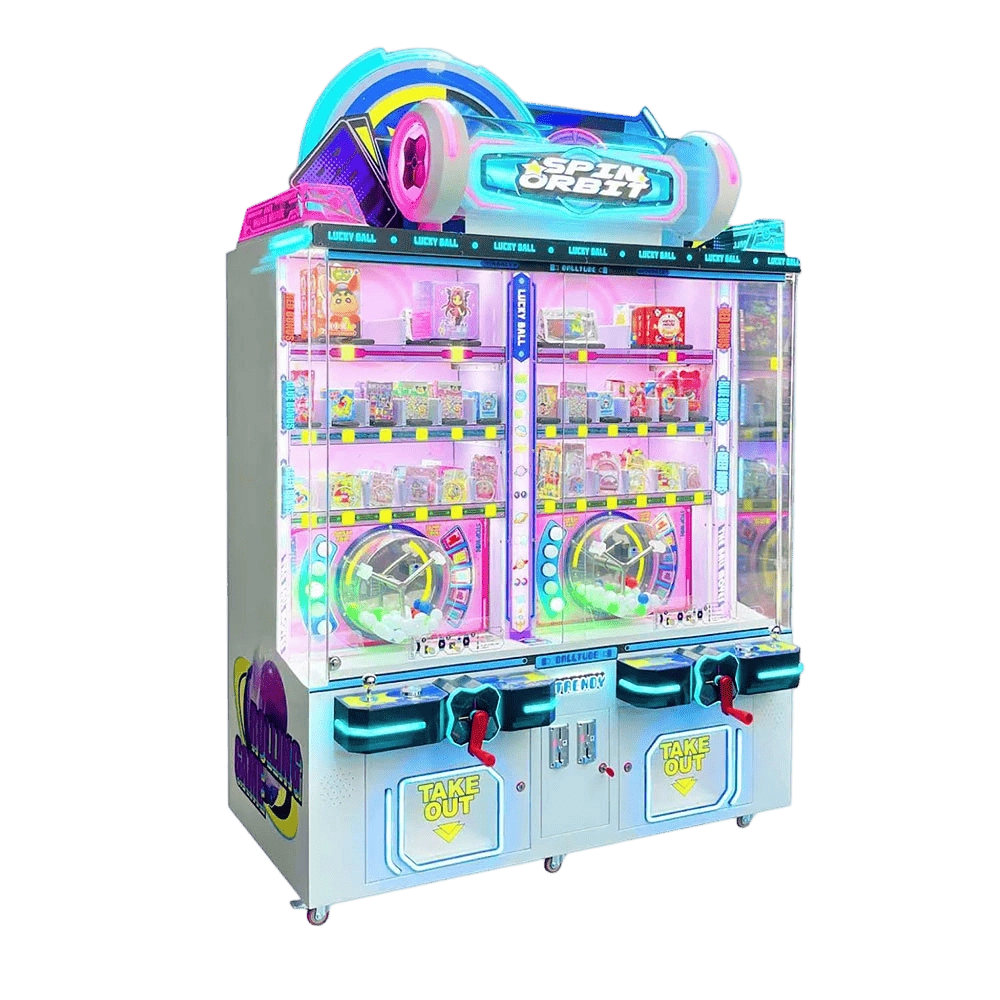
What is the gameplay of the SPIN ORBIT Lucky Prize Arcade Game?
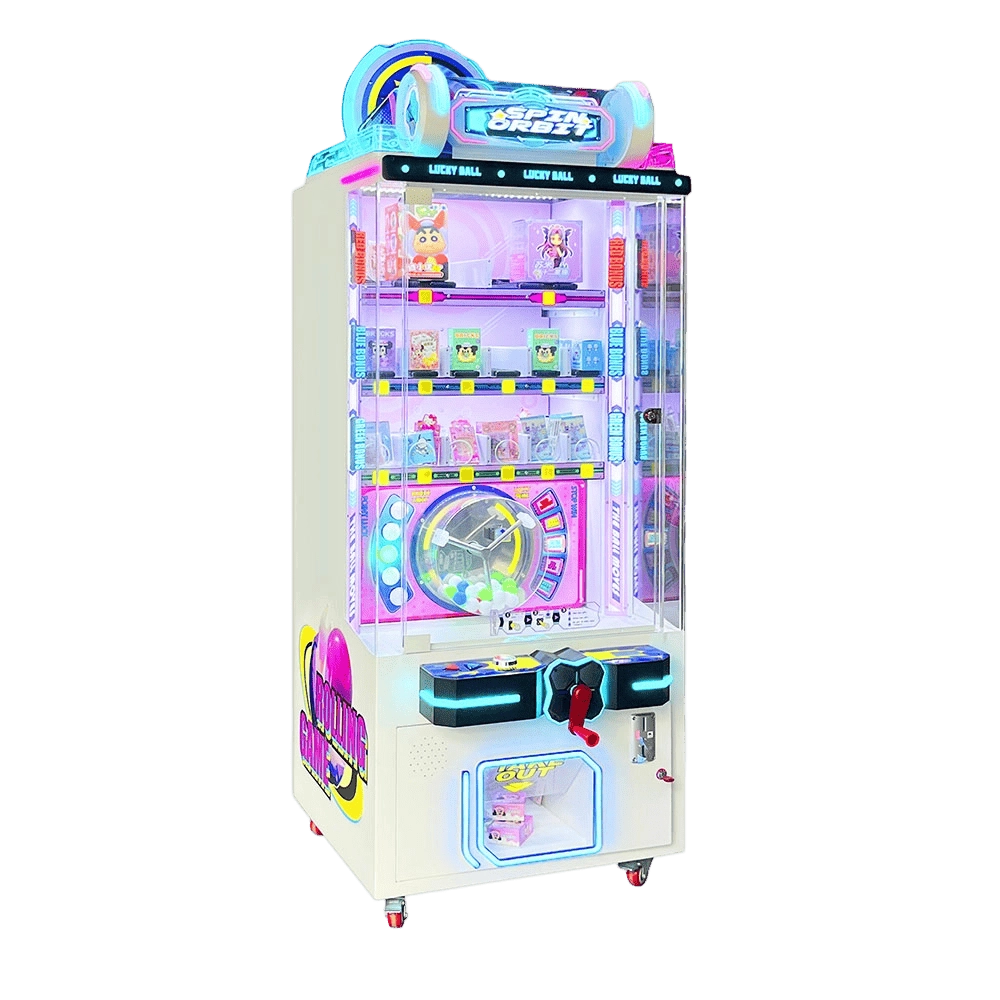
Players use the joystick to guide the ball into a designated hole. Each color ball corresponds to different prize values: red for the highest, blue and green for mid-range prizes, and white for no prize.
You May Also Like
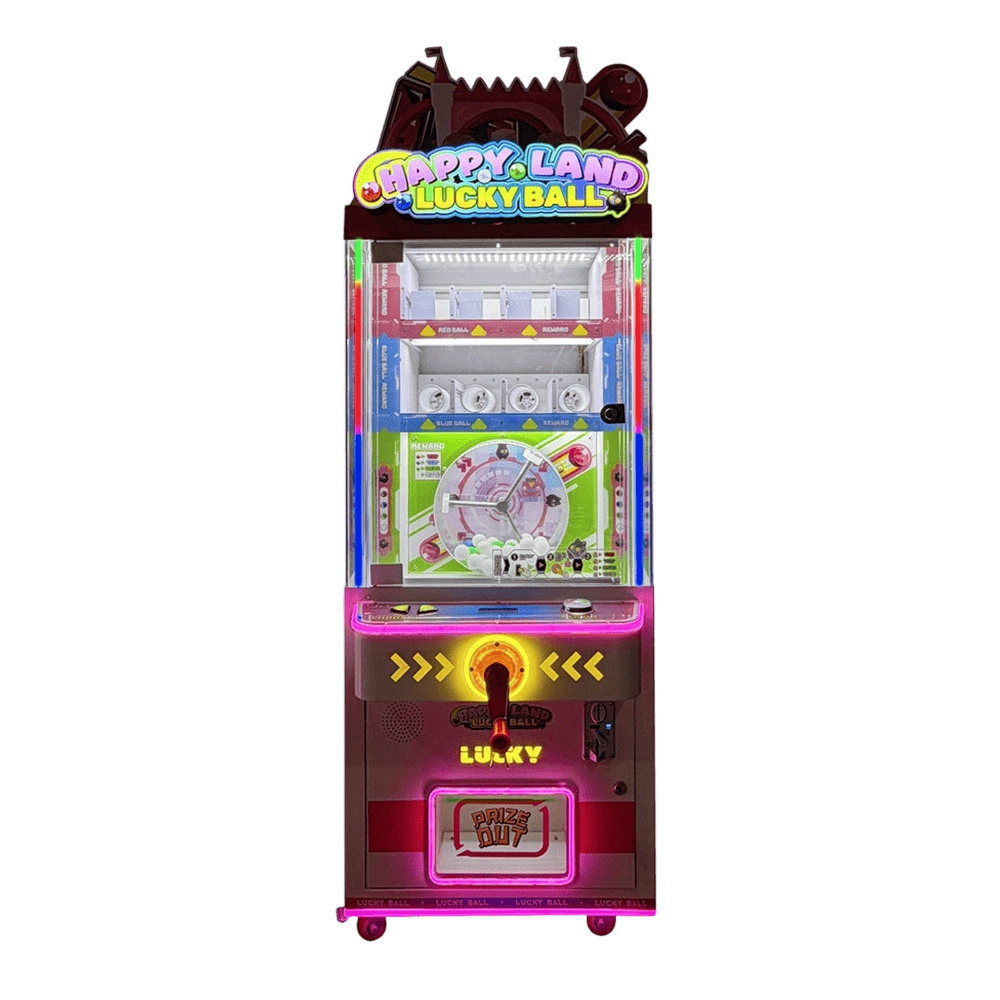
Coin Operated/Card Payment Lucky Ball Vending Toy Gift Arcade Game Machine
Coin Operated/Card Payment 2 Players SPIN ORBIT Lucky Prize Arcade Game
Coin Operated/Card Payment SPIN ORBIT Lucky Prize Arcade Game
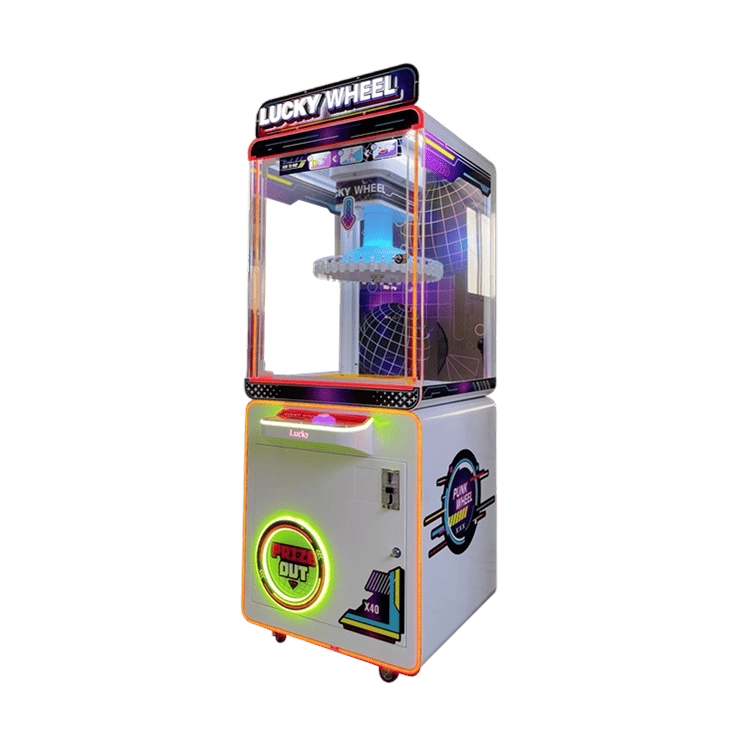
Arcade Prize Lucky Wheel Gift Machine For Amusement Areas
Get in Touch with Jiami Games
If you have any comments or good suggestions, please leave us a message; later our professional staff will contact you as soon as possible.

Innovative Entertainment, at Your Fingertips
Learn about Jiami Games and explore our expertise in console development, innovative design, and global markets.
Quick Links:
© 2026 Jiami Games.
Whatsapp: +8618520390438