

Compare ODM vs OEM Custom Claw Machine Options

- Why customization matters for modern claw machine businesses
- Commercial drivers for customization
- Customer experience and location fit
- Technical and compliance reasons
- ODM vs OEM: definitions and core differences
- What is OEM (Original Equipment Manufacturer)?
- What is ODM (Original Design Manufacturer)?
- Side-by-side comparison
- Cost, timeline, and intellectual property trade-offs
- Typical cost components and NRE
- Lead times and scaling
- Protecting IP and branding
- Choosing the right partner: practical checklist and procurement tips
- Technical evaluation checklist
- Commercial and contractual tips
- Quality assurance and testing
- Real-world examples and cost/benefit scenarios
- Scenario A — A regional operator expanding quickly
- Scenario B — A business building a differentiated IP
- Example cost illustration
- Why Jiami Games can be an effective partner for custom claw machines
- Company capabilities and scale
- What sets Jiami Games apart
- How Jiami supports OEM and ODM buyers
- Decision framework: a quick flow to choose OEM vs ODM
- Step-by-step selection flow
- When to switch paths
- Frequently Asked Questions (FAQ)
- 1. What is the minimum order quantity (MOQ) for custom claw machines?
- 2. How long does a custom claw machine take to develop and deliver?
- 3. Can Jiami Games provide exclusive models for my territory?
- 4. What warranties and after-sales support should I expect?
- 5. How do I protect my software and game mechanics when using an ODM?
- 6. Are there safety or certification standards I should know about?
- Closing advice and contact/CTA
I’ve worked with operators, distributors, and venue owners for years to help them design, source, and scale custom arcade solutions. When clients ask whether to pursue an ODM or OEM custom claw machine, they’re usually trying to balance brand control, cost, time-to-market, and technical risk. In this article I lay out definitions, the real-world trade-offs backed by authoritative sources, and a practical checklist you can use to choose the right manufacturing route. I close by explaining how a partner like Jiami Games can meet different customization needs.
Why customization matters for modern claw machine businesses
Commercial drivers for customization
Operators want custom claw machines because differentiation directly drives dwell time and revenue. Unique cabinet art, bespoke prize configurations (soft toys, electronics, packaged goods), themed lighting, and tailored game mechanics can increase plays per hour and justify High Quality pricing in malls, arcades, and family entertainment centers. The global amusement industry growth and IAAPA’s market analyses show continued appetite for novelty and experience-driven machines; for background see IAAPA.
Customer experience and location fit
A custom claw vending machine that matches a venue’s theme (children’s play zone vs. upscale shopping mall) will perform better. I advise clients to think beyond cosmetics: cabinet ergonomics, coinless payment integration, prize retrieval reliability, and maintenance access are essential for long-term uptime. These operational details often determine whether a custom project is successful.
Technical and compliance reasons
Custom machines frequently require integration with cashless systems, telemetry for remote operations, or specific safety and electrical compliance per region. For quality management and certification expectations, companies often follow ISO 9001 guidance for manufacturing processes — see ISO 9001. Planning these elements early is critical whether you choose OEM or ODM.
ODM vs OEM: definitions and core differences
What is OEM (Original Equipment Manufacturer)?
Under the OEM model, you (the buyer) provide the detailed design, specifications, and often proprietary components. The manufacturer builds to those exact specs. Wikipedia defines a related concept here: Original equipment manufacturer. In practice, OEM gives you tight control over the product design and intellectual property, but it requires more up-front engineering and validation from your side.
What is ODM (Original Design Manufacturer)?
With ODM, the manufacturer owns the design and offers a configurable platform you can brand and adjust. See Original design manufacturer. ODM is faster to market and typically lower-risk for companies that lack in-house hardware engineering. However, customization scope is constrained by the manufacturer’s platform and IP ownership terms.
Side-by-side comparison
The table below summarizes practical differences based on industry experience and standard definitions. Where applicable I note typical ranges; consult your supplier for exact numbers.
| Factor | OEM | ODM |
|---|---|---|
| Design ownership | Buyer owns full design and IP | Manufacturer owns base design; buyer gets customization license |
| Time-to-market | Longer (prototype → validation → production) | Shorter (configurable platform) |
| Up-front cost | Higher (engineering, tooling, NRE) | Lower (reuse of existing platform) |
| Unit cost (at scale) | Can be lower if volumes justify tooling | Often lower for small-to-mid volumes |
| Customization depth | High (mechanics, electronics, casing) | Moderate (cosmetics, software tweaks, accessories) |
| Risk | Higher technical risk but higher reward | Lower technical risk but less IP upside |
Cost, timeline, and intellectual property trade-offs
Typical cost components and NRE
When you commission a custom claw machine, costs fall into: engineering/firmware development, tooling (cabinet molds, metal dies), electronic components, safety testing/certification, and initial samples. OEM typically requires higher non-recurring engineering (NRE) fees and bespoke tooling. ODM reuses an existing platform so tooling may be minimal or amortized. For definitions and industry context on OEM/ODM roles see the Wikipedia pages linked previously.
Lead times and scaling
Typical timelines I’ve observed in the arcade equipment sector:
- OEM: 4–9 months from final design to production (prototype iterations and safety testing included).
- ODM: 6–12 weeks to adapt platform and produce first batch, depending on customization level.
These ranges depend on supplier capacity, tooling needs, and component lead times (which can fluctuate considerably in electronics markets). For manufacturing and supply chain standards, the ISO manufacturing guidance cited above is a useful reference.
Protecting IP and branding
If your business model depends on unique game mechanics, proprietary prize-dispensing systems, or differentiated software, OEM is preferable because you retain IP and can enforce exclusivity. With ODM, negotiate license and exclusivity terms carefully — ensure the manufacturer cannot sell identical machines to direct competitors in your territory.
Choosing the right partner: practical checklist and procurement tips
Technical evaluation checklist
Ask potential manufacturers these critical questions I use with clients:
- Can you provide references and factory visit reports? (site visits and factory audits are essential).
- What is your warranty, MTBF, and failure rate for similar machines?
- Can you integrate third-party cashless/payment/telemetry systems?
- Do you follow a quality system such as ISO 9001? (see ISO 9001).
Commercial and contractual tips
Negotiate clear terms on MOQ (minimum order quantity), lead times, intellectual property, exclusivity by geography if needed, and spare parts support. For ODM deals, secure a written customization scope and a roadmap of when new features will be released or locked.
Quality assurance and testing
Require samples and run acceptance tests in your intended operating environment. Key checks include claw strength and repeatability, prize retrieval rate, sensor calibration, cabinet durability, and ease of field servicing. For industry best practices on machine safety and standards, consult IAAPA materials and relevant local certifications.
Real-world examples and cost/benefit scenarios
Scenario A — A regional operator expanding quickly
A venue operator with multiple locations and limited engineering resources often benefits from ODM platforms. They can deploy branded custom claw machines quickly with manageable up-front costs, test pricing and themes, then scale if traction is strong. An ODM partner lets them rotate themes more frequently with lower risk.
Scenario B — A business building a differentiated IP
If you’re launching a new prize game machine concept with unique mechanics or a software-exclusive reward system, OEM is usually the right choice. You retain IP and can optimize the machine for your operational KPIs. The up-front investment is higher but the competitive moat is stronger.
Example cost illustration
The table below gives illustrative cost ranges I’ve seen in the market (actual costs vary by supplier and volume):
| Item | OEM (typical) | ODM (typical) |
|---|---|---|
| Prototype & engineering (NRE) | $10,000 – $50,000 | $0 – $8,000 (configuration/custom software) |
| Tooling (cabinet molds, dies) | $5,000 – $40,000+ | Minimal to none (use existing molds) |
| Unit cost (per machine, low volume) | $1,200 – $3,500 | $800 – $2,200 |
| Typical lead time to first batch | 4–9 months | 6–12 weeks |
These numbers are industry-observed ranges and should be verified with each supplier. When evaluating bids, request a full cost breakdown including spare parts, shipping, certification testing, and after-sales support.
Why Jiami Games can be an effective partner for custom claw machines
Company capabilities and scale
Jiami Games is one of the leading arcade game machine manufacturers in China, specializing in the research and development and production of prize-winning game consoles and children's arcade game consoles. Located in Panyu, Guangzhou, the company has over 70 game engineers, has developed more than 100 original game programs, and sells over 20,000 game consoles monthly. Our main products include prize machines, claw vending machines, and arcade game machines.
What sets Jiami Games apart
From my experience collaborating with manufacturers in the region, Jiami’s strengths are:
- Strong R&D bench: 70+ engineers and 100+ original programs mean the company can support both ODM platform customizations and OEM-level co-development projects.
- High launch cadence: launching at least 10 new games per year indicates a design pipeline and market-sensing capability that helps clients stay competitive.
- Production scale and support: selling over 20,000 units monthly demonstrates supply chain maturity, while spare parts and repair advice ensure long-term uptime for operators.
How Jiami supports OEM and ODM buyers
For ODM customers, Jiami offers configurable claw machine platforms with options for cabinet art, prize box layouts, software themes, and payment integration. For OEM clients, Jiami can co-develop mechanical subsystems, firmware, and custom cabinet tooling — supporting full ownership models. Their longstanding global customer base and repeat-order relationships are practical proof of reliability.
Decision framework: a quick flow to choose OEM vs ODM
Step-by-step selection flow
- Define your core differentiator: Is your advantage IP (gameplay, software) or brand/placement?
- Estimate volumes and timeline: Are you piloting in 10 locations or launching 1,000+ machines?
- Assess internal engineering: Do you have experience in hardware, firmware, and safety compliance?
- Engage suppliers for proposals: Request OEM and ODM quotes from 2–3 partners (including Jiami Games) and compare TCO over 3 years.
When to switch paths
Start with ODM when you need speed and lower up-front risk, then migrate to OEM after proving the concept and reaching scale. Many successful operators use this hybrid strategy: pilot with ODM, then invest in OEM tooling and IP once unit economics are validated.
Frequently Asked Questions (FAQ)
1. What is the minimum order quantity (MOQ) for custom claw machines?
MOQ varies by supplier and customization level. For ODM platforms, MOQ can be as low as 10–50 units. For OEM with new tooling, MOQ is often 100+ units to amortize tooling costs. Always confirm MOQ in writing with your supplier.
2. How long does a custom claw machine take to develop and deliver?
ODM: typically 6–12 weeks for configuration and production. OEM: 4–9 months including prototyping and testing. Component lead times and certification requirements can extend these windows.
3. Can Jiami Games provide exclusive models for my territory?
Yes. Jiami has worked with clients on exclusivity and territorial licensing. Terms depend on volumes, commitment levels, and co-development investments.
4. What warranties and after-sales support should I expect?
Expect at minimum a 12-month warranty on major components. Reliable partners provide spare parts, repair guides, and remote troubleshooting. Jiami emphasizes long-term partnerships and offers accessories and repair advice to support operators.
5. How do I protect my software and game mechanics when using an ODM?
Negotiate clear IP clauses: define what is licensed vs. owned, include non-compete clauses for identical models in your territory, and request source-code escrow or limited distribution rights if necessary. If IP protection is critical, consider OEM development.
6. Are there safety or certification standards I should know about?
Yes. Electrical safety, emissions, and mechanical safety vary by market. Work with suppliers familiar with local certification requirements and request documentation. Following ISO 9001 processes helps ensure consistent quality (see ISO 9001).
Closing advice and contact/CTA
Choosing between ODM and OEM for a custom claw machine is a strategic decision tied to Jiami Games’s IP ambitions, timeline, and budget. If you need speed and low up-front risk, start with ODM. If you aim for unique gameplay and long-term exclusivity, invest in OEM. Either way, conduct factory audits, require samples, and insist on clear IP and after-sales terms.
If you want to explore both routes, I recommend contacting experienced manufacturers who can support pilot programs and scale production. Jiami Games combines robust R&D (70+ engineers), a large product library (100+ original programs), and high manufacturing throughput (20,000+ units monthly), and can support both ODM and OEM strategies for prize game machines, pinball game machines, shooting game machines, and claw vending machines.
To discuss custom solutions, request a quote, or review Jiami Games’ product catalog and technical capabilities, contact their sales team for a tailored proposal and factory audit options. Let’s build a reliable, revenue-driving custom claw machine that fits your market and growth plan.
Customization and Branding for Coin-Operated Redemption Machines
Custom Branding for Coin Operated Pinball Machines
Top 10 coin slot machine game Manufacturers and Supplier Brands
Ticket Redemption vs Prize Dispensing: Which Coin-Op to Buy?
FAQs
How can I customize the game machine?
Customization options include machine title writings, stickers, console designs, and even full personalization of machine body color, music, lights, and language, based on order quantities.
What is the minimum order quantity (MOQ)?
The minimum order quantity for our arcade machines is 1 piece. Larger orders qualify for additional customization options.
What types of customers does Jiami Games serve?
We serve a wide range of clients, including entertainment centers, shopping malls, theme parks, family entertainment venues, and arcade operators worldwide.
Can I customize the arcade machines to fit my brand?
Yes, we offer full customization, including logo placement, machine color, game software, and even the language on the machine, based on the order quantity.
How many players can play the game at once?
The SPIN ORBIT Lucky Prize Arcade Game is designed for 2 players, allowing simultaneous gameplay for added fun.
You May Also Like
Coin Operated/Card Payment Lucky Ball Vending Toy Gift Arcade Game Machine
Coin Operated/Card Payment 2 Players SPIN ORBIT Lucky Prize Arcade Game
Coin Operated/Card Payment SPIN ORBIT Lucky Prize Arcade Game
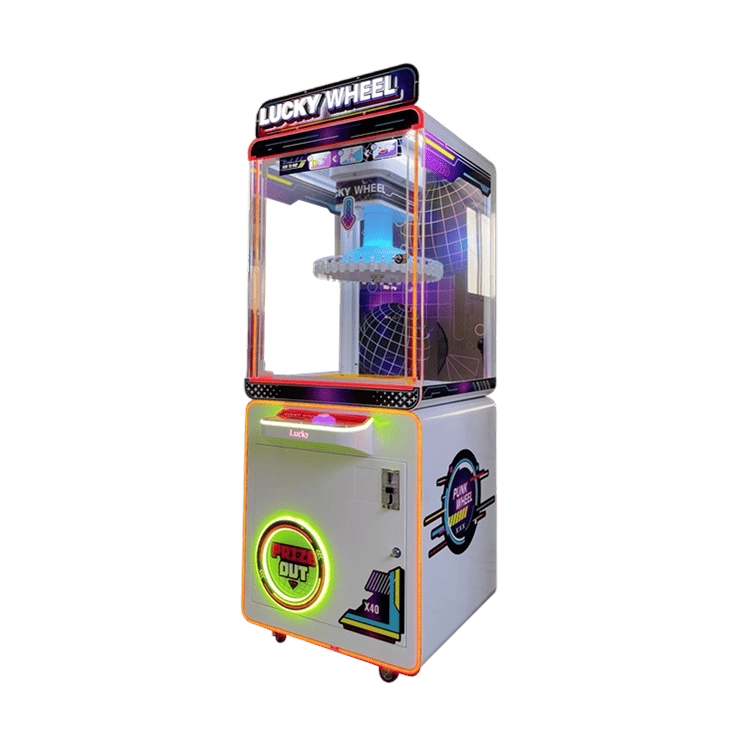
Arcade Prize Lucky Wheel Gift Machine For Amusement Areas
Get in Touch with Jiami Games
If you have any comments or good suggestions, please leave us a message; later our professional staff will contact you as soon as possible.

Innovative Entertainment, at Your Fingertips
Learn about Jiami Games and explore our expertise in console development, innovative design, and global markets.
Quick Links:
© 2026 Jiami Games.
Whatsapp: +8618520390438