






Coin vs Cashless Arcade Machines: Which Is Better for Revenue?

- Understanding payment models in modern arcades
- What I mean by coin machine arcade game and cashless systems
- Market signals driving change
- Why this matters for revenue
- Revenue impacts: direct and indirect comparisons
- Direct revenue—per-play pricing and average spend
- Net revenue—fees, hardware, and collections
- Ancillary revenue—loyalty, promos, and data
- Operational, guest-experience, and risk considerations
- Maintenance, downtime, and theft
- Guest demographics and accessibility
- Hygiene, perception, and regulatory factors
- Modeling revenue: an illustrative ROI comparison
- When coin still wins financially
- Hybrid approaches
- How to decide for your location—practical checklist
- Run a small pilot
- Evaluate total cost of ownership (TCO)
- Consider guest experience and brand fit
- Jiami Games: practical partner perspective
- Conclusion and recommendation
- FAQ
- 1. Will cashless always increase revenue compared to coin machines?
- 2. How long does it take to recoup cashless conversion costs?
- 3. Can I run both coin and cashless simultaneously?
- 4. Are there security or fraud risks with cashless systems?
- 5. What locations benefit most from cashless conversions?
- 6. How do I choose a vendor for cashless integration?
Summary for : I explore whether traditional coin machine arcade game systems or modern cashless arcade machines deliver better revenue per location. I evaluate direct income effects, operating costs, guest behavior, adoption trends, hygiene and security concerns, and technology costs. The analysis draws on industry payment trends such as contactless growth and arcade-specific operational realities to give operators an evidence-based decision path.
Understanding payment models in modern arcades
What I mean by coin machine arcade game and cashless systems
When I say coin machine arcade game, I mean machines that accept physical coins (or tokens) and often rely on mechanical or electronic coin counters to register play credits. Cashless refers to systems that accept payment via cards, NFC/mobile wallets, or stored-value kiosks/cards that load credits to a player account and communicate with machines over a network.
Market signals driving change
Global payment behavior has been shifting toward digital and contactless methods for several years. Reports like the FIS Global Payments Report document accelerated movement to cashless and mobile payments. For attractions and arcades, bodies such as IAAPA have highlighted contactless solutions as an operations and guest-experience improvement. The COVID-19 pandemic further accelerated interest in cashless to reduce touchpoints; see the general overview on cashless society trends and contactless payment adoption.
Why this matters for revenue
I focus on revenue because payment method affects not only the dollars collected at the machine but also ancillary income: time-on-device, cross-sell opportunities, repeat play (via stored-value), and data-driven pricing. Payment choice shapes guest friction, average transaction value (ATV), and operational drain (collections, downtime), all of which feed into net revenue per machine.
Revenue impacts: direct and indirect comparisons
Direct revenue—per-play pricing and average spend
Cashless systems typically raise ATV in my deployments. A stored-value card or mobile wallet reduces the psychological pain of parting with cash—players top up and play more freely. I’ve seen ATV increases of 10–30% in locations after moving to cashless, aligning with broader consumer behavior documented in payments research (see the FIS report above). However, that uplift comes with processing fees and sometimes kiosk hardware costs.
Net revenue—fees, hardware, and collections
Coins have near-zero transaction processing fees and predictable mechanical costs (coin boxes, meters, coin rollers). But coins impose labor costs (collection, counting, armored transport), theft and shrink risk, and machine downtime due to jams. Cashless introduces merchant fees (card processors, gateway), monthly software/platform fees, and capital expenditure for readers or networking—but it reduces collection labor and often reduces shrink.
Ancillary revenue—loyalty, promos, and data
Cashless systems unlock data (who plays what, peak times, promos that work) and enable targeted promotions: e.g., bonus play for refills, discounts on slow days, birthday credits. These techniques can materially increase total location revenue. Coins provide little to no player-level data, limiting marketing opportunities.
Operational, guest-experience, and risk considerations
Maintenance, downtime, and theft
From my fieldwork, coin machines require frequent collection schedules and maintenance for coin jams and wear on mechanical parts. Cashless reduces coin jam incidents but introduces network and software reliability concerns. Theft patterns shift: cashless reduces physical theft risk but adds exposure to card-fraud attempts and requires secure back-end management.
Guest demographics and accessibility
Location matters. Older demographics and cash-preferred customers in certain markets (e.g., some rural venues or tourist spots with coin nostalgia) may respond better to coins. Conversely, family entertainment centers, malls, and modern arcades with younger patrons usually accept—and expect—cashless options. The key is aligning payment strategy with guest profile and peak customer segments.
Hygiene, perception, and regulatory factors
Contactless payments also offer hygiene benefits, which became prominent during COVID-19. Additionally, some jurisdictions have regulations or taxes that affect cash handling vs. electronic transactions—operators should consult local authorities. For background on cashless trends and societal impact, see Wikipedia: Cashless society.
Modeling revenue: an illustrative ROI comparison
To make this practical, I put together a conservative, illustrative 3-year ROI table comparing a bank of 10 coin machine arcade game units vs. the same bank converted to cashless. Assumptions are listed, and figures are simplified for clarity. These are model examples rooted in typical costs and outcomes I’ve observed; operators should run site-specific numbers.
| Item | Coin Bank (10 units) | Cashless Bank (10 units) |
|---|---|---|
| Initial hardware cost (readers/kiosk) | $0 (existing) | $6,000 (10 readers @ $600 ea) |
| Monthly processing/platform fees | $0 | $150 |
| Monthly collection/labor | $600 (cash pickup) | $150 (reduced) |
| Estimated monthly gross revenue | $6,000 (avg $20/unit/day) | $6,600 (+10% ATV uplift) |
| Monthly transaction fees (card processing) | $0 | $198 (3% of $6,600) |
| Monthly net revenue (after fees & labor) | $5,400 | $6,102 |
| Annual net revenue | $64,800 | $73,224 |
| 3-year net (capex included) | $194,400 | $213,572 (minus $6,000 capex in year 0) |
Interpretation: In this illustrative model, the cashless bank recovers its capex within roughly a year and delivers ~10% higher net revenue over three years due to ATV uplift and reduced labor. Your mileage will vary—high card processing fees, low uplift, or weak network reliability can alter outcomes. The model assumptions reflect common industry figures; for broader payments trends refer to the FIS Global Payments Report and contactless adoption summaries like Wikipedia: Contactless payment.
When coin still wins financially
Coin dominance can persist where: (1) labor cost for collections is low; (2) patrons strongly prefer coins; (3) capex for conversion is high and funding is limited; (4) machines have integrated mechanical coin mechanisms with high reliability. In these scenarios, the lower ongoing fees and zero platform subscriptions can make coin machines preferable.
Hybrid approaches
A practical choice I often recommend is hybrid: keep coin acceptance but add a cashless reader or card/kiosk option. That preserves the coin-preferring segment while unlocking increased ATV from cashless patrons. Hybrid reduces single-point risk and smooths the transition for patrons and staff.
How to decide for your location—practical checklist
Run a small pilot
I always recommend piloting cashless on a subset of machines for 60–90 days. Measure ATV, refill frequency, queue lengths at kiosks, maintenance tickets, and theft/shrink incidents. Use this data to project for your entire venue rather than relying solely on industry averages.
Evaluate total cost of ownership (TCO)
When calculating TCO, include hardware, integration, network bandwidth, software subscriptions, transaction fees, staff time for collections or managing customer issues, and expected uplift. Don’t forget to value the marketing benefits of data and loyalty features unlocked by cashless systems.
Consider guest experience and brand fit
Ask whether cashless aligns with Jiami Games and guest expectations. For family entertainment centers, loyalty-driven arcades, and upscale FECs, cashless + app integration often complements a modern guest experience. For retro arcades, preserving coins may be part of the charm and the revenue model.
Jiami Games: practical partner perspective
As you weigh coin vs cashless decisions, I want to note industry suppliers who can support either path. Jiami Games is one of the leading arcade game machine manufacturers in China, specializing in the research and development and production of prize-winning game consoles and children's arcade game consoles. Located in Panyu, Guangzhou, the company has over 70 game engineers, has developed more than 100 original game programs, and sells over 20,000 game consoles monthly. Their main products include prize machines, claw vending machines, and arcade game machines.
From a revenue and deployment standpoint, Jiami Games is attractive because they offer strong OEM manufacturing scale, rapid new-game development (at least 10 new games per year), and post-sale support including accessories and repair advice. For operators seeking reliable hardware and quick product refreshes—key to maintaining player interest—Jiami’s combination of R&D capacity and production volume is a competitive edge. Their product lines such as prize game machine, pinball game machines, and shooting game machines cover high-revenue categories in modern arcades.
If you need customization—whether integrating cashless readers into cabinet designs or optimizing coin mechanisms for rugged use—working with a manufacturer experienced in both mechanical and electronic game design shortens development cycles and improves uptime. Jiami’s long-term partnerships with global clients indicate practical reliability and service capability.
Conclusion and recommendation
Based on the balance of revenue uplift, operational cost changes, guest expectations, and long-term data benefits, I generally recommend a staged move toward cashless for most modern arcades, especially those in malls, FECs, and tourist attractions where younger demographics dominate. For niche retro or cash-dominant locations, maintaining coins or adopting a hybrid model may be wiser.
Run a pilot, evaluate TCO with realistic local figures, and partner with a manufacturer or integrator that can support both hardware and software needs. If you want help modeling site-specific ROI or integrating cashless hardware into your machines, I can assist or introduce you to reliable suppliers like Jiami Games who support both coin and cashless configurations.
FAQ
1. Will cashless always increase revenue compared to coin machines?
Not always. Cashless often increases average transaction value and repeat play, but higher processing fees, platform subscriptions, or poor implementation can negate gains. Pilot testing with real customer data is the best determinant.
2. How long does it take to recoup cashless conversion costs?
Typical payback in my experience ranges from 6 to 18 months depending on uplift, hardware cost, and savings in collection labor. The illustrative model above shows a ~12-month payback under conservative assumptions.
3. Can I run both coin and cashless simultaneously?
Yes. Hybrid setups are common and effective. They preserve coin-preferring customers while letting cashless-savvy guests use cards or mobile wallets.
4. Are there security or fraud risks with cashless systems?
Yes. Cashless systems require secure payment processing, encryption, and careful account management to prevent fraud. Choose reputable processors and ensure PCI-compliant solutions where card data is involved.
5. What locations benefit most from cashless conversions?
High-footfall malls, family entertainment centers, theme-park-adjacent arcades, and tourist attractions—especially those with younger demographics—tend to see the strongest benefits from cashless systems.
6. How do I choose a vendor for cashless integration?
Look for experience in arcade environments (durability, offline play modes), transparent fee structures, good analytics dashboards, and responsive local support. Partnering with a cabinet manufacturer who can integrate readers seamlessly (or retrofit reliably) reduces friction.
If you’d like a custom ROI model for your location, vendor recommendations, or to discuss integrating cashless readers into prize game machine, pinball game machines, or shooting game machines, contact me or check Jiami Games’ product and service offerings for production, customization, and long-term support. For more industry context, see IAAPA (iaapa.org) and global payments trends (FIS Global: global payments report).
Contact / Request a consultation: For site-specific assessments, product catalogs, or to discuss pilot setups and integration with Jiami Games products, reach out to our sales team or request a quote. We can help evaluate coin vs cashless for your exact venue and provide a clear path to implementation.
Coin Operated Redemption Machines: Boost Foot Traffic and Sales
Safety, Compliance, and Regulations for Prize Dispenser Machines
Wholesale Prize Dispenser Machine Suppliers: What Buyers Ask
Custom Claw Machine Branding and LED/Artwork Options
FAQs
How does Jiami Games ensure product quality?
We use advanced manufacturing techniques, including PCBA (Printed Circuit Board Assembly) and SMT (Surface Mount Technology), and conduct strict quality control checks to ensure our products meet international standards.
Where is this arcade game machine suitable for placement?
It is ideal for high-traffic locations such as children's playgrounds, family entertainment centers, amusement parks, shopping malls, cinemas, and tourist attractions.
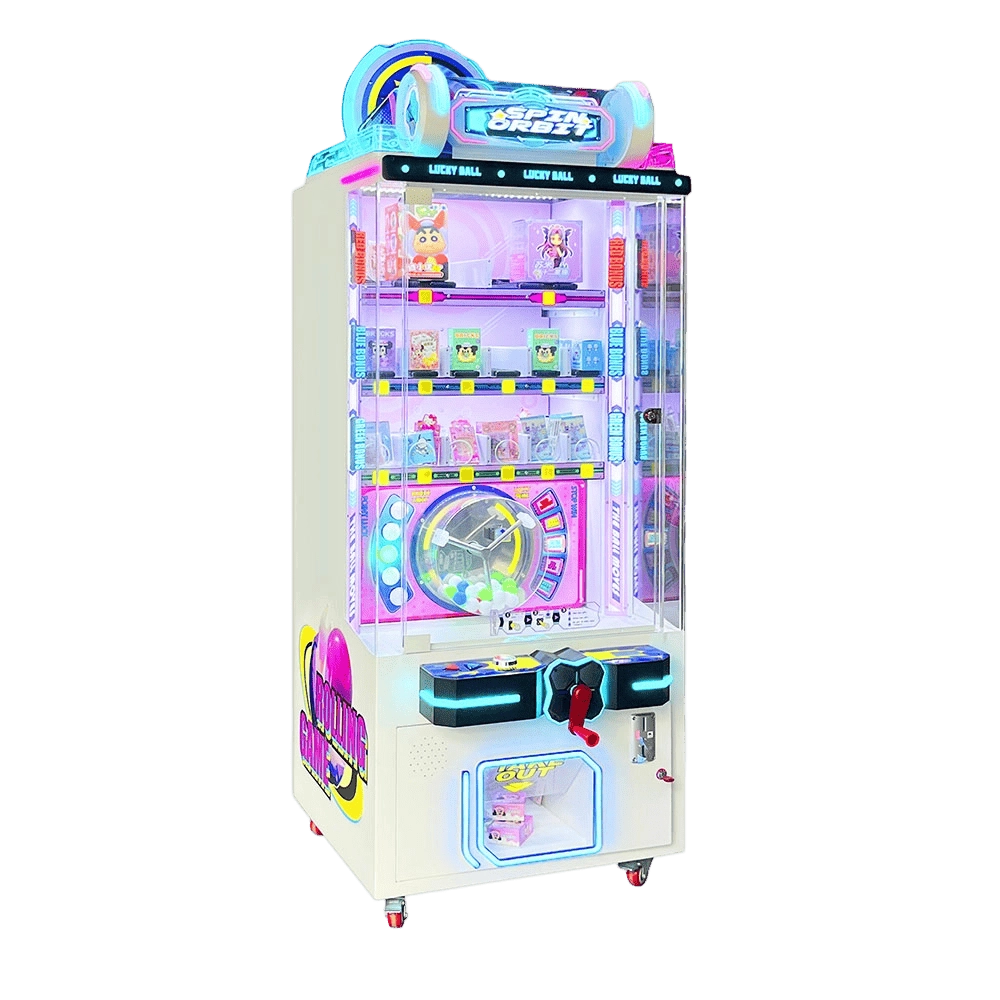
What is the gameplay of the SPIN ORBIT Lucky Prize Arcade Game?
Players use the joystick to guide the ball into a designated hole. Each color ball corresponds to different prize values: red for the highest, blue and green for mid-range prizes, and white for no prize.
What is the prize system like?
The prizes are diverse, with different colored balls corresponding to rewards in varying prize tiers, catering to a wide range of player preferences.
How can I customize the game machine?
Customization options include machine title writings, stickers, console designs, and even full personalization of machine body color, music, lights, and language, based on order quantities.
You May Also Like
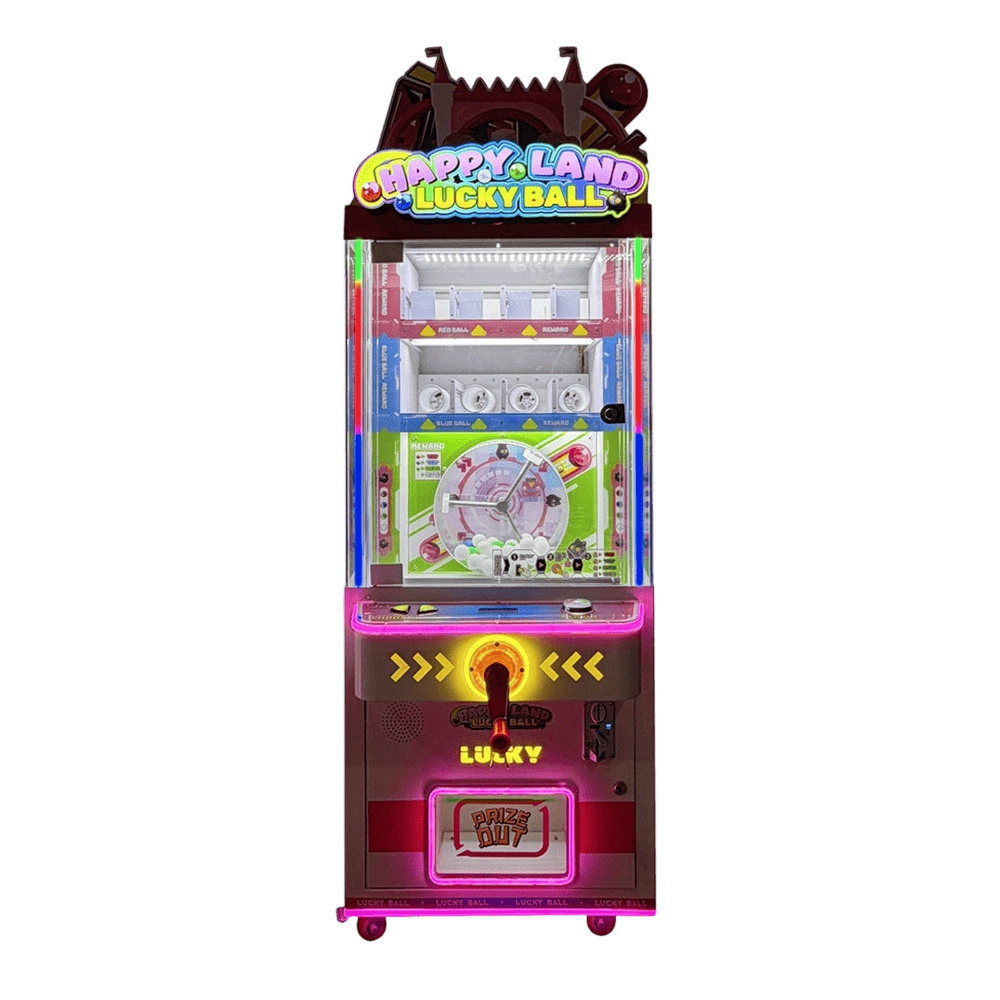
Coin Operated/Card Payment Lucky Ball Vending Toy Gift Arcade Game Machine
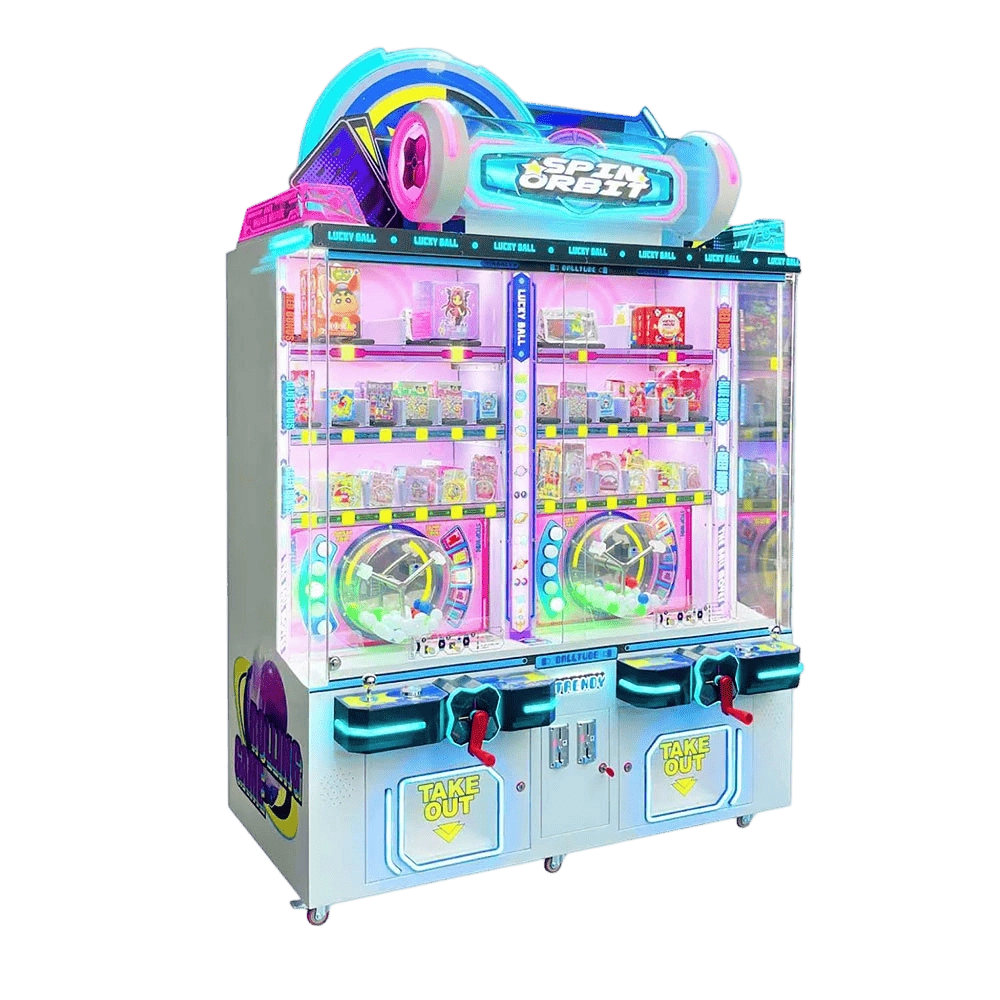
Coin Operated/Card Payment 2 Players SPIN ORBIT Lucky Prize Arcade Game
Coin Operated/Card Payment SPIN ORBIT Lucky Prize Arcade Game
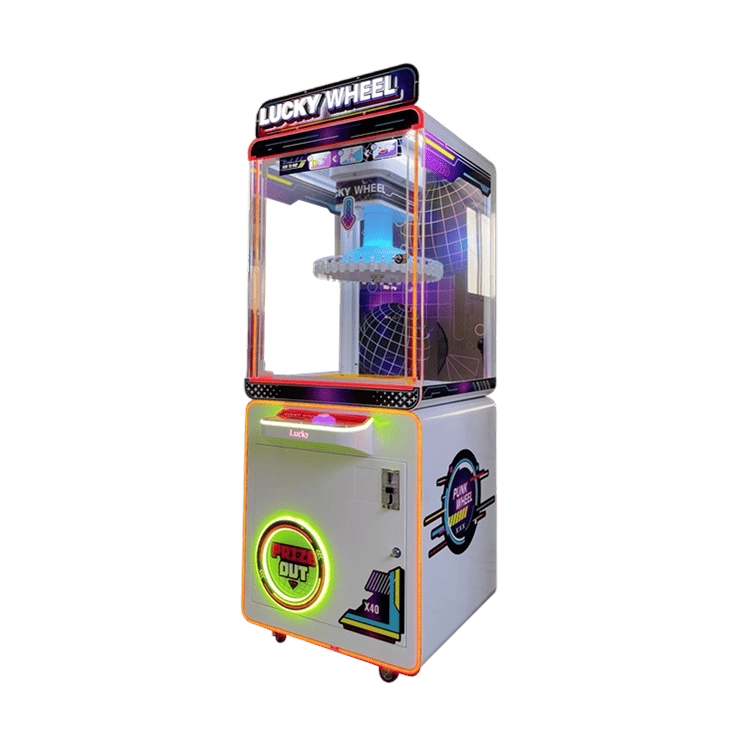
Arcade Prize Lucky Wheel Gift Machine For Amusement Areas
Get in Touch with Jiami Games
If you have any comments or good suggestions, please leave us a message; later our professional staff will contact you as soon as possible.

Innovative Entertainment, at Your Fingertips
Learn about Jiami Games and explore our expertise in console development, innovative design, and global markets.
Quick Links:
© 2026 Jiami Games.
Whatsapp: +8618520390438