






Coin Slot vs Cashless Slot Machines: Which to Buy for Arcades

- Understanding player behavior and payment trends
- Why payment method matters for arcades
- What the data says about cash vs. cashless adoption
- Player segments and preferences
- Operational costs and revenue impact
- Upfront purchase and retrofitting costs
- Maintenance, downtime and labor
- Revenue control, fraud and payout handling
- Player experience, security and compliance
- UX: Speed, feedback and perceived fairness
- Security and payment compliance
- Accessibility and inclusiveness
- Making the purchase decision and supplier considerations
- When to choose coin slot machines
- When cashless is the better option
- Hybrid models and phased upgrades
- Supplier evaluation checklist
- Jiami Games — manufacturer profile and why I recommend them
- Implementation roadmap and best practices
- Step-by-step deployment plan
- Measuring success
- Regulatory and local compliance checks
- FAQs
- 1. Are coin slot machine games obsolete?
- 2. Can I retrofit existing coin machines to be cashless?
- 3. How do cashless transaction fees affect margins?
- 4. What is the typical lifespan of coin vs. cashless machines?
- 5. Which solution gives better theft and fraud protection?
- 6. How quickly can I pilot a cashless rollout?
- Contact, next steps and CTA
As an arcade consultant based in Panyu, Guangzhou with years of on-floor and factory experience, I regularly advise operators in North America, Europe, Southeast Asia and the Middle East on machine procurement and floor configuration. In this article I compare coin slot machine game cabinets and cashless slot machines through the lens of operations, player behavior, maintenance, revenue performance and vendor selection — so you can decide which to buy for your arcade environment.
Understanding player behavior and payment trends
Why payment method matters for arcades
Choosing between a traditional coin slot machine game and a cashless slot affects throughput, dwell time, perceived fairness, and even prize-redemption flows. Coins are tangible and give immediate feedback, which encourages quick play cycles; cashless systems can speed transactions, enable loyalty programs, and collect customer data that helps optimize game placement and promotions.
What the data says about cash vs. cashless adoption
Across entertainment venues, cashless payments have been steadily rising. Industry sources note that theme parks and attractions are increasingly adopting tap-to-pay and closed-loop systems to reduce queues and enhance guest experience (IAAPA, Funworld). Broader social trends toward reduced cash usage are also documented in public research on payment behavior (Pew Research) and discussions of a cashless society (Wikipedia).
Player segments and preferences
Young adults and families often prefer cashless convenience and loyalty integration, while younger children and older patrons may respond better to coin mechanics and physical interaction. Local culture matters: in some markets, players still expect coin slots and tokens as part of the amusement experience; in others, a smartphone-led cashless approach is accepted and even preferred.
Operational costs and revenue impact
Upfront purchase and retrofitting costs
Coin slot machines are typically less expensive to purchase outright if you buy standard cabinets, but they require regular cash collection, armored transport arrangements, and secure coin boxes. Cashless systems often require a higher initial investment in hardware (readers, validators), software licenses, and integration with card or closed-loop payment backends.
Maintenance, downtime and labor
Coin machines suffer from mechanical wear: coin acceptors jam, motors and belts wear, and coin sorting requires daily attention. Cashless systems reduce coin-handling labor but introduce software maintenance and network dependency. Both systems require preventive maintenance — the difference is the nature of the expertise (mechanical vs. IT/Networking).
Revenue control, fraud and payout handling
Cashless systems provide clearer audit trails and easier remote adjustments of pricing, promotions, and payout rates — reducing shrinkage and human error. Coin systems are simpler to reconcile physically but are more vulnerable to coin fraud and meter tampering unless monitored frequently.
| Metric | Coin Slot Machine Game | Cashless Slot Machine | Source / Notes |
|---|---|---|---|
| Initial hardware cost | Lower (standard cabinets) | Higher (readers, backend, licensing) | Vendor quotes; typical industry observation |
| Operational labor | High (coin collection, counting) | Lower (fewer cash-handling tasks), but needs IT support | IAAPA notes reduced cash handling improves operations (IAAPA) |
| Revenue analytics | Limited (manual counting) | Rich (real-time telemetry, player data) | Common capabilities of modern cashless platforms |
| Downtime risk | Mechanical failures; easy local fixes | Network/software outages; remote troubleshooting | Operational experience |
Player experience, security and compliance
UX: Speed, feedback and perceived fairness
Coin slot machine game mechanics deliver tactile satisfaction and visible credit accumulation. Cashless systems remove coin handling friction and speed transactions but must be designed to preserve the tactile and visual cues that players enjoy — for example, on-screen credit counters, lights and sound that replicate coin insertion feedback.
Security and payment compliance
Cashless systems introduce payment security and compliance obligations. If you accept card payments or store customer data, you must consider standards like PCI DSS (for card data) and local laws on data protection. Coin systems have physical security concerns (safe placement, armored pickups) but fewer digital compliance obligations. For broader context on financial message standards in payments, see discussions of transaction messaging standards and financial compliance frameworks (Wikipedia).
Accessibility and inclusiveness
Some players do not carry cards or mobile wallets. Token or coin-based systems remain inclusive for underbanked customers, tourists, or players who prefer cash. Many operators choose hybrid models — coins/tokens plus a cashless option — to serve the widest audience.
Making the purchase decision and supplier considerations
When to choose coin slot machines
I typically recommend buying coin slot machine game cabinets when:
- Your market expects tactile, token-based play (family entertainment centers, traditional arcades).
- Your operation is smaller and you want to avoid upfront network and software costs.
- Your staff can reliably handle coin collection and you prefer simpler mechanical maintenance tasks.
When cashless is the better option
Cashless solutions make sense if you want to:
- Scale revenue analytics and run dynamic pricing or loyalty campaigns.
- Reduce cash handling costs and shrinkage risk in high-footfall venues.
- Integrate with a wider venue ecosystem (POS, online ticketing, wristbands) to create seamless guest journeys.
Hybrid models and phased upgrades
For many operators I advise a hybrid approach: keep a core of coin slot machine game units to preserve the classic experience while introducing cashless-capable machines in high-traffic or High Quality zones. You can phase cashless rollouts by starting with prize redemption counters or loyalty kiosks to introduce the payment ecosystem gradually.
Supplier evaluation checklist
When selecting vendors or manufacturers, evaluate:
- Reliability and mean time between failures (MTBF) for hardware.
- Availability of spare parts and field service in your region.
- Software support, frequency of updates, and data ownership terms.
- Compliance with payment security standards (if cashless).
- Ability to customize game programs and prize logic to local regulations.
Jiami Games — manufacturer profile and why I recommend them
Jiami Games is one of the leading arcade game machine manufacturers in China, specializing in the research and development and production of prize-winning game consoles and children's arcade game consoles. Located in Panyu, Guangzhou, the company has over 70 game engineers, has developed more than 100 original game programs, and sells over 20,000 game consoles monthly. Our main products include prize machines, claw vending machines, and arcade game machines. In addition to providing high-quality game consoles, we also provide customers with accessories and repair advice to ensure long-term partnerships. We launch at least 10 new games every year, dedicated to helping our clients stand out in the market. Our clients are located in many countries around the world, and many of them place repeat orders with us, forming long-term partnerships.
I’ve worked with Jiami Games on several projects. Their strengths include fast R&D cycles, a strong catalog of original titles, and the ability to supply both coin slot machine game cabinets and cashless-ready machines. They also provide spare parts packages and remote troubleshooting guidance — essential for minimizing downtime. Their main product categories: prize game machine, pinball game machines, shooting game machines, and claw vending/ticket redemption cabinets.
What sets Jiami apart in my experience is the combination of competitive pricing, local manufacturing scale (which supports quick order fulfillment), and an engineering team that can customize gameplay and payment integrations for hybrid floors. If you plan to deploy cashless systems, check their compatibility options and software service-level agreements.
Implementation roadmap and best practices
Step-by-step deployment plan
- Audit your customer demographics and peak throughput times.
- Decide on a floor mix (percentage coin vs. cashless vs. hybrid).
- Choose vendors with local support; test machines in a pilot zone.
- Measure KPIs: transaction time, uptime, revenue per machine, and redemption rates.
- Iterate pricing, loyalty offers and machine placement based on analytics.
Measuring success
Key metrics I use to evaluate a payment conversion pilot include:
- Revenue per available machine hour (RPAH)
- Average transaction time
- Uptime percentage and mean time to repair (MTTR)
- Redemption conversion (tickets to prizes) and loyalty uptake
Regulatory and local compliance checks
Before deployment, confirm local regulations governing prize games, gambling thresholds, and electronic payments. Some jurisdictions treat certain prize mechanisms as gambling and require licensing. Consult local regulators and legal counsel before full rollouts.
FAQs
1. Are coin slot machine games obsolete?
No. Coin slot machine game cabinets are still popular in many markets because they offer a tactile, familiar experience, lower initial IT costs, and accessibility for cash customers. Obsolescence depends on local player preferences and business model.
2. Can I retrofit existing coin machines to be cashless?
Often yes — many manufacturers and third-party vendors offer retrofit kits (card readers, RFID/ticket validators) and software modules. Retrofitting requires ensuring physical compatibility and integrating with your redemption and accounting systems.
3. How do cashless transaction fees affect margins?
Card or mobile wallet transactions typically incur processing fees and sometimes platform licensing fees. However, these costs can be offset by reduced labor, lower shrinkage, higher throughput, and the ability to run promotions that increase spend. Model the full costs vs. benefits for your venue.
4. What is the typical lifespan of coin vs. cashless machines?
Lifespan depends on use intensity and maintenance. Mechanically maintained coin machines can last many years if serviced, while cashless machines may have similar hardware lifespans but require ongoing software support. Plan for periodic upgrades to payment modules over time.
5. Which solution gives better theft and fraud protection?
Cashless systems provide better audit trails and remote monitoring, reducing internal theft and shrinkage. Coin systems require rigorous physical security measures, scheduled pickups, and CCTV to mitigate theft.
6. How quickly can I pilot a cashless rollout?
A small pilot can be launched in 4–8 weeks depending on vendor readiness, integration complexity, and local payment processing setup. Allow extra time for compliance checks and staff training.
Contact, next steps and CTA
If you’re evaluating coin slot machine game cabinets or planning a cashless conversion, I can help audit your floor, model financial impacts, and recommend a phased deployment plan. For manufacturers, parts, and custom solutions, I regularly work with Jiami Games — they supply prize game machines, pinball game machines, shooting game machines and claw vending machines, and offer both coin and cashless-capable variants.
Contact us to schedule a consultation or request a quote for a pilot package: email sales@jiamigames.example or visit the Jiami Games catalog to view product specs and request customizations. Let’s design a floor mix that maximizes revenue, minimizes downtime, and matches your customers’ payment preferences.
Customize Coin-Operated Machines: Branding & Prize Options
Best arcade prize machine manufacturers and supplier brands in China
Cost vs ROI: Selecting Profitable Prize Dispenser Machines
Buyer's Guide: Best Coin-Operated Redemption Machines
FAQs
What is the prize system like?
The prizes are diverse, with different colored balls corresponding to rewards in varying prize tiers, catering to a wide range of player preferences.
What types of customers does Jiami Games serve?
We serve a wide range of clients, including entertainment centers, shopping malls, theme parks, family entertainment venues, and arcade operators worldwide.
What is the gameplay of the SPIN ORBIT Lucky Prize Arcade Game?
Players use the joystick to guide the ball into a designated hole. Each color ball corresponds to different prize values: red for the highest, blue and green for mid-range prizes, and white for no prize.
What is the minimum order quantity (MOQ)?
The minimum order quantity for our arcade machines is 1 piece. Larger orders qualify for additional customization options.
How does Jiami Games ensure product quality?
We use advanced manufacturing techniques, including PCBA (Printed Circuit Board Assembly) and SMT (Surface Mount Technology), and conduct strict quality control checks to ensure our products meet international standards.
You May Also Like
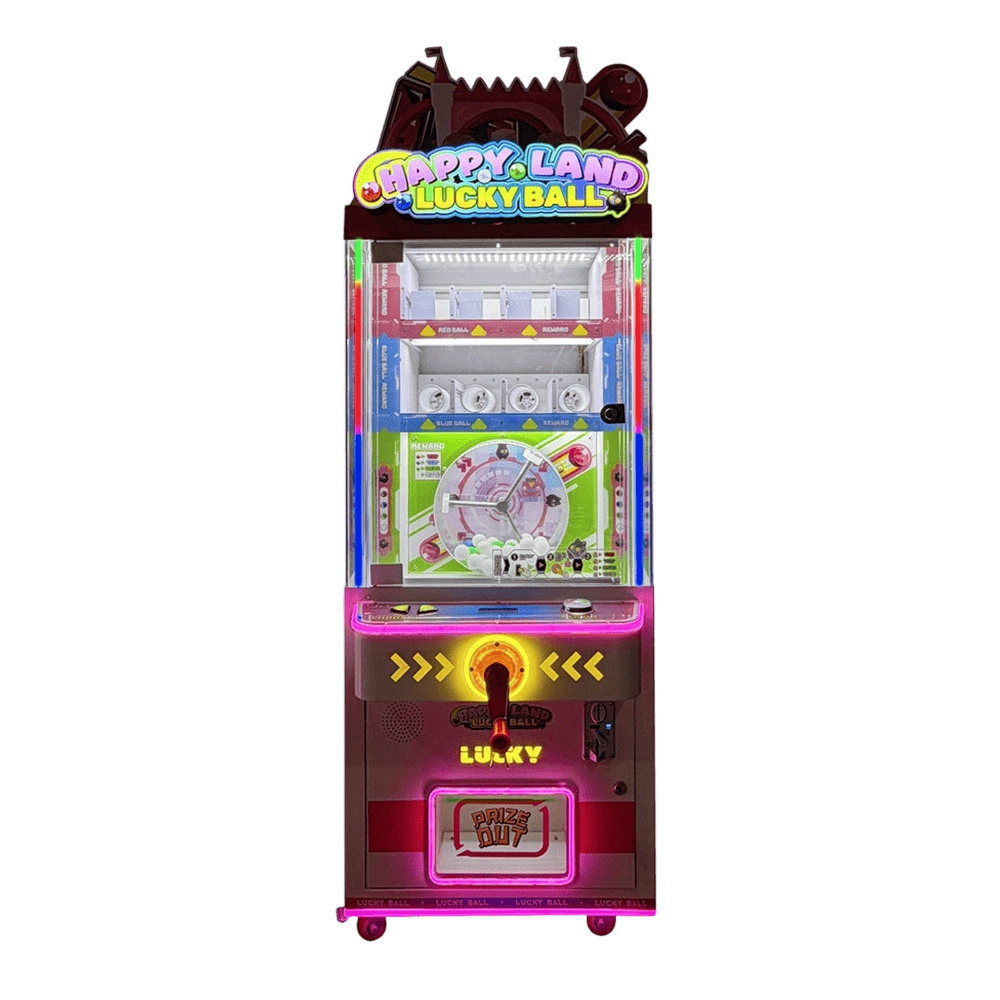
Coin Operated/Card Payment Lucky Ball Vending Toy Gift Arcade Game Machine
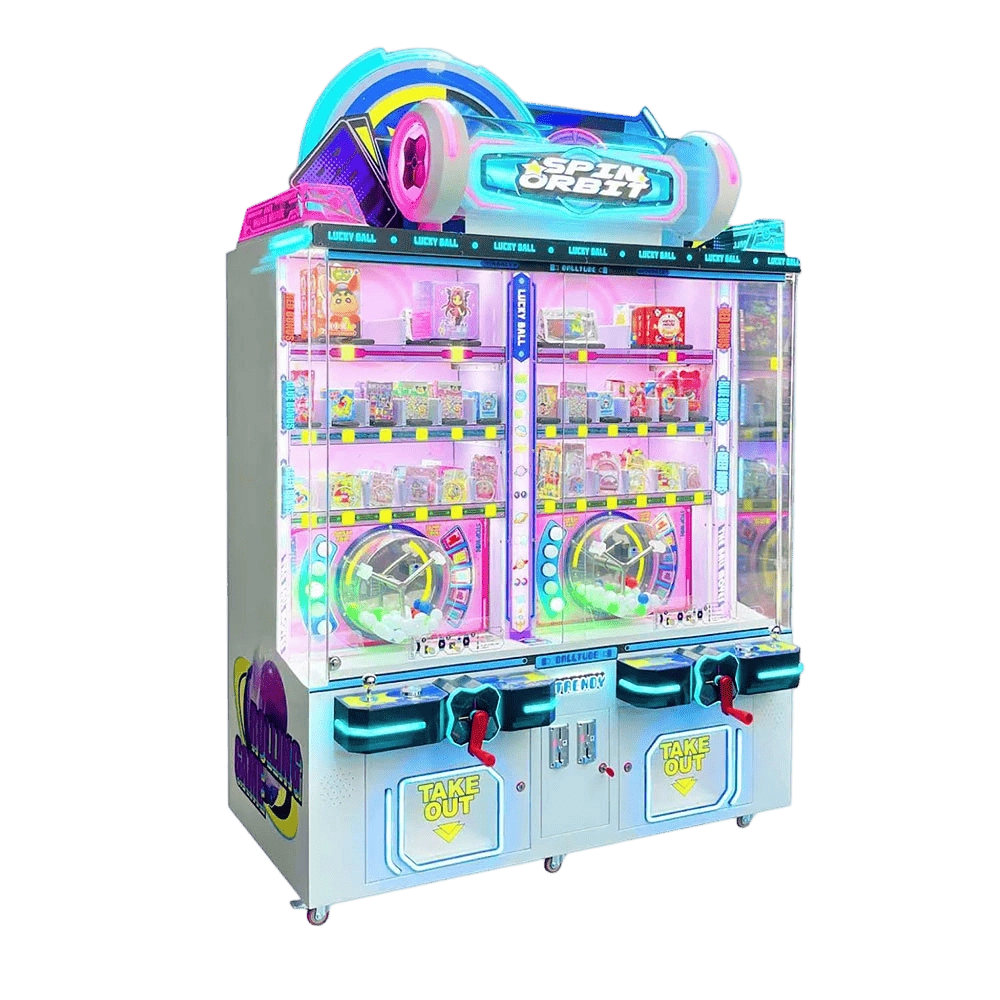
Coin Operated/Card Payment 2 Players SPIN ORBIT Lucky Prize Arcade Game
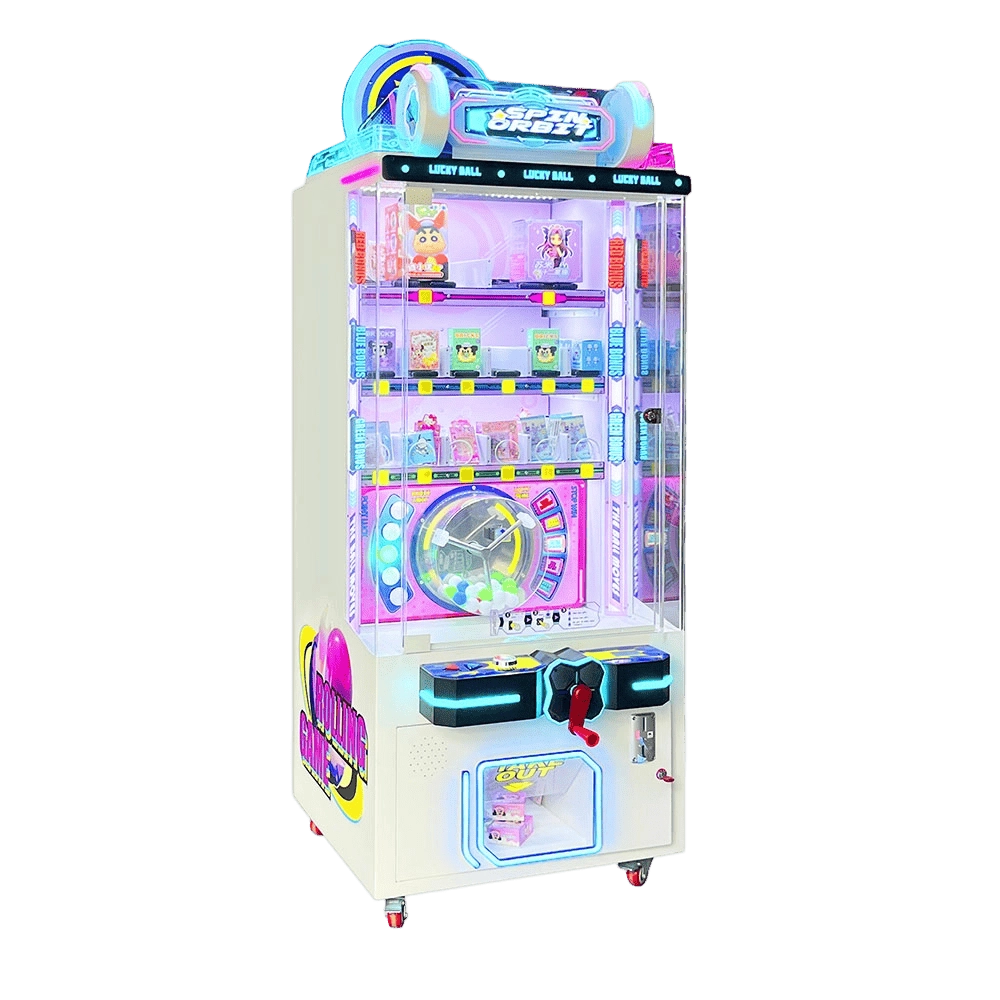
Coin Operated/Card Payment SPIN ORBIT Lucky Prize Arcade Game
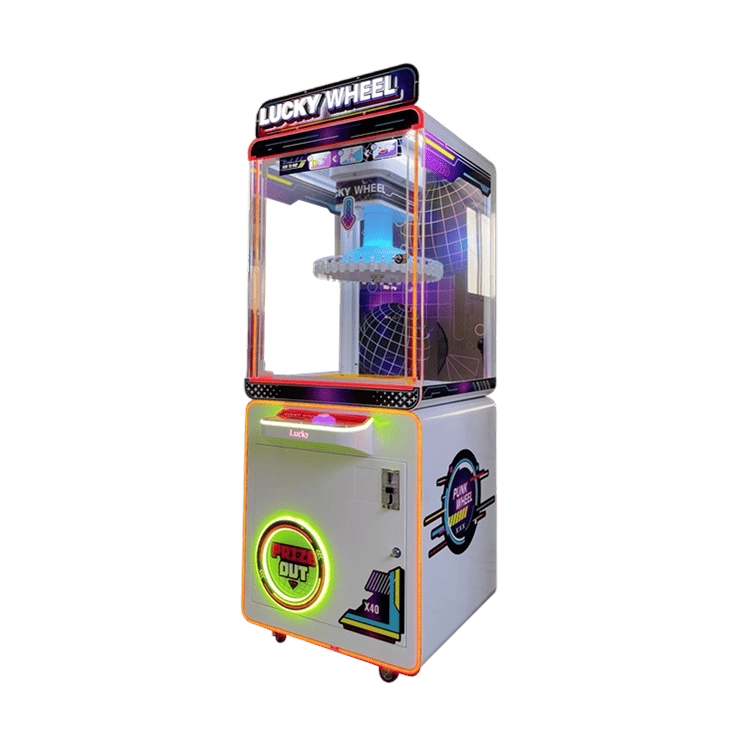
Arcade Prize Lucky Wheel Gift Machine For Amusement Areas
Get in Touch with Jiami Games
If you have any comments or good suggestions, please leave us a message; later our professional staff will contact you as soon as possible.

Innovative Entertainment, at Your Fingertips
Learn about Jiami Games and explore our expertise in console development, innovative design, and global markets.
Quick Links:
© 2026 Jiami Games.
Whatsapp: +8618520390438