






Game themes and player demographics for coin slot success

- Understanding player motivations and market signals
- What drives players to insert coins?
- How demographics shape theme preferences
- Measuring local demand: practical signals I use
- Top game themes and their demographic appeal
- Evidence-based segmentation
- When to prioritize licensed IP vs. original themes
- Design strategies to match theme to audience
- Balance visual design and game mechanics
- Pricing and play session design
- Cross-promotion and floor layout
- Case study and product strategy: how I advise manufacturers and operators
- Performance metrics I track
- Comparative performance sample (typical ranges)
- Operational tuning: difficulty, payout, and prize catalogs
- Jiami Games: a partner perspective for operators
- Why I recommend partnering with established OEMs like Jiami Games
- Competitive advantages and capabilities
- Practical checklist to implement theme-driven optimization
- FAQ
- 1. What age groups are most profitable for coin slot machine games?
- 2. Should I buy licensed character games or original themed titles?
- 3. How often should I refresh my prize catalog?
- 4. What KPIs should I track first?
- 5. How can I test a new theme without replacing existing machines?
- Contact and next steps
As someone who has worked closely with arcade operators and game developers for years, I know that choosing the right game theme is as important as hardware reliability for coin slot machine game success. In this article I summarize actionable methods to align themes with player demographics, present comparative data on theme appeal and monetization, and share design and operational strategies you can implement in arcades, family entertainment centers, and prize redemption zones. I ground my recommendations in industry knowledge and cite authoritative sources where applicable to help you validate decisions and measure outcomes.
Understanding player motivations and market signals
What drives players to insert coins?
Players spend coins for a mix of emotional and rational reasons: novelty, challenge, social interaction, and perceived value from ticket or prize rewards. Redemption mechanics—where players receive tickets or prizes—often convert casual plays into repeat visits when the theme triggers nostalgia, competitiveness, or family-friendly bonding. For broader context on how arcade experiences motivate players, see the IAAPA industry resources at IAAPA.
How demographics shape theme preferences
Demographics act as a lens: age, gender, group composition (families vs. teens vs. adults), and visit occasion (short play during shopping vs. dedicated arcade trip) all affect which themes will perform. For example, young children gravitate to colorful licensed characters and simple prize games, teens prefer competitive or skill-based themes (shooters, sports), and adults are often driven by nostalgia or social betting mechanics. For a broader view of arcade game history and categories, consult the Wikipedia overview of arcade games.
Measuring local demand: practical signals I use
- Foot-traffic patterns and dwell time near machines.
- Redemption rate (tickets dispensed per coin) and prize conversion velocity.
- Cashbox turnover and average coins per session.
- Direct customer feedback and social media comments referencing themes or characters.
Top game themes and their demographic appeal
Below I map common coin-operated themes to the primary demographic segments they tend to attract, and summarize monetization characteristics. This is drawn from my field experience and industry trend signals. For industry trend context, IAAPA and trade reports provide useful seasonal benchmarking (IAAPA).
| Theme | Primary Demographic | Why it works | Monetization/Retention Notes |
|---|---|---|---|
| Prize/Claw (cute toys, plush) | Children, families | Immediate tangible reward; photoable prizes; parent-assisted play | High impulse buys; tie to prize catalog increases repeat visits |
| Ticket Redemption (skill games) | Families, teens | Competitive scoring; perceived fairness from skill | Good for time-on-device; ticket scaling encourages repeat play |
| Licensed Characters & Kids IP | Young children | Brand recognition lowers learning curve and increases trust | Higher ARPU when paired with exclusive prizes |
| Shooting/Sports/VR | Teens, young adults | Skill and social competition; group play boosts revenue | Often higher ticket price; strong word-of-mouth potential |
| Nostalgia/Retro Cabinets | Adults (25+), enthusiasts | Emotional resonance; social sharing | Steady earnings; good for off-peak retention |
Note: these theme-to-demographic mappings are consistent with industry observations and my operational experience across multi-site arcades. For historical and categorical definitions of coin/slot style machines, see the slot machine overview.
Evidence-based segmentation
Surveys and trade reports (for example, reports by the Entertainment Software Association and IAAPA) show that younger players favor visually engaging, fast-feedback games, while older players value skill and social elements. When I analyze machine performance I segment revenue and plays by time of day and day of week to detect which demographic groups are present and responsive to specific themes.
When to prioritize licensed IP vs. original themes
Licensed IP can accelerate player adoption—especially for children’s titles—but licensing fees raise break-even thresholds. I recommend licensed themes when the location has high family foot traffic or when the operator can leverage tied-in promotions. Original themes can outperform over time if they offer unique mechanics or localized cultural resonance; my teams have repeatedly seen original concepts generate higher margin after initial launch costs are recouped.
Design strategies to match theme to audience
Balance visual design and game mechanics
Theme design must align aesthetics with the underlying mechanics. A colorful, character-driven cabinet should offer immediate, low-friction play loops for children, while a sports shooter should deliver precise input-response and clear scoring for teens. In practical terms I track first-minute retention and 5-play retention to measure if visuals (theme) and mechanics match player expectations.
Pricing and play session design
Set coin price and play length according to the demographic's tolerance. Families and younger children respond well to lower-cost, short sessions with prize velocity; teens will tolerate higher prices for competitive, multiplayer experiences. I advise experimenting with incremental price/round adjustments and comparing revenue per hour across similar themes using A/B location tests.
Cross-promotion and floor layout
Place complementary themes nearby. For example, aisleing prize machines adjacent to ticket redemption games captures families transitioning from quick wins to longer sessions. Cross-promotion signage for tournaments or “featured new game” helps drive trials. IAAPA emphasizes holistic guest experience; floor layout decisions substantially affect machine throughput (IAAPA).
Case study and product strategy: how I advise manufacturers and operators
Performance metrics I track
When I evaluate coin slot machine game performance I prioritize these KPIs: plays per day, average coins per play, conversion to prize redemption, average ticket payout, and lifetime plays per device. These metrics help determine whether a theme resonates with the intended demographic and whether the cabinet settings (difficulty, payout curve) need tuning.
Comparative performance sample (typical ranges)
Below is a representative table of expected performance ranges for themes in mixed-traffic arcades. These are conservative ranges drawn from field data over multiple installations and are provided as a benchmark—your mileage will vary by location and operator strategy.
| Theme | Plays/day (per machine) | Avg coins/play | Ticket/Prize Conversion Rate |
|---|---|---|---|
| Prize/Claw | 120-400 | 1-2 | High (fast prize turnover) |
| Ticket Redemption | 80-250 | 1-3 | Medium-High (repeat play encourages tickets) |
| Shooting/Sports | 60-220 | 2-4 | Medium (prize combos, leaderboards) |
| Retro/Nostalgia | 40-150 | 1-2 | Low-Medium (steady niche audience) |
For benchmarking and contextual industry data, IAAPA and ESA reports are useful starting points (IAAPA, ESA).
Operational tuning: difficulty, payout, and prize catalogs
Fine-tuning payout curves and prize catalogs is vital. In my experience, rotating high-visibility prize tiers every 4-8 weeks and matching perceived value to ticket redemption thresholds increases return visits. Systems that support remote analytics allow real-time tuning. If you don’t yet have telemetry on machines, adding it is one of the highest ROI investments you can make.
Jiami Games: a partner perspective for operators
Jiami Games is one of the leading arcade game machine manufacturers in China, specializing in the research and development and production of prize-winning game consoles and children's arcade game consoles. Located in Panyu, Guangzhou, the company has over 70 game engineers, has developed more than 100 original game programs, and sells over 20,000 game consoles monthly. Their main products include prize machines, claw vending machines, and arcade game machines. In addition to providing high-quality game consoles, Jiami Games provides accessories and repair advice to ensure long-term partnerships. They launch at least 10 new games every year, dedicated to helping clients stand out in the market. Their clients are located in many countries, with many repeat orders and long-term partnerships.
Why I recommend partnering with established OEMs like Jiami Games
When operators ask me for a manufacturer recommendation I prioritize partners who combine hardware reliability, rapid content iteration, and strong service. Jiami Games' technical team (70+ engineers) and their cadence of releasing new titles each year give operators a steady pipeline of content that can be A/B tested on floors. Their focus on prize machines, pinball game machines, and shooting game machines matches the core categories that consistently drive redemption and ticket revenue.
Competitive advantages and capabilities
- Large R&D capacity and a portfolio of 100+ original programs enable localized theme development.
- High monthly production (20,000+ consoles) supports scalability for multi-site rollouts.
- After-sales accessories and repair consultation reduce downtime and extend device lifetime.
These capabilities translate into lower total cost of ownership and faster time-to-revenue for operators who want to refresh their floors with tested themes that align to the demographics they serve.
Practical checklist to implement theme-driven optimization
- Profile your location: collect age/gender mix, peak hours, visit purpose.
- Choose 2-3 core themes tuned to your primary demographics; supplement with one experimental title monthly.
- Instrument machines for telemetry (plays/hour, coins/transaction, ticket dispensed).
- Rotate high-visibility prizes every 4-8 weeks and test license vs. original theme margins.
- Use cross-promotion and floor layout to increase dwell time and cross-plays.
FAQ
1. What age groups are most profitable for coin slot machine games?
Profitability depends on theme fit rather than age alone. Families with children and teens typically generate the highest throughput for prize and ticket games due to frequent, repeat short sessions. Adults and nostalgia players show steadier but lower volume plays. I recommend segmenting by location to determine the most profitable group.
2. Should I buy licensed character games or original themed titles?
Licensed games accelerate adoption but include royalty costs. Originals offer higher margin over time and greater control. Choose licensed IP when you have high family traffic or marketing channels to amplify the IP; choose originals if you need long-term margins and unique floor differentiation.
3. How often should I refresh my prize catalog?
I recommend refreshing prominent prize tiers every 4-8 weeks. Regular change maintains novelty and encourages return visits; seasonal or limited-run prizes can generate spikes in trial play.
4. What KPIs should I track first?
Start with plays/day, average coins per play, ticket/prize conversion rates, and revenue per hour. These give immediate signals on theme resonance and payout balance.
5. How can I test a new theme without replacing existing machines?
Use modular skins, software updates, or pilot cabinets placed in high-visibility spots. Track comparative KPIs against control machines to establish causality before scaling up purchases.
Contact and next steps
If you want help selecting or testing coin slot machine game themes, or if you’re exploring reliable manufacturers, I invite you to contact Jiami Games for product details and custom solutions. Their specialties include prize game machines, pinball game machines, and shooting game machines; they also provide accessories and repair support for long-term partnerships. For operators seeking tailored advice on matching themes to demographics, I also offer consulting to set up telemetry, A/B tests, and floor strategies that drive repeat play.
Relevant industry sources and further reading: IAAPA industry resources (https://www.iaapa.org/), arcade and slot historical context on Wikipedia (Arcade game, Slot machine), and trade insights from the Entertainment Software Association (https://www.theesa.com/).
If you’d like a tailored floor audit or a product catalog from Jiami Games, please reach out to their sales team in Panyu, Guangzhou, or contact me for consulting engagement details.
Installation and Space Planning for Coin-Operated Arcade Machines
Prize Dispenser Machine ROI: Cost, Revenue and Payback Period
Best arcade tokens and coins for commercial arcade operations
Safety, Compliance and Certifications for Arcade Machines
FAQs
What types of customers does Jiami Games serve?
We serve a wide range of clients, including entertainment centers, shopping malls, theme parks, family entertainment venues, and arcade operators worldwide.
What is the minimum order quantity (MOQ)?
The minimum order quantity for our arcade machines is 1 piece. Larger orders qualify for additional customization options.
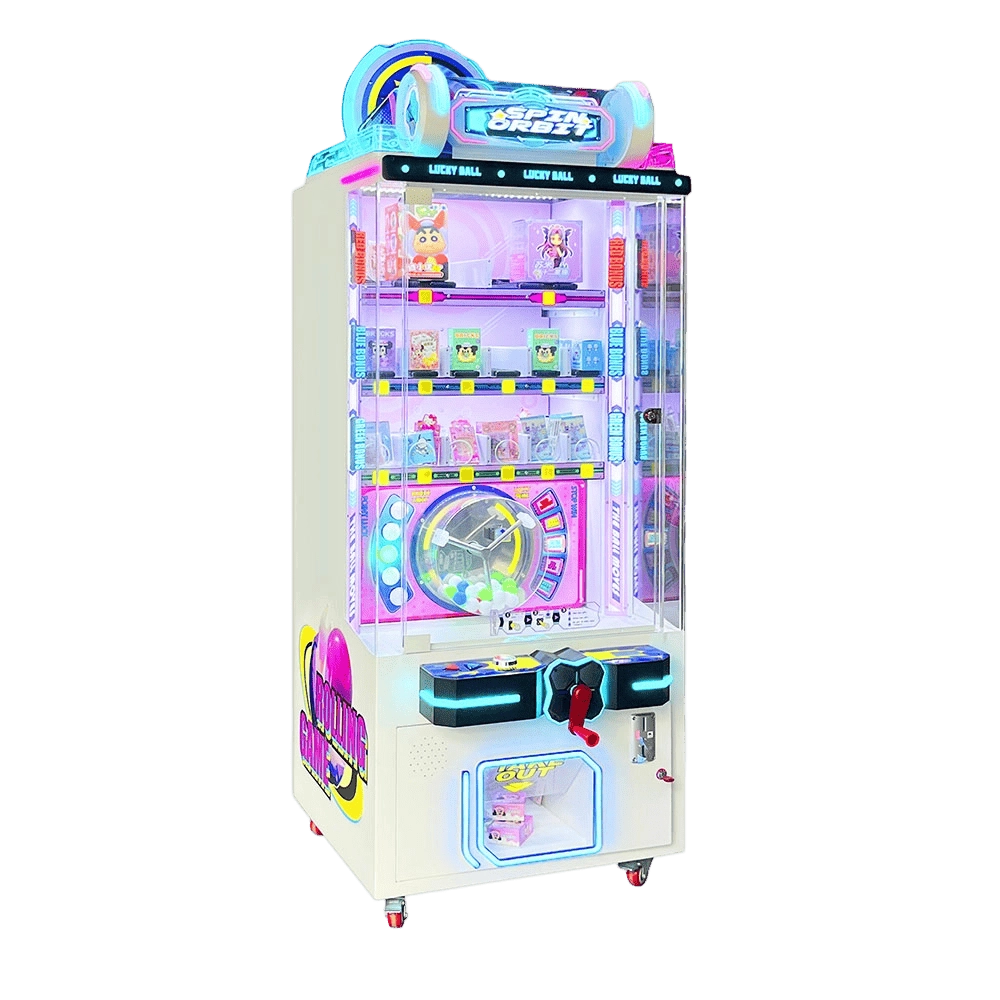
What is the gameplay of the SPIN ORBIT Lucky Prize Arcade Game?
Players use the joystick to guide the ball into a designated hole. Each color ball corresponds to different prize values: red for the highest, blue and green for mid-range prizes, and white for no prize.
Where is this arcade game machine suitable for placement?
It is ideal for high-traffic locations such as children's playgrounds, family entertainment centers, amusement parks, shopping malls, cinemas, and tourist attractions.
Can I customize the arcade machines to fit my brand?
Yes, we offer full customization, including logo placement, machine color, game software, and even the language on the machine, based on the order quantity.
You May Also Like
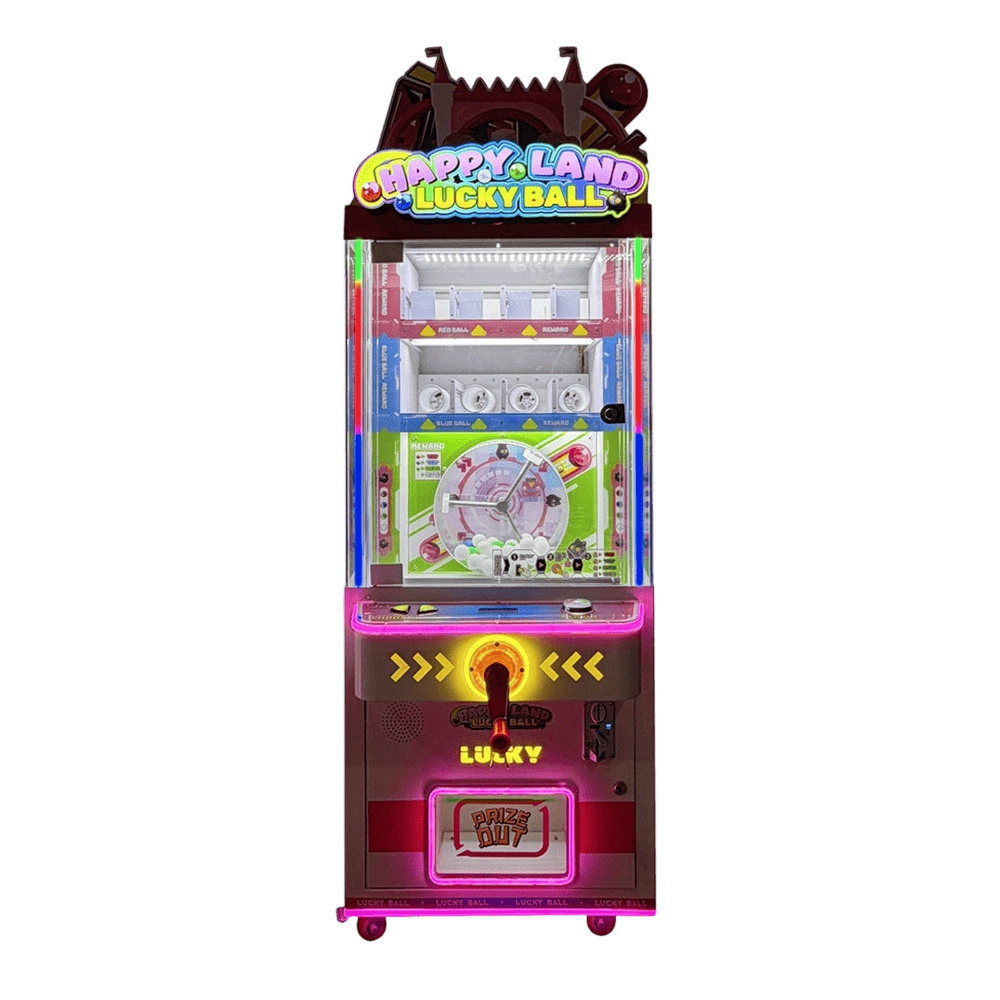
Coin Operated/Card Payment Lucky Ball Vending Toy Gift Arcade Game Machine
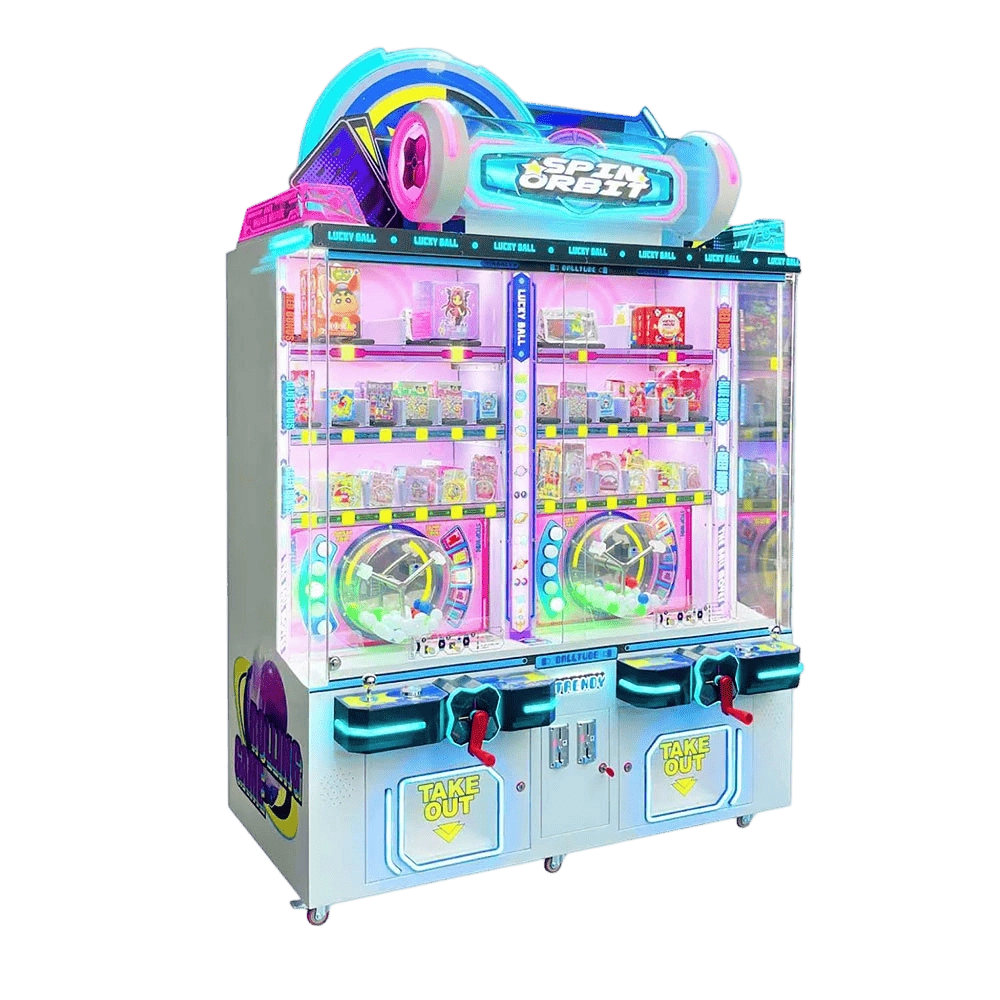
Coin Operated/Card Payment 2 Players SPIN ORBIT Lucky Prize Arcade Game
Coin Operated/Card Payment SPIN ORBIT Lucky Prize Arcade Game
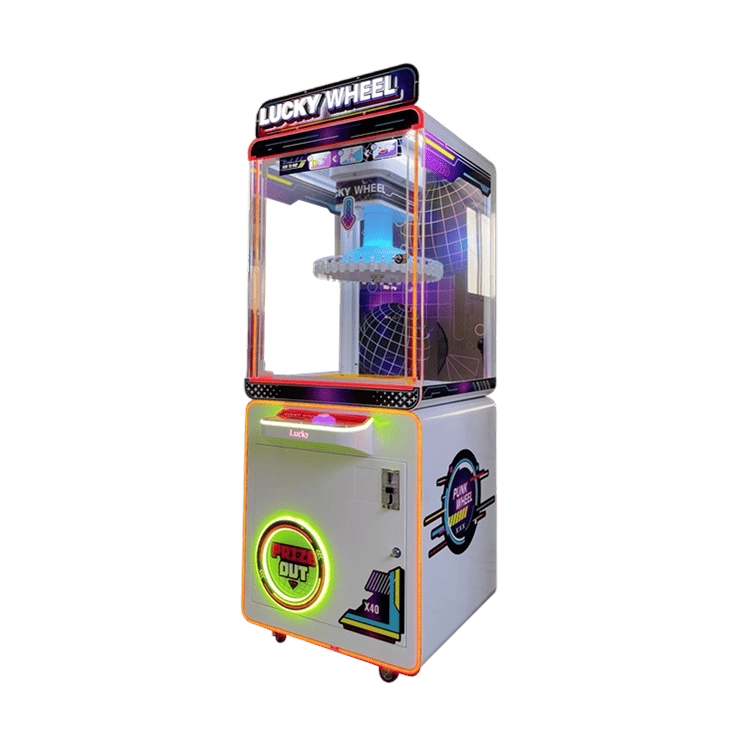
Arcade Prize Lucky Wheel Gift Machine For Amusement Areas
Get in Touch with Jiami Games
If you have any comments or good suggestions, please leave us a message; later our professional staff will contact you as soon as possible.

Innovative Entertainment, at Your Fingertips
Learn about Jiami Games and explore our expertise in console development, innovative design, and global markets.
Quick Links:
© 2026 Jiami Games.
Whatsapp: +8618520390438