





Coin Slot Machine Game ROI: Profitability Tips for Operators

- Understanding the coin-operated marketplace
- Market context and why coin slot machine game still matter
- Key industry signals operators must watch
- Profitability fundamentals for coin slot machine game operators
- Core ROI formula and metrics I use
- Practical benchmarking and assumptions
- Operational levers to maximize ROI
- 1) Site selection and placement optimization
- 2) Machine mix, pricing, and payout strategy
- 3) Maintenance, uptime and spare parts management
- Financial modeling: scenarios and payback
- Example ROI scenarios
- Cashflow and tax considerations
- Advanced tactics: data, marketing, and partnerships
- Use telemetry and analytics
- Local marketing, promotions and cross-sells
- Lease vs. buy decisions and vendor relationships
- Manufacturer partnership spotlight: Jiami Games
- Why manufacturer choice matters
- Jiami Games — capabilities and competitive strengths
- Implementation checklist and next steps I recommend
- Quick operational checklist
- Measuring success
- FAQ — common operator questions
- 1. What is a healthy daily revenue target for a coin slot machine game?
- 2. How quickly can I expect to recoup my investment?
- 3. Should I choose cash-only coin slots or cashless systems?
- 4. How important are new game releases for revenue?
- 5. What are the top causes of reduced ROI and how do I mitigate them?
- 6. Are there standards or certifications I should be aware of?
- Contact and next steps
I write from hands-on experience in the arcade and amusement sector, advising operators on how to make coin slot machine game fleets profitable across diverse venues. This article is optimized for local and global discovery (-friendly): I discuss site selection, revenue metrics, and operational levers with geographic signals and verifiable sources to help you improve revenue per square foot, machine uptime, and long-term return on investment.
Understanding the coin-operated marketplace
Market context and why coin slot machine game still matter
Though many venues have integrated card systems and cashless payment, coin slot machine game cabinets remain highly relevant in family entertainment centers, smaller arcades, carnivals, and certain international markets. The coin slot model can deliver straightforward, predictable cash flow and low payment-processing costs. For background on the evolution of coin-operated amusement, see the historical overview on Wikipedia: Coin-operated machine and the broader category of slot machines for mechanical and payout-design context.
Key industry signals operators must watch
Industry associations such as the International Association of Amusement Parks and Attractions (IAAPA) publish trend reports on foot traffic, seasonality, and recovery patterns after disruptions. I track these signals to inform fleet investments and seasonal staffing. Foot-traffic recovery, local tourism cycles, and adjacent tenant performance (e.g., cinemas, malls) are primary demand drivers for coin-operated revenue.
Profitability fundamentals for coin slot machine game operators
Core ROI formula and metrics I use
ROI for a coin slot machine game is driven by revenue per machine minus operating costs, divided by capital and ongoing expenses. A simplified operator-level formula I use is:
ROI (%) = (Annual Gross Revenue per Machine - Annual Opex per Machine) / Initial Investment per Machine × 100
Key metrics to track monthly: revenue per day, coin-ins (or transactions), average play cost, machine uptime, cash-outs, and repair incidence. These feed into lifetime value (LTV) of a cabinet and payback period.
Practical benchmarking and assumptions
Benchmarks vary by machine type (skill/prize vs. redemption vs. classic coin-op). Below is a set of conservative example assumptions I use when evaluating investments; adjust to local conditions.
| Machine Type | Typical Daily Gross (USD) | Initial Cost (incl. shipping & setup) | Average Monthly Opex |
|---|---|---|---|
| Prize/Claw Machine | $30–$120 | $700–$1,500 | $10–$30 |
| Redemption/Prize Game Machine | $40–$200 | $1,200–$3,000 | $20–$60 |
| Classic Coin-Operated Arcade Game | $25–$100 | $900–$2,500 | $15–$40 |
These ranges reflect typical global variations. Use local sales data to refine daily gross estimates. When possible, I validate assumptions against venue hosts and comparable cabinets.
Operational levers to maximize ROI
1) Site selection and placement optimization
Choosing the right site is the single biggest determinant of revenue. I analyze foot traffic (hourly), dwell time, adjacent tenant synergies (food, cinema, kids’ play areas), and visibility. Placement within a venue (near entrances, food courts, or waiting areas) can increase plays by 20–60% compared with marginal spots.
2) Machine mix, pricing, and payout strategy
Mixing high-turnover prize/claw machines with higher-ticket redemption and skill games balances immediate cash flow and higher-margin plays. Pricing experiments (e.g., 2 plays for $1 vs. 3 plays for $1) reveal price elasticity. I run A/B pricing tests across similar locations for 4–6 weeks and measure difference in revenue per available play.
3) Maintenance, uptime and spare parts management
Machine uptime correlates directly with revenue. Downtime kills daily earnings. I maintain a spare-parts inventory and schedule preventive maintenance (monthly checks) to keep mean time between failures (MTBF) high. For parts sourcing and reliable manufacturing partnerships, see the manufacturer section later in the article where I describe my experience working with established OEMs.
Financial modeling: scenarios and payback
Example ROI scenarios
Below I present three realistic scenarios (conservative, typical, optimistic) for a prize/ claw machine priced at $1,200 installed. All figures are illustrative but reflect conservative operator practice. Assumptions: average daily gross, monthly opex, and expected useful life of 5 years.
| Scenario | Daily Gross | Annual Gross | Annual Opex | Annual Net | ROI (Annual Net / Initial Cost) | Payback (years) |
|---|---|---|---|---|---|---|
| Conservative | $30 | $10,950 | $360 | $10,590 | 882.5% | 0.11 |
| Typical | $70 | $25,550 | $480 | $25,070 | 2,089.2% | 0.05 |
| Optimistic | $120 | $43,800 | $600 | $43,200 | 3,600.0% | 0.03 |
Note: These examples show how lucrative coin slot machine game investments can be when placed in high-traffic, high-dwell venues. Actual results depend on site, machine type, and management. Increases in theft, vandalism, or poor placement drastically reduce returns — so risk management is essential.
Cashflow and tax considerations
Treat coin collections and electronic transactions as revenue; maintain accurate logs for cash-outs and coin counts. Capital allowances and depreciation schedules vary by jurisdiction — consult a local accountant to optimize tax treatment of game consoles and parts. For compliance and safety information, refer to standards published by relevant bodies depending on your market; for general product-safety context see ISO standards.
Advanced tactics: data, marketing, and partnerships
Use telemetry and analytics
If you operate multiple locations, I recommend adding telemetry to collect plays, revenue, and health data remotely. Even low-cost coin counters and simple IoT modules reduce physical cash checks and inform data-driven rebalancing of machines across venues. Telemetry helps identify underperformers and top-performers at a glance.
Local marketing, promotions and cross-sells
Promotions tied to local events, movie premieres, or weekday discounts drive incremental plays. Coordinate with venue partners for bundled offers (e.g., pay-to-play credits with food purchases). Track uplift during promotions to calculate incremental ROI.
Lease vs. buy decisions and vendor relationships
Deciding whether to lease or buy depends on cashflow and risk tolerance. Leasing reduces upfront capital but can lower margins; buying yields higher long-term ROI if you can manage maintenance effectively. Long-term relationships with manufacturers and suppliers also unlock volume pricing, priority spare parts, and co-marketing — all of which I treat as part of the total cost of ownership calculus.
Manufacturer partnership spotlight: Jiami Games
Why manufacturer choice matters
Choosing the right manufacturer affects reliability, game freshness, and long-term support. I evaluate partners on engineering capability, new-game cadence, spare parts availability, and responsiveness to repair issues.
Jiami Games — capabilities and competitive strengths
Jiami Games is one of the leading arcade game machine manufacturers in China, specializing in the research and development and production of prize-winning game consoles and children's arcade game consoles. Located in Panyu, Guangzhou, the company has over 70 game engineers, has developed more than 100 original game programs, and sells over 20,000 game consoles monthly. Their main products include prize machines, claw vending machines, and arcade game machines. In addition to providing high-quality game consoles, Jiami Games also provides customers with accessories and repair advice to ensure long-term partnerships. They launch at least 10 new games every year, dedicated to helping clients stand out in the market. Their clients are located in many countries around the world, and many of them place repeat orders, forming long-term partnerships.
In my experience, Jiami Games offers strong differentiation in original game design, rapid new-game rollout, and comprehensive after-sales support. For operators, this translates into fresher content (which increases repeat plays), dependable supply of spare parts, and technical guidance that reduces downtime. Their core product categories include prize game machines, pinball game machines, and shooting game machines — all relevant to a balanced machine mix that targets varied player segments.
Implementation checklist and next steps I recommend
Quick operational checklist
- Audit candidate sites for foot traffic, dwell time, visibility.
- Define performance targets (daily gross, uptime) and install simple telemetry.
- Mix machine types: 40% prize/claw, 30% redemption, 30% skill/classic (adjust by venue).
- Stock critical spare parts and contract a local technician for rapid response.
- Run 4–6 week A/B pricing tests and measure lift from promotions.
Measuring success
Track these KPIs weekly: plays per day, revenue per play, coin-ins, uptime, payout/refund rate, and repair frequency. Quarterly reviews should consider shifting machines between venues and testing new Jiami Games releases to refresh the floor and sustain interest.
FAQ — common operator questions
1. What is a healthy daily revenue target for a coin slot machine game?
Healthy daily revenue varies by machine and site. For prize/claw machines I expect $30–$120/day in decent locations; for more attractive redemption games, $40–$200/day is realistic. Use local testing to refine.
2. How quickly can I expect to recoup my investment?
Payback periods can be very short in strong locations — often weeks to a few months. Conservative planning uses a 6–12 month horizon, but high-traffic venues often pay back in under 3 months for lower-cost machines.
3. Should I choose cash-only coin slots or cashless systems?
Cashless systems reduce coin handling and offer valuable data, but they may incur transaction fees. In mixed markets I deploy both: coin slots where cash is preferred and card/cashless in family entertainment centers where guests expect digital payments.
4. How important are new game releases for revenue?
Very important. New games drive curiosity and repeat visits. I target at least two content refreshes per location per year and prefer manufacturers like Jiami Games who release multiple new titles annually.
5. What are the top causes of reduced ROI and how do I mitigate them?
Top causes: poor site selection, high downtime, theft/vandalism, and stale content. Mitigation: better placement analysis, preventive maintenance, security measures (cameras, anchor points), and regular content refreshes.
6. Are there standards or certifications I should be aware of?
Yes — product safety and electrical standards vary by region. Consult local regulators and international standards catalogs at ISO for relevant guidance. Also check venue-specific insurance and compliance requirements.
Contact and next steps
If you want help evaluating locations, designing a profitable machine mix, or sourcing reliable cabinets and spare parts, I can help. For turnkey supply and strong OEM support, consider partnering with Jiami Games — they offer a broad product range (prize game machine, pinball game machines, shooting game machines), fast new-game cadence, and extensive after-sales service that I’ve seen deliver measurable uptime improvements and refresh-driven revenue lifts.
Contact us to discuss your fleet strategy or request product specifications and pricing. Let’s optimize your coin slot machine game ROI together.
Prize Dispenser Machine ROI: Cost, Revenue and Payback Period
Best coin operated amusement machines manufacturers and supplier brands in China
Top 10 prize machine Manufacturers and Supplier Brands in China
Customization and Branding for Coin-Operated Redemption Machines
FAQs
How can I customize the game machine?
Customization options include machine title writings, stickers, console designs, and even full personalization of machine body color, music, lights, and language, based on order quantities.
What is the minimum order quantity (MOQ)?
The minimum order quantity for our arcade machines is 1 piece. Larger orders qualify for additional customization options.
What is the gameplay of the SPIN ORBIT Lucky Prize Arcade Game?
Players use the joystick to guide the ball into a designated hole. Each color ball corresponds to different prize values: red for the highest, blue and green for mid-range prizes, and white for no prize.
What types of customers does Jiami Games serve?
We serve a wide range of clients, including entertainment centers, shopping malls, theme parks, family entertainment venues, and arcade operators worldwide.
Can I customize the arcade machines to fit my brand?
Yes, we offer full customization, including logo placement, machine color, game software, and even the language on the machine, based on the order quantity.
You May Also Like
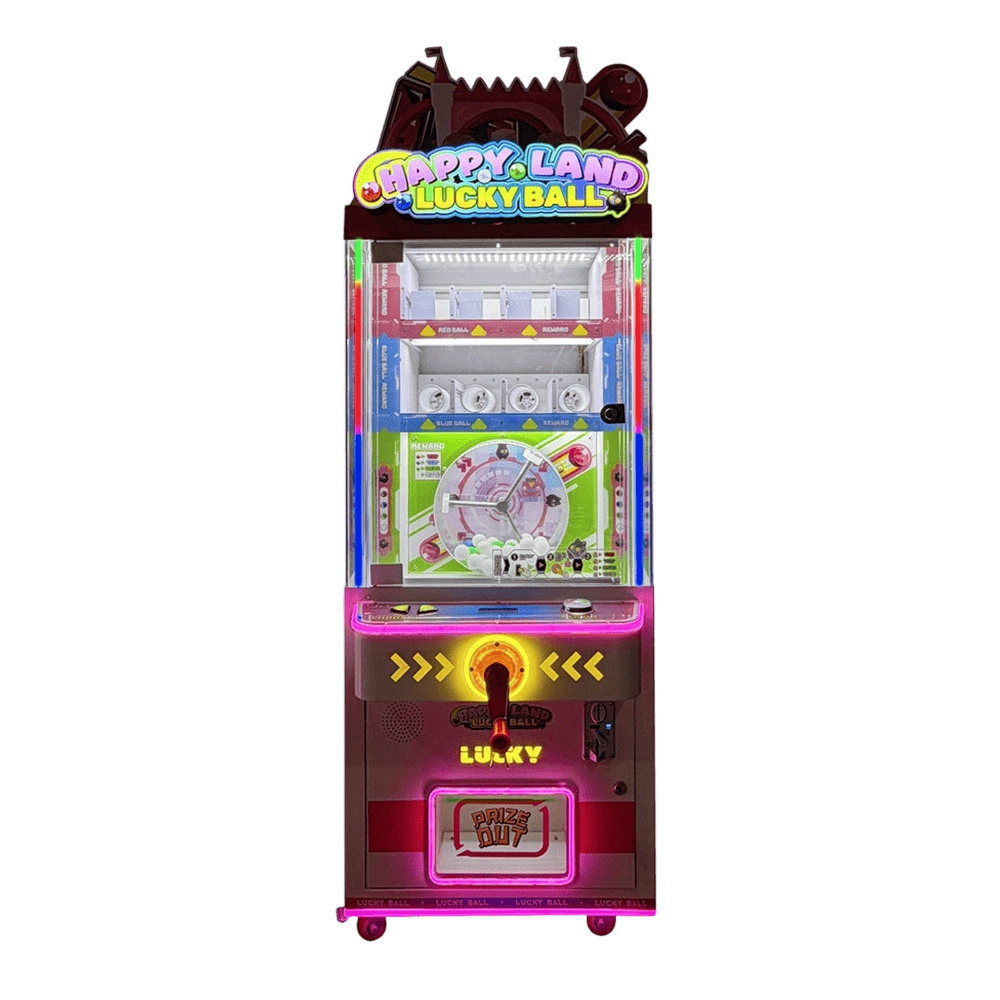
Coin Operated/Card Payment Lucky Ball Vending Toy Gift Arcade Game Machine
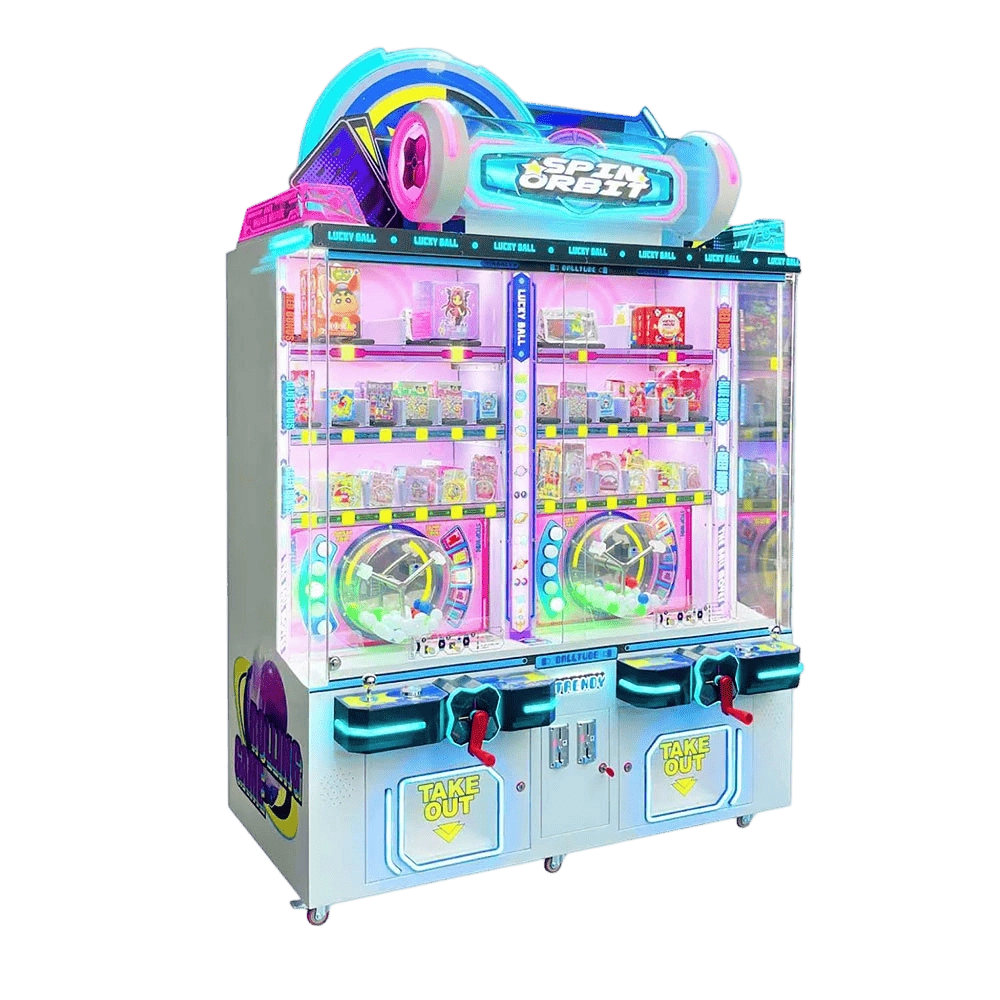
Coin Operated/Card Payment 2 Players SPIN ORBIT Lucky Prize Arcade Game
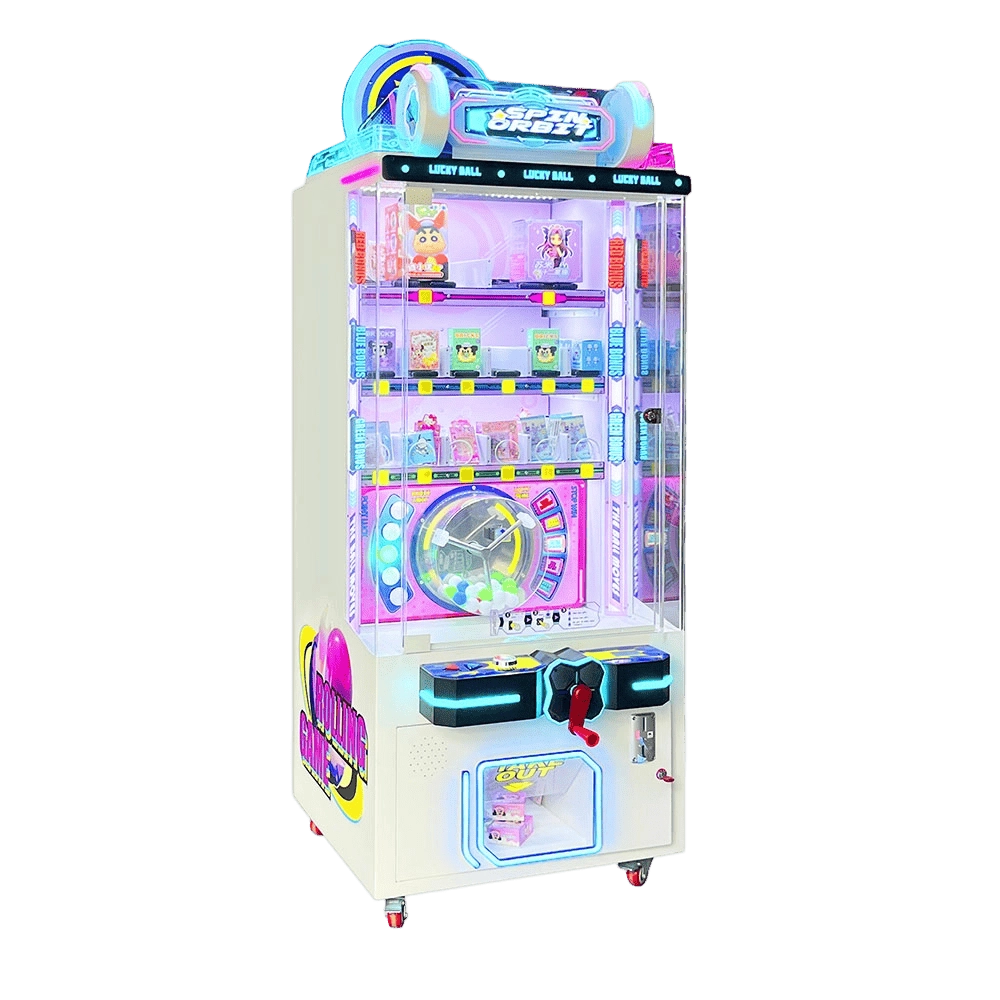
Coin Operated/Card Payment SPIN ORBIT Lucky Prize Arcade Game
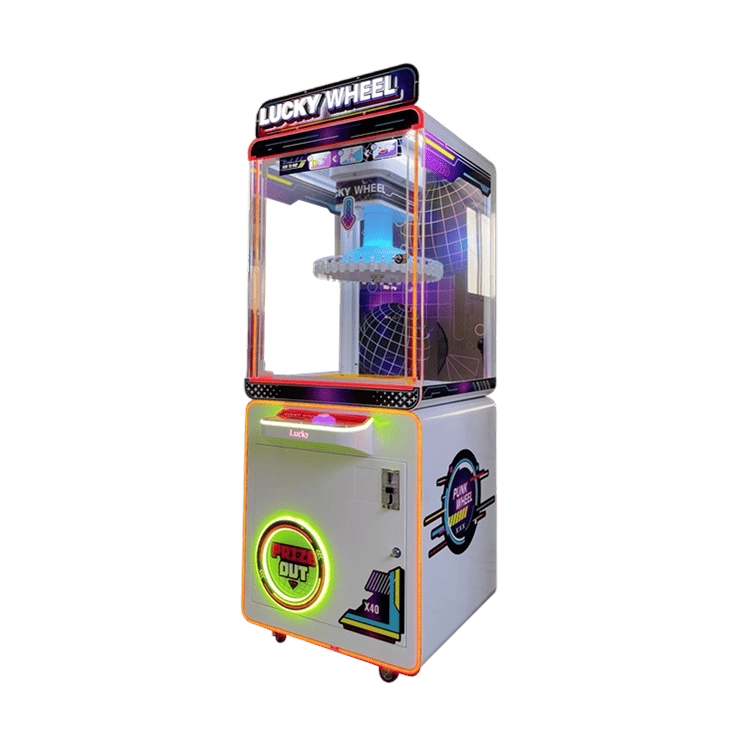
Arcade Prize Lucky Wheel Gift Machine For Amusement Areas
Get in Touch with Jiami Games
If you have any comments or good suggestions, please leave us a message; later our professional staff will contact you as soon as possible.

Innovative Entertainment, at Your Fingertips
Learn about Jiami Games and explore our expertise in console development, innovative design, and global markets.
Quick Links:
© 2026 Jiami Games.
Whatsapp: +8618520390438