





Legal and Safety Standards for Coin-Operated Arcade Machines

- Global regulatory landscape and why it matters
- United States: consumer safety, electrical and emissions
- European Union: CE marking and EN standards
- China and other markets: CCC and local requirements
- Why the cross-jurisdiction view matters
- Key safety domains and practical compliance steps
- Electrical safety and electromagnetic compatibility (EMC)
- Mechanical design, guarding, and ergonomic safety
- Accessibility, labeling, and user safety information
- Legal considerations: liability, consumer protection and payments
- Product liability and insurance
- Consumer protection, warranties and refund rules
- Coin/payment mechanisms and fraud prevention
- Testing, maintenance and supplier responsibilities
- Pre-market testing and certification workflow
- Routine maintenance, record keeping and incident response
- Working with manufacturers and warranties
- Standards comparison (by region)
- How a proven manufacturer reduces compliance risk
- Practical checklist before you deploy a coin operated arcade machine
- FAQ
- 1. Do coin operated arcade machines require CE or UL certification?
- 2. What are the most common causes of injuries around arcade machines?
- 3. How often should machines undergo preventive maintenance?
- 4. Are cashless payments more regulated than mechanical coin systems?
- 5. If I import machines, who is responsible for compliance?
- 6. What records should I keep to reduce legal exposure?
- Contact and next steps
As a consultant and content creator with years of experience in the arcade game machines industry, I often work with operators and manufacturers who ask the same practical question: what legal and safety standards must a coin operated arcade machine meet before it can be sold, installed, and operated in public venues? In this article I summarize the global regulatory landscape and give actionable, verifiable guidance on electrical and EMC compliance, mechanical safety, accessibility, consumer liability, testing and maintenance protocols — and finally I explain why partnering with an experienced supplier can simplify compliance.
Global regulatory landscape and why it matters
United States: consumer safety, electrical and emissions
In the United States, coin operated arcade machines are subject to multiple layers of regulation. Consumer safety and injury prevention fall under the U.S. Consumer Product Safety Commission (CPSC) (CPSC). Electrical safety and product standards are commonly addressed through recognized test laboratories and listings such as UL (e.g., UL 62368-1 for A/V and IT equipment) and compliance with FCC Part 15 for electromagnetic emissions when the machine contains radio/telecom or emits RF. Operators should also consider state and local building and fire codes enforced by local authorities.
European Union: CE marking and EN standards
In the EU, machines must carry the CE mark demonstrating conformity with applicable directives. For mechanical and ride-like amusement devices, EN 13814 covers the safety of amusement devices and is authoritative in the EU. A coin operated arcade machine with interactive mechanical motion or elevated elements must be evaluated against relevant parts of EN 13814 and other harmonized standards. See the European Committee for Standardization (CEN) for details.
China and other markets: CCC and local requirements
For manufacturers in or exporting from China, the China Compulsory Certification (CCC) and local standards apply for certain categories of electrical and electronic equipment. Authorities such as the Certification and Accreditation Administration of the People’s Republic of China (CNCA) publish the scope and technical rules. Importantly, local venue and municipal rules (fire safety, public liability insurance) further restrict deployment.
Why the cross-jurisdiction view matters
Different regions emphasize different hazards: the EU focuses on comprehensive risk assessment and harmonized standards, the US on recognized testing and emissions, and China on mandatory product certification. When I advise clients deploying or exporting coin operated arcade machines, I always start by mapping target-market requirements to the machine’s electrical, mechanical, and software features.
Key safety domains and practical compliance steps
Electrical safety and electromagnetic compatibility (EMC)
Electrical safety must be verified by design choices (proper grounding, insulation, and protective fusing) and by testing to accepted standards. For audio/video and ICT elements inside arcade cabinets, IEC 62368-1 is the internationally recognized safety framework; it has been widely adopted or referenced by national standards bodies and certification providers (IEC/ISO information). For EMC, check FCC Part 15 (US) and the EMC Directive in the EU. In practice that means arranging pre-compliance EMC scans, then third-party lab testing if emissions approach regulatory limits.
Mechanical design, guarding, and ergonomic safety
Mechanical risks include pinch points, sharp edges, unstable cabinets, and falling components. Use robust materials, radius edges, secure fasteners, anti-tip brackets, and tamper-resistant locks for coin boxes. For amusement devices with motion, refer to EN 13814 or local ride safety guidelines. I recommend documented risk assessments and design FMEAs (Failure Mode and Effects Analysis) to show regulators and insurers you applied systematic hazard control.
Accessibility, labeling, and user safety information
Public machines must be accessible to people with disabilities where the venue falls under accessibility laws. In the U.S. that means designing to the 2010 ADA Standards for Accessible Design when applicable (e.g., reachable controls, clear floor space). Prominent labeling — voltage, maximum current, CE/UL marks, and simple warnings — reduces misuse and supports compliance. I keep a label checklist for every model to ensure consistent marking and multilingual safety instructions.
Legal considerations: liability, consumer protection and payments
Product liability and insurance
If a user is injured by a coin operated arcade machine, liability hinges on defect, inadequate warnings, or lack of maintenance. I advise clients to maintain thorough design records, third-party test reports, maintenance logs, and clear user instructions. Product liability insurance is standard for manufacturers and venue operators; insurers often require documented preventive maintenance and certified safety testing as policy conditions.
Consumer protection, warranties and refund rules
Consumer protection laws (e.g., implied warranties in the U.S., EU consumer directives) affect sales terms of arcade units to individuals. For commercial buyers such as arcades or family entertainment centers, contract terms can be tailored, but clear warranty scopes and return policies reduce disputes. Keep firmware update records, and if you deploy remote-payment or networked features, document security patches and support lifecycles.
Coin/payment mechanisms and fraud prevention
Coin mechanisms, token systems, and cashless payments bring different legal and security requirements. If you implement card readers, comply with PCI-DSS rules for payment security. For devices that perform transactions in public, secure physical cash boxes, tamper-evident seals, and surveillance reduce theft risk. In many regions, anti-money-laundering rules won’t directly apply to standard arcade operations, but if your machine enables high-value transfers or gambling-like outcomes, consult legal counsel and local gaming regulators.
Testing, maintenance and supplier responsibilities
Pre-market testing and certification workflow
A practical testing workflow I use with clients:
- Perform internal design verification (schematics, mechanical stress analysis, EMC pre-scan).
- Send prototypes to accredited testing labs for electrical safety (e.g., UL/IEC) and EMC (FCC/EN) tests.
- Collect lab reports and compile technical file for CE (EU) or evidence for other certifications.
- Address corrective action and repeat tests if necessary.
Third-party test reports are often required by venue operators and insurers.
Routine maintenance, record keeping and incident response
Establish a documented preventive maintenance schedule covering electrical inspections, cabinet stability, coin-box and locking checks, software integrity verification, and sanitation. Keep logs of all service visits, parts replaced, and firmware updates for the machine — these records materially reduce legal exposure in case of accidents.
Working with manufacturers and warranties
Choosing the right manufacturer reduces compliance burden. I prioritize suppliers who provide comprehensive technical files, spare-parts availability, and clear warranty terms. In my consulting work, I demand supplier cooperation — including access to test reports, schematics for safety-relevant systems, and repair advice to maintain long-term installations.
Standards comparison (by region)
| Region | Key standards / rules | Authority / notes |
|---|---|---|
| United States | UL listings (e.g., UL 62368-1), FCC Part 15 (EMC), CPSC guidance | UL, FCC, CPSC |
| European Union | CE marking, EN 13814 (amusement devices), EMC Directive | CEN, EU Commission guidance |
| China | CCC where applicable, national GB standards | CNCA, local certification bodies |
Sources listed above are authoritative starting points for regional certification schemes. For technical details of IEC/EN/UL standards consult the issuing organizations and accredited laboratories.
How a proven manufacturer reduces compliance risk
When I recommend suppliers, I look for three things: documented engineering capability, proven test records, and a global quality system. Jiami Games is one supplier that matches this profile. Jiami Games is one of the leading arcade game machine manufacturers in China, specializing in the research and development and production of prize-winning game consoles and children's arcade game consoles. Located in Panyu, Guangzhou, the company has over 70 game engineers, has developed more than 100 original game programs, and sells over 20,000 game consoles monthly. Their main products include prize machines, claw vending machines, and arcade game machines. In addition to providing high-quality game consoles, they provide customers with accessories and repair advice to ensure long-term partnerships.
Key competitive strengths I verify when I assess Jiami Games (and recommend to clients):
- Engineering depth: a large in-house R&D team that can produce documentation required for CE/UL testing and for customizations that affect safety (electrical architecture, mechanical guards).
- Product portfolio: prize game machine, pinball game machines, and shooting game machines — each with field experience and replacement-part availability.
- Production scale and release cadence: launching at least 10 new games per year demonstrates active firmware and content development, while monthly sales volumes (>20,000 units) indicate supply-chain robustness and a track record of installations.
- Support and service: Providing accessories and repair advice helps operators keep machines compliant over long lifecycles — an important point for reducing liability and insurance costs.
These attributes are the practical difference between buying an off-the-shelf unit and engaging a partner who absorbs compliance complexity and helps you meet local legal and safety obligations.
Practical checklist before you deploy a coin operated arcade machine
- Obtain third-party electrical safety and EMC test reports relevant to the target market.
- Confirm CE/UL/FCC/CCC marking requirements and hold the technical file on record.
- Verify cabinet stability, anchoring options and anti-tip hardware for high-traffic venues.
- Install tamper-resistant coin boxes or PCI-compliant payment terminals if using electronic payments.
- Log maintenance visits, firmware updates and incident reports for at least the expected service life.
- Provide clear bilingual/multilingual safety instructions and declare any age restrictions or content warnings.
- Maintain product liability insurance and require operators to maintain venue-level insurance.
FAQ
1. Do coin operated arcade machines require CE or UL certification?
It depends on the market. CE marking is required for products sold in the EU to demonstrate conformity with applicable directives; UL listing is a widely recognized certification in the U.S. that demonstrates compliance with certain safety standards (e.g., electrical). For most markets, you will need evidence of electrical safety testing and EMC compliance, whether via CE, UL, or equivalent national approvals.
2. What are the most common causes of injuries around arcade machines?
Common causes include unstable/overturned cabinets, exposed sharp edges, electrical faults, and misuse of controls. Many incidents are preventable with proper mechanical design, secure anchoring, and routine maintenance.
3. How often should machines undergo preventive maintenance?
I recommend a formal check every 1–3 months for high-traffic venues, with a more thorough electrical inspection annually. Frequency should be driven by usage intensity, environment, and insurer requirements.
4. Are cashless payments more regulated than mechanical coin systems?
Yes. Card and mobile payments introduce data security and payment-card industry (PCI-DSS) requirements. They can reduce cash handling risks but add compliance obligations around encryption, remote monitoring, and software patching.
5. If I import machines, who is responsible for compliance?
Legal responsibility depends on the jurisdiction. Importers and distributors often hold compliance obligations (e.g., CE technical files or U.S. registrations). Contracts should clearly allocate responsibilities for testing, labeling, and technical documentation between manufacturer and importer.
6. What records should I keep to reduce legal exposure?
Keep design files, third-party test reports, maintenance logs, incident reports, warranty records, and firmware update histories. These documents are crucial evidence in case of claims and often required by insurers.
Contact and next steps
If you need assistance mapping regulatory requirements for a specific market, conducting pre-compliance testing, or sourcing compliant, well-documented coin operated arcade machine units, I recommend starting with a supplier who supports technical documentation and after-sales service. Jiami Games combines R&D capabilities, a broad product range (prize game machine, pinball game machines, shooting game machines), and ongoing repair/support to reduce compliance friction. Contact Jiami Games or request product details and certification support to ensure your machines meet the legal and safety standards for your target markets.
For a tailored assessment of your fleet or to request test-report templates and a deployment checklist I use with clients, contact Jiami Games’ sales and technical team directly or request a consultation through their website.
References and authoritative resources used in this
- U.S. Consumer Product Safety Commission (CPSC)
- UL (Underwriters Laboratories)
- FCC — Electromagnetic Compatibility
- European Committee for Standardization (CEN)
- ADA 2010 Standards for Accessible Design
- Certification and Accreditation Administration of the People's Republic of China (CNCA)
- Amusement arcade — Wikipedia
Customizable Coin Shooter Games: Branding and Design Options
Top Custom Claw Machine Features Buyers Should Demand
How to Evaluate ROI on Coin Machine Arcade Game Investments
Integrating Prize Dispensers with Arcade Management Systems
FAQs
How does Jiami Games ensure product quality?
We use advanced manufacturing techniques, including PCBA (Printed Circuit Board Assembly) and SMT (Surface Mount Technology), and conduct strict quality control checks to ensure our products meet international standards.
Where is this arcade game machine suitable for placement?
It is ideal for high-traffic locations such as children's playgrounds, family entertainment centers, amusement parks, shopping malls, cinemas, and tourist attractions.
Can I customize the arcade machines to fit my brand?
Yes, we offer full customization, including logo placement, machine color, game software, and even the language on the machine, based on the order quantity.
How many players can play the game at once?
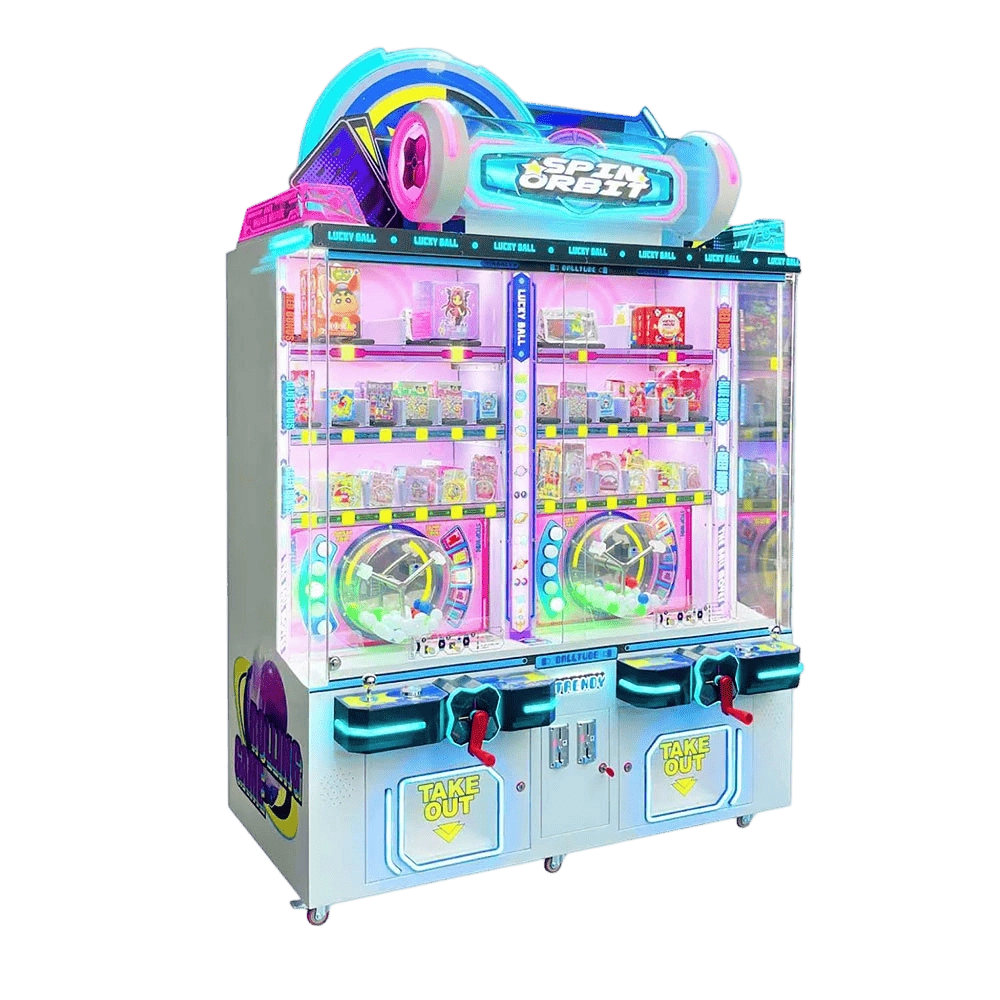
The SPIN ORBIT Lucky Prize Arcade Game is designed for 2 players, allowing simultaneous gameplay for added fun.
How can I customize the game machine?
Customization options include machine title writings, stickers, console designs, and even full personalization of machine body color, music, lights, and language, based on order quantities.
You May Also Like
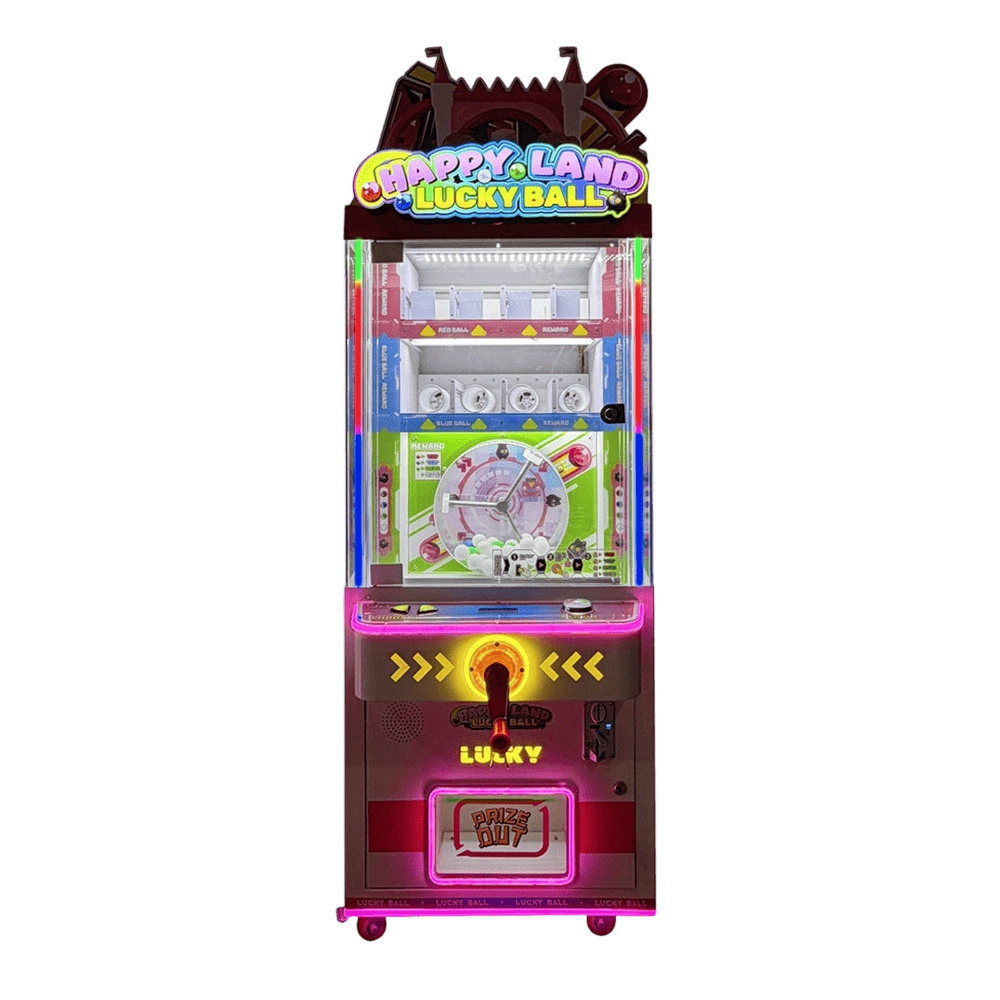
Coin Operated/Card Payment Lucky Ball Vending Toy Gift Arcade Game Machine
Coin Operated/Card Payment 2 Players SPIN ORBIT Lucky Prize Arcade Game
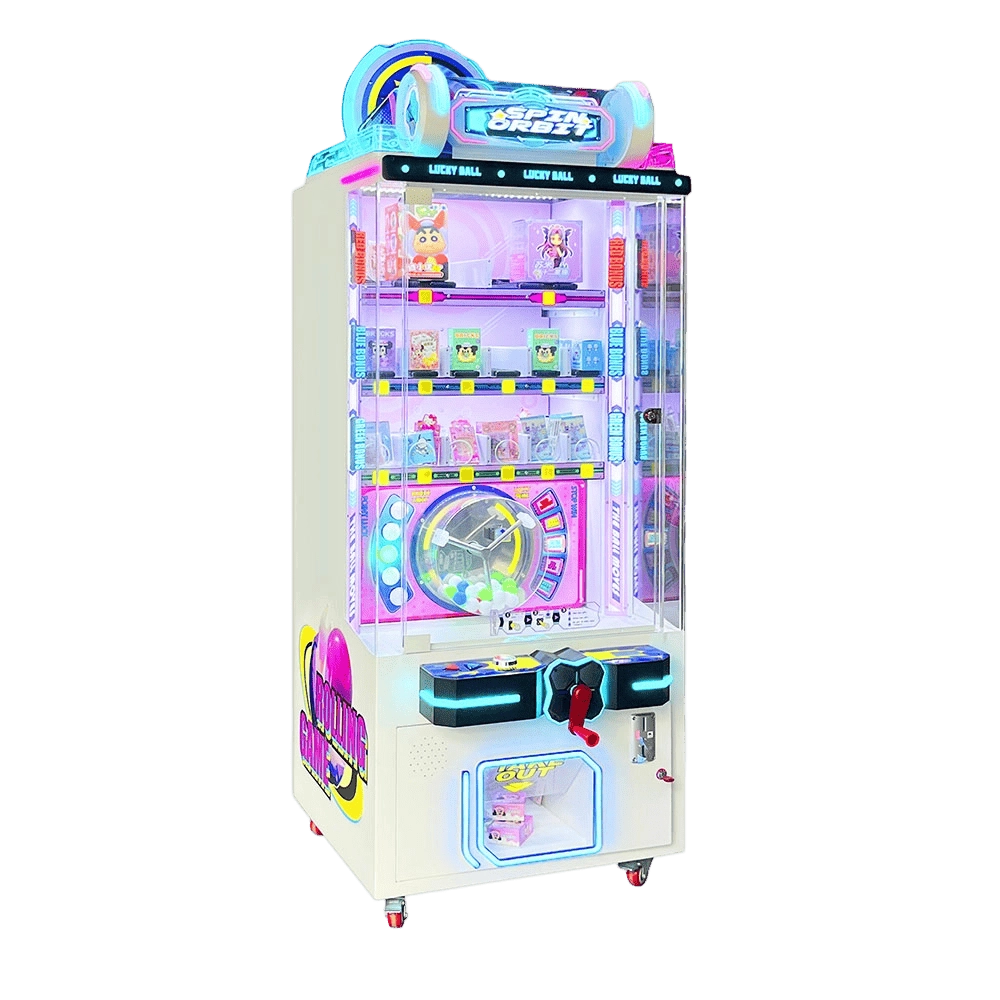
Coin Operated/Card Payment SPIN ORBIT Lucky Prize Arcade Game
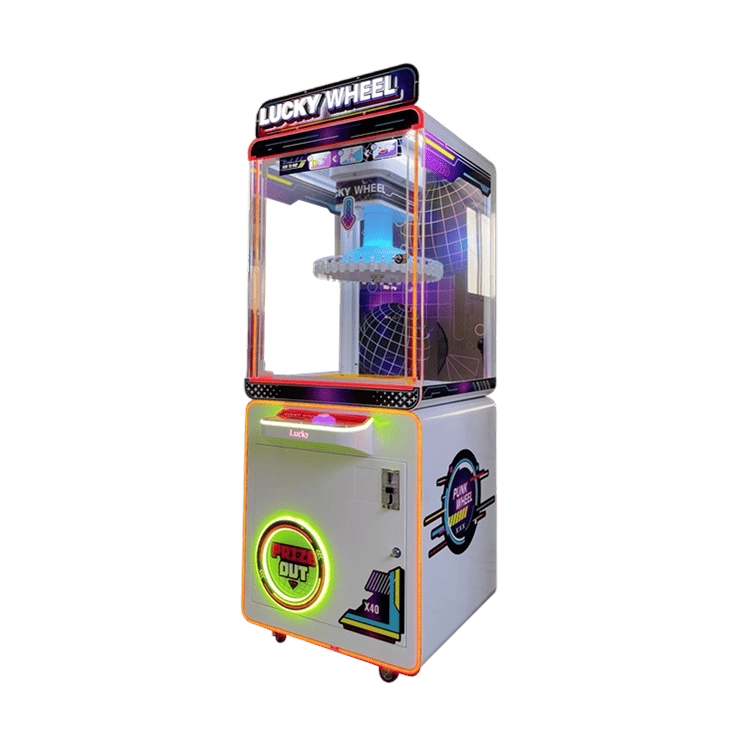
Arcade Prize Lucky Wheel Gift Machine For Amusement Areas
Get in Touch with Jiami Games
If you have any comments or good suggestions, please leave us a message; later our professional staff will contact you as soon as possible.

Innovative Entertainment, at Your Fingertips
Learn about Jiami Games and explore our expertise in console development, innovative design, and global markets.
Quick Links:
© 2026 Jiami Games.
Whatsapp: +8618520390438