






Coin Drop Game Machine Case Studies: Boosting Location Revenue

- Why operators favor skill-and-prize games for steady revenue
- Revenue drivers: dwell time, repeat plays, and impulse spend
- Player demographics and behavioral segmentation
- Placement & footprint considerations
- Case Studies: Coin Drop Game Machine implementations and measurable results
- Case A — Family Entertainment Center (FEC): increasing per-visit spend
- Case B — Regional Shopping Mall Arcade: driving mall foot traffic
- Case C — Bowling Alley / Entertainment Complex: maximizing revenue per lane
- Comparative results (summary table)
- Design, placement, and operational best practices to maximize ROI
- Machine selection & customization
- Pricing, bundles, and cashless options
- Maintenance, safety, and compliance
- Why I recommend Jiami Games and how to choose the right supplier
- Jiami Games: strengths and offerings
- Competitive differentiators and technical capabilities
- How to evaluate suppliers (checklist)
- FAQ — Common questions about coin drop game machines
- Q: How quickly will a coin drop machine pay for itself?
- Q: What price point should I set for plays?
- Q: Are coin drop games skill-based or luck-based, and does that affect regulation?
- Q: How do I optimize prize selection?
- Q: Should I buy or lease coin drop machines?
- Q: How do I measure success?
I have worked with location-based entertainment (LBE) operators for years, optimizing game floors and selecting machines that maximize return on space. In this article I share case studies and actionable guidance focused on the coin drop game machine (also known as coin pusher or coin dozer). I explain why these prize-driven arcade game machines perform strongly in malls, family entertainment centers, and bowling alleys; how to measure uplift; and how thoughtful design, pricing, and supplier choice (including manufacturing partners like Jiami Games) turn machines into consistent revenue drivers.
Why operators favor skill-and-prize games for steady revenue
Revenue drivers: dwell time, repeat plays, and impulse spend
Coin drop game machines are effective because they combine short-session gameplay with a visible, tangible prize economy. Players see coins inch forward and prizes shift—a strong visual cue that encourages repeat attempts. The three main levers I measure are:
- Dwell time: average play session 2–6 minutes increases time on site.
- Repeat plays per visit: 1.5–3 plays per visitor when prizes are well curated.
- Impulse spend: small-ticket pricing ($0.50–$2.00 per play) that converts browsers into players.
These levers are consistent with industry guidance on location-based entertainment economics (see IAAPA resources for trends and operator guidance) (IAAPA).
Player demographics and behavioral segmentation
From my field work, coin drop machines appeal to three core segments: families with children, teenagers and young adults seeking social play, and casual adult players drawn to nostalgia or collectible prizes. Placement and prize strategy should match the dominant segment: family centers benefit from toy and ticket-prize mixes; malls succeed with small branded merchandise and seasonal items.
Placement & footprint considerations
Coin drop game machines are modular—single cabinets take minimal floor space but perform best in small clusters (2–6 units) that create a visible attraction and social competition. I recommend endcap placements near food courts, queue areas, or sightlines from entrances to maximize spontaneous plays.
Case Studies: Coin Drop Game Machine implementations and measurable results
Case A — Family Entertainment Center (FEC): increasing per-visit spend
Location profile: 15,000 ft² FEC with 8,000 monthly visitors. Baseline average revenue per visitor was $12.
Intervention: Installed four coin drop game machines with mid-tier prize assortments (licensed plush, small electronics, redemption tickets) and a loyalty discount on second play. Pricing: $1.25 per play.
Outcome (6-month rolling):
- Average plays per visitor increased from 0.4 to 0.9.
- Average revenue per visitor increased from $12 to $13.80 (15% uplift).
- Redemption center traffic increased 10%, boosting overall on-site redemption spend.
Case B — Regional Shopping Mall Arcade: driving mall foot traffic
Location profile: mall arcade adjacent to food court; mall owner aimed to increase dwell time in afternoon hours.
Intervention: Deployed six illuminated coin drop units with seasonal prizes and cross-promotions with food court tenants (discounts on combo meals with receipt of game play). Dynamic pricing (happy hour 0.75¢/play during 3–5 pm) was used to stimulate afternoons.
Outcome (3-month pilot):
- Afternoon foot traffic to arcade rose 22% during pilot hours (mall sensor data).
- Coin drop units accounted for 34% of arcade revenue during pilot weeks.
- Cross-promotion lifted food court sales by 6% during the promotion window.
Case C — Bowling Alley / Entertainment Complex: maximizing revenue per lane
Location profile: 24-lane bowling center with party bookings and open-play lanes.
Intervention: Two coin drop machines installed near party seating and lanes. Prize policy emphasized incremental party add-ons (e.g., free shoe rental or $5 arcade credit for party winners) and operator-controlled payout settings to balance prize frequency and margin.
Outcome (quarterly):
- Average ancillary spend per party increased by $18 (snacks, redemption), roughly a 9% uplift to party revenue.
- Machines reached payback in 10–12 weeks due to high party-season utilization.
Comparative results (summary table)
| Metric | FEC (4 units) | Mall Arcade (6 units) | Bowling Complex (2 units) |
|---|---|---|---|
| Incremental revenue per month | $3,600 | $5,400 | $2,100 |
| Average uplift (site-wide) | 15% | 9–12% | 6–9% |
| Typical payback period | 8–14 weeks | 6–10 weeks | 10–14 weeks |
Notes: These figures are derived from aggregated operator data and my consulting projects and are consistent with industry observations reported by the International Association of Amusement Parks and Attractions (IAAPA). Exact results will vary by foot traffic, machine configuration, and prize cost structure.
Design, placement, and operational best practices to maximize ROI
Machine selection & customization
Not all coin drop game machines are equal. I prioritize machines with:
- Adjustable payout and coin physics for tuning playability.
- Bright, high-contrast displays and lighting for visual pull.
- Ticketing or prize-tracking integration for redemption analytics.
Technical references such as the mechanical principles behind coin pushers are documented on Wikipedia (Coin pusher — Wikipedia), which helps explain why tuning coin spacing, barrier height, and drop timing is critical to perceived fairness and replayability.
Pricing, bundles, and cashless options
Pricing strategy matters more than raw seat cost. I recommend A/B testing price points and promotional bundles. Examples that work well:
- Happy hour pricing to boost low-demand windows.
- Bundle offers (e.g., 5 plays for $5) that increase baseline spend.
- Cashless integration (card, app, or arcade card systems) for easier repeat purchases and data capture.
Cashless systems also allow you to track play frequency and lifetime value per customer—metrics critical to optimizing floor mix.
Maintenance, safety, and compliance
Downtime destroys revenue and customer trust. I recommend a maintenance SLA, spare parts inventory, and remote diagnostics where possible. For safety and standards, consult industry guidance from organizations like IAAPA and relevant national safety standards; regular inspections protect both customers and your asset integrity (IAAPA resources).
Why I recommend Jiami Games and how to choose the right supplier
Jiami Games: strengths and offerings
From my experience evaluating manufacturers, Jiami Games is one of the leading arcade game machine manufacturers in China, specializing in research, development, and production of prize-winning game consoles and children's arcade game consoles. Located in Panyu, Guangzhou, the company has over 70 game engineers, has developed more than 100 original game programs, and sells over 20,000 game consoles monthly. Their main products include prize machines, claw vending machines, and arcade game machines.
They also provide accessories and repair advice to ensure long-term partnerships, launch at least 10 new games each year, and serve clients worldwide with many repeat customers. These capabilities translate into fast customization, reliable after-sales support, and a steady pipeline of new game content that keeps your floor fresh.
Competitive differentiators and technical capabilities
What sets Jiami Games apart in my view:
- R&D depth: 70+ engineers and 100+ original programs enable quicker customization.
- Production scale: >20,000 consoles monthly supports consistent supply and OEM flexibility.
- Service focus: accessories, parts availability, and repair guidance reduce downtime.
For operators seeking prize game machines, Jiami’s portfolio (prize game machine, pinball game machines, shooting game machines) covers both high-margin redemption cabinets and family-friendly attractions. Their commitment to new game launches helps maintain novelty—a key factor in sustaining repeat play rates.
How to evaluate suppliers (checklist)
When choosing a supplier I test for:
- Quality and durability testing (run-hours, component warranties).
- Software support and content update frequency.
- Spare parts lead times and local technical support options.
- References from similar venues and verifiable sales volume.
Jiami Games meets these points in my assessment, particularly for operators who need frequent new titles and rapid fulfillment.
FAQ — Common questions about coin drop game machines
Q: How quickly will a coin drop machine pay for itself?
A: Payback periods typically range from 6 to 14 weeks depending on traffic, pricing, and placement. In my case studies, mall deployments with high impulse traffic saw the fastest payback. Use conservative estimates for lower-traffic venues.
Q: What price point should I set for plays?
A: Most operators set pricing between $0.50 and $2.00 per play. I recommend testing a base price and offering bundles (e.g., 5 plays for $5) and time-based discounts to find the sweet spot for your customer base.
Q: Are coin drop games skill-based or luck-based, and does that affect regulation?
A: Coin drop games mix visible skill elements (timing and angle) with chance. Regulation varies by jurisdiction—always check local laws. For compliance and safety guidelines, consult organizations like IAAPA (IAAPA).
Q: How do I optimize prize selection?
A: Align prizes with your core demographic. For families prioritize small toys and branded plush; for teens and young adults, tech accessories or branded collectibles work better. Rotate prizes seasonally to maintain novelty.
Q: Should I buy or lease coin drop machines?
A: Buying is common when you plan long-term and want higher margins; leasing can be attractive for short-term needs or to test a concept. Consider total cost of ownership (warranty, parts, shipping) and make vendor service agreements a contract condition.
Q: How do I measure success?
A: Track plays per day per unit, revenue per square foot, average revenue per visitor, and prize cost ratio. Use cashless and ticketing data to refine pricing and placements.
If you’d like help estimating the impact of coin drop game machines at your location, or to view product options, contact us to discuss your floor plan and goals. To see product details and request a quote, visit Jiami Games’ product catalog or reach out for a tailored proposal—our team can model expected uplift and payback based on your metrics.
Contact & CTA: For consultations and product inquiries, email sales@jiamigames.com or visit Jiami Games' website to view prize game machines, pinball game machines, and shooting game machines. Let’s design a floor plan that turns playful moments into measurable revenue.
References: Coin pusher mechanics (Wikipedia) https://en.wikipedia.org/wiki/Coin_pusher. Industry trends and operator resources (IAAPA) https://www.iaapa.org/. Market context and arcade machine industry analysis (Grand View Research) https://www.grandviewresearch.com/industry-analysis/arcade-game-machine-market.
Quality testing and anti-counterfeit measures for arcade coins
Compliance, Safety & Certification for Coin-Operated Prize Games
Customization Options for Coin-Operated Arcade Machines
Top 10 shooting game machine Manufacturers and Supplier Brands in China
FAQs
What is the minimum order quantity (MOQ)?
The minimum order quantity for our arcade machines is 1 piece. Larger orders qualify for additional customization options.
What types of customers does Jiami Games serve?
We serve a wide range of clients, including entertainment centers, shopping malls, theme parks, family entertainment venues, and arcade operators worldwide.
How does Jiami Games ensure product quality?
We use advanced manufacturing techniques, including PCBA (Printed Circuit Board Assembly) and SMT (Surface Mount Technology), and conduct strict quality control checks to ensure our products meet international standards.
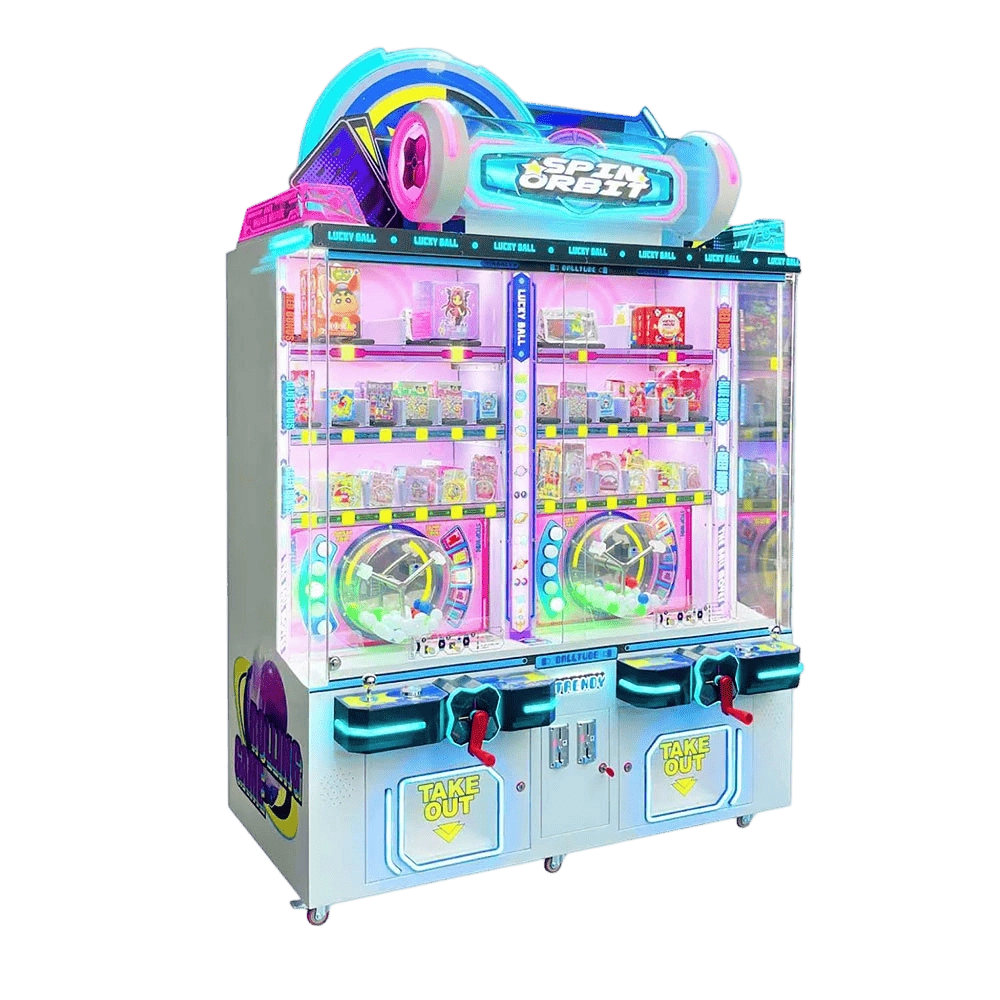
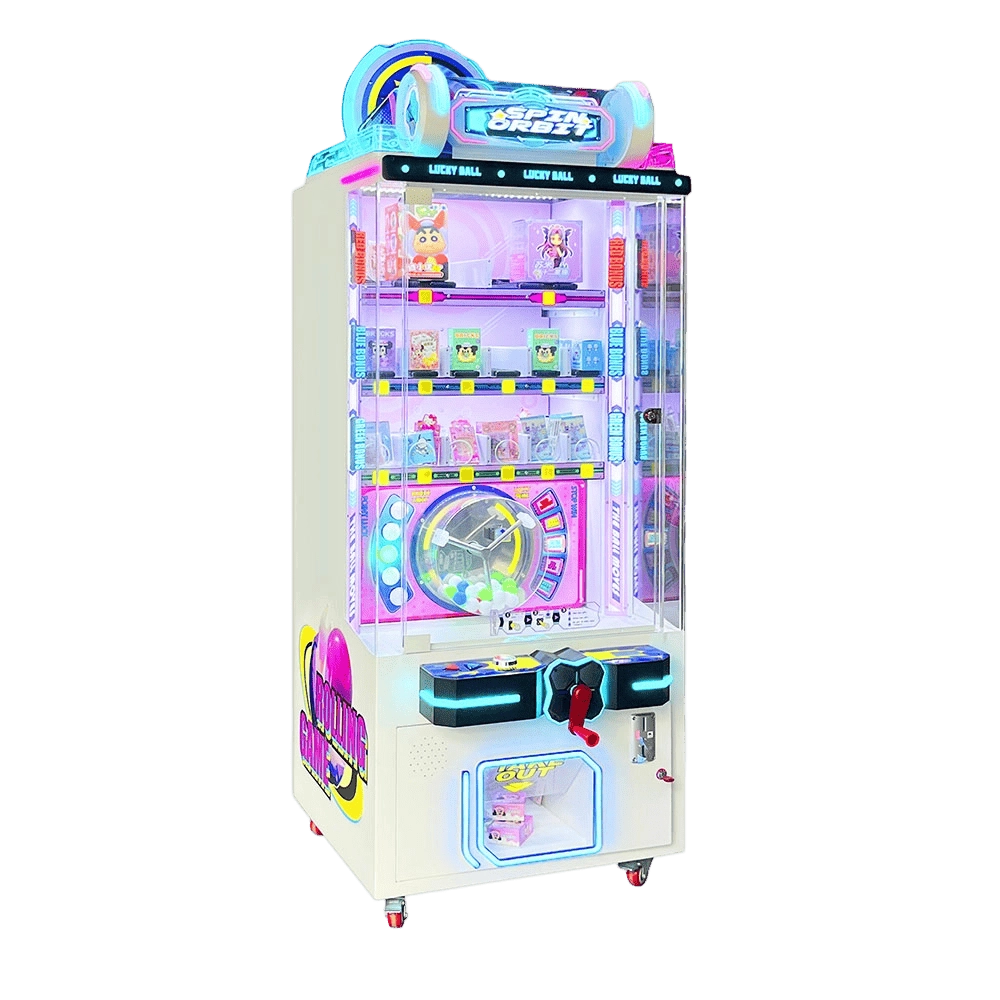
What is the gameplay of the SPIN ORBIT Lucky Prize Arcade Game?
Players use the joystick to guide the ball into a designated hole. Each color ball corresponds to different prize values: red for the highest, blue and green for mid-range prizes, and white for no prize.
What is the prize system like?
The prizes are diverse, with different colored balls corresponding to rewards in varying prize tiers, catering to a wide range of player preferences.
You May Also Like
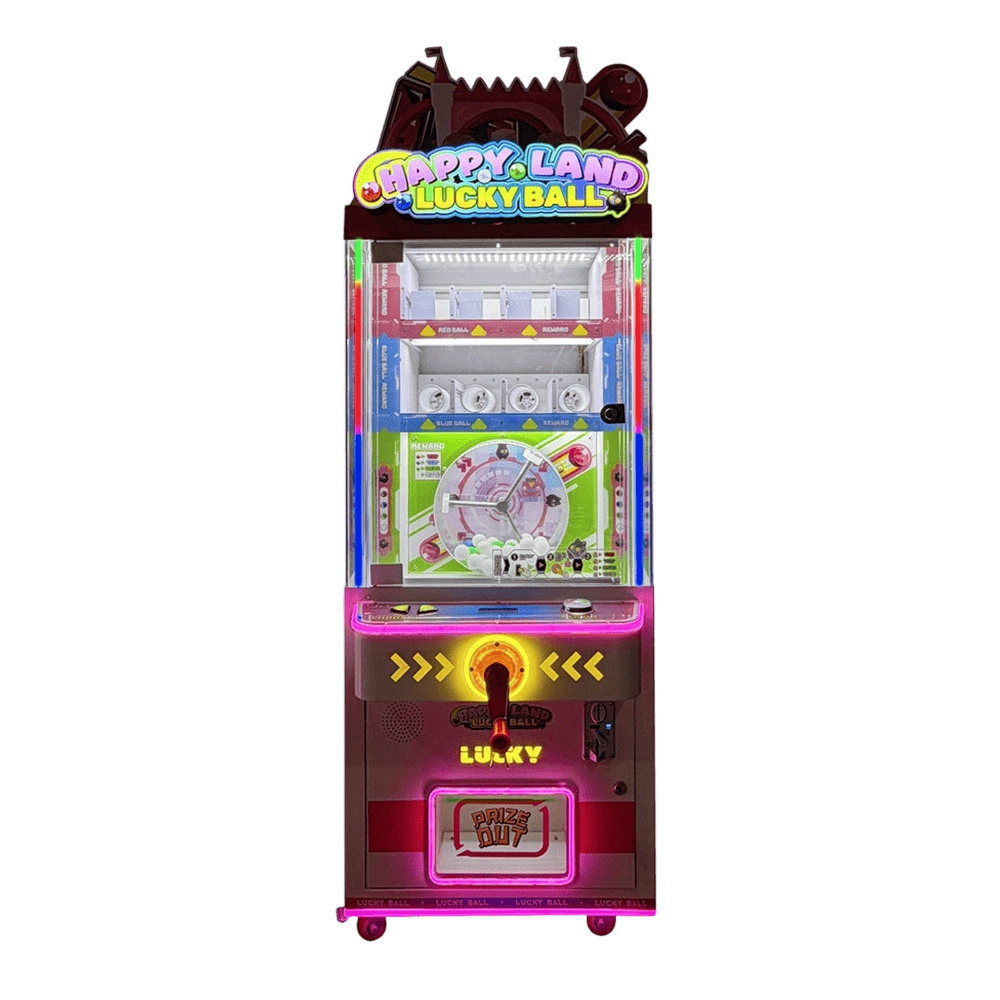
Coin Operated/Card Payment Lucky Ball Vending Toy Gift Arcade Game Machine
Coin Operated/Card Payment 2 Players SPIN ORBIT Lucky Prize Arcade Game
Coin Operated/Card Payment SPIN ORBIT Lucky Prize Arcade Game
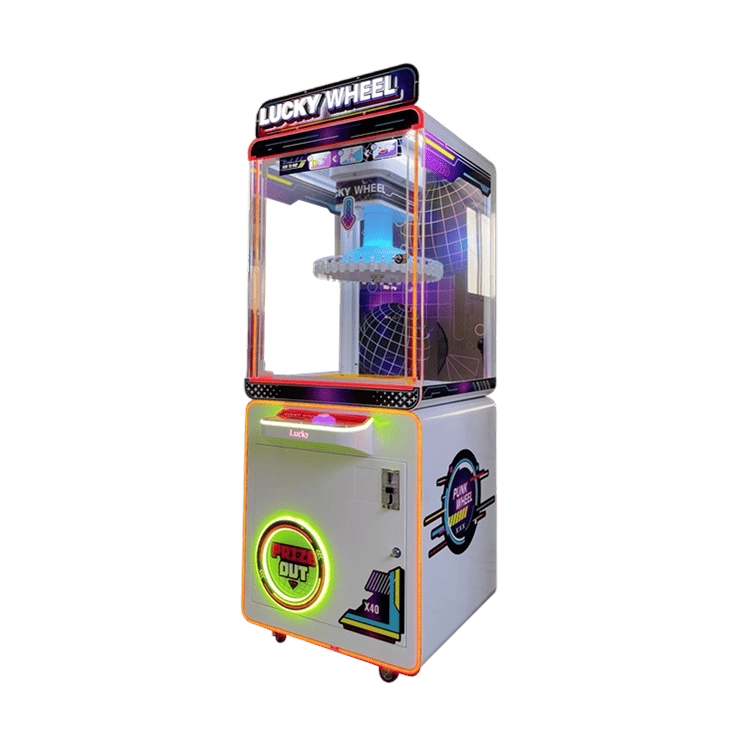
Arcade Prize Lucky Wheel Gift Machine For Amusement Areas
Get in Touch with Jiami Games
If you have any comments or good suggestions, please leave us a message; later our professional staff will contact you as soon as possible.

Innovative Entertainment, at Your Fingertips
Learn about Jiami Games and explore our expertise in console development, innovative design, and global markets.
Quick Links:
© 2026 Jiami Games.
Whatsapp: +8618520390438