






Coin Arcade Game ROI: Profitability and Pricing Guide

- Understanding Payback Dynamics for Coin Arcade Games
- What ‘ROI’ means for a coin arcade game
- Key revenue drivers
- Common cost buckets
- Estimating Revenue: Typical Benchmarks and a Modeling Table
- Benchmarks and variability
- Example revenue model
- Using utilization metrics to set realistic targets
- Pricing Strategies and Revenue Optimization
- Price elasticity and game design
- Location and revenue-share negotiation
- Promotions, loyalty and bundling
- Costs, Depreciation, and Break-even Analysis
- Acquisition and depreciation schedules
- Maintenance, spare parts, and vendor support
- Break-even example
- Vendor Selection, Compliance, and Long-Term Scalability
- Selecting reliable manufacturers
- Standards, safety, and legal considerations
- When to lease vs. buy
- Case Study: Practical ROI Scenarios
- Claw machine fleet in a family entertainment center
- Sit-down racing cabinet in an arcade
- How Jiami Games can improve outcomes
- Implementation Checklist and Actionable Next Steps
- Pre-deployment checklist
- Ongoing optimization
- Scaling considerations
- FAQ
- 1. How much does a coin arcade game earn per month?
- 2. What is a reasonable payback period?
- 3. Should I buy or lease machines?
- 4. How much should I budget for maintenance and downtime?
- 5. How do prizes affect ROI?
- 6. What documentation should I require from a manufacturer?
As an arcade game machine consultant with years of experience in deployment, revenue optimization and multi-market pricing, I focus on practical answers: how much can a coin arcade game actually earn, what costs should you expect, and what pricing and placement strategies maximize return on investment (ROI)? This article provides a step-by-step framework, data-backed examples, and vendor guidance to help operators, venue owners, and investors make informed decisions.
Understanding Payback Dynamics for Coin Arcade Games
What ‘ROI’ means for a coin arcade game
ROI for a coin arcade game measures profitability over a period relative to the initial and ongoing costs. I use the standard ROI formula (Investopedia ROI) to keep results comparable across machines and venues: ROI (%) = (Net Profit / Total Investment) x 100. Net profit = Total Revenues - Total Costs (including depreciation, maintenance, and location fees).
Key revenue drivers
Revenue per machine depends on three controllable factors: foot traffic quality, machine pricing (coin price and game length), and utilization (plays per hour). Secondary drivers include prize value and restocking frequency for redemption/prize machines, and novelty or exclusivity of the game’s content.
Common cost buckets
Costs fall into four categories: acquisition (machine purchase or lease), installation and shipping, operating expenses (electricity, change, prizes, paper tickets), and maintenance/repairs. I always model an allowance for downtime—typically 5–10% of operating hours for older fleets, lower for newer machines with solid vendor support.
Estimating Revenue: Typical Benchmarks and a Modeling Table
Benchmarks and variability
Industry benchmarks vary by venue type. Family entertainment centers (FECs) and arcades command higher per-machine revenue than corner arcades in shopping centers. The International Association of Amusement Parks and Attractions (IAAPA) publishes industry trend insights that help establish context for revenue expectations (IAAPA).
Example revenue model
Below I provide a conservative to aggressive model for a typical coin arcade game (e.g., a claw machine, ticket redemption, or small sit-down racing game). The model assumes coin pricing, average plays per day, and monthly operating days.
| Scenario | Coin Price | Plays per Day | Gross Revenue /mo | Monthly Net (after 30% ops/prize) |
|---|---|---|---|---|
| Conservative | $0.50 | 50 | $750 | $525 |
| Moderate | $0.75 | 100 | $2,250 | $1,575 |
| Aggressive | $1.00 | 200 | $6,000 | $4,200 |
Notes: assumptions are illustrative. Gross Revenue = coin price x plays per day x 30 days. Net assumes 30% taken for prizes, electricity, ticket paper, and minor maintenance; location fees or revenue share are modeled separately.
Using utilization metrics to set realistic targets
I track plays/hour and conversion rate from foot traffic to plays. For a machine placed in a high-traffic family zone, 4–8 plays per hour during peak times is feasible. In lower-traffic corridors, 0.5–2 plays/hour is typical. Use counters, cashbox audits, or networked telemetry to measure utilization and validate your pricing.
Pricing Strategies and Revenue Optimization
Price elasticity and game design
Price increases are typically tolerated when game experience perceived value is high—better graphics, multiplayer social elements, or skill reward. For simple coin arcade game models like claw machines, small changes (e.g., $0.25 to $0.50) can significantly affect play volume. I recommend A/B testing price points and tracking plays to measure elasticity.
Location and revenue-share negotiation
Location is king. A High Quality corner near dining or children’s play areas will outperform hidden nooks. When negotiating with venues, typical deals include fixed monthly rent, percentage revenue share (20–40%), or a hybrid. Use the table below to compare schemes and breakeven for a moderate scenario.
| Deal Type | Operator Cashflow (monthly) | Pros | Cons |
|---|---|---|---|
| Fixed Rent ($200) | $1,375 (from $1,575 net - $200) | Predictable for venue | Operator bears traffic risk |
| Revenue Share 30% | $1,102.5 (after venue cut) | Shared risk | Lower upside for operator |
| Hybrid (rent $100 + 20% share) | $1,255 (after both) | Balanced | More complex accounting |
Promotions, loyalty and bundling
Bundling tokens or offering happy-hour pricing increases utilization in off-peak hours. Loyalty programs (e.g., punch cards, digital wallets) increase repeat plays. When I implement bundles, I always model the marginal contribution—if an extra 20% plays come from a 15% discount, the program is worthwhile.
Costs, Depreciation, and Break-even Analysis
Acquisition and depreciation schedules
New coin arcade game machines range widely: small redemption units or claw machines may cost $1,000–$5,000; larger sit-down or VR cabinets can be $8,000–$25,000. I amortize machines over 3–7 years depending on mechanical complexity and expected technological obsolescence. Use straight-line depreciation unless you track usage-based wear.
Maintenance, spare parts, and vendor support
Budget 2–10% of the purchase price annually for maintenance and parts; higher for machines with mechanical prizes or complex electronics. Choosing a vendor with local parts availability and remote diagnostics reduces downtime and repair costs—factors I weigh heavily when selecting suppliers.
Break-even example
Example: Machine cost $5,000, expected life 5 years (depreciation $83/mo), average net revenue $1,200/mo, operating costs (electricity/prizes) $300/mo, location share 20% ($240). Monthly net cash = $1,200 - $300 - $240 = $660. Including depreciation, net accounting profit = $577/mo. Payback period (cash basis) = $5,000 / $660 ≈ 7.6 months. Payback including depreciation is slightly different but gives the operator confidence about capital recovery.
Vendor Selection, Compliance, and Long-Term Scalability
Selecting reliable manufacturers
When scaling, I prioritize vendors who deliver: consistent quality, fast spare parts, and frequent new game releases to refresh the floor. Transparency on MTTR (mean time to repair) and spare parts lead times are essential. I also recommend contract clauses for warranty response times.
Standards, safety, and legal considerations
Safety standards and local compliance can affect installation and operating costs—especially for machines targeted at children. Refer to industry references and safety guidelines; for general context see the industry overview on Wikipedia: Arcade game and IAAPA resources (IAAPA).
When to lease vs. buy
Leasing preserves capital and transfers some maintenance risk to the lessor; buying increases potential upside but requires service capability. I calculate an operator’s weighted cost of capital and compare expected ROI under each model before recommending a path.
Case Study: Practical ROI Scenarios
Claw machine fleet in a family entertainment center
Real deployment: 10 claw machines placed near food courts and play areas. Average per-machine gross revenue $1,800/mo; net after prizes and costs $1,250. After location fees (25%) operator net $937.5. With machine cost $2,200 and 36-month depreciation ($61/mo), payback (cash) ≈ 2.3 months—illustrating why claws remain popular.
Sit-down racing cabinet in an arcade
Higher ticket price ($1–$2 per play), higher initial cost ($9,000). Average monthly net revenue $3,000. With location share and maintenance, cash payback ~ 4–6 months depending on traffic. These machines are attractive when the venue has strong repeat players and multiplayer social draw.
How Jiami Games can improve outcomes
Selecting the right manufacturer matters. Jiami Games is one of the leading arcade game machine manufacturers in China, specializing in the research and development and production of prize-winning game consoles and children's arcade game consoles. Located in Panyu, Guangzhou, the company has over 70 game engineers, has developed more than 100 original game programs, and sells over 20,000 game consoles monthly. Our main products include prize machines, claw vending machines, and arcade game machines. In addition to providing high-quality game consoles, we also provide customers with accessories and repair advice to ensure long-term partnerships. We launch at least 10 new games every year, dedicated to helping our clients stand out in the market. Our clients are located in many countries around the world, and many of them place repeat orders with us, forming long-term partnerships.
I’ve worked with vendors like Jiami because they offer rapid spare parts availability, frequent new content (which keeps machines fresh), and technical support that reduces downtime—directly improving utilization and ROI. Their product lines (prize game machine, pinball game machines, shooting game machines) are competitive in both initial price and lifecycle support. The company’s engineering depth and volume scale (20,000 units monthly) translate to lower lead times and consistent quality for large deployments—advantages that matter when you’re scaling an arcade or FEC.
Implementation Checklist and Actionable Next Steps
Pre-deployment checklist
- Measure foot traffic and identify peak hours.
- Run pilot with 1–3 machines and track plays/hour and revenue for 60 days.
- Negotiate a hybrid location deal with performance milestones.
- Confirm spare parts lead times and MTTR with vendor (include Jiami Games SLA terms if applicable).
Ongoing optimization
- Rotate games quarterly to sustain novelty.
- Implement dynamic pricing or time-based promotions for off-peak hours.
- Keep a KPI dashboard: plays/hour, gross revenue, downtime, and prize cost ratio.
Scaling considerations
When expanding to fleets, negotiate volume discounts and preferential support. Vendors that issue frequent firmware updates and produce new game content (like Jiami Games, which launches at least 10 new games yearly) will help maintain competitiveness and customer engagement.
FAQ
1. How much does a coin arcade game earn per month?
It depends on venue and machine type. Conservative estimates range $500–$1,000/mo for low-traffic placements, while high-traffic or High Quality cabinets may earn $2,000–$6,000+/mo. Use pilot data to validate your local market.
2. What is a reasonable payback period?
Many operators target paybacks under 12 months for small machines and under 18 months for larger, higher-cost cabinets. With strong placement, paybacks of 3–8 months are common.
3. Should I buy or lease machines?
Lease to preserve capital and transfer some maintenance risk. Buy for higher long-term upside if you can manage maintenance and want total control over content and pricing.
4. How much should I budget for maintenance and downtime?
Budget 2–10% of purchase price annually for routine maintenance; expect some downtime—especially in the first year—unless vendor SLA and remote diagnostics are strong. Prioritize vendors with local parts and quick service response.
5. How do prizes affect ROI?
Prize cost is a major component for redemption and claw machines. Track prize cost as a percentage of gross revenue (typical 15–35%). Optimize prize mix to maintain perceived value while controlling costs.
6. What documentation should I require from a manufacturer?
Request MTTR and spare parts lead times, warranty terms, software update policy, and references from other operators. For large orders, include penalty clauses for excessive downtime in the contract.
If you want a tailored ROI model for your location and machine mix, or to view our product catalog, contact me or explore Jiami Games’ offerings. We can provide ROI projections, floor layout recommendations, and volume pricing. To discuss project specifics and get a personalized quote, reach out for consultation or view our products today.
Contact / Request Quote: sales@jiamigames.com
References: Industry overview and trends from IAAPA; general arcade machine context from Wikipedia; ROI principles at Investopedia.
Coin Slot Machine Game ROI: Profitability Tips for Operators
ROI Guide: Profits from Coin Operated Amusement Machines
Installation and Space Planning for Coin-Operated Arcade Machines
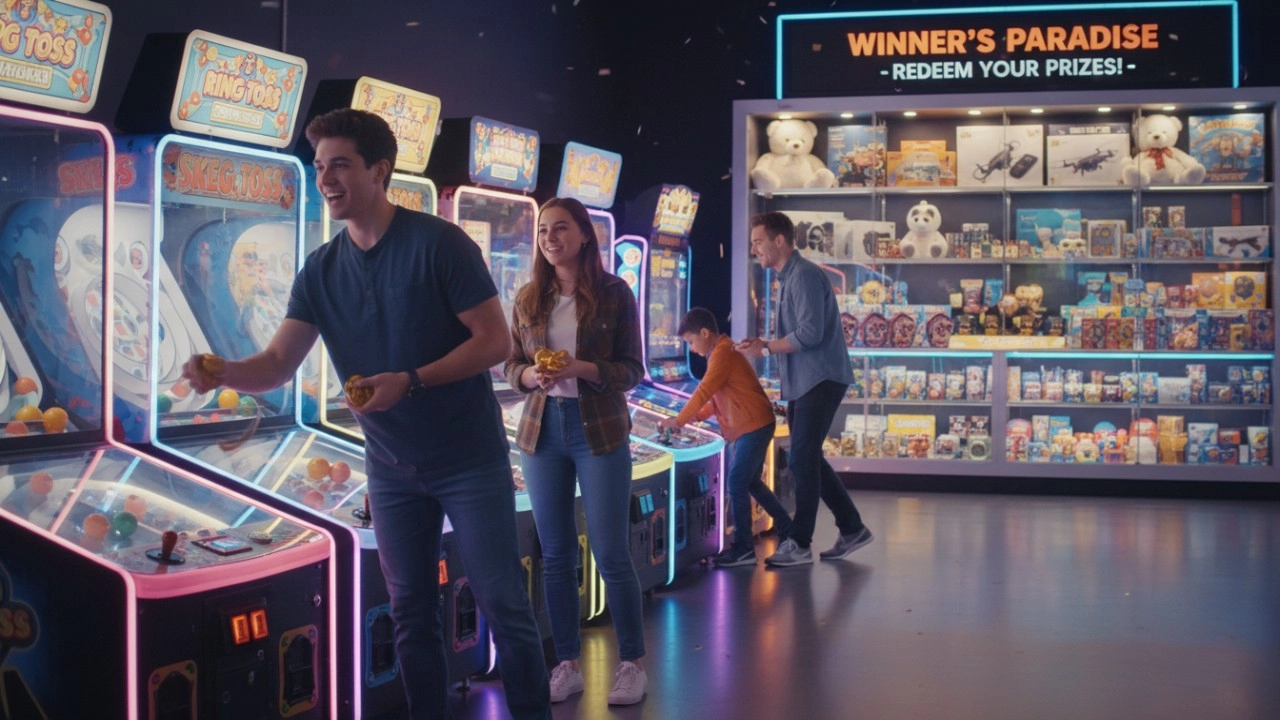
The Ultimate Guide to Coin Operated Redemption Games: Maximize Your Arcade's ROI in 2026
FAQs
How can I customize the game machine?
Customization options include machine title writings, stickers, console designs, and even full personalization of machine body color, music, lights, and language, based on order quantities.
How does Jiami Games ensure product quality?
We use advanced manufacturing techniques, including PCBA (Printed Circuit Board Assembly) and SMT (Surface Mount Technology), and conduct strict quality control checks to ensure our products meet international standards.
What is the gameplay of the SPIN ORBIT Lucky Prize Arcade Game?
Players use the joystick to guide the ball into a designated hole. Each color ball corresponds to different prize values: red for the highest, blue and green for mid-range prizes, and white for no prize.
What is the prize system like?
The prizes are diverse, with different colored balls corresponding to rewards in varying prize tiers, catering to a wide range of player preferences.
What types of customers does Jiami Games serve?
We serve a wide range of clients, including entertainment centers, shopping malls, theme parks, family entertainment venues, and arcade operators worldwide.
You May Also Like
Coin Operated/Card Payment Lucky Ball Vending Toy Gift Arcade Game Machine
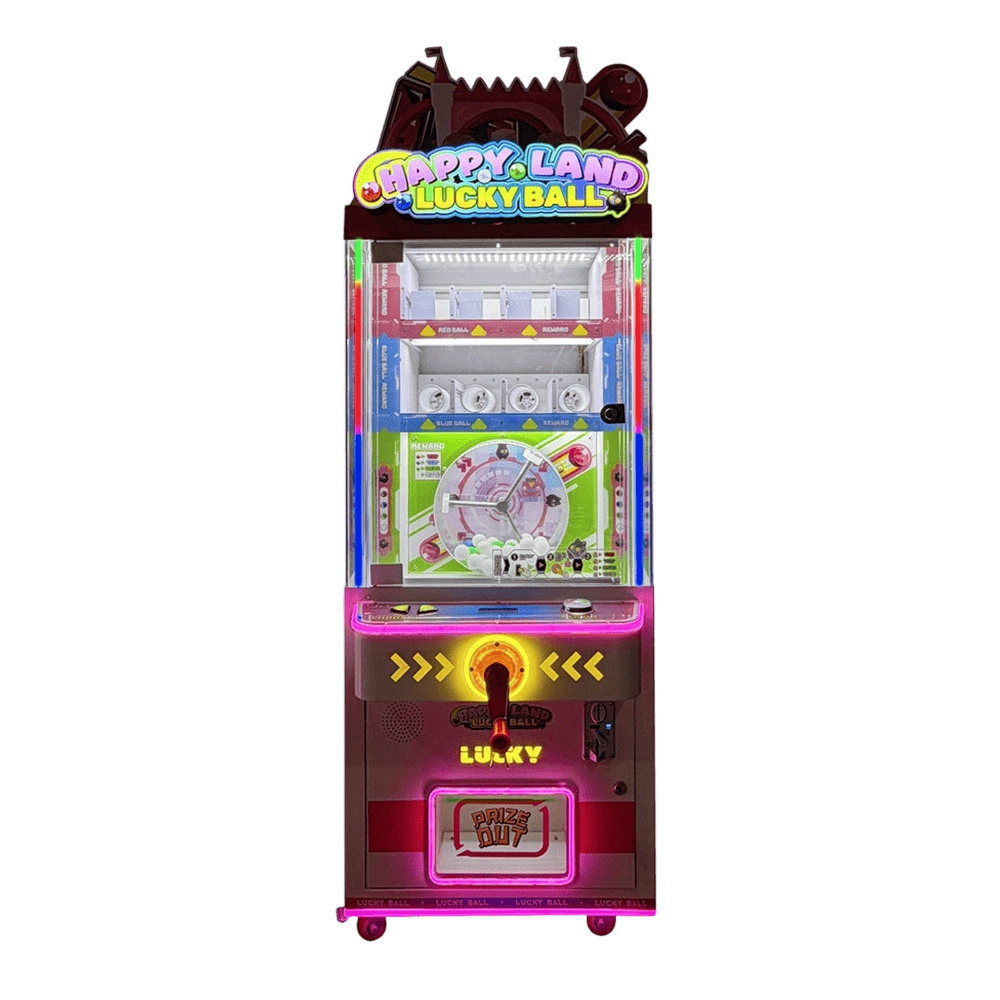
Coin Operated/Card Payment 2 Players SPIN ORBIT Lucky Prize Arcade Game
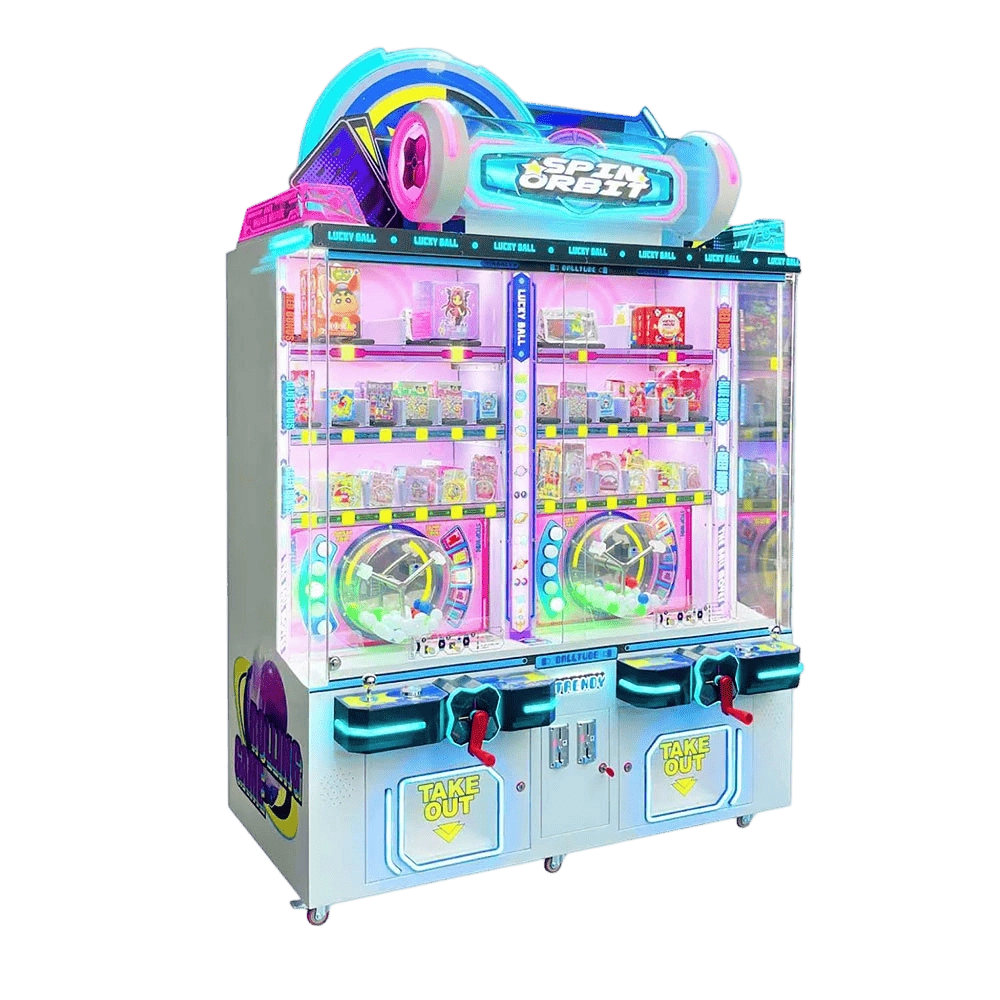
Coin Operated/Card Payment SPIN ORBIT Lucky Prize Arcade Game
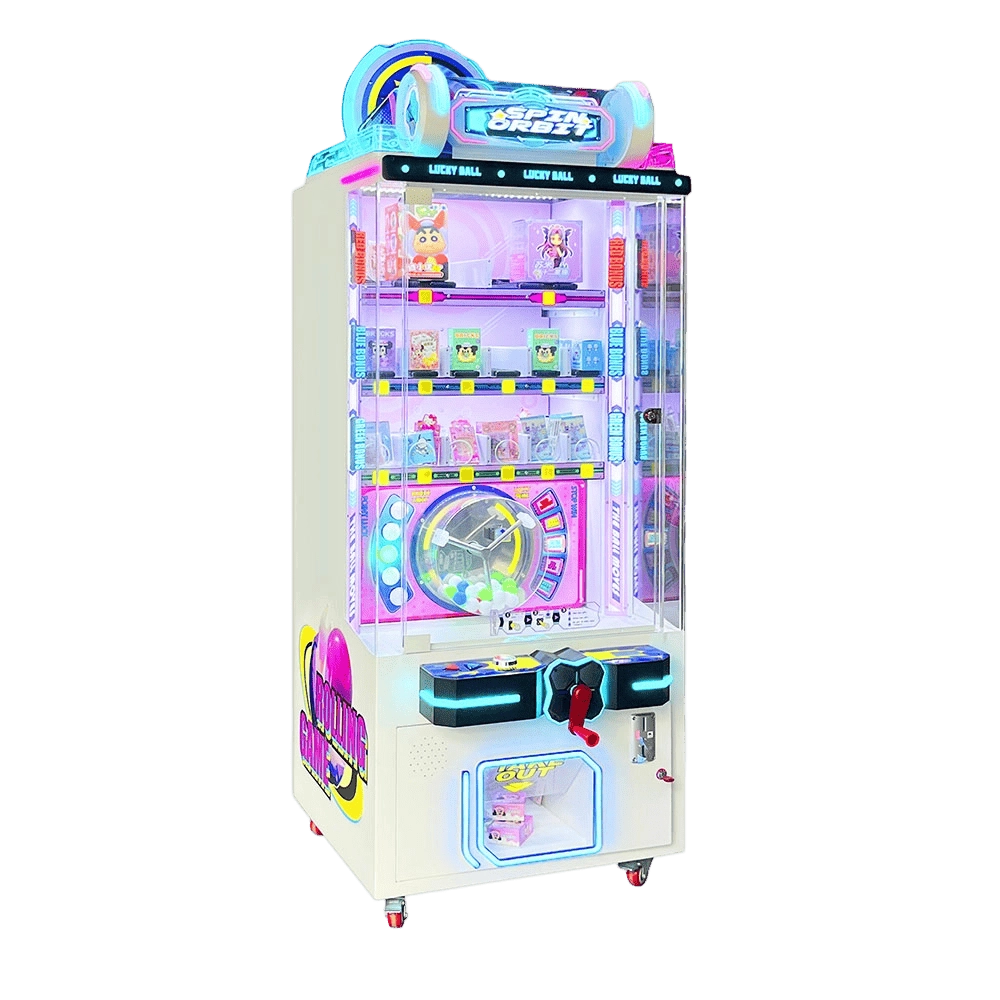
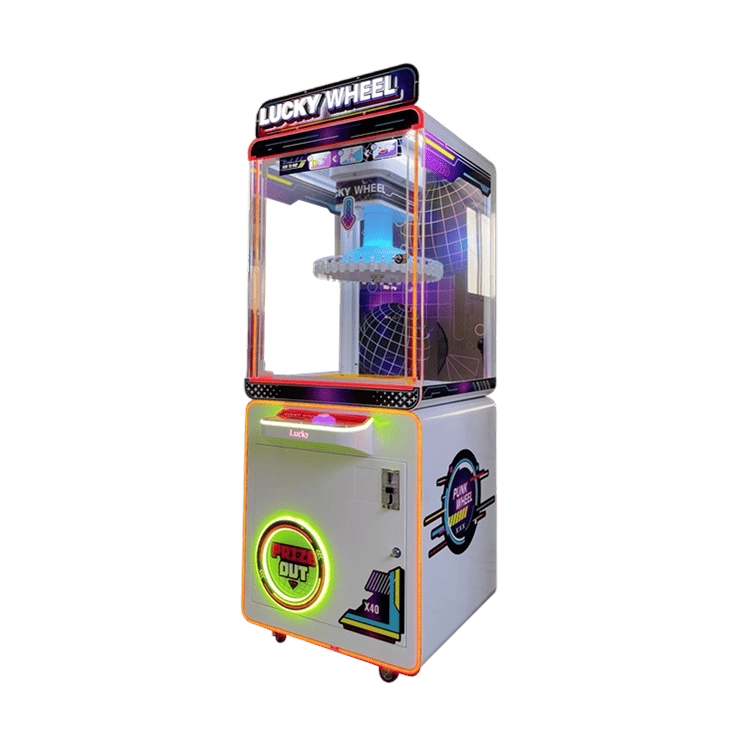
Arcade Prize Lucky Wheel Gift Machine For Amusement Areas
Get in Touch with Jiami Games
If you have any comments or good suggestions, please leave us a message; later our professional staff will contact you as soon as possible.

Innovative Entertainment, at Your Fingertips
Learn about Jiami Games and explore our expertise in console development, innovative design, and global markets.
Quick Links:
© 2026 Jiami Games.
Whatsapp: +8618520390438