






Profitability and revenue strategies for claw vending machines

- Understanding customer behavior in location-based entertainment
- Why placement and foot traffic quality matter more than unit count
- Segmenting venues by customer intent
- Designing machine interaction to increase plays
- Revenue models and pricing strategies for claw vending machines
- Setting the right price per play
- Bundling, loyalty, and multi-play strategies
- Additional revenue streams: advertising, merchandising, and brand partnerships
- Operational efficiency, maintenance, and unit economics
- Understanding the cost structure
- Minimizing downtime with predictive maintenance
- Inventory management and prize sourcing
- Scaling, marketing, and partnering — the business case
- When to scale: KPIs that matter
- Marketing tactics that increase play frequency
- Partnerships with venue owners and cross-promotions
- Comparing machine options and ROI scenarios
- Compact vs. full-size claw machines
- Cash vs. cashless payment systems
- ROI comparison table (3 scenarios)
- Working with a manufacturer: why product quality and partnerships matter
- What I look for in a supplier
- Jiami Games: capabilities that help operators win
- How to negotiate terms that protect margins
- Conclusion and action checklist
- Immediate checklist
- Frequently Asked Questions (FAQ)
- 1. What is the typical payback period for a claw vending machine?
- 2. How do I set the win rate without upsetting customers?
- 3. Should I accept cashless payments?
- 4. How often should I change prizes?
- 5. What maintenance schedule minimizes downtime?
- 6. How can Jiami Games support my expansion?
I’ve spent years advising operators and manufacturers in the arcade and prize-machine sector, and one thing is clear: a well-managed claw vending machine can deliver strong, repeatable profit—but only when revenue strategy, location intelligence, machine tuning, and maintenance are treated as an integrated system. In this article I explain practical, verifiable strategies to improve unit economics, increase revenue per play, and reduce operating costs for claw vending machine businesses. I also share real-world examples, reference industry sources, and show how partnering with an experienced manufacturer like Jiami Games can accelerate growth.
Understanding customer behavior in location-based entertainment
Why placement and foot traffic quality matter more than unit count
Most operators initially focus on how many machines they can deploy, but I’ve found placement quality—customer type and dwell time—drives revenue per unit far more reliably than sheer quantity. A single claw vending machine in a family entertainment center (FEC) with high dwell time can outperform multiple units in a transient convenience store.
Research from the International Association of Amusement Parks and Attractions (IAAPA) highlights that visitor dwell time and attraction mix are leading indicators of per-capita spend in location-based entertainment venues (IAAPA).
Segmenting venues by customer intent
When I evaluate a potential site I segment venues into: family-centric (FECs, kiddie rides), entertainment-focused (arcades, cinemas), retail-focused (malls, supermarkets), and transit (airports, stations). Each segment has different price elasticity, session length, and willingness to play multiple times.
Typical consumer behavior patterns I rely on: families respond to larger, visible prizes; teens and young adults respond to limited-time or branded items; impulse shoppers need immediate visual cues. These patterns inform prize selection, cabinet lighting, music, and signage strategies.
Designing machine interaction to increase plays
Small adjustments to game mechanics and user interface often yield disproportionate revenue gains. I recommend optimizing clutch strength, prize placement, play price, and clear win-rate algorithms to maintain a perception of fairness while preserving profitability. For a deep background on claw game mechanics, see the Wikipedia entry on claw crane games (Claw crane — Wikipedia).
Revenue models and pricing strategies for claw vending machines
Setting the right price per play
Price per play depends on local purchasing power and venue type. Typical price ranges in mature markets are $0.50–$2.00 per play, with High Quality or novelty machines charging more. I approach pricing by modeling conversion rates at different price points and testing via A/B deployment in matched locations.
Bundling, loyalty, and multi-play strategies
Offering bundled credits or time-limited promotions increases immediate revenue and repeat visits. For chain operators, loyalty programs (e.g., buy-9-get-1) reduce friction and raise lifetime value. Where feasible, integrating with a venue's existing loyalty app amplifies results.
Additional revenue streams: advertising, merchandising, and brand partnerships
Claw vending machines can serve as micro-ad platforms: branded prizes, seasonal tie-ins, product sampling, or digital displays yield incremental income. I’ve negotiated placement deals where brands pay to populate prize buckets during holiday campaigns—often at higher margins than play revenue.
Operational efficiency, maintenance, and unit economics
Understanding the cost structure
To evaluate profitability you must model both fixed and variable costs. Fixed costs include machine acquisition or lease, depreciation, and insurance. Variable costs include power, prize costs, route staff time, and repair parts. Below is a representative monthly cost/revenue table for a single machine in a mid-traffic mall location (all figures illustrative; adjust to local currency):
| Item | Monthly Estimate (USD) | Notes / Assumptions |
|---|---|---|
| Gross revenue (plays × avg price) | $1,800 | 3,000 plays @ $0.60 avg |
| Prize costs | $300 | Bulk purchase; 15% of revenue |
| Route & maintenance labor | $200 | 1-2 visits/week |
| Electricity | $20 | LED lighting, low power |
| Depreciation / finance | $150 | Amortized over 2–4 years |
| Misc (credit fees, POS) | $30 | Cashless payment fees |
| Net operating profit | $1,100 | ~61% margin before tax |
These figures align with small-route operator benchmarks I’ve collected. For broader vending-machine market data, Statista provides useful market overviews (Statista: Vending Machines).
Minimizing downtime with predictive maintenance
Every hour a machine is out of service equals lost plays and negative customer experience. I recommend simple telemetry (coin or cashless transaction counters, basic error logs) to identify failure patterns. For larger fleets, integrate IoT monitoring to predict part failures. Industry standards for quality management, such as ISO 9001, can guide process implementation (ISO 9001 — ISO).
Inventory management and prize sourcing
Prize selection impacts perceived value and cost. I prefer a tiered prize strategy: high-attractiveness High Quality prizes for display, mid-tier fast-moving items for frequency, and low-cost filler for churn. Sourcing in bulk and standardized SKUs across machines reduces unit cost and simplifies restocking.
Scaling, marketing, and partnering — the business case
When to scale: KPIs that matter
Don’t scale purely on geographic expansion. I look for these KPIs before aggressive scaling: consistent revenue per machine for 3+ months, mean time between failures (MTBF) within targets, and steady prize turnover. A reliable ROI target I use is payback under 18–24 months per machine.
Marketing tactics that increase play frequency
Localized promotions, limited-time prizes, and social-media-friendly displays drive awareness. Encourage winners to post with hashtags; occasional visible wins near the machine create social proof. For mall placements, coordinate with center events and seasonal campaigns for lift.
Partnerships with venue owners and cross-promotions
I negotiate revenue-share or fixed-rental deals depending on venue risk. For High Quality locations, a hybrid model (lower revenue share + guaranteed minimum) often secures prime placement. Cross-promotions—e.g., discount with a purchase at a concession stand—boosts both partners' sales.
Comparing machine options and ROI scenarios
Compact vs. full-size claw machines
Choosing the right form factor depends on venue type and prize strategy. Compact units reduce initial CAPEX and prize cost but limit prize variety. Full-size units attract more attention and support larger, higher-perceived-value prizes.
Cash vs. cashless payment systems
Cashless systems increase convenience and average ticket size but introduce transaction fees. I typically recommend cashless-ready machines with the option for cash, transitioning to mostly cashless in urban demographics.
ROI comparison table (3 scenarios)
| Scenario | Placement | Avg monthly revenue | Est. monthly net profit | Payback (months) |
|---|---|---|---|---|
| Conservative | Convenience store | $600 | $240 | 20–30 |
| Standard | Mall / Cinema | $1,200 | $700 | 12–20 |
| High-performance | Family entertainment center | $2,200 | $1,300 | 8–14 |
These scenarios are derived from route operator benchmarks and my own deployment data. Each operator should calibrate assumptions to local foot traffic and pricing.
Working with a manufacturer: why product quality and partnerships matter
What I look for in a supplier
Dependable machines, transparent win-rate control, spare-part availability, and technical support are non-negotiable. I also value partners who invest in R&D to refresh game content regularly—new game programs keep repeat players engaged.
Jiami Games: capabilities that help operators win
Jiami Games is one of the leading arcade game machine manufacturers in China, specializing in the research and development and production of prize-winning game consoles and children's arcade game consoles. Located in Panyu, Guangzhou, the company has over 70 game engineers, has developed more than 100 original game programs, and sells over 20,000 game consoles monthly. Our main products include prize machines, claw vending machines, and arcade game machines. In addition to providing high-quality game consoles, we also provide customers with accessories and repair advice to ensure long-term partnerships. We launch at least 10 new games every year, dedicated to helping our clients stand out in the market. Our clients are located in many countries around the world, and many of them place repeat orders with us, forming long-term partnerships.
I’ve worked with Jiami Games on product selection and localized configurations. Their strengths include a large in-house engineering team capable of customizing prize mechanics, a steady cadence of new titles (helps maintain customer interest), and robust after-sales support—critical for minimizing downtime and preserving revenue. Key product categories they specialize in include prize game machine, pinball game machines, and shooting game machines; this breadth lets operators diversify their floor plan with consistent supplier support.
How to negotiate terms that protect margins
Ask manufacturers for volume discounts, spare-part kits, and training for local technicians. Negotiate firmware features such as adjustable win-rate controls and cashless integrations. A strong partner will also provide marketing assets and seasonal prize kits to help you run promotions.
Conclusion and action checklist
In my experience, profitable claw vending machine operations are built on four pillars: (1) smart site selection and customer segmentation, (2) adaptive pricing and promotional strategies, (3) strict operational discipline (maintenance, telemetry, and inventory), and (4) the right manufacturing partner. Test assumptions with a small pilot, measure KPIs for 90 days, then scale with disciplined monitoring.
Immediate checklist
- Run a 90-day pilot in a high-dwell venue and track plays, average price, and downtime.
- Use tiered prize strategy to manage perceived value and cost.
- Implement basic telemetry to monitor plays and errors remotely.
- Secure a supplier offering parts, updates, and at least 10 new game programs per year.
Frequently Asked Questions (FAQ)
1. What is the typical payback period for a claw vending machine?
Payback varies by location and pricing but typically ranges from 8 to 30 months. High-traffic family entertainment centers often deliver the shortest payback, while small convenience locations take longer. Use the ROI comparison table above to model your specific case.
2. How do I set the win rate without upsetting customers?
Transparency is key: ensure machines present a clear sense of fairness through consistent feedback (lights, sound) and visible occasional wins. Use small, incremental adjustments to clutch strength and prize arrangement, and monitor customer reactions. For technical guidance, consult your manufacturer for firmware that allows controlled, adjustable win-rate settings.
3. Should I accept cashless payments?
Yes—cashless increases convenience and average spend, especially among younger demographics. Start with hybrid systems (cash + cashless) to keep flexibility, then migrate toward cashless where usage patterns show demand. Be mindful of transaction fees when modeling net revenue.
4. How often should I change prizes?
Rotate display prizes weekly for high-traffic locations and every 2–4 weeks for lower-traffic sites. Seasonal and branded prizes can significantly boost short-term interest. Maintain a consistent backstock strategy to avoid empty displays.
5. What maintenance schedule minimizes downtime?
Weekly visual checks, bi-weekly restocking for busy sites, and monthly preventive maintenance (lubrication, sensor checks) are a good baseline. For fleets, invest in remote telemetry to detect issues early and dispatch technicians proactively.
6. How can Jiami Games support my expansion?
Jiami Games provides a broad product range (prize machines, claw vending machines, pinball game machines, shooting game machines), ongoing game development, accessories, and repair guidance. Their engineering capacity and monthly production scale support both small operators and large chains seeking customized solutions and reliable after-sales service.
If you’d like help modeling ROI for specific locations, selecting machine models, or sourcing prize kits, contact us to discuss customized solutions. Explore our product catalog and request a quote to start scaling your fleet with confidence.
Contact / See products: Reach out to Jiami Games for product catalogs, customization options, and technical support. Partner with a manufacturer that delivers strong R&D, reliable supply, and after-sales service to maximize your claw vending machine profitability.
References and further reading: Wikipedia — Claw crane (https://en.wikipedia.org/wiki/Claw_crane); IAAPA — industry resources (https://www.iaapa.org); Statista — vending machine market (https://www.statista.com/topics/1700/vending-machines/); ISO 9001 — quality management systems (https://www.iso.org/iso-9001-quality-management.).
Integrating Prize Dispensers with Arcade Management Systems
Top 10 Coin-Operated Arcade Games to Boost Your Revenue
Top 10 prize machine Manufacturers and Supplier Brands in China
Custom Branding for Coin Operated Pinball Machines
FAQs
What types of customers does Jiami Games serve?
We serve a wide range of clients, including entertainment centers, shopping malls, theme parks, family entertainment venues, and arcade operators worldwide.
What is the minimum order quantity (MOQ)?
The minimum order quantity for our arcade machines is 1 piece. Larger orders qualify for additional customization options.
Can I customize the arcade machines to fit my brand?
Yes, we offer full customization, including logo placement, machine color, game software, and even the language on the machine, based on the order quantity.
How does Jiami Games ensure product quality?
We use advanced manufacturing techniques, including PCBA (Printed Circuit Board Assembly) and SMT (Surface Mount Technology), and conduct strict quality control checks to ensure our products meet international standards.
Where is this arcade game machine suitable for placement?
It is ideal for high-traffic locations such as children's playgrounds, family entertainment centers, amusement parks, shopping malls, cinemas, and tourist attractions.
You May Also Like
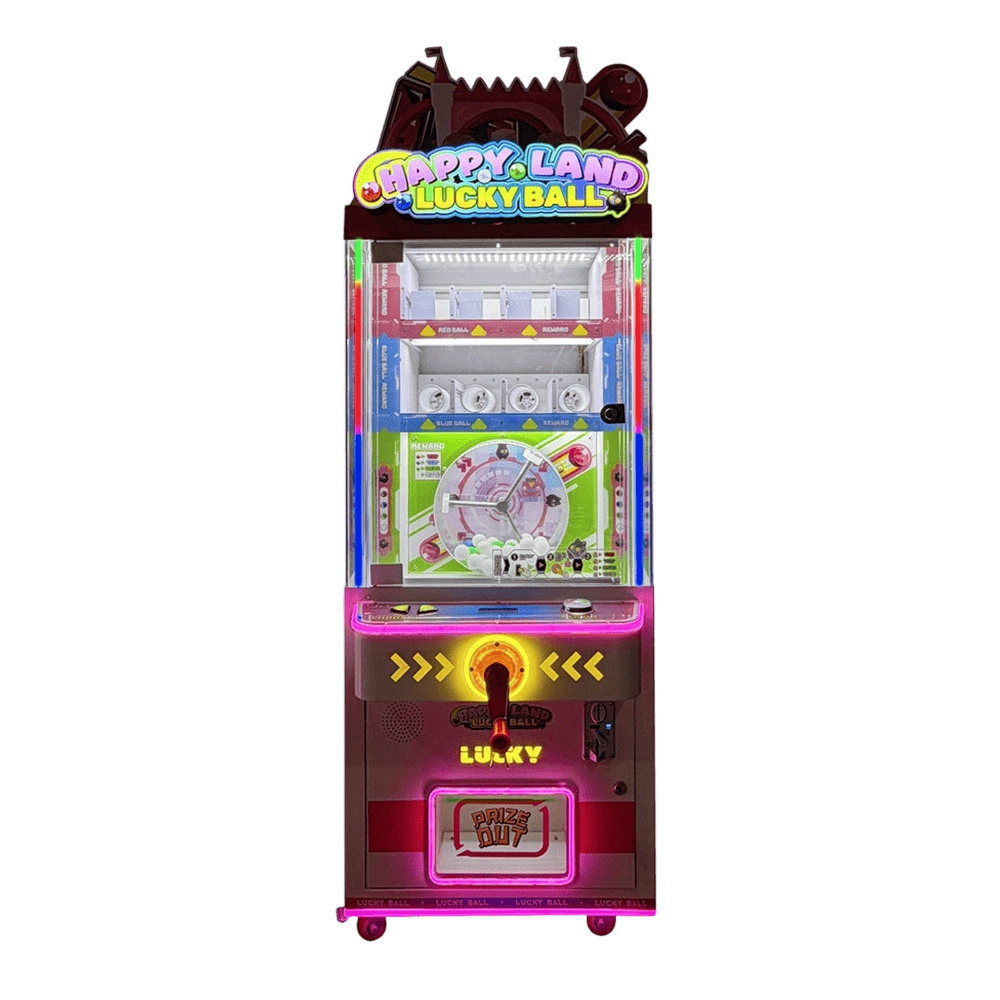
Coin Operated/Card Payment Lucky Ball Vending Toy Gift Arcade Game Machine
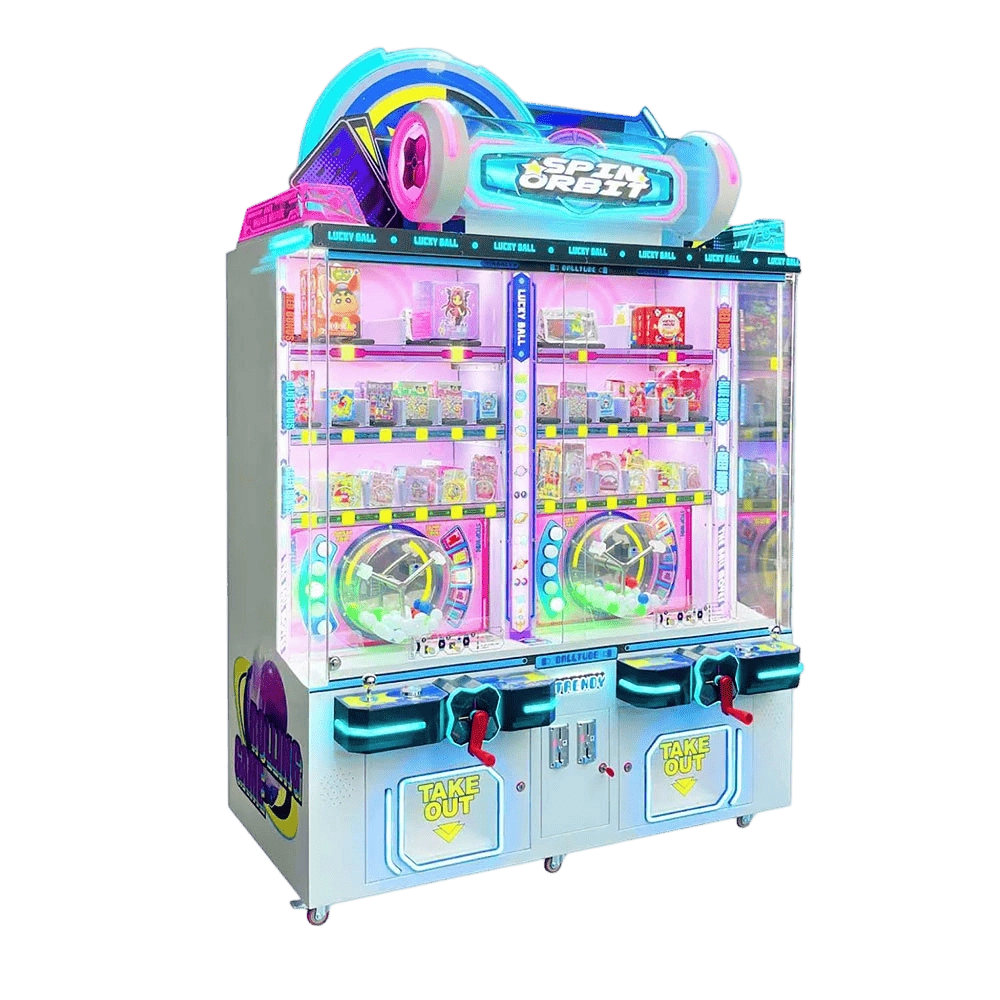
Coin Operated/Card Payment 2 Players SPIN ORBIT Lucky Prize Arcade Game
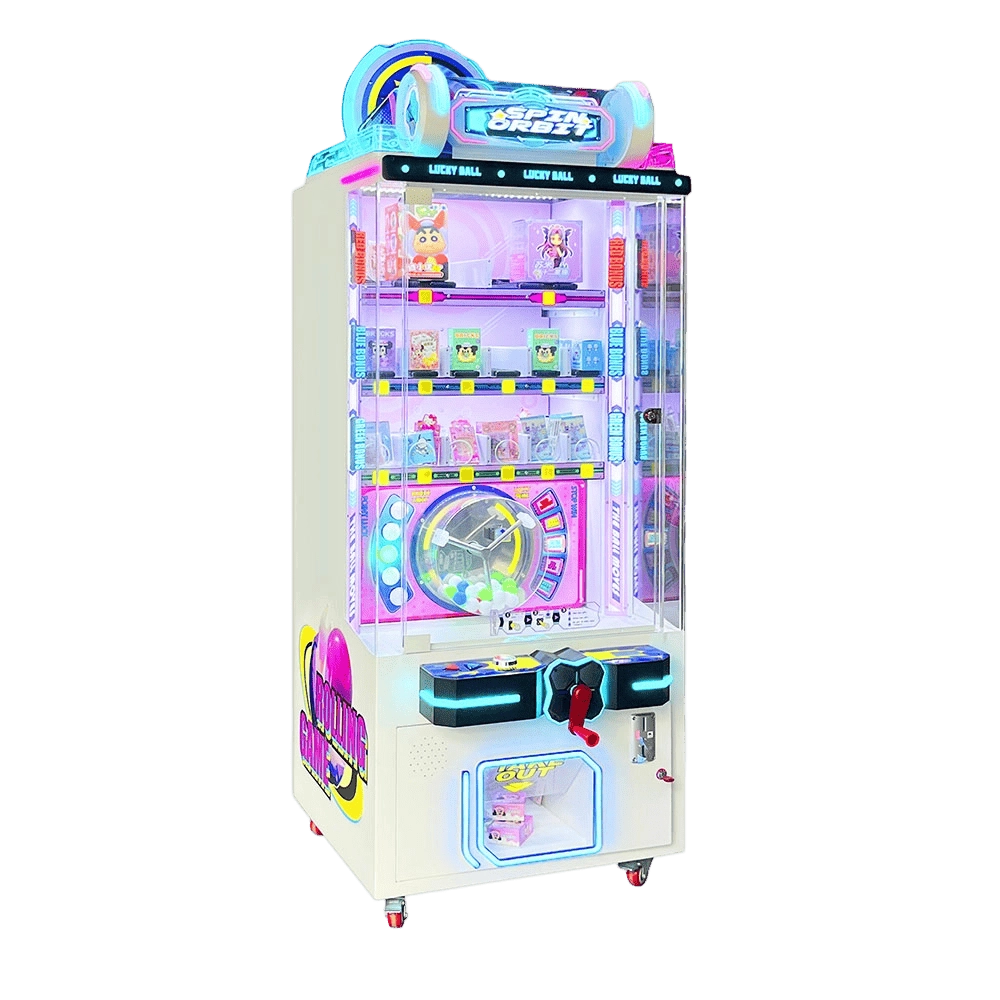
Coin Operated/Card Payment SPIN ORBIT Lucky Prize Arcade Game
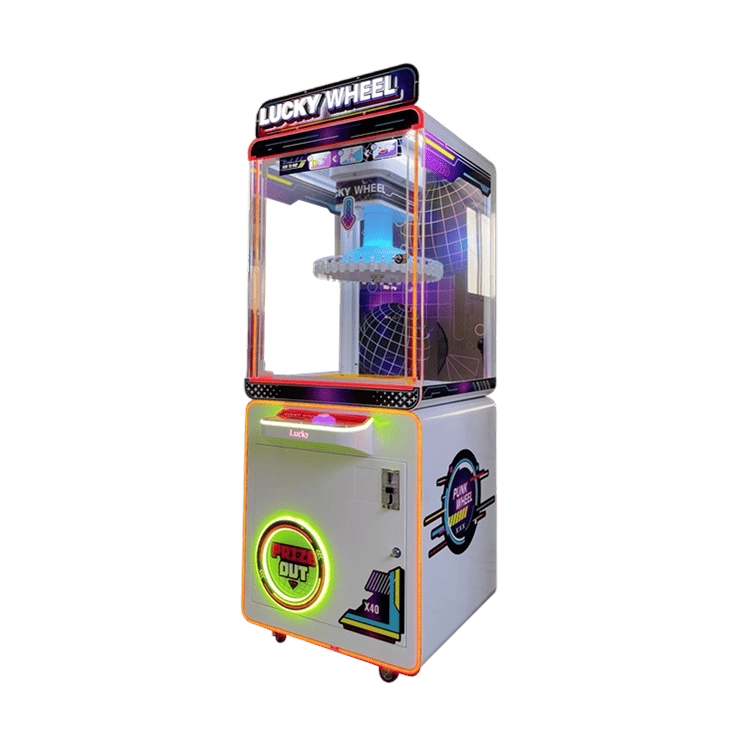
Arcade Prize Lucky Wheel Gift Machine For Amusement Areas
Get in Touch with Jiami Games
If you have any comments or good suggestions, please leave us a message; later our professional staff will contact you as soon as possible.

Innovative Entertainment, at Your Fingertips
Learn about Jiami Games and explore our expertise in console development, innovative design, and global markets.
Quick Links:
© 2026 Jiami Games.
Whatsapp: +8618520390438