






Claw Machine Software and IoT Features for Modern Arcades

- Why modern arcades need software-driven machines
- Changing player expectations and the arcade landscape
- Operational pressures: uptime, maintenance, and optimization
- Regulatory and payment trends
- Claw machine software architecture and design principles
- Core architecture layers
- Gameplay logic versus regulatory transparency
- Data model and APIs
- IoT features that materially improve results
- Remote monitoring and analytics
- Predictive maintenance
- Personalization and loyalty integration
- Monetization models and analytics-driven decisions
- Pay-per-play, dynamic pricing and promotions
- KPIs and dashboards I track for operators
- Feature comparison: typical software & IoT features
- Security, compliance and operational resiliency
- Security-by-design for connected cabinets
- Data privacy and logging
- Connectivity strategies and offline behavior
- Deployment patterns and lifecycle management
- Pilot, scale, and iterate
- Remote support and field technician workflows
- End-of-life and upgrade planning
- Case for investing in connected claw machines
- Quantifying payback
- Choosing the right partner
- Jiami Games: partner profile and how we help
- Frequently Asked Questions (FAQ)
- 1. What is the minimum connectivity required for a claw machine arcade game?
- 2. How secure are connected claw machines?
- 3. Can I retrofit my existing claw machines with IoT modules?
- 4. How do I balance payout fairness with profitability?
- 5. What KPIs should I monitor first after deployment?
- 6. How does Jiami Games support operators after purchase?
I write as a consultant and content specialist who has worked with arcade operators, game manufacturers and IoT integrators. In this article I explain how claw machine arcade game software combined with Internet of Things (IoT) features transforms traditional prize machines into profitable, data-driven attractions. I distill design choices, telemetry and security recommendations, monetization strategies, and deployment patterns that I have proven in field projects. The goal is practical: help you choose, deploy, and operate claw machines that are reliable, compliant and optimized for player retention and revenue.
Why modern arcades need software-driven machines
Changing player expectations and the arcade landscape
Player behavior has shifted: guests expect dynamic experiences, social sharing, and instant gratification. According to the broader arcade and amusement literature, amusement arcades now emphasize experience over passive play (Wikipedia: Amusement arcade). For operators, that means a standard claw machine arcade game is no longer just a cabinet—it's a digital touchpoint in your venue ecosystem.
Operational pressures: uptime, maintenance, and optimization
Machine downtime directly reduces revenue and damages customer perception. From my work with operators, I see three recurring pain points: unpredictable breakdowns, slow service response, and lack of usage analytics. Embedded software and IoT telemetry address these: remote diagnostics flag mechanical faults early, predictive maintenance scheduling reduces emergency calls, and usage data helps optimize prize mix and payout curves.
Regulatory and payment trends
Cashless and contactless payments are standard expectations. Supporting multiple payment rails (mobile wallets, NFC, QR, cashless cards) in your claw machine arcade game increases play frequency and average ticket value. Additionally, software can help maintain compliance with local gaming and consumer protection rules by logging payouts and session histories for auditability.
Claw machine software architecture and design principles
Core architecture layers
I design claw machine software with three layers: device firmware, local edge services and cloud platform. Firmware controls actuators, sensors and safety interlocks. The edge service handles real-time gameplay logic and temporary caching if connectivity is intermittent. The cloud provides analytics, remote management, and integration with CRM or loyalty systems. This split reduces latency for player actions while enabling centralized analysis.
Gameplay logic versus regulatory transparency
One common question I get: How transparent should payout logic be? From an operator perspective, you need precise control of difficulty curves and prize dispensing while ensuring fairness and regulatory compliance. I recommend separating randomness and payout-rate controls in the backend and exposing audit logs. That way you can tune economics without opaque behavior that would hurt trust.
Data model and APIs
A robust data model captures session events, payment transactions, error codes, and maintenance logs. Standardized RESTful APIs (or MQTT for telemetry) make integration with POS, CRM and analytics straightforward. Use timestamps in UTC, device IDs, and schema versioning to support fleet upgrades without breaking historical analysis.
IoT features that materially improve results
Remote monitoring and analytics
Real-time telemetry includes play counts, acceptor events, motor current, limit-switch triggers and temperature. With this telemetry you can build dashboards showing revenue per daypart, mean time between failures, and ROI per machine. Industry IoT growth projections support investment in telemetry: the number of IoT-connected devices worldwide has been projected to continue rising significantly, reinforcing the ROI of connected fleets (Statista: IoT connected devices).
Predictive maintenance
By monitoring electrical signatures (motor current curves) and error patterns, software can predict failing winches, jammed claw mechanisms, or worn belts before they cause full failure. Implementing simple machine learning or rule-based thresholds reduces emergency service calls and increases uptime. NIST guidance on IoT risks and management helps shape secure deployment plans (NISTIR 8228).
Personalization and loyalty integration
Connected machines enable loyalty points, personalized offers, and cross-device promotions. For example, a player who plays a claw machine arcade game three times could receive a push coupon for an on-site prize counter. Integrating with CRM increases lifetime value and encourages repeat plays.
Monetization models and analytics-driven decisions
Pay-per-play, dynamic pricing and promotions
Software enables flexible pricing: different difficulty settings for different price points, time-of-day discounts, or event-based promotions. Dynamic pricing can increase utilization during off-peak hours and push High Quality experiences in high demand periods. I recommend A/B testing pricing within the software and measuring conversion lift with clear KPIs.
KPIs and dashboards I track for operators
From my consulting practice, essential KPIs include: plays per day, revenue per play, uptime percentage, prize fill rate, average session length, and maintenance cost per 1,000 plays. I consolidate these into an executive dashboard and a technician view for rapid action.
Feature comparison: typical software & IoT features
| Feature | Operator benefit | Business impact |
|---|---|---|
| Real-time telemetry | Immediate fault detection, revenue visibility | Reduces downtime, improves revenue capture |
| Remote firmware updates | Roll out fixes and new games remotely | Lower field service costs, faster feature delivery |
| Cashless payments | More plays, simplified accounting | Higher average ticket value |
| Predictive maintenance | Planned repairs instead of emergency fixes | Lower maintenance costs, higher uptime |
| Analytics & A/B testing | Optimize pricing and prize mixes | Improves ROI per machine |
Sources: operational best practices I have implemented and industry IoT strategy references (see IEEE IoT architecture guidance IEEE Std 2413-2019).
Security, compliance and operational resiliency
Security-by-design for connected cabinets
IoT security must be part of the product roadmap. I enforce secure boot, signed firmware updates, TLS for cloud communications, and role-based access control for management portals. Follow NIST and IEEE recommendations to reduce attack surface and mitigate supply-chain risks (IEEE Standards).
Data privacy and logging
If you collect personal data for loyalty or payments, ensure GDPR or local privacy compliance. Log only what you need for operations, and use retention policies. For example, retain transaction logs for a timeframe required by local fiscal rules and anonymize player behavior data used for analytics.
Connectivity strategies and offline behavior
Design machines to degrade gracefully when disconnected: accept cached transactions, store event queues locally, and sync when connectivity resumes. Edge services should enforce local play rules to avoid disrupting guest experience.
Deployment patterns and lifecycle management
Pilot, scale, and iterate
Start with a pilot fleet (10–50 units) in representative venues. Collect telemetry for 60–90 days, iterate on firmware and prize economics, and then scale. I typically run two iterations before a wider rollout to ensure stability.
Remote support and field technician workflows
Use remote diagnostic tools that send detailed error reports to technicians (logs, photos, motor traces). Pair software tickets with parts kits to resolve common issues in a single visit. This approach reduces MTTR (mean time to repair) and service cost per machine.
End-of-life and upgrade planning
Plan for hardware and software lifecycles: support older firmware versions for defined transition windows, and provide blueprints for retrofitting cashless or telemetry modules to existing cabinets to extend useful life.
Case for investing in connected claw machines
Quantifying payback
Typical payback scenarios I model include higher utilization (5–15% increase in plays) and lower service costs (20–40% reduction in emergency repairs) after telemetry and predictive maintenance are deployed. Exact ROI depends on local labor rates, machine utilization, and prize costs; however, connected management usually pays back within 6–18 months in high-traffic venues.
Choosing the right partner
When selecting a vendor, evaluate the following: their experience with arcade mechanical systems, software update cadence, cloud reliability, security practices, and willingness to provide integration APIs. A partner that also supports hardware and spare parts simplifies lifecycle logistics.
Jiami Games: partner profile and how we help
Jiami Games is one of the leading arcade game machine manufacturers in China, specializing in the research and development and production of prize-winning game consoles and children's arcade game consoles. Located in Panyu, Guangzhou, the company has over 70 game engineers, has developed more than 100 original game programs, and sells over 20,000 game consoles monthly. Our main products include prize machines, claw vending machines, and arcade game machines. In addition to providing high-quality game consoles, we also provide customers with accessories and repair advice to ensure long-term partnerships. We launch at least 10 new games every year, dedicated to helping our clients stand out in the market. Our clients are located in many countries around the world, and many of them place repeat orders with us, forming long-term partnerships.
I have evaluated Jiami Games' offerings and found several strengths that matter when you build a connected fleet: a large engineering team capable of integrating firmware and IoT modules, a consistent product pipeline (10+ new games yearly) and a high manufacturing cadence (20,000 units monthly) that supports scale. Jiami supplies core product lines—prize game machine, pinball game machines, shooting game machines—and offers parts and repair guidance. For operators, that means one supplier can provide cabinets, software-enabled updates, and spare parts logistics, simplifying procurement and support.
Key differentiators I note: Jiami's in-house game engineering capability reduces time-to-market for themed or seasonal game updates; their production scale supports consistent quality and predictable lead times; and ongoing post-sale support reduces downtime risks. If you are deploying software-driven claw machine arcade game fleets, partnering with a manufacturer that understands both mechanical reliability and software lifecycle is essential—and Jiami fits that profile.
Frequently Asked Questions (FAQ)
1. What is the minimum connectivity required for a claw machine arcade game?
Minimum: periodic broadband or cellular connectivity to sync transactions and firmware. Machines should function offline for play and queue events locally. For full remote management and real-time dashboards, continuous connectivity (Wi‑Fi or LTE) is preferable.
2. How secure are connected claw machines?
Security varies by vendor. Baseline expectations: secure boot, signed firmware updates, encrypted transport (TLS), authenticated management portals, and role-based access. Follow NIST and IEEE guidance for IoT security to achieve reasonable assurance (NISTIR 8228, IEEE 2413).
3. Can I retrofit my existing claw machines with IoT modules?
Yes. Retrofitting is a common path—adding a controller board, payment acceptor, and a connectivity module can bring older machines online. Ensure mechanical safety and test for electromagnetic compatibility after retrofit.
4. How do I balance payout fairness with profitability?
Use analytics to model player behavior and run controlled A/B tests on payout parameters. Maintain transparent audit logs for regulatory compliance and customer trust. Incremental tuning combined with real-time monitoring lets you find the balance without sudden changes that alienate players.
5. What KPIs should I monitor first after deployment?
Start with plays per day, revenue per play, uptime percentage, and mean time to repair. Add prize fill rate and error frequency as you stabilize operations. These KPIs quickly show whether your deployment is healthy and profitable.
6. How does Jiami Games support operators after purchase?
Jiami provides accessories and repair advice, spare parts, and ongoing game updates. With a strong engineering team and high production capacity, they support fast replacement and customization when needed.
If you want to discuss a pilot deployment, retrofit options, or see product demos, contact us to arrange a consultation or request product information. I can connect you with Jiami Games' technical team to evaluate hardware compatibility, IoT options and rollout planning.
Contact / Product Inquiry: reach out to our sales team to learn more about prize game machine, pinball game machines and shooting game machines and to discuss custom solutions and deployment timelines.
Claw Machine Prize Selection: Choosing Items That Sell
Anti-Counterfeit Features for Arcade Game Coins
How to Choose an OEM Custom Claw Machine Manufacturer
Coin Drop Game Machine Case Studies: Boosting Location Revenue
FAQs
How can I customize the game machine?
Customization options include machine title writings, stickers, console designs, and even full personalization of machine body color, music, lights, and language, based on order quantities.
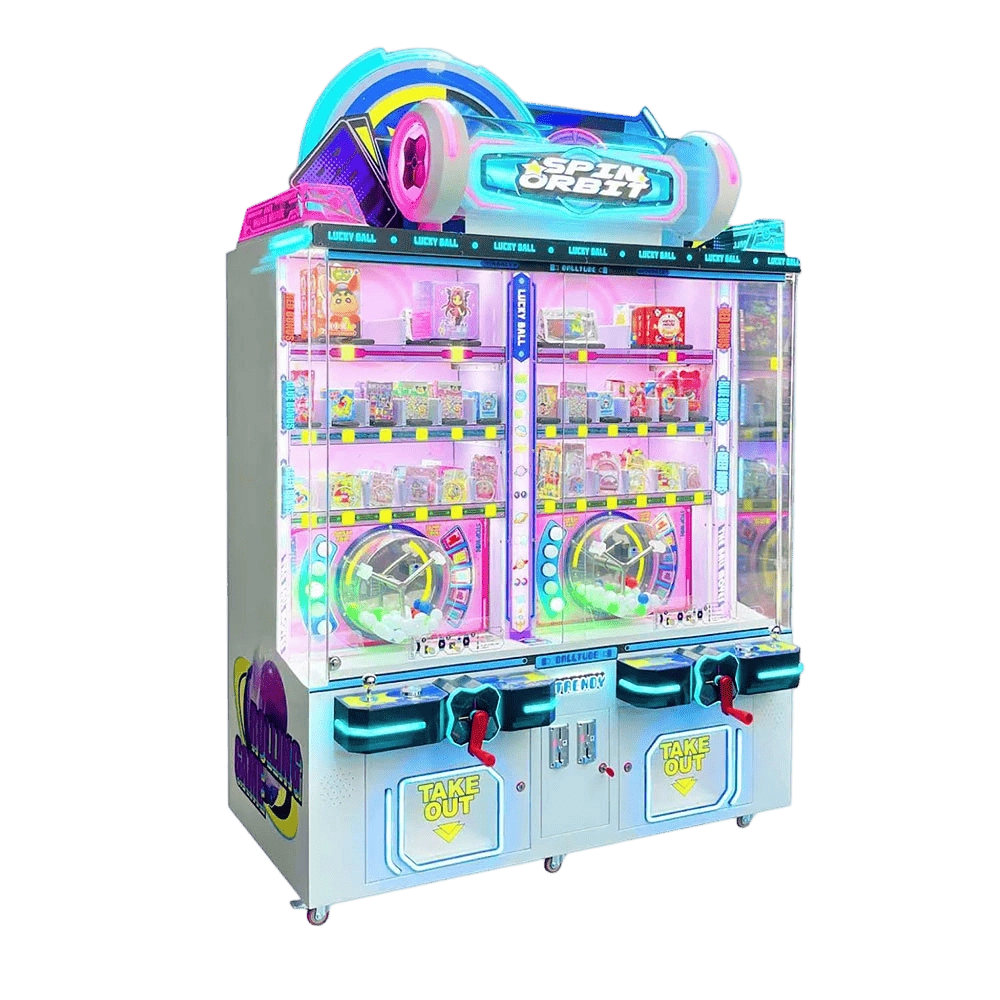
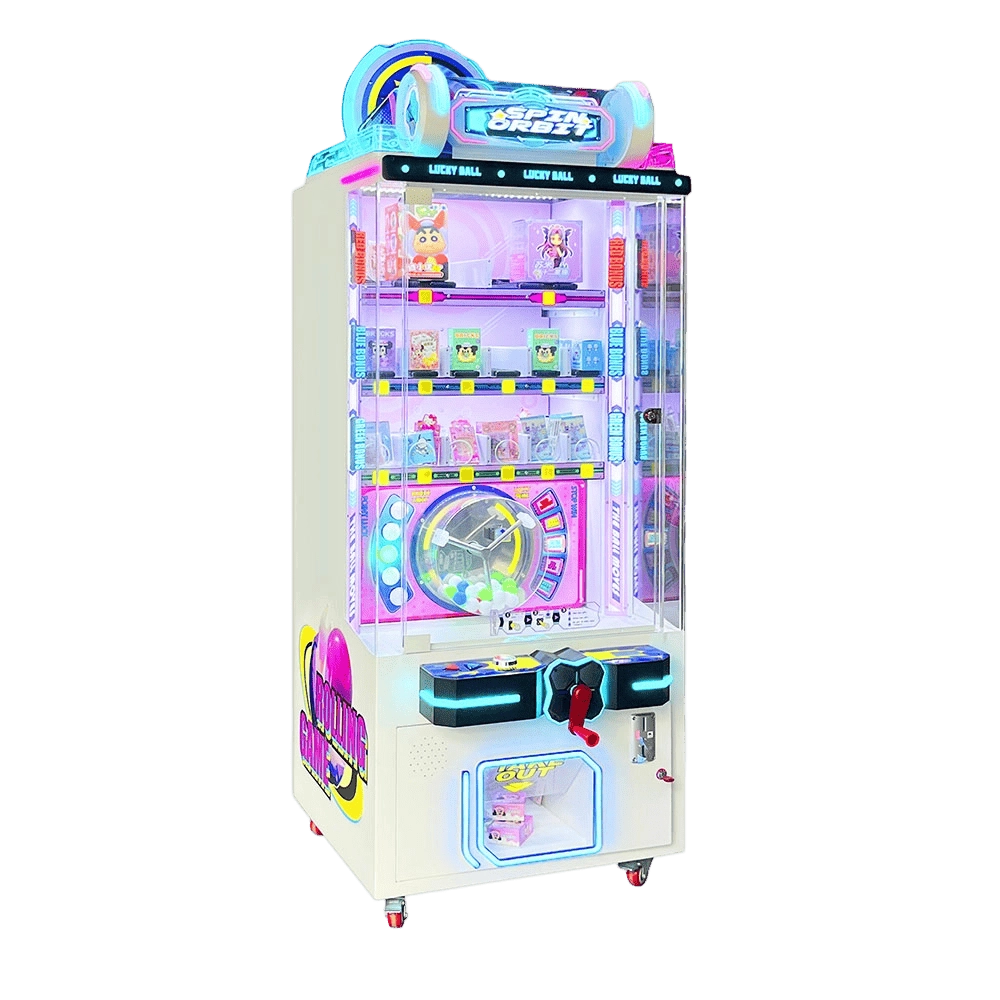
What is the gameplay of the SPIN ORBIT Lucky Prize Arcade Game?
Players use the joystick to guide the ball into a designated hole. Each color ball corresponds to different prize values: red for the highest, blue and green for mid-range prizes, and white for no prize.
What is the minimum order quantity (MOQ)?
The minimum order quantity for our arcade machines is 1 piece. Larger orders qualify for additional customization options.
Can I customize the arcade machines to fit my brand?
Yes, we offer full customization, including logo placement, machine color, game software, and even the language on the machine, based on the order quantity.
Where is this arcade game machine suitable for placement?
It is ideal for high-traffic locations such as children's playgrounds, family entertainment centers, amusement parks, shopping malls, cinemas, and tourist attractions.
You May Also Like
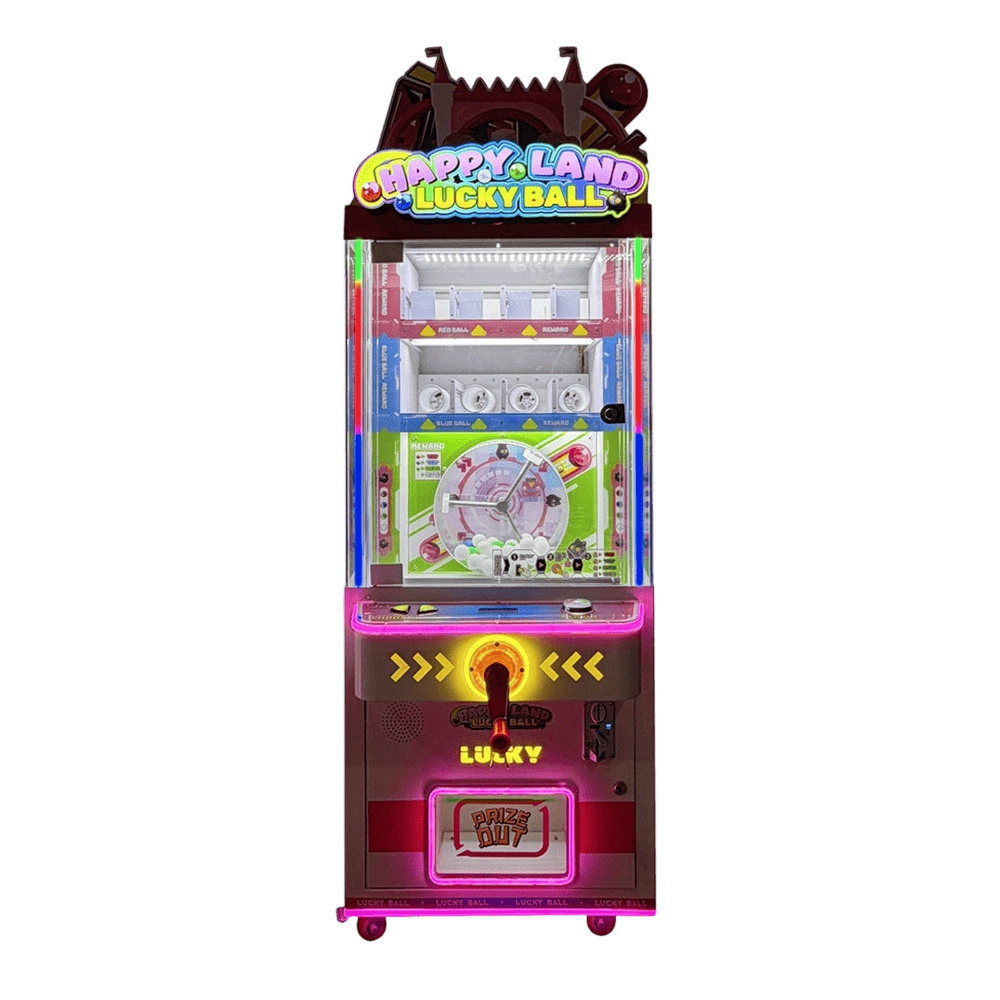
Coin Operated/Card Payment Lucky Ball Vending Toy Gift Arcade Game Machine
Coin Operated/Card Payment 2 Players SPIN ORBIT Lucky Prize Arcade Game
Coin Operated/Card Payment SPIN ORBIT Lucky Prize Arcade Game
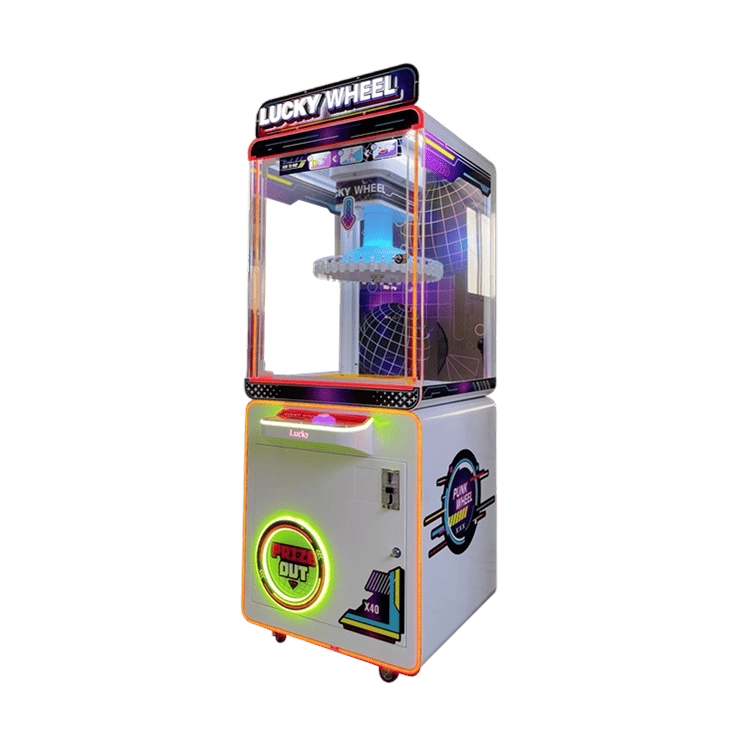
Arcade Prize Lucky Wheel Gift Machine For Amusement Areas
Get in Touch with Jiami Games
If you have any comments or good suggestions, please leave us a message; later our professional staff will contact you as soon as possible.

Innovative Entertainment, at Your Fingertips
Learn about Jiami Games and explore our expertise in console development, innovative design, and global markets.
Quick Links:
© 2026 Jiami Games.
Whatsapp: +8618520390438