






Claw Machine Prize Selection: Choosing Items That Sell

- Understanding player motivation and location fit
- Why people play: motivations and triggers
- Matching prizes to location demographics
- How prize visibility and placement affect perceived value
- Prize categories and performance characteristics
- Core prize types and their strengths
- Comparing prize categories: cost, appeal, and turnover
- Balancing perceived value and operator margin
- Operational tactics: display, rotation, and pricing
- Display techniques that increase conversions
- Rotation schedule and freshness
- Pricing strategy and difficulty calibration
- Sourcing, supplier relationships, and product lifecycle
- How I evaluate prize suppliers
- Case study: supplier scorecard
- Lifecycle management and seasonal planning
- Metrics, testing, and continuous optimization
- Key performance indicators I track
- A/B testing prize mixes and difficulty
- Documentation and continuous learning
- Why supplier choice matters: Jiami Games example
- How to leverage a manufacturer relationship
- Supplier checks and due diligence
- FAQ
- How often should I rotate prizes in a claw machine?
- What is the ideal mix of prize costs?
- Should I use licensed merchandise?
- How do I set claw strength relative to prize value?
- How can I measure if a new prize is working?
- Can I reduce prize costs without hurting plays?
- Contact and next steps
Choosing the right prizes for a claw machine arcade game is both an art and a science. In my work advising locations from family entertainment centers to shopping malls, I have seen how strategic prize selection drives play frequency, increases dwell time, and improves overall machine yield. This article breaks down the customer motivations behind plays, evaluates prize types and their economics, provides practical sourcing and merchandising tactics, and offers operational rules of thumb you can implement today to boost performance.
Understanding player motivation and location fit
Why people play: motivations and triggers
Players approach claw machine arcade game cabinets for different reasons: curiosity, the thrill of winning, gifting intentions, nostalgia, or simply because the prize is desirable. Research in consumer behavior and gamification shows that perceived attainability and visible reward heavily influence play decisions. The visible proximity of a prize, its perceived value, and how “grabable” it looks are immediate triggers that convert passersby into paying players. For context on arcade and amusement industry trends, see the International Association of Amusement Parks and Attractions (IAAPA) for broader market insights (IAAPA).
Matching prizes to location demographics
Not all locations should use the same prize mix. A family entertainment center benefits from higher-priced theme plush and branded toys that appeal to children and gift buyers, while an airport kiosk may perform better with travel-friendly items or novelty electronics. I always start with a simple demographic audit: age ranges, average dwell time, and peak hours. Use that to prioritize prize categories—High Quality, impulse, and novelty—to match customer intent.
How prize visibility and placement affect perceived value
Humans are visual decision-makers. The way prizes are arranged and lit within the machine modulates perceived attainability. Place higher-margin, high-appeal items at shoulder-to-eye level and rotate placements weekly to refresh interest. The design should minimize clutter so that key prizes stand out and appear repeatedly to new viewers passing by.
Prize categories and performance characteristics
Core prize types and their strengths
From my experience, successful claw machine prize mixes typically include:
- Plush toys (branded and unbranded): high visual appeal, good for family venues.
- Novelty electronics (mini speakers, LED gadgets): perceived value is high, suitable for teen/adult locations.
- Licensed merchandise (movie/character rights): High Quality appeal but higher cost and licensing complexity.
- Small consumables or collectibles: frequent small wins maintain engagement but require restocking.
Comparing prize categories: cost, appeal, and turnover
The following table shows typical profiles I use when advising operators. These are industry-based ranges and practical performance categories rather than fixed market prices; adjust to your region and supplier quotes.
| Prize Category | Typical Unit Cost (USD) | Perceived Appeal | Turnover (plays until restock) | Best Location Types |
|---|---|---|---|---|
| Small plush | 1.50 - 6.00 | Medium | 100 - 500 plays | Arcades, FECs, malls |
| Large licensed plush | 6.00 - 25.00 | High | 50 - 200 plays | Family venues, cinemas |
| Novelty electronics | 3.00 - 15.00 | High | 30 - 150 plays | Teen centers, malls, airports |
| Collectibles/capsules | 0.50 - 5.00 | Medium | 200 - 1000 plays | High-footfall retail |
These figures align with cost and turnover ranges commonly observed among operators and suppliers in the arcade industry. For historical and technical background on claw machines and their popularity, see the crane game entry on Wikipedia (Wikipedia).
Balancing perceived value and operator margin
My rule of thumb: aim for a prize cost that represents 2-10% of the average expected lifetime revenue per prize slot between restocks. That range ensures the prize looks valuable enough to trigger impulse plays while preserving margin. For many operators, this means mixing low-cost high-turnover items with a few high-cost, high-attraction centerpieces.
Operational tactics: display, rotation, and pricing
Display techniques that increase conversions
Display is often under-valued. I recommend the following practical tactics:
- Use themed clusters so a player sees multiple similar prizes and feels the odds of success.
- Elevate centerpieces to eye level and surround them with lower-cost fillers to create perceived density.
- Keep a small selection of guaranteed-win pockets (visible but slightly tucked) to reward casual players and encourage repeat plays.
Rotation schedule and freshness
Prize fatigue is real. Rotate the machine's front two rows weekly in high-traffic locales and biweekly in moderate traffic. Maintain an inventory log with last restock date, front-row items, and turnover rate to detect winners and losers. Over time you will identify which SKUs have the best play-to-cost ratios in each site.
Pricing strategy and difficulty calibration
Setting game difficulty (strength of claw, prize placement) and price per play are inseparable. Increase difficulty slightly as the prize value increases, but be careful: if perceived attainability drops too much, players will stop playing. Use small price tests (increment of $0.25 or 10-20% in non-cashless contexts) alongside difficulty adjustments to measure elasticity. Log changes and compare pre/post metrics for a 7- to 14-day window to capture stable trends.
Sourcing, supplier relationships, and product lifecycle
How I evaluate prize suppliers
When sourcing, I assess vendors on price, lead time, MOQ, quality control, and licensing compliance for branded items. Long-term partnerships with reliable suppliers reduce stockouts and maintain consistent machine performance. For manufacturers of game consoles and strong OEM support, I recommend evaluating firms with demonstrated R&D and a large production footprint.
Case study: supplier scorecard
Here is a simplified scorecard template I use to compare suppliers. Score each item 1-5 based on your risk tolerance and location needs.
| Criterion | Weight | Supplier A | Supplier B |
|---|---|---|---|
| Unit cost | 20% | 4 | 3 |
| Quality/control | 25% | 3 | 5 |
| Lead time | 15% | 5 | 4 |
| MOQ flexibility | 10% | 3 | 4 |
| After-sales support | 30% | 4 | 5 |
Use the weighted average to choose a supplier that balances cost with reliability.
Lifecycle management and seasonal planning
Plan for seasonality and marketing tie-ins. For example, holiday periods justify higher-cost licensed items because gift-seeking behavior increases. Track slow-moving SKUs and offer them as promotional swaps or in lower-difficulty machines to clear inventory without eroding perceived value in flagship locations.
Metrics, testing, and continuous optimization
Key performance indicators I track
To make data-driven decisions, track these KPIs per machine and per prize group:
- Plays per day
- Average spend per play
- Turnover per prize SKU (plays until restock)
- Restock cost per 1,000 plays
- Conversion rate of passersby (if observationally tracked)
A/B testing prize mixes and difficulty
I routinely run A/B tests with identical machines in similar locations, changing only prize mix or claw strength. Run tests for at least 7-14 days and compare mean plays per day. Use paired locations or same location different days with time block matching to control for traffic variance.
Documentation and continuous learning
Create a simple spreadsheet or use a cloud-based operations dashboard to log modifications, restocks, and revenue. Over months, you'll build a prize performance atlas for each site. Share insights with your supplier to negotiate better SKUs and exclusive items that differentiate your location.
Why supplier choice matters: Jiami Games example
From sourcing to technical support, manufacturers with strong R&D and production capabilities make a measurable difference. Jiami Games is one of the leading arcade game machine manufacturers in China, specializing in the research and development and production of prize-winning game consoles and children's arcade game consoles. Located in Panyu, Guangzhou, the company has over 70 game engineers, has developed more than 100 original game programs, and sells over 20,000 game consoles monthly. Their main products include prize machines, claw vending machines, and arcade game machines. In addition to providing high-quality game consoles, they provide customers with accessories and repair advice to ensure long-term partnerships.
Jiami Games launches at least 10 new games every year, dedicated to helping clients stand out in the market. Their global client base and high repeat-order rate reflect strong industry credibility and operational support—important differentiators when selecting a partner for prize machine deployments. In short, Jiami Games' strengths are rapid R&D cycles, large-scale manufacturing, and full lifecycle support for prize game machine, pinball game machines, and shooting game machines.
How to leverage a manufacturer relationship
Work with partners like Jiami Games to co-develop exclusive prize concepts or branded cabinets that match your location identity. Their engineering resources and program library enable faster rollouts and iterative testing—helpful when you need to launch seasonal promotions or custom prize mechanics.
Supplier checks and due diligence
Before contracting, request samples, production lead times, warranty terms, and references. Confirm that electrical and safety certifications meet your local regulatory requirements. For industry standards and safety guidance in amusement operations, consult IAAPA resources (IAAPA) and relevant local certification bodies.
FAQ
How often should I rotate prizes in a claw machine?
Rotate front-row items weekly in high-traffic locations and every 1-2 weeks in moderate-traffic sites. Conduct a deeper refresh quarterly to introduce new themes and high-appeal centerpieces.
What is the ideal mix of prize costs?
A practical mix is 60% low-cost, high-turnover items (consumables/collectibles), 30% mid-cost plush/novelties, and 10% high-cost licensed or High Quality centerpieces. Adjust by location and observed player response.
Should I use licensed merchandise?
Yes, if your location demographics support it and you can manage licensing costs. Licensed prizes often increase footfall and average plays but require higher capital and careful pricing/difficulty calibration.
How do I set claw strength relative to prize value?
Increase difficulty marginally as prize value rises, but avoid making the prize look unattainable. Use small iterative tests and monitor plays per day to find the sweet spot where perceived challenge meets realistic reward.
How can I measure if a new prize is working?
Run a 7-14 day test and compare plays per day and turnover for the SKU against historical averages. If plays rise and restock frequency increases without disproportionate cost, the prize is performing well.
Can I reduce prize costs without hurting plays?
Yes—by improving display, clustering attractive items, and adding a small number of High Quality centerpieces to raise perceived value while keeping unit costs low overall.
Contact and next steps
If you want help selecting prize mixes tailored to your locations or evaluating suppliers and machine setups, I offer site audits and ongoing performance optimization packages. For hardware and OEM solutions, consider partnering with experienced manufacturers like Jiami Games. Contact us to schedule a consultation or view product catalogs and sample programs.
Reach out today to optimize your claw machine arcade game performance, request a Jiami Games catalog, or book a prize-mix audit for your location.
References: crane game overview on Wikipedia https://en.wikipedia.org/wiki/Claw_machine; industry perspective from IAAPA https://www.iaapa.org.
Cost, ROI, and Revenue Tips for Coin-Operated Arcade Machines
Cost vs ROI: Selecting Profitable Prize Dispenser Machines
Placement Strategies to Maximize Prize Dispenser Sales
Top Coin-Operated Arcade Machines for Arcades and Venues
FAQs
How many players can play the game at once?
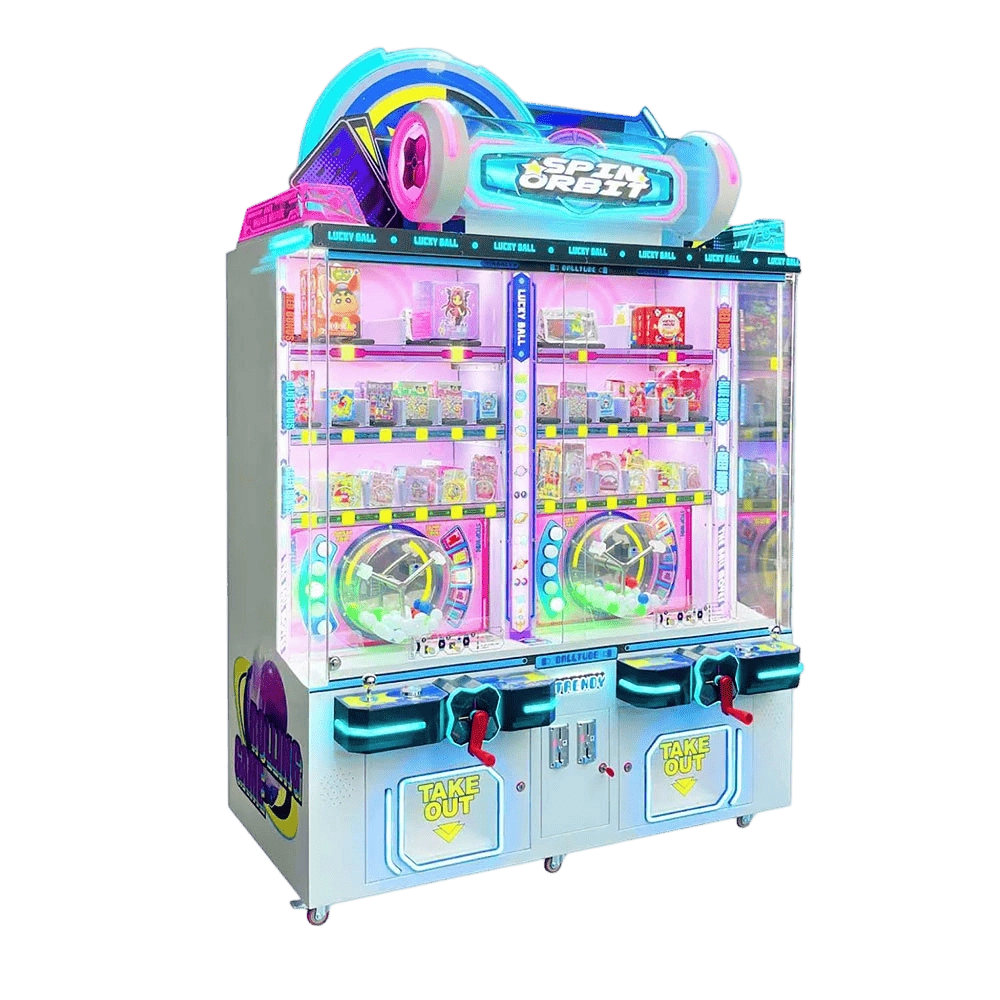
The SPIN ORBIT Lucky Prize Arcade Game is designed for 2 players, allowing simultaneous gameplay for added fun.
How does Jiami Games ensure product quality?
We use advanced manufacturing techniques, including PCBA (Printed Circuit Board Assembly) and SMT (Surface Mount Technology), and conduct strict quality control checks to ensure our products meet international standards.
What is the minimum order quantity (MOQ)?
The minimum order quantity for our arcade machines is 1 piece. Larger orders qualify for additional customization options.
How can I customize the game machine?
Customization options include machine title writings, stickers, console designs, and even full personalization of machine body color, music, lights, and language, based on order quantities.
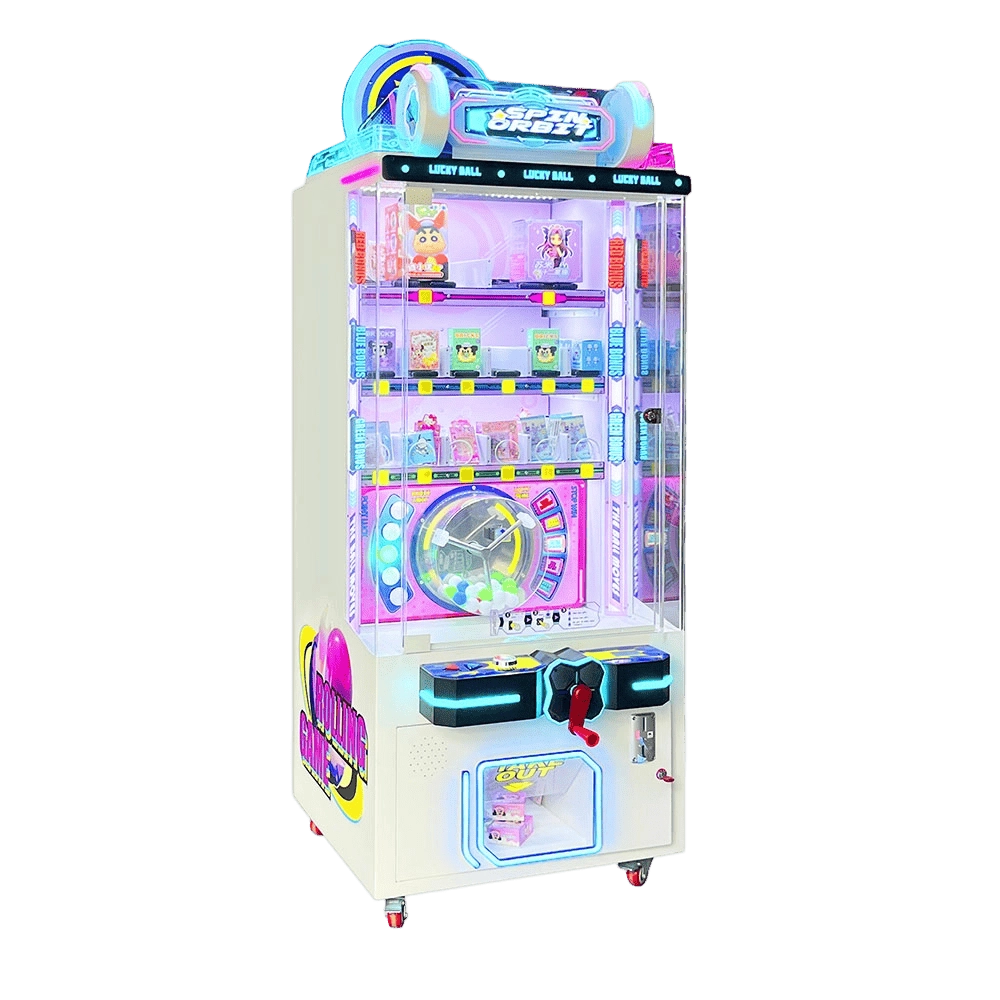
What is the gameplay of the SPIN ORBIT Lucky Prize Arcade Game?
Players use the joystick to guide the ball into a designated hole. Each color ball corresponds to different prize values: red for the highest, blue and green for mid-range prizes, and white for no prize.
You May Also Like
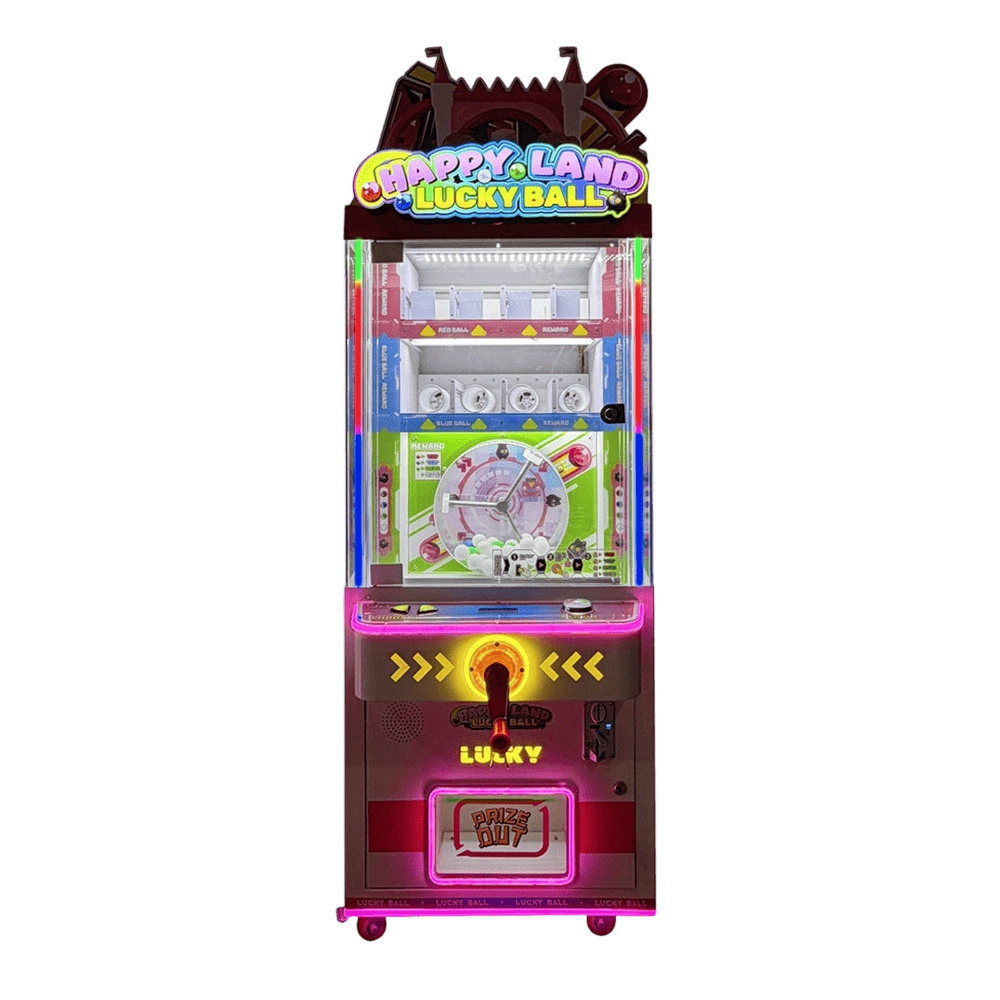
Coin Operated/Card Payment Lucky Ball Vending Toy Gift Arcade Game Machine
Coin Operated/Card Payment 2 Players SPIN ORBIT Lucky Prize Arcade Game
Coin Operated/Card Payment SPIN ORBIT Lucky Prize Arcade Game
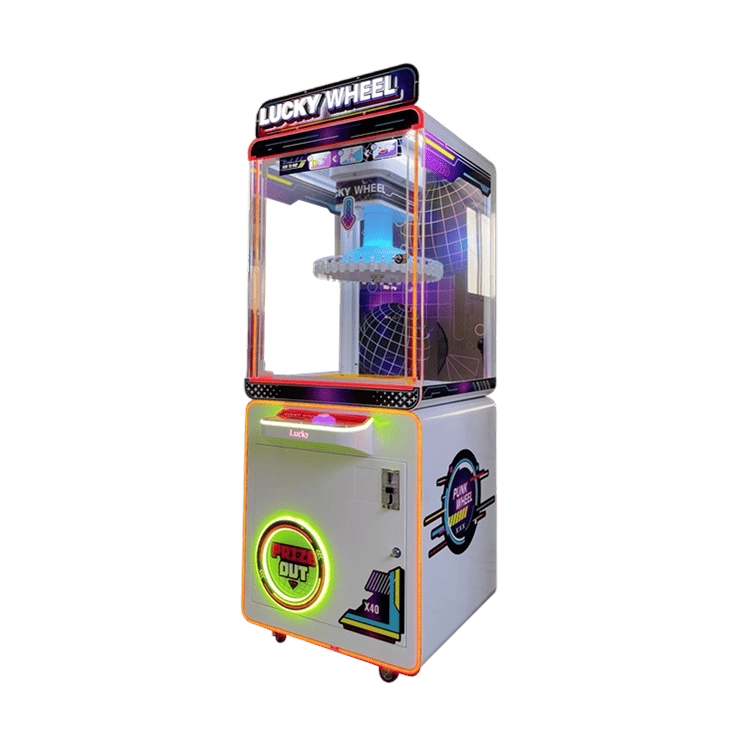
Arcade Prize Lucky Wheel Gift Machine For Amusement Areas
Get in Touch with Jiami Games
If you have any comments or good suggestions, please leave us a message; later our professional staff will contact you as soon as possible.

Innovative Entertainment, at Your Fingertips
Learn about Jiami Games and explore our expertise in console development, innovative design, and global markets.
Quick Links:
© 2026 Jiami Games.
Whatsapp: +8618520390438