





Claw Machine Arcade Game Safety Standards and Compliance

- Understanding Risk in Arcade Environments
- Common hazards associated with claw machines
- User behavior and accessibility considerations
- Environmental and installation factors
- Regulatory Frameworks and Standards for Claw Machines
- Essential international and regional standards
- Electrical safety, EMC and environmental rules
- Prize safety and consumer product rules
- Design Best Practices and a Compliance Workflow
- Risk assessment and documentation
- Mechanical safeguards and electronic fail‑safes
- Labeling, user instructions and training
- Testing, Certification, and Post‑market Surveillance
- Laboratory testing and typical certifications
- Maintenance, repairs and spare parts policies
- Incident reporting and recall readiness
- Standards and Compliance Comparison
- Practical Implementation: A Manufacturer’s and Operator’s Checklist
- Design and pre‑production stage
- Production and testing stage
- Post‑sale responsibilities
- How Jiami Games Aligns with Safety and Compliance Needs
- FAQ
- 1. What safety standards specifically apply to claw machine arcade games?
- 2. Do claw machines need third‑party certification?
- 3. How do I handle prizes that could be considered toys?
- 4. What maintenance schedule do you recommend for claw machines?
- 5. What records should operators and manufacturers keep?
- 6. How can Jiami Games help with compliance?
As someone who has worked with arcade game machines, claw vending machines, and prize machines for years, I know that safety and compliance are as crucial as gameplay and profitability. This guide explains the safety standards and regulatory expectations that apply to claw machine arcade game products and operations worldwide. I outline actionable steps—from design risk assessments and required certifications to maintenance and documentation—backed by authoritative references so you can make verifiable decisions for manufacturing, importing, or operating claw crane machines.
Understanding Risk in Arcade Environments
Common hazards associated with claw machines
Claw machine arcade games present a mixture of electrical, mechanical, and human‑factor risks. Typical hazards include electrical shock from poorly insulated wiring, crushing or entrapment from moving parts (e.g., the claw carriage), small‑parts choking risks from prizes, and fire hazards from overloaded power supplies. I always begin a safety program by cataloging these potential harms within the context of the machine’s intended use (public arcades, family entertainment centers, malls, etc.).
User behavior and accessibility considerations
Operator and player behaviors strongly influence risk. Players may tamper with coin slots, shake machines, or attempt to reach inside. Machines should be designed to limit user access to hazardous zones and to be robust against tampering. Accessibility is also a compliance factor in some jurisdictions—controls should be reachable and instructions legible for people with disabilities, and emergency stop access should be obvious.
Environmental and installation factors
Placement in a humid, dusty, or heavily trafficked environment changes failure modes and maintenance intervals. Electrical protections (grounding, surge protection) and ingress protection levels must match installation environments. I recommend documenting site conditions and adjusting preventive maintenance schedules accordingly.
Regulatory Frameworks and Standards for Claw Machines
Essential international and regional standards
There is no single claw machine standard that covers everything, so manufacturers and operators must navigate multiple standards sets. Key references I rely on include ISO 12100 for machinery risk assessment and design principles (ISO 12100), and IEC 62368‑1 for safety of audio/video and information technology equipment which often covers arcade electronics (IEC 62368‑1). For prize and toy safety in the EU, the Toy Safety Directive and harmonized standards such as EN 71 may apply to prizes inside the machine (EU Toy Safety).
Electrical safety, EMC and environmental rules
Arcade machines must meet electrical safety and electromagnetic compatibility (EMC) rules for the markets where they are sold. In the U.S., FCC rules on emissions and equipment authorization are relevant (FCC Equipment Authorization). In Europe, CE marking requires conformity with relevant directives (Low Voltage Directive, EMC Directive, RoHS). RoHS restricts hazardous substances in electronics (RoHS).
Prize safety and consumer product rules
Prizes dispensed by claw machines may be classified as toys or consumer items. For example, small parts can create choking hazards for children under three; compliance with EN 71 or the U.S. CPSIA (Consumer Product Safety Improvement Act) may be required. Always assess prize items separately and maintain supplier documentation and test reports for toy safety where applicable.
Design Best Practices and a Compliance Workflow
Risk assessment and documentation
I start every project with a formal risk assessment following ISO 12100 principles: identify hazards, estimate and evaluate risks, implement measures to mitigate risks, and verify residual risk. Risk documentation should include design drawings, risk matrices, test plans, and statements of conformity that map each safety requirement to implemented design controls.
Mechanical safeguards and electronic fail‑safes
Effective machine designs combine physical guards (locking access to the inner mechanism), interlocks, emergency stops, and control logic with safe failure modes. For example, limit switches or optical encoders should prevent excessive travel of the claw carriage. Power supplies should include overcurrent protection and thermal cutoffs; controls should default to a safe state on fault detection.
Labeling, user instructions and training
Clear warnings, maintenance instructions, and user rules reduce misuse. I advise permanent labels for voltage, grounding instructions, emergency stop locations, and prize warnings (e.g., age suitability). Additionally, operator training materials and service manuals should be part of the delivered package to purchasers.
Testing, Certification, and Post‑market Surveillance
Laboratory testing and typical certifications
Third‑party testing validates compliance. Common tests include electrical safety (dielectric, insulation, leakage), EMC emissions and immunity, mechanical strength, and toy/prize testing. For many markets a certificate from a recognized test lab (e.g., UL, TÜV, Intertek) supports market entry. The specific tests depend on the machine’s electrical rating, regions of sale, and whether prizes are considered toys.
Maintenance, repairs and spare parts policies
Post‑sale support is a core compliance activity. Regular inspections, replacement schedules for wear items (motors, belts, limit switches), and approved repair procedures reduce incidents. Keep maintenance logs and parts traceability; these records are crucial if a safety incident triggers an investigation or recall action.
Incident reporting and recall readiness
Establish processes for customer incident reports, troubleshooting, and corrective actions. If safety testing reveals non‑compliance, act quickly with corrective actions and communicate transparently with buyers and authorities. Jurisdictions have legal requirements for safety defect reporting—know local obligations and maintain a recall playbook.
Standards and Compliance Comparison
Below is a concise comparison of key standards and their relevance to claw machine arcade games:
| Standard / Directive | Scope | Typical Application to Claw Machines | Reference |
|---|---|---|---|
| ISO 12100 | General machinery safety / risk assessment | Framework for hazard analysis and risk reduction in mechanical design | ISO 12100 |
| IEC 62368‑1 | Safety of electrical/AV/IT equipment | Electrical safety requirements for control electronics and power supplies | IEC 62368‑1 |
| EN 71 / Toy Safety | Safety of toys (EU) | Applies to prizes categorized as toys (choking, flammability, chemical limits) | EU Toy Safety |
| EMC / FCC / CE | Electromagnetic compatibility and market access | Required for electronics to limit interference and allow market entry | FCC |
Practical Implementation: A Manufacturer’s and Operator’s Checklist
Design and pre‑production stage
- Perform ISO 12100 style risk assessment and document mitigations.
- Specify components with safety certifications (power supplies, motors, switches).
- Design tamper‑resistant access panels and clear labeling.
Production and testing stage
- Run electrical safety, EMC, and mechanical endurance tests at accredited labs.
- Validate prize/toy compliance when applicable and retain test reports.
- Implement factory QA checklists and traceability for key components.
Post‑sale responsibilities
- Provide operator manuals, spare parts lists, and maintenance schedules.
- Offer training for operators on safe placement, inspection, and incident response.
- Keep records of service, incidents, and product changes for compliance and continuous improvement.
How Jiami Games Aligns with Safety and Compliance Needs
As a practical example from the industry, Jiami Games is one of the leading arcade game machine manufacturers in China, specializing in the research and development and production of prize‑winning game consoles and children's arcade game consoles. Located in Panyu, Guangzhou, the company has over 70 game engineers, has developed more than 100 original game programs, and sells over 20,000 game consoles monthly. Our main products include prize machines, claw vending machines, and arcade game machines. In addition to providing high‑quality game consoles, we also provide customers with accessories and repair advice to ensure long‑term partnerships. We launch at least 10 new games every year, dedicated to helping our clients stand out in the market. Our clients are located in many countries around the world, and many of them place repeat orders with us, forming long‑term partnerships.
Jiami Games emphasizes design practices that support compliance: designing for robust mechanical guards, using certified electrical components, documenting risk assessments and test plans, and providing operator training and spare part support. The company’s product lines—prize game machine, pinball game machines, shooting game machines—are developed with attention to durability and serviceability, supporting operators in achieving long service life while maintaining player safety.
FAQ
1. What safety standards specifically apply to claw machine arcade games?
No single standard covers every aspect. You should apply machinery risk assessment principles (ISO 12100), electrical equipment standards (IEC 62368‑1), regional EMC and certification rules (FCC, CE), and toy safety standards (EN 71 or CPSIA) for prizes. Refer to the official standards pages for requirements: ISO 12100, IEC 62368‑1, EU Toy Safety.
2. Do claw machines need third‑party certification?
Third‑party testing is strongly recommended to demonstrate compliance and reduce liability. The exact certificates depend on target markets: UL/TÜV for North America, CE conformity documents for Europe, and local EMC/electrical approvals as needed.
3. How do I handle prizes that could be considered toys?
Assess prize items separately. If they meet toy definitions, test them for mechanical hazards, small parts, flammability, and restricted substances. Keep supplier declarations and test reports accessible for regulators and customers.
4. What maintenance schedule do you recommend for claw machines?
Monthly basic checks (power cords, visible wiring, coin mechanisms), quarterly functional tests (limit switches, motor behavior), and annual full safety inspections including electrical testing and mechanical wear checks. Adjust intervals by environment and usage intensity.
5. What records should operators and manufacturers keep?
Maintain design documents, risk assessments, test reports, certificates of conformity, production lot records, maintenance logs, incident reports, and customer communications. These records are essential for regulatory compliance and effective incident response.
6. How can Jiami Games help with compliance?
Jiami Games provides products designed with compliance in mind, offers accessories and repair advice, and supports customers with documentation and after‑sales service. Their engineering team can assist in tailoring solutions to meet regional requirements and to implement safer designs for operators.
If you need help auditing your existing claw machine fleet, preparing technical files for certification, or sourcing compliant prize and replacement parts, contact us to discuss tailored solutions and product options. View our products or request a consultation to ensure your claw machine arcade games meet safety and market entry requirements.
Contact & Products: Request a quote or learn more about our prize game machine, pinball game machines, and shooting game machines by contacting Jiami Games for customized solutions and after‑sales support.
Custom Branding and Cabinet Design for Coin Slot Machines
Custom Branding for Claw Machine Arcade Games to Increase Footfall
How to Maximize Revenue from Coin Operated Pinball Machines
How to Choose Commercial Coin-Operated Arcade Machines
FAQs
What types of customers does Jiami Games serve?
We serve a wide range of clients, including entertainment centers, shopping malls, theme parks, family entertainment venues, and arcade operators worldwide.
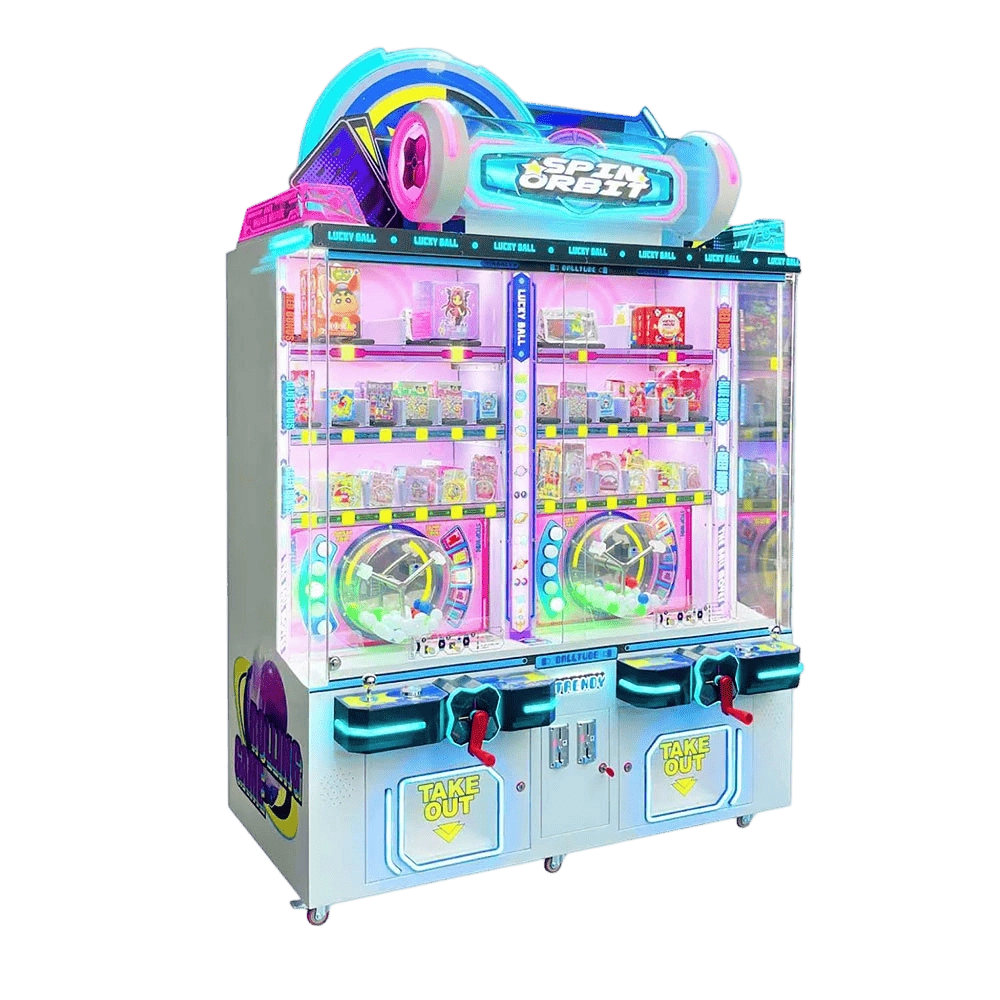
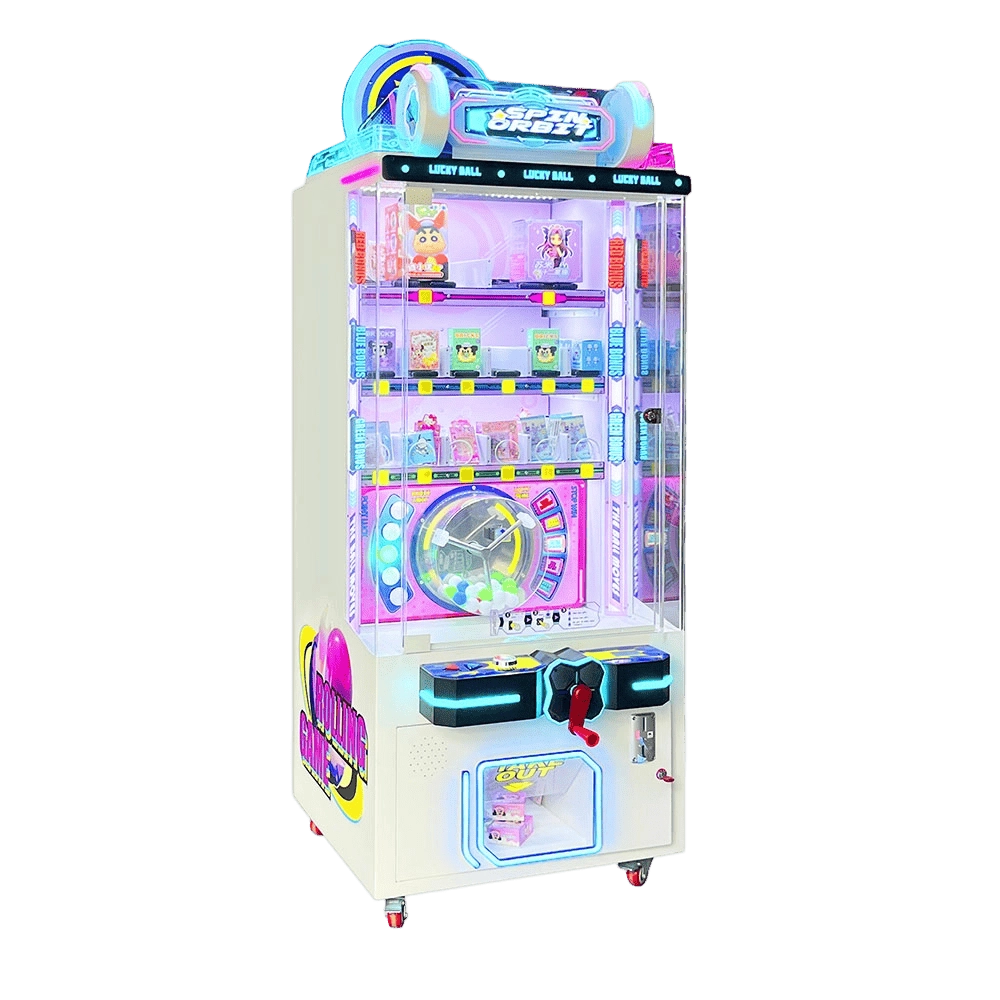
What is the gameplay of the SPIN ORBIT Lucky Prize Arcade Game?
Players use the joystick to guide the ball into a designated hole. Each color ball corresponds to different prize values: red for the highest, blue and green for mid-range prizes, and white for no prize.
How many players can play the game at once?
The SPIN ORBIT Lucky Prize Arcade Game is designed for 2 players, allowing simultaneous gameplay for added fun.
How does Jiami Games ensure product quality?
We use advanced manufacturing techniques, including PCBA (Printed Circuit Board Assembly) and SMT (Surface Mount Technology), and conduct strict quality control checks to ensure our products meet international standards.
What is the minimum order quantity (MOQ)?
The minimum order quantity for our arcade machines is 1 piece. Larger orders qualify for additional customization options.
You May Also Like
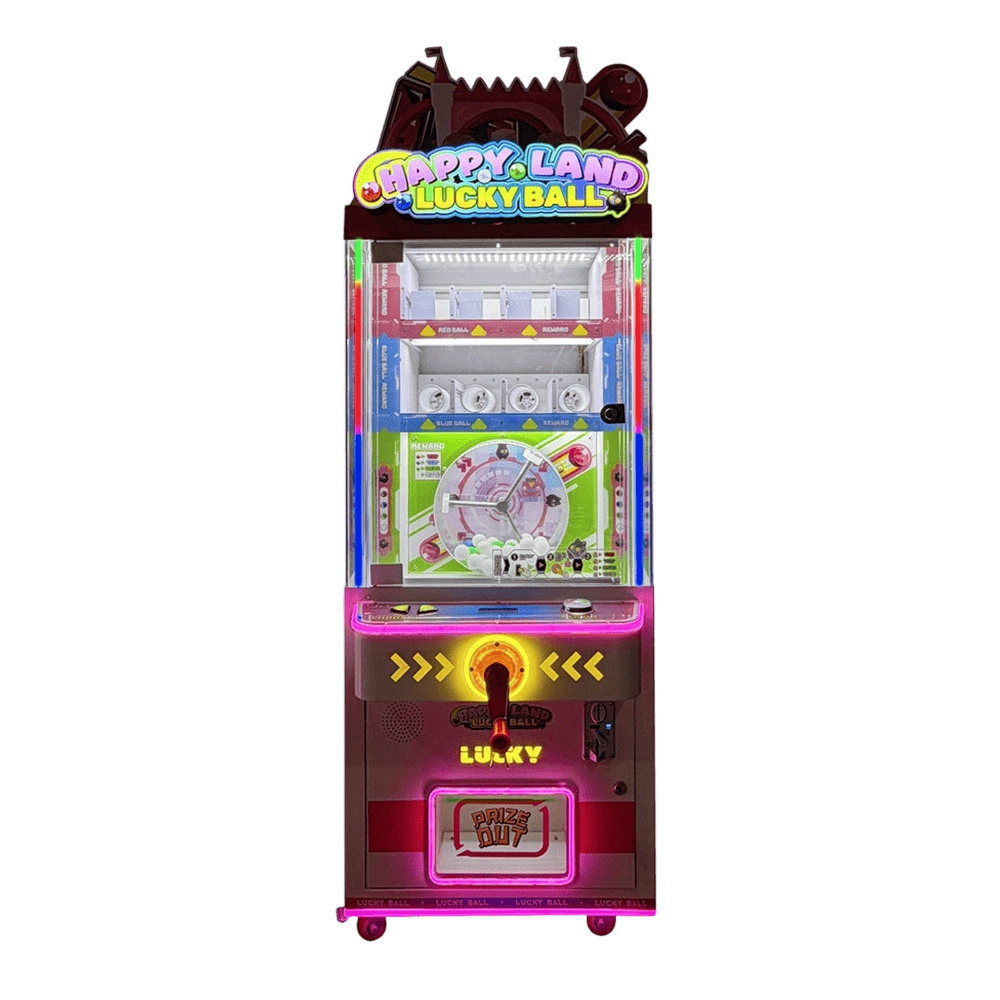
Coin Operated/Card Payment Lucky Ball Vending Toy Gift Arcade Game Machine
Coin Operated/Card Payment 2 Players SPIN ORBIT Lucky Prize Arcade Game
Coin Operated/Card Payment SPIN ORBIT Lucky Prize Arcade Game
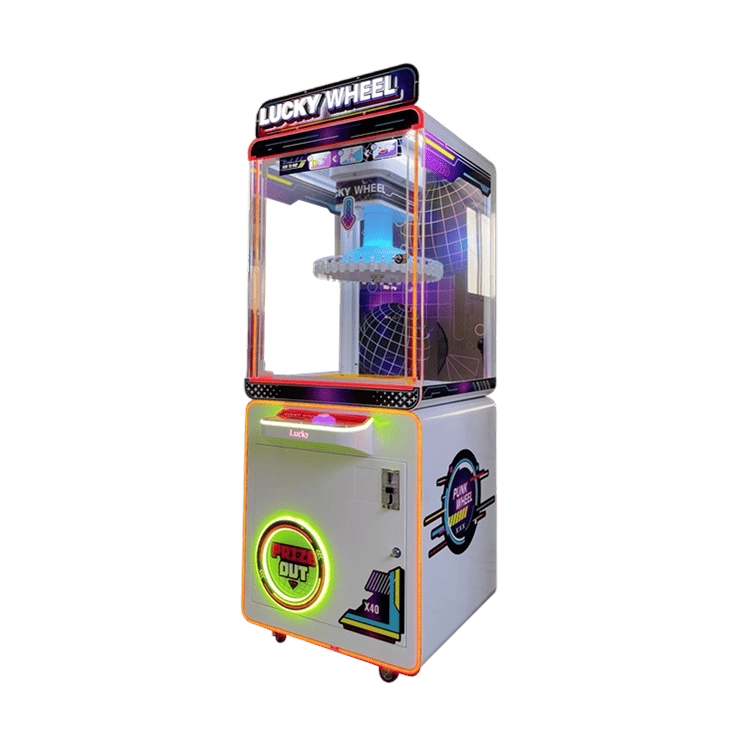
Arcade Prize Lucky Wheel Gift Machine For Amusement Areas
Get in Touch with Jiami Games
If you have any comments or good suggestions, please leave us a message; later our professional staff will contact you as soon as possible.

Innovative Entertainment, at Your Fingertips
Learn about Jiami Games and explore our expertise in console development, innovative design, and global markets.
Quick Links:
© 2026 Jiami Games.
Whatsapp: +8618520390438