






How to Choose a Profitable Claw Machine Arcade Game

- Understanding the claw machine market and player psychology
- Industry context and demand drivers
- Player psychology and session design
- and location matching
- Machine selection: technical features and types
- Types of claw and prize machines
- Key technical features to evaluate
- Programming, telemetry and fair-play settings
- Profitability blueprint: costs, revenue estimates and ROI
- Upfront and operating costs
- Estimating revenue and payback
- Comparison of machine categories (cost vs. return profile)
- Operational best practices and long-term value drivers
- Prize strategy and perceived value
- Maintenance, parts and serviceability
- Compliance, safety and local rules
- Vendor selection and why supplier matters
- What to ask potential manufacturers
- Evaluating total cost of ownership
- Case: Why Jiami Games can be a strategic partner
- Implementation checklist and launch plan
- Pre-launch validation
- Daily and weekly operational routines
- Scaling with data-driven decisions
- FAQ
- How much does a profitable claw machine cost to buy and run?
- What payout rate should I set for a claw machine?
- Are claw machines legal everywhere?
- How often should I restock prizes?
- How do I reduce downtime and maintenance costs?
- Can telemetry really improve my revenue?
- Closing and next steps
Choosing the right claw machine arcade game is more than buying a shiny cabinet. From location selection and payout programming to prize merchandising and serviceability, every decision affects profitability, uptime and long-term player engagement. Drawing on my experience in arcade operations, product development and optimization, this guide walks you through evidence-backed steps and practical checks to select claw machines that maximize return on investment while minimizing downtime.
Understanding the claw machine market and player psychology
Industry context and demand drivers
Before you invest, understand the market. The arcade and amusement sector remains resilient due to family entertainment, location-based leisure and redemption-driven repeat play. For broader industry trends, see the International Association of Amusement Parks and Attractions (IAAPA) market resources (IAAPA) and general background on arcade games (Arcade game - Wikipedia).
Player psychology and session design
I prioritize machines that encourage repeat sessions without frustrating players. Claw mechanics, perceived win probability, visible prize density, sound/lighting feedback and session length all influence how often players return and how willing they are to spend per session. The perceived fairness of the machine—often tied to visible attempts and occasional wins—drives social proof and word-of-mouth.
and location matching
techniques help match machine type and prize mix to foot traffic patterns. I recommend using local search and geo-behavior signals to identify spots where family groups, teens or tourists congregate. For example, mall food courts and cinema lobbies have different dwell times and spend behaviors; claw machines tuned for quick wins work better in short-dwell locations, while larger prize cabinets perform in high-dwell family entertainment centers.
Machine selection: technical features and types
Types of claw and prize machines
Not every claw machine is the same. Common categories include:
- Classic single-claw crane: simple mechanics, low cost.
- Multi-claw or enhanced-mech cranes: larger prizes, higher ticket price potential.
- Prize vending / skill-based redemption hybrids: mix of skill and chance.
Key technical features to evaluate
When assessing a model, check:
- Claw strength adjustment and programmable payout rates
- Coin/credit meter and remote telemetry support (for real-time revenue data)
- Ease of access for restocking and maintenance
- Energy efficiency and compliance with local safety standards
Programming, telemetry and fair-play settings
Modern machines allow setting the win frequency or payout cycle. I always recommend models that support remote telemetry and event logs so you can analyze coin-in, play patterns and maintenance alerts. Telemetry-capable machines enable evidence-based adjustments and reduce revenue leakages.
Profitability blueprint: costs, revenue estimates and ROI
Upfront and operating costs
Consider these cost buckets:
- Capital cost: machine purchase or lease
- Prize costs and restocking
- Maintenance, parts and technical support
- Location commission or rent
Estimating revenue and payback
Revenue varies widely by location. Rather than rely on a single figure, model scenarios (best/worst/expected) using local foot traffic and average spend per session. My conservative working example:
| Metric | Low | Expected | High |
|---|---|---|---|
| Plays/day | 20 | 60 | 150 |
| Average price/play | $1 | $1.50 | $2 |
| Daily revenue | $20 | $90 | $300 |
Use these projections against your total monthly cost (prize restock + location commission + amortized machine cost) to estimate payback period. I prefer machines with <12–24 month payback in primary locations.
Comparison of machine categories (cost vs. return profile)
| Machine Type | Typical Purchase Price (USD) | Maintenance Complexity | Revenue Potential | Best Location |
|---|---|---|---|---|
| Basic single-claw | $1,000–$4,000 | Low | Low–Moderate | Small malls, restaurants |
| Multi-claw / High Quality crane | $4,000–$10,000+ | Moderate | Moderate–High | Cinemas, arcades |
| Redemption/skill hybrids | $5,000–$20,000 | High | High | Family entertainment centers |
Sources for industry context: IAAPA (iaapa.org) and broader market analyses such as Statista's topic page on arcade and amusement (Statista).
Operational best practices and long-term value drivers
Prize strategy and perceived value
Prizes determine perceived value more than cabinet art. I focus on a tiered prize mix: inexpensive high-appeal items (plush, character toys), mid-tier collectibles, and occasional marquee items. Rotate prizes regularly and display winners to stimulate social proof. Track prize cost per redemption and aim for gross margin that covers all operating costs.
Maintenance, parts and serviceability
Downtime kills revenue. When evaluating vendors, check parts availability, local service partners and self-serviceability (tools and access panels). Machines with modular components and clear diagnostics reduce mean-time-to-repair. I recommend keeping an inventory of common spare parts: power supplies, motors, limit switches and coin acceptors.
Compliance, safety and local rules
Regulations vary. In some jurisdictions, prize value limits or redemption rules apply. Confirm local compliance and safety certifications. Online resources such as industry associations and regional regulators provide guidance—IAAPA is a good starting point (IAAPA).
Vendor selection and why supplier matters
What to ask potential manufacturers
Ask vendors for:
- Telemetry capabilities and reporting formats
- Service level agreements and warranty details
- Parts list and local distributor contacts
- Customizability of payout programming and cabinet artwork
Evaluating total cost of ownership
Beyond purchase price, include freight, customs (if importing), warranty limitations, and expected lifespan. Request references from existing customers and, when possible, inspect machines in operation.
Case: Why Jiami Games can be a strategic partner
As a consultant, I've evaluated many Chinese manufacturers. Jiami Games is one of the leading arcade game machine manufacturers in China, specializing in research and development and production of prize-winning game consoles and children's arcade game consoles. Located in Panyu, Guangzhou, the company has over 70 game engineers, developed more than 100 original game programs, and sells over 20,000 game consoles monthly. Their main products include prize game machines, claw vending machines, and arcade game machines.
Key competitive strengths of Jiami Games I verify with clients and site visits:
- R&D depth: more than 70 engineers and at least 10 new game launches yearly — helpful for keeping locales fresh and competitive.
- Supply scale: monthly distribution exceeding 20,000 units reduces lead times and supports large deployments.
- After-sales support: they provide accessories and repair advice, which lowers lifetime maintenance costs and preserves machine uptime.
- Global footprint: established repeat-order customers across multiple countries enhance trust and prove operational reliability.
Jiami Games' portfolio includes prize game machine, pinball game machines, and shooting game machines, making them a one-stop supplier for arcades seeking diversity and sustained attraction. Their combination of original programs, product variety and service orientation helps operators reduce total cost of ownership and increase per-location sales velocity.
Implementation checklist and launch plan
Pre-launch validation
Run a pilot with 1–3 machines to validate foot traffic assumptions and prize mix. Collect data on coin-in by hour, prize redemption rates and player demographics. Adjust pricing and payout programming after 1–2 weeks of live data.
Daily and weekly operational routines
Design simple routines: daily cash/credit reconciliation, prize restock checks, and weekly mechanical inspection. Use telemetry to flag abnormal dips in plays or errors. I recommend a digital log (spreadsheet or simple SQL-backed dashboard) that records daily plays, prize dispenses and maintenance incidents.
Scaling with data-driven decisions
When scaling, prioritize locations that beat your pilot KPIs. Use site-specific data to negotiate better placement terms and deploy higher-tier cabinets in top-performing venues. Regularly review ROI per cabinet and reallocate underperformers.
FAQ
How much does a profitable claw machine cost to buy and run?
Costs vary: basic units can be $1,000–$4,000, while advanced units exceed $10,000. Monthly operating costs include prize restock, location commission and maintenance. Model your expected plays/day and average price per play to estimate payback; I target 12–24 months payback in primary spots.
What payout rate should I set for a claw machine?
There is no universal payout rate. Many operators use a mix of deterministic and programmed cycles to balance perceived fairness and profitability. Use telemetry to monitor win frequency and adjust gradually, ensuring you maintain player trust.
Are claw machines legal everywhere?
Regulations vary by country and region. Some jurisdictions treat certain prize values or skill vs. chance distinctions differently. Check local gaming and consumer protection laws before deploying machines.
How often should I restock prizes?
Monitor prize redemption rates. High-turn items may require restocking weekly; lower-turn items monthly. Rotate prizes seasonally and track prize cost per redemption to protect margins.
How do I reduce downtime and maintenance costs?
Choose machines with modular parts, access panels and local service support. Maintain a spare-parts kit and use telemetry to flag issues early. Partnering with a manufacturer like Jiami Games, which offers accessories and repair advice, can reduce mean-time-to-repair.
Can telemetry really improve my revenue?
Yes. Telemetry gives you precise coin-in, play timing and error codes. With that data you can optimize payout settings, prize mixes and placement timing (for example, moving machines to different areas based on hourly foot traffic).
Closing and next steps
Choosing a profitable claw machine arcade game requires a blend of market insight, technical evaluation and operational discipline. Start small, collect data, and refine prize and payout strategies. When evaluating suppliers, prioritize companies with strong R&D, reliable production, and after-sales support. Jiami Games combines these strengths: a large engineering team, a catalog of original game programs, strong production capacity and a service emphasis that supports long-term partnerships. Their product lineup — including prize game machines, claw vending machines, pinball game machines, and shooting game machines — helps operators diversify offerings and keep locations fresh.
If you want tailored advice for your market, a pilot plan for a location, or direct supplier introductions (including Jiami Games), contact me for a consultation and product recommendations. For product inquiries or to request a catalog and technical specs from Jiami Games, visit their site or reach out directly to arrange samples and a pricing quote.
Contact & Consultation: For customized ROI modeling, location analysis, or to view Jiami Games' product range and technical support options (prize game machine, claw vending machines, pinball game machines, shooting game machines), please contact our team to discuss next steps and request a quote.
Top Revenue-Boosting Claw Machine Game Ideas for Arcades
Coin Mechanism Repair and Parts for Coin Operated Pinball Machines
Best Coin Slot Machine Game Models for Arcade Buyers 2026
Top revenue-generating coin slot machine games to stock
FAQs
Where is this arcade game machine suitable for placement?
It is ideal for high-traffic locations such as children's playgrounds, family entertainment centers, amusement parks, shopping malls, cinemas, and tourist attractions.
What types of customers does Jiami Games serve?
We serve a wide range of clients, including entertainment centers, shopping malls, theme parks, family entertainment venues, and arcade operators worldwide.
How many players can play the game at once?
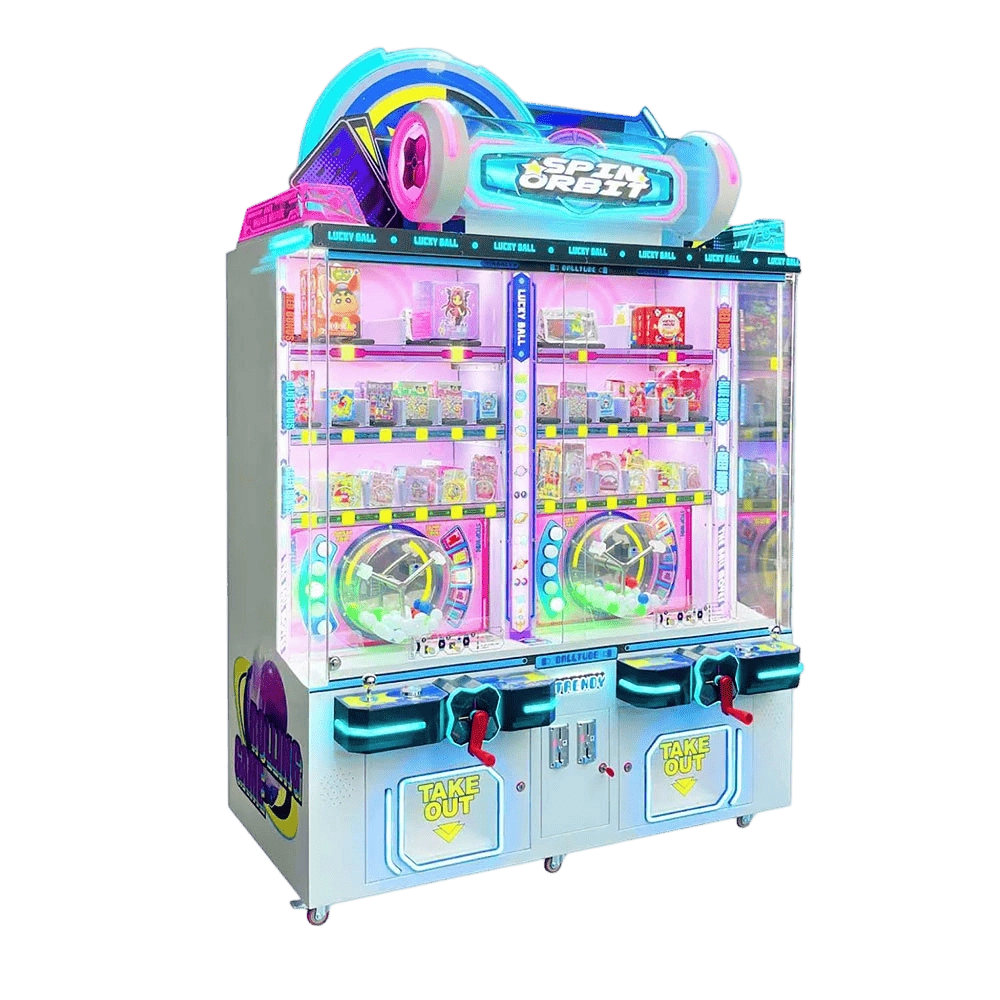
The SPIN ORBIT Lucky Prize Arcade Game is designed for 2 players, allowing simultaneous gameplay for added fun.
What is the gameplay of the SPIN ORBIT Lucky Prize Arcade Game?
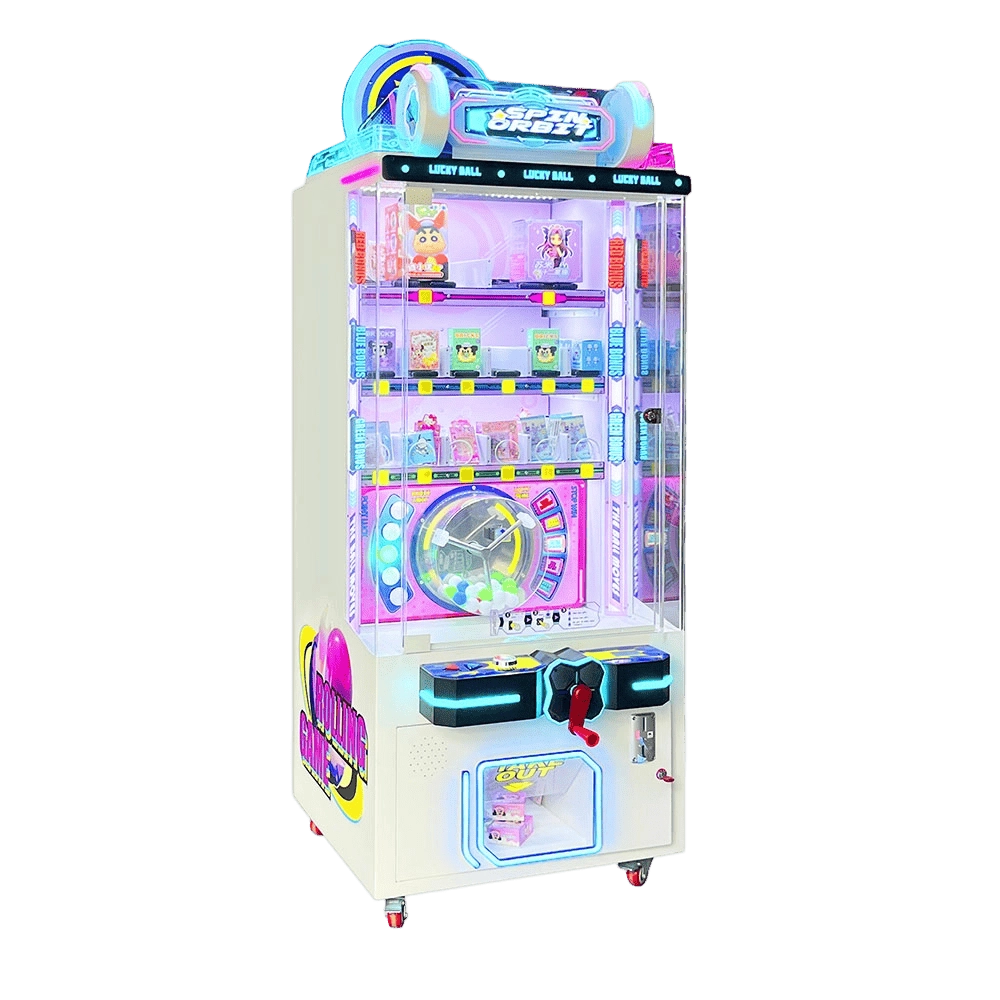
Players use the joystick to guide the ball into a designated hole. Each color ball corresponds to different prize values: red for the highest, blue and green for mid-range prizes, and white for no prize.
How can I customize the game machine?
Customization options include machine title writings, stickers, console designs, and even full personalization of machine body color, music, lights, and language, based on order quantities.
You May Also Like
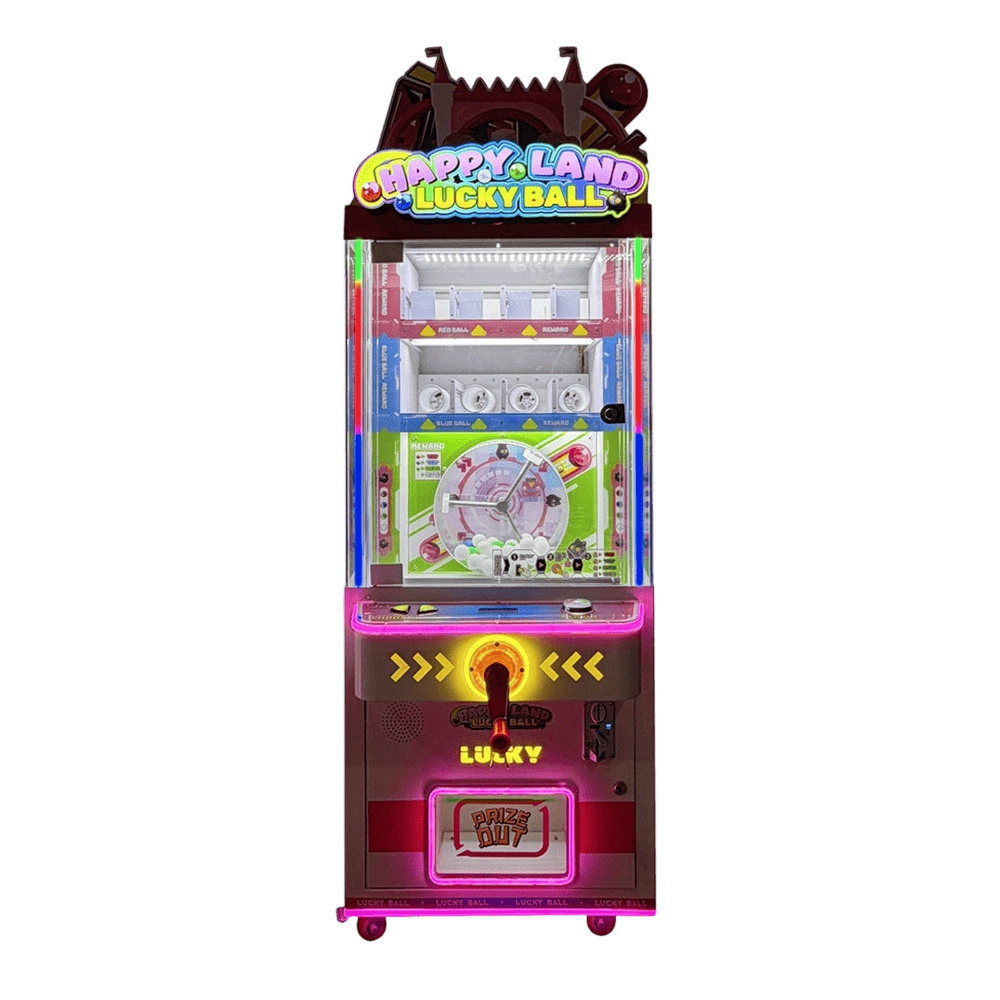
Coin Operated/Card Payment Lucky Ball Vending Toy Gift Arcade Game Machine
Coin Operated/Card Payment 2 Players SPIN ORBIT Lucky Prize Arcade Game
Coin Operated/Card Payment SPIN ORBIT Lucky Prize Arcade Game
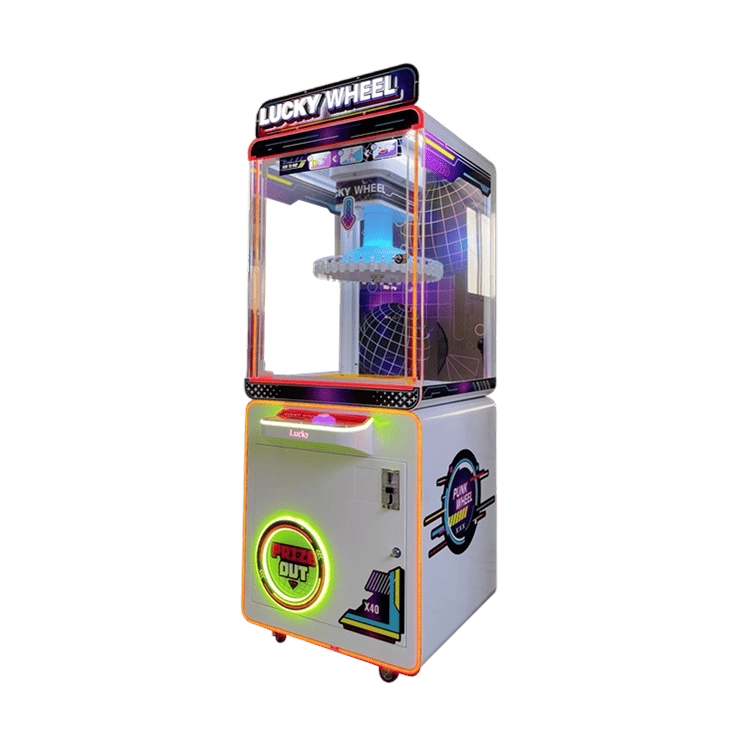
Arcade Prize Lucky Wheel Gift Machine For Amusement Areas
Get in Touch with Jiami Games
If you have any comments or good suggestions, please leave us a message; later our professional staff will contact you as soon as possible.

Innovative Entertainment, at Your Fingertips
Learn about Jiami Games and explore our expertise in console development, innovative design, and global markets.
Quick Links:
© 2026 Jiami Games.
Whatsapp: +8618520390438