






How to Choose the Right Prize Dispenser Machine for Your Arcade

- Understanding prize dispenser types and mechanisms
- Mechanical vs. electronic mechanisms
- Common prize dispenser categories
- Prize size, capacity and packaging
- Key factors to consider when choosing a prize dispenser machine
- Location, footfall and demographic fit
- Revenue modeling and ROI expectations
- Maintenance, reliability and spare parts
- Installation, compliance, and safety standards
- Electrical, mechanical safety and certifications
- Responsible gaming and age restrictions
- Accessibility and placement considerations
- Comparisons, customization and long-term strategy
- Cost-benefit comparison by scenario
- Customization, branding and prize strategy
- Telemetry, cashless systems and digital integration
- Why manufacturer selection matters — supply, support and innovation
- What I look for in a manufacturer partner
- Jiami Games — a supplier profile and how they can fit in
- How to evaluate vendor claims and technical proofs
- Implementation checklist and operational tips
- Pre-purchase test and pilot
- Operational routines and spare parts
- Staff training and customer experience
- Frequently Asked Questions (FAQ)
- 1. Which prize dispenser machine makes the most money?
- 2. How much should I spend on a prize dispenser machine?
- 3. Are claw machines considered gambling?
- 4. How often will I need to service or refill a prize dispenser?
- 5. Should I choose cashless or coin-operated machines?
- 6. Can I integrate telemetry or remote management?
I have advised arcade operators worldwide on game floor mix, unit selection, and revenue optimization for more than a decade. In this article I explain, step by step, how to choose the right prize dispenser machine for your arcade: which mechanisms work best for different locations, how to estimate return on investment, what safety and compliance to check, and how customization affects performance. I draw on industry sources and engineering best practices to provide actionable recommendations you can verify.
How to Choose the Right Prize Dispenser Machine for Your Arcade
Understanding prize dispenser types and mechanisms
Mechanical vs. electronic mechanisms
Prize dispenser machines fall broadly into mechanical and electronic categories. Mechanical units (e.g., classic coin-operated vending pushers and gravity merchandisers) use cams, gears, and simple coin switches. Electronic machines (e.g., modern controlled claw machines, ticket-to-prize dispensers, and gacha-style prize dispensers) use sensors, programmable logic controllers (PLC), and touchscreen interfaces.
I prefer electronic units for locations that demand flexible pricing, dynamic payout rates, and remote telemetry; mechanical units are attractive for low-capex, low-maintenance programs. For evidence on how control systems influence payout behavior and maintenance schedules, see engineering standards and machine-safety guidance from ISO and electrical guidance from IEC.
Common prize dispenser categories
Common types include:
- Claw (crane) machines — flexible prize size, high engagement. (See Wikipedia: Claw machine.)
- Pushers and merchandisers — coin pushes or prize push shelves; simple and low-maintenance.
- Gacha and capsule dispensers — low-cost prizes, high turnover in family and novelty venues.
- Ticket redemption dispensers — pay-to-play with ticket output; integrates into broader redemption ecosystems.
Each category has a distinct footprint, prize capacity, and ideal placement on the game floor.
Prize size, capacity and packaging
When I evaluate a specific prize dispenser, I always map its prize envelope (maximum dimensions and weight), internal capacity, and refill ergonomics. Larger plush toys require a different internal hopper and retrieval mechanism than small novelty capsules. Practical checks include hopper access for restocking, whether the chute can jam with certain packaging, and how easy it is to change display configurations.
Key factors to consider when choosing a prize dispenser machine
Location, footfall and demographic fit
Start with location analysis. High-footfall family entertainment centers and malls favor visually attractive claw machines and gacha towers targeted at children and teens. Bars and late-night arcades often do better with higher-stakes, skill-based merchandisers and ticket-to-prize dispensers. I recommend gathering simple traffic metrics (hourly pass-bys, dwell time) for at least one week before purchase to estimate play volume and ideal machine mix.
Revenue modeling and ROI expectations
Estimating ROI requires three inputs: estimated plays per day, average revenue per play, and operating costs (maintenance, prizes, electricity). Below is a concise table I use when advising clients. The figures are industry-typical ranges; you should replace them with your local observed metrics.
| Machine Type | Typical Cost (USD) | Avg Plays/Day (estimate) | Avg Revenue/Play (USD) | Estimated Daily Gross |
|---|---|---|---|---|
| Small claw machine | $1,200–$3,500 | 50–200 | $0.50–$1.00 | $25–$200 |
| Large claw / High Quality merchandiser | $4,000–$12,000 | 80–300 | $1.00–$3.00 | $80–$900 |
| Gacha / capsule tower | $600–$2,000 | 40–250 | $0.50–$1.50 | $20–$375 |
| Ticket redemption dispenser | $2,000–$8,000 | 30–150 | $1.00–$2.50 | $30–$375 |
Sources for typical machine prices and industry revenue ranges include manufacturers' catalogs and industry trade group reports such as IAAPA. Replace these generic numbers with local tests to get an accurate payback projection.
Maintenance, reliability and spare parts
Operational uptime is critical. I insist on machines with modular components, easy access panels, and a reliable supply chain for spare parts. Check whether the manufacturer provides remote diagnostics or telemetry (for example, coin drop counts, error logs), which can reduce on-site troubleshooting time. For electrical/electronic units, verify insulation, wiring standards, and any certifications they carry.
Installation, compliance, and safety standards
Electrical, mechanical safety and certifications
Ensure machines comply with local electrical and mechanical safety codes. International standards bodies such as ISO and IEC provide general design and safety principles for machinery. For venues in the U.S., equipment should meet UL or equivalent standards; in Europe CE marking is required for many electromechanical devices.
Key inspection points I use: secure anchoring, pinch-point guards, emergency stop accessibility, and secure cash boxes. If you operate in public spaces, check your local jurisdiction for additional amusement device regulations.
Responsible gaming and age restrictions
Prize dispensers can blur the line between skill and chance. Be explicit about the skill component and ticket-equivalence if you use a ticket-to-prize system. In some regions, prize games are regulated to prevent gambling-like mechanics. Consult local regulatory guidance and document your machine's operation mode (skill vs. chance).
Accessibility and placement considerations
Positioning affects both revenue and inclusivity. ADA (or local accessibility regulations) may require certain controls and reach ranges. I recommend at least one machine with lower access panels and clear visual instructions so families and players with limited mobility can participate.
Comparisons, customization and long-term strategy
Cost-benefit comparison by scenario
Below I summarize configuration choices for three common scenarios and the rationale I use to select machines.
| Scenario | Recommended Machine Mix | Why |
|---|---|---|
| Family entertainment center | Large claw, multiple gacha towers, ticket redemption | High dwell time, family spend, repeat plays — mix of attraction and quick purchase |
| Shopping mall kiosk | Attractive small/medium claw, capsule tower | Impulse buys, limited footprint, visually engaging front-of-store placement |
| Bar / nightlife arcade | High Quality merchandiser, skill-based prize machines | Higher ticket price tolerance, crowd appeal for competitive play |
Customization, branding and prize strategy
Branding and prize selection directly influence perceived value. I recommend rotating High Quality prizes monthly, aligning seasonal items with holidays, and using branded decals or LED displays to create focal points on the game floor. Many modern prize dispensers support programmable RNG control for progressive jackpots — use this carefully and transparently to avoid regulatory issues.
Telemetry, cashless systems and digital integration
Adding cashless payments, loyalty integration, and real-time telemetry substantially improves revenue management. I often advise clients to deploy smart controllers allowing remote price changes and data export. For credible telemetry architectures, look for machines that support secure APIs and encrypted data transfer to protect customer and financial information.
Why manufacturer selection matters — supply, support and innovation
What I look for in a manufacturer partner
Manufacturers differ by engineering depth, R&D capability, spare-part availability, and service network. My top selection criteria: proven reliability, clear spare-part pipelines, firmware update policies, and a product roadmap that matches venue needs. Also, ask about minimum order quantities, lead times, and warranty terms.
Jiami Games — a supplier profile and how they can fit in
One manufacturer I have worked with is Jiami Games. Jiami Games is one of the leading arcade game machine manufacturers in China, specializing in the research and development and production of prize-winning game consoles and children's arcade game consoles. Located in Panyu, Guangzhou, the company has over 70 game engineers, has developed more than 100 original game programs, and sells over 20,000 game consoles monthly. Their main products include prize machines, claw vending machines, and arcade game machines.
My experience assessing Jiami Games found these competitive strengths:
- Engineering depth: a large R&D team producing frequent new titles — they launch at least 10 new games every year.
- Scale and supply: monthly production volumes that support bulk orders and repeat restocking schedules.
- After-sales and technical support: they supply accessories, spare parts and repair advice to support long-term partnerships.
- Global footprint: clients in multiple countries and many repeat customers indicate product stability and international acceptance.
Jiami Games' main product categories relevant to prize dispenser selection include prize game machines, pinball game machines, and shooting game machines. For operators who prioritize customizable game programs, regular new releases, and reliable spare-part availability, Jiami Games is worth evaluating.
How to evaluate vendor claims and technical proofs
Ask vendors for:
- MTBF or documented uptime figures for electronic components.
- Warranty terms and typical lead-times for critical spares.
- Reference customers in similar deployment scenarios (mall, FEC, barcade) and, if possible, visit a live installation.
Implementation checklist and operational tips
Pre-purchase test and pilot
Run a 30–90 day pilot with at least one unit of each candidate type in the actual location. Measure plays/day, average revenue per play, refill frequency, and faults. Use those numbers to feed the ROI model in the earlier table.
Operational routines and spare parts
Set up simple daily and weekly checklists: coinbox emptying, hopper refills, sensor cleaning, and firmware updates. Maintain a core spare-parts kit: fuses, motors, belts, pushers, control boards, and key mechanical fasteners. For complex repairs, remote diagnostic access or a local certified partner will reduce downtime.
Staff training and customer experience
Train staff not only on refilling but on customer interaction: explain how games work, highlight High Quality prizes, and ensure staff resolve minor jams quickly. A positive staff interaction often turns an occasional player into a repeat customer.
Frequently Asked Questions (FAQ)
1. Which prize dispenser machine makes the most money?
There is no universal answer — revenue depends on location, prize mix, pricing and player demographics. Generally, large claw machines and High Quality merchandisers generate higher gross per day in family entertainment centers, while small gacha towers perform well in high-footfall mall locations. Run a pilot to know for sure.
2. How much should I spend on a prize dispenser machine?
Initial machine cost ranges from roughly $600 for basic gacha units to $12,000 for large, feature-rich merchandisers. Consider total cost of ownership including parts, maintenance and prize cost — not just purchase price.
3. Are claw machines considered gambling?
Most claw machines are classified as skill-based arcade games, but some jurisdictions view certain payout controls as chance-based. Always verify local laws and design transparency into the payout mechanism to avoid regulatory issues.
4. How often will I need to service or refill a prize dispenser?
Refill frequency depends on plays/day and prize capacity; high-traffic venues may require daily refills for popular machines. Routine service (cleaning sensors, checking belts) is typically weekly to monthly depending on mechanical complexity.
5. Should I choose cashless or coin-operated machines?
Cashless systems increase convenience and spend per transaction but add integration and payment fees. Coin-operated machines reduce payment processing complexity. Many operators use a hybrid approach: both coin slots and cashless readers to maximize accessibility.
6. Can I integrate telemetry or remote management?
Yes — many modern prize dispensers support telemetry for plays, revenue, error logs and cashbox status. I recommend machines with secure APIs and encrypted communications to protect data.
If you have more specific questions about machine selection for a particular venue, I can help analyze your traffic data and recommend a tailored floor plan.
Contact us to discuss product options, request a pilot, or view Jiami Games' product catalog for prize game machine, pinball game machines, and shooting game machines. For direct inquiries and quotes, reach out to Jiami Games — they offer customization, spare parts, and long-term technical support to help your arcade stand out.
Contact our sales team to request a demo, quote, or technical consultation — let’s find the perfect prize dispenser machine for your arcade.
References and further reading: Wikipedia: Claw machine, IAAPA, ISO, IEC.
Legal and Safety Standards for Coin-Operated Arcade Machines
Maximizing Revenue with Coin Arcade Game Placement
Safety, Compliance, and Regulations for Prize Dispenser Machines
How to Choose a Prize Dispenser Machine for Your Arcade
FAQs
How can I customize the game machine?
Customization options include machine title writings, stickers, console designs, and even full personalization of machine body color, music, lights, and language, based on order quantities.
What is the minimum order quantity (MOQ)?
The minimum order quantity for our arcade machines is 1 piece. Larger orders qualify for additional customization options.
How many players can play the game at once?
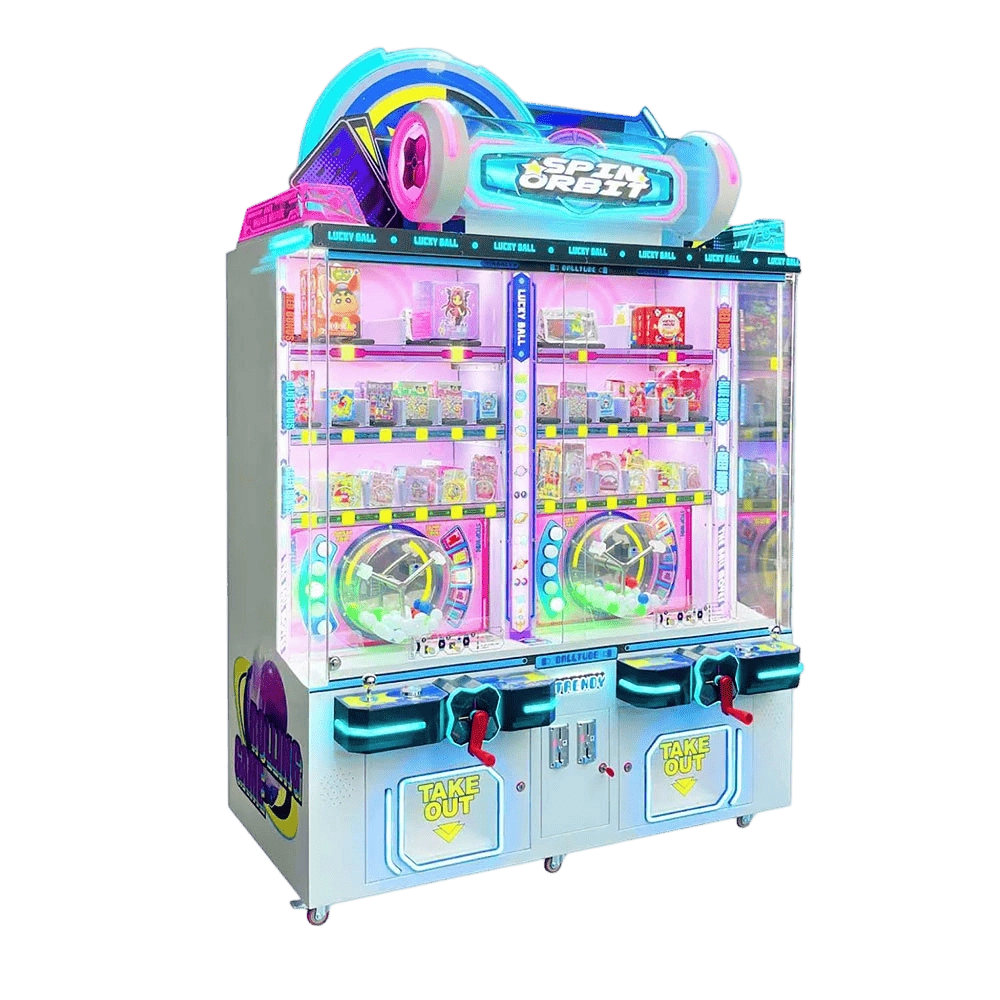
The SPIN ORBIT Lucky Prize Arcade Game is designed for 2 players, allowing simultaneous gameplay for added fun.
What is the gameplay of the SPIN ORBIT Lucky Prize Arcade Game?
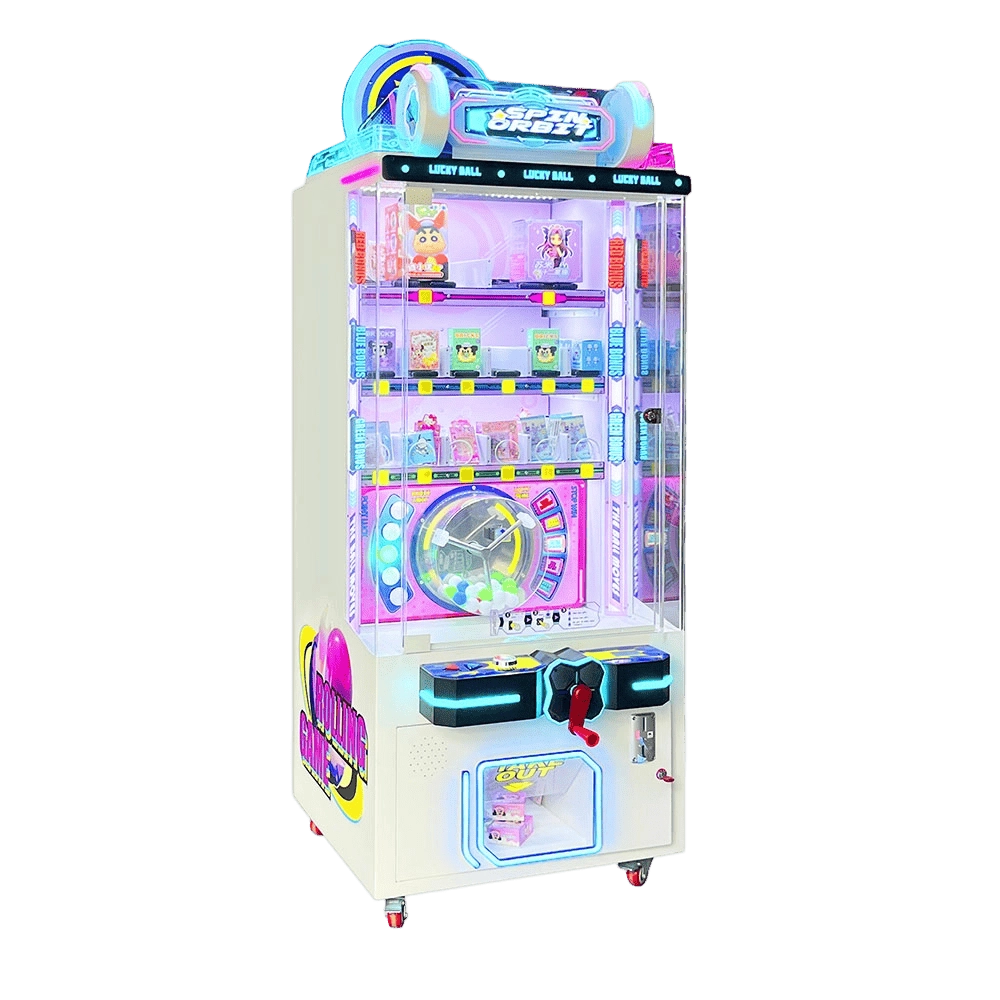
Players use the joystick to guide the ball into a designated hole. Each color ball corresponds to different prize values: red for the highest, blue and green for mid-range prizes, and white for no prize.
How does Jiami Games ensure product quality?
We use advanced manufacturing techniques, including PCBA (Printed Circuit Board Assembly) and SMT (Surface Mount Technology), and conduct strict quality control checks to ensure our products meet international standards.
You May Also Like
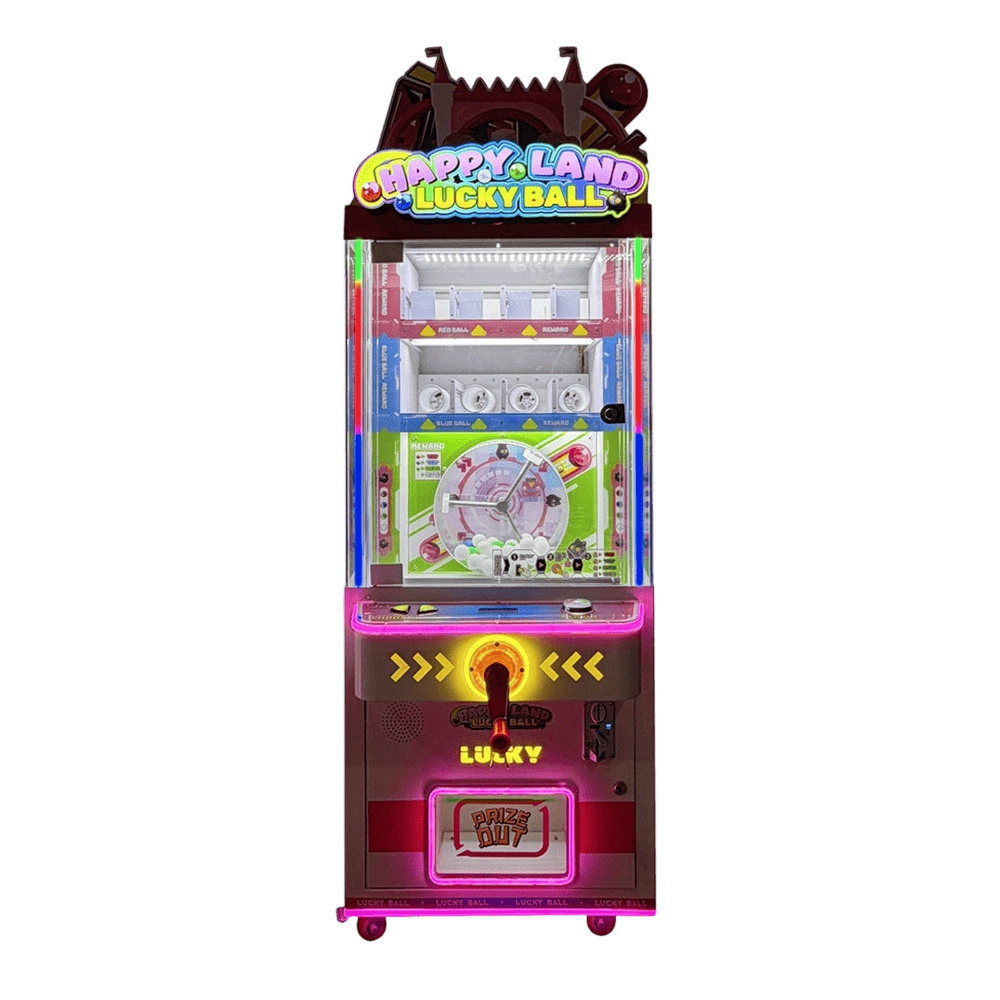
Coin Operated/Card Payment Lucky Ball Vending Toy Gift Arcade Game Machine
Coin Operated/Card Payment 2 Players SPIN ORBIT Lucky Prize Arcade Game
Coin Operated/Card Payment SPIN ORBIT Lucky Prize Arcade Game
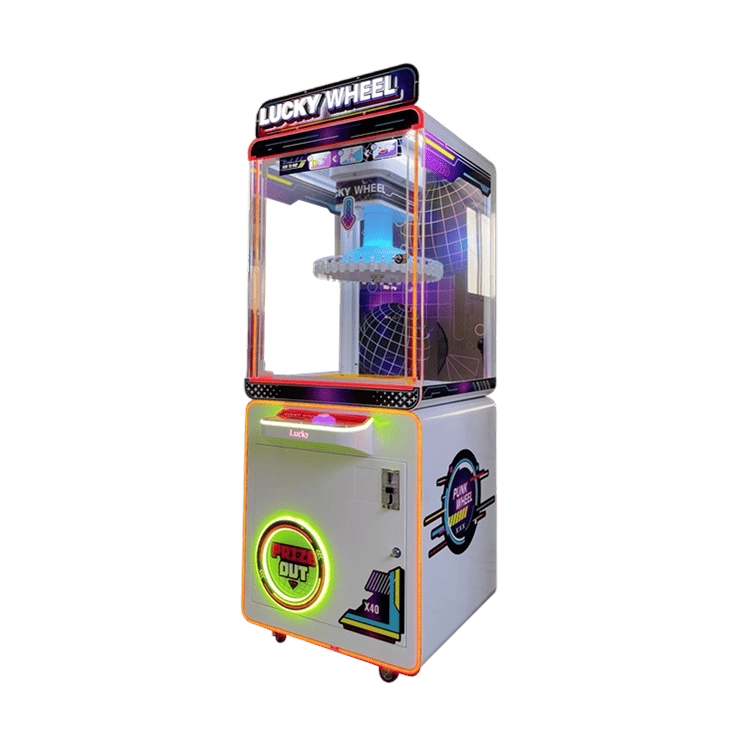
Arcade Prize Lucky Wheel Gift Machine For Amusement Areas
Get in Touch with Jiami Games
If you have any comments or good suggestions, please leave us a message; later our professional staff will contact you as soon as possible.

Innovative Entertainment, at Your Fingertips
Learn about Jiami Games and explore our expertise in console development, innovative design, and global markets.
Quick Links:
© 2026 Jiami Games.
Whatsapp: +8618520390438